Crocodilians are largely ambush predators that rely upon stealth and patience to capture prey. They typically don’t chase down mobile prey by running or swimming for long distances, but instead sit and wait for prey to come within striking distance before lunging. Concealment and the choice of strategic ambush point play a big role in successful prey capture. This is well illustrated with a remarkable BBC Planet Earth video of Mugger Crocodiles hunting deer in Sri Lanka.
One thing I noticed while observing wild American Alligators in Florida is how frequently they have debris – primarily aquatic vegetation – resting upon their backs and snout. This is most evident when they are resting on the water’s edge. Going through my photos of alligators I can find hundreds of examples of this. This begs the question: is this occurring incidentally as they swim through debris-strewn waters, or being done deliberately as a form of decorative camouflage or even as a means to attract potential prey?
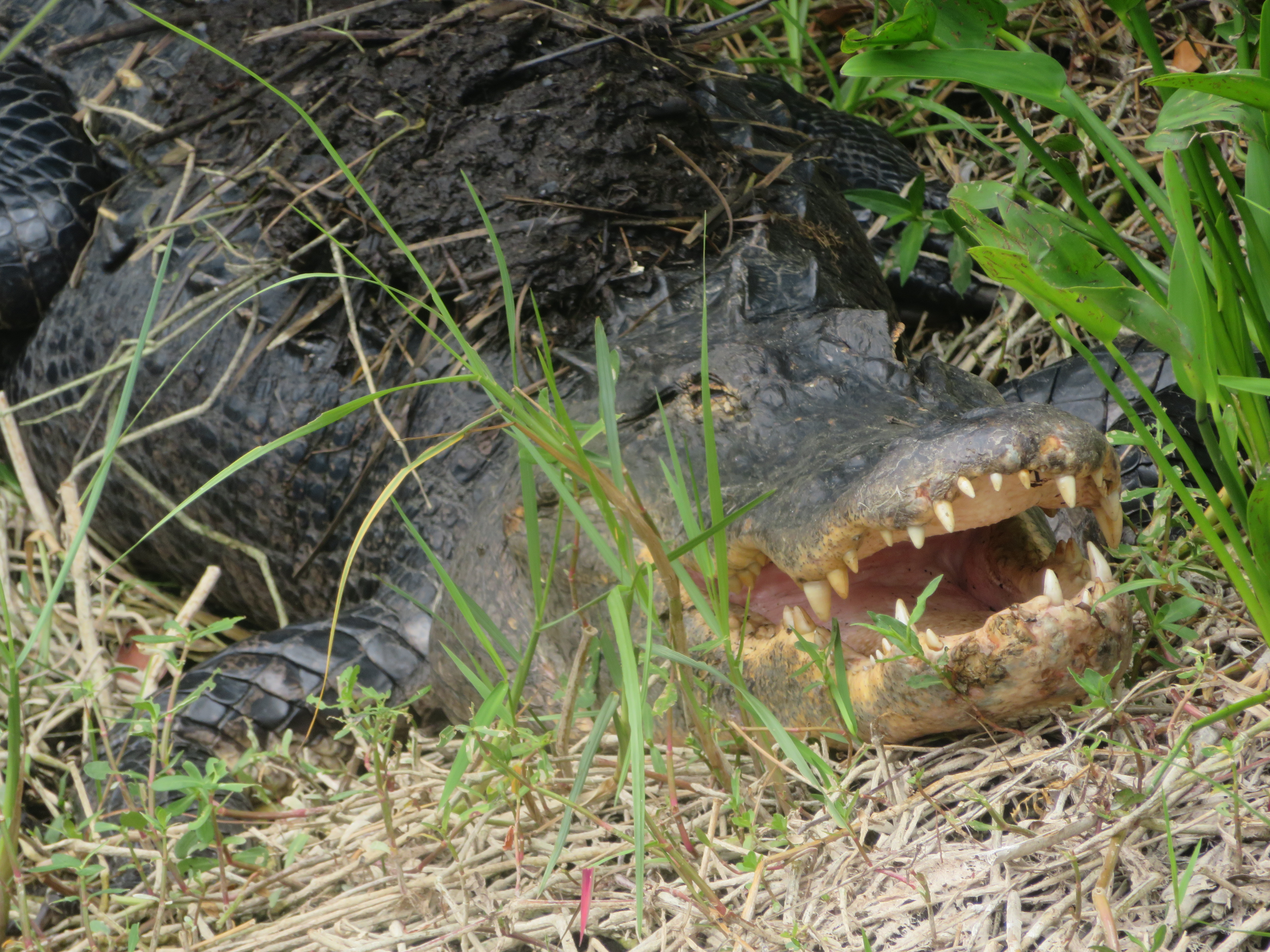
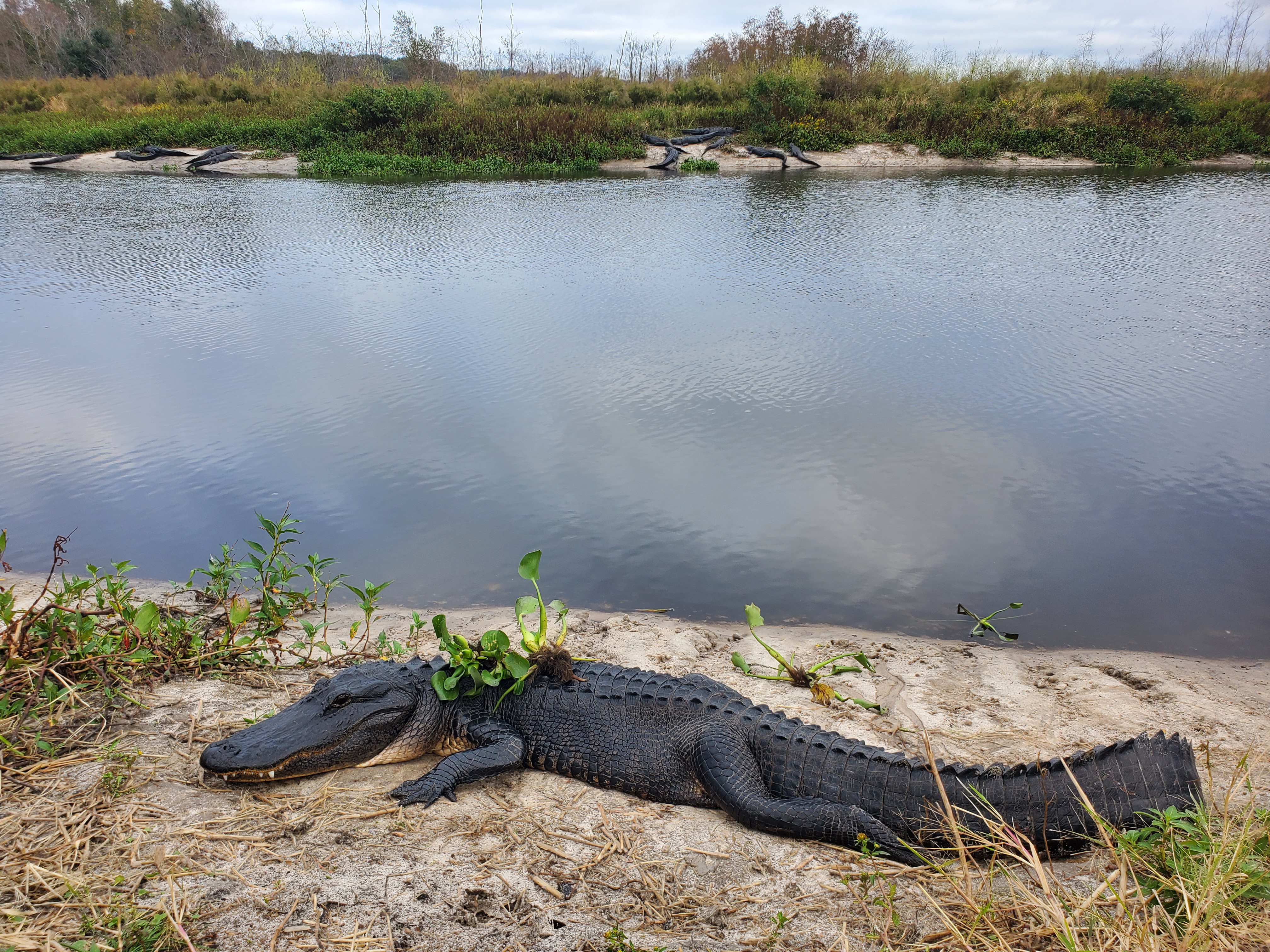
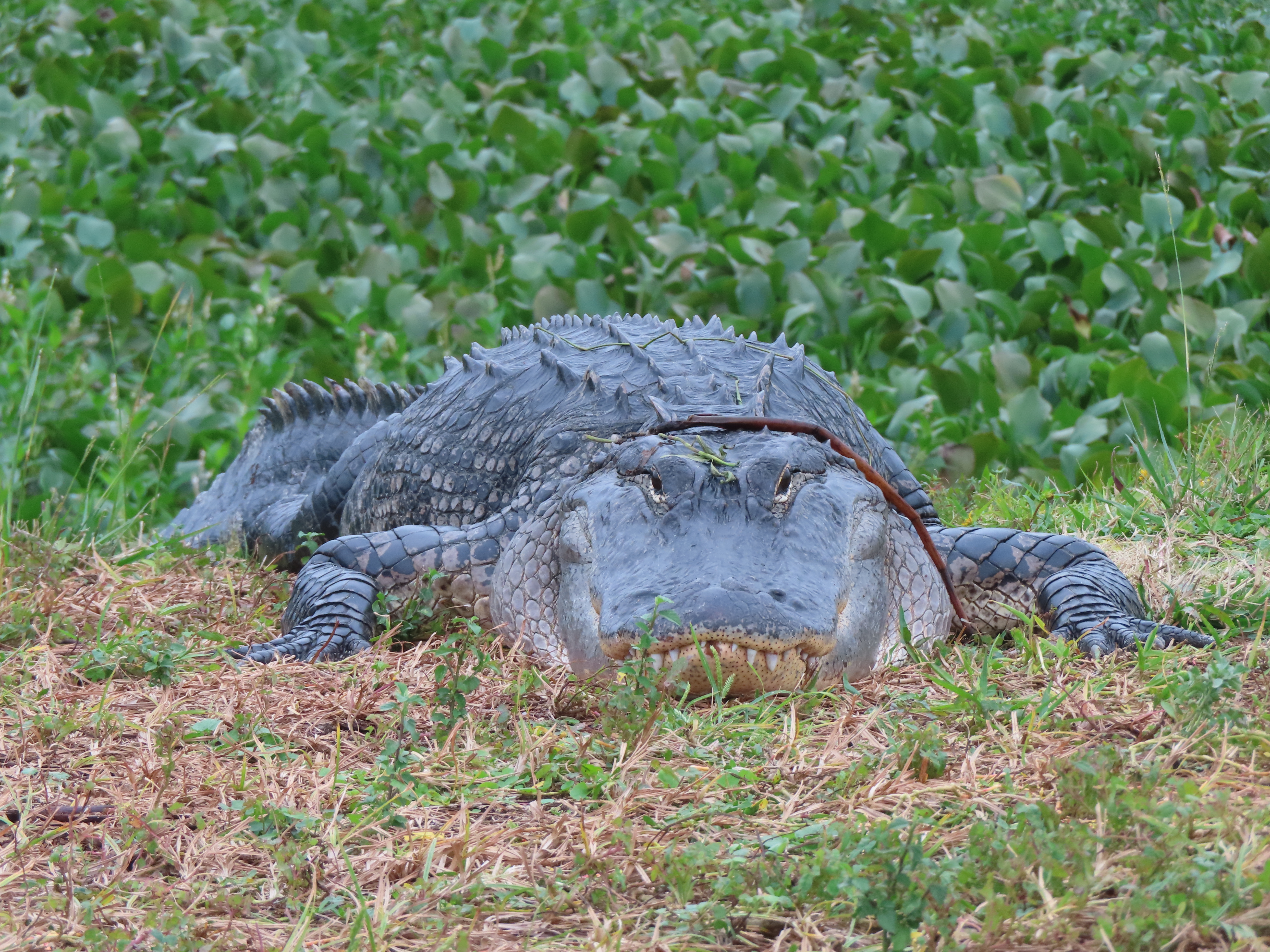
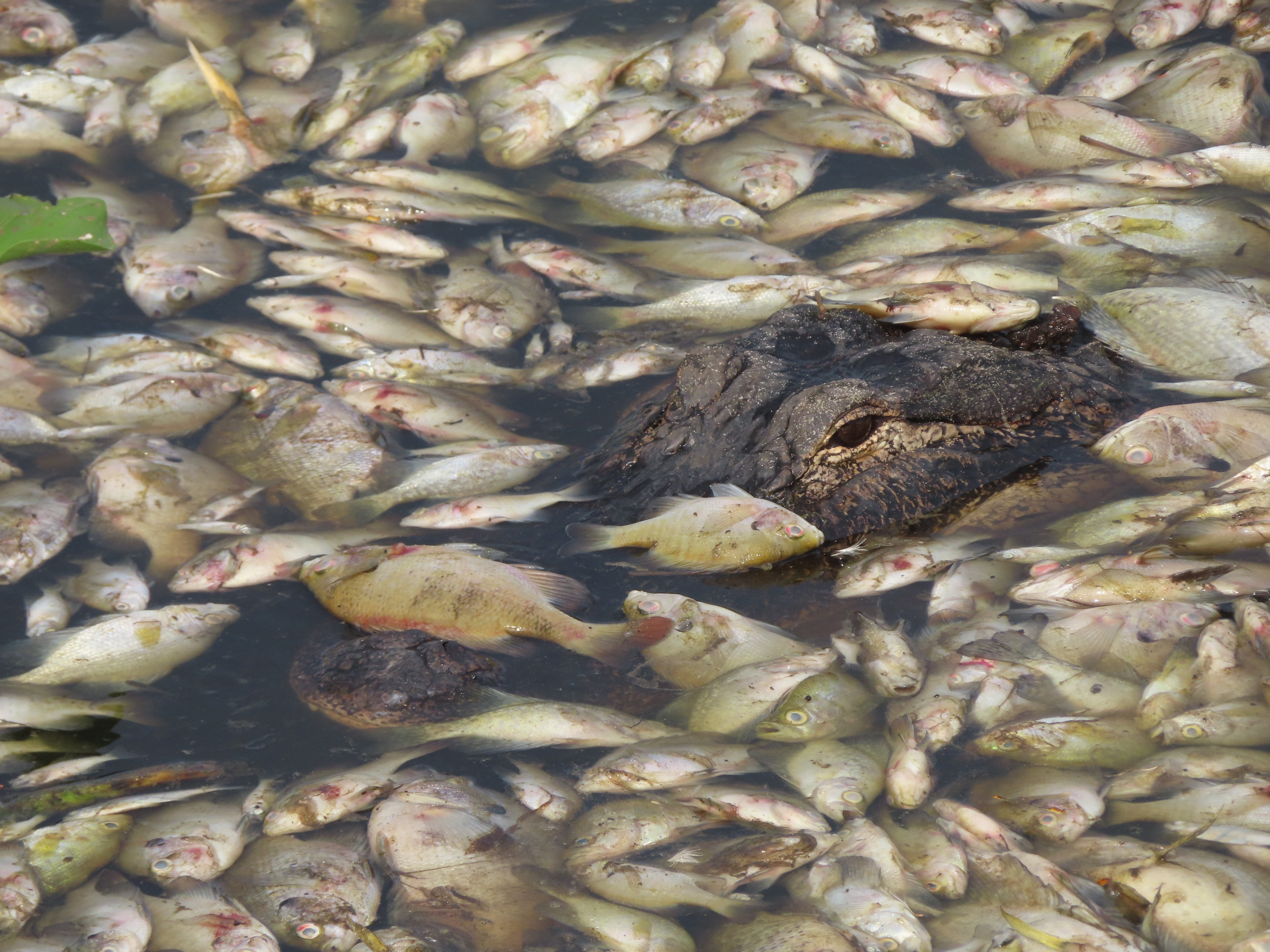
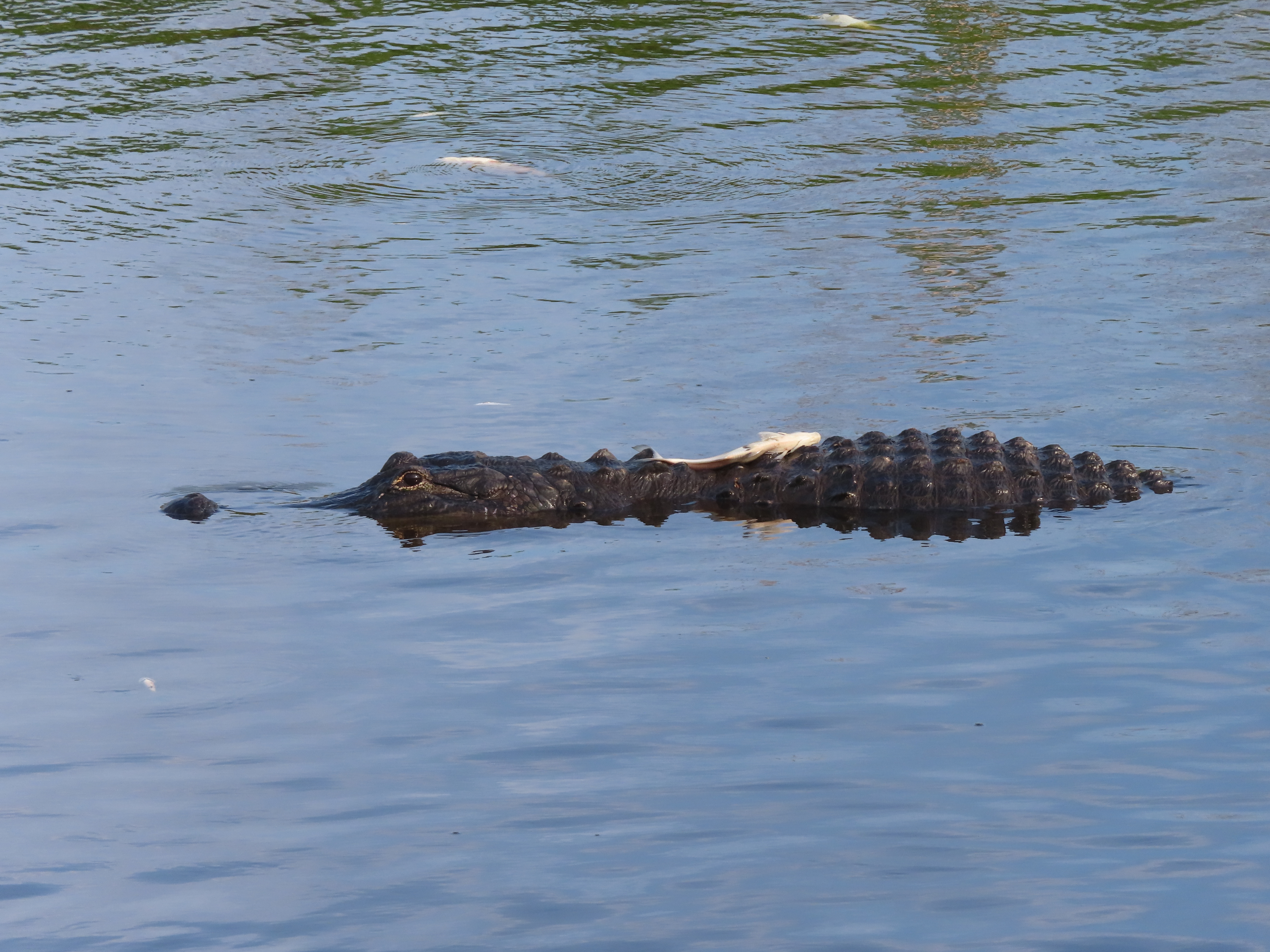
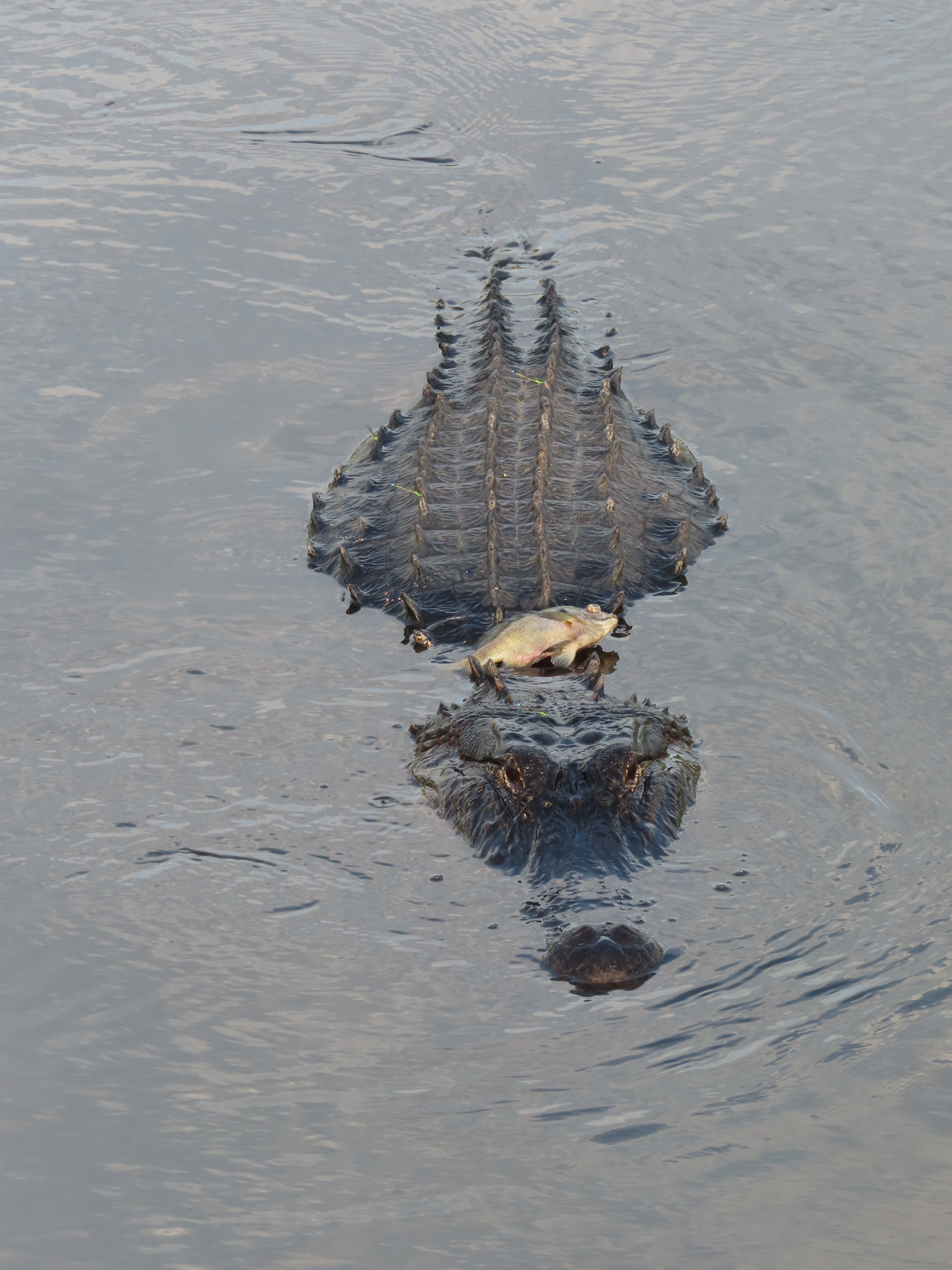
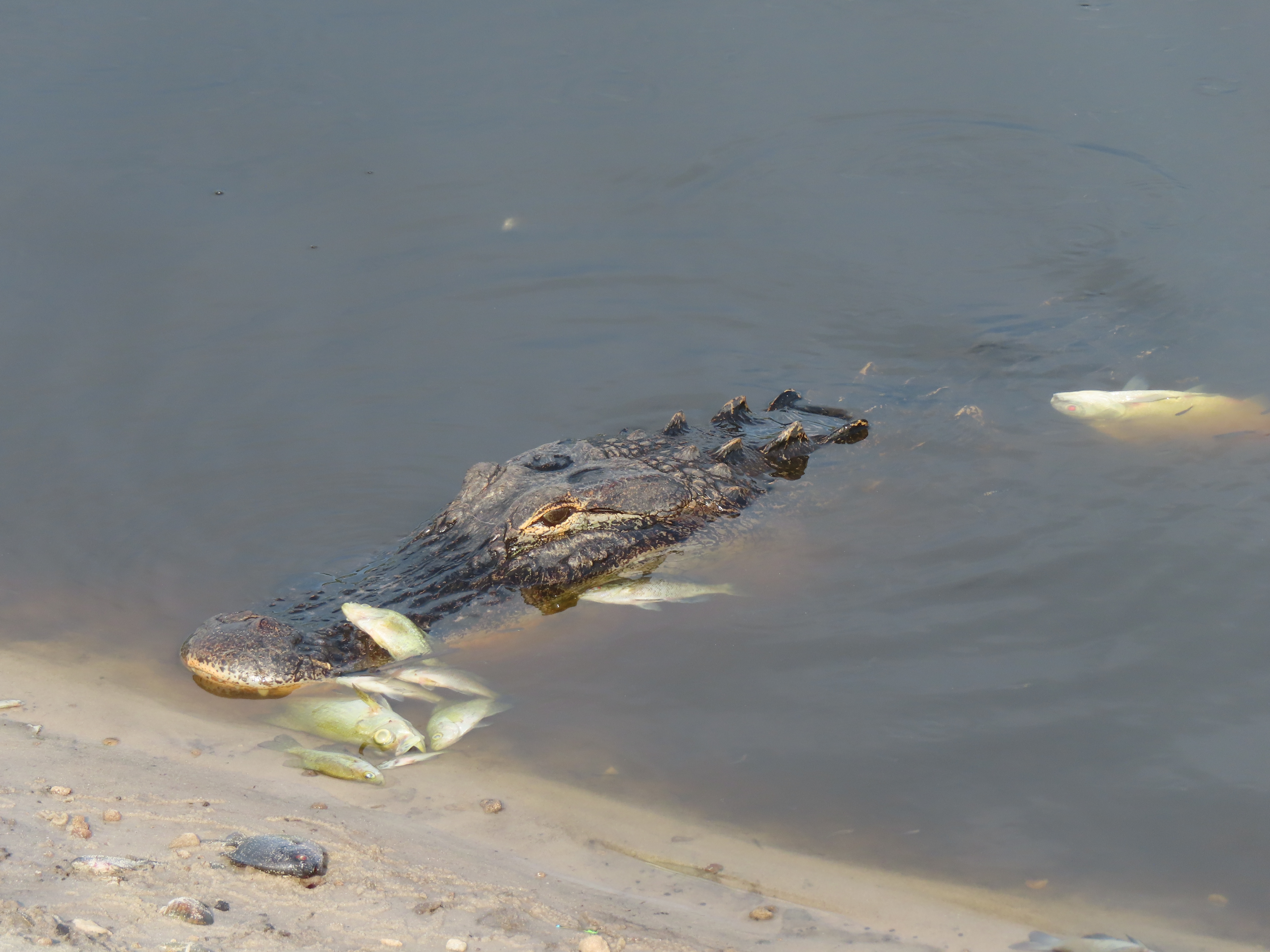
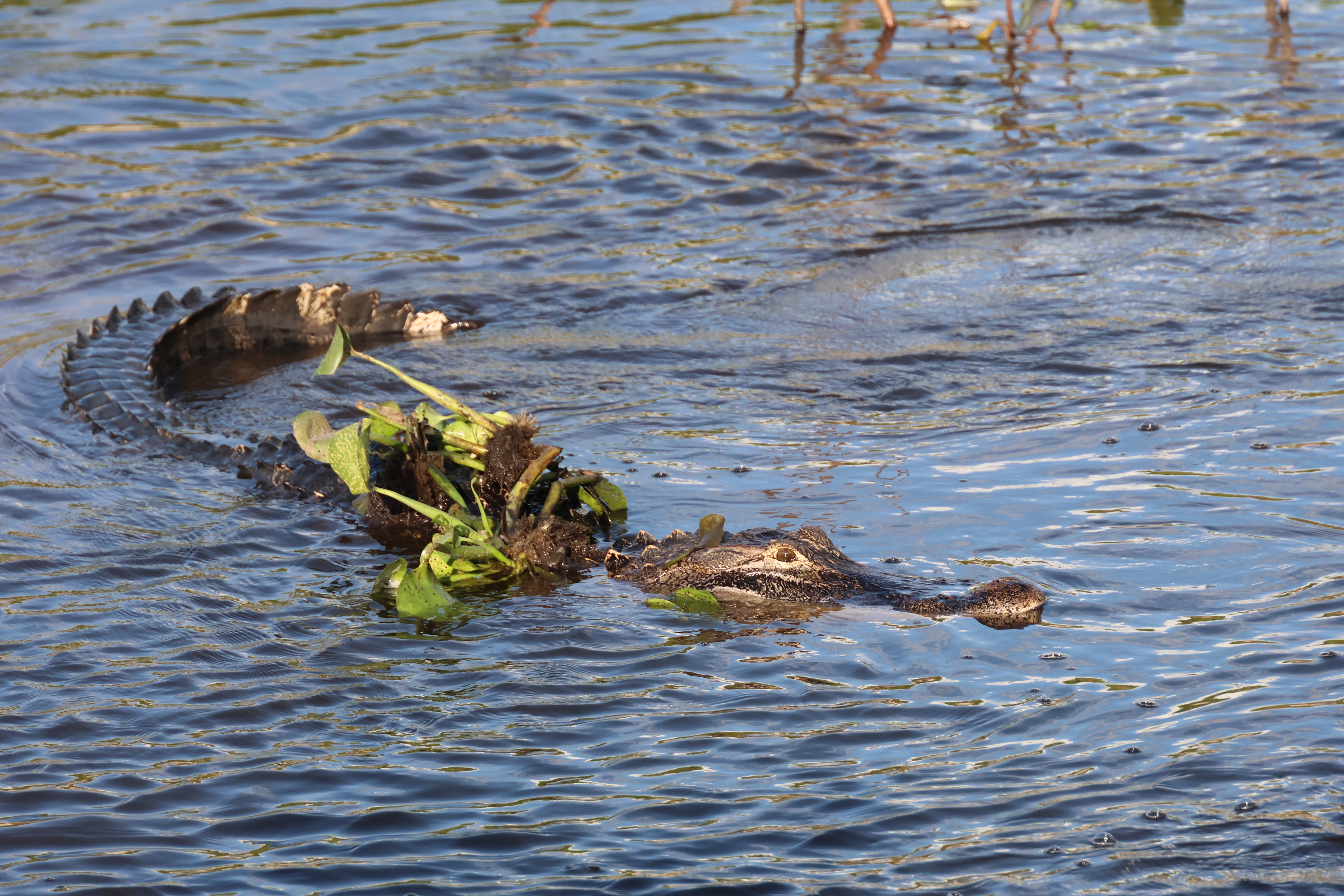
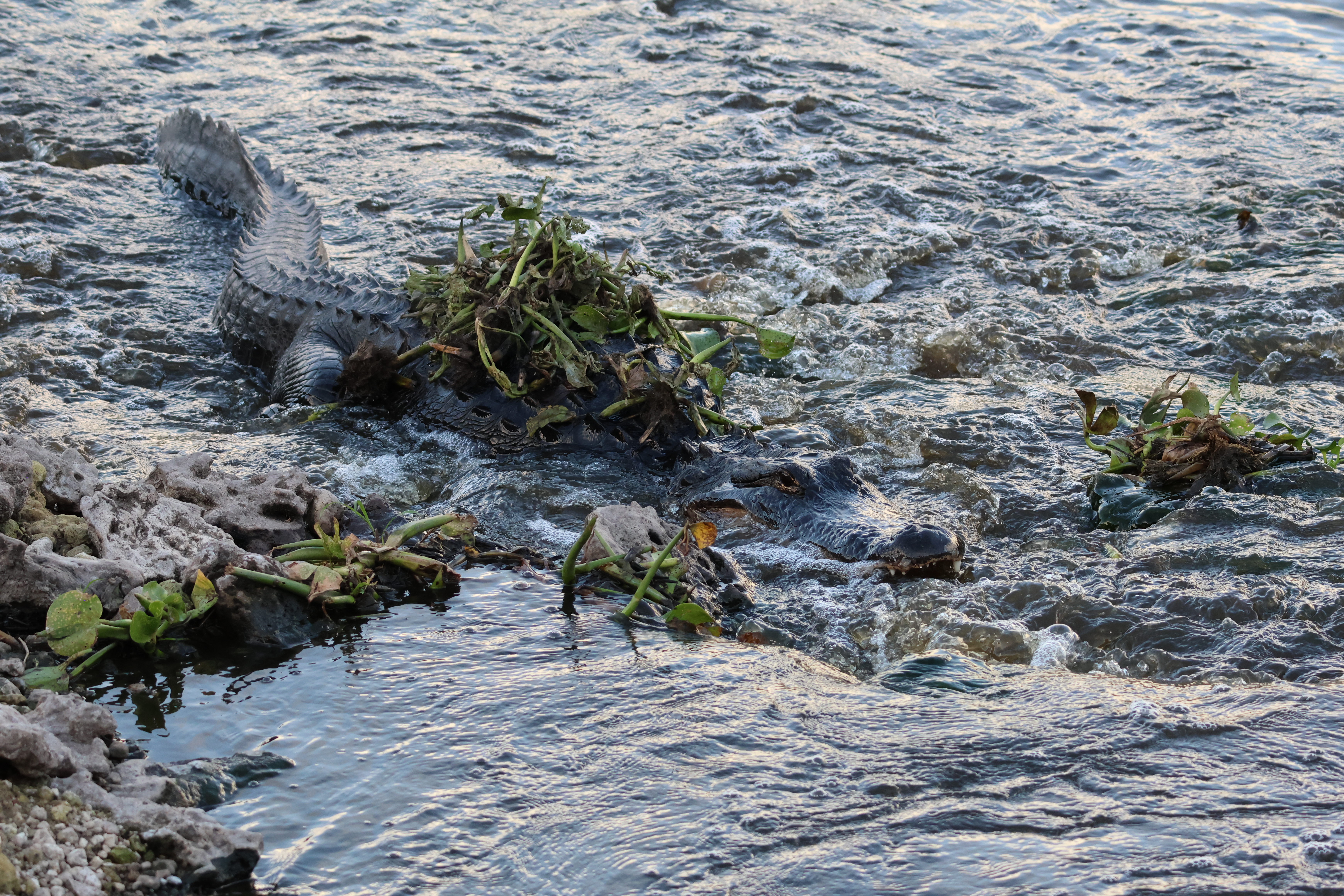
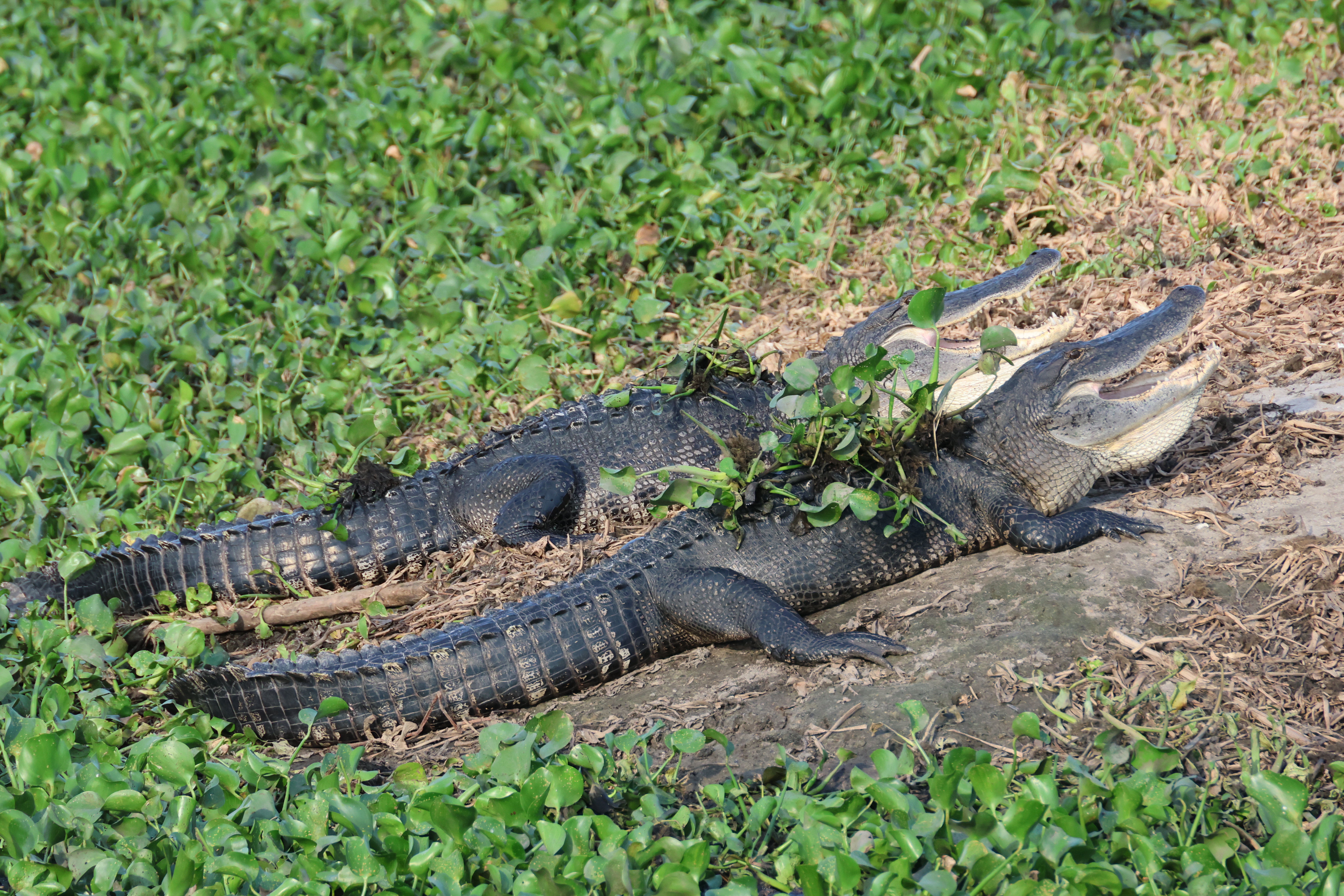
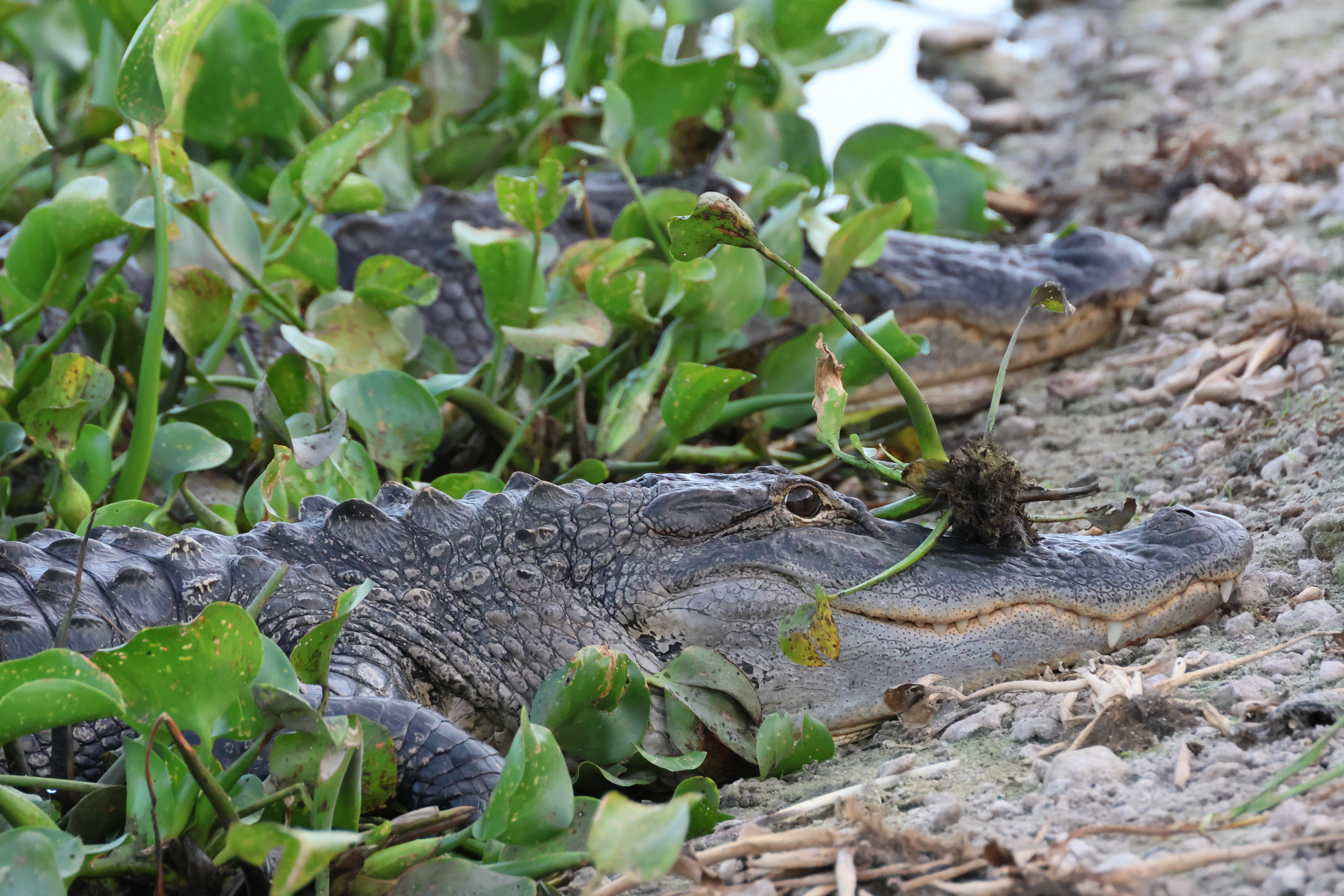
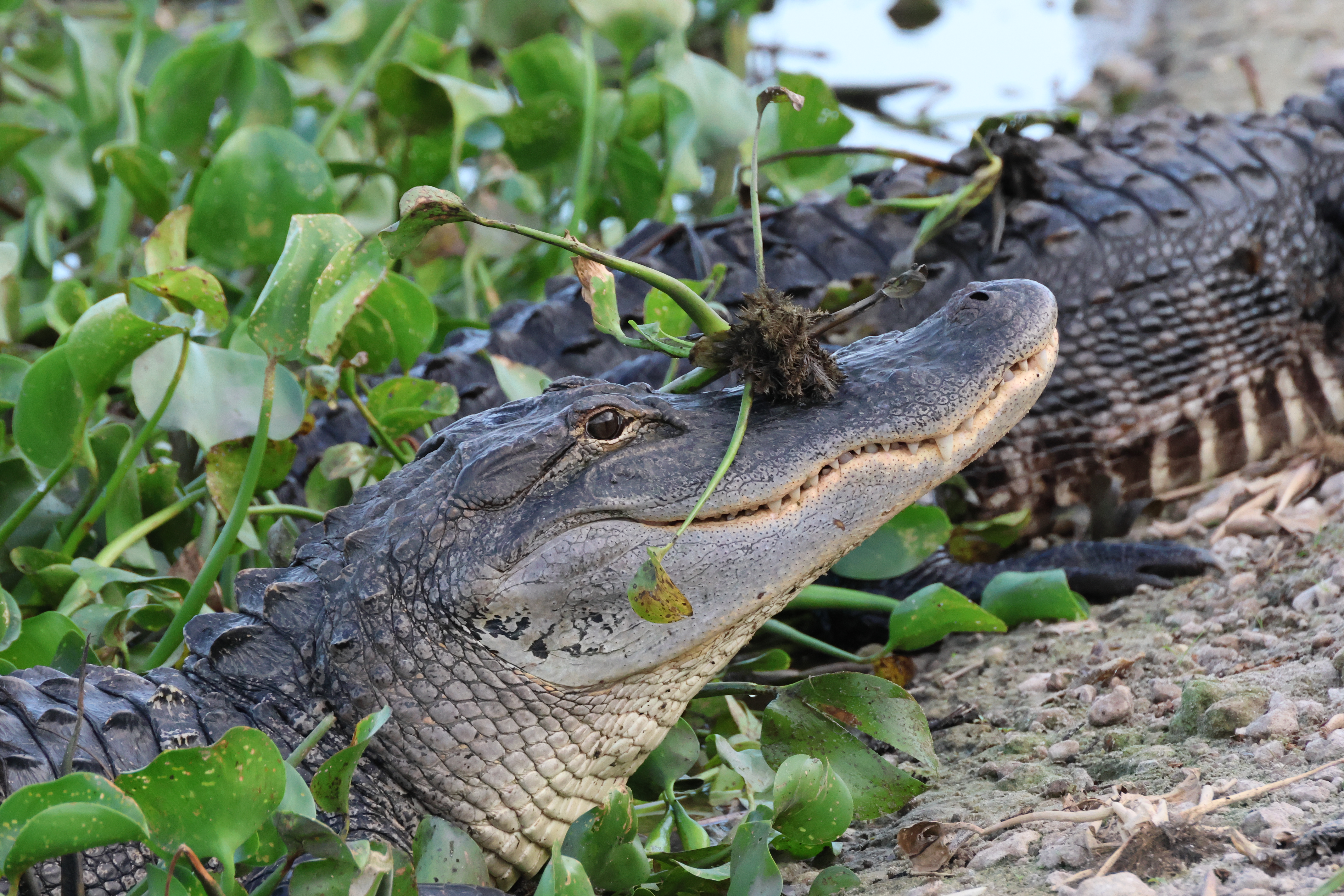
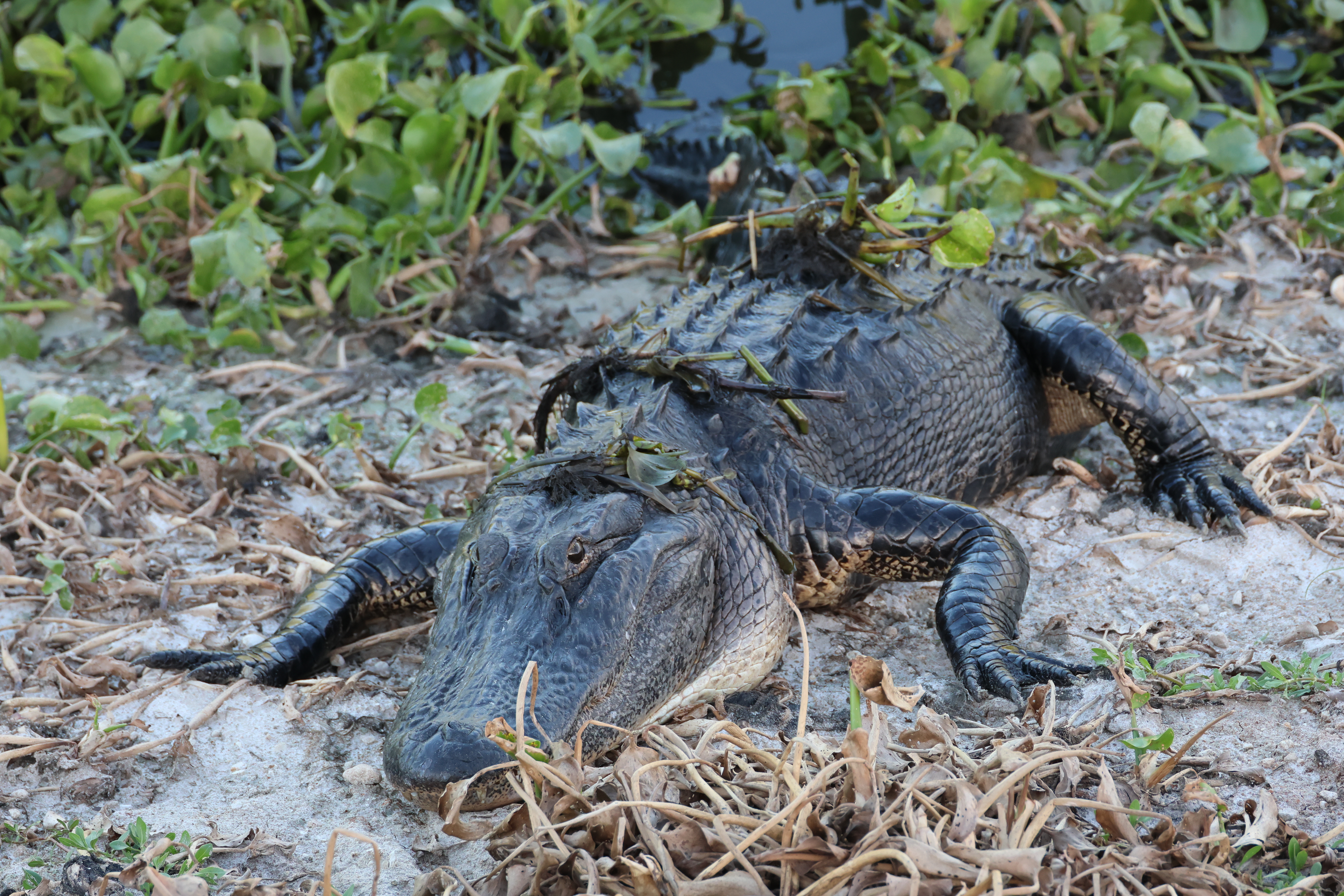
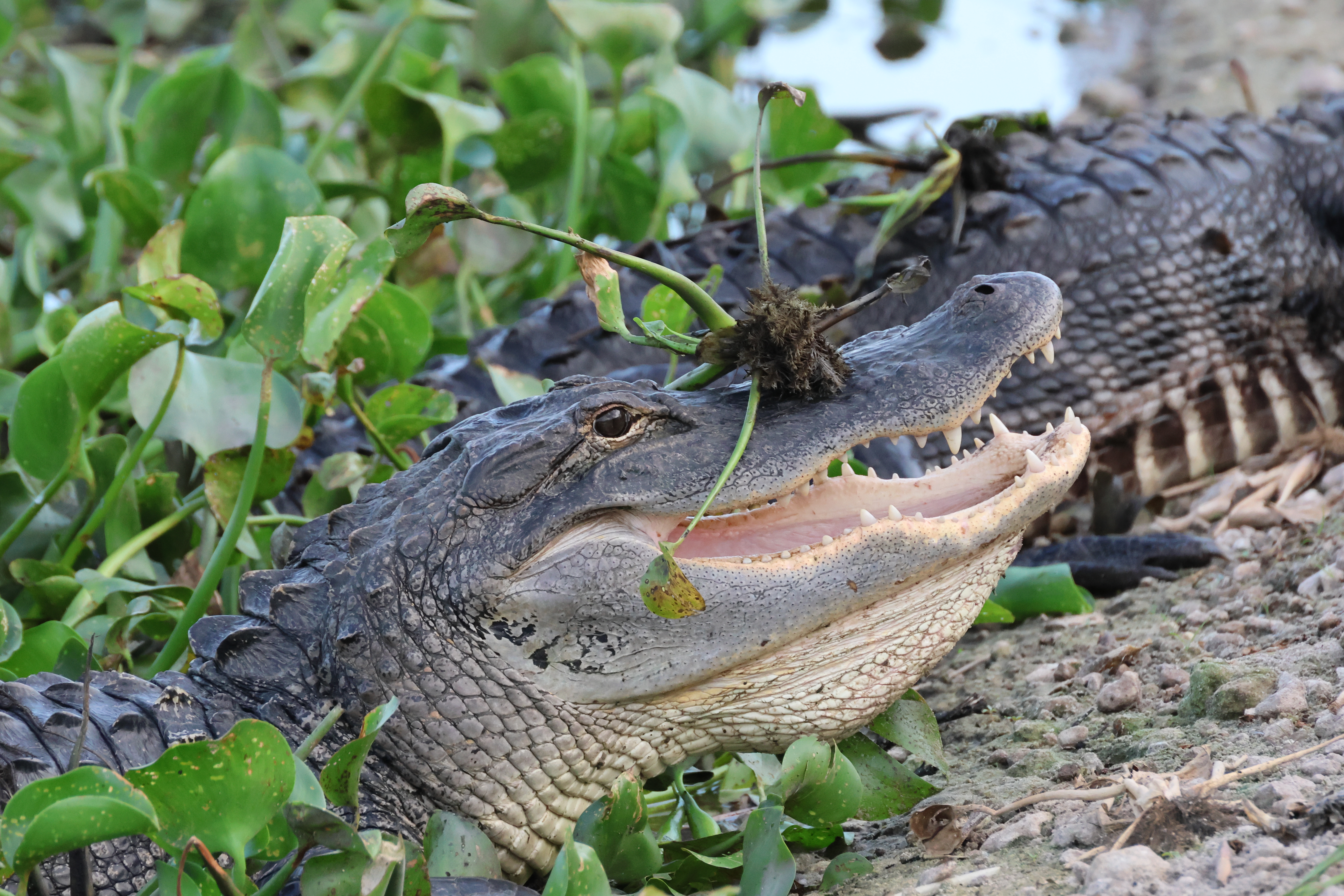
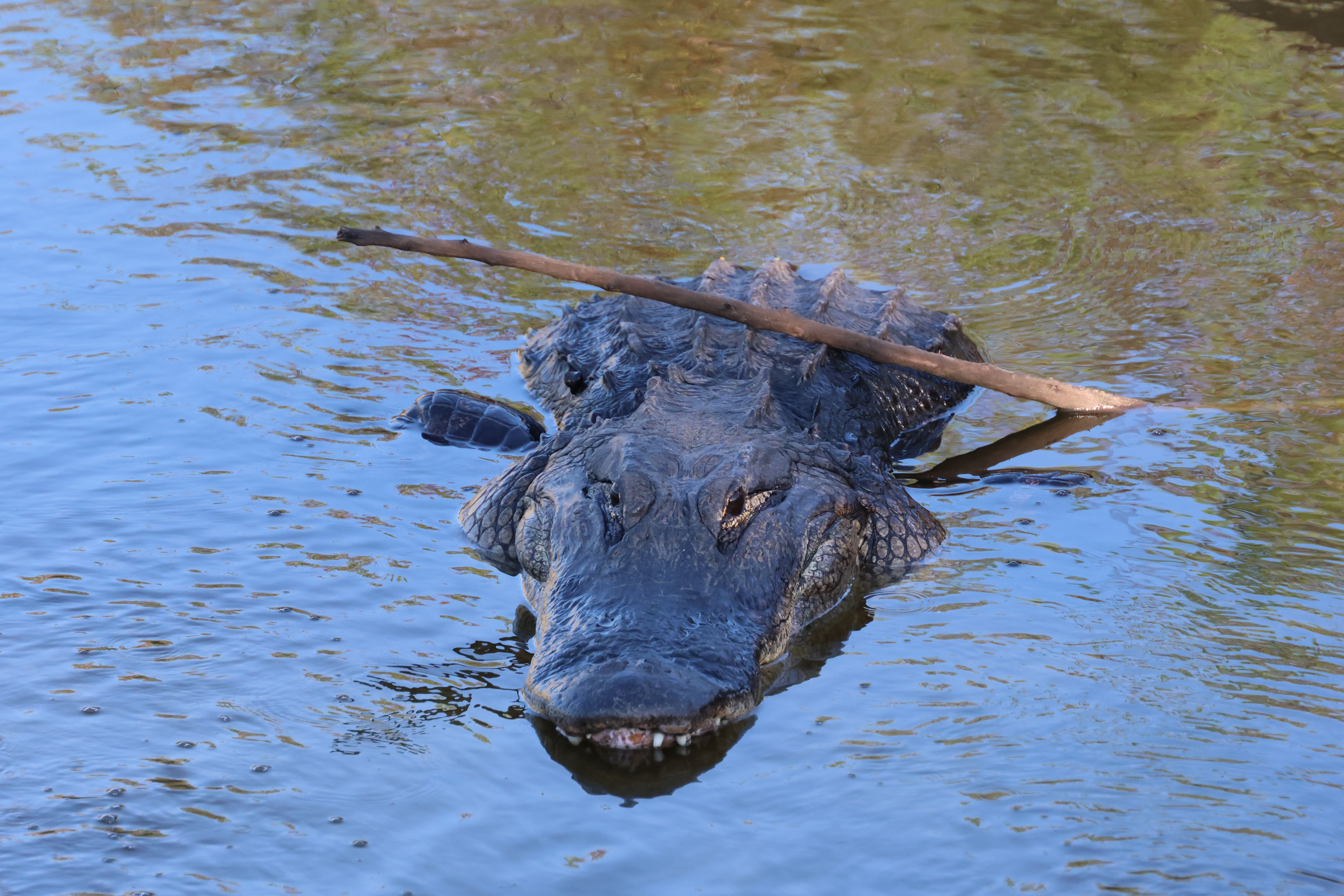
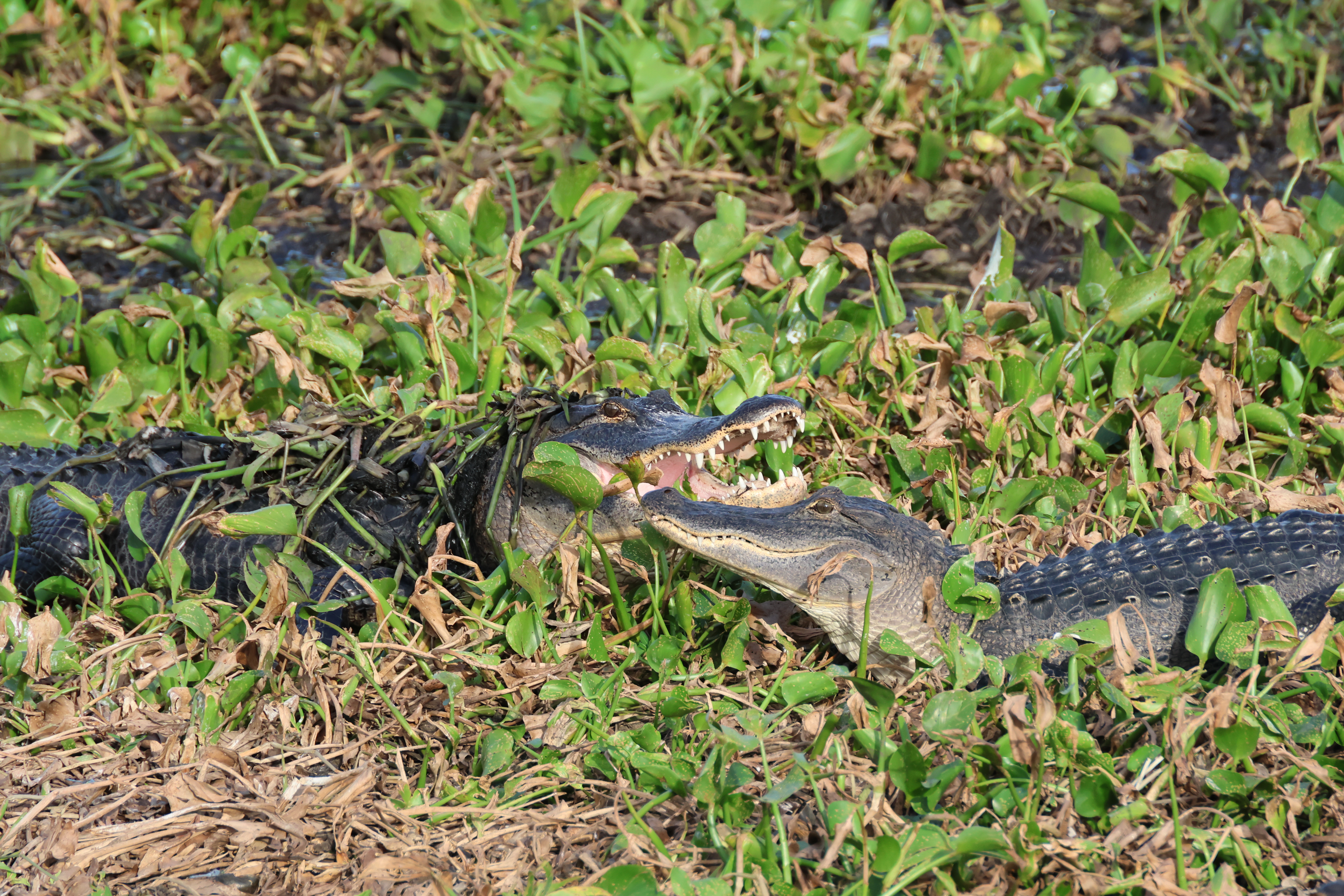
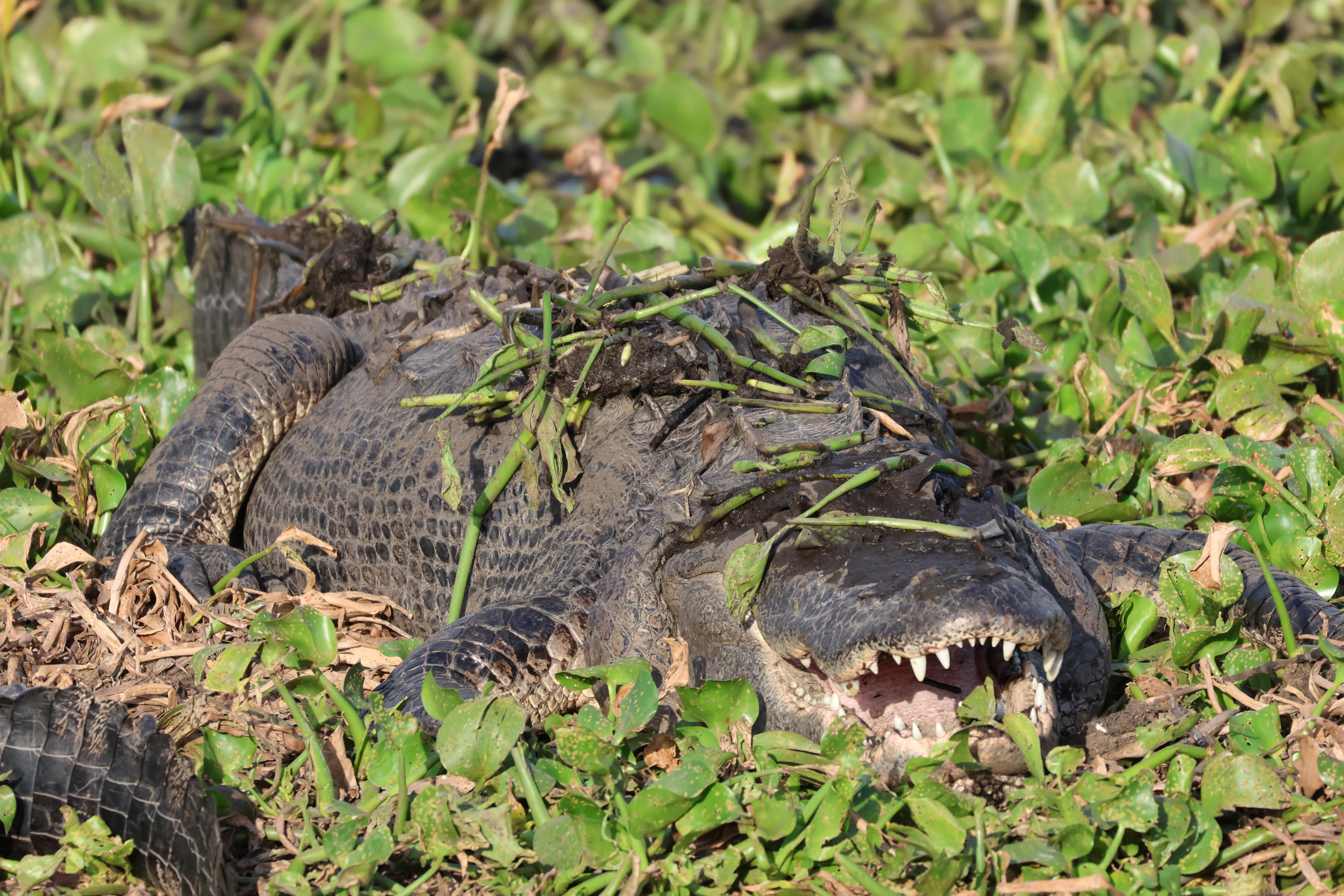
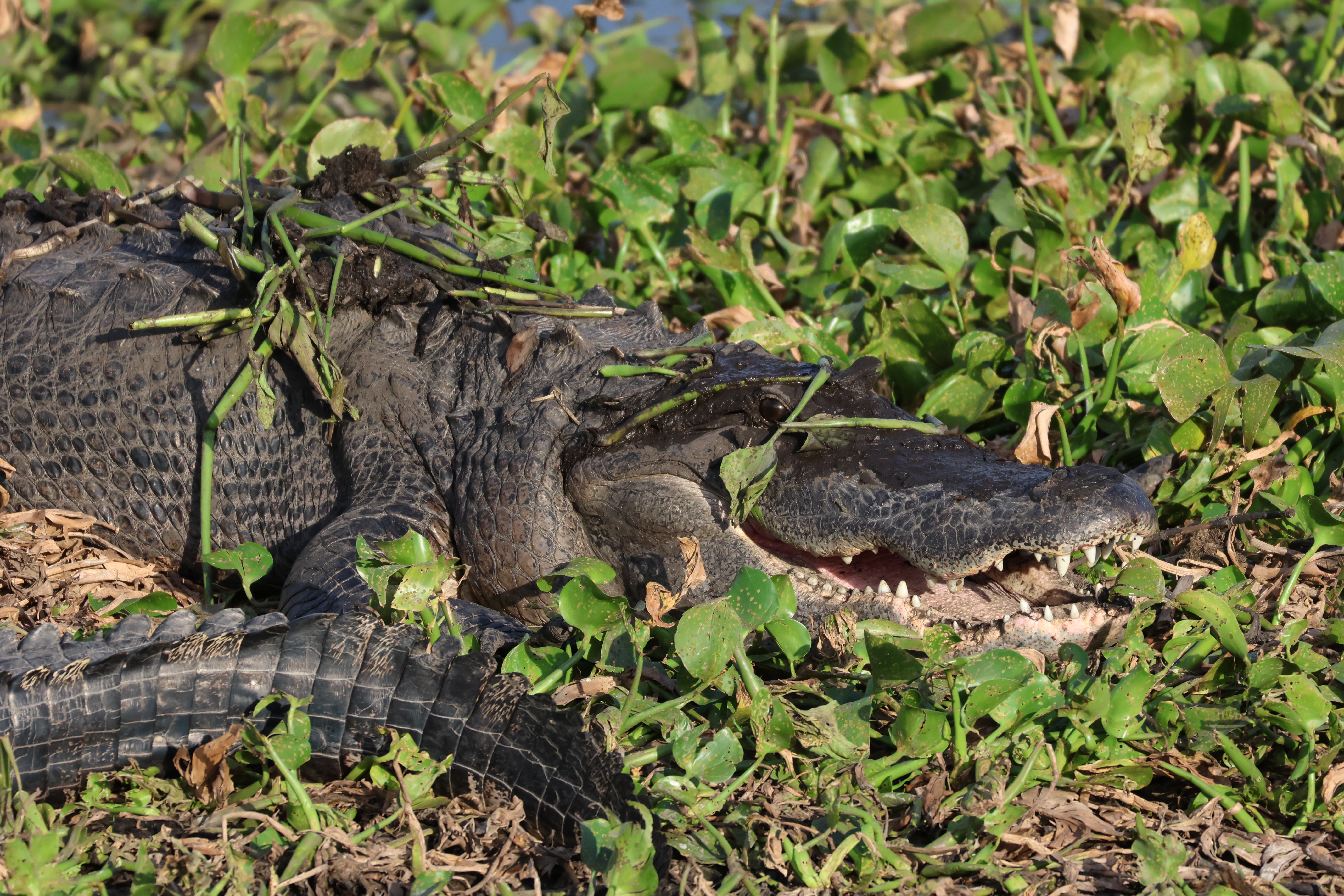
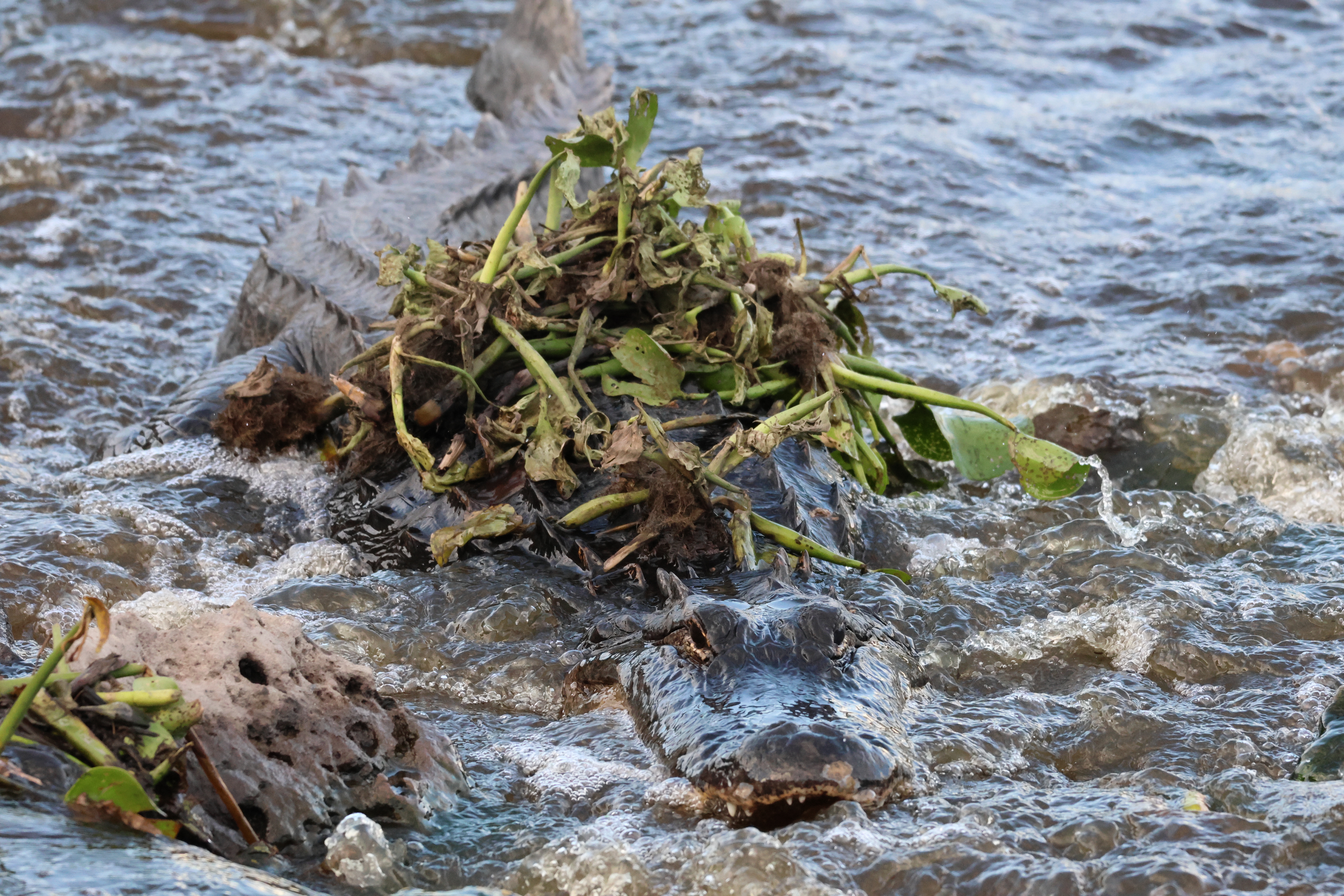
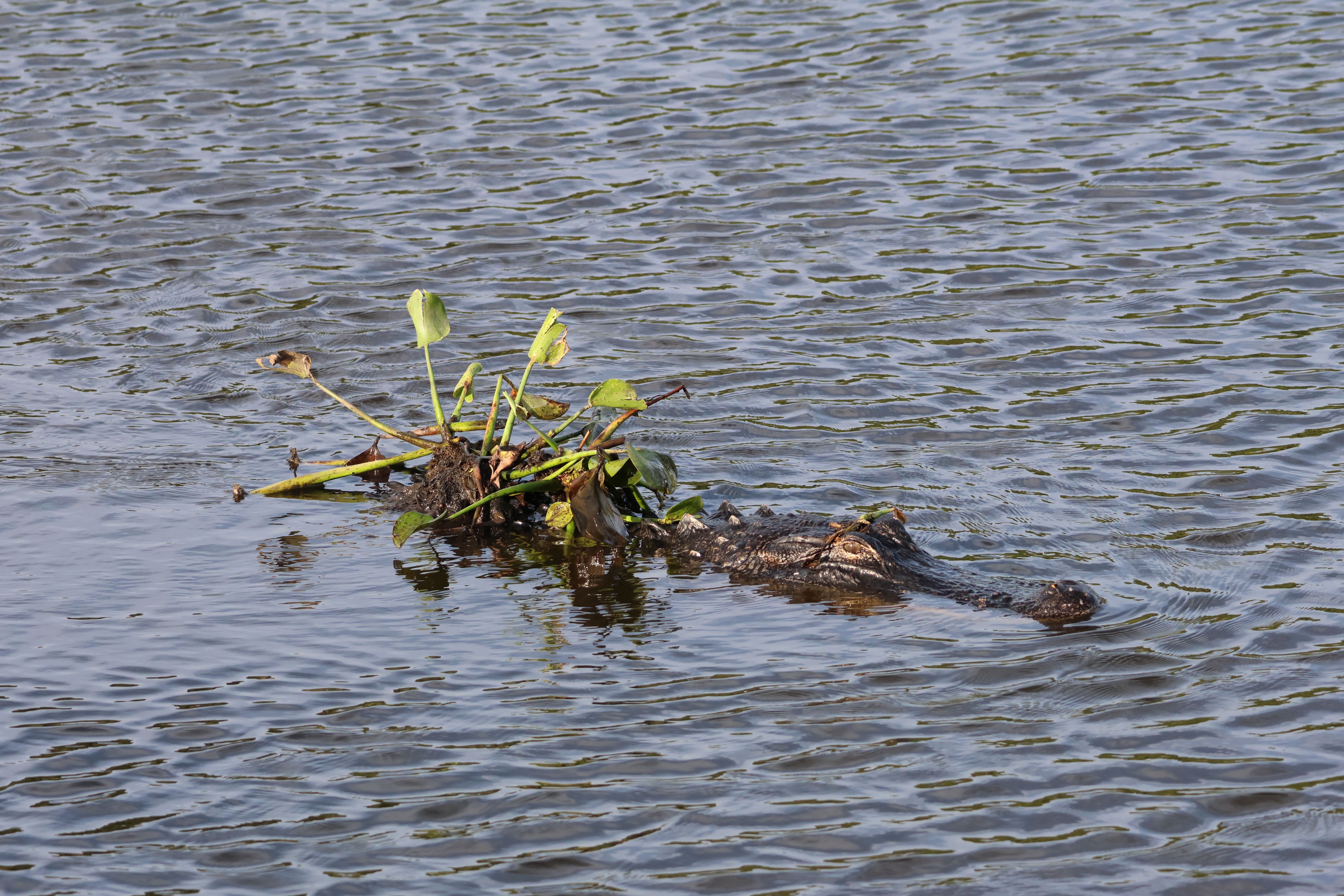
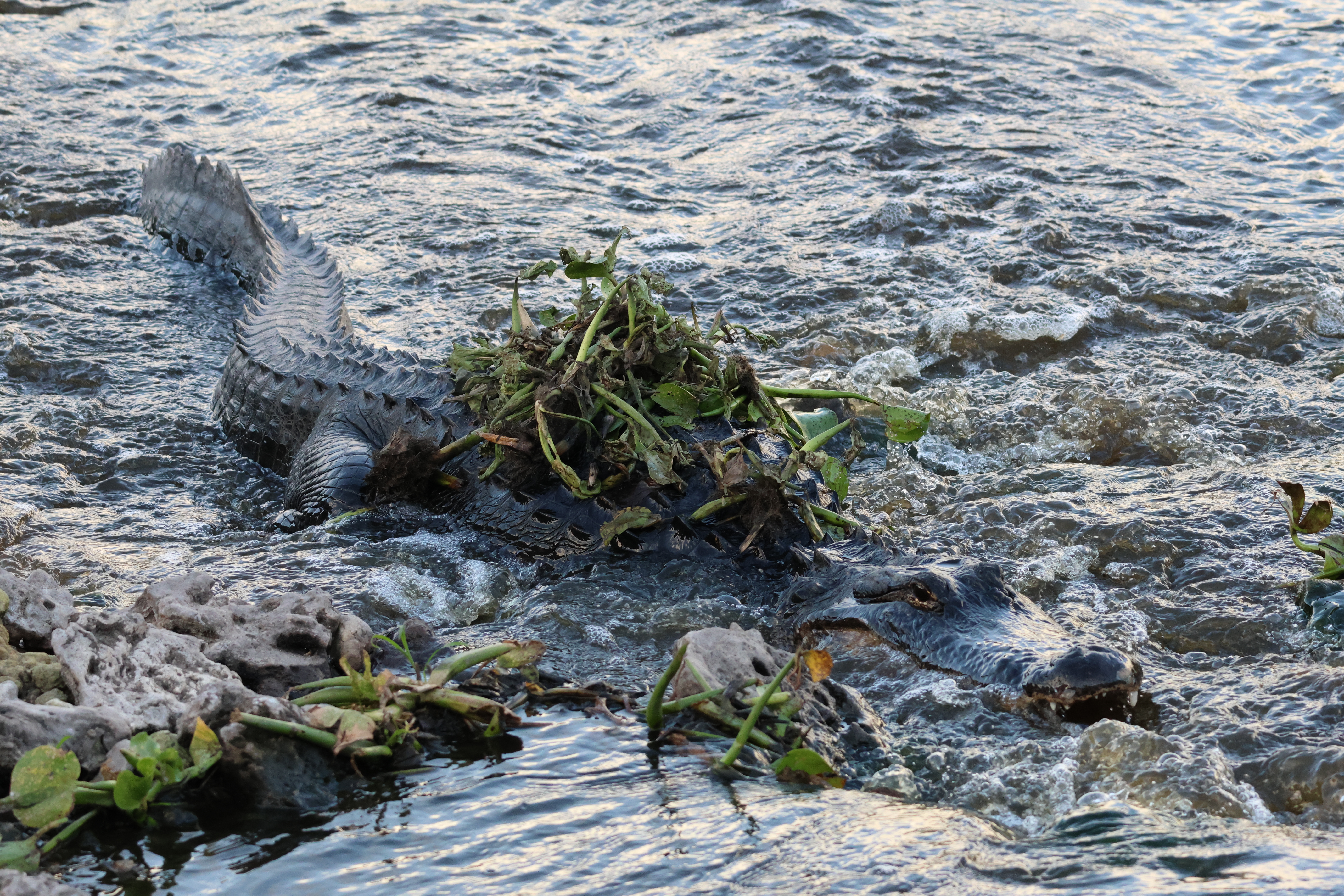
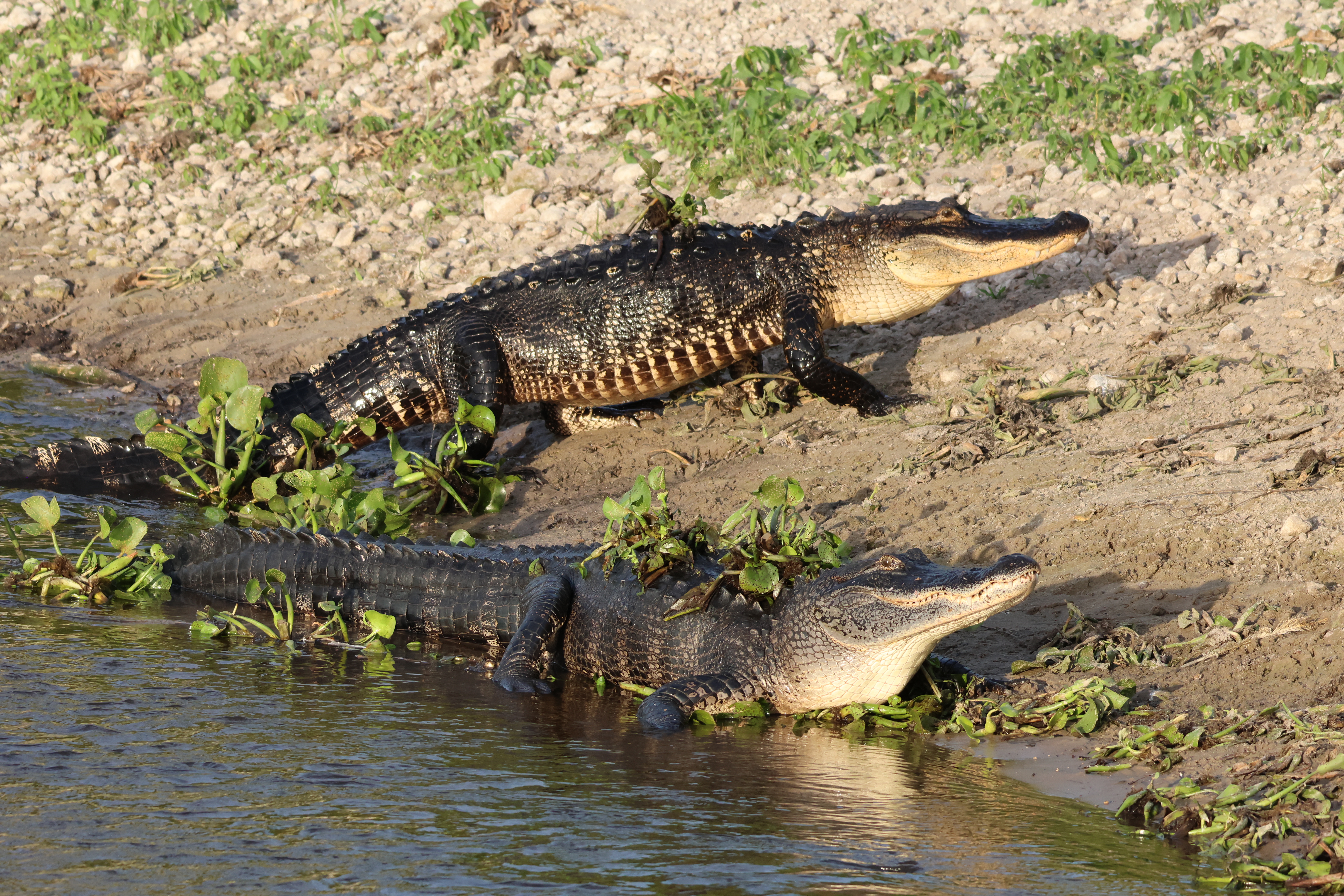
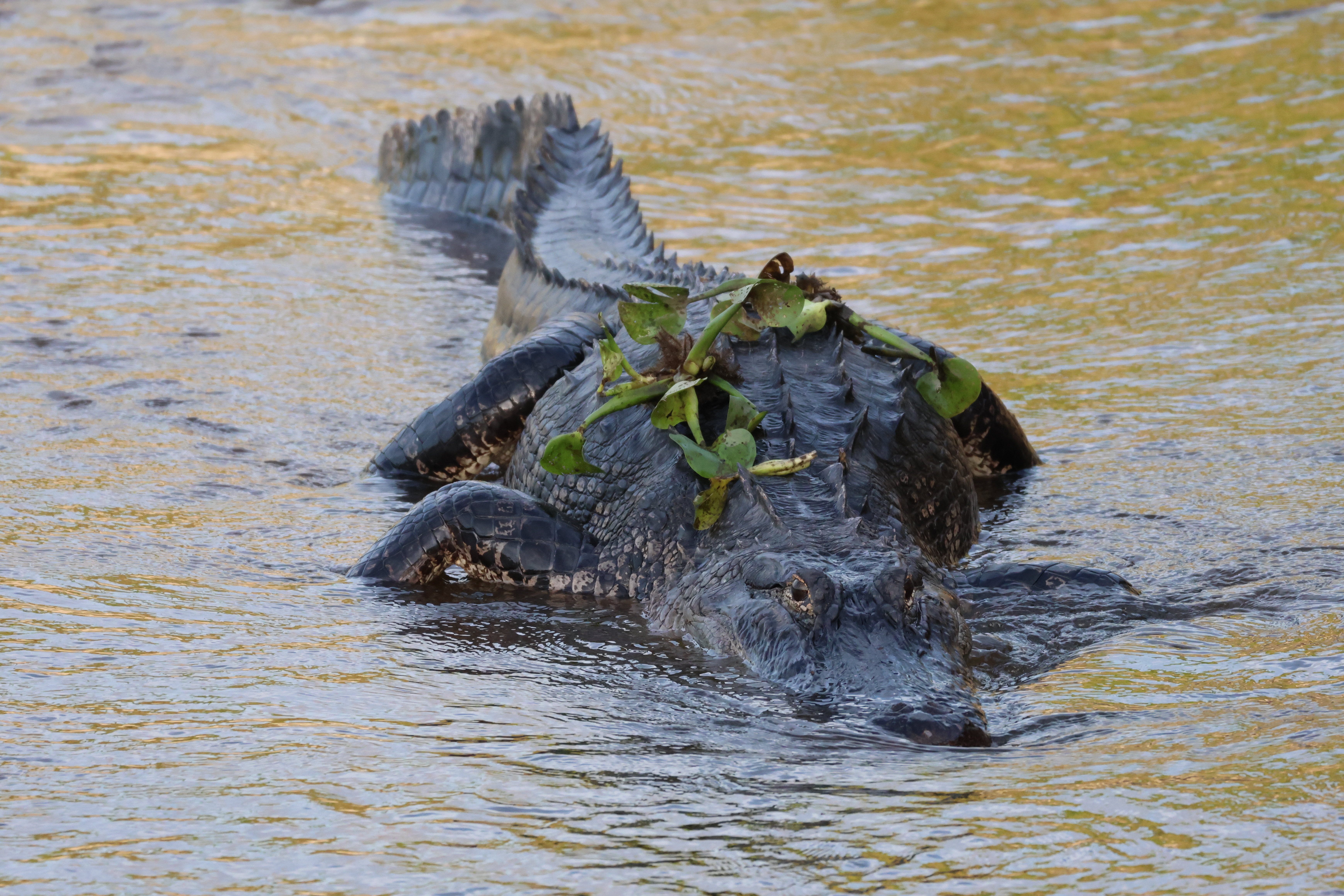
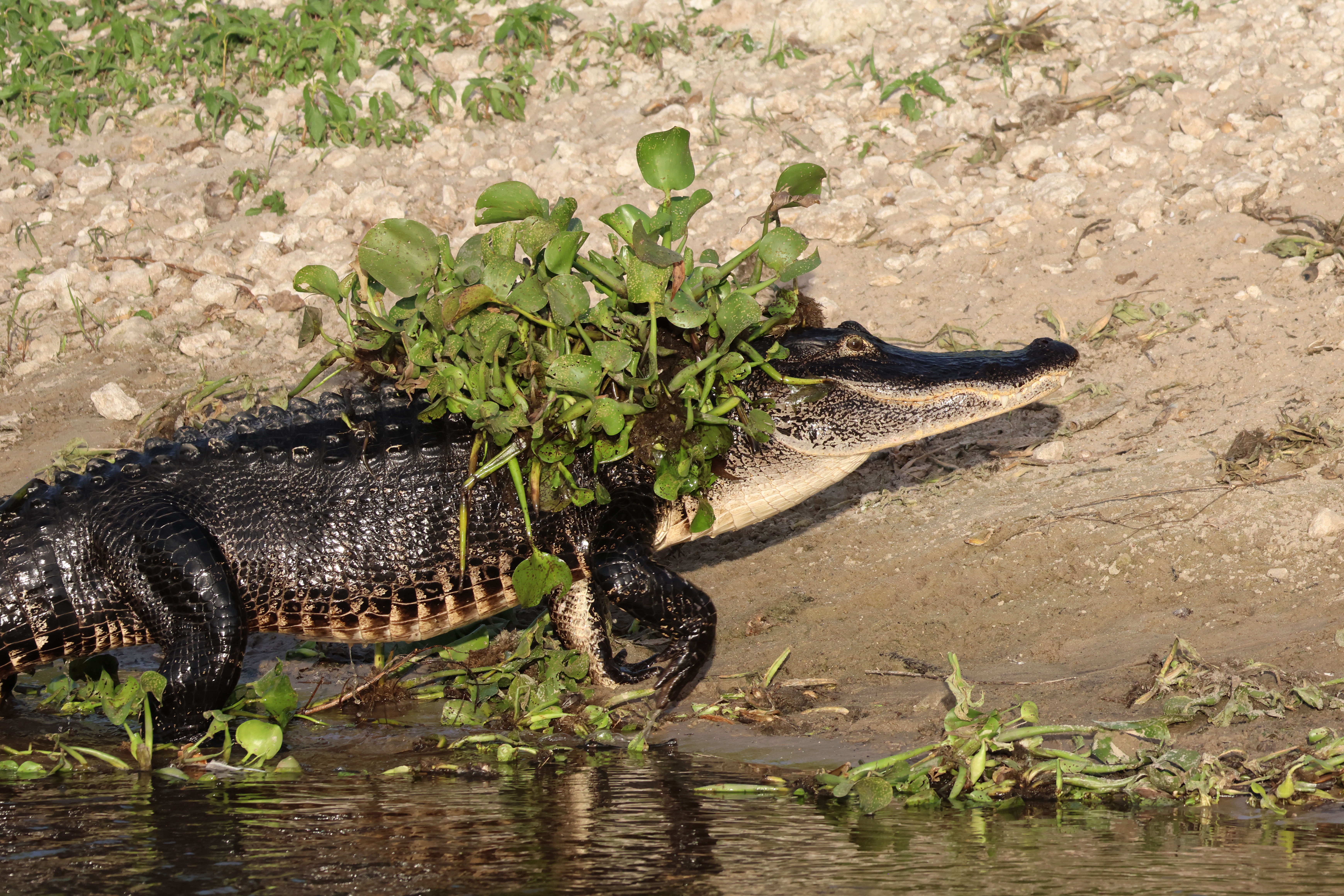
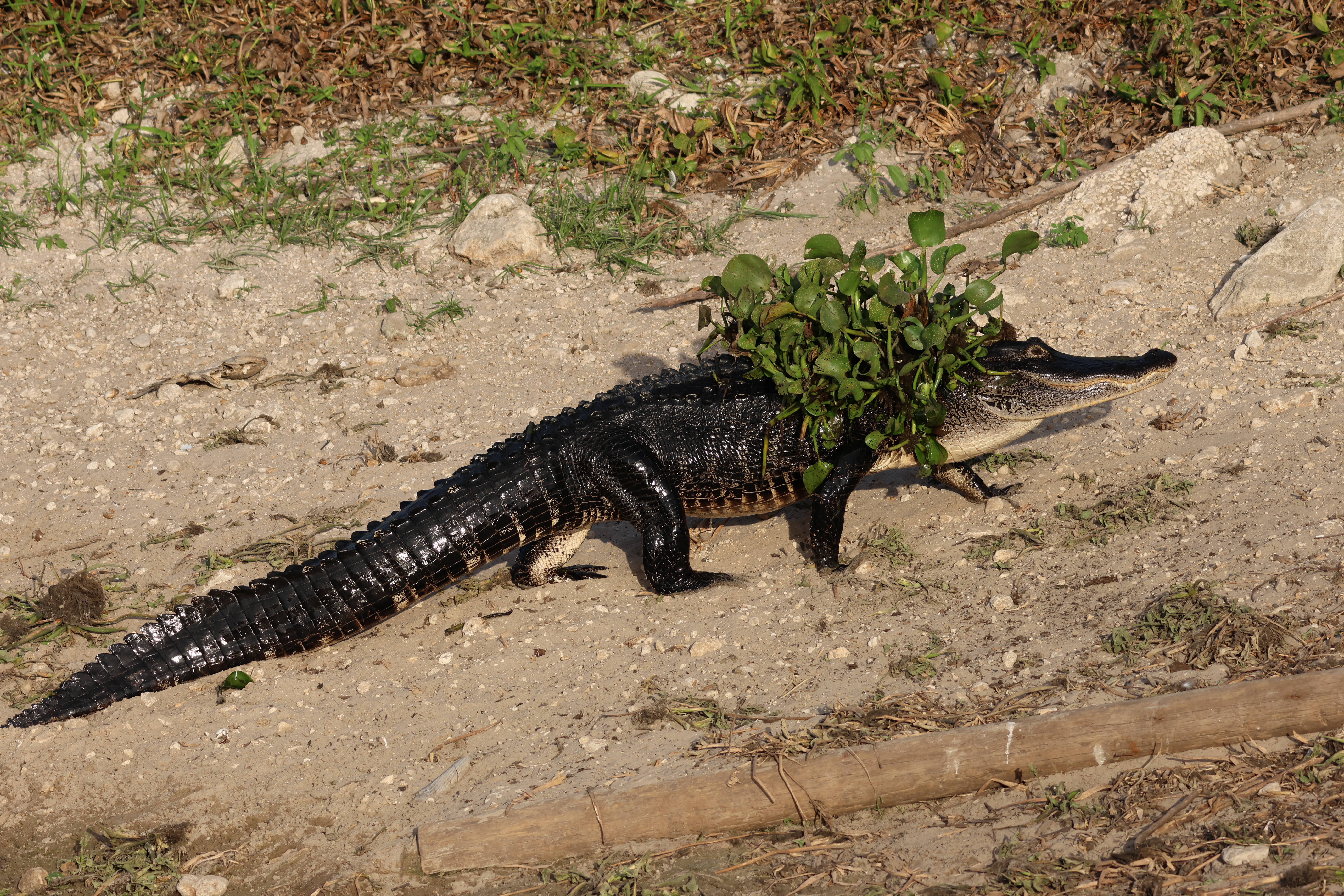
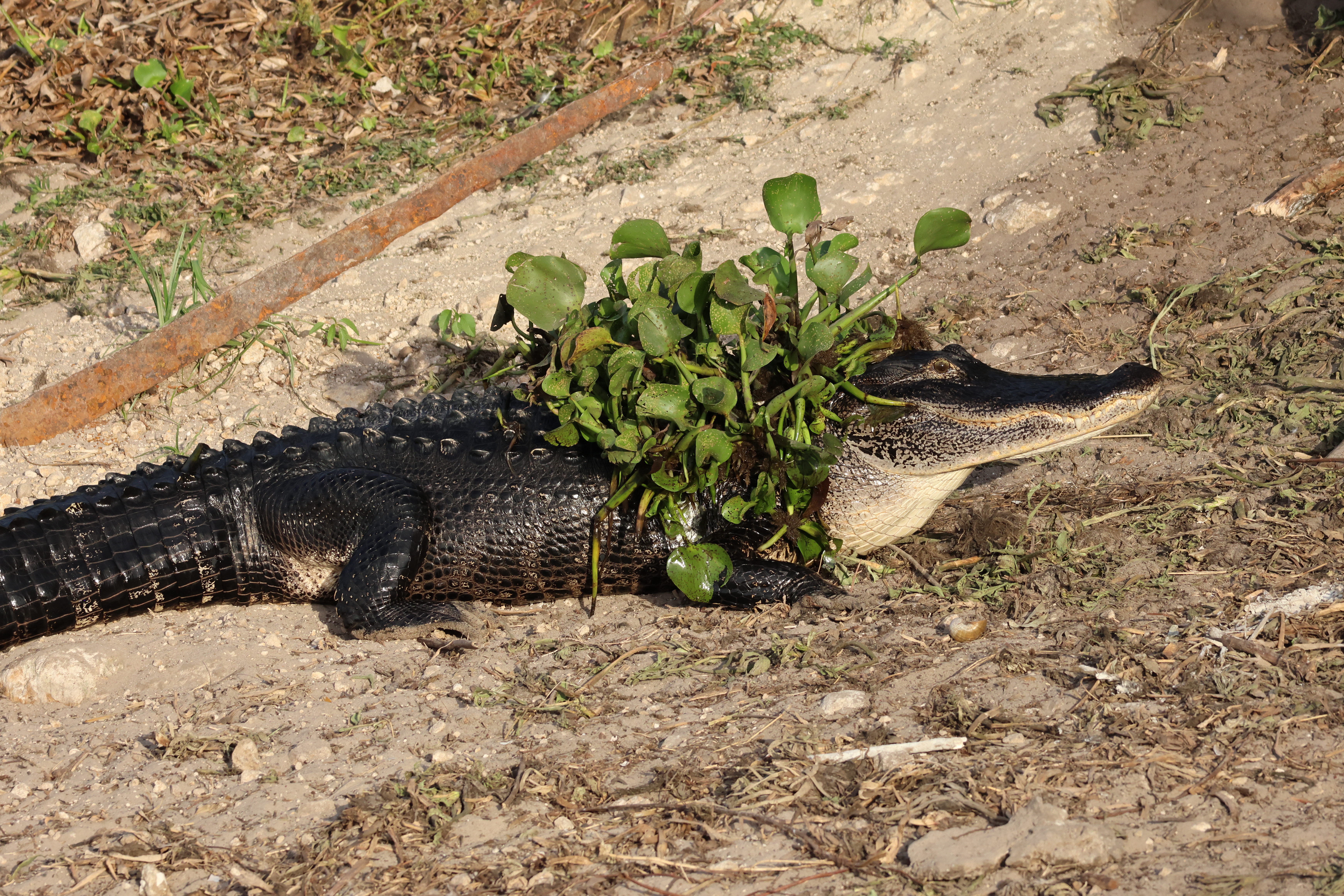
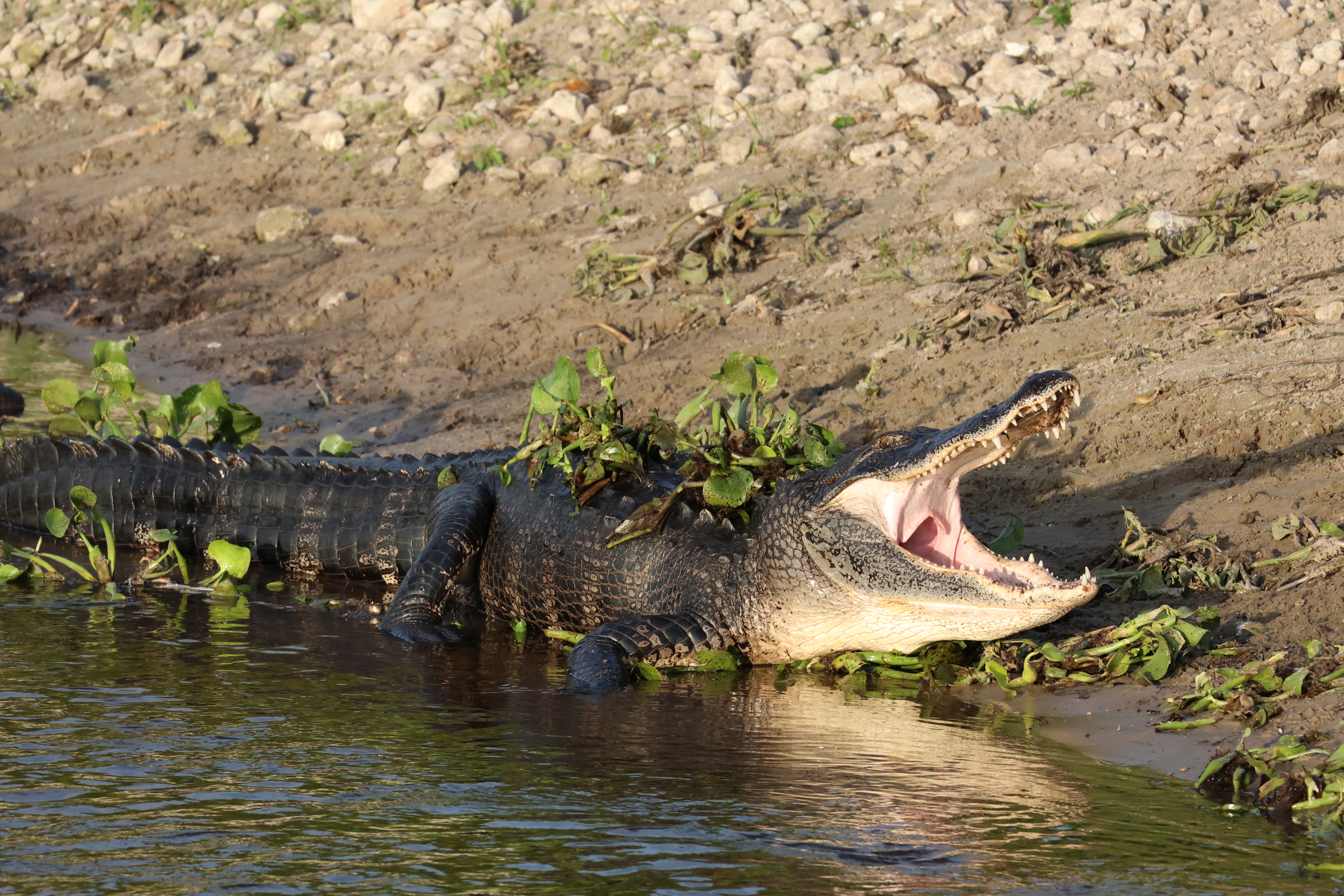
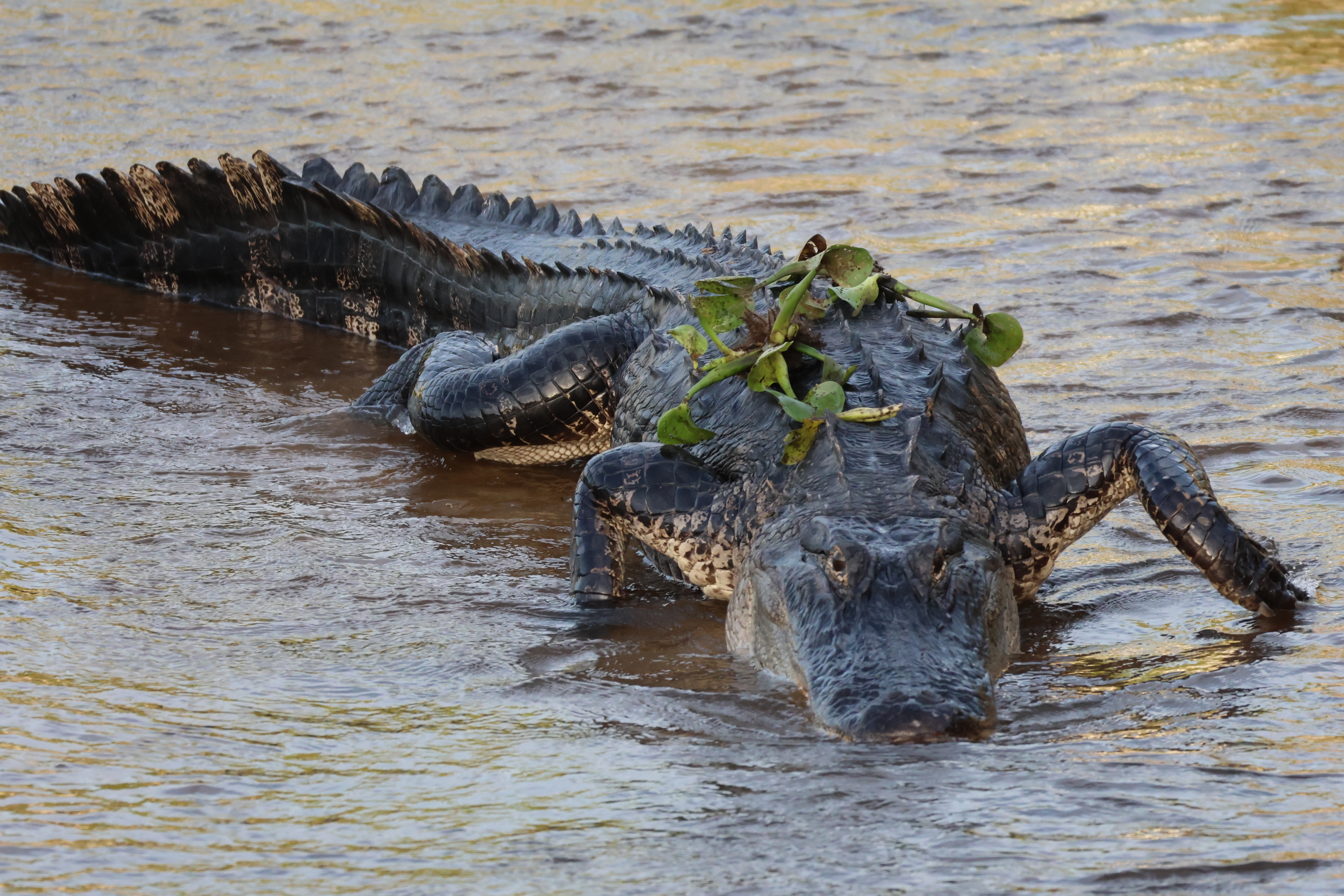
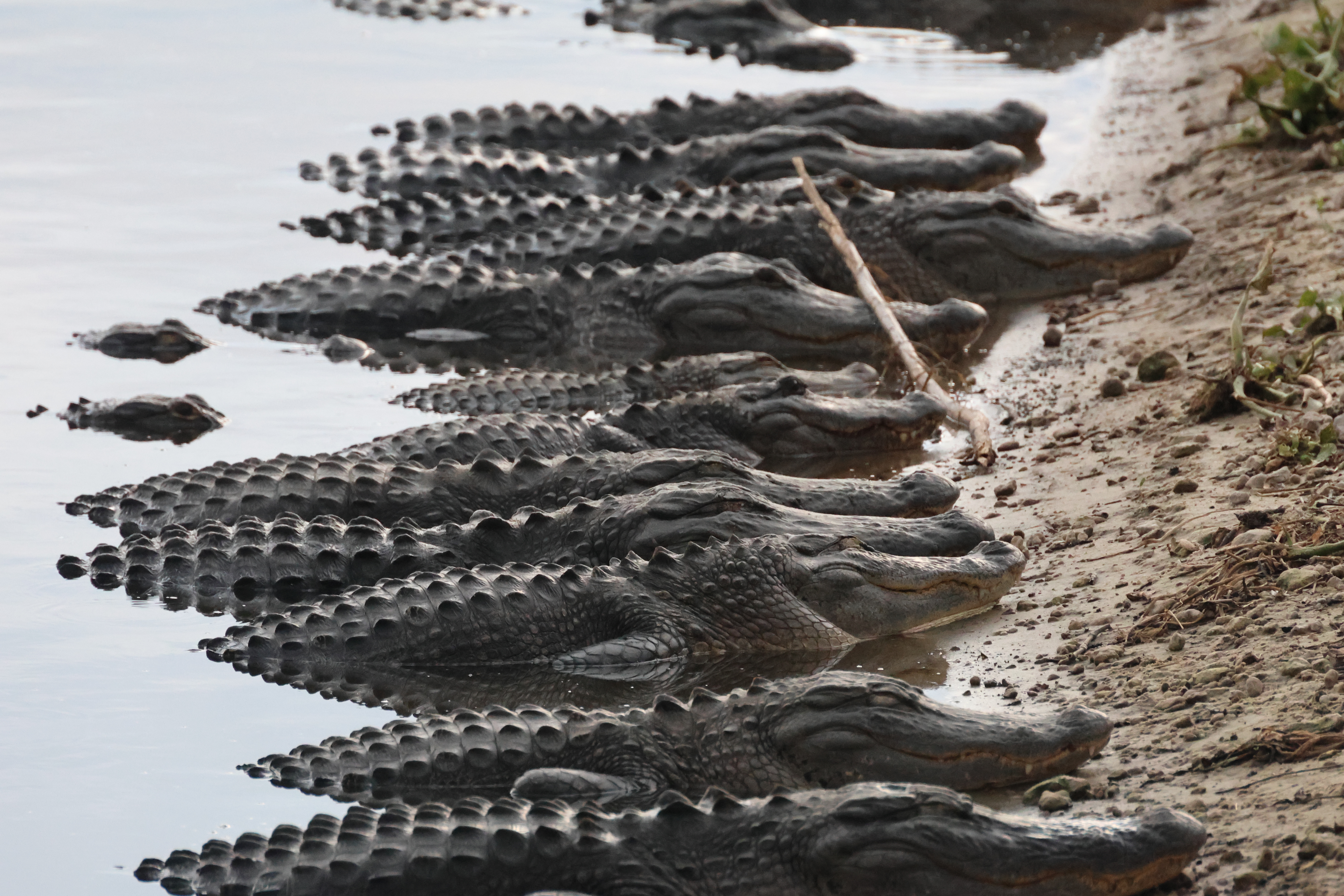
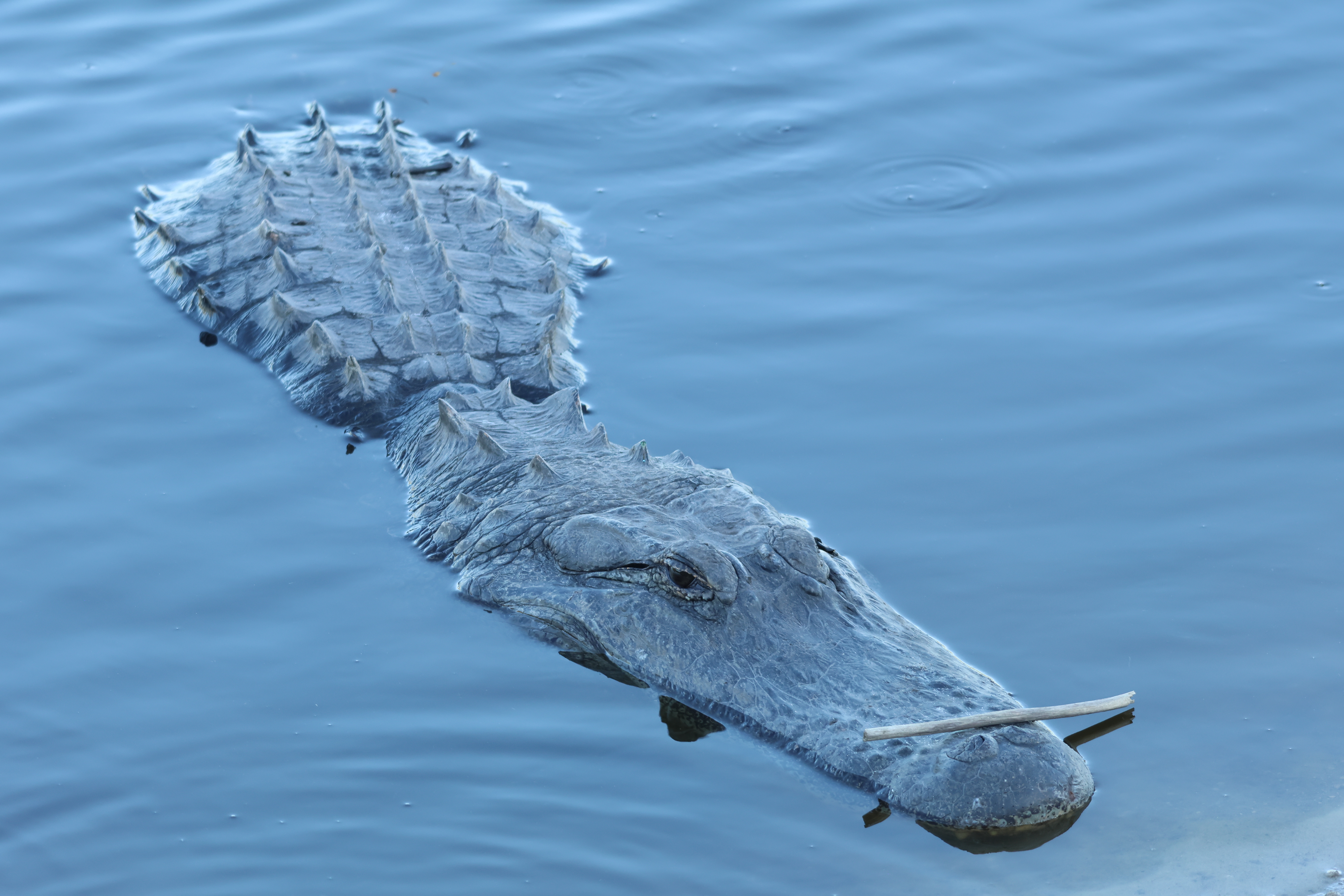
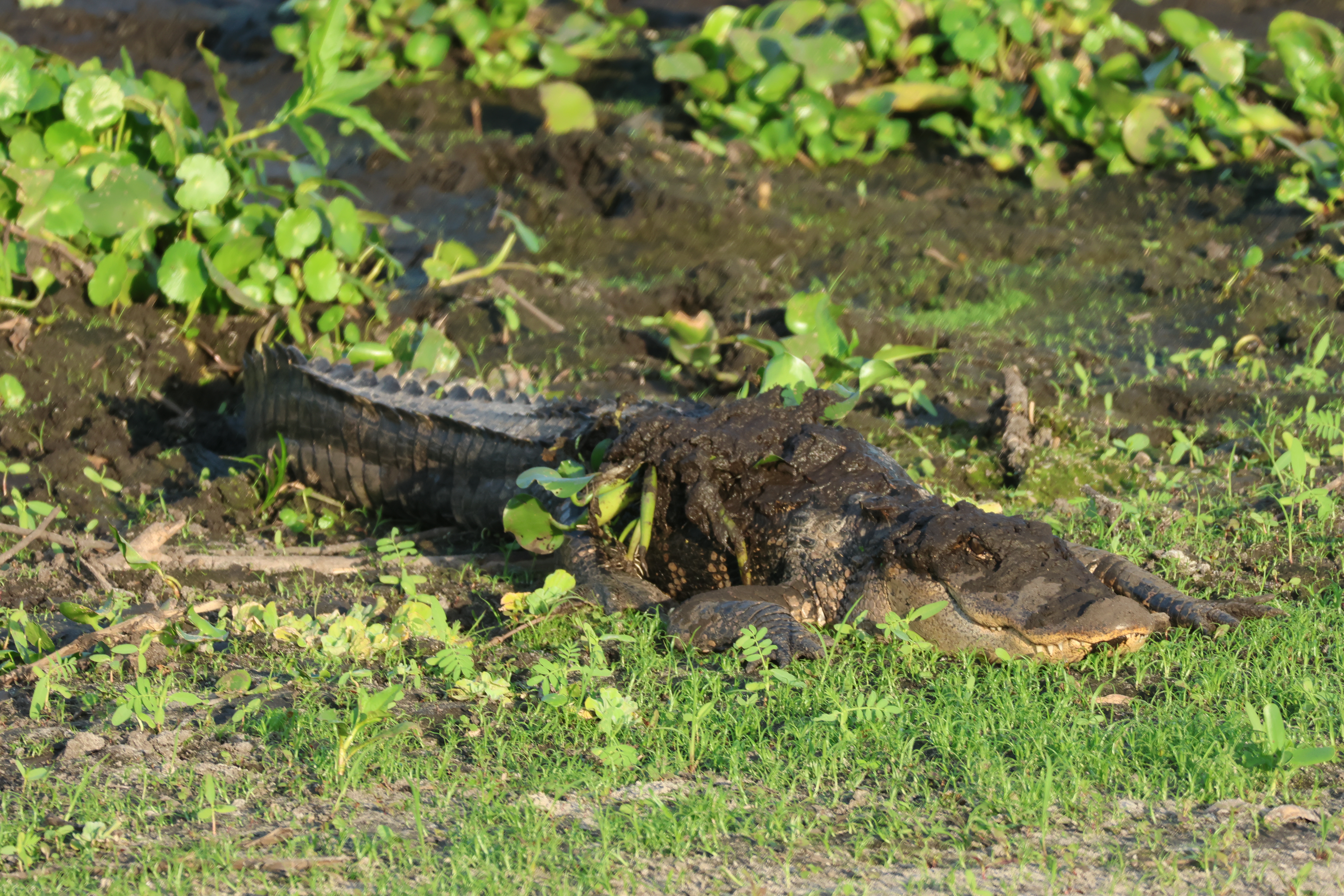
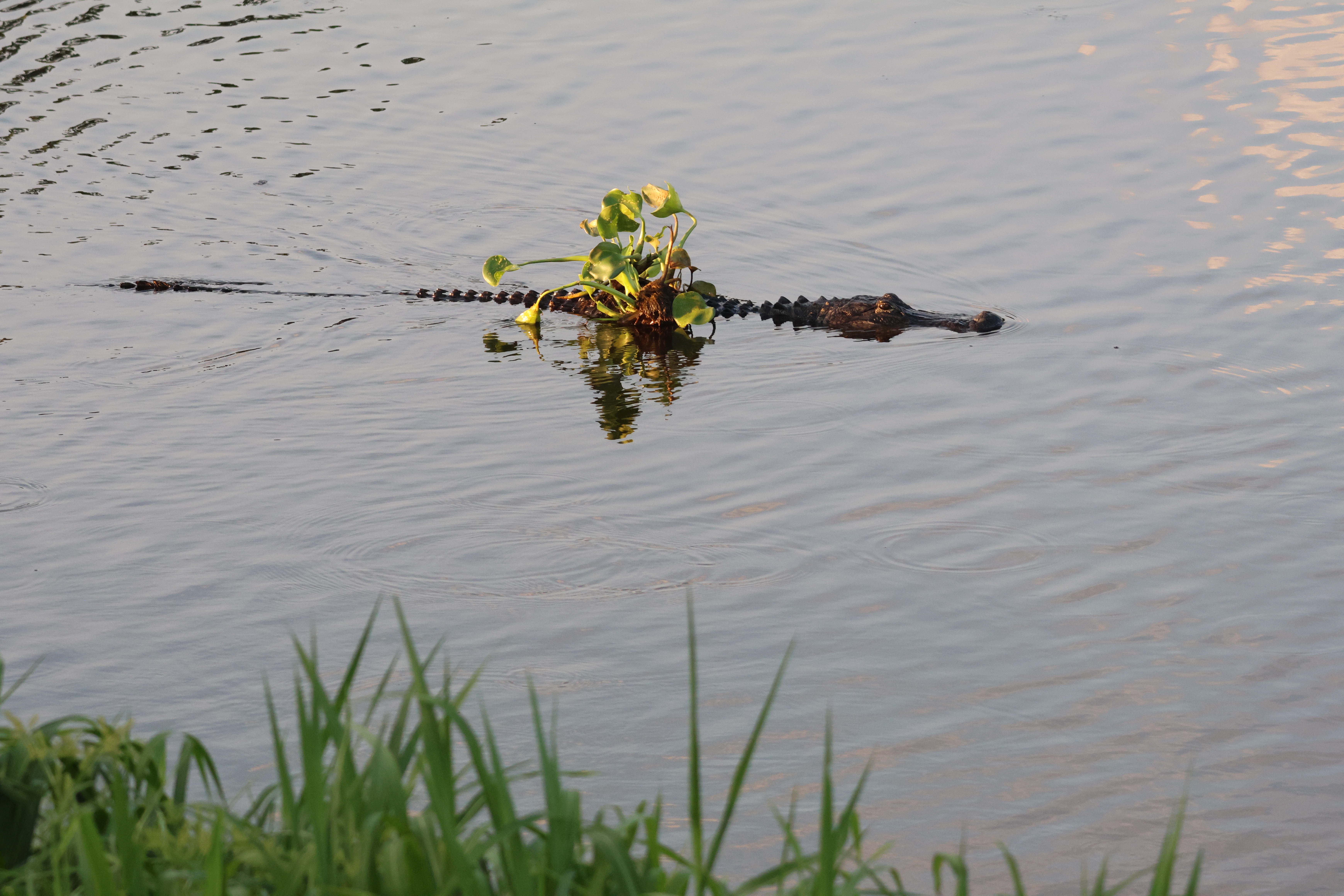
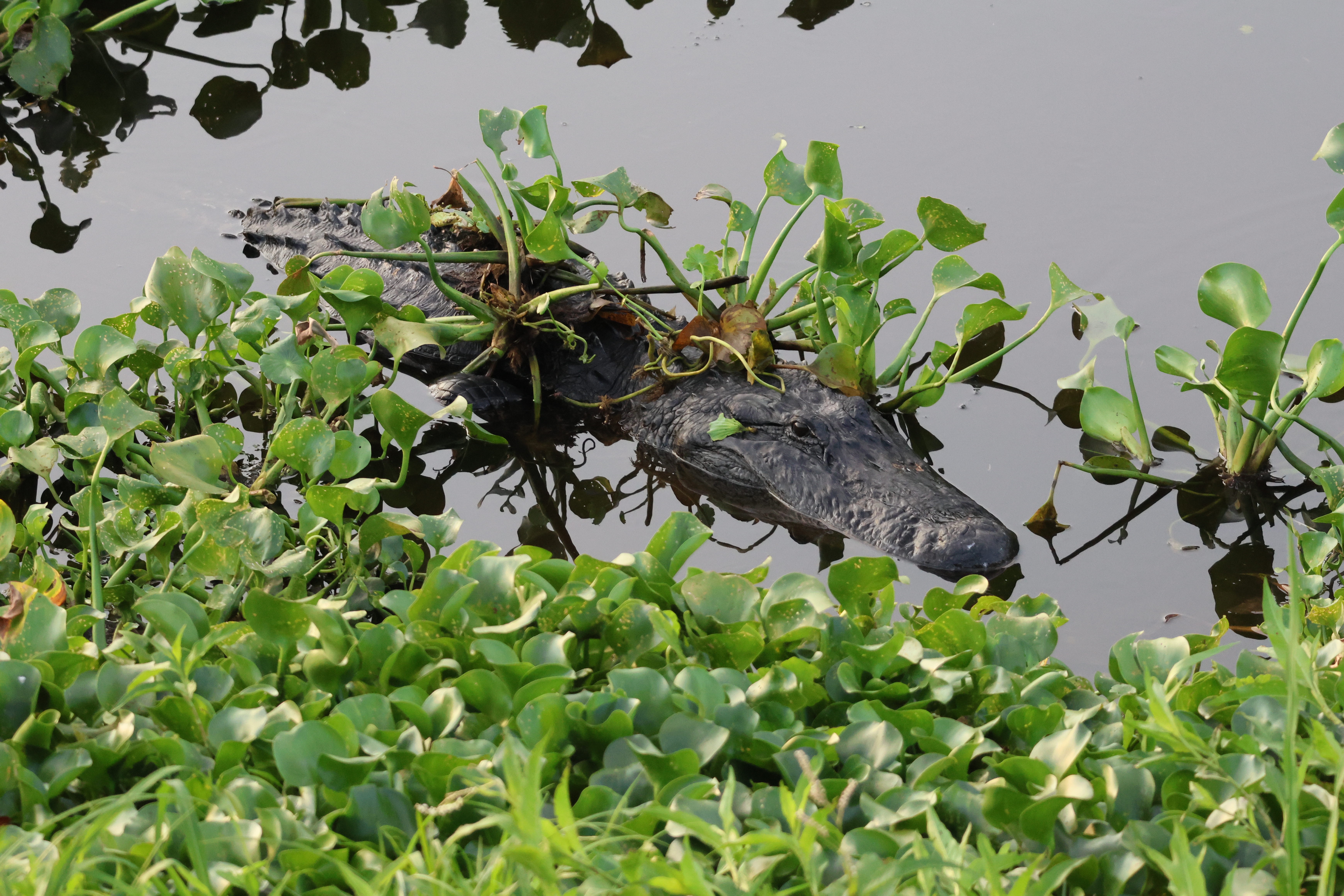
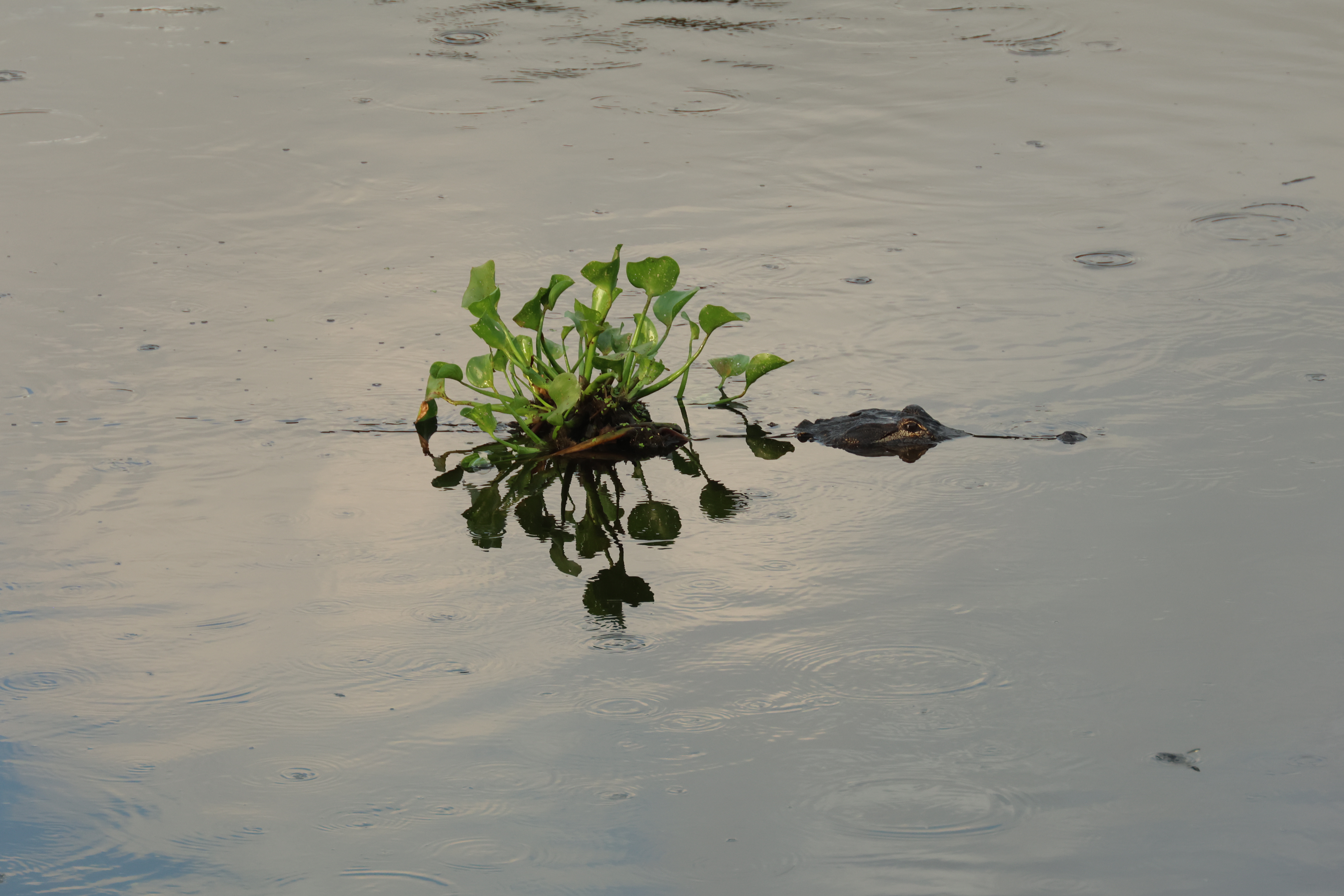
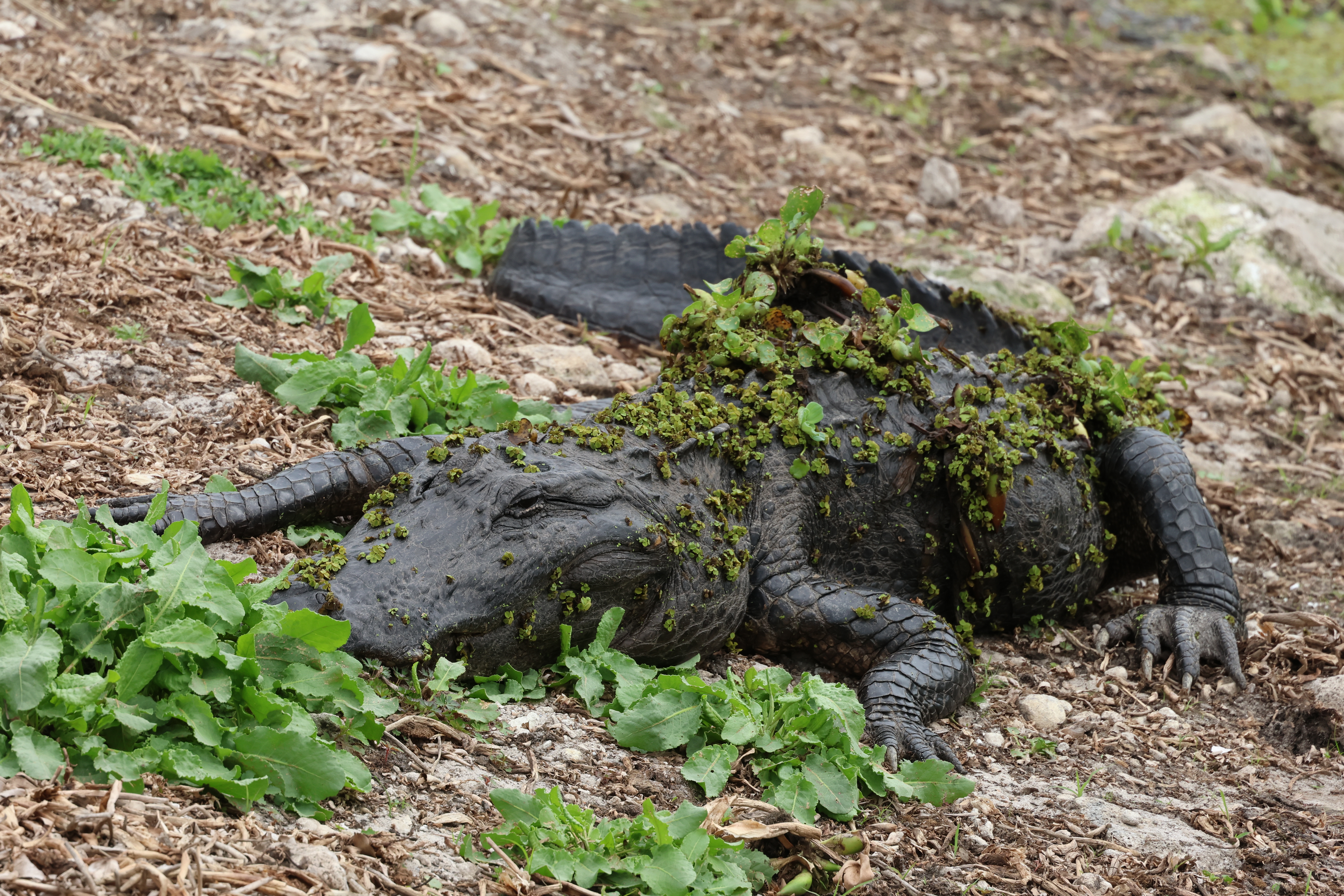
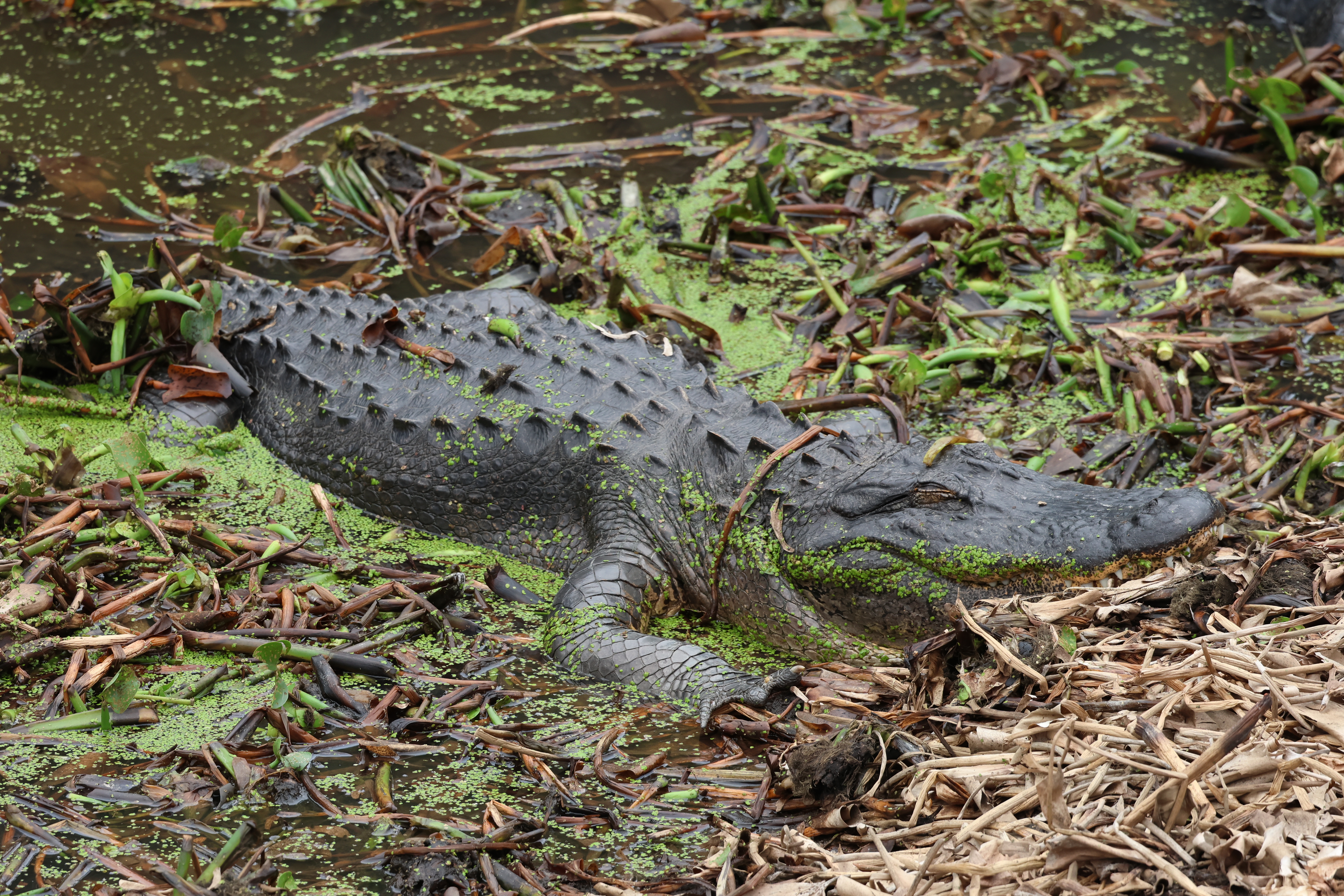
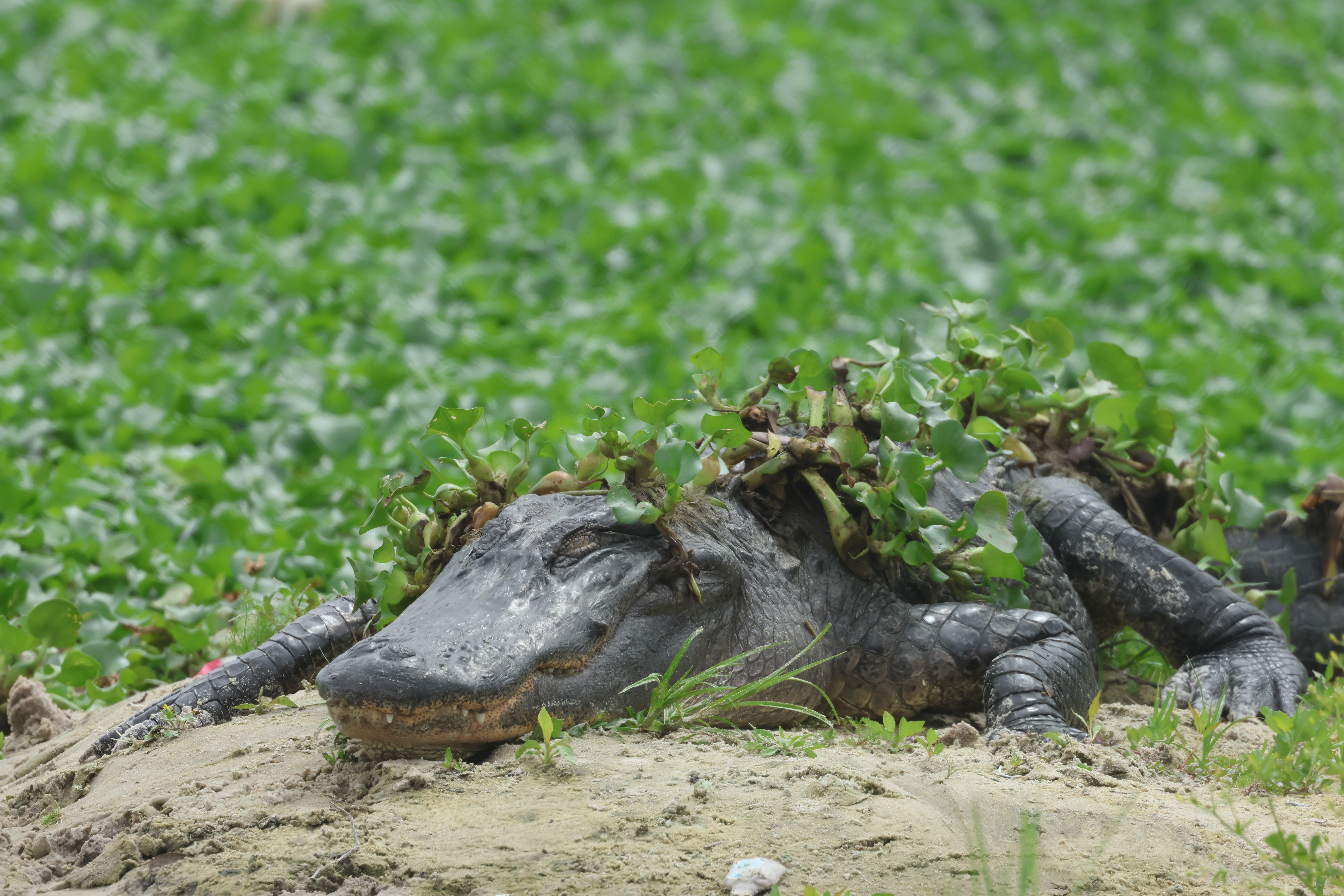
I have frequently observed wild American Alligators swimming or resting on shore partially covered with debris. This debris includes aquatic plants (most frequently), but also sticks, mud, and even dead fish.
An intriguing 2013 scientific paper entitled ‘Crocodilians use tools for hunting’ claimed alligators balance sticks on their snouts as lures to attract breeding water birds in search of nesting material. The hypothesized behavioral sequence is that a bird in need of nesting material that attempted to pick up such a stick (i.e. lure) in its beak would be captured and eaten by the stick-displaying alligator. This is a remarkable assertion as it constitutes the first reported instance of tool use in a reptile. The evidence presented for this tool use was anecdotal reports of alligators (at an alligator farm in Florida) with sticks on their snouts, and in a few instances lunging at or capturing birds. Furthermore, the authors compared the number of times alligators were observed with sticks on their snouts in two Louisiana lakes (with one location in each lake near a bird rookery and one further away) before and after the bird nest-building season. The hypothesis being tested was that if deliberate tool use / luring behavior, we would expect ‘stick display on the snout’ to be higher during bird nesting season and closer to bird rookeries (as these are the conditions in which the behavior is predicted to be most effective). The authors reported results consistent with the hypothesis, although the sample size was low (11 instances of stick display observed in 12 weeks of observation) and there were no observed instances of stick-displaying resulting in successful bird capture. Unsurprisingly, this paper got lots of press and a summary was even written up in the journal Science.
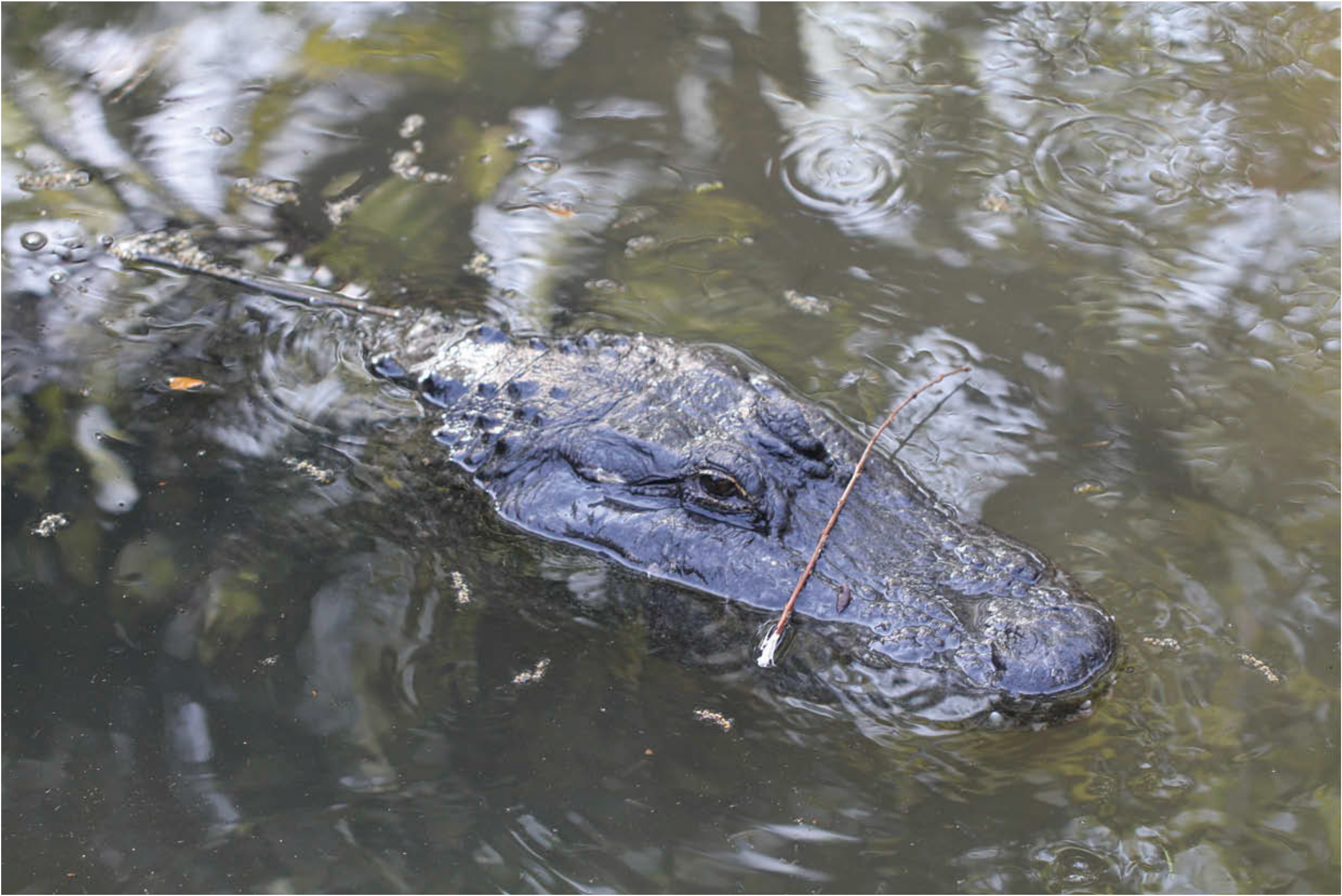
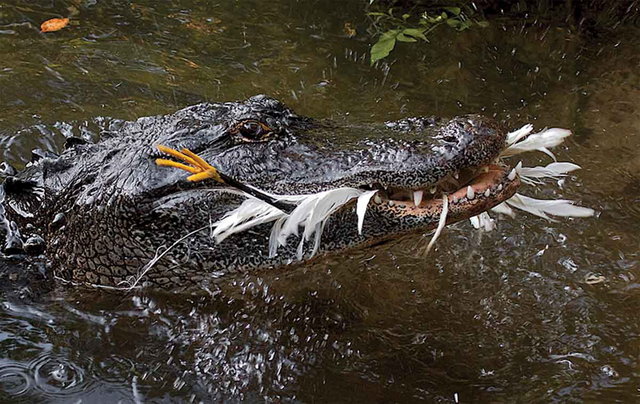
American Alligator with a stick on its snout, and alligator predation on a snowy egret. Photo credits: Dinets et al. 2013 (left) and Rosenblatt and Johnson 2019 (right).
Such a bold claim (i.e. tool use in alligators) deserves further examination and scrutiny. In this case, the null hypothesis is that any stick display by alligators is incidental. That is, it is not being done deliberately (i.e. with the intent of luring birds into close proximity). Furthermore, the observation of an alligator with a stick on its snout capturing a bird, does not necessarily imply the alligator deliberately did this with the intent of attracting a bird. It could be a rare coincidence…. an alligator happens to swim through an area with floating sticks, one becomes balanced on its snout as it comes to rest on the shoreline, and it opportunistically captures a bird while the stick is on its snout. This may seem like a subtle distinction (i.e. deliberate stick display to lure birds close, versus coincidental capture of bird while stick on snout) but it is an important one because it is what determines whether this is deliberate tool use. A recent paper took an experimental approach to distinguishing these alternatives. The authors compared the rate of stick display in alligators living in ponds at four Florida alligator farms, after experimentally increasing the number of floating sticks in the ponds. Importantly, two of four ponds had bird rookeries (dense aggregations of nesting water birds in the trees surrounding the pond) and the study was conducted during the bird nest-building period (when birds are actively looking for sticks to build their nests). Again, the hypothesis was that if deliberate tool use / luring behavior, we would expect stick display to be higher at the two locations with bird rookeries compared to the two without. The authors found no difference in the frequency of stick display between rookery and non-rookery sites, and made no observations of stick-displaying alligators capturing birds. This does not support the tool use hypothesis and suggests this stick-display may be incidental rather than deliberate.
Finally, I can add my own observations that alligators frequently come ashore with all sorts of debris (aquatic plants, sticks, mud) clinging to their bodies. To me, this suggests that the occasional ‘stick display’ may be incidental and just one specific form of a more general phenomena – alligators swimming through debris strewn waters and either not being bothered to remove such material when they come ashore, or even opportunistically using this as decorative camouflage to conceal one’s form.

