Microfishing refers to a specialized form of angling in which very small fish species are targeted using miniature tackle (i.e. short rods, light line, and tiny hooks). The technique was developed in Japan, where anglers target the miniature Japanese Bitterling (also referred to as Tanago). This niche style of fishing has recently been growing in popularity. I first read about microfishing several years ago. While trying to identify several species of small fish, I came across websites in which microfishing anglers documented (with photos) the variety of different species they had caught on hook and line. It was fairly amazing to see the diversity of species these anglers captured, photographed, and released. I get the sense that many of the practitioners of this unique hobby are really interested in fish (perhaps they could be called fish nerds), and this provides an outlet with which to target new species and add to one’s life list (i.e. a list of every species one has caught, analogous to birders keeping a list of every bird species they have seen). Since most fish are small-bodied, going micro opens a whole new world of target species that are unavailable to the traditional angler. Furthermore, it is an inexpensive and accessible hobby. You don’t need a boat, expensive gear, or to travel long distances to pristine areas. Furthermore, you can fish anywhere: from tiny urban canals, to backyard ponds, to rural creeks only inches deep. Recently, I bought the required gear online and decided to give it a go. This was partly out of curiosity, and partly because it just seemed interesting. The first place I decided to try was a small urban canal in Gainesville, Florida, a few blocks from where I live. I had walked by this canal before, and noticed it had clear water and lots of small fish.
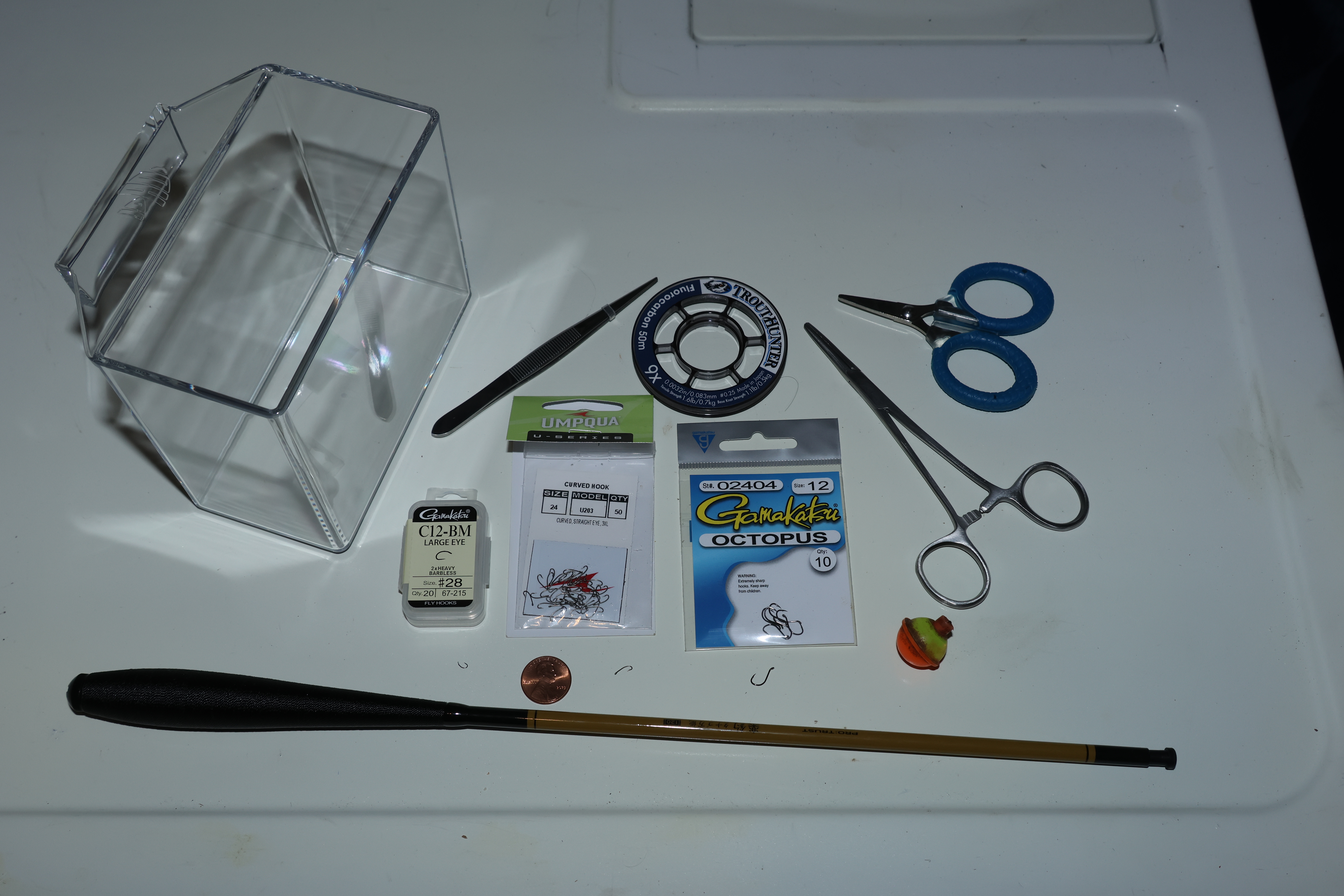

My microfishing gear includes a collapsible rod (which looks like a wand), tiny hooks of different sizes (note penny for scale), very thin line, a small float, scissors, pliers, tweezers, and a photo tank. Click photos to enlarge.

My microfishing bait – bread and Spam. Click to enlarge photo.

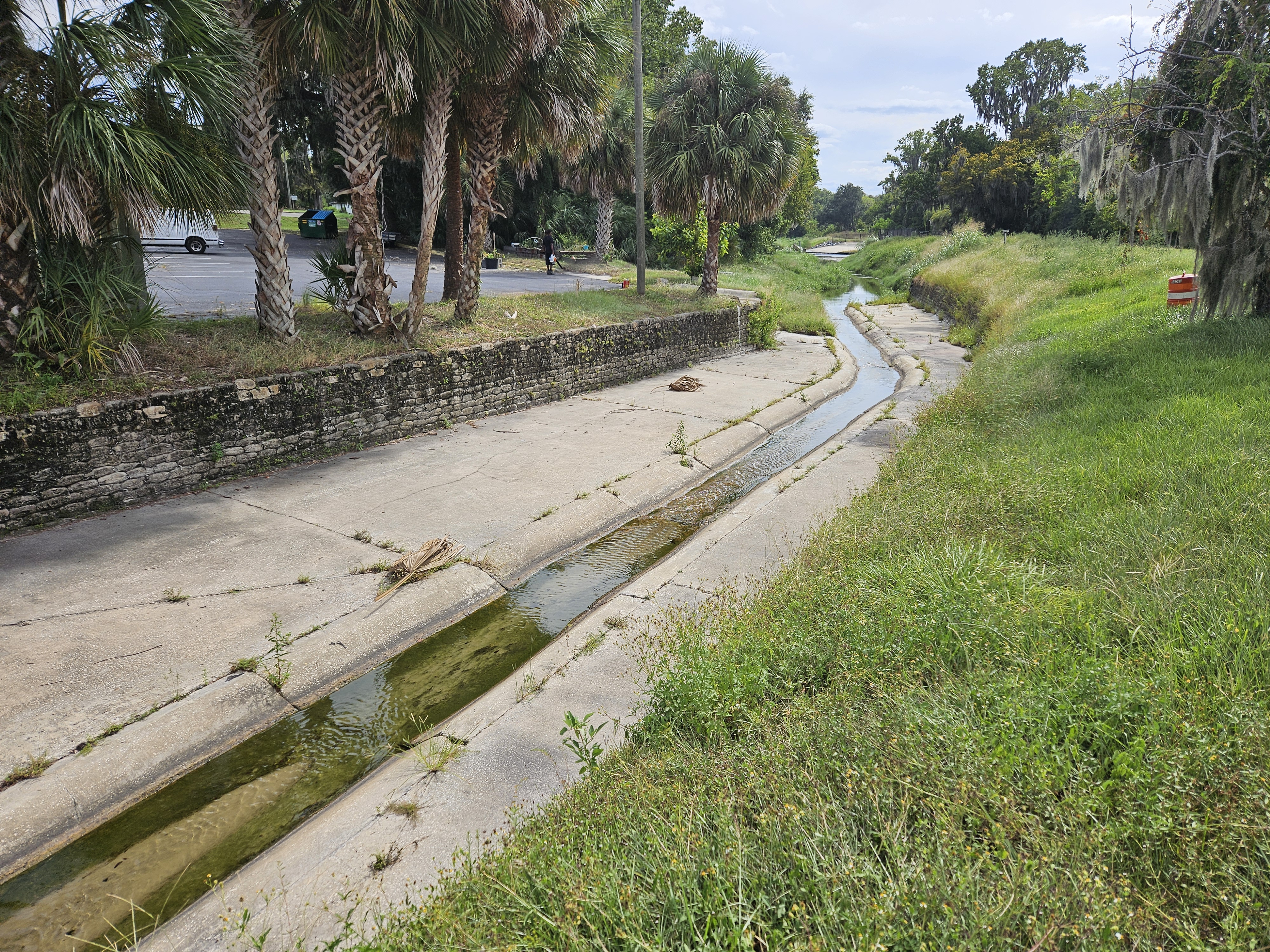
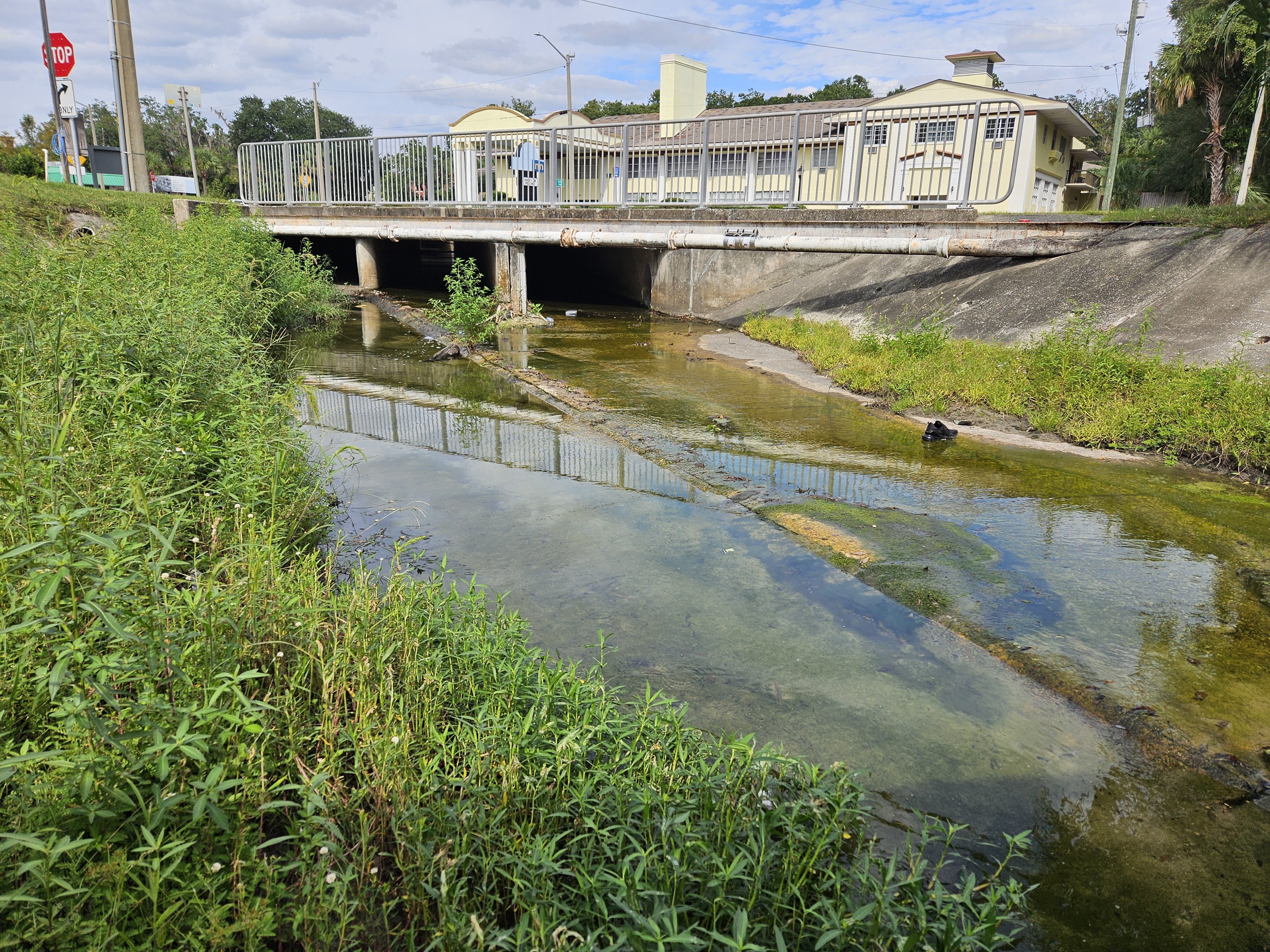

The microfishing site – an urban canal only a few feet wide and a few inches deep. Despite its small size, this canal was filled with small fish – particularly in areas where the canal was a bit deeper and wider, and where weeds were present. Click to enlarge photos.


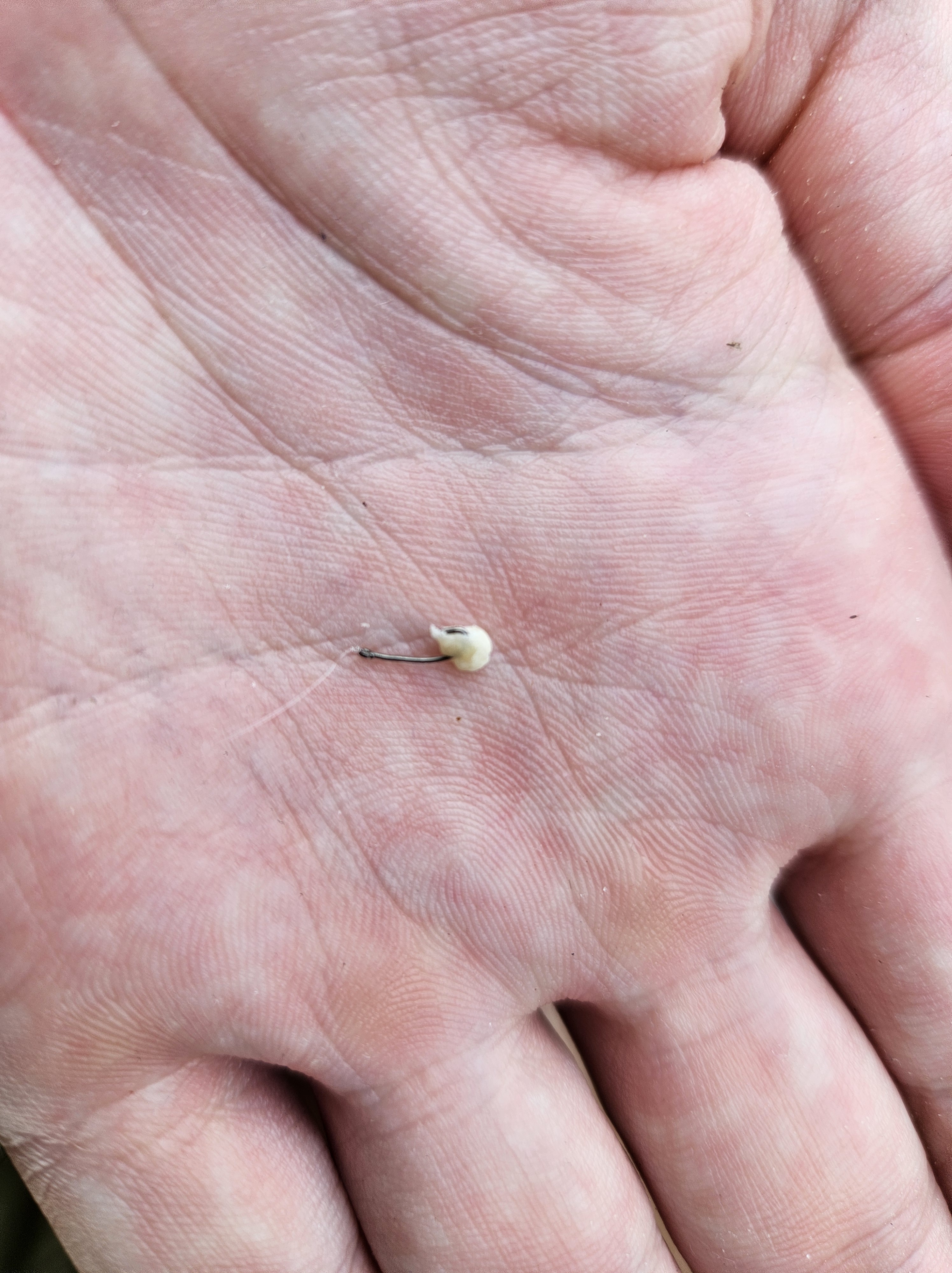
Getting setup at the site. When extended, the rod measures 1.2 meters (~4 feet). I tied about 4 feet of thin fishing line directly to the rod tip. The other end of the line had a micro hook baited with a tiny ball of bread. Click to enlarge photos.
At the site, I extended the wand-like rod and formed the bread (or Spam) into a tiny ball and placed it on the end of the hook point. I then extended the rod forward and let the bait drop into the water (no casting involved). The bread was immediately attacked by dozens of small fish. As soon as the bread (visible as a white speck) disappeared into the mouth of a fish, I simply lifted sharply upward and a tiny fish was on the end of the line. I caught about a dozen Eastern Mosquitofish (Gambusia holbrooki) using this technique. Despite being incredibly common and mostly ignored, they are neat little fish.

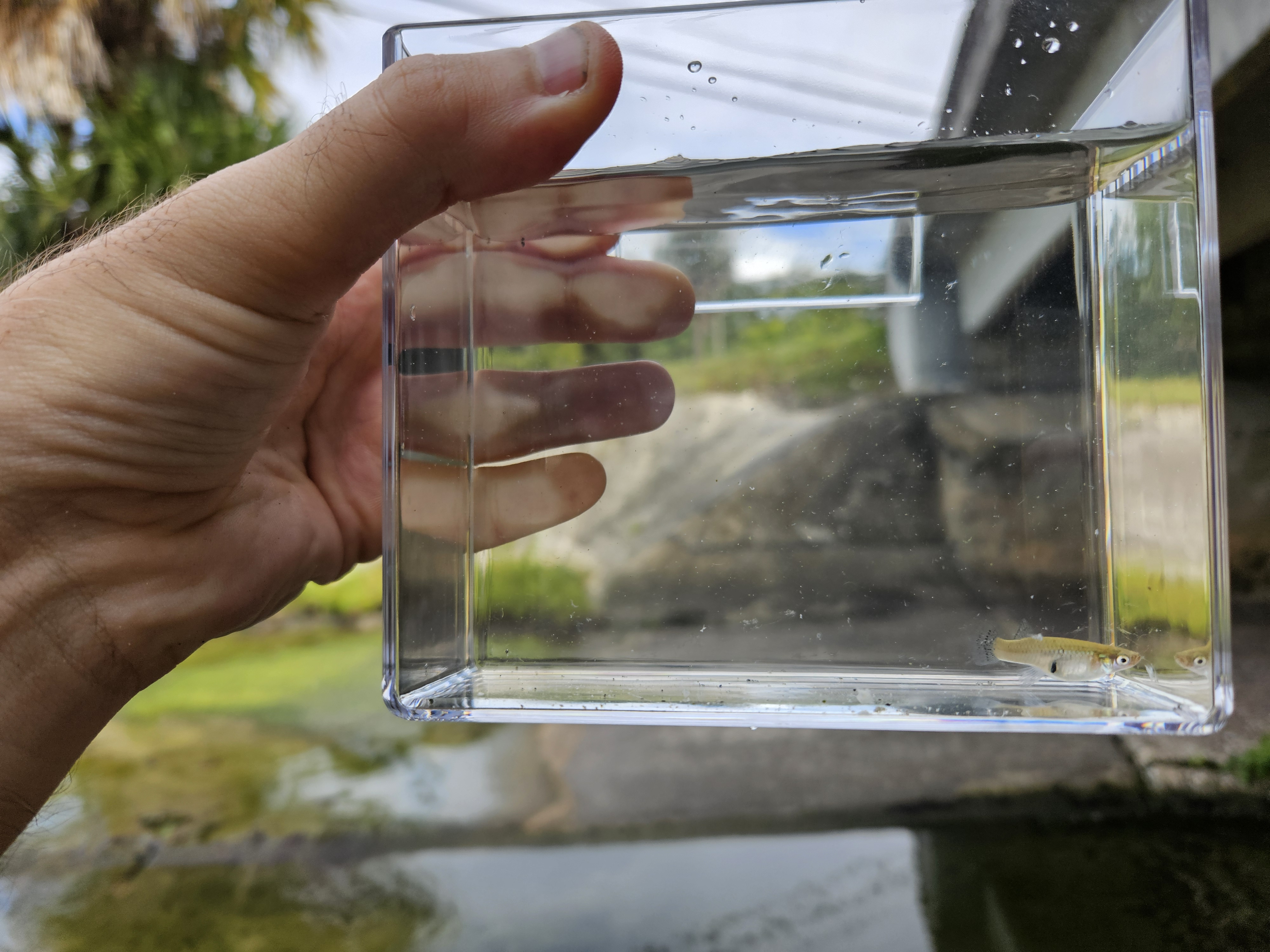
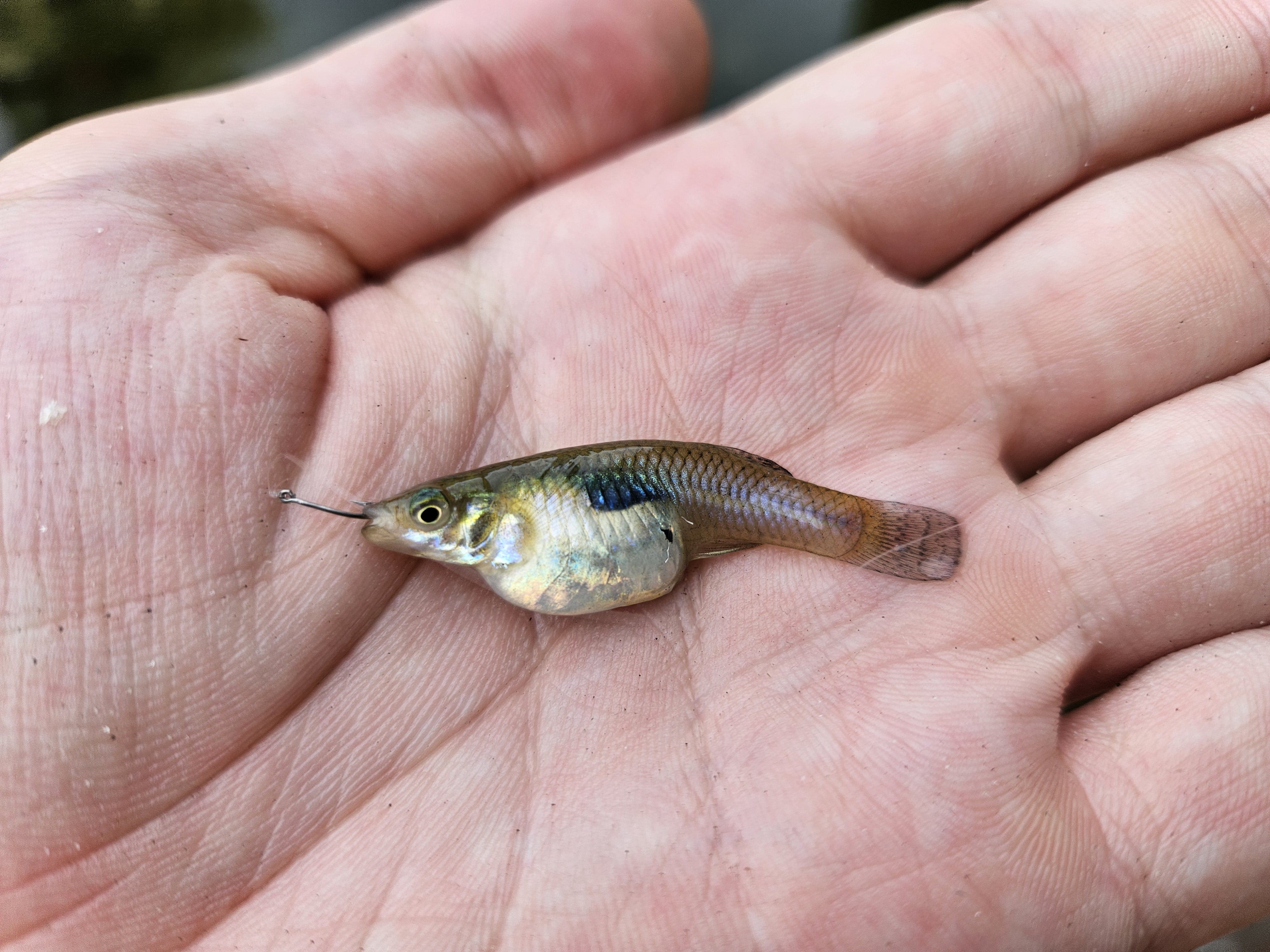


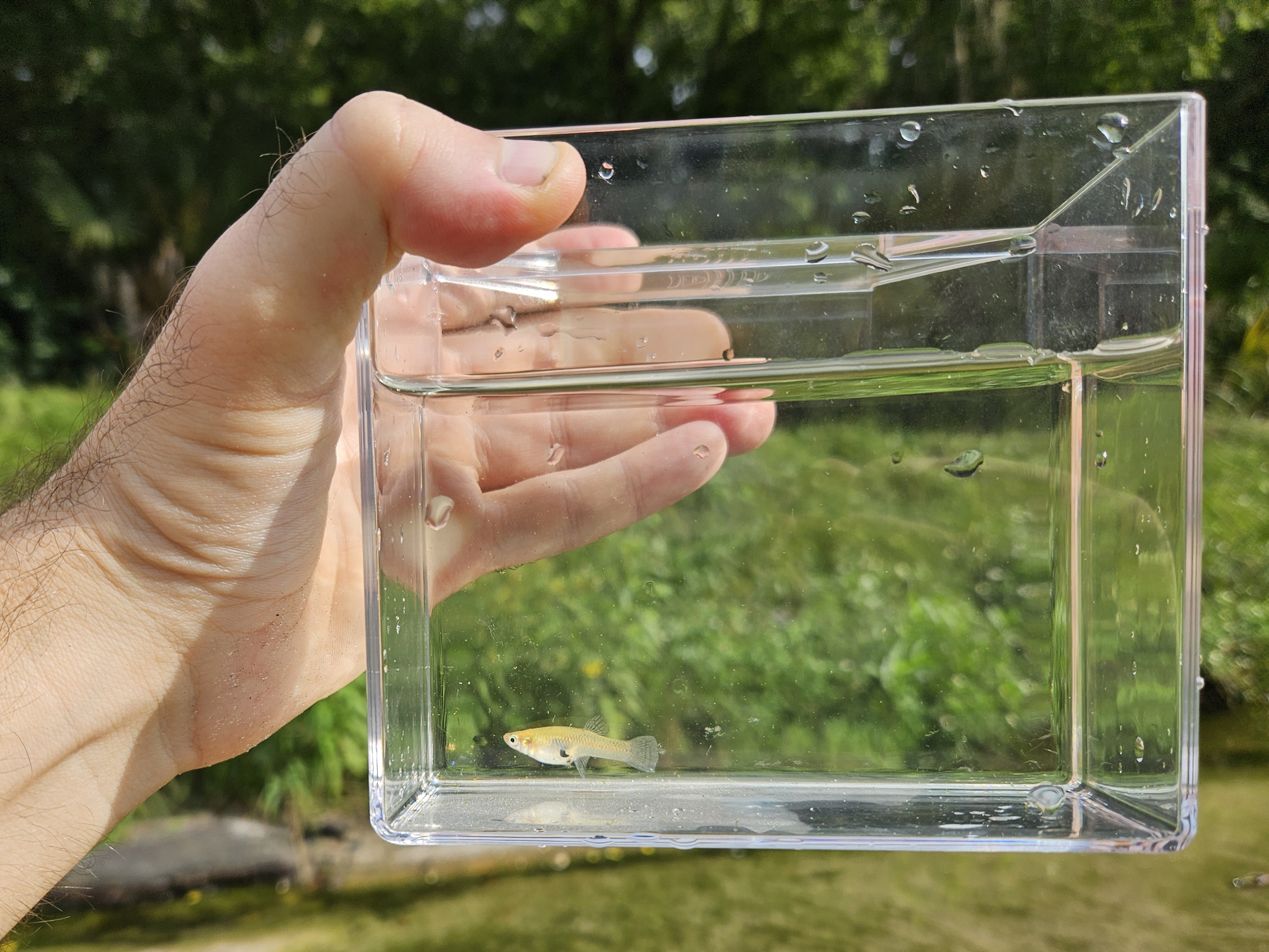


I caught about a dozen (female) Eastern Mosquitofish (Gambusia holbrooki) using microfishing gear. These livebearing fish all appeared in good condition and were returned to the water after taking photos in a small tank. Click to enlarge photos.
One thing I was initially concerned about was whether these small fish would be okay after being caught. I am happy to report that in all cases the tiny hook came out easily and did not require the use of the tweezers that I had brought with me. Furthermore, all were put into a small tank for observation and photos, and they appeared fine – rapidly swimming around before being released back into the wild. In addition to Mosquitofish there was another slightly larger species present – the Sailfin Molly (Poecilia latipinna). However, I was unable to catch this species. They appeared interested in the bread and Spam, but were repeatedly crowded out by the much more numerous and boisterous Mosquitofish. Finally, I will note that the bread was a more effective bait than was the Spam. The Mosquitofish readily ate both, but the bread was more pliable and therefore more easily formed into the right size and shape around the tiny hook.
I soon moved to another spot further downstream. Here, the canal opened into a rectangular pool with deeper water. A small alligator resting on a sandbar crawled into the water as I approached. I could see that this pool contained fish of various sizes. I put a piece of bread on my tiny hook and dropped it into the shallows. A Bluegill (Lepomis macrochirus), about as big as my hand, darted forward from the depths and inhaled the tiny bread ball. When I pulled upward my line broke. This Bluegill, although modest in size, was obviously still too big for my micro gear. So, I switched to an ultralight spinning rod with 2-pound test line, a larger – but still relatively small – hook, and a bread-ball the size of a pea. As soon as the bread hit the water and began sinking toward the bottom it was eaten by a Bluegill. I managed to catch several, only a few feet from shore, every time I dropped my bait in the water.


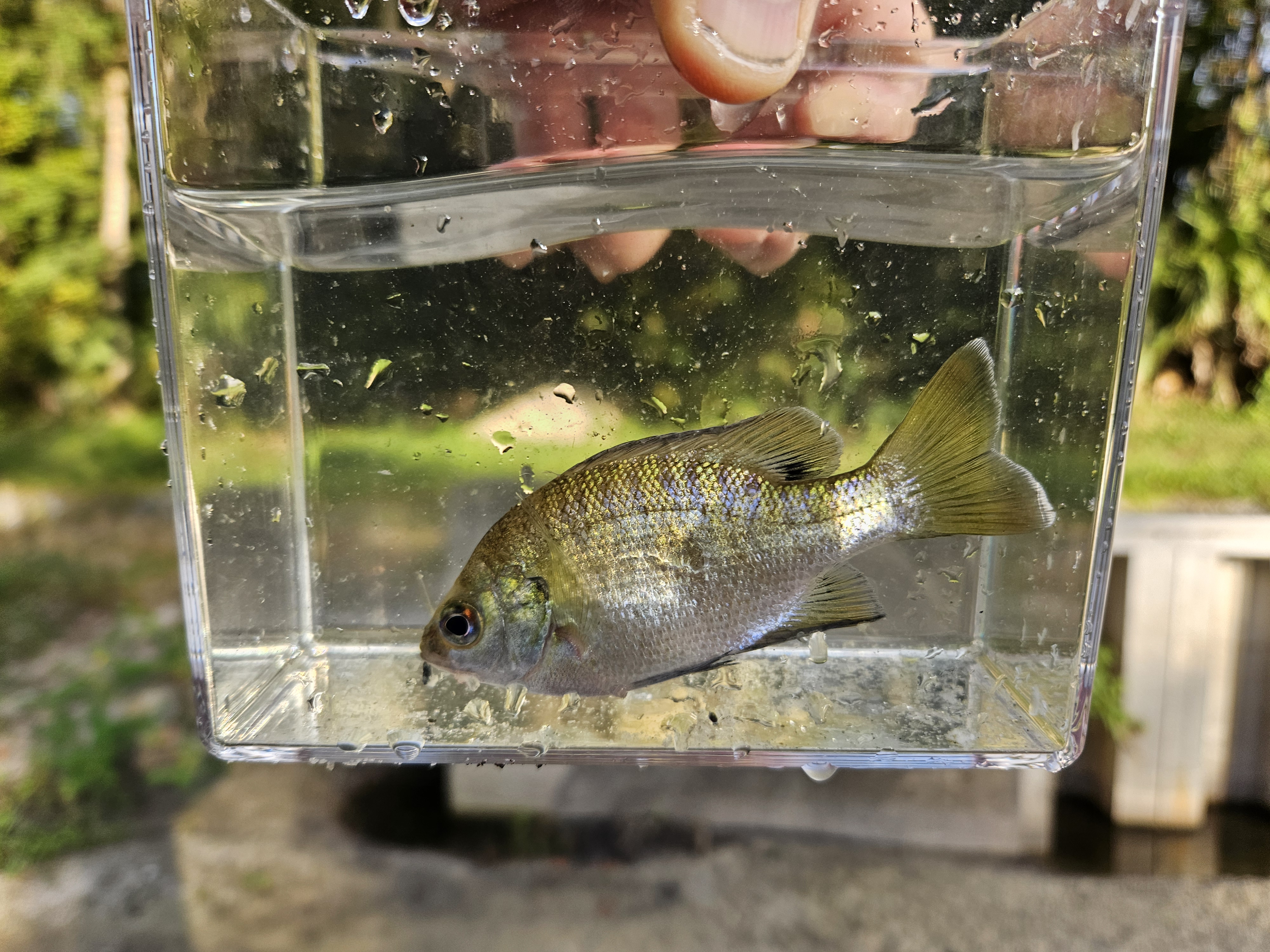
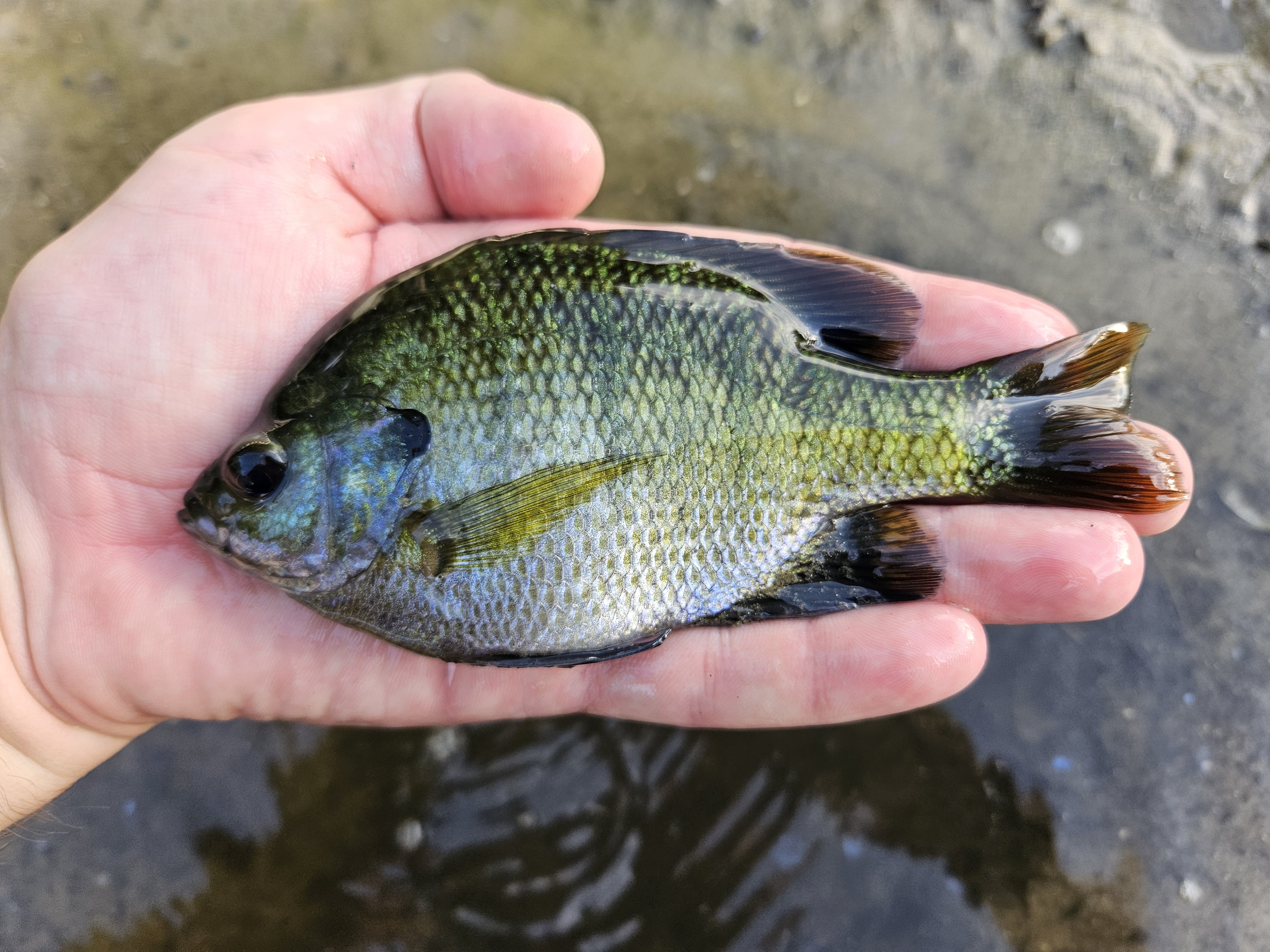
I made my way further downstream to a deeper pool in the canal. Here there were larger fish including Bluegill, which were easily caught. Click to enlarge photos.
Given how ravenous the Bluegill were (and easy to catch) I decided it would be more fun to attempt to film them feeding underwater. I quickly went home, got my underwater camera and small tripod, and came back. I set up the camera and tripod underwater, a few feet from shore. I then placed a stick vertically into the sand directly in front of the camera and skewered a bread roll onto the stick, securing it mid-way in the water column. As soon as I backed away a swarm of fish attacked the bread roll like Piranha. This can be seen in the below video, which probably captures this better than would photos.

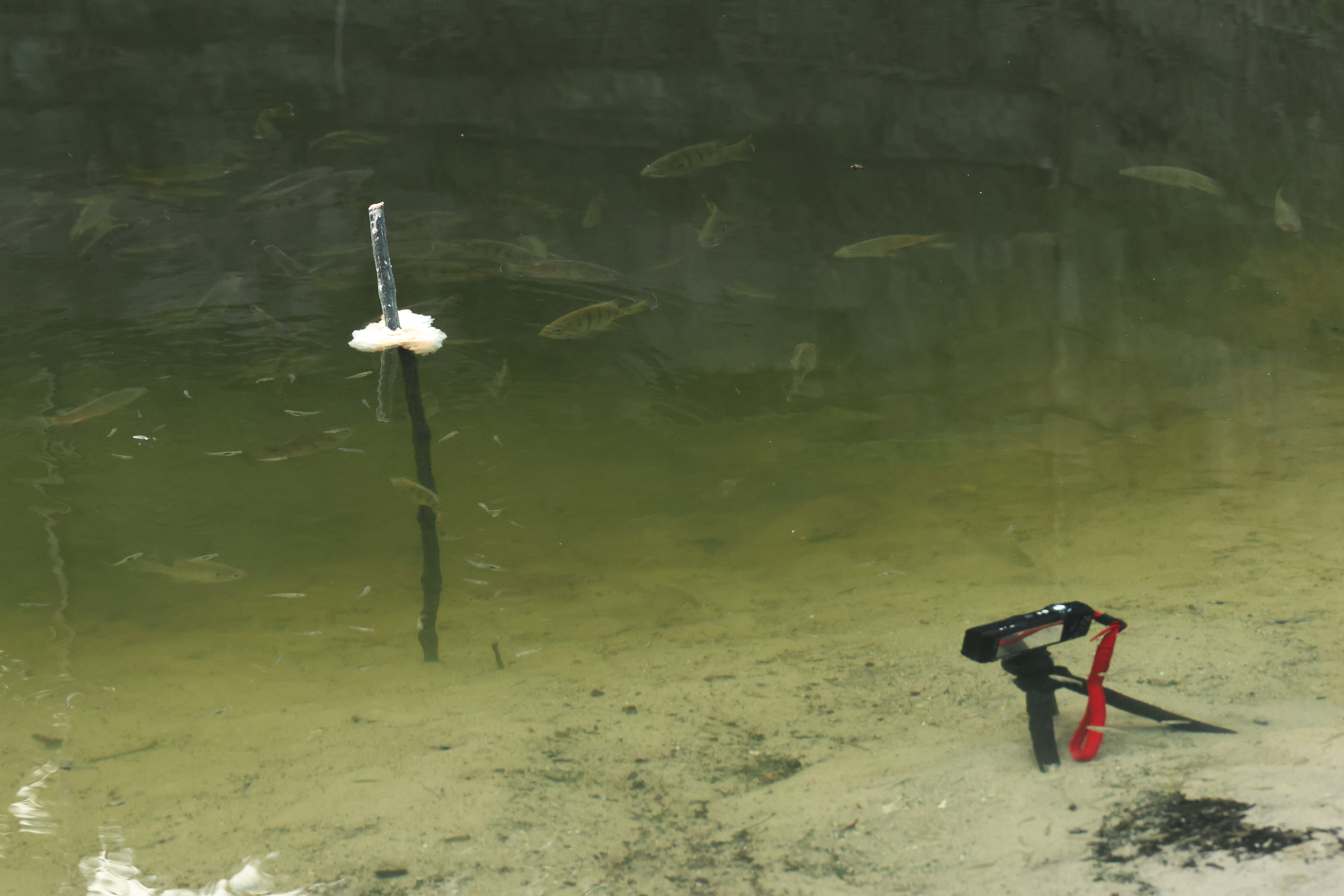
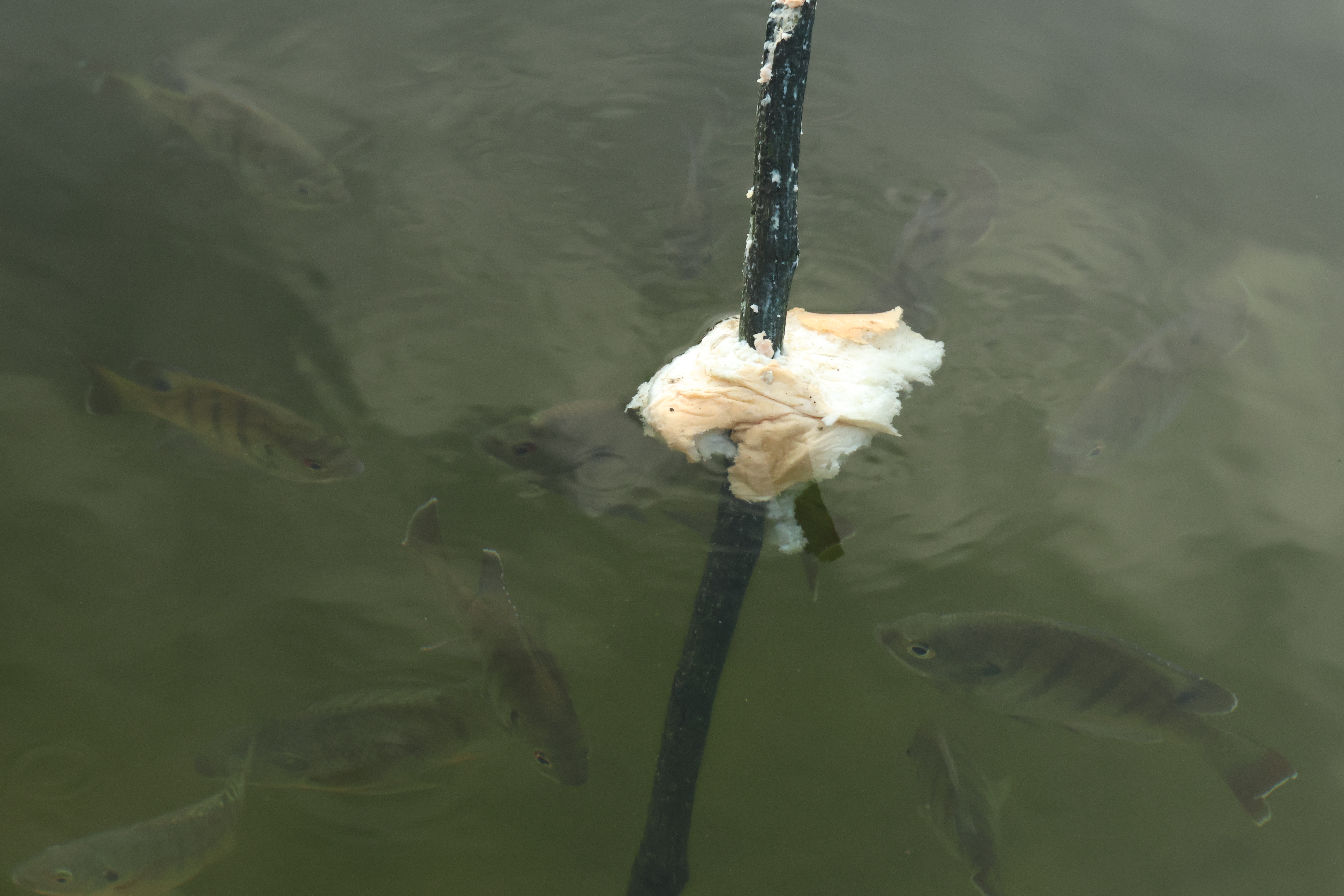


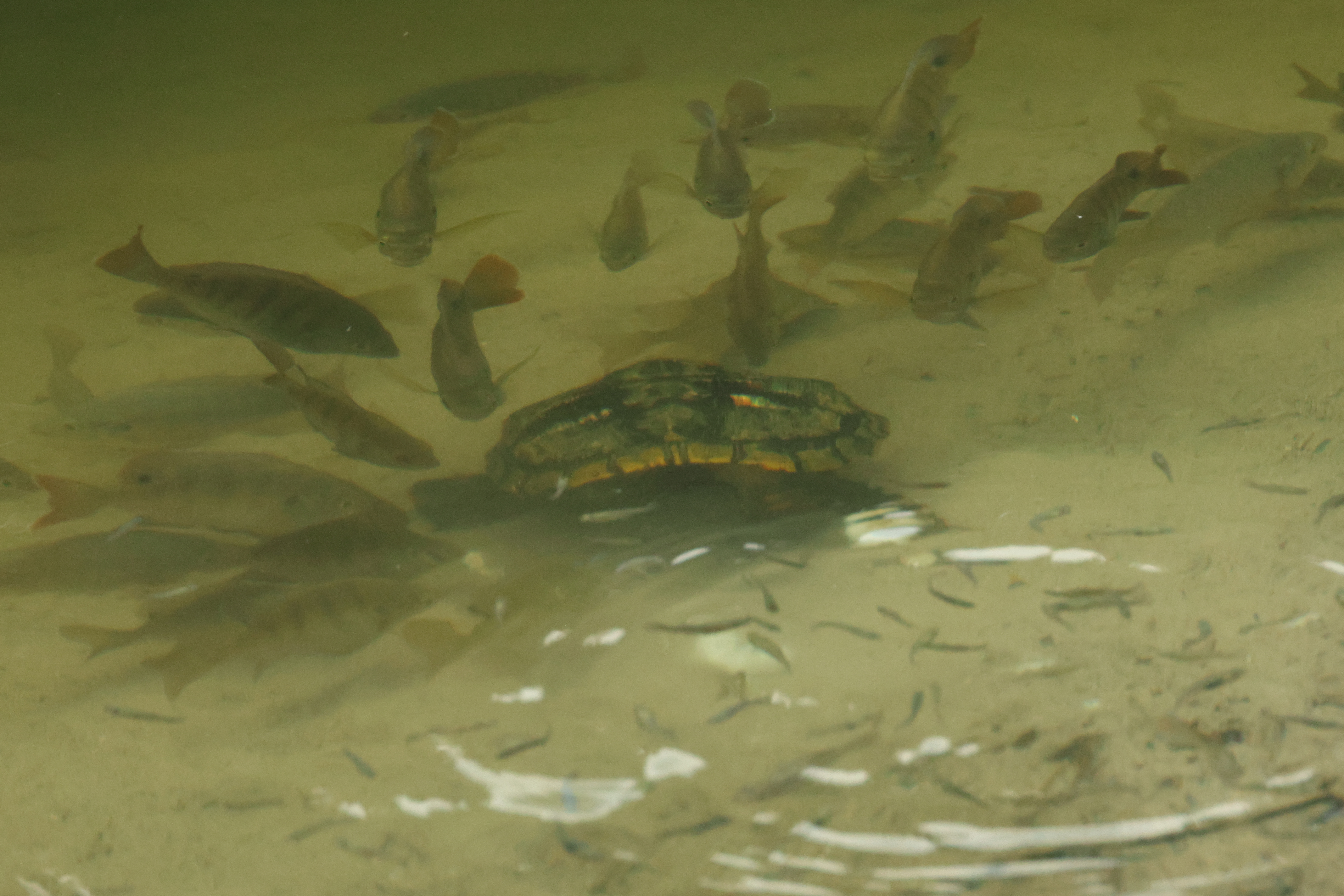
Above-water photos of fish and turtle eating a bread role. See above video for both underwater and above-water footage. Click to enlarge photos.
I found the underwater and above-water footage fascinating. When the bread roll was mid-way down the water column it was aggressively attacked by Bluegill and Tilapia (Oreochromis sp.), and small fish (Mosquitofish and Sailfin Mollies) were nowhere to be seen. However, when the soggy roll floated to the surface, the Bluegill were quite hesitant to bite off chunks, and hundreds of small fish (Mosquitofish and Sailfin Mollies) darted in to eat the bread, keeping very close to the surface. It was interesting to see such small fish devouring bread at the water’s surface while larger predatory fish (mostly Bluegill) swam only a few inches below them. After a few minutes, a Slider Turtle (Trachemys scripta) came and joined the feast, and soon the bread roll was entirely gone.
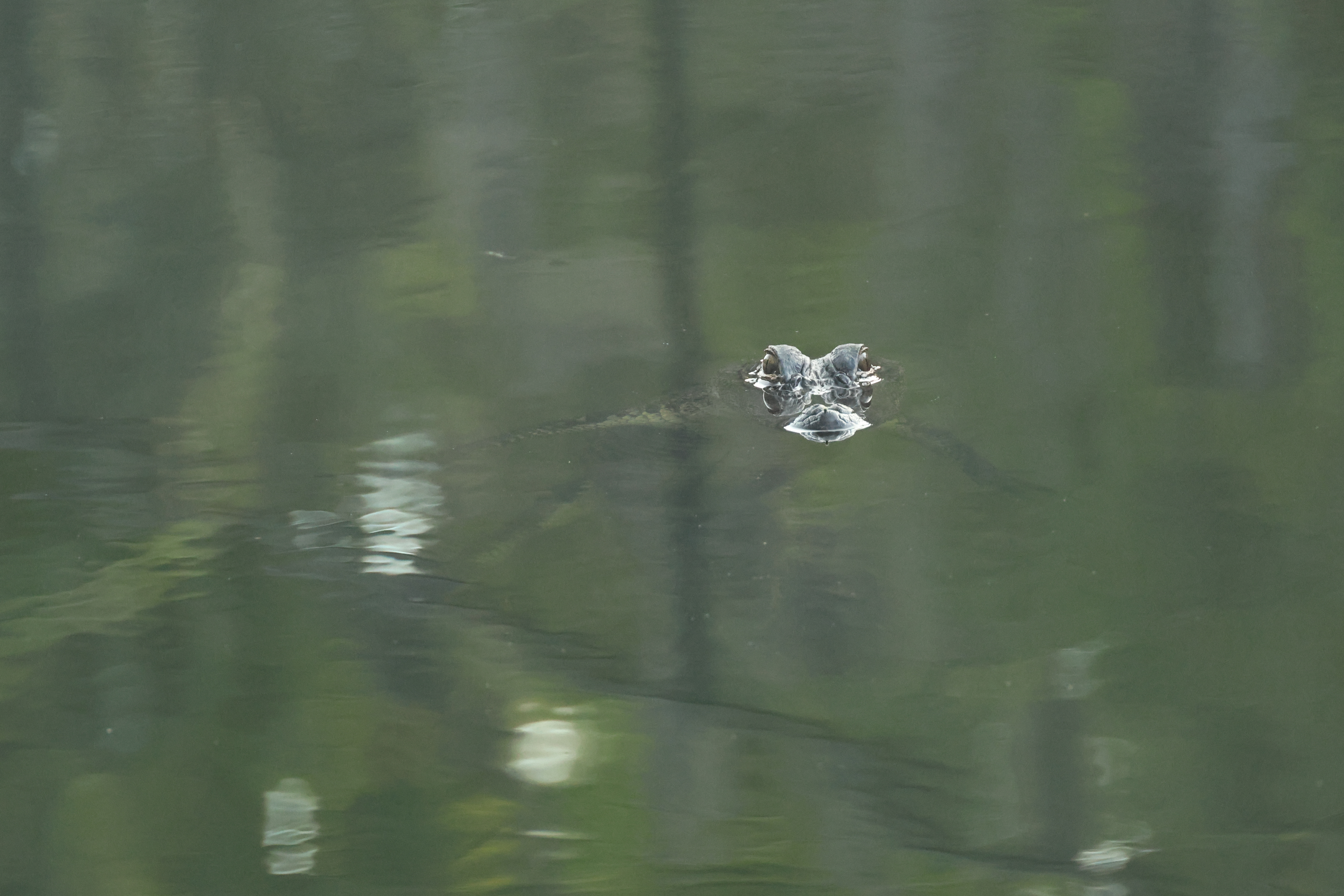
I also had a whole can of leftover Spam, which I wasn’t too keen on eating. So, I decided to do the same thing that I did with bread, but with Spam! Spam is firmer than bread so it held its shape for longer and remained on the stick better. It was interesting to see the fish bite into the Spam and attempt to remove chunks. Toward the end a turtle again came in and began taking bites out of the Spam. Even a small alligator came in for a closer look, likely attracted by the commotion created by the fish and turtle feeding frenzy.
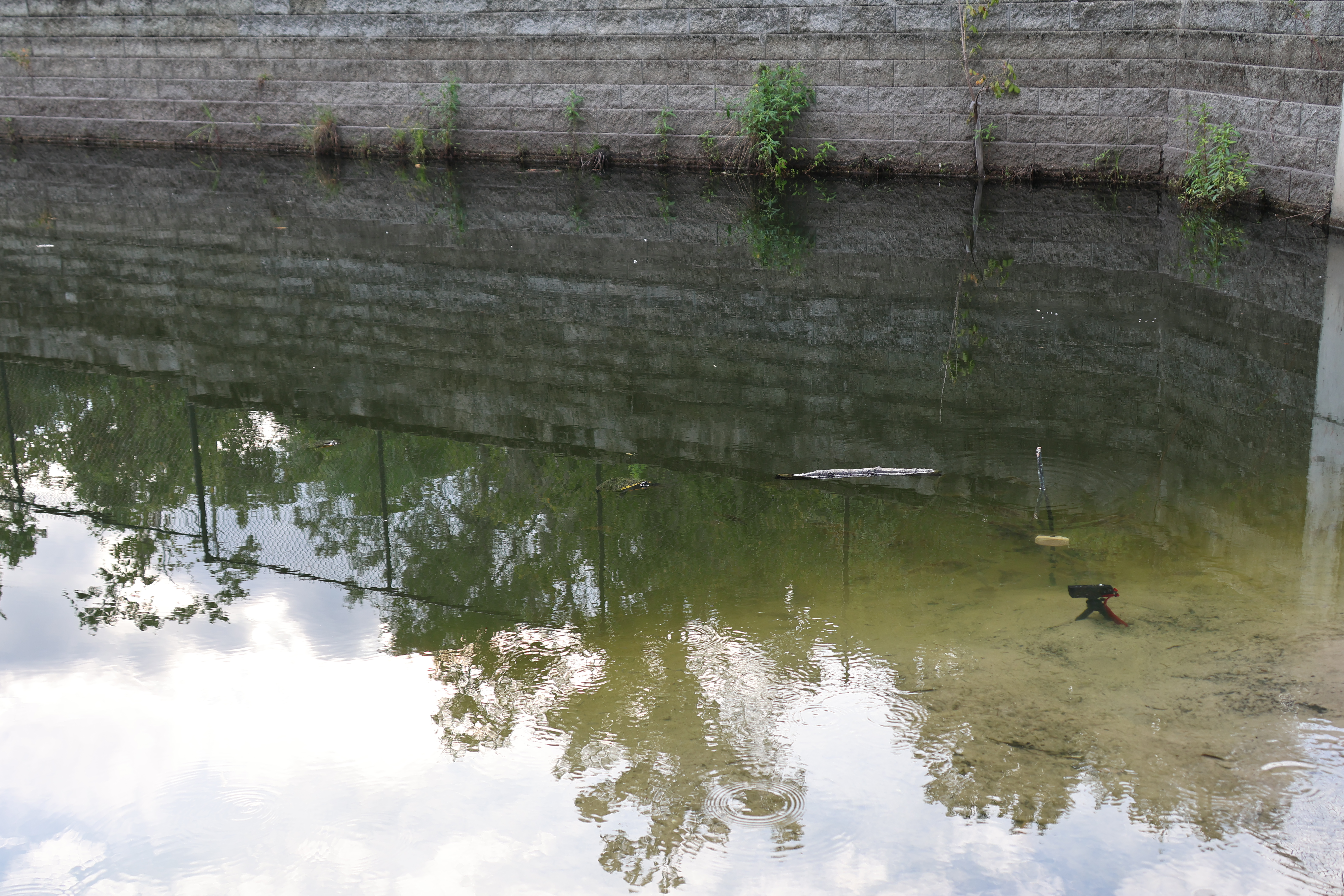
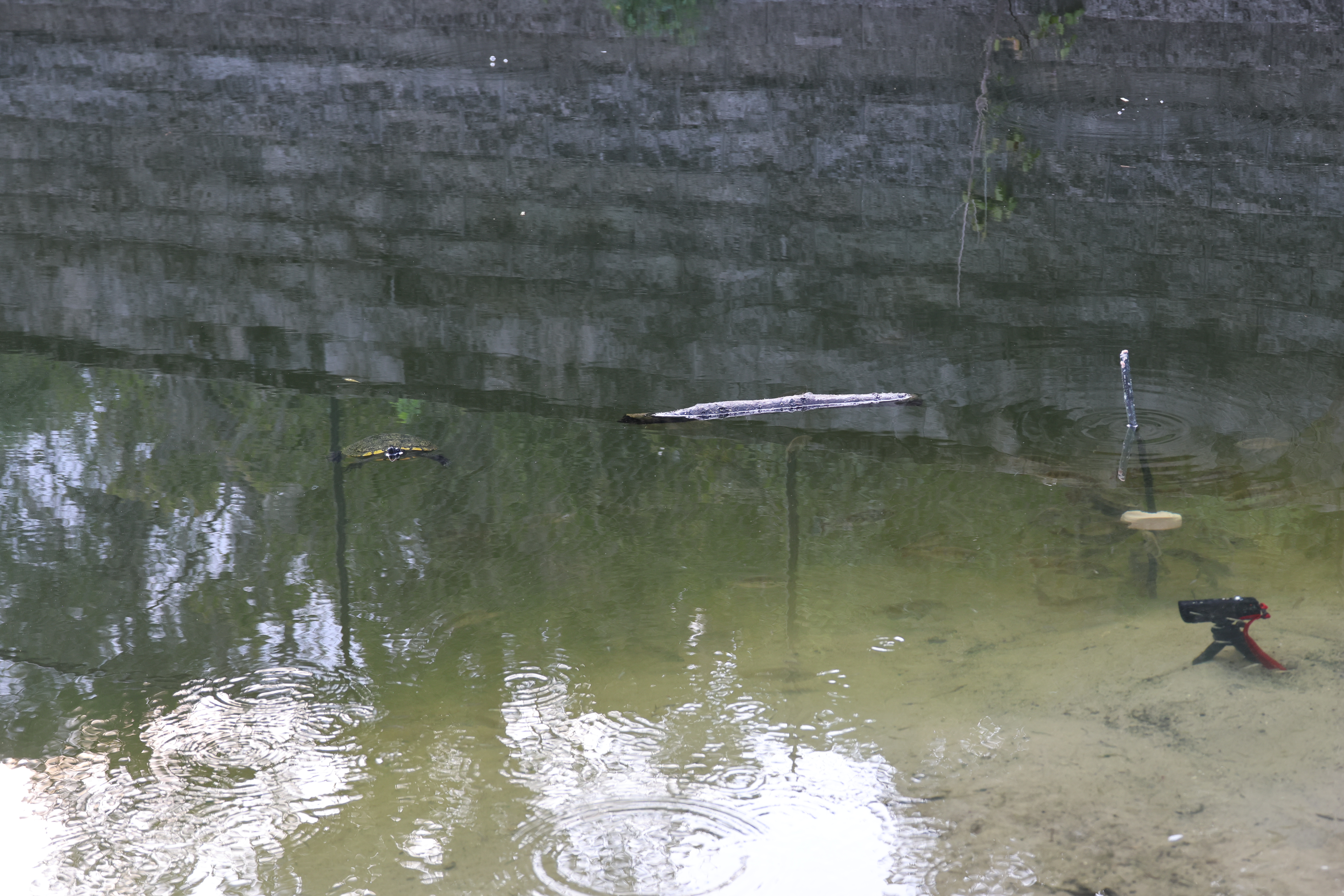
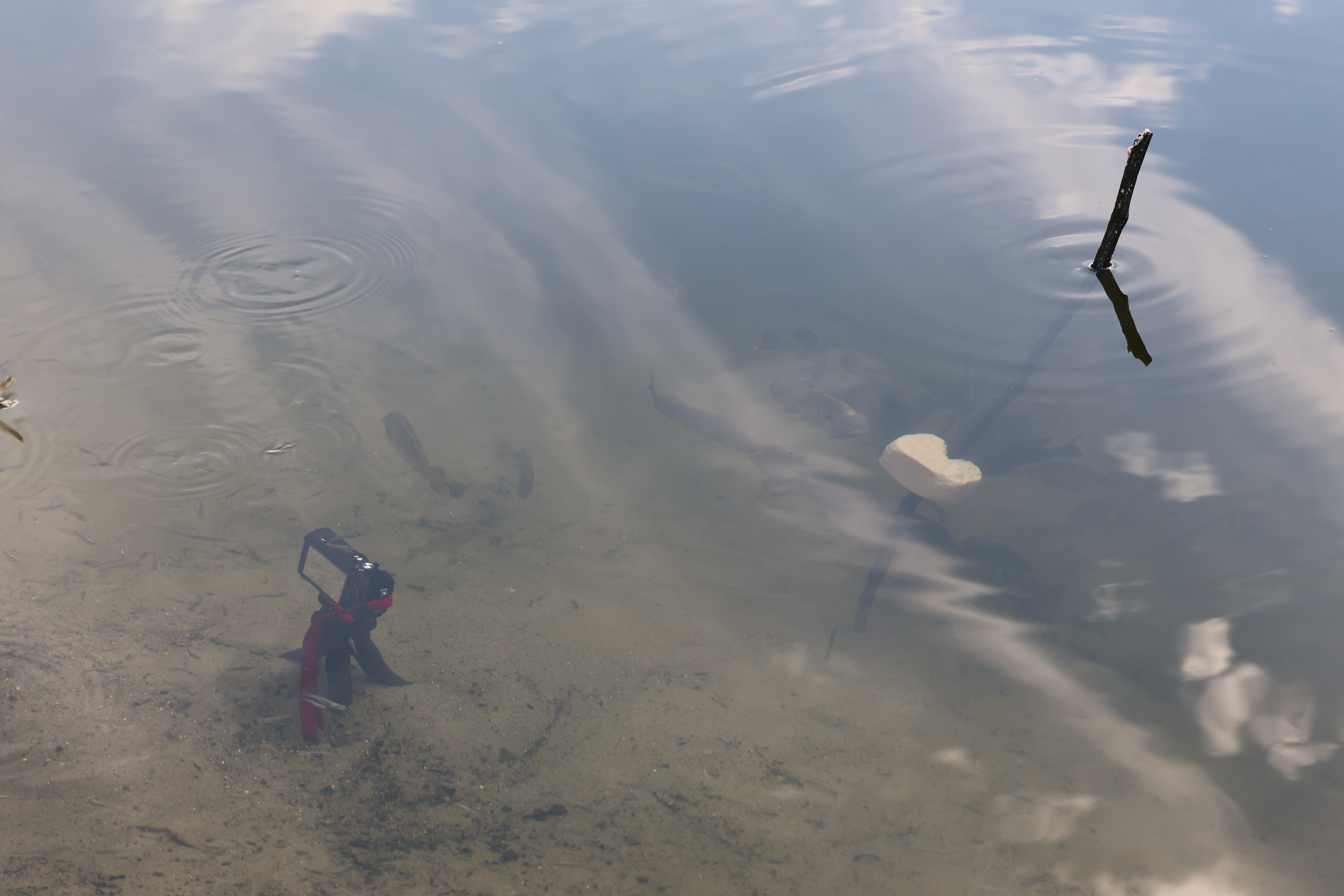
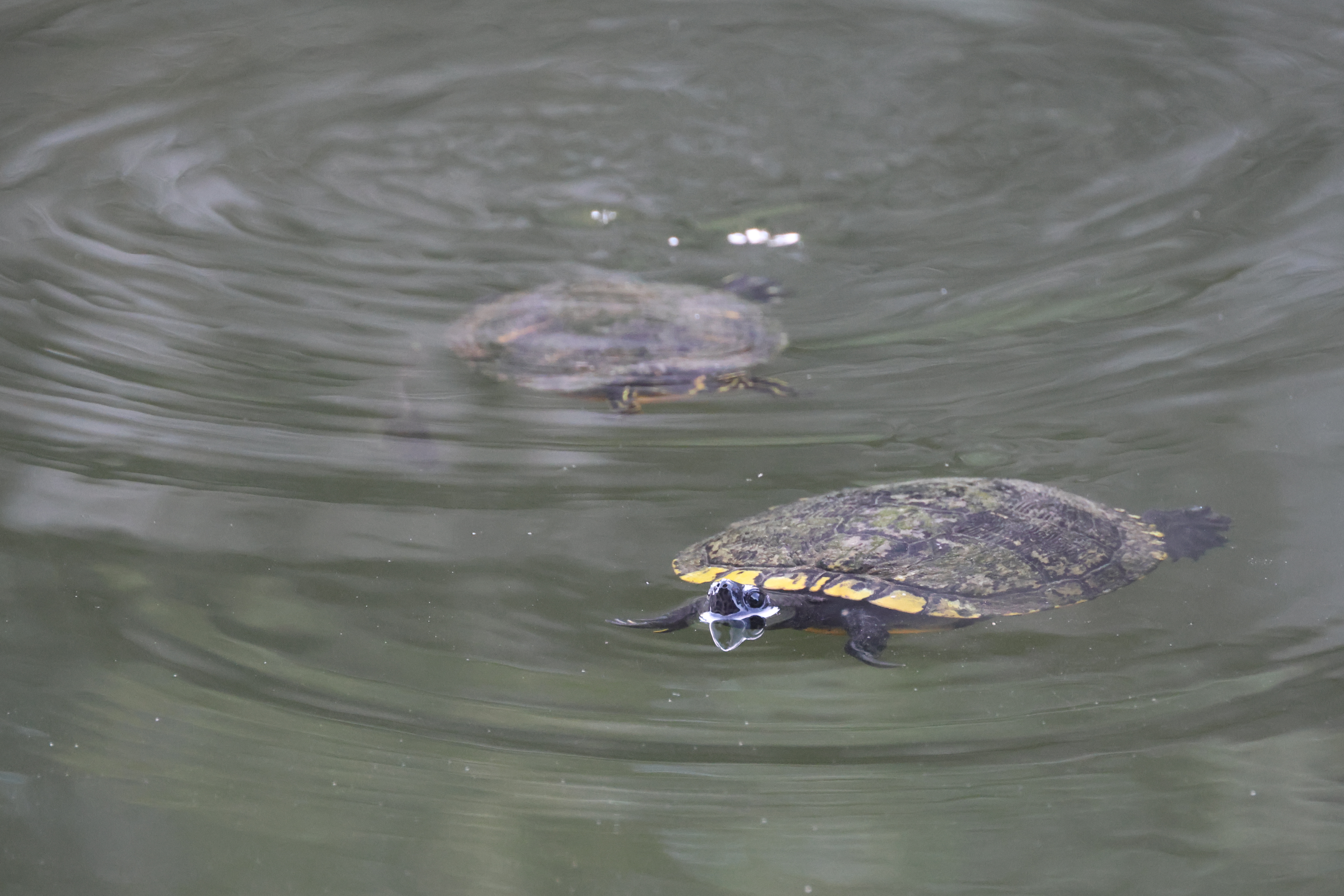


Above-water photos of fish and turtle eating Spam. See above video for both underwater and above-water footage. Click to enlarge photos.
Given this interesting footage, I am tempted to try this underwater experiment again in other urban locations and perhaps with other types of food.
 Reason and Nature
Another education! Thank you, Reason and Nature! Keep up the good work!
LikeLiked by 1 person