Florida is the spring capital of the world. The state contains 700 natural springs. 33 of these are first-magnitude springs, or those that discharge at least 100 cubic feet per second (which amounts to at least 64.6 million gallons of water daily). This is more first-magnitude springs than any other state in the United States, and more than any other country in the world. Most of these springs are in north and central Florida, within an hour drive of Gainesville (where I live). These springs are one of the highlights of living in this region.

Map of Florida springs.
Many of these 33 first-magnitude springs are protected in state parks and offer year-round swimming, snorkeling, scuba diving (including in caves), underwater photography, canoeing, kayaking, and tubing in crystal clear water with a constant average temperature of 72 degrees F (22 C). This last point is important. Since the water from these springs comes from deep within the earth, it remains a constant temperature year-round, irrespective of the outside (surface air) temperature. As such, these springs provide warm water refugia for West Indian manatees (Trichechus manatus) during the winter months in north and central Florida.
The water gushing from first-magnitude springs flows from its origin (the headspring) into larger rivers, and these eventually flow into the ocean (the Atlantic to the East and the Gulf of Mexico to the west). In winter, the 72 degree water emerging from these springs is warmer than the surrounding water, and manatees seek out these springs as a warm water oasis. During other times of the year besides winter, when the spring water is colder than the surrounding waters, manatees are not found in the springs but instead in rivers, oceans, bays, estuaries – the places you would typically expect to find manatees. It is during winter, when the weather gets colder in north and central Florida, that manatees swim up rivers and seek out the springs, where they often congregate in large numbers.
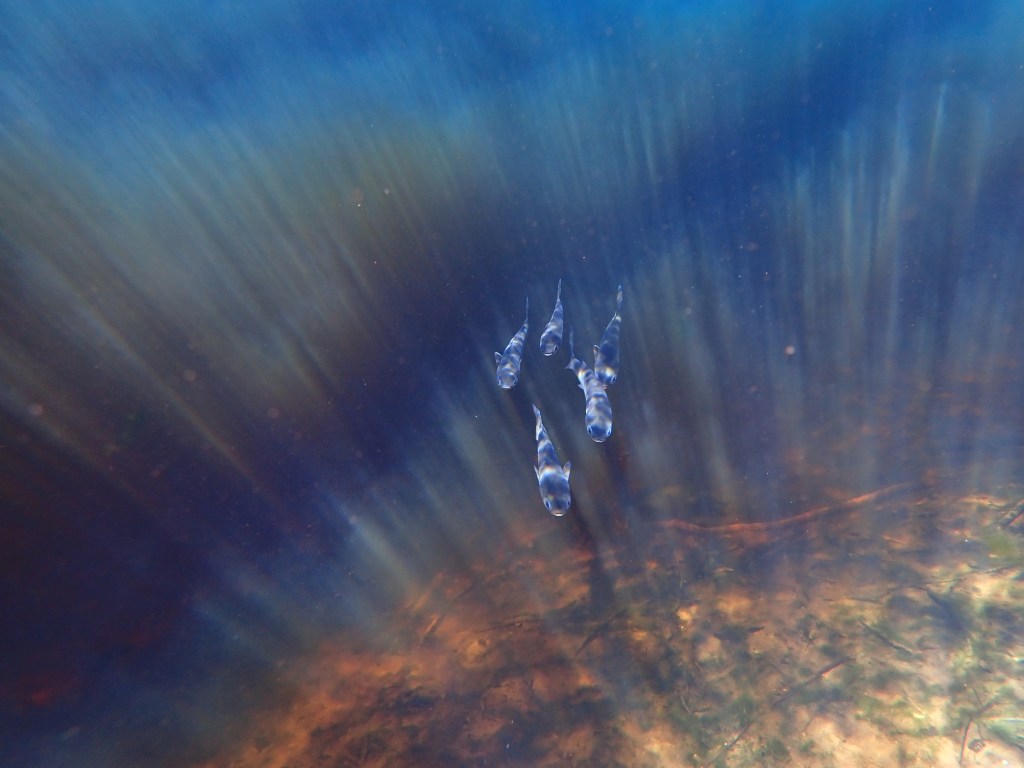
This past week it has been cold in the United States, including most of Florida, and over the weekend I visited a spring not far from Gainesville, Fanning Springs. This is one of Florida’s 33 first-magnitude springs, located in a state park. Here I was able to photograph and snorkel with the approximately 12 manatees that were in the spring on the day I visited (1/26/2025). Below are some of the photos I took of this spring and the manatees which have temporarily taken up residence in this warm water refuge during the winter months.


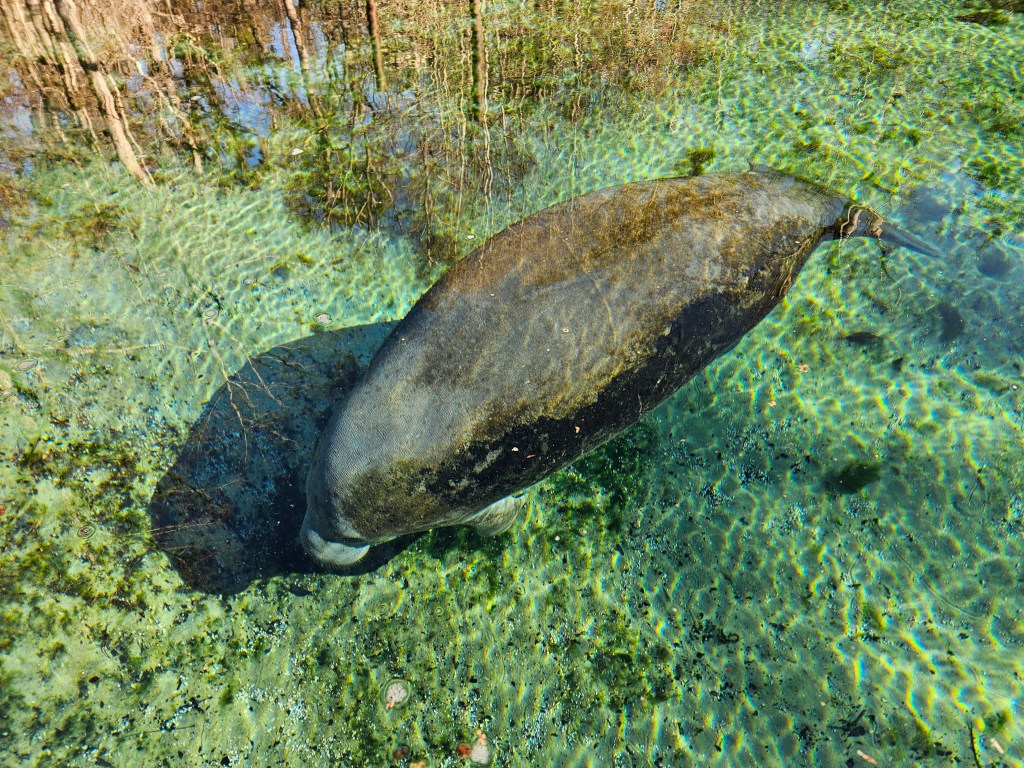
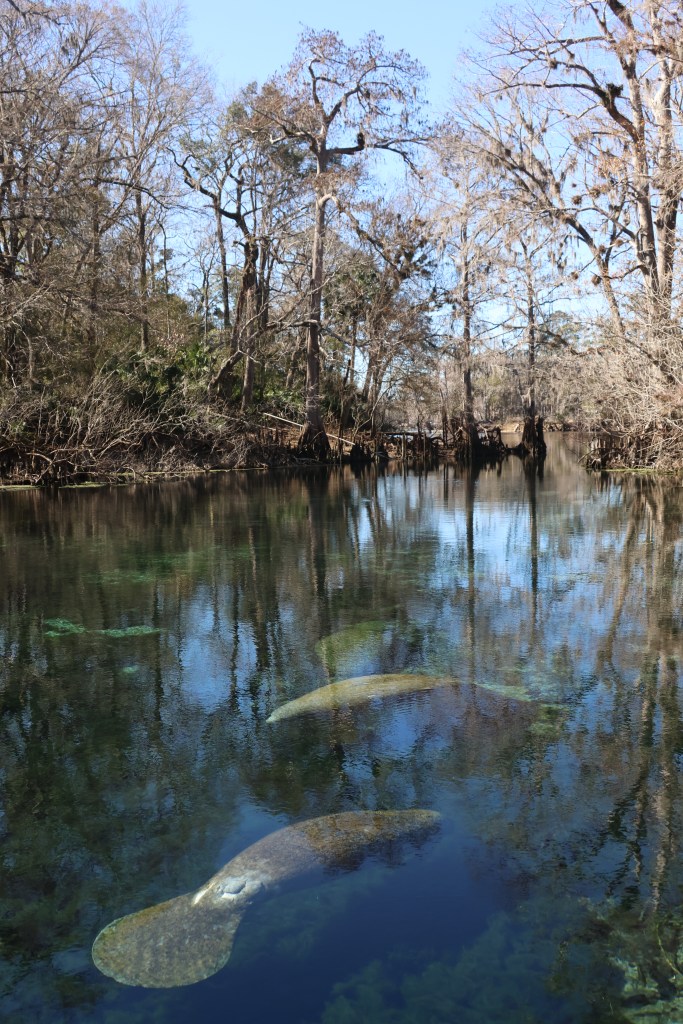
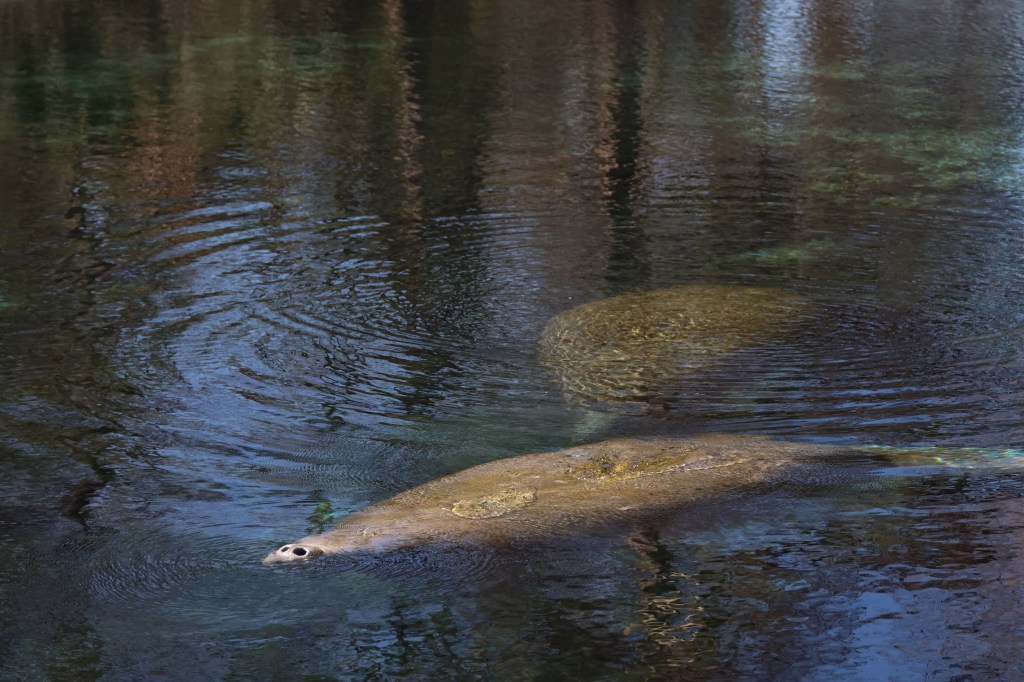
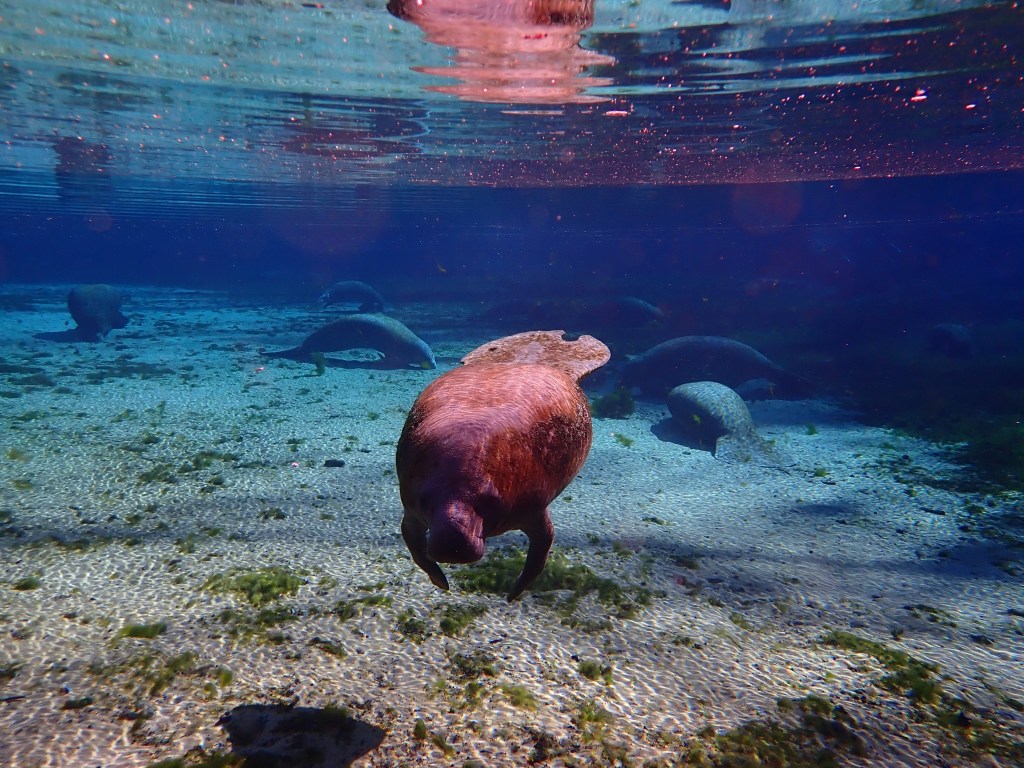

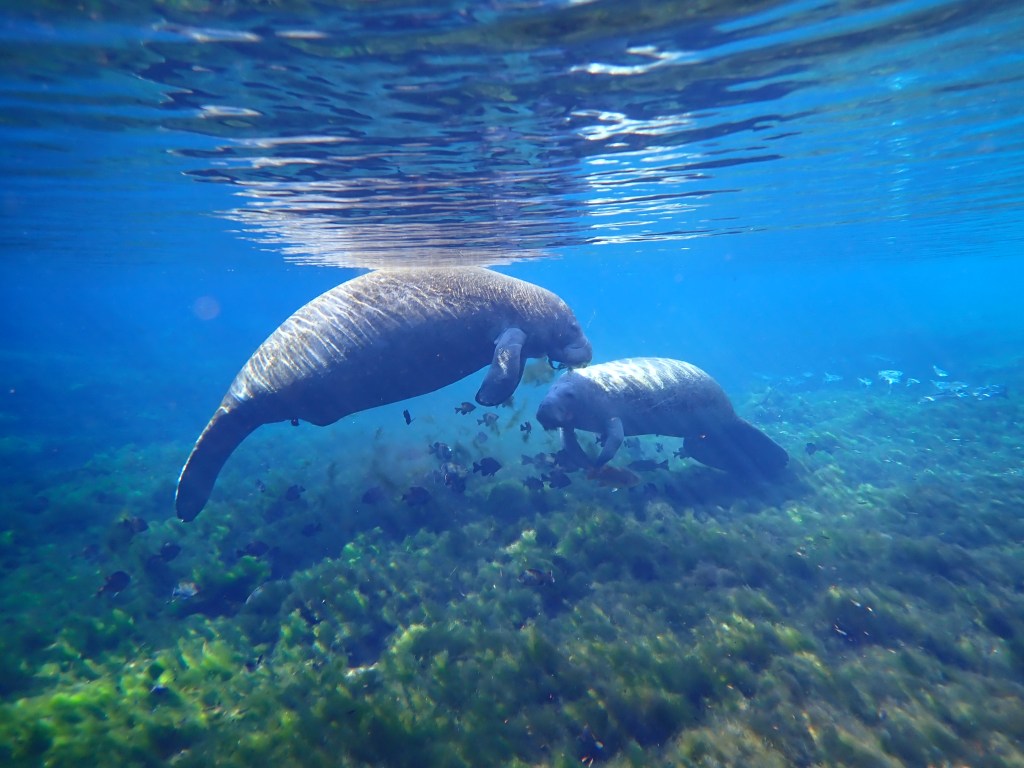



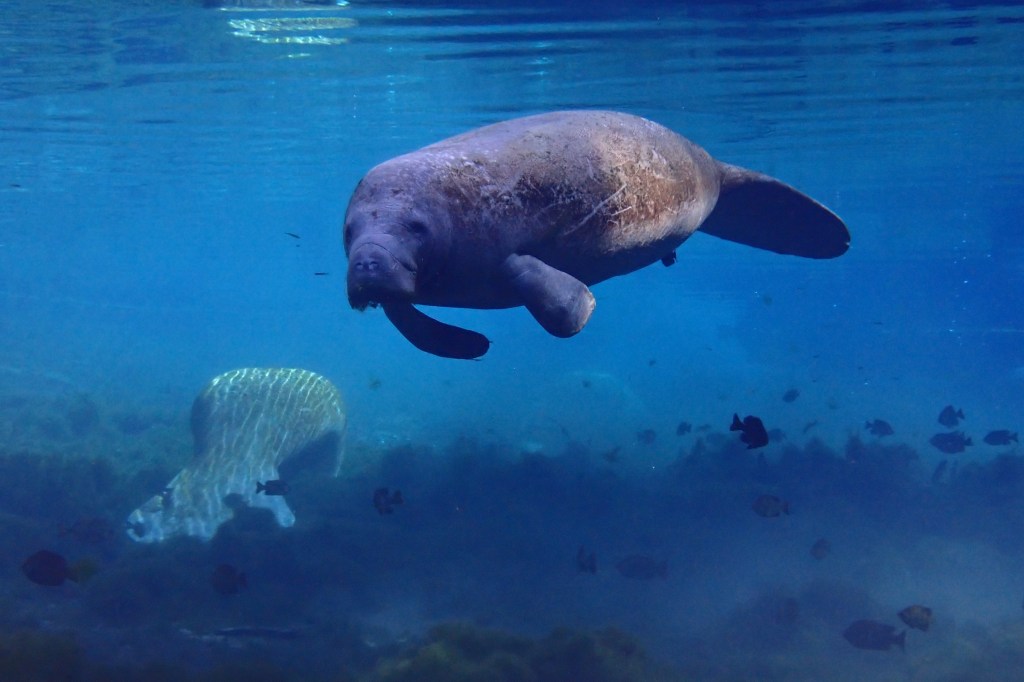

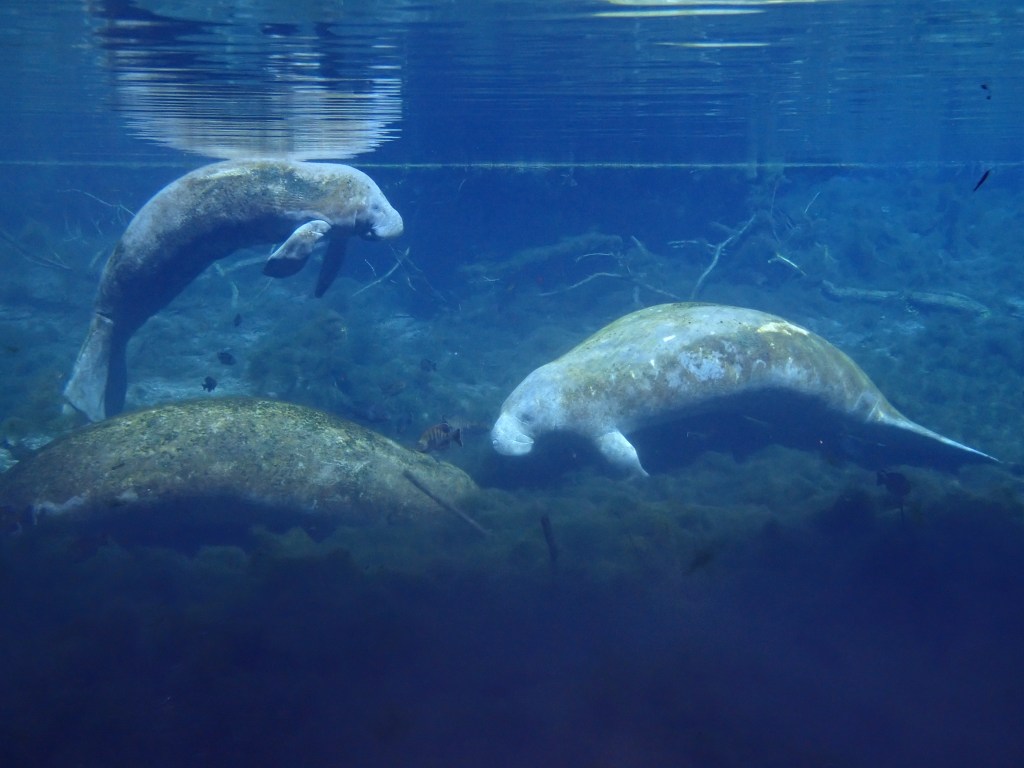
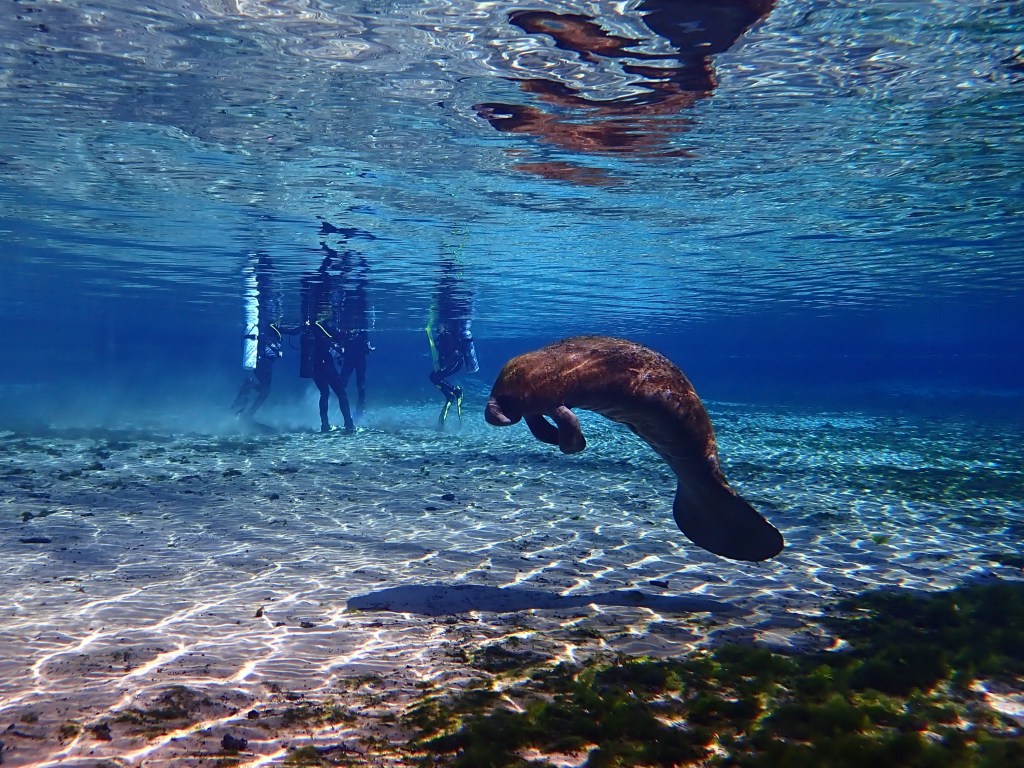

West Indian manatees in Florida are at the northern limits for the species. This is because water temperatures below 68 degrees F (20 C) induce stress and increase mortality. Manatees that seek out warm water refuges during winter are exhibiting behavioral flexibility that allows them to live in areas that they otherwise would not be able to. Humans are of course famous for this. Lacking fur and blubber, we are not naturally cold tolerant. Yet we have managed to colonize all 7 continents due to our behavioral ability to construct shelter, make and wear clothing, and burn fuel to keep warm. Manatees are doing this on a somewhat smaller scale by seeking out those naturally warm-water areas (springs) or artificially warm-water areas (runoff from power plants) and thereby surviving in environments in which they otherwise wouldn’t be able to physiologically tolerate. Finally, manatees must have a very accurate mental map of the landscape, for they are spread across an enormous watery landscape for most of the year, but reliably find their way back to these few and far-between warm-water outposts when it is required for survival.
 Reason and Nature
Beautiful photography as usual, and well researched article. I have been to a number of these springs and am always amazed by them. Have even seen a few manatees in some.
LikeLike