Ratsnakes are large snakes (over 6 feet as adults) found in the eastern United States. The Virginia Herpetological Society reports that they are the most commonly seen snake in Virginia. This is the case because they move around a lot and are often found near human habitation (such as barns and old buildings) where their main prey, rats and other rodents, are abundant. Their diet consists primarily of rodents, birds and bird eggs, lizards, and frogs. They are adept climbers, even known to climb trees to prey upon birds, nestlings, and eggs. Ratsnakes are constrictors and can either ambush their prey from a stationary position or actively hunt it.
A few weeks ago, in Gainesville, I was returning home at night and to my surprise found an Eastern ratsnake (Pantherophis alleghaniensis) climbing my neighbor’s door. I watched it for about 20 minutes. It easily scaled the door, travelled along the top of the doorframe, and positioned itself behind a nearby light. At night this light attracts insects and there are usually lots of introduced Tropical house geckos (Hemidactylus mabouia) in this area feasting on the insects. I am fairly sure the ratsnake was hunting these geckos, and took up a suitable ambush point by the light.
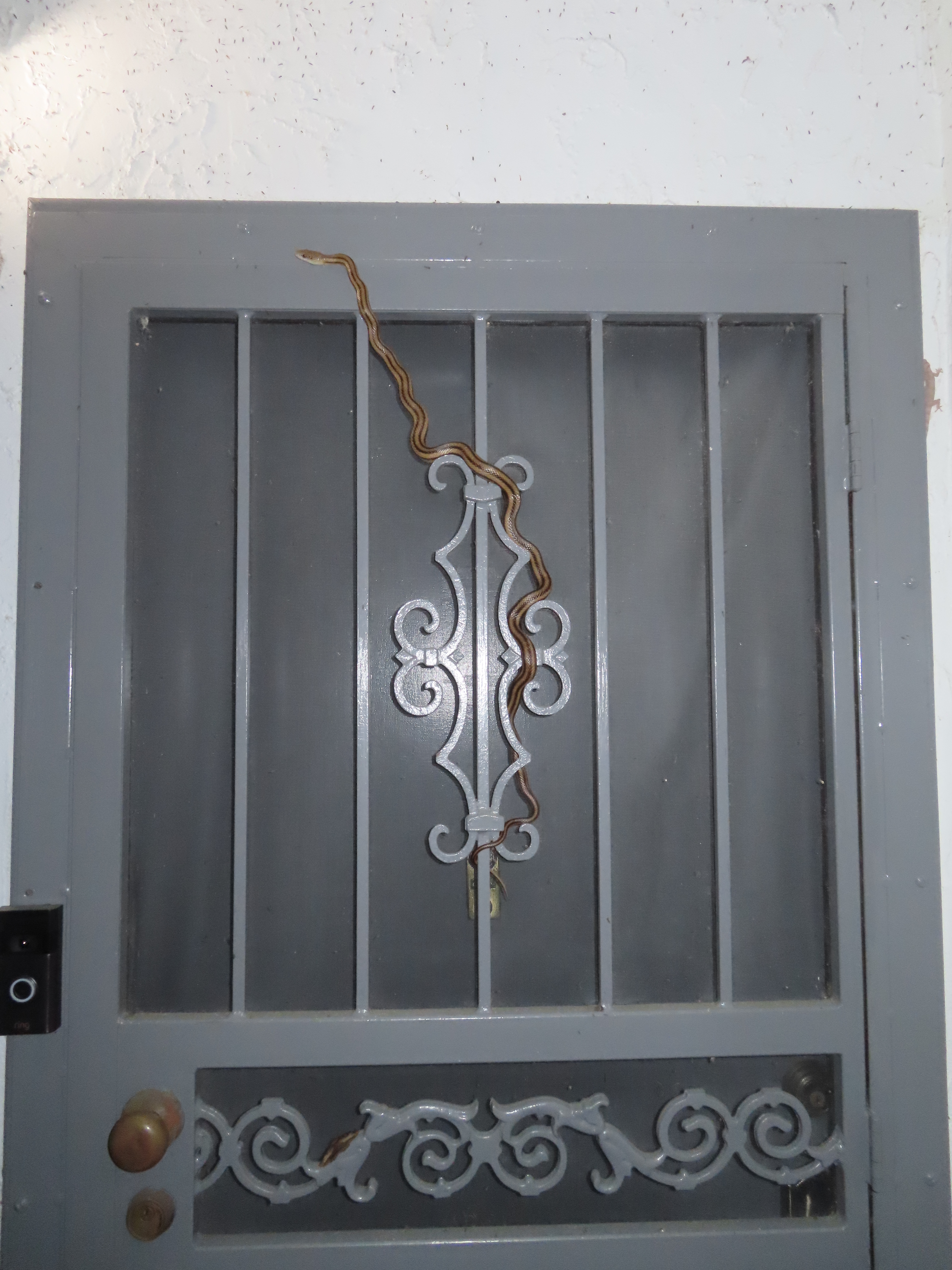
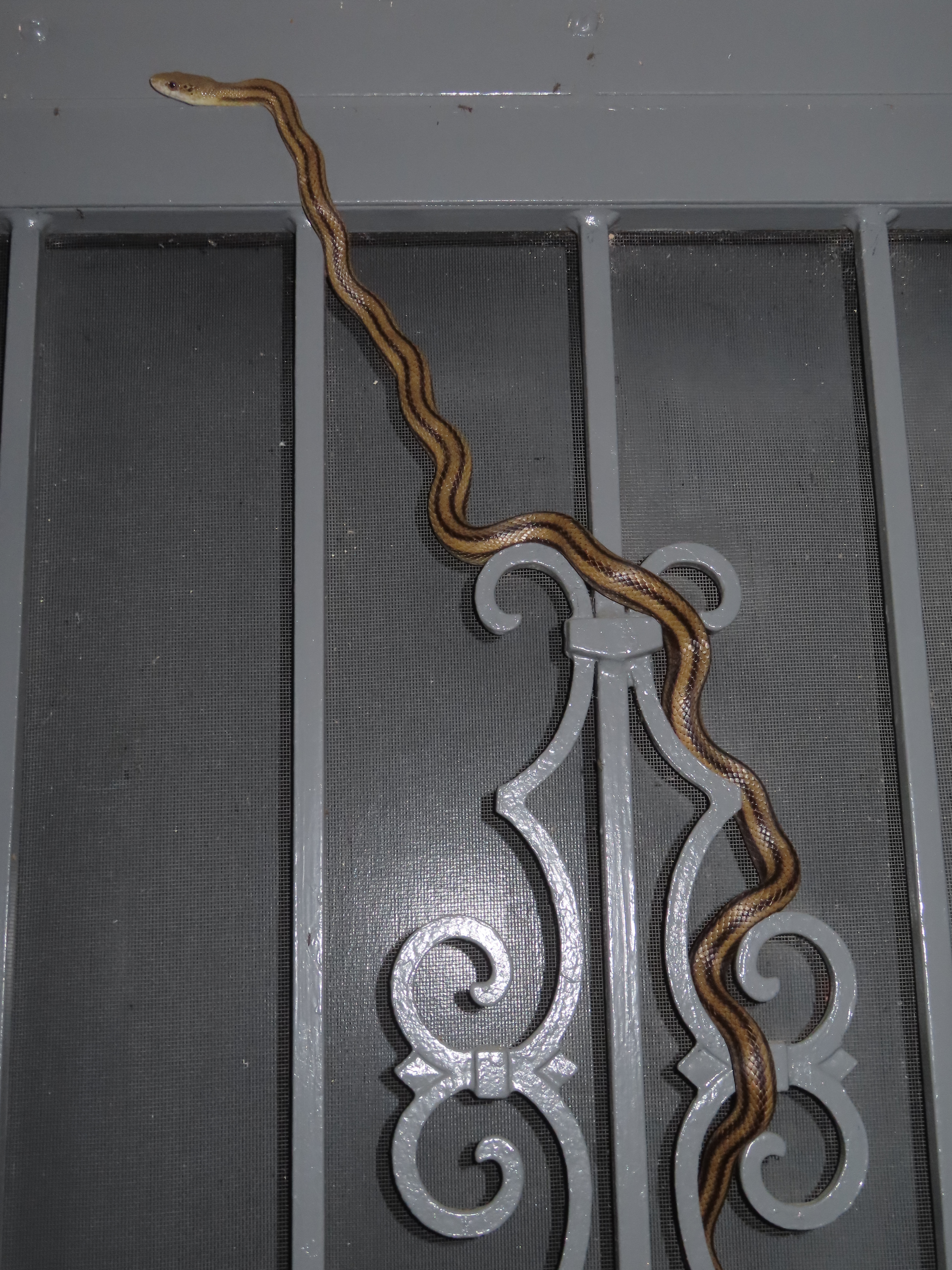
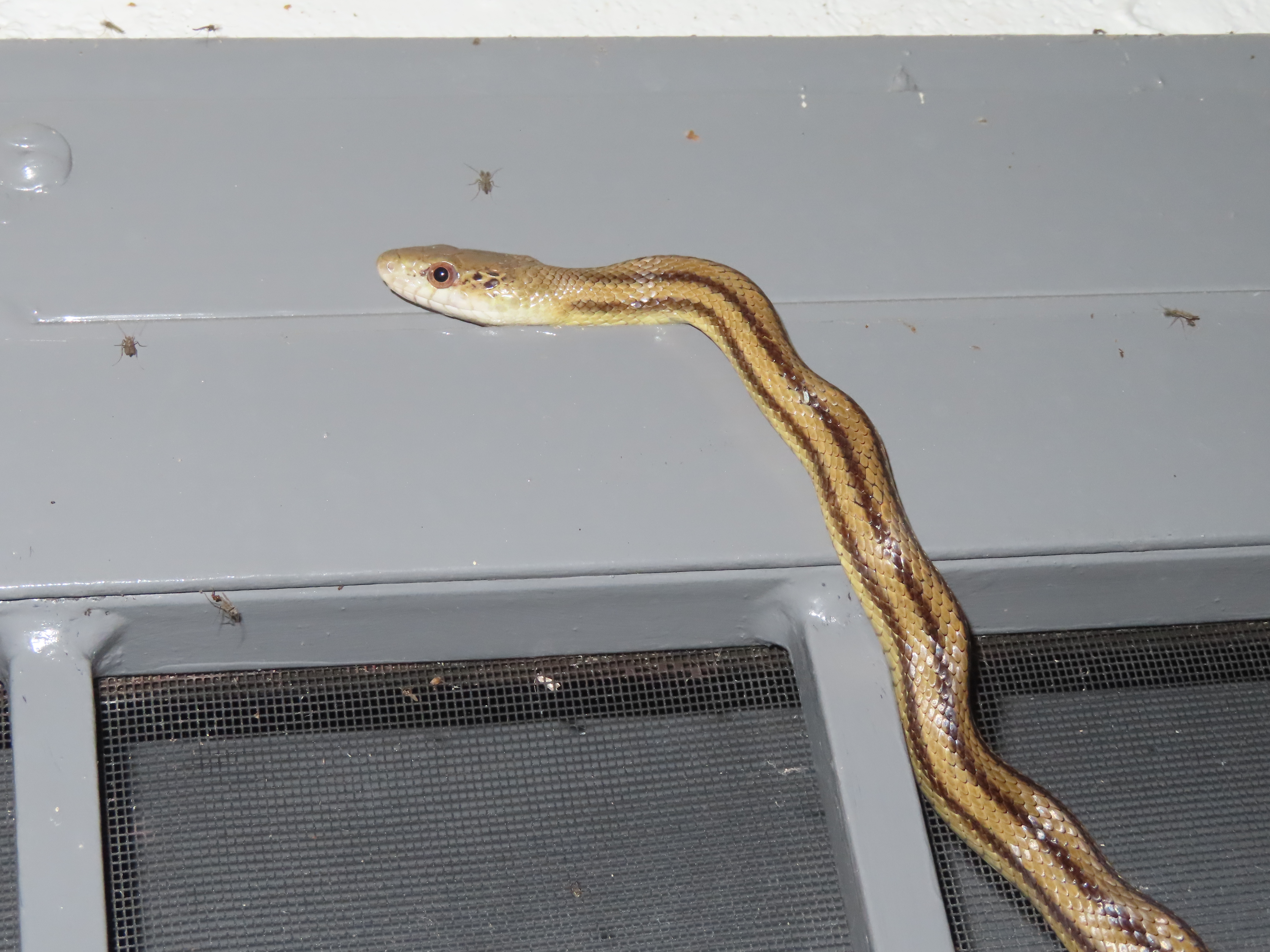
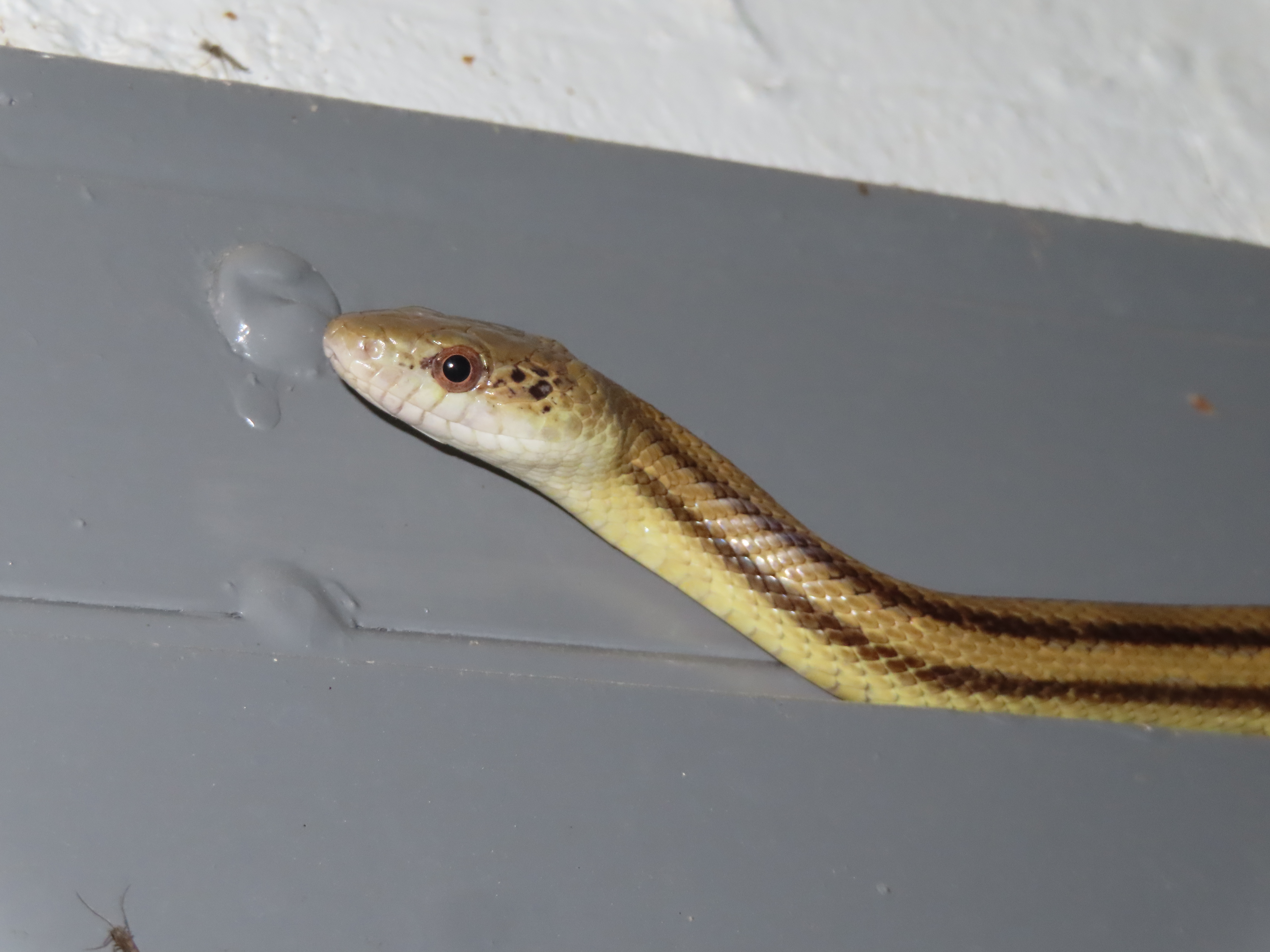
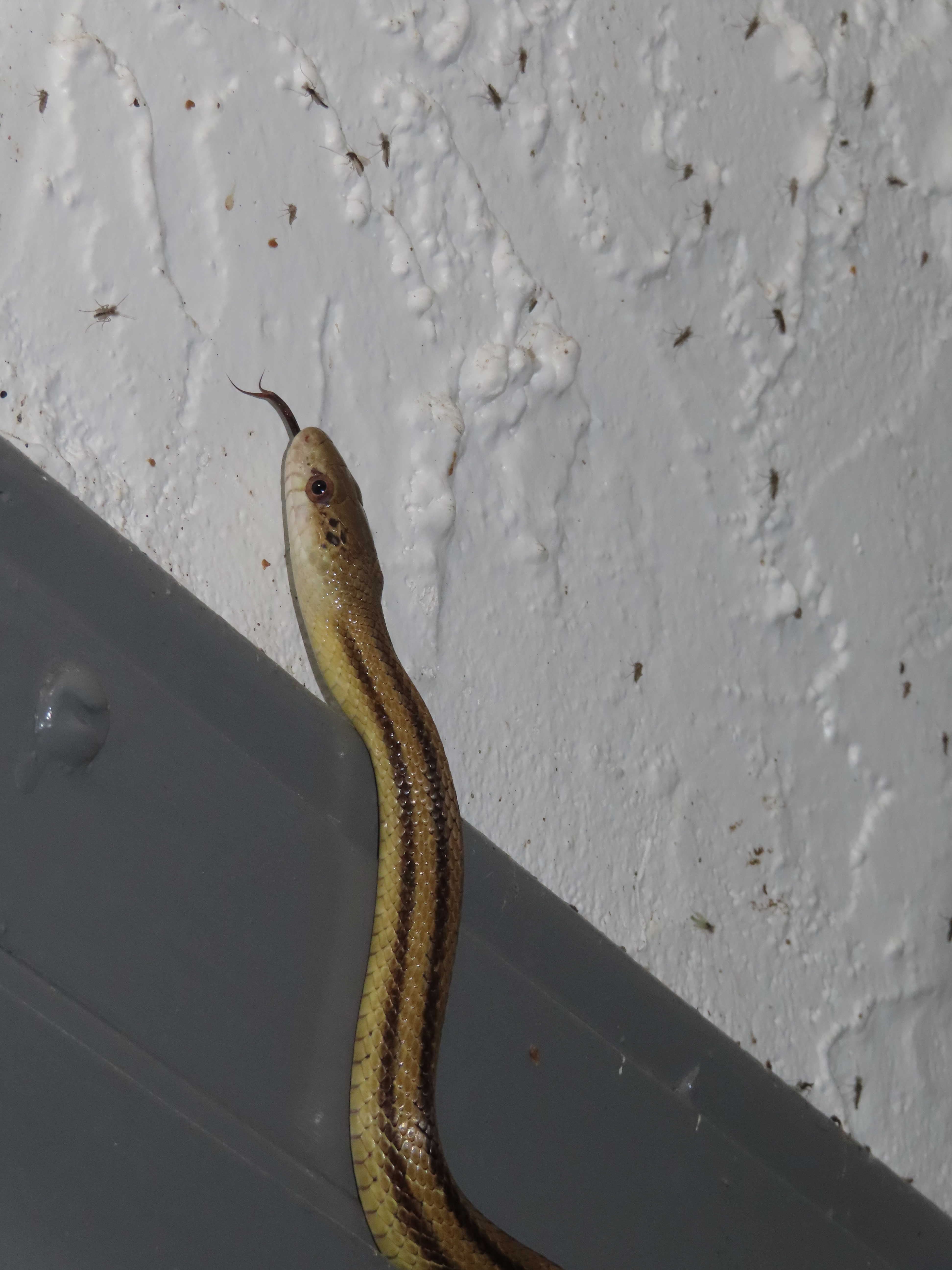
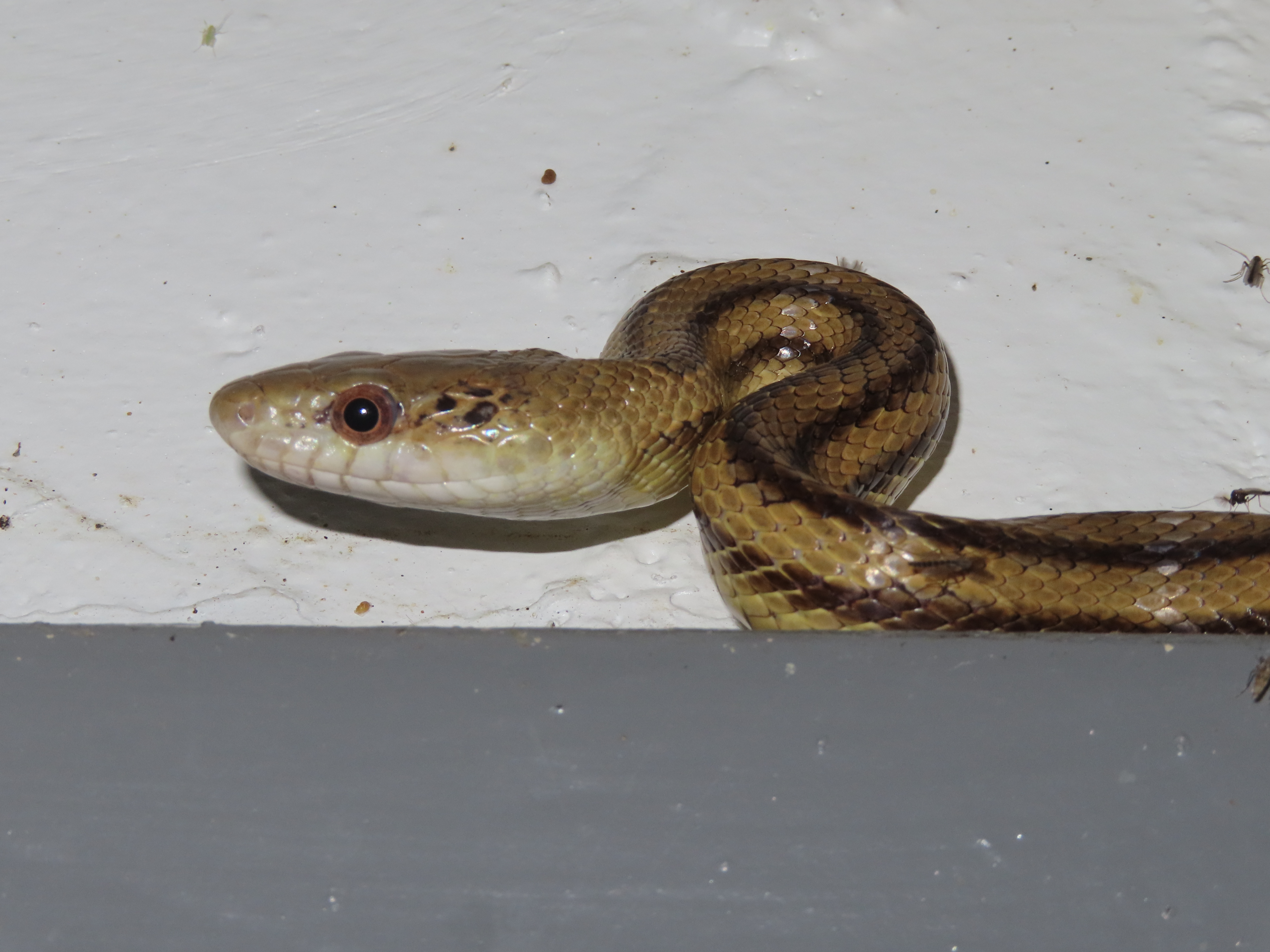
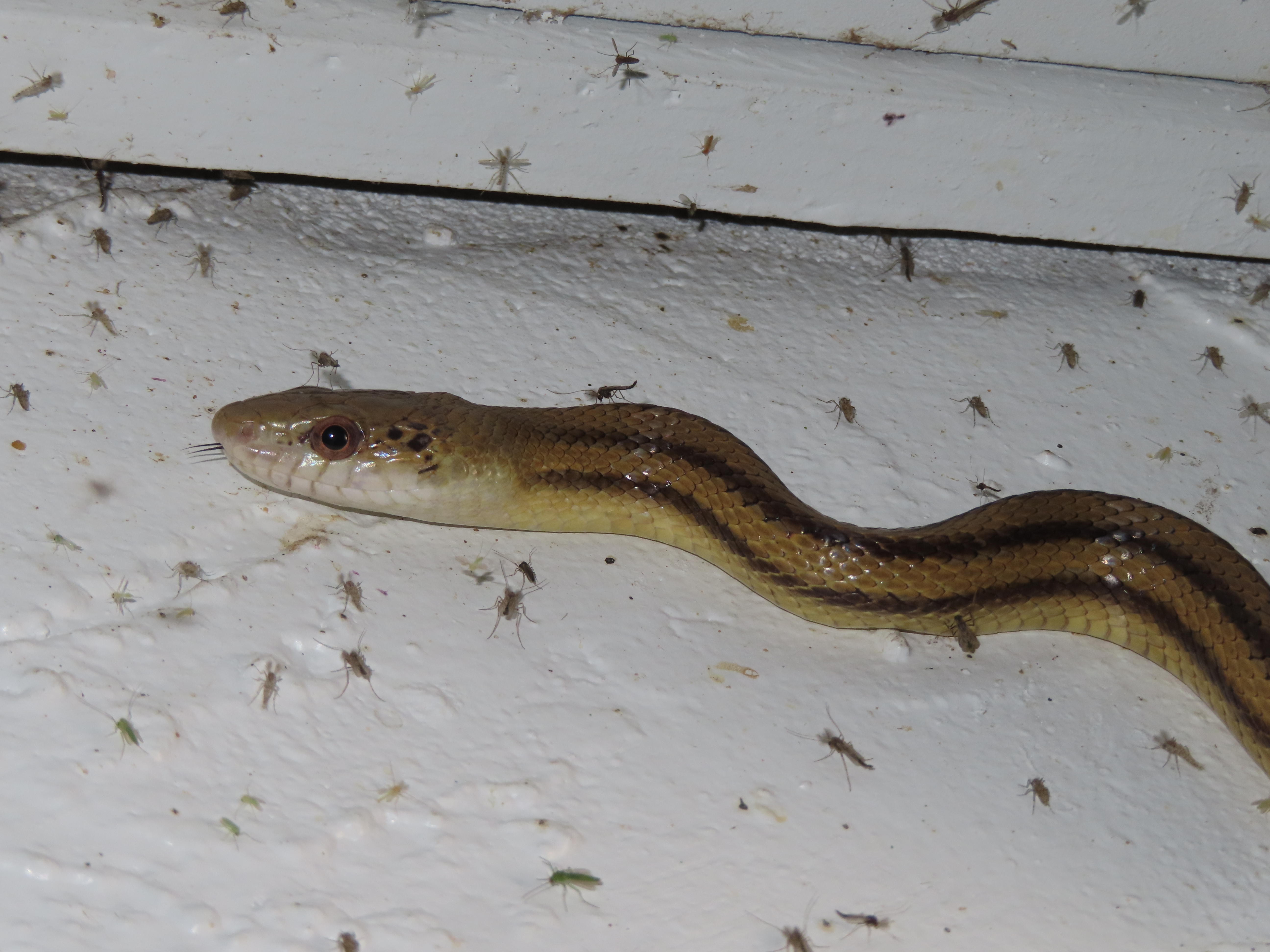
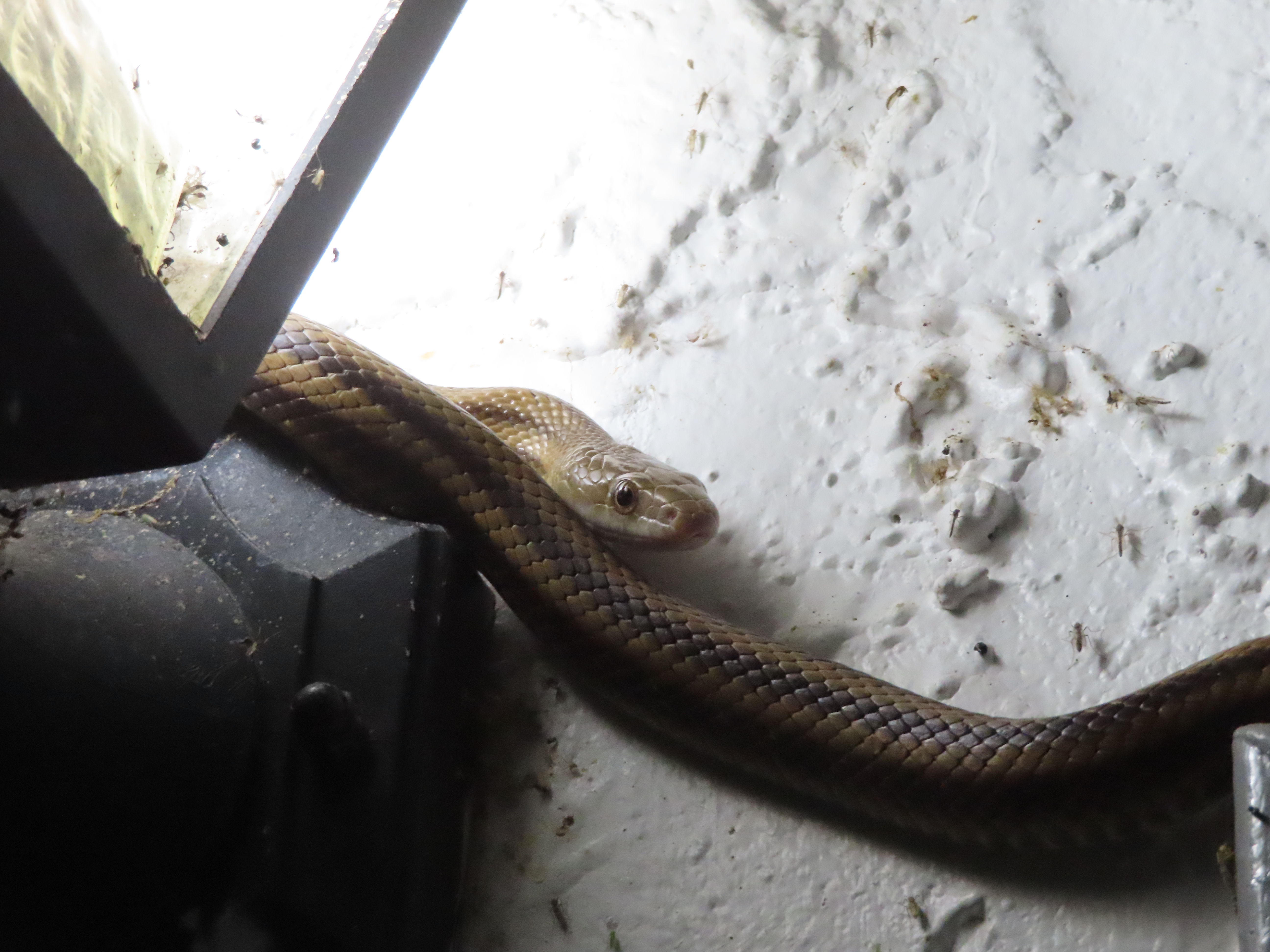
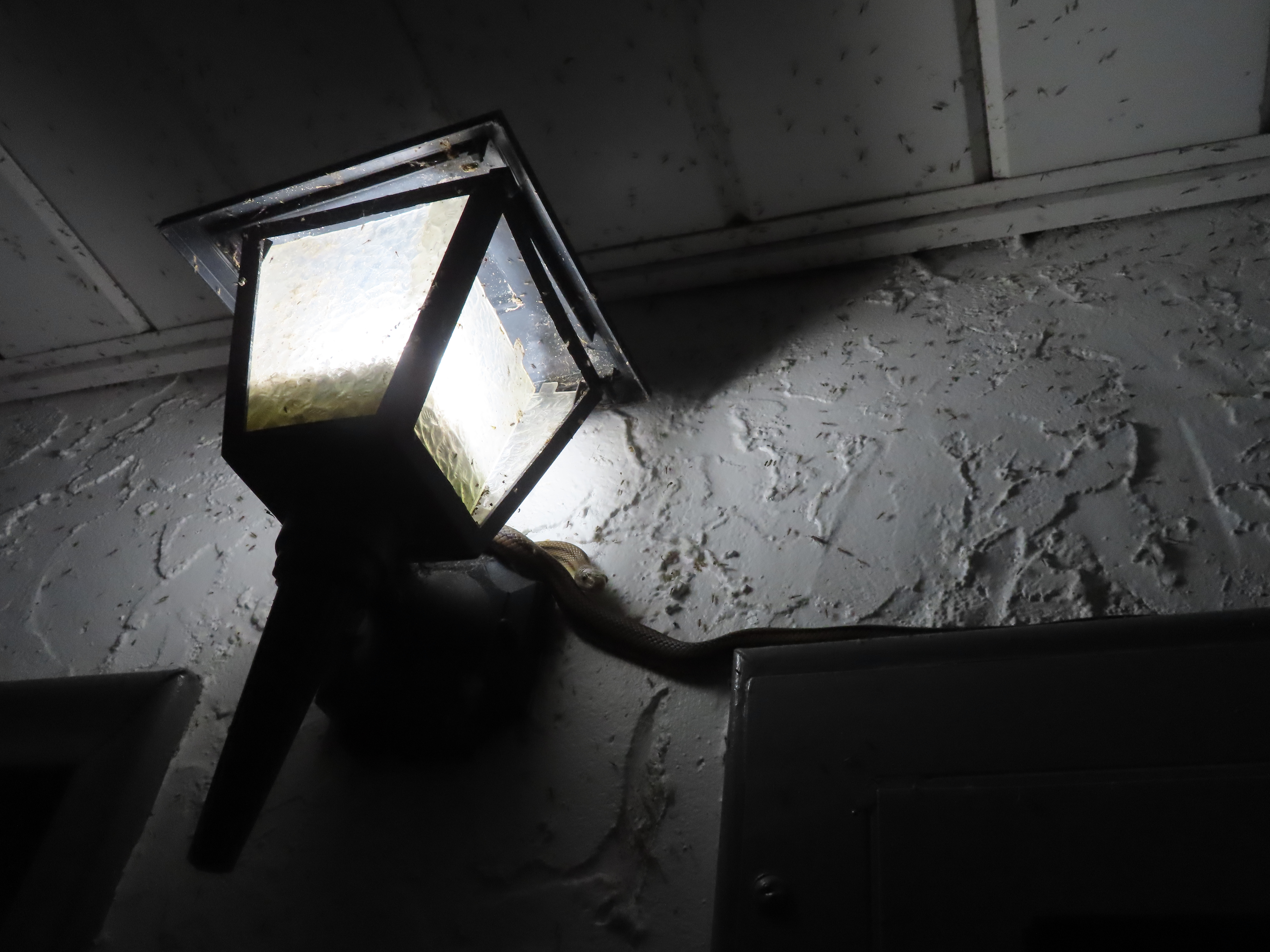
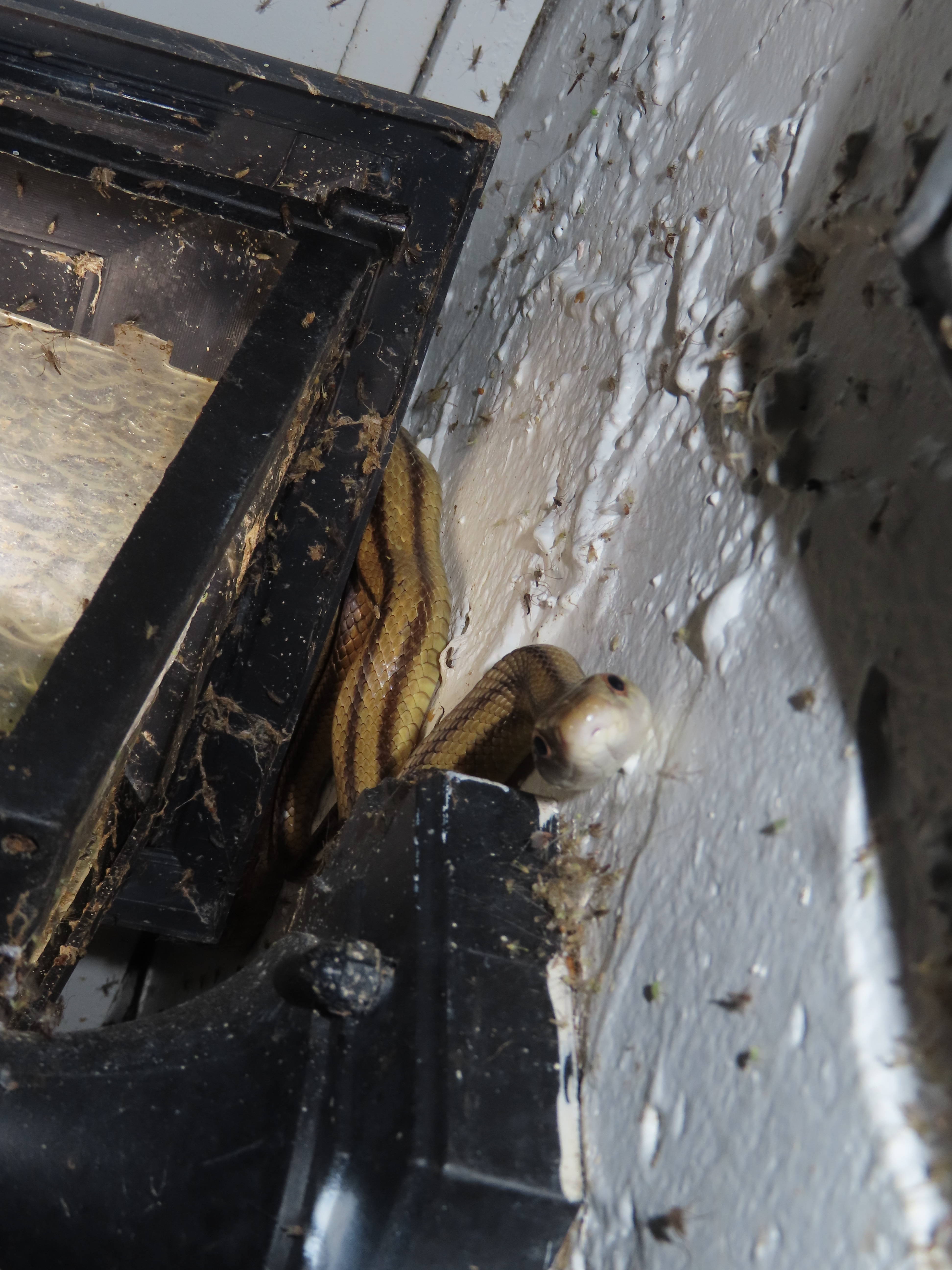
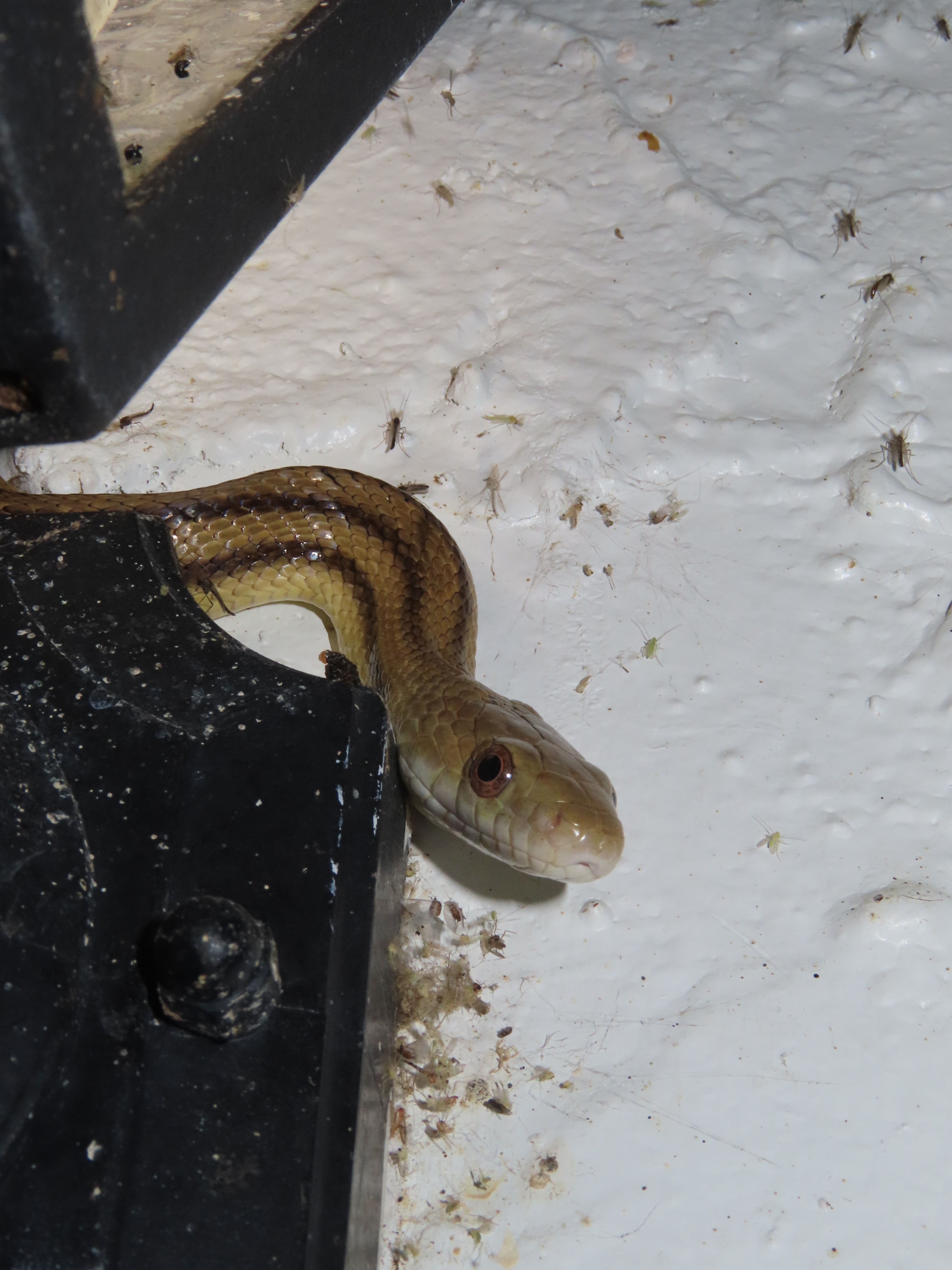

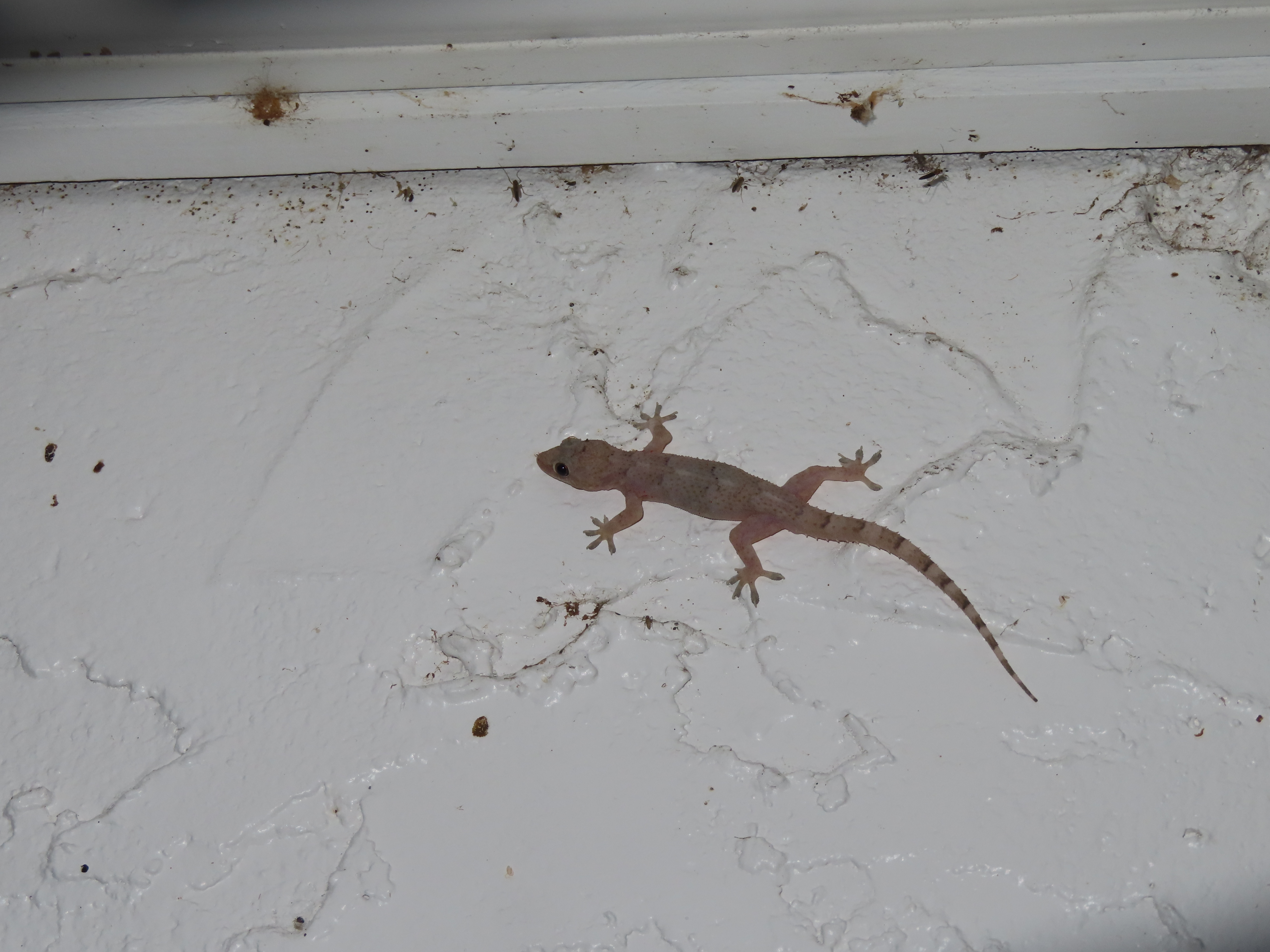
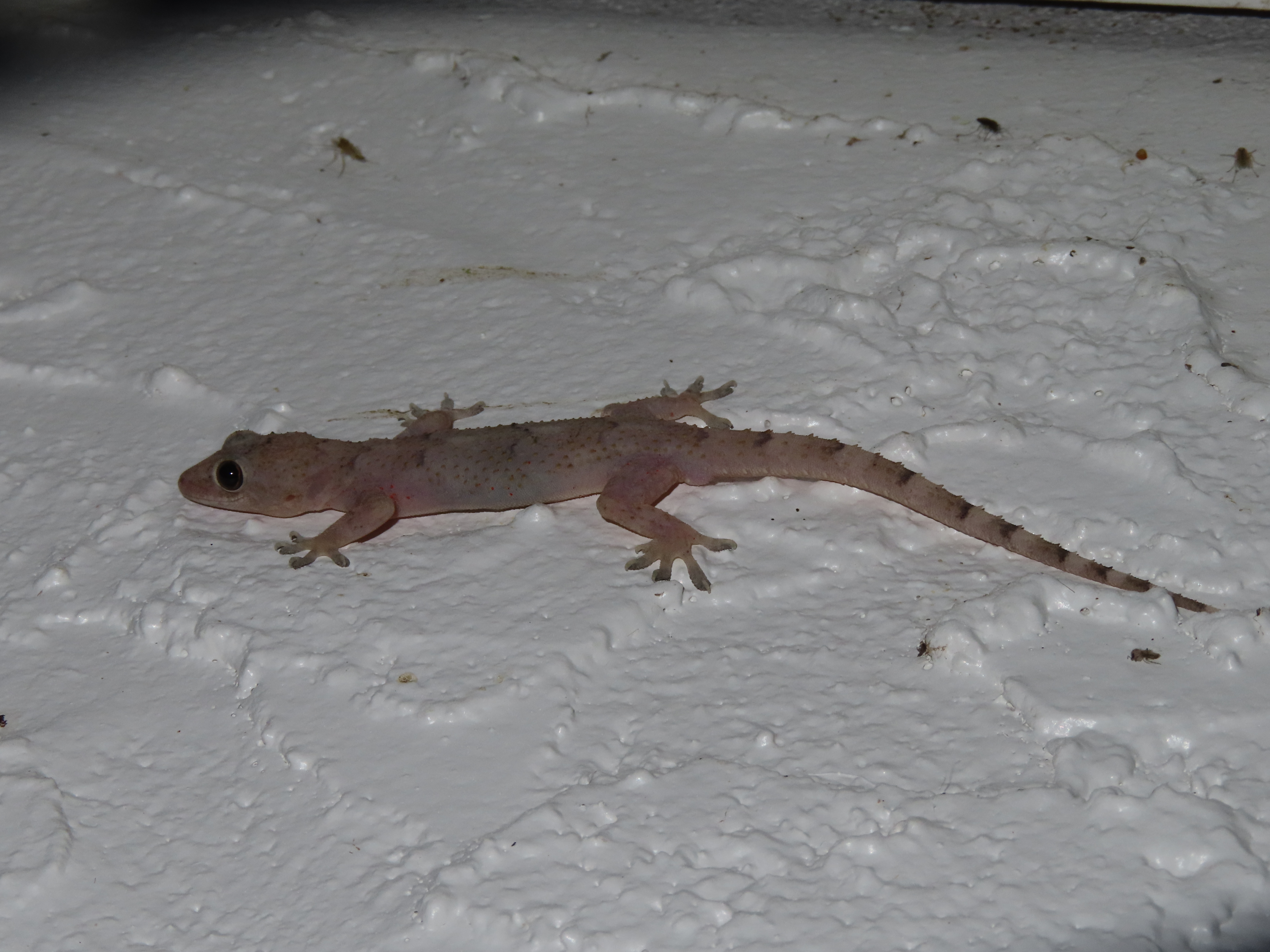
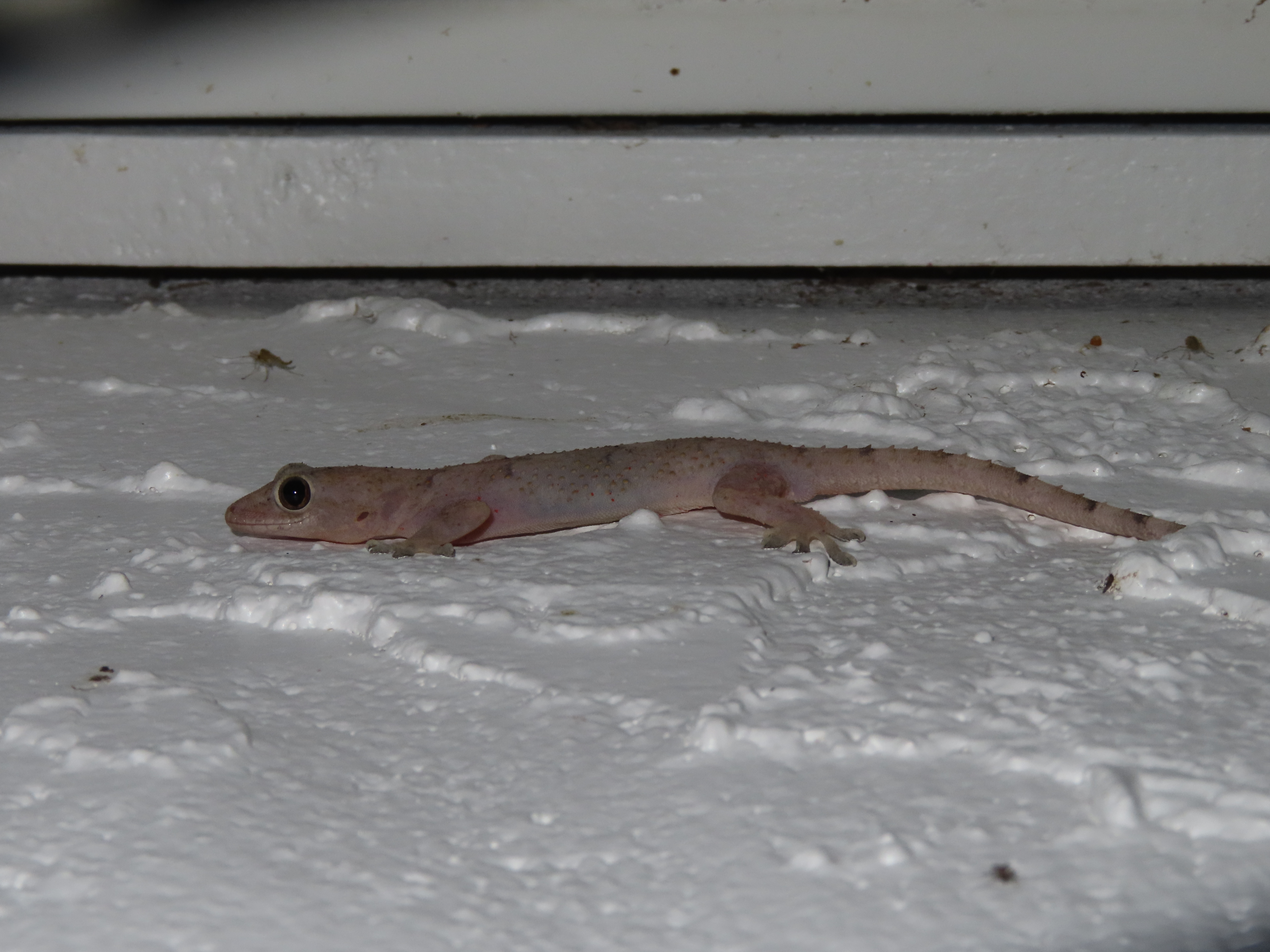
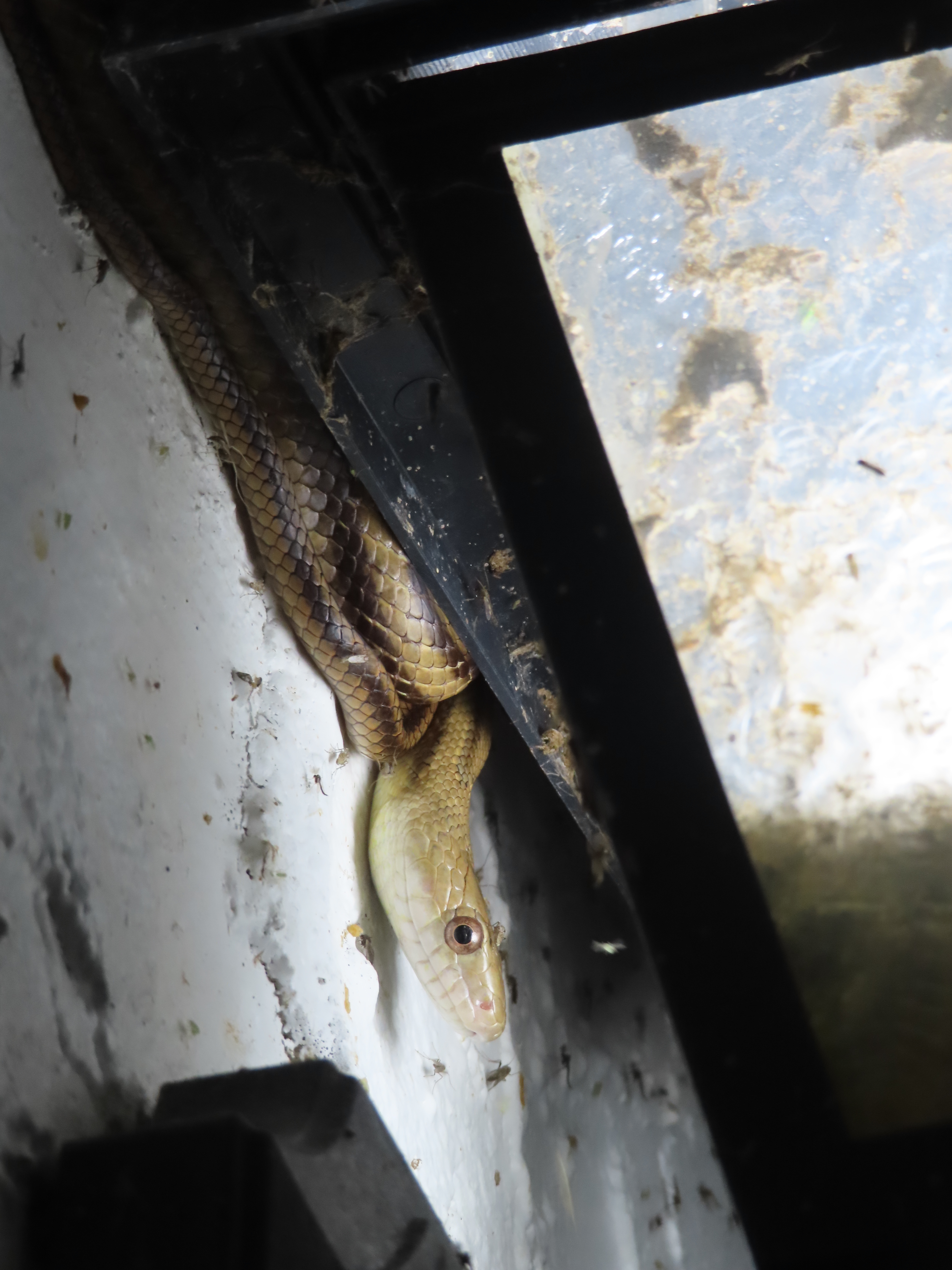
An Eastern ratsnake scaling my neighbor’s door then taking up a position behind the light. Note the abundant insects (including on the snake) that are attracted to the light. That night I didn’t see any geckos but there are usually several in the area surrounding the light, and on other nights I have photographed them (pictured). The geckos typically scurry into gaps between the exterior walls whenever someone approaches the door. Perhaps I had scared them off when approaching, or else they sensed the snake was near and retreated into hiding. Click to enlarge photos.
I think this represents an interesting food chain. Humans place an outdoor light by
their door. At night, this light attracts insects. These insects attract introduced
house geckos. And finally, these geckos attract a ratsnake. This is somewhat
analogous to a farmer who has a barn filled with grain, the grain attracts
rodents, and the rodents attract ratsnakes. It also reminds me of a documentary
clip from a while ago (narrated by David Attenborough) where snakes position
themselves hanging from the entrance of caves to catch and eat bats which are
entering and exiting the cave at night.
 Reason and Nature
Interesting observance. Critters that are able to adapt to their circumstances seem to prosper.
LikeLike
My husband and I really enjoy “Reason and Nature!”
LikeLike