Snapping turtles – big, powerful and with long claws, snake-like neck, and beak-like jaws – are an impressive sight to behold. The common snapping turtle (Chelydra serpentina) is abundant in freshwaters across most of the United States. With a shell length up to 20 inches and weight of 35 pounds, they are the largest turtle that many Americans encounter in the wild. In the U.S., only the alligator snapping turtle, Florida softshell turtle, and six species of sea turtle (Green, Hawksbill, Kemp’s Ridley, Leatherback, Loggerhead, and Olive Ridley) are larger.
Within the past month I’ve been lucky to have three encounters with snapping turtles.
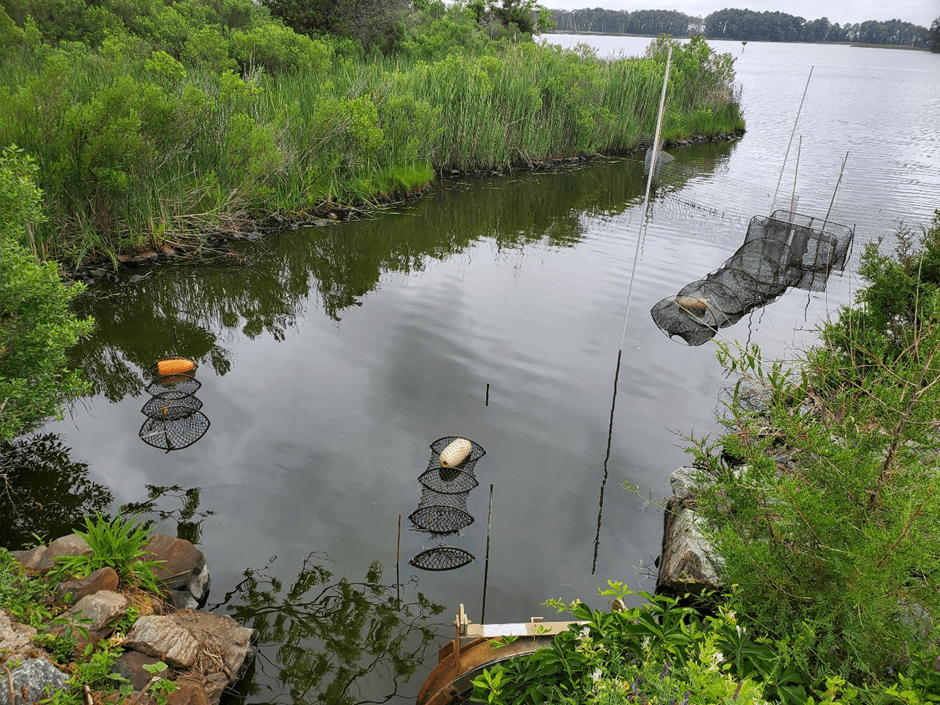
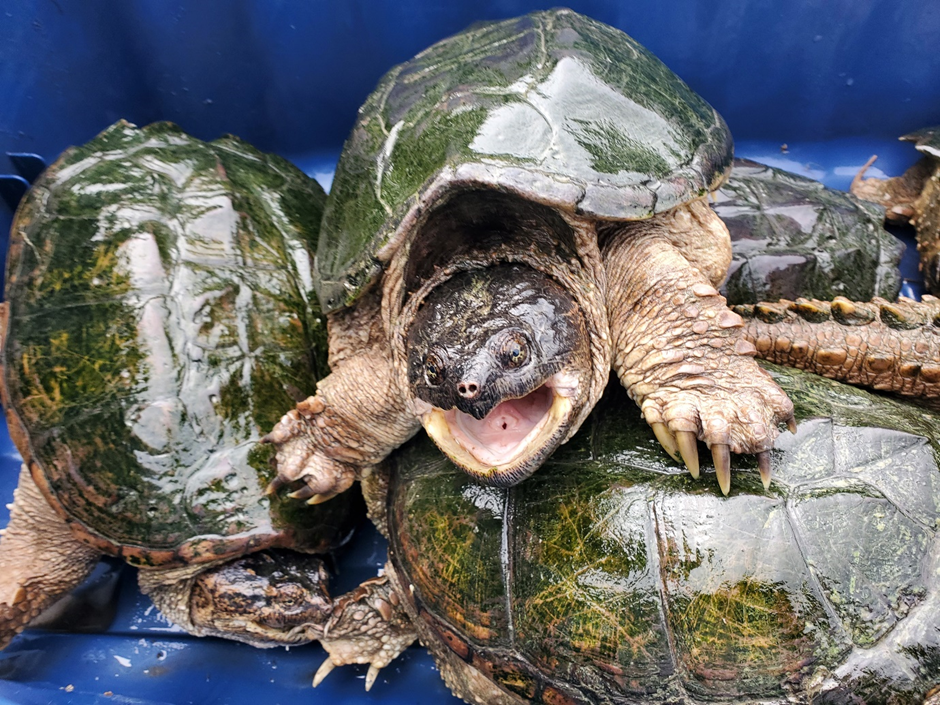
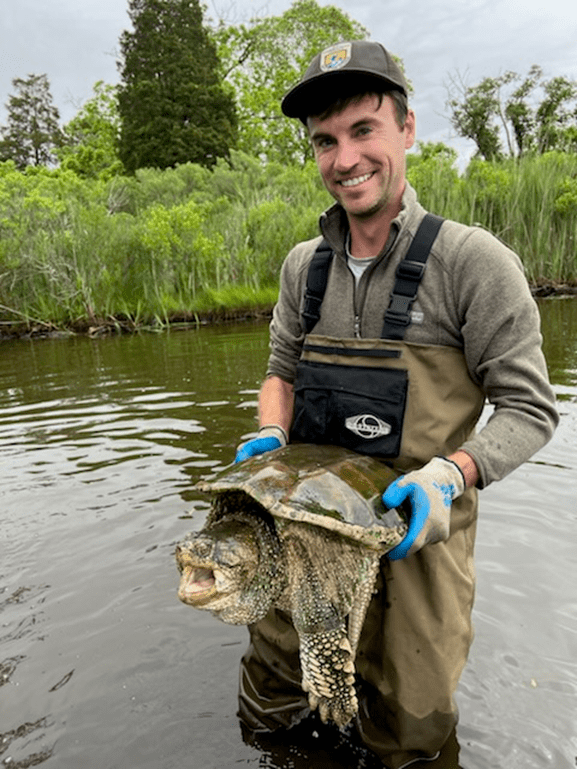
Part of my job as a fish biologist with the U.S. Fish and Wildlife Service is traveling to different areas of Maryland to capture northern snakehead (an introduced species of fish) as part of a tagging program to estimate their rate of harvest through angling. My favorite site so far has been the Blackwater National Wildlife Refuge on Maryland’s eastern shore. This is a tannin-rich (i.e. blackwater) swamp adjacent to the Chesapeake Bay that spans the gradient from brackish to freshwater. At Blackwater, in late May, we set two fyke nets and left them overnight in an attempt to capture snakehead. The next day we returned to check the nets and found that one of them had 18 large snapping turtles in it. All were doing fine. I was able to remove the snapping turtles fairly efficiently and avoid getting snapped.


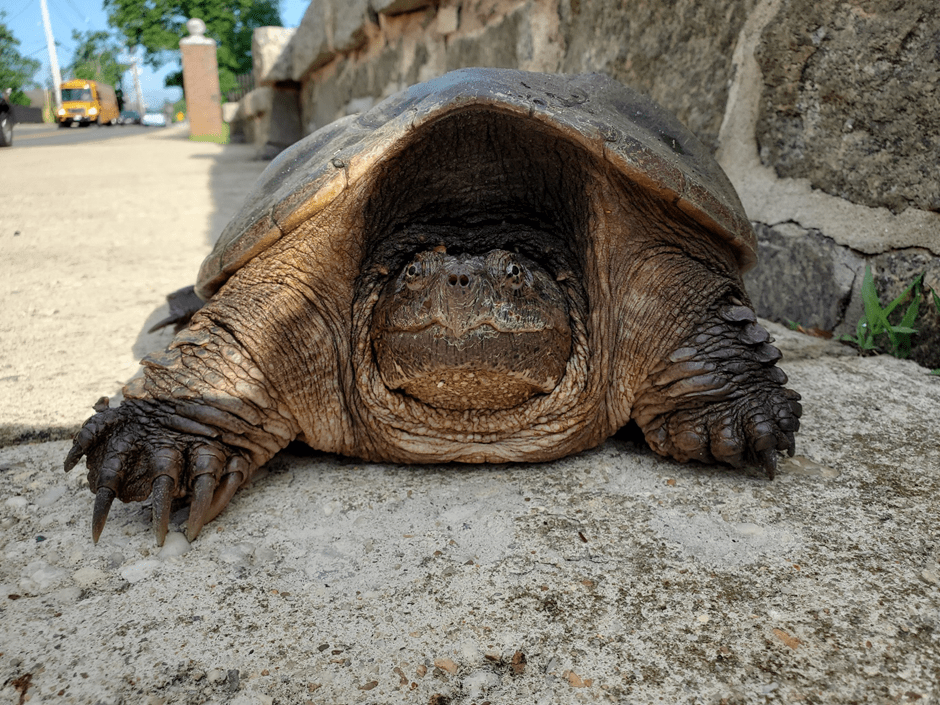
While driving to work in early June I was surprised to see a snapping turtle walking on the sidewalk in Annapolis, just outside the historic city center. West Street is the busy main street leading into Annapolis and here was a snapping turtle walking on the sidewalk around 7:30 in the morning. Snapping turtles are known for making long overland journeys in search of suitable nest sites in which to lay eggs or to colonize new habitat. However, this one really surprised me because it seemed so out of place given the surroundings. I wasn’t even aware of any freshwater nearby and had to check the map on my phone to see where it could have come from and where it may have been heading. If I left it where it was it would inevitably have crossed West Street, and likely many other busy roads as well, and there was a high likelihood it would get hit by a car. Therefore, I decided to pick it up and move it to a safe location. On one side of the sidewalk was a walled-off cemetery and the other side of the road contained office buildings and businesses. The nearest freshwater was a creek several blocks away. I am not sure if that’s where it came from. Anyways, the creek was too far to carry the turtle so I put it in my trunk, drove to the creek, and then released it.



If you have to move a snapping turtle the best way is to approach from behind and firmly grasp the turtle with both hands by the upper shell just above the hind legs. There is a large gap here in which to grab and this hand positioning keeps you safe from both the claws and the snapping mouth. Picking snapping turtles up by the tail can damage their vertebrae.
This weekend I went to Great Falls, a series of waterfalls and rapids on the Potomac River about 10 miles northwest of Washington D.C. In addition to seeing the impressive falls, I biked along a portion of the Chesapeake and Ohio (C&O) canal which runs parallel to the Potomac river, around the falls, and connects the Chesapeake Bay Watershed and Ohio River. The canal is no longer used for boat passage and has been designated a National Historical Park. The slow-flowing or stagnant waters of the canal, with abundant vegetation and numerous fallen trees, make for perfect turtle habitat.
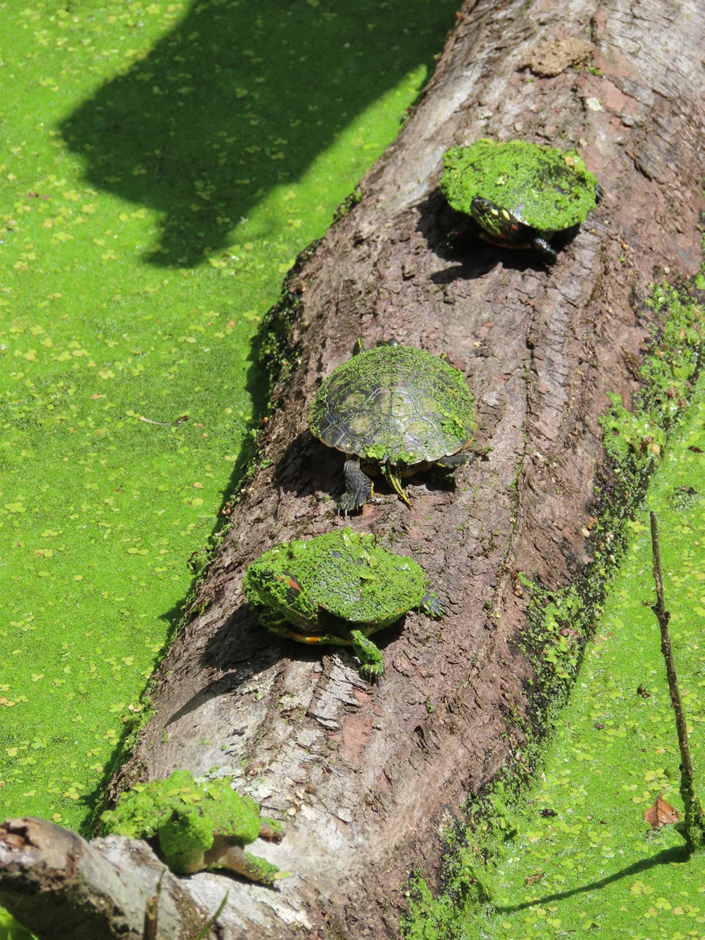
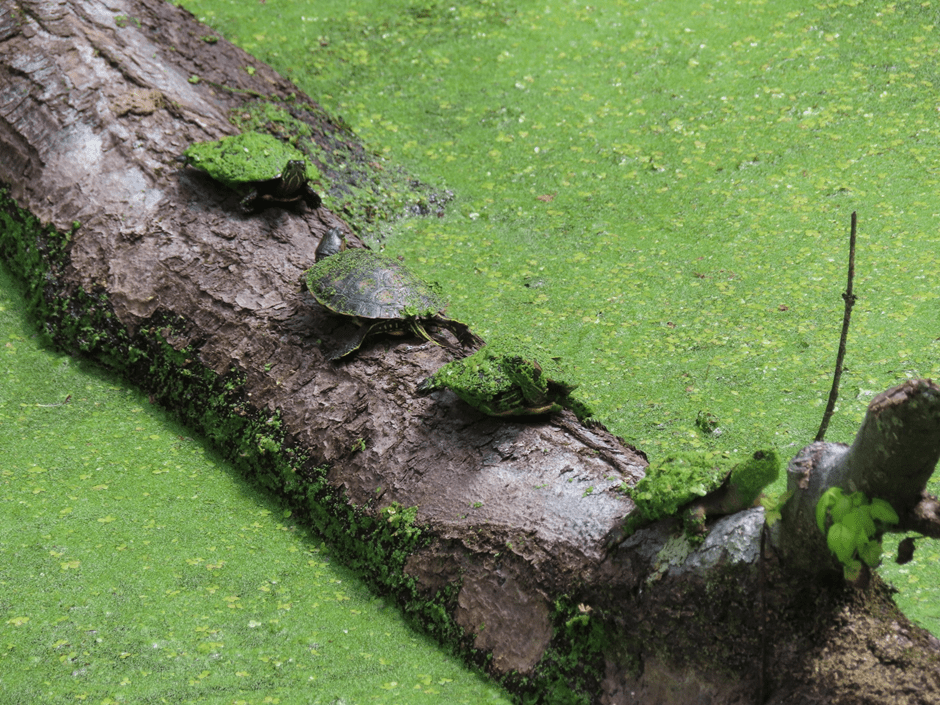
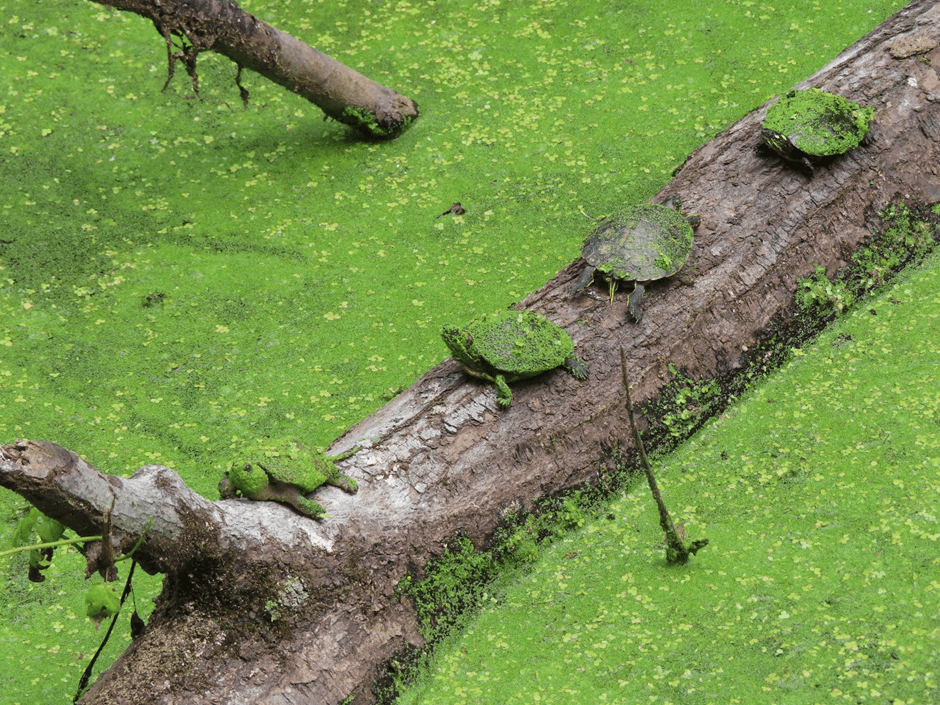


So, there were two red-eared sliders and one painted turtle, but the turtle furthest forward on the log was difficult to identify.
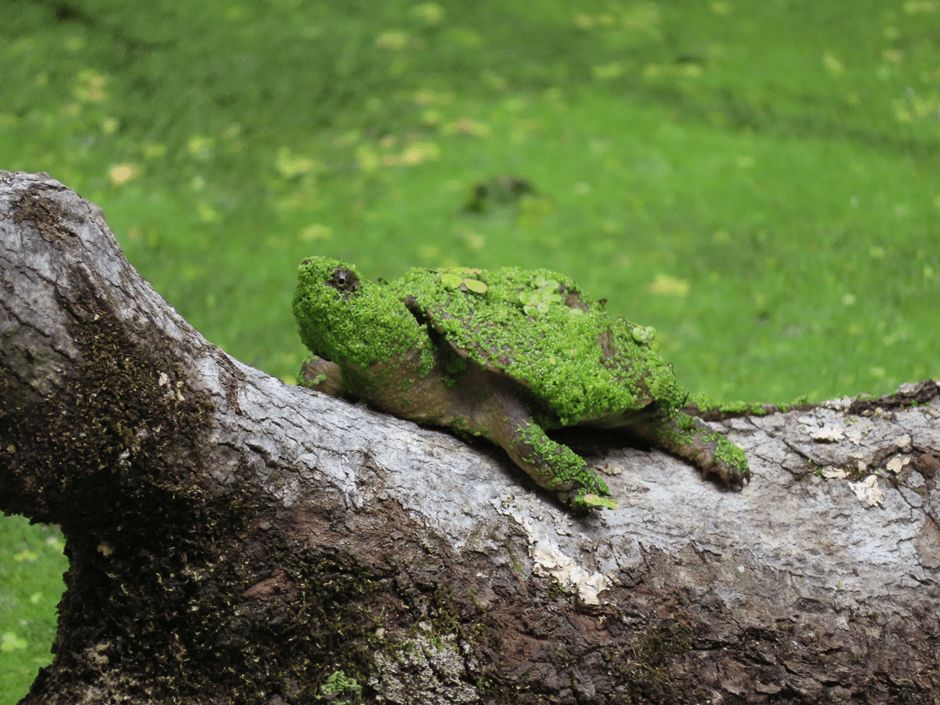
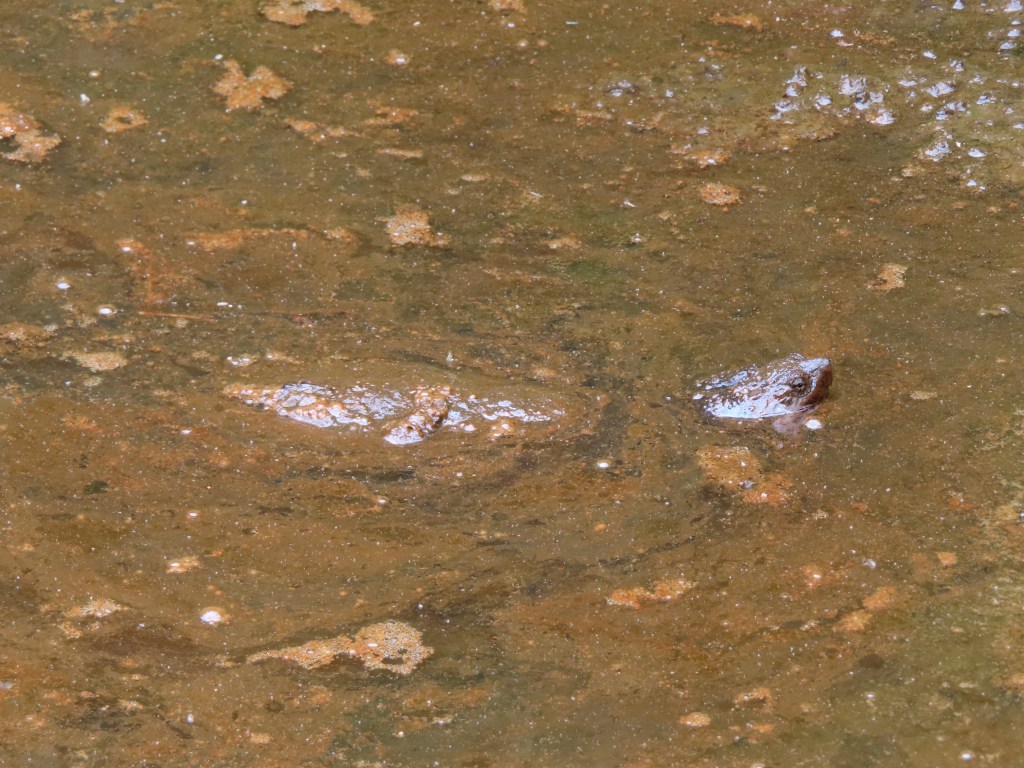
I continued biking, stopping to photograph dozens of other turtles including red-eared sliders, painted turtles, northern red-bellied cooters, snapping turtles, an eastern musk turtle, and two species of turtle I was unable to identify.


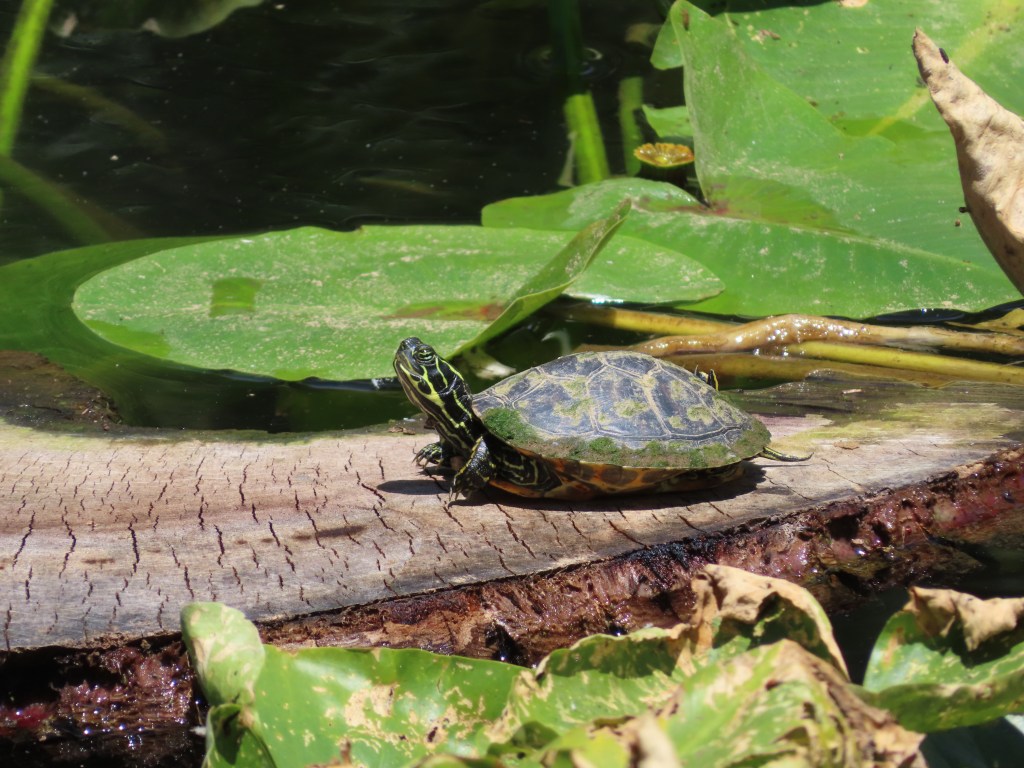
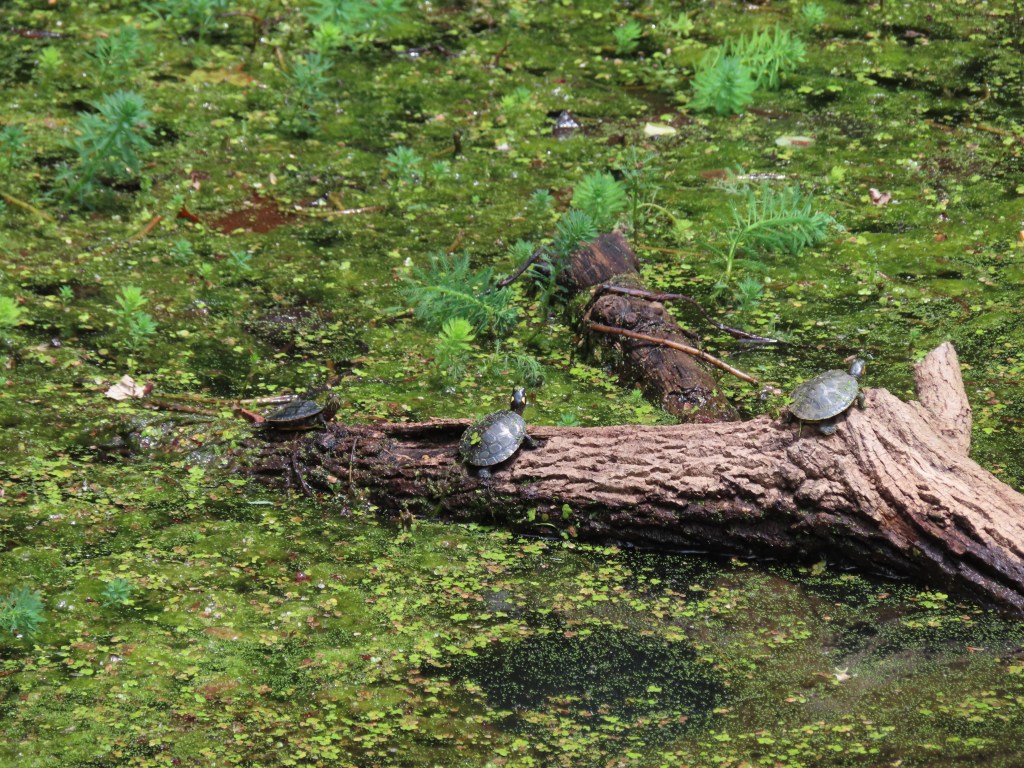

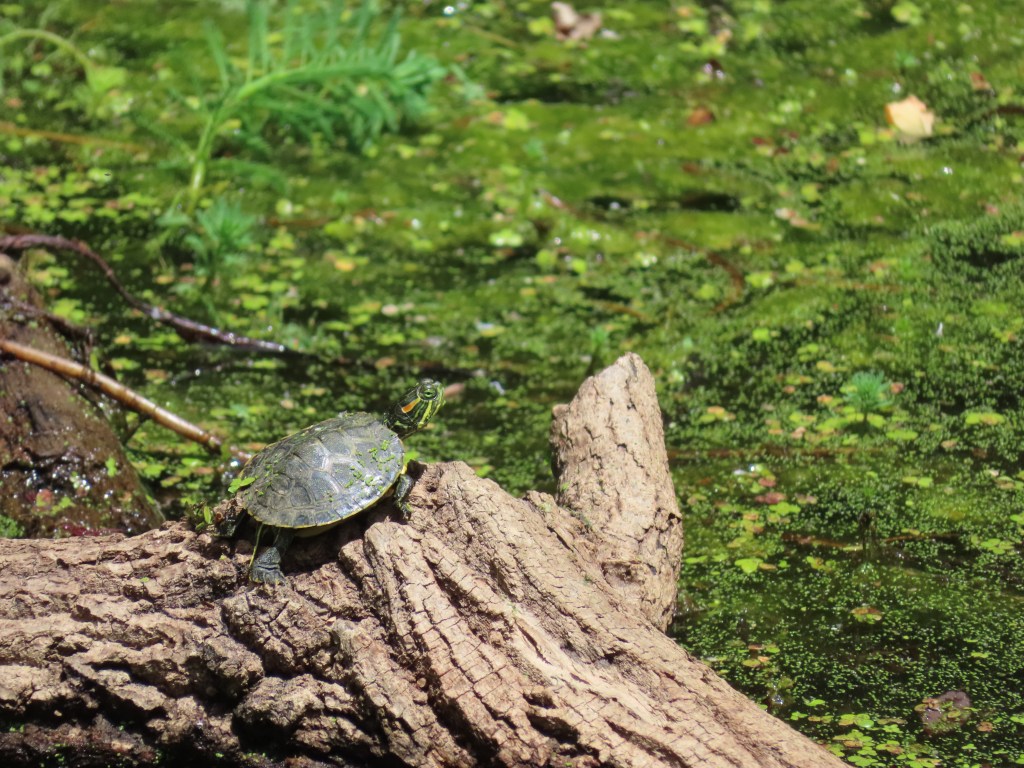


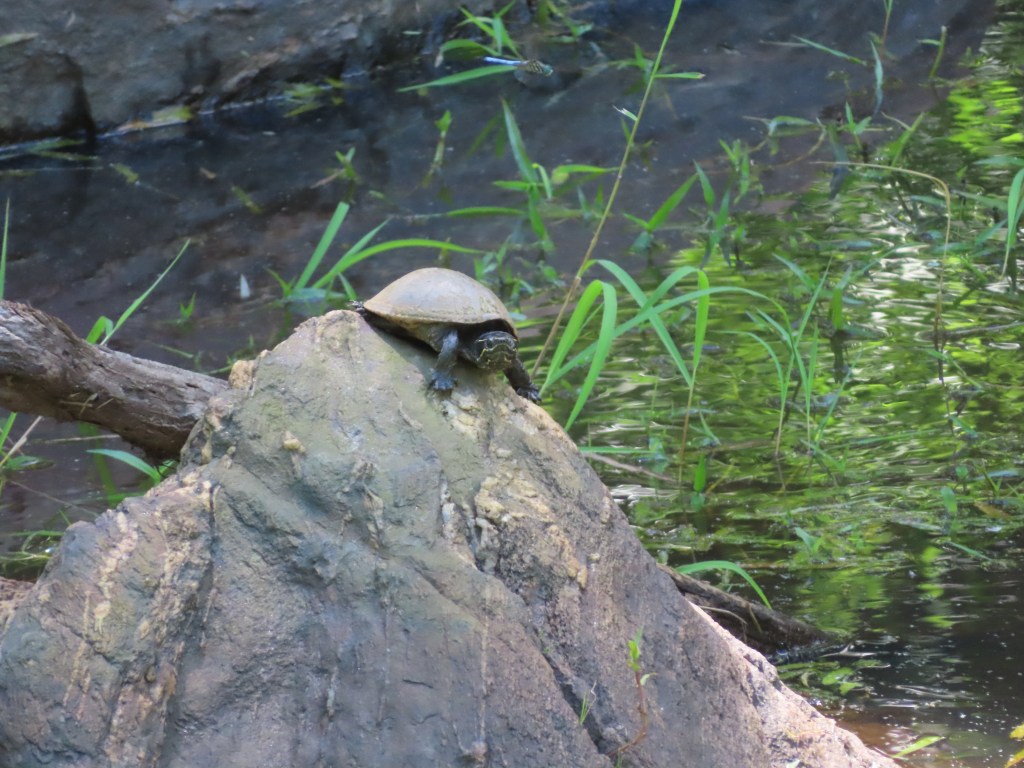

Many different turtle species were observed in the C&O canal. Please click to enlarge photos and view gallery.
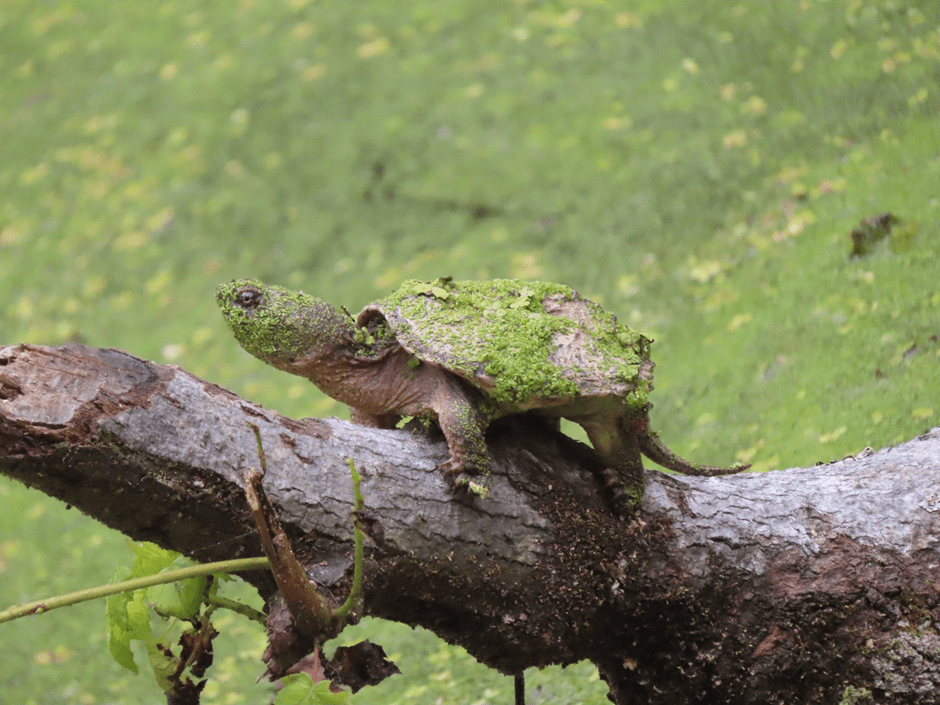
A few hours later, on the ride back, I stopped at the log in which the four turtles were basking. Only one turtle remained on the log and it was clearly the same (unidentified) turtle from earlier. But now with a bit of the duckweed cleared it was identifiable as a small snapping turtle! I am not sure why it was intent on climbing so far up this log.

 Reason and Nature
My husband carries heavy gloves in the car to rescue snappers! We once had to put one in my motorcycle carrier and get it to water (it was walking along the roadside and was very dehydrated). Loved your article! Glad to know that there are other people in the world like us!
LikeLike
When I lived in Missouri I often encountered modern snapping turtles and I’ll say to anyone who has never had experiences with these creatures,DONT MESS WITH THEM!
LikeLike