A few weeks ago, in the Everglades, I came upon an interesting caterpillar. It had a spotted pattern, with the spot closest to the head looking remarkably similar to a vertebrate eye.
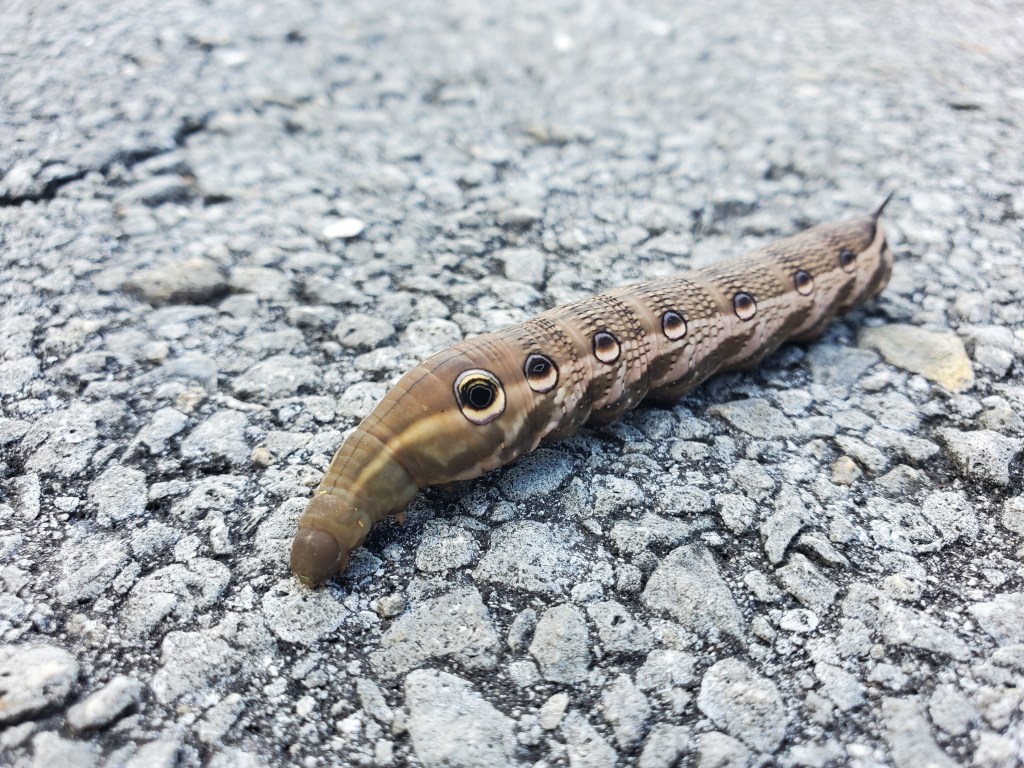


I managed to get a few photos from different angles and even a video showing its rocking back-and-forth crawling movement. The encounter got me thinking about whether the caterpillar was mimicking a snake – and if so, a particular species of snake, or just a general snake. It also reminded me of some incredible pictures I had seen of other caterpillars mimicking snakes with remarkable accuracy. And finally, it spurred me to further investigate this topic, as well as identify the species as that of the tersa sphinx moth (Xylophanes tersa).
In the case of the tersa sphinx caterpillar, I am not aware of any particular snake found in the area that exhibits this pattern. Nonetheless, perhaps this general snake-like geometric pattern could be effective at deterring small predators. Also, perhaps any snake-like mimicry is most effective when viewed directly from head on – as a bird would often encounter a caterpillar when actively foraging amongst vegetation or leaf litter. I didn’t take any photos of the caterpillar from the head-on angle, but found several on the internet. And when viewed from this angle the caterpillar looks decidedly less caterpillar-like and more snake-like, at least to me, and at least at first glance.

While doing a bit of background reading for this post I came across a fascinating scientific article with the title “A tropical horde of counterfeit predator eyes” by the noted ecologist Dan Janzen. The paper starts with the natural history observation that a remarkable number of caterpillars and pupae in the tropics exhibit different, but essentially similar, eye-like and face-like color patterns.
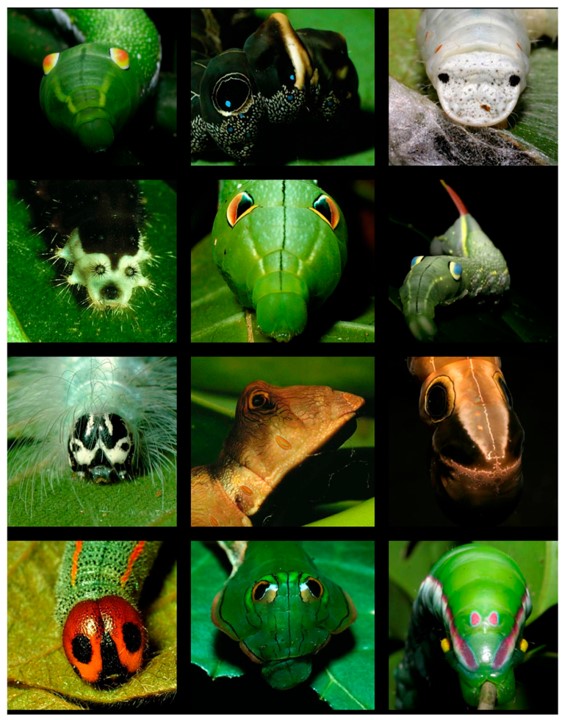
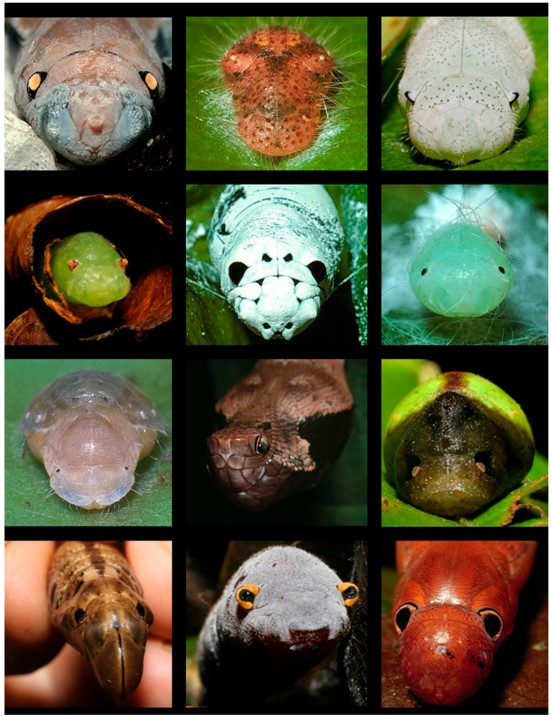
The paper is about as colorfully and compellingly written as I have seen in a scientific paper and the Introduction is worth quoting in its entirety:
You are a 12-gram, insectivorous, tropical rainforest bird, foraging in shady, tangled, dappled, rustling foliage where edible caterpillars and other insects are likely to shelter. You want to live 10–20 years. You are peering under leaves, poking into rolled ones, searching around stems, exploring bark crevices and other insect hiding places. Abruptly an eye appears, 1–5 centimeters from your bill. The eye or a portion of it is half seen, obstructed, shadowed, partly out of focus, more or less round, multicolored, and perhaps moving. If you pause a millisecond to ask whether that eye belongs to acceptable prey or to a predator, you are likely to be—and it takes only once—someone’s breakfast. Your innate reaction to the eye must be instant flight, that is, a “startle” coupled with distancing. The bird that must learn to avoid what appears to be a predator’s eye is not long for this world. Now, a safe few meters away, are you going to go back to see whether that was food? No.
You, like billions of other individuals and hundreds of other species for tens of millions of years, have just been a player in an act of natural selection favoring mutations that lead to the multitudes of “false eye” color patterns, “eyespot” patterns, or “facsimiles of eyes” and “faces” adorning tropical caterpillars and pupae. These eyespots are round or oval and mono- or polychromatic, with round or slit pupils. Associated body patterns often suggest other head and facial features, which in turn enhance the eye-like nature of the spots. Depending on the angle of observation and on how much or which part shows, one pattern may even simulate different faces. None of these patterns exactly matches the eyes or face of any particular species of predator; but, even when quickly and partially glimpsed, all give the illusion of an eye or face. These false eyes are mimicking the eyes and faces of such predators of insect-eating birds as snakes, lizards, other birds, and small mammals, as perceived at close range by the insectivorous birds in their natural world. These color patterns—long noticed by field naturalists, evolutionary behaviorists, ecologists, taxonomists, ecotourists, and, no doubt, our distant ancestors—and the birds’ reactions to them, are the evolutionary footprints of predator/prey encounters as shallow as today and as deep as the first terrestrial vertebrate eyes. Such footprints are scattered across many diurnal vertebrate/prey interactions, but here we focus only on those of caterpillars and pupae and the birds that eat them.
Janzen et al. (2010)

The authors go on to posit that the huge array of false eyes and face-like patterns on tropical caterpillars and pupae has been generated and is sustained due to the innate startle response causing insectivorous birds to instinctively flee when suddenly confronted, at close range, with what appears to be the eyes of one of their predators. They further suggest that the caterpillar need not closely match one specific predator species to be effective: “Even when approximate, these patterns are sufficiently eye-like and face-like to stimulate visual receptors/mental processes that vertebrate predators have evolved for rapidly recognizing what might be an eye, regardless of how imperfectly or fractionally seen.”
However, there are a few cases of mimicry in which, at least to my eye, the caterpillar or pupa resembles a particular species of snake. Below I have included 3 examples that illustrate these wonders of evolution, along with pictures of the snake species that the caterpillar may be mimicking.


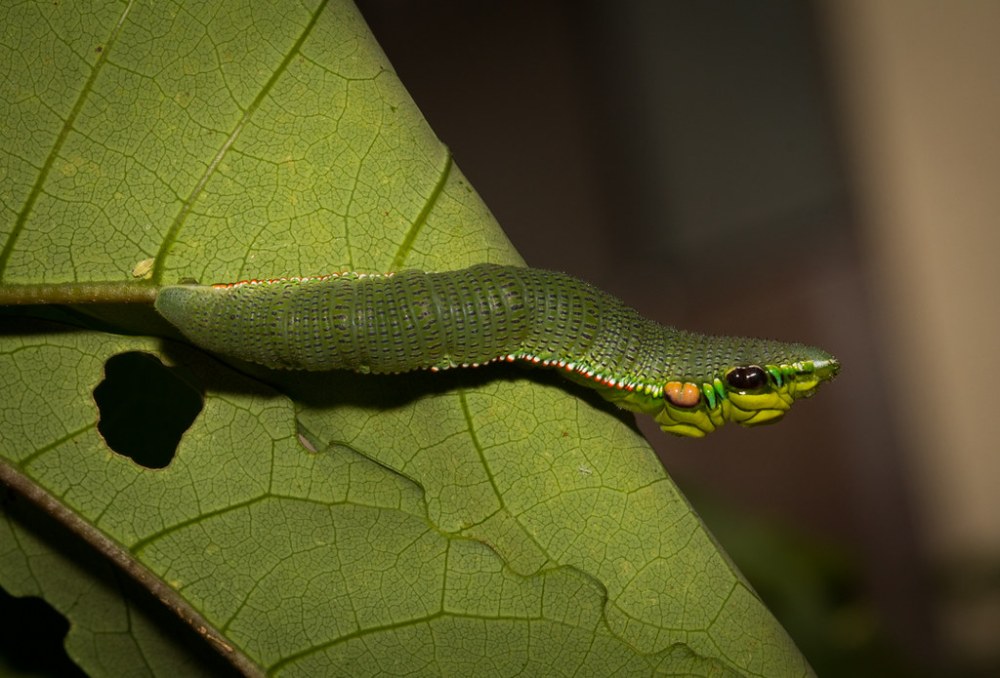


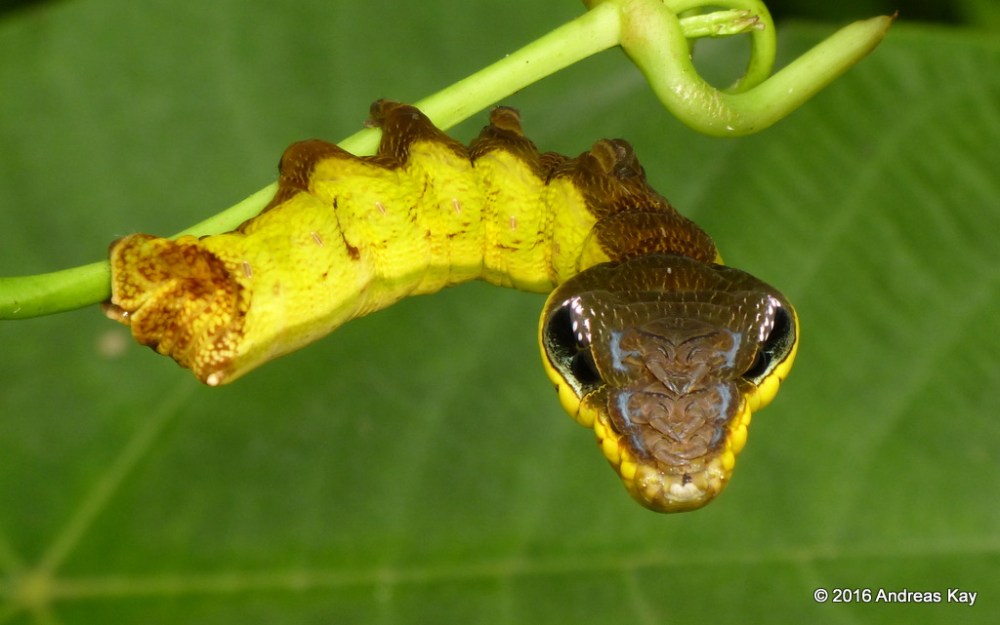


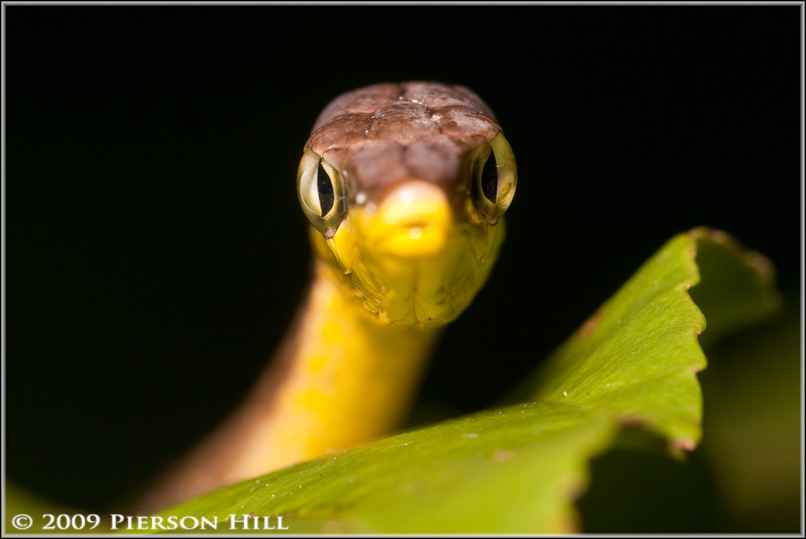
Caterpillar of sphinx moth (Hemeroplanes triptolemus) and Brown vine snake (Oxybelis aeneus). From the photographer of the sphinx moth, Andreas Kay: “When disturbed this larva of a sphinx moth expands and exposes the underside of the first body segments, mimicking a snake head with black eyes and even light reflections. Sometimes it also strikes like a snake to deter predators such as lizards or birds.” Photo credits: caterpillar in photo 1, 3, 4, 5 = Andreas Kay, snake in photo 2 and 6 = Pierson Hill.
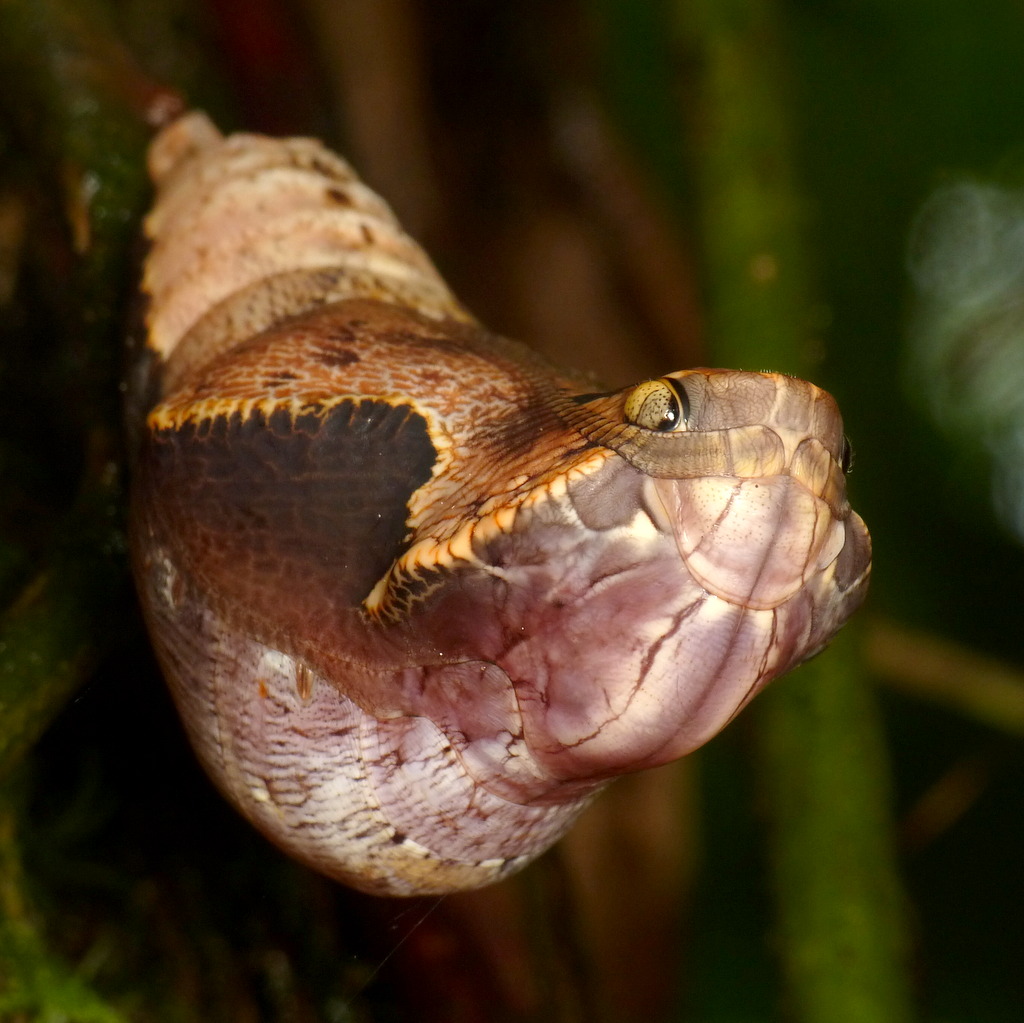
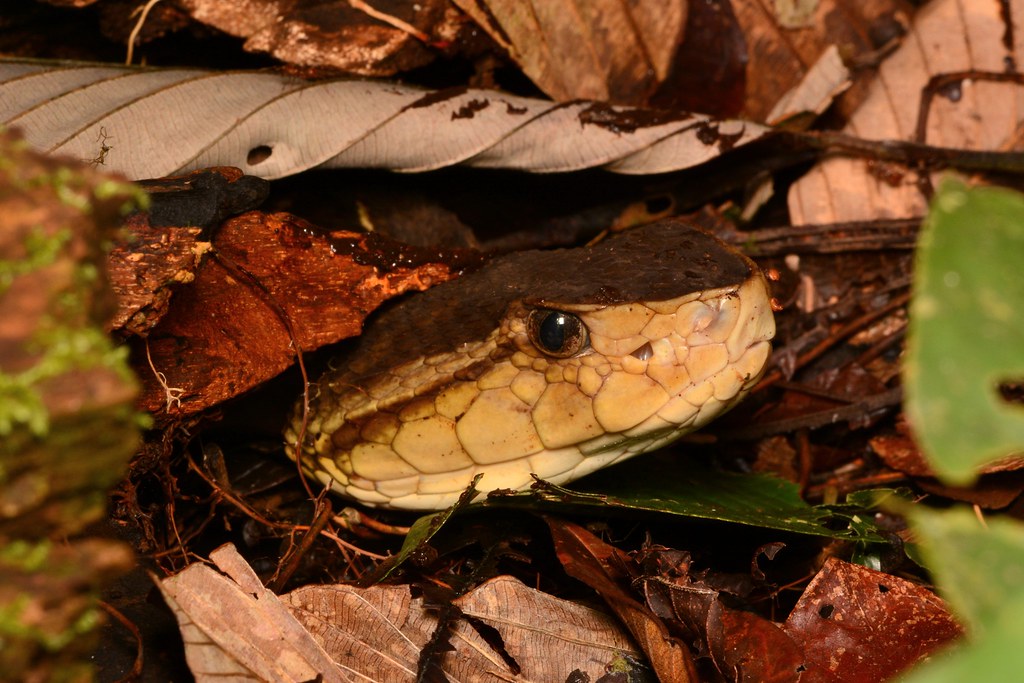


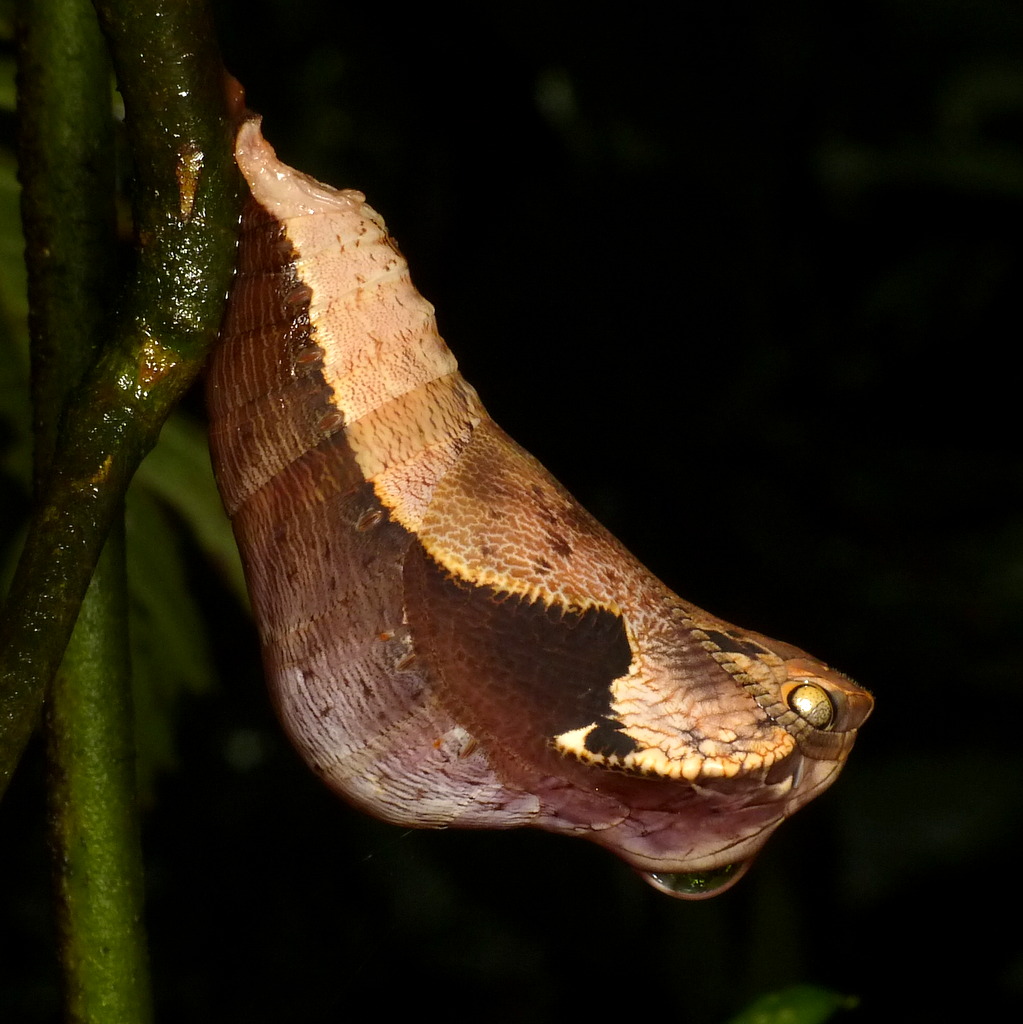

Pupa or chrysalis of owl-butterfly (Dynastor darius) and Fer de lance (Bothrops asper). Photo credits: chrysalis in photo 1, 3, 5 = Andreas Kay, snake in photo 2 = Andrew DuBois, photo 4 = Sebastian Domenico, and photo 6 = Pierson Hill.
 Reason and Nature
3 thoughts on “Caterpillars mimicking snakes”