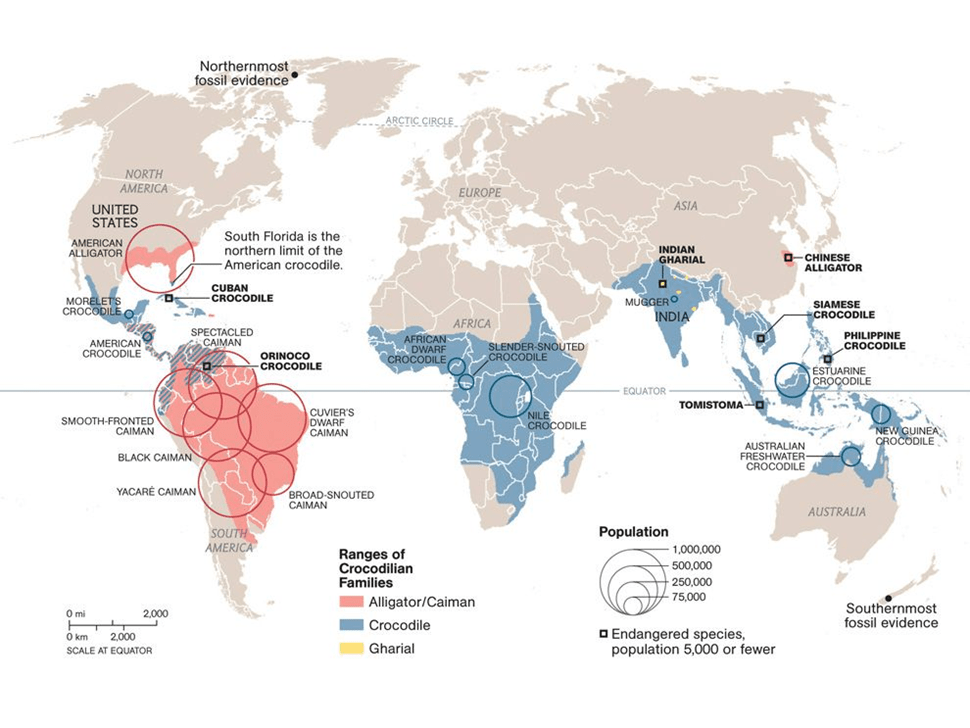
A google search for ‘difference between alligator and crocodile’ returns 30 million search results. Physical differences include alligators having round U-shaped snouts and crocodiles pointed V-shaped snouts, alligators being dark green or black and crocodiles generally lighter green or grey in coloration, and alligators having only the upper teeth visible when the mouth is closed but crocodiles having both upper and lower teeth visible. However, unless observed in captivity, geographic location is surely the easiest way to tell whether you are dealing with an alligator or crocodile. This is because there is only one small region on earth where alligators and crocodiles naturally co-occur together in the wild – South Florida. In this post I will give some background on the biology of this fascinating group of ancient predators (the Crocodilians) and then share some natural history information regarding American alligators and crocodiles in South Florida.

The biology of Crocodilia
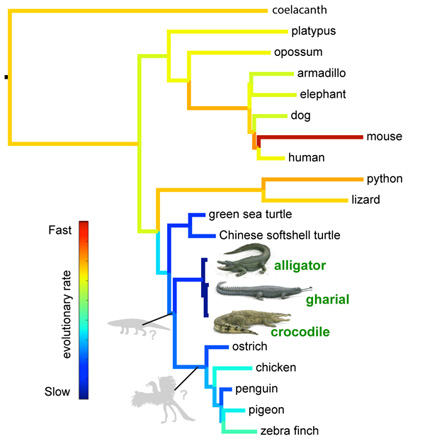
The Order Crocodilia contains crocodiles (family Crocodylidae), the gharial and false gharial (family Gavialidae), and the alligators and caimans (family Alligatoridae). This group, together referred to as crocodilians, is an ancient group of large, semiaquatic, predatory reptiles that (perhaps surprisingly given physical appearances) are the closest living relatives to birds.
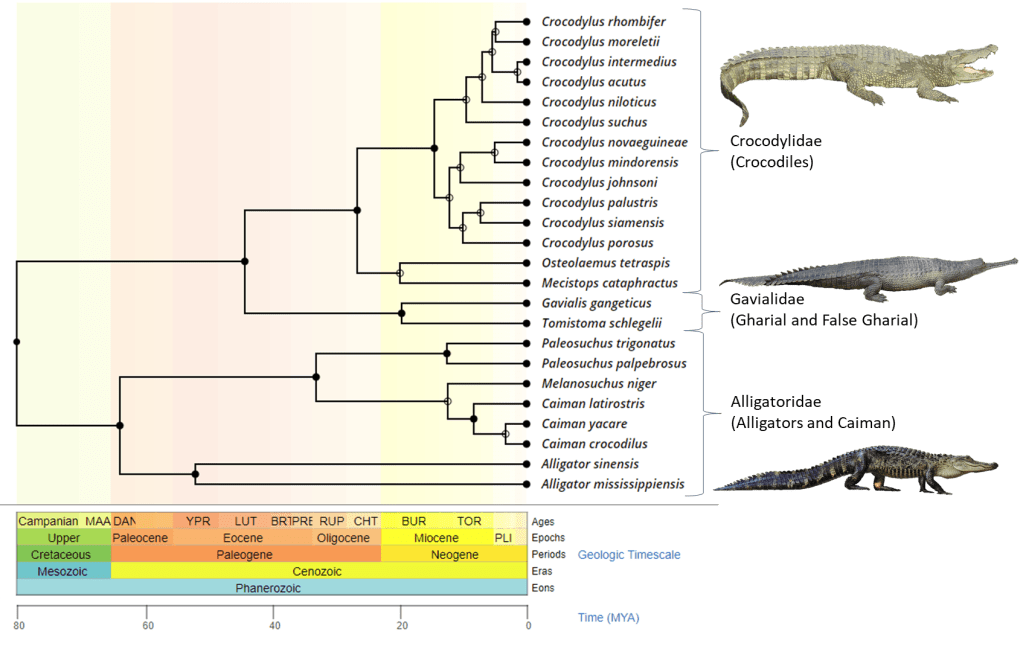
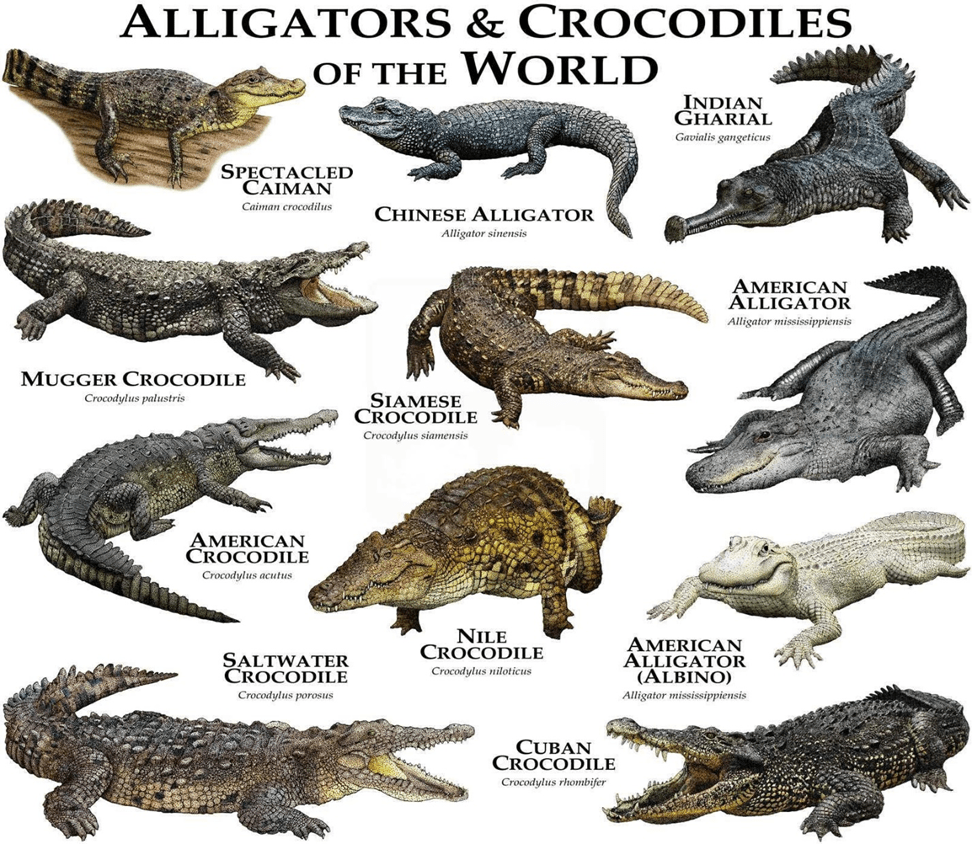
Although an ancient group that appears little changed since the age of dinosaurs, there are a limited number of living crocodilians – 24 species to be exact. These 24 species are grouped into three families. In the family Alligatoridae there are 8 species – 6 species of caiman, which are native to Central and South America, and two species of alligator, the American alligator and the smaller Chinese alligator. The family Gavialidae contains 2 species, the Gharial and False Gharial. Both species are found only in Asia, and both are threatened with extinction. They are noted for their long slender snout and specialize in eating fish. Finally, there are 14 species of crocodiles in the family Crocodylidae. Crocodile species are found throughout the tropics.
American alligators and crocodiles in South Florida
In South Florida, the American crocodile is at the northernmost limit of its range, and the American alligator the southernmost. It is estimated over 2 million alligators are found in Florida, but only 1,500 crocodiles (ref). Crocodiles inhabit coastal regions, while alligators inhabit inland freshwaters of all types as well as coastal regions.
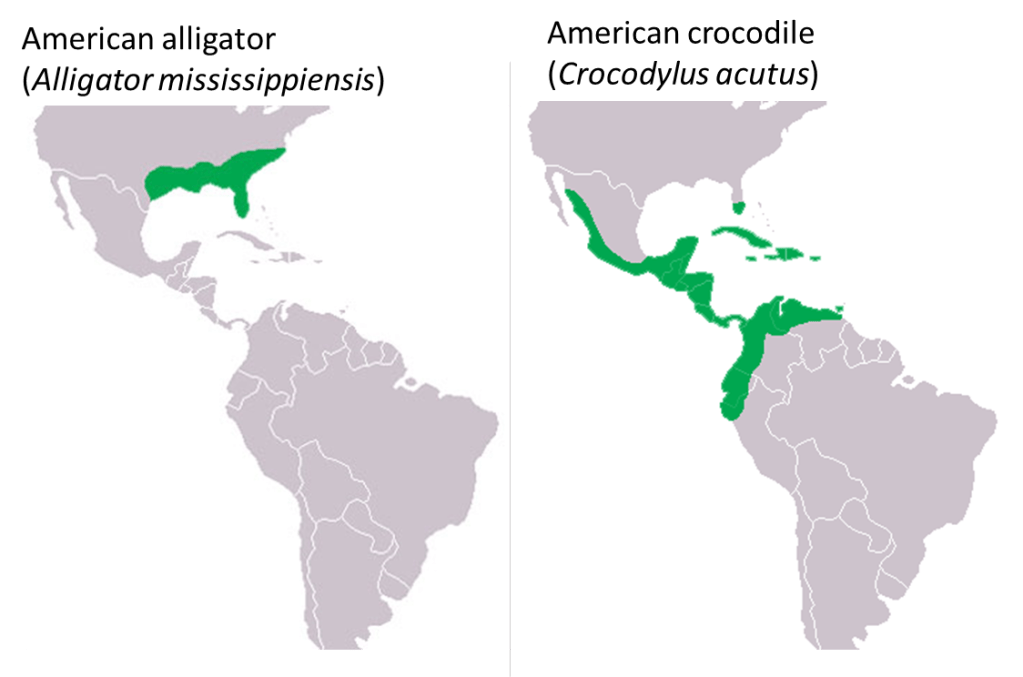
In the Everglades I have observed hundreds of alligators, in all types of freshwater habitat, and about a half dozen crocodiles, in mangrove areas on Virginia Key and the Flamingo marina of the Everglades. Below, I have included some photos I took of American crocodiles and alligators, and give some natural history details about these species.


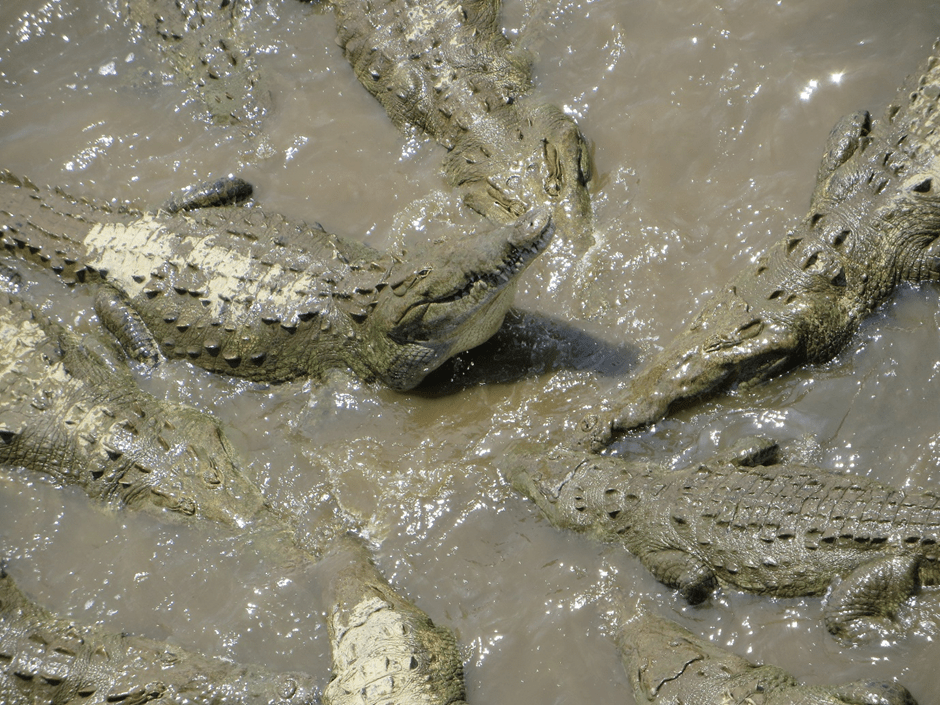
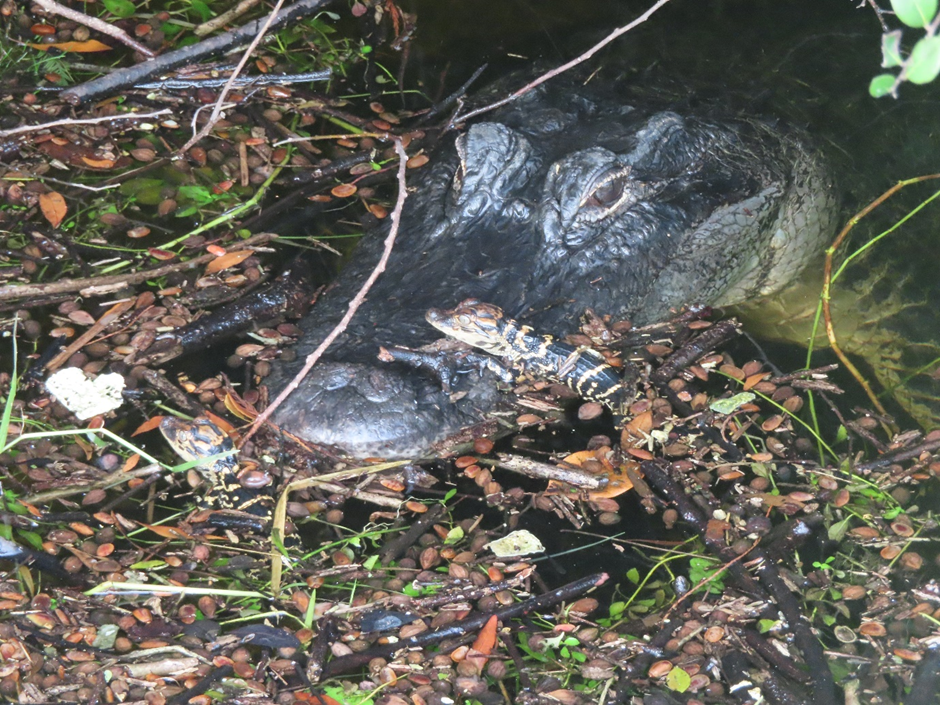

Lately I have been thinking about habitat usage and potential interactions between American alligators and crocodiles in South Florida. These two species occupy somewhat differing habitats, with crocodiles primarily found near salt water and alligators fresh, which matches my own observations in the Everglades. Yet, alligators do enter and forage in brackish / estuary habitat (Nifong and Lowers 2017), and in multiple trips to Costa Rica to conduct fieldwork on poeciliid fishes, I have seen American crocodiles dozens of miles upstream in freshwater rivers. So, I was wondering if in South Florida there is a greater degree of habitat segregation (as evidence of competitive exclusion) than when either species occurs alone in all other parts of their geographic ranges (besides South Florida). Put simply, in South Florida are alligators limited primarily to freshwaters so as to avoid competitive / aggressive interactions with crocodiles? Conversely, could crocodiles be limited primarily to brackish and salt waters in South Florida, but elsewhere in their range they also utilize freshwaters to a greater extent? I think this question could be addressed quantitively using occurrence data of both species in South Florida, compared to other parts of their geographic range where they do not co-occur. It might be interesting to combine such a quantitative analysis with whatever anecdotal information is available on (rare) observed interactions between these two species in the wild.
 Reason and Nature
GREAT BLOG-POSTING; with GREAT RESEARCH is the REWARD; CONCERNING Alligators and Crocadiles…IN U.S.A. Sincerely Brian CANUCK-THE BREEZE Murza, Niagara Falls, Ontario, Canada. Note: I have had the GREAT CHANCES; of VIEWING ALLIGATORS…IN MANY PARTS OF THE SOUTHERN U.S.A.!!!
LikeLike