This week I received my eagerly awaited new underwater camera equipment. After first setting everything up on land, the following day I headed to Ichetucknee Springs to test it out underwater. This post details my new setup and its performance in the field.
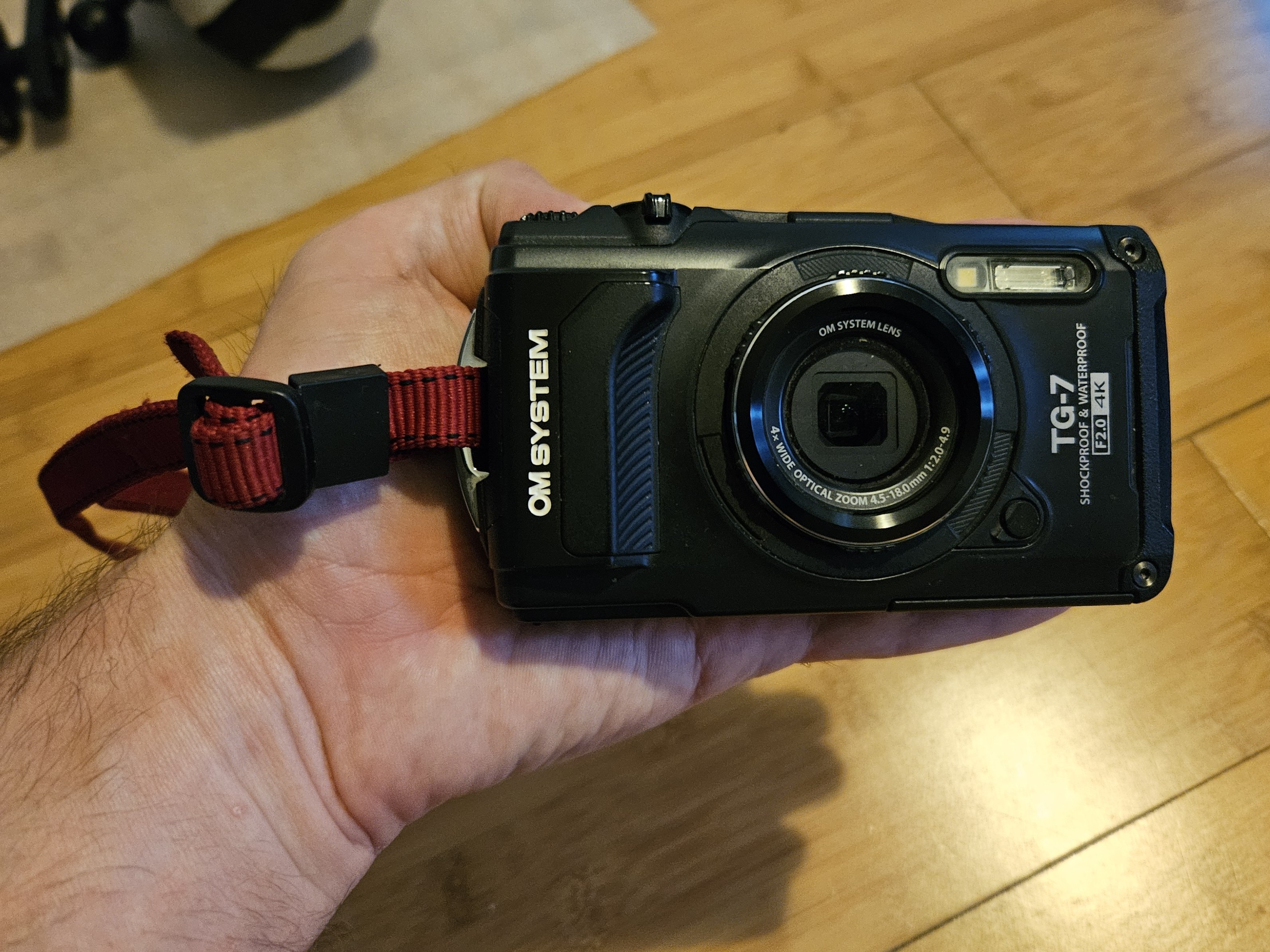
Prior to getting my new setup, all my underwater photography and video was performed using a compact waterproof digital camera, primarily the OM system TG-7. In my opinion, the primary advantage of a compact digital camera is the simplicity. The camera is small, easy to travel with, works on everything from macro to wide-angle underwater photography, and there is no setup required. You basically just take your camera underwater and use it just like on land, as it is waterproof. The TG-7 (and the earlier TG-6 model by Olympus) is considered the top-of-the-line compact digital waterproof camera. Over the years, this camera served me well and I used it to photograph and record video of everything from tiny poeciliid fishes in the streams of Costa Rica to huge manatees in Florida Springs.
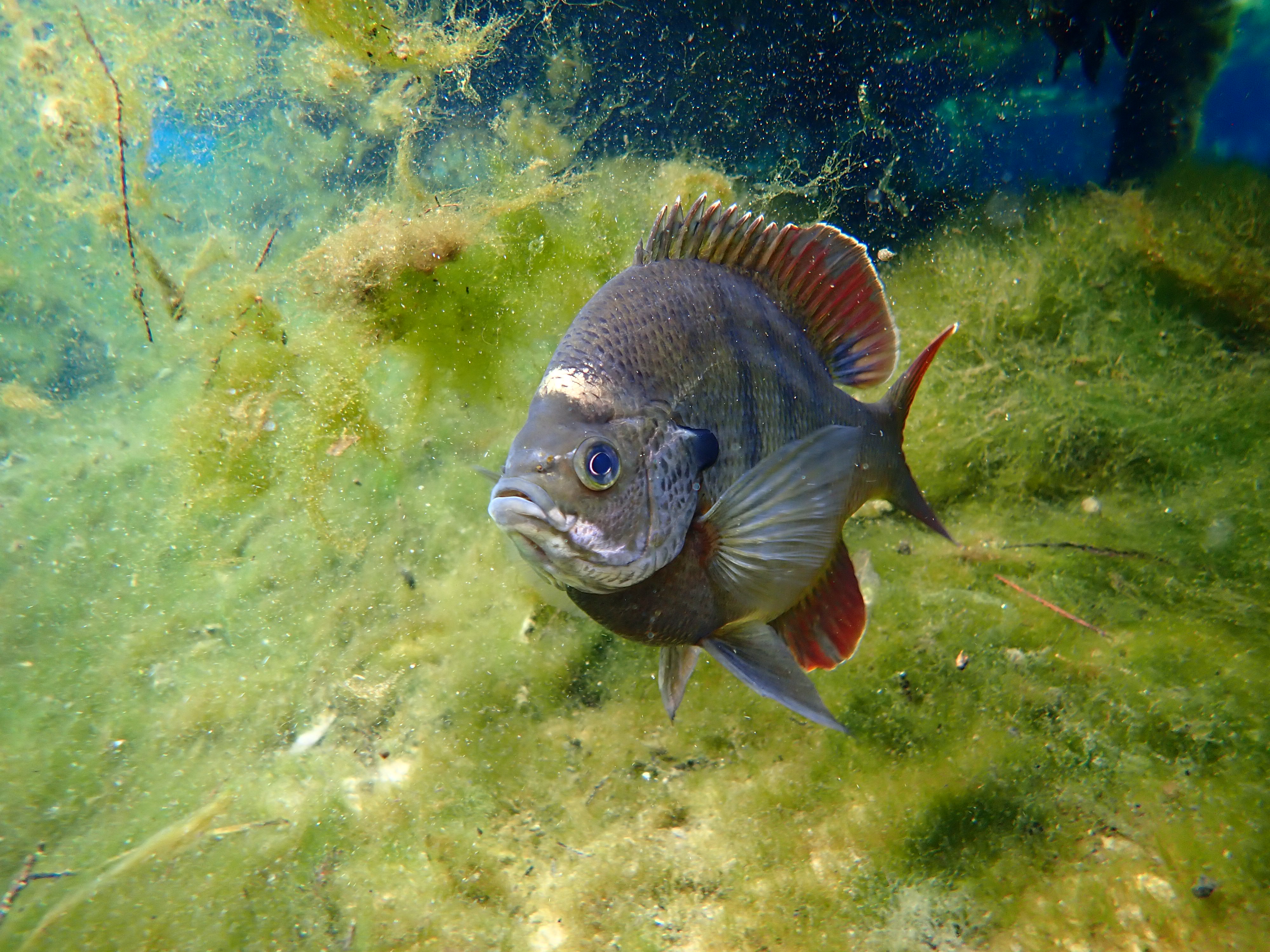
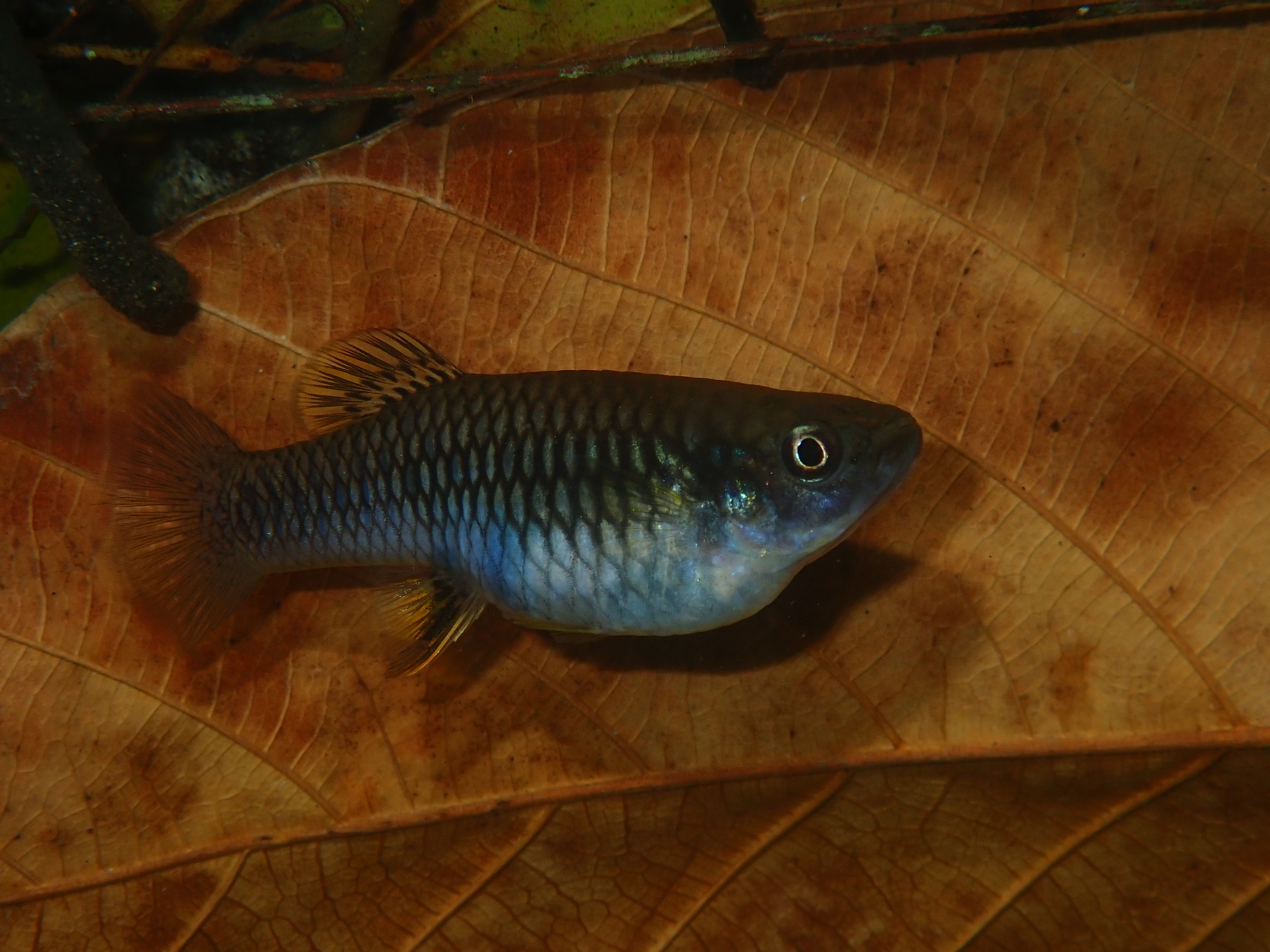
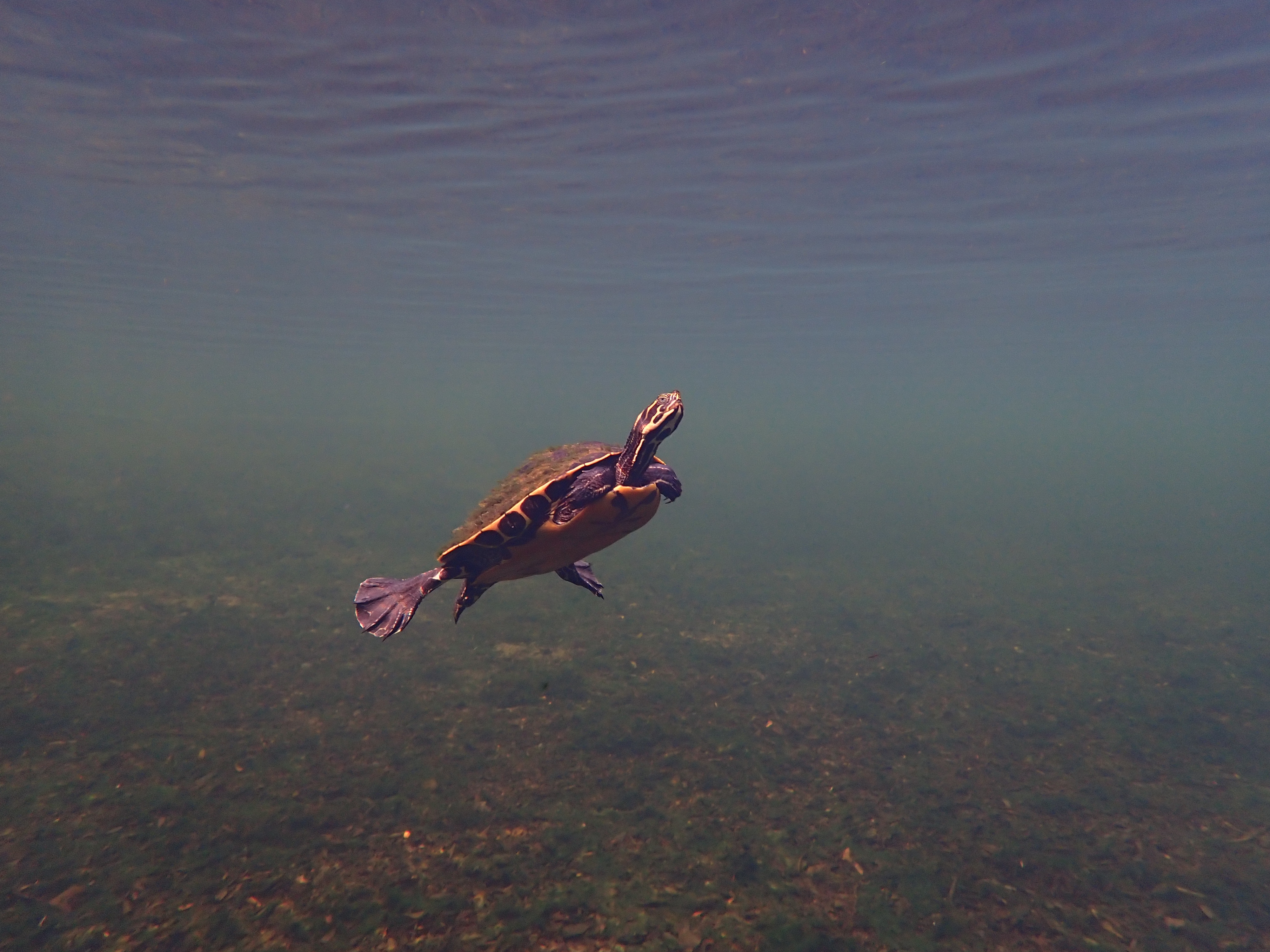
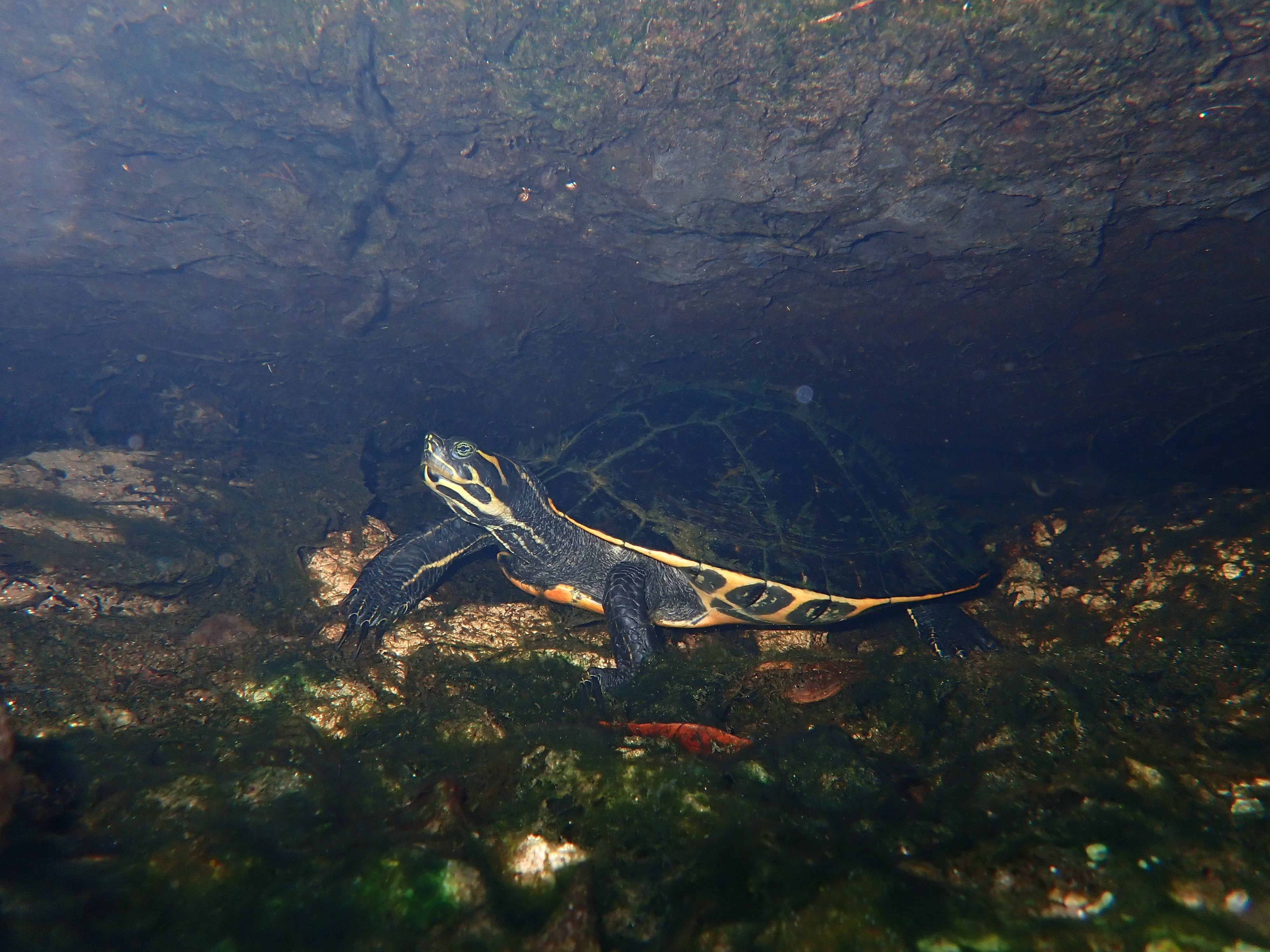
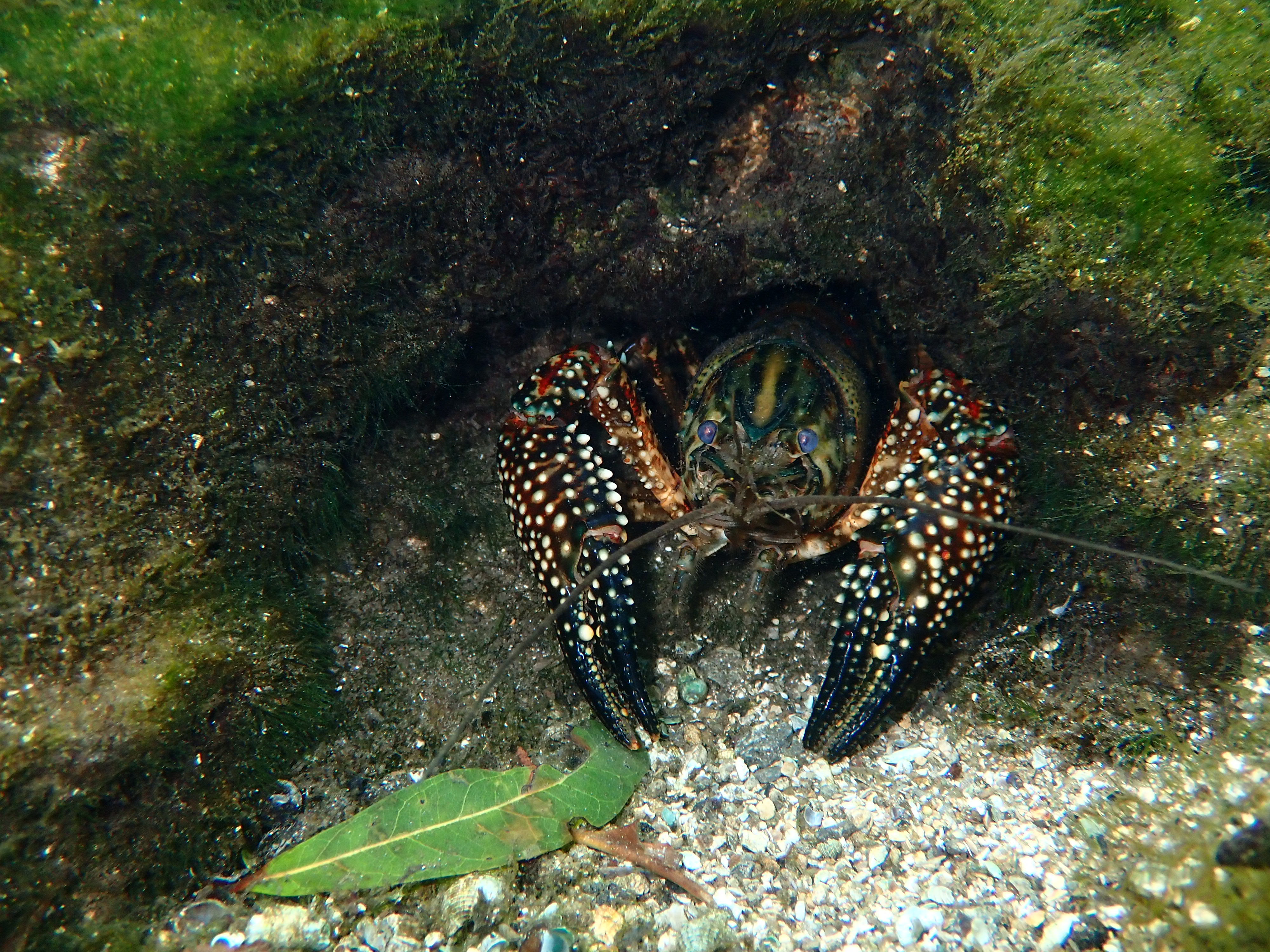
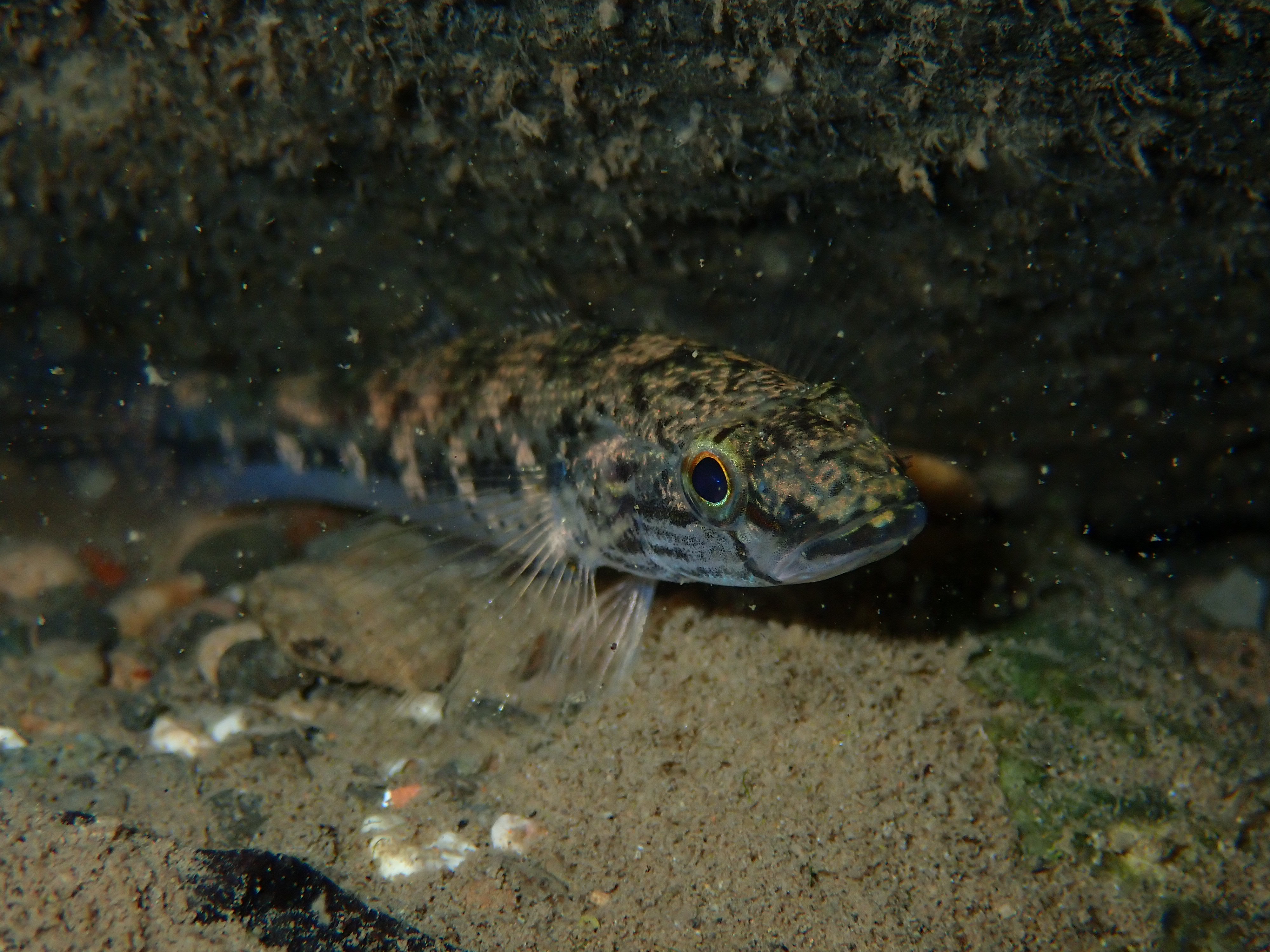
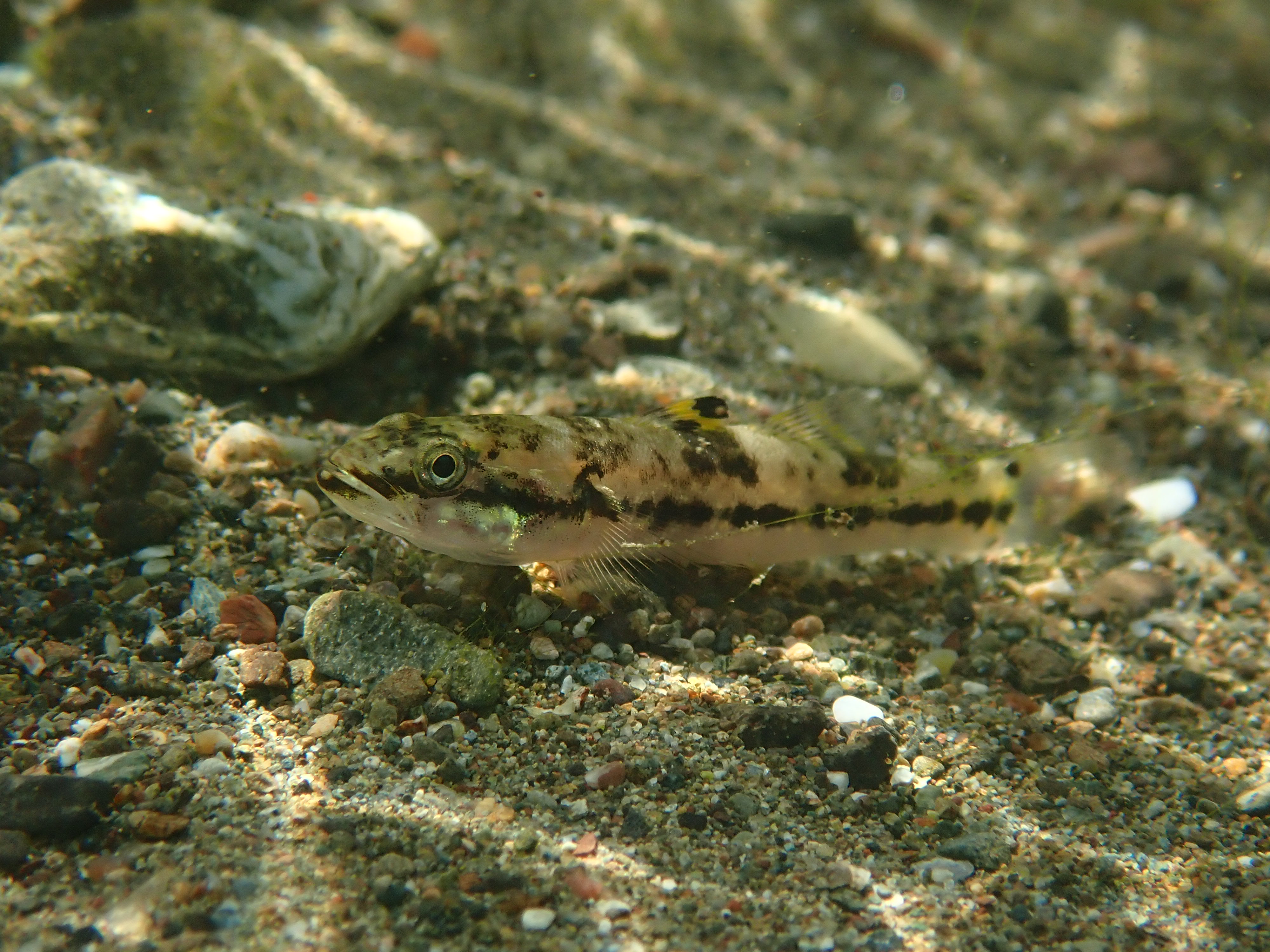
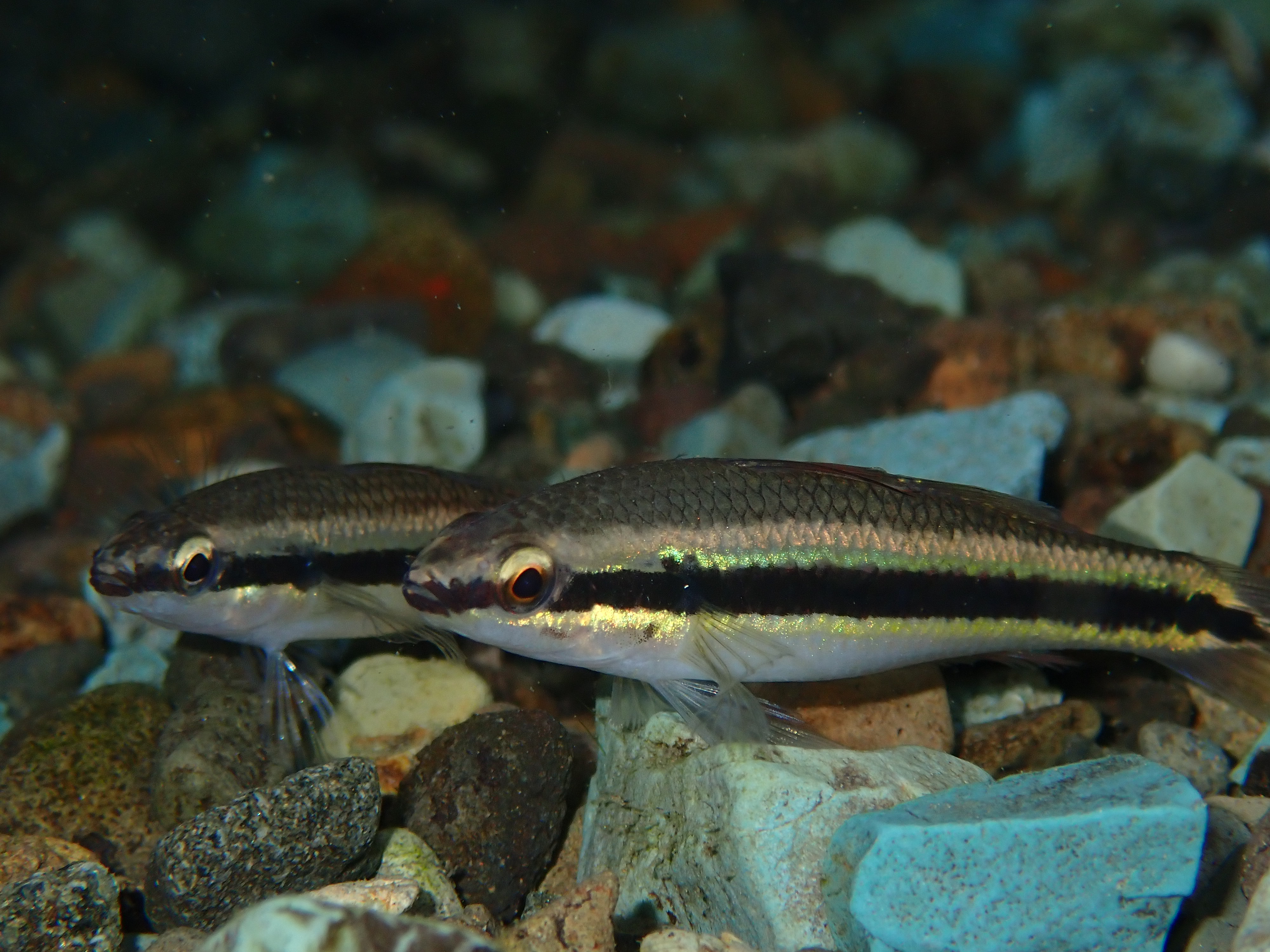
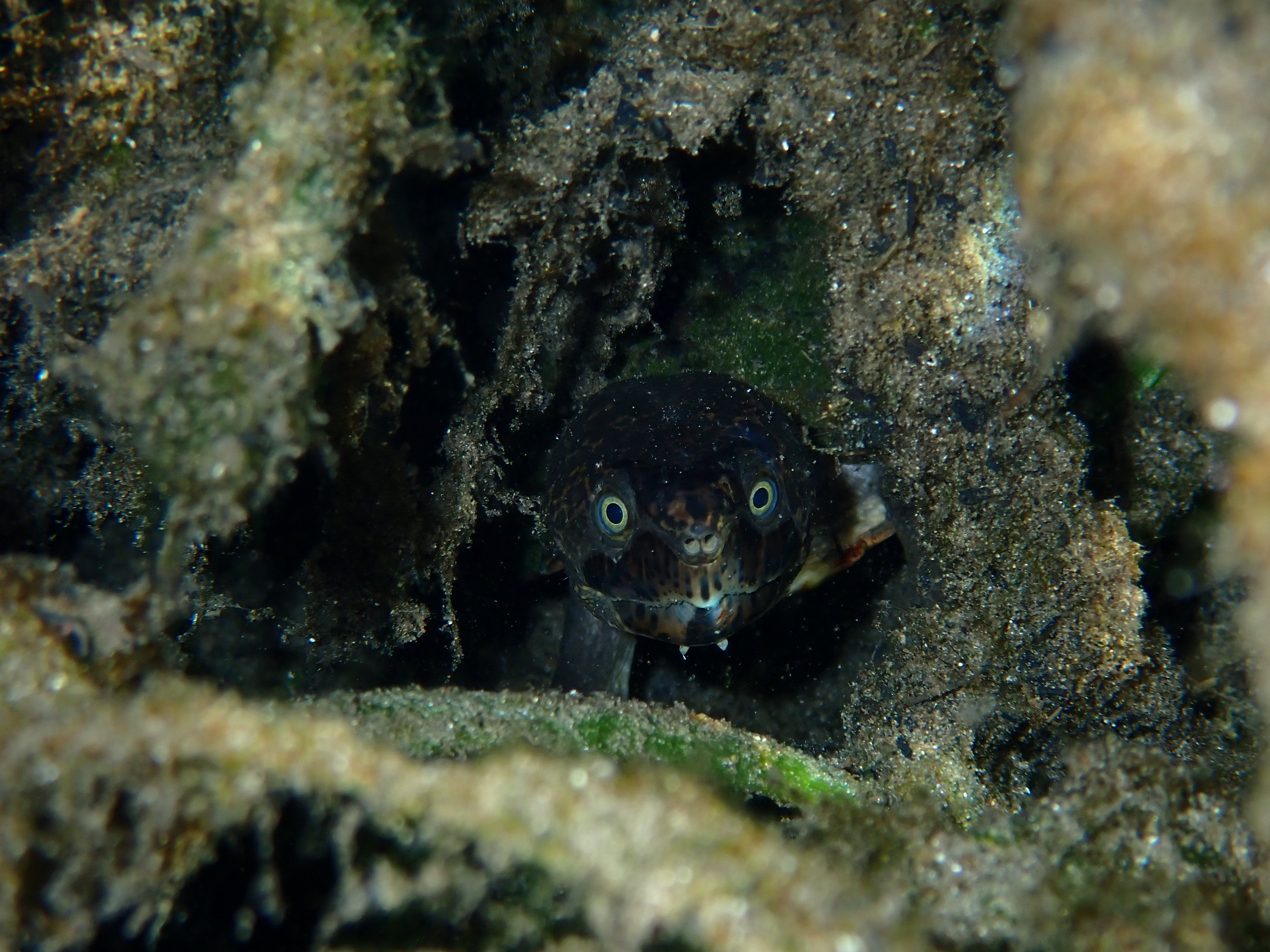
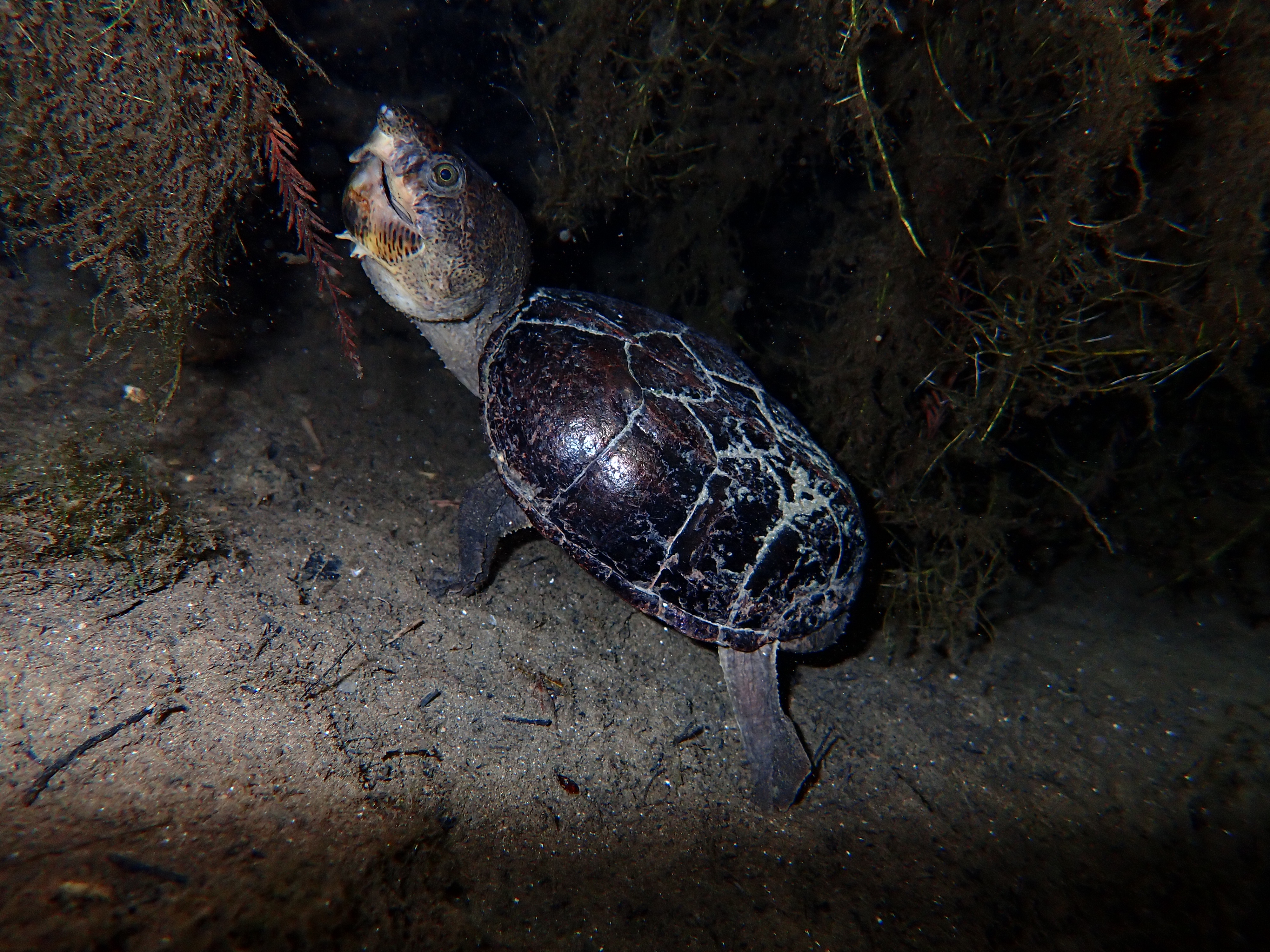
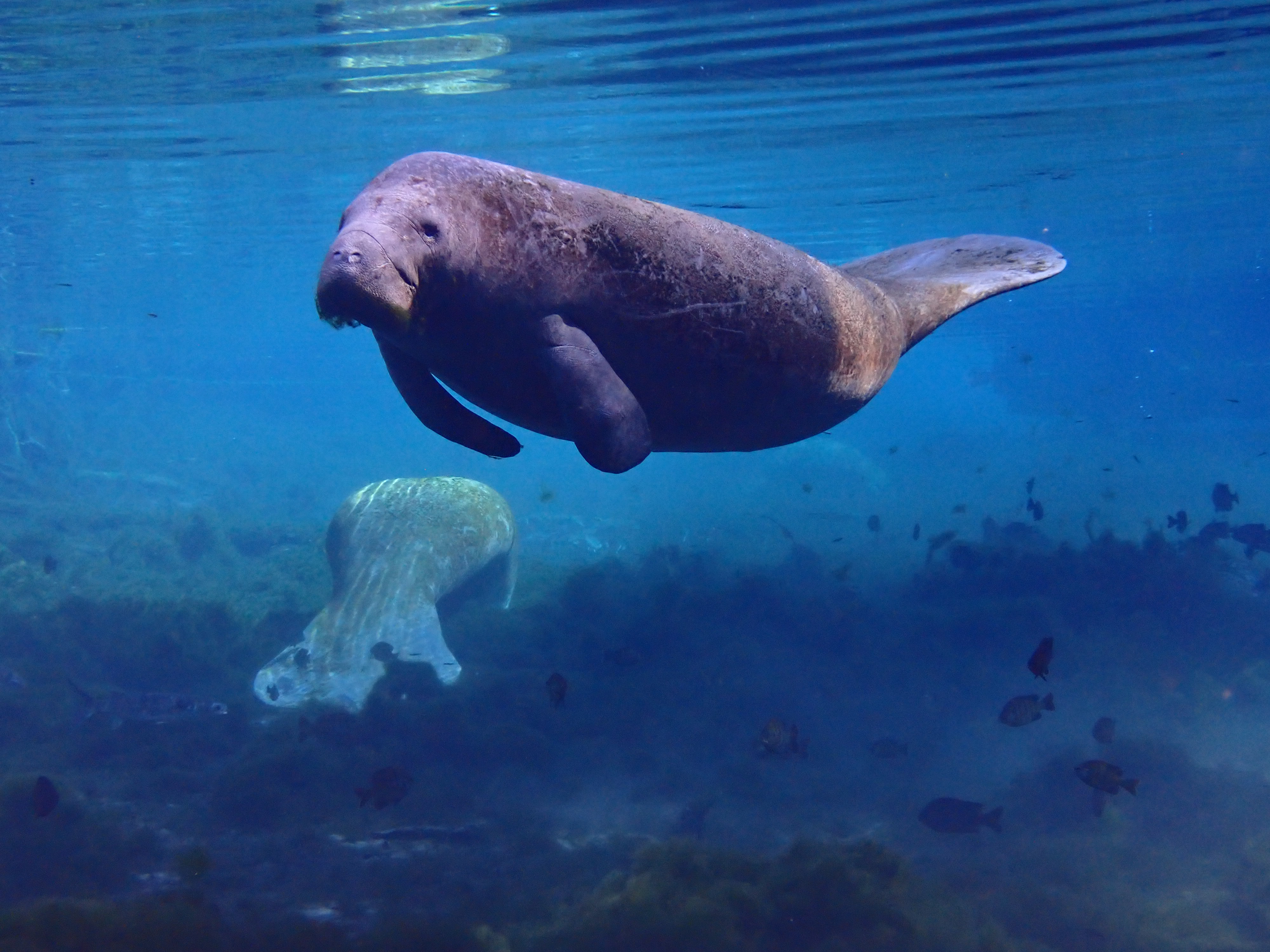
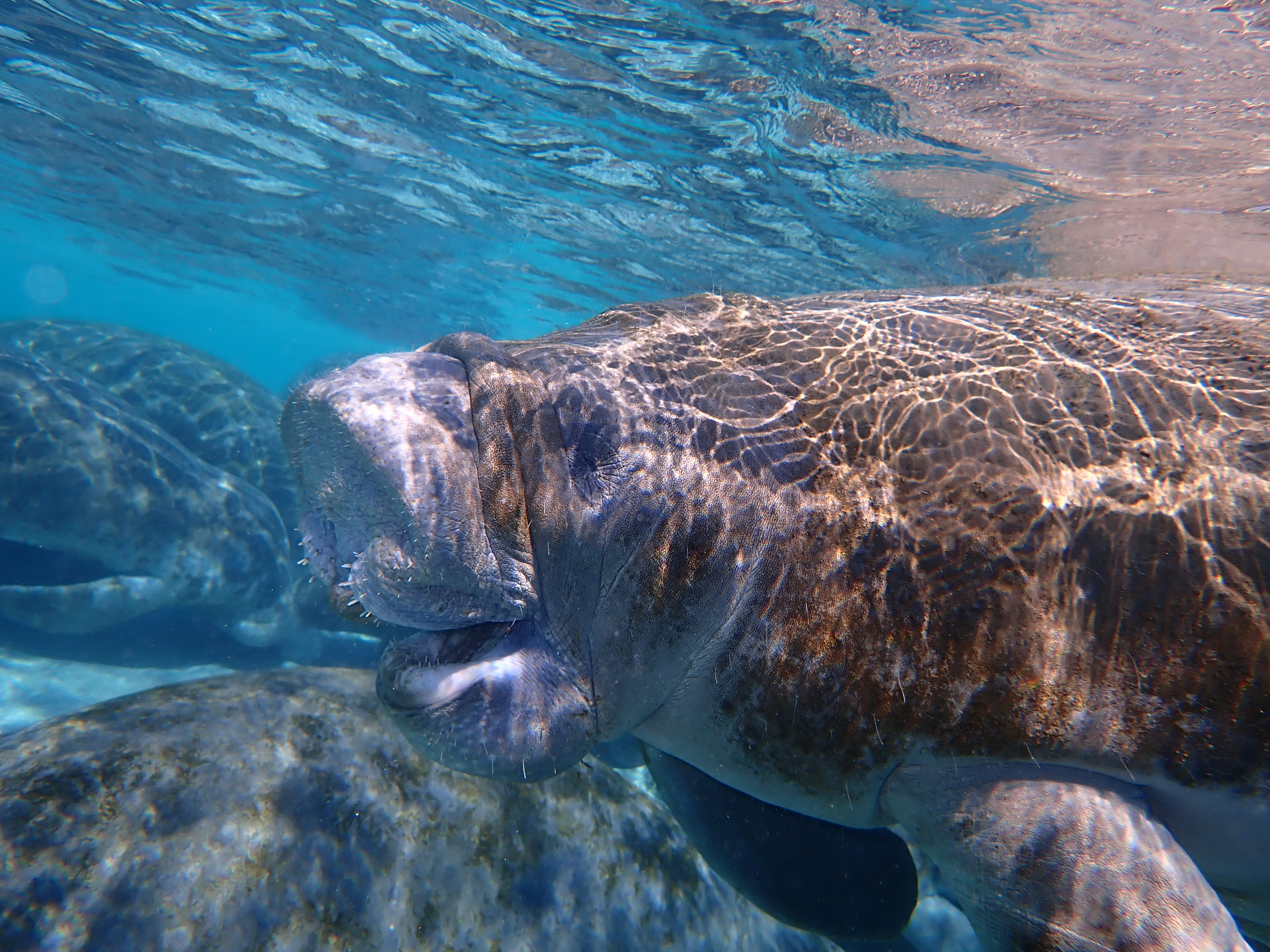
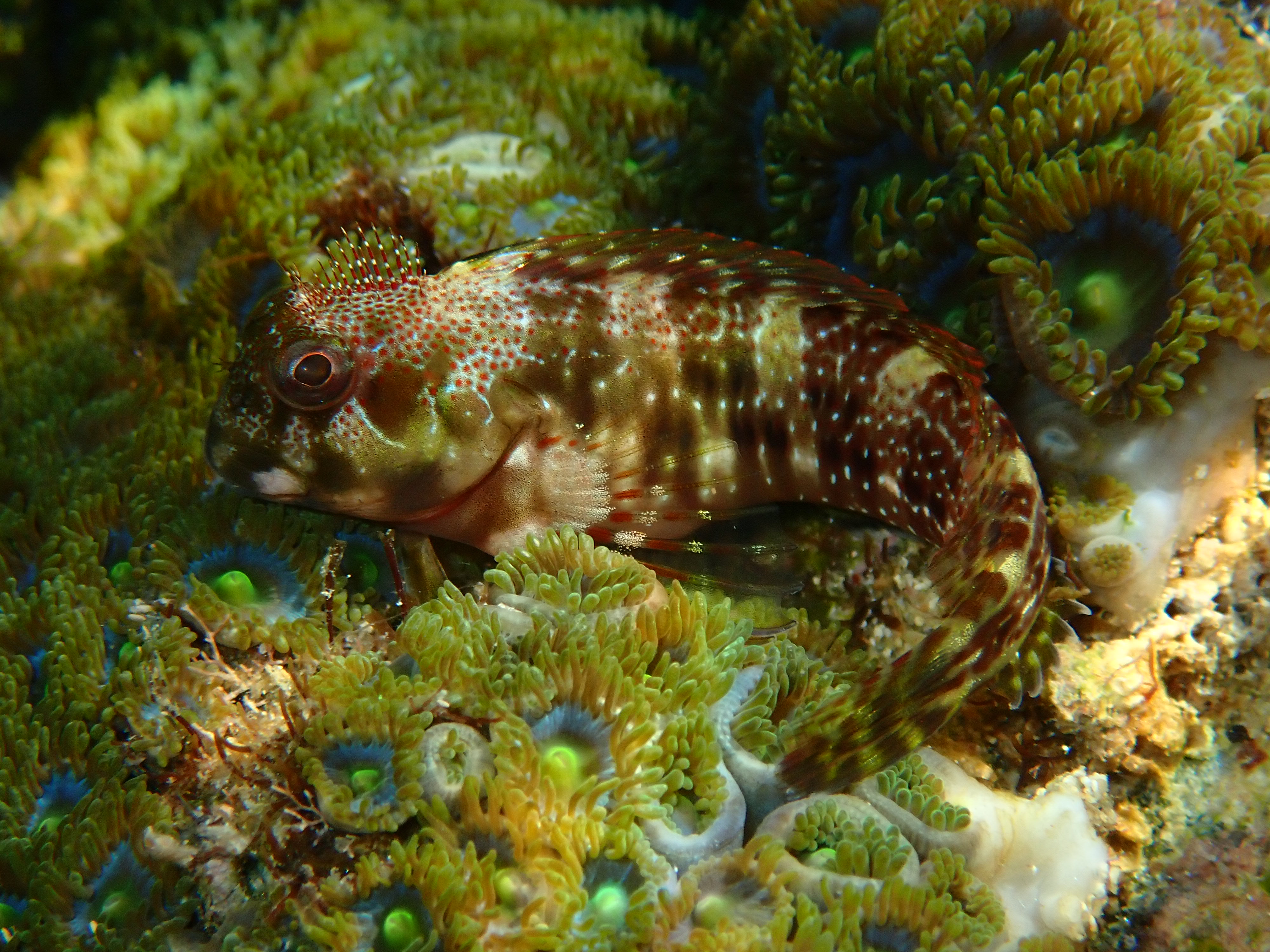
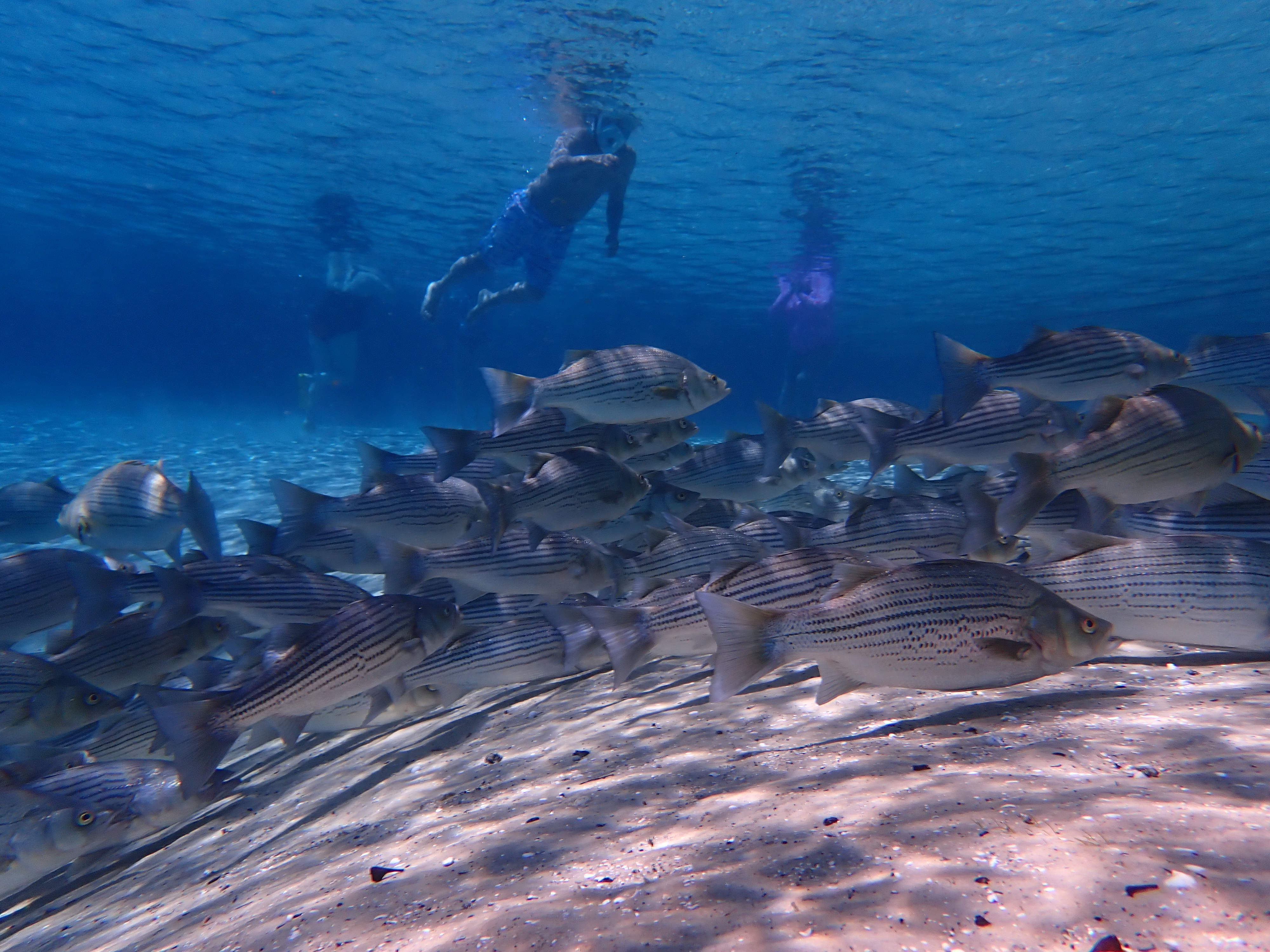
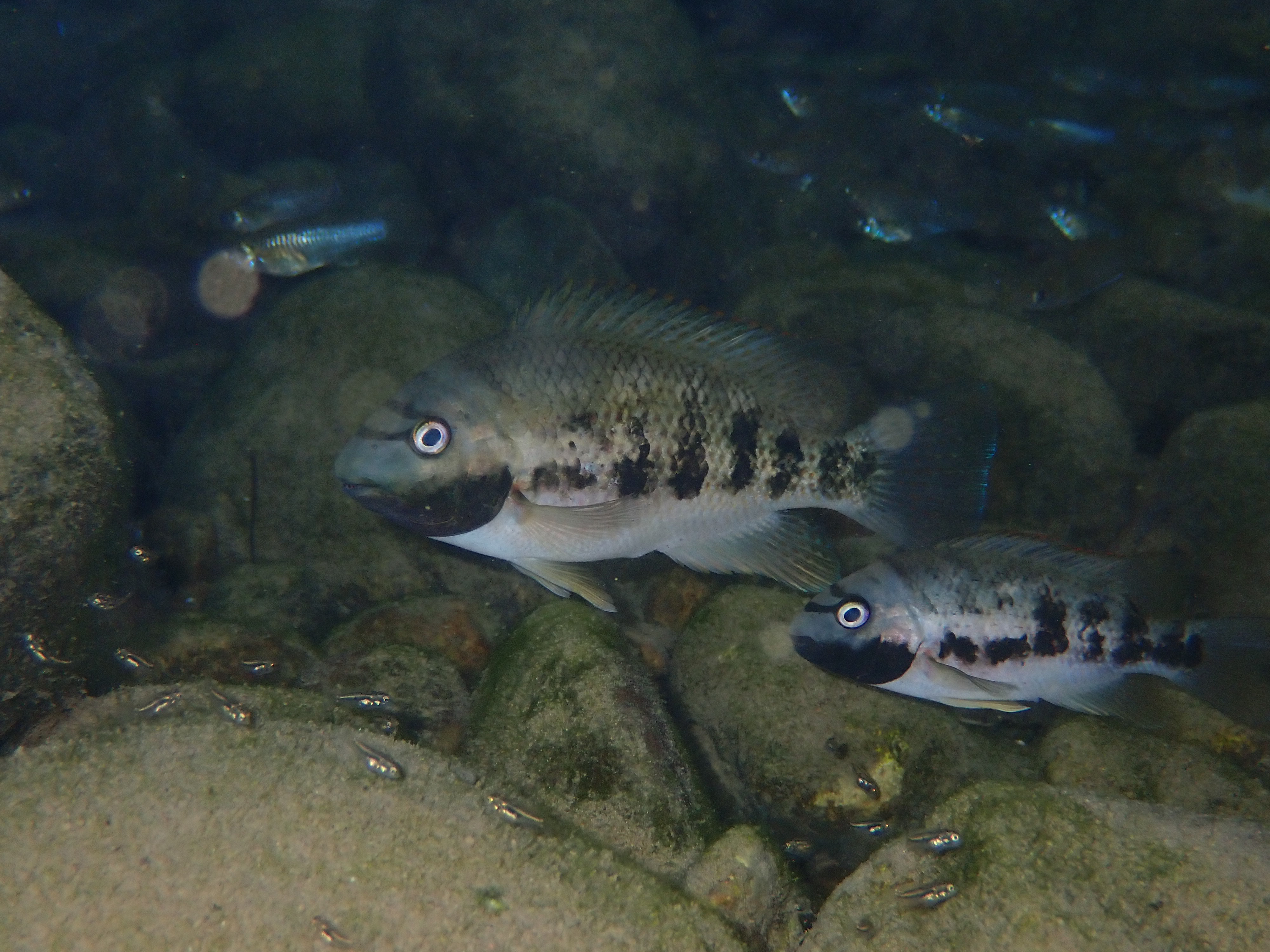
Some of my favorite shots taken with my TG-7 waterproof camera. Click any image to enlarge.
However, lately I was finding this camera a bit limiting. Furthermore, my favorite underwater photographers all have waterproof housings for their preferred camera, which allows them to take high quality underwater images without being limited to the use of the very few compact digital cameras which are already waterproof. So, I decided to upgrade.
I ended up getting an underwater housing for my Canon EOS R7 camera, two underwater strobes, and all the accessories to tie the system together. All of this came from a US company called Ikelite. This company, based out of Indianapolis Indiana, specializes in producing equipment for underwater photography. They make custom waterproof housings for a wide range of cameras. These housings allow you to operate your camera underwater, essentially the same way you would on land. Since each camera model has various dials and control functions in different locations, each camera requires its own unique housing which has little levers and dials built into the sides in the proper places. Lighting is very important in underwater photography, and I opted to get two strobe lights which attach to the camera via adjustable ball arms. The strobes are synced to the camera via fiber optic cables so when you push the shutter button a flash is produced of the appropriate intensity. These strobes can also produce a continuous light beam (which is useful for video).
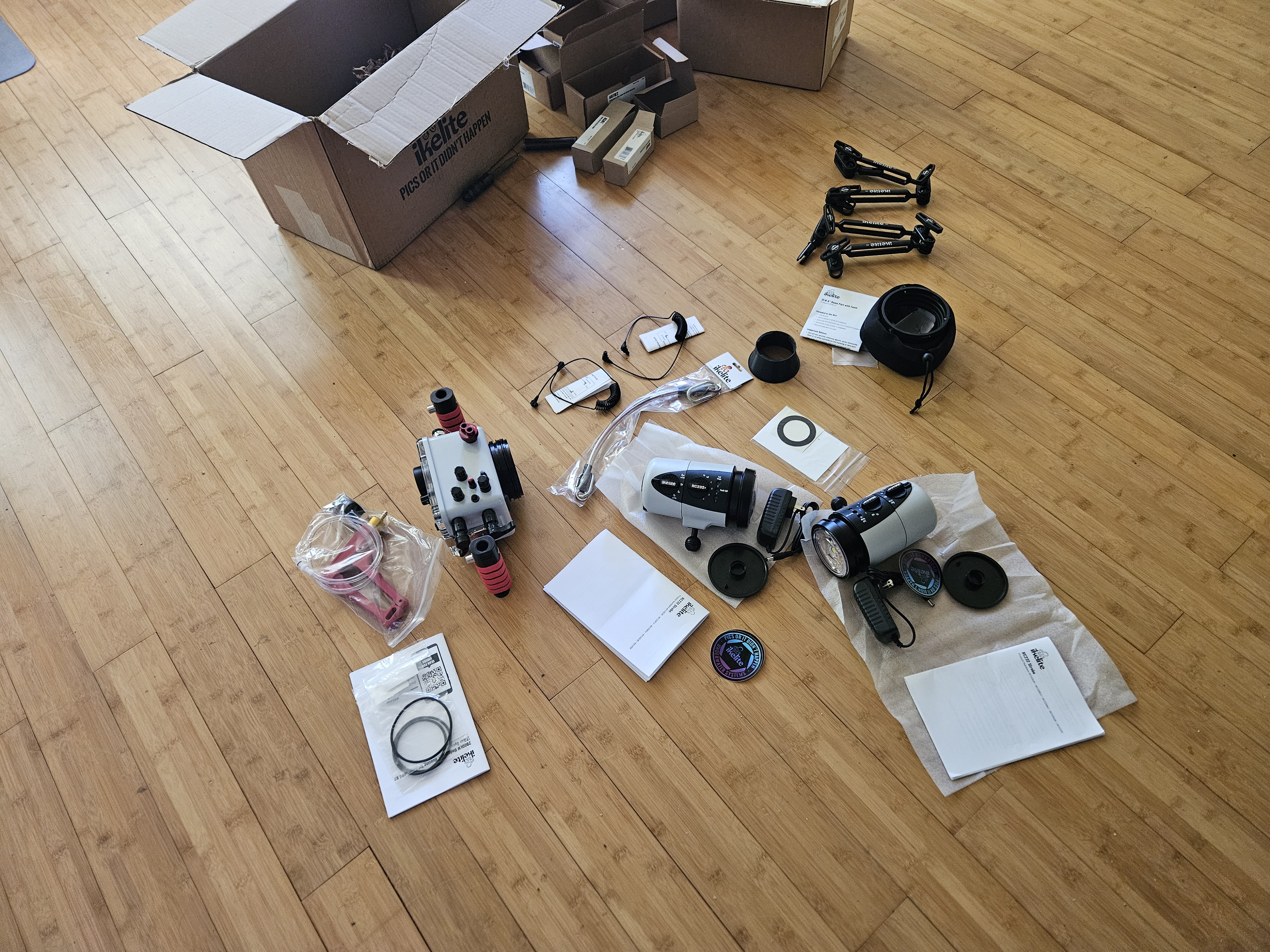
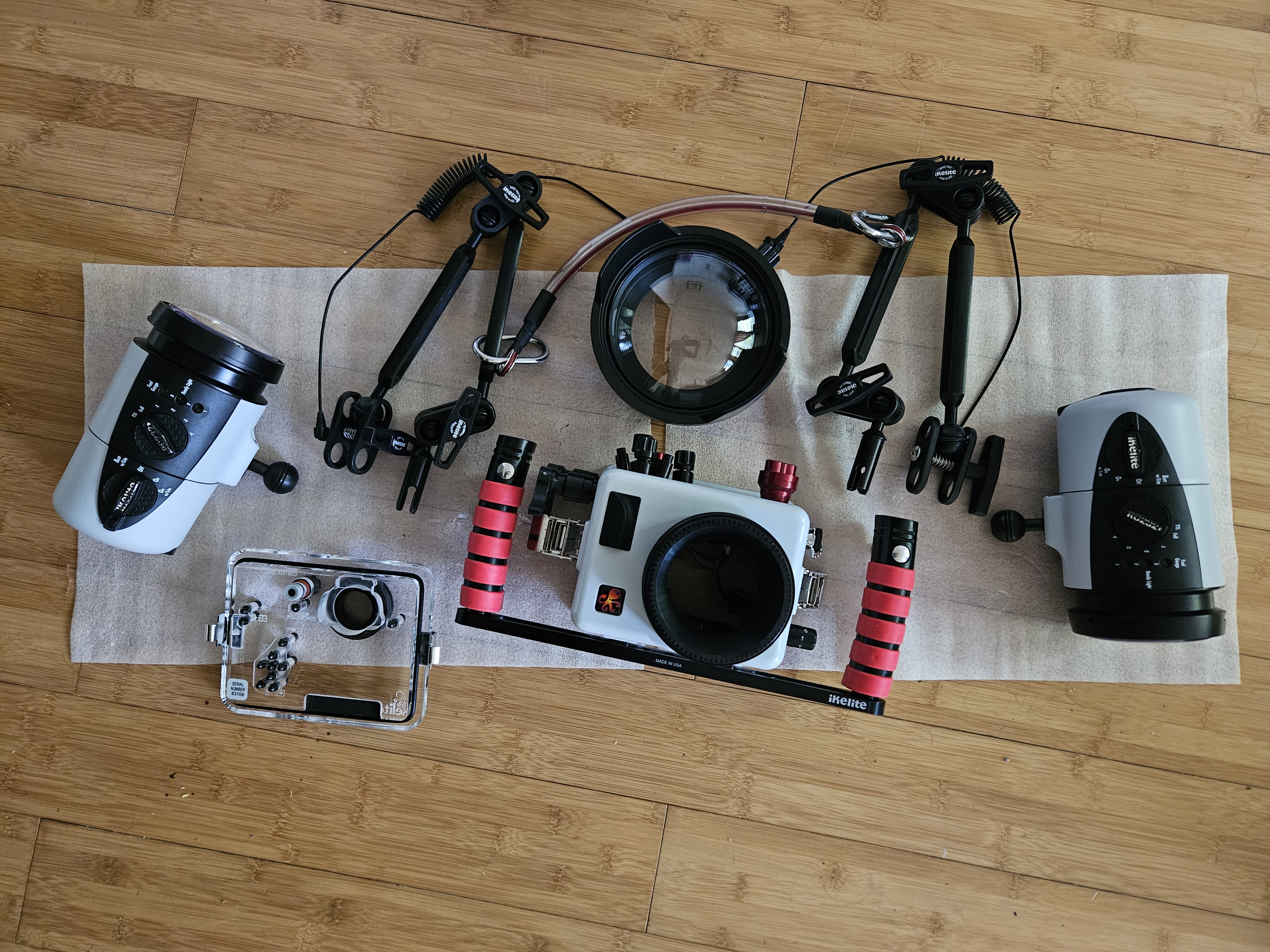
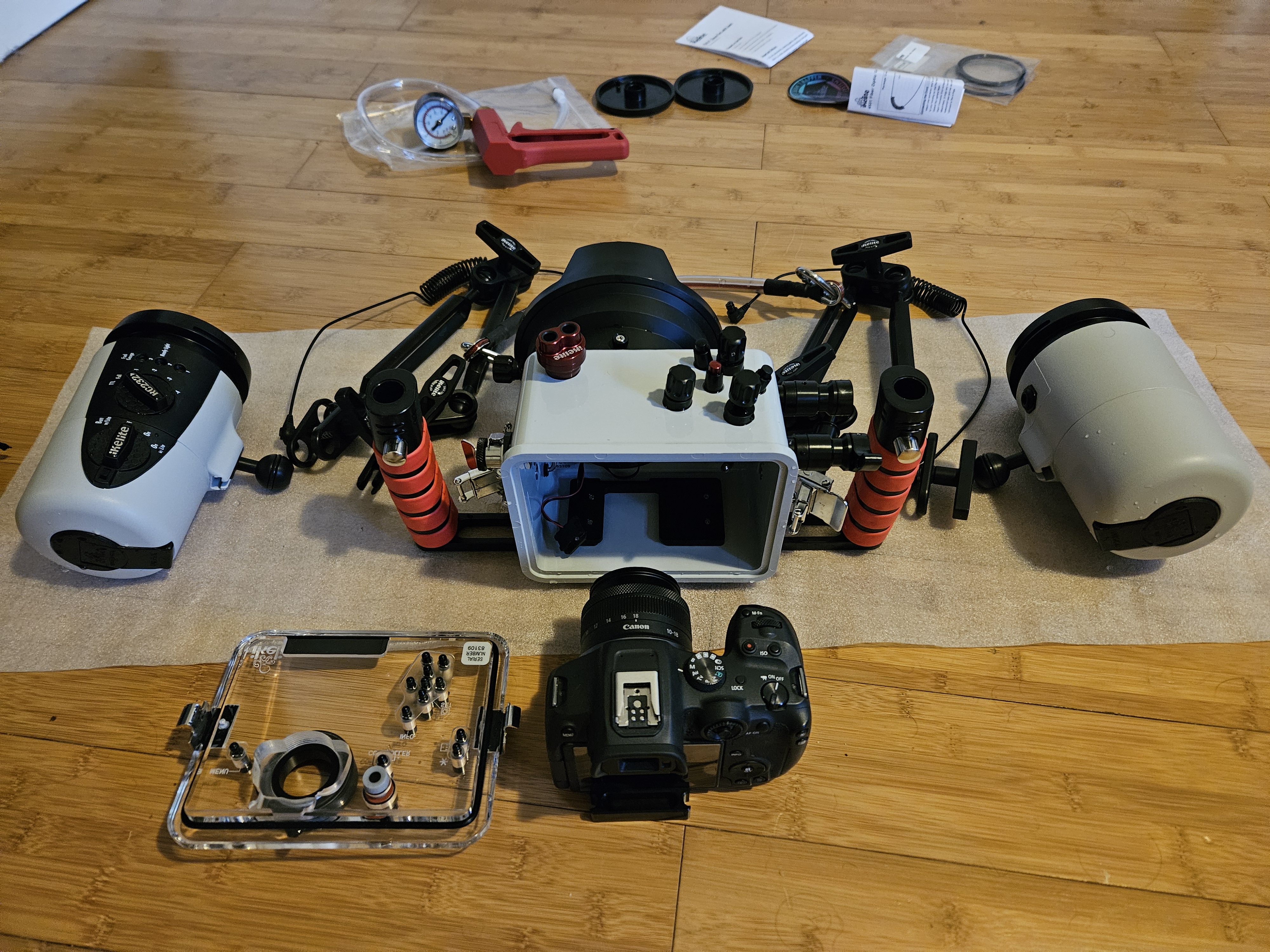
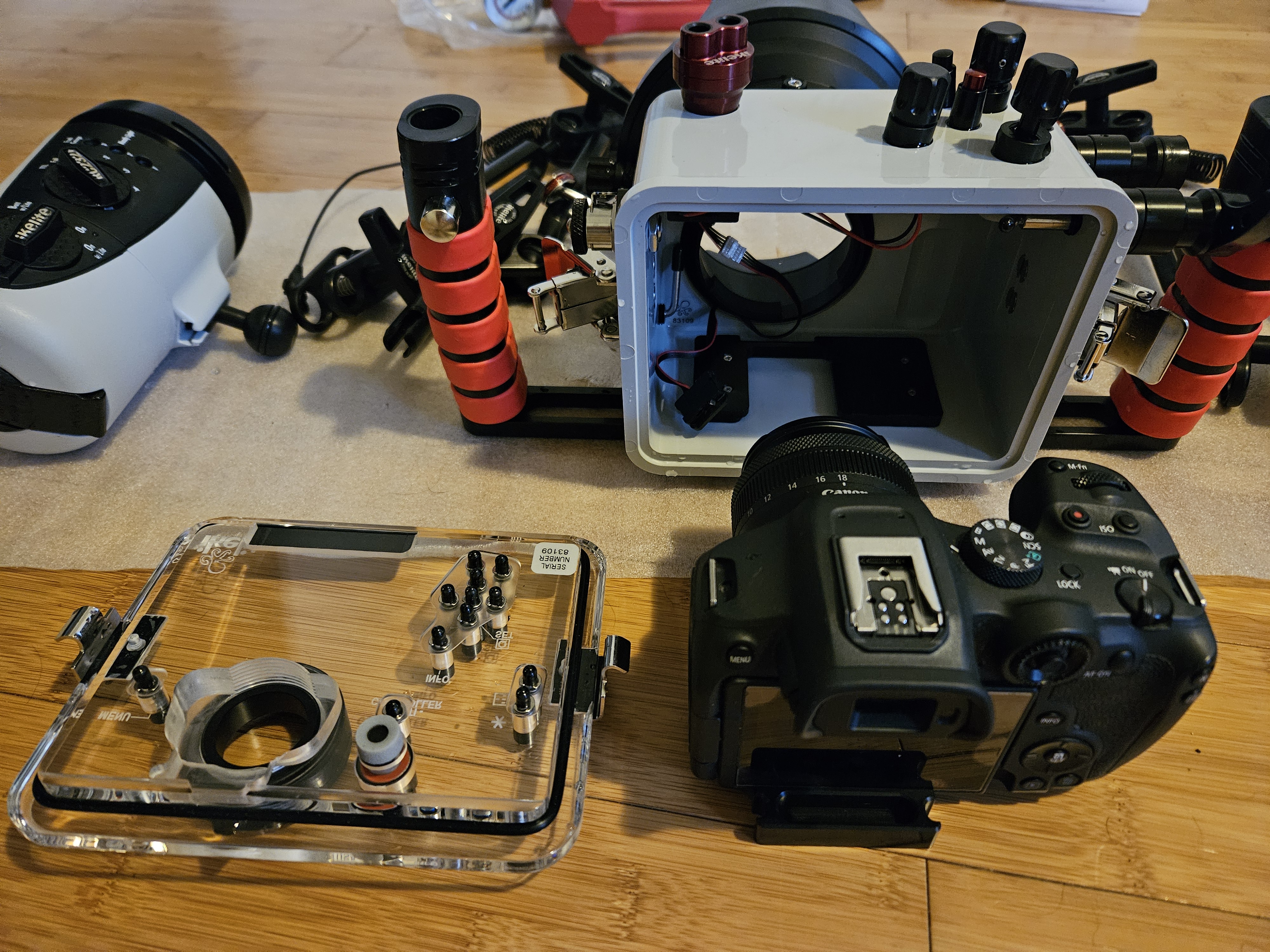
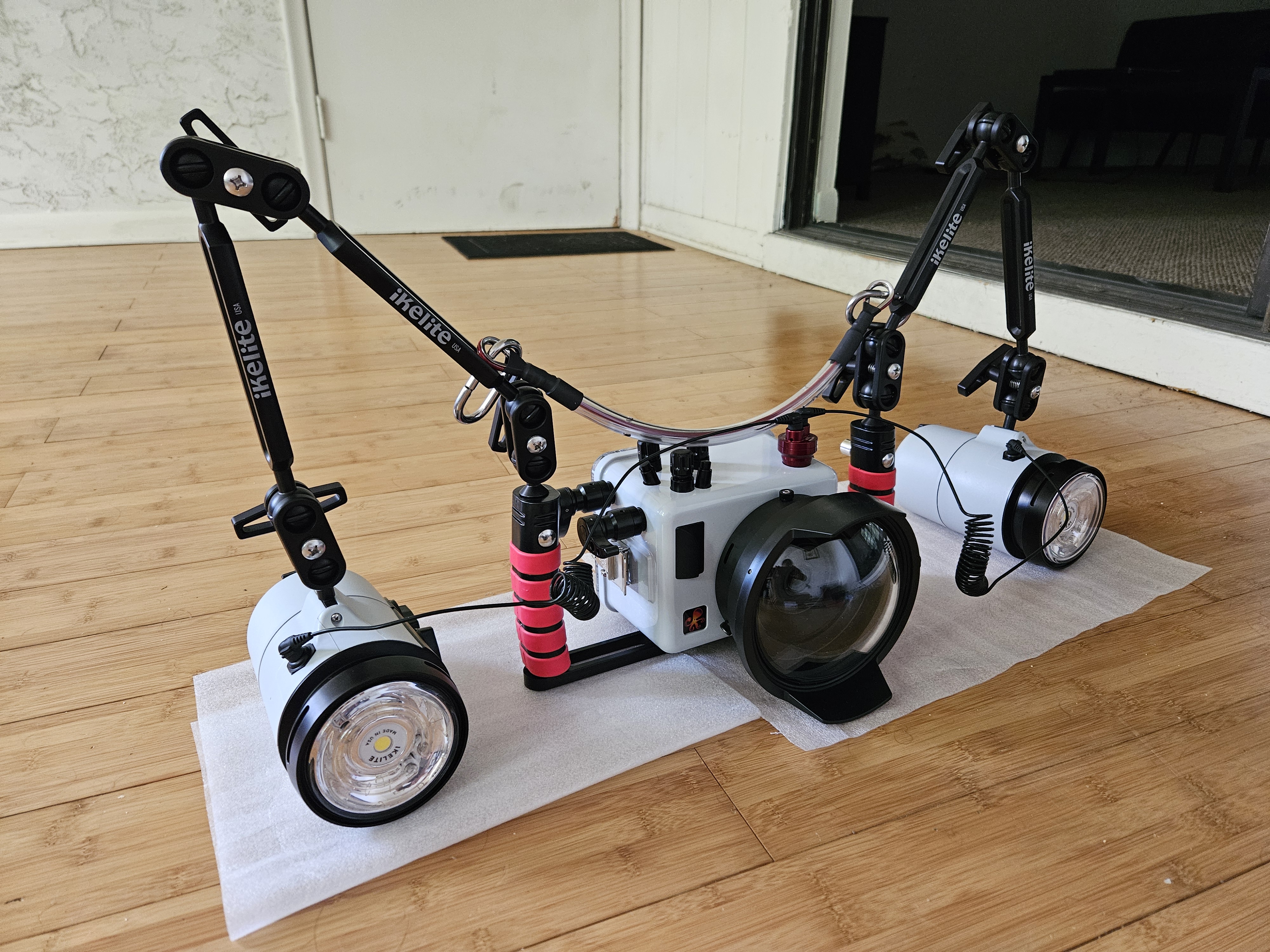
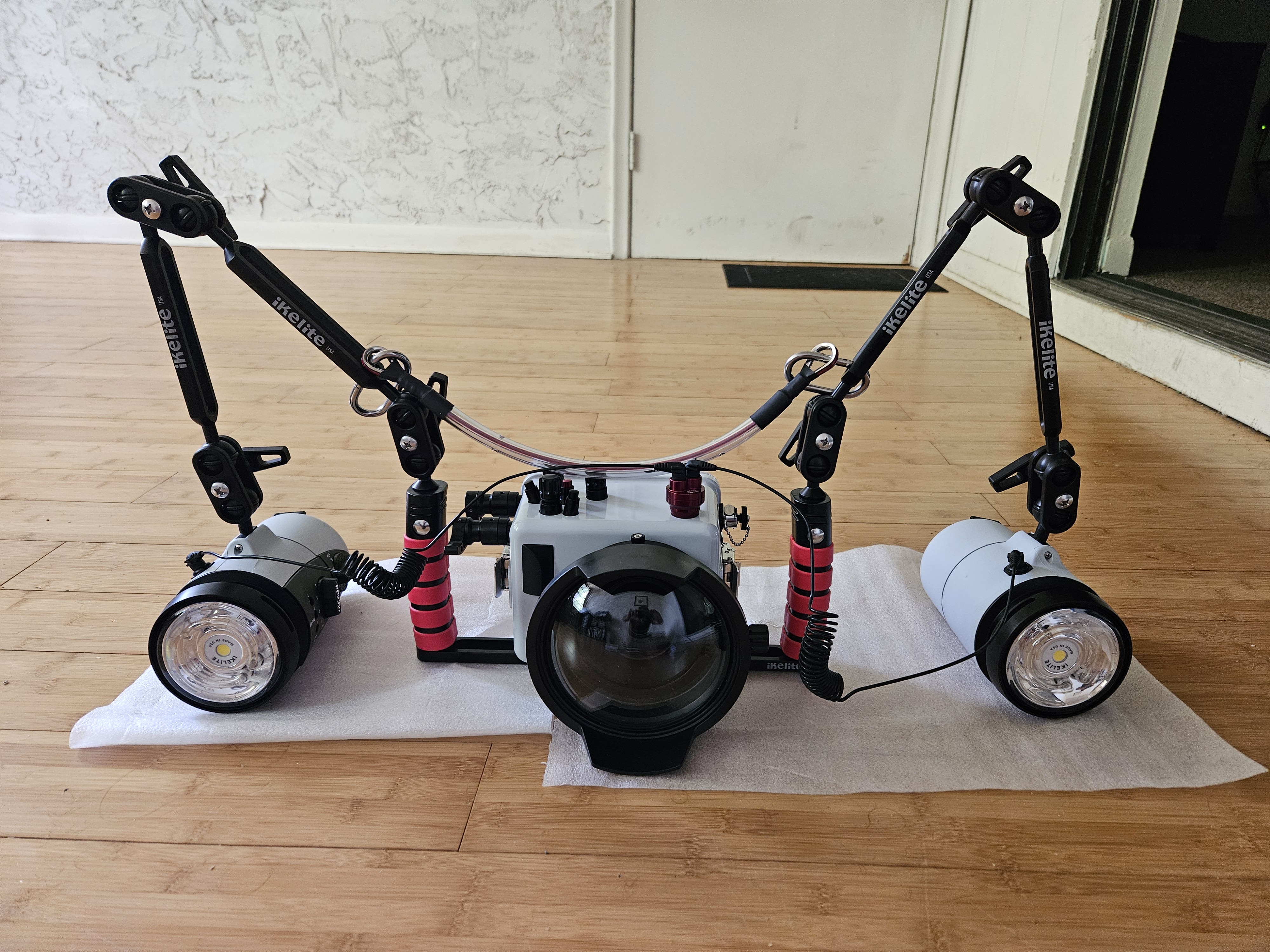
My new underwater camera setup includes an Ikelite housing (for my Canon EOS R7 camera), dome port, two strobes, and adjustable ball arms that connect the strobes to the housing. Click any image to enlarge.
I did a test setup of the system to make sure I knew what I was doing before taking it underwater. I decided to test it out for the first time in Ichetucknee springs. This spring is relatively close by, I have been many times and am familiar with the place, and perhaps most importantly the water is clear and there are usually lots of fish to photograph. The Canon EOS R7 camera has interchangeable lenses. For this outing I used a wide-angle RF-S 10-18 mm lens. Wide angle lenses are good for a popular type of underwater photography referred to as ‘close focus wide angle’. In this style of photography, you get close to your subject matter (in this case most likely a fish or turtle) such that you can capture the details of this animal, while simultaneously capturing a lot of background scenery due to the wide field of view. The goal is to capture both the animal and its underwater habitat in the same shot.
I was able to get a few decent images, and am impressed with the new system. However, I still have a lot to learn about how best to adjust my camera settings underwater and to position the strobe lights.
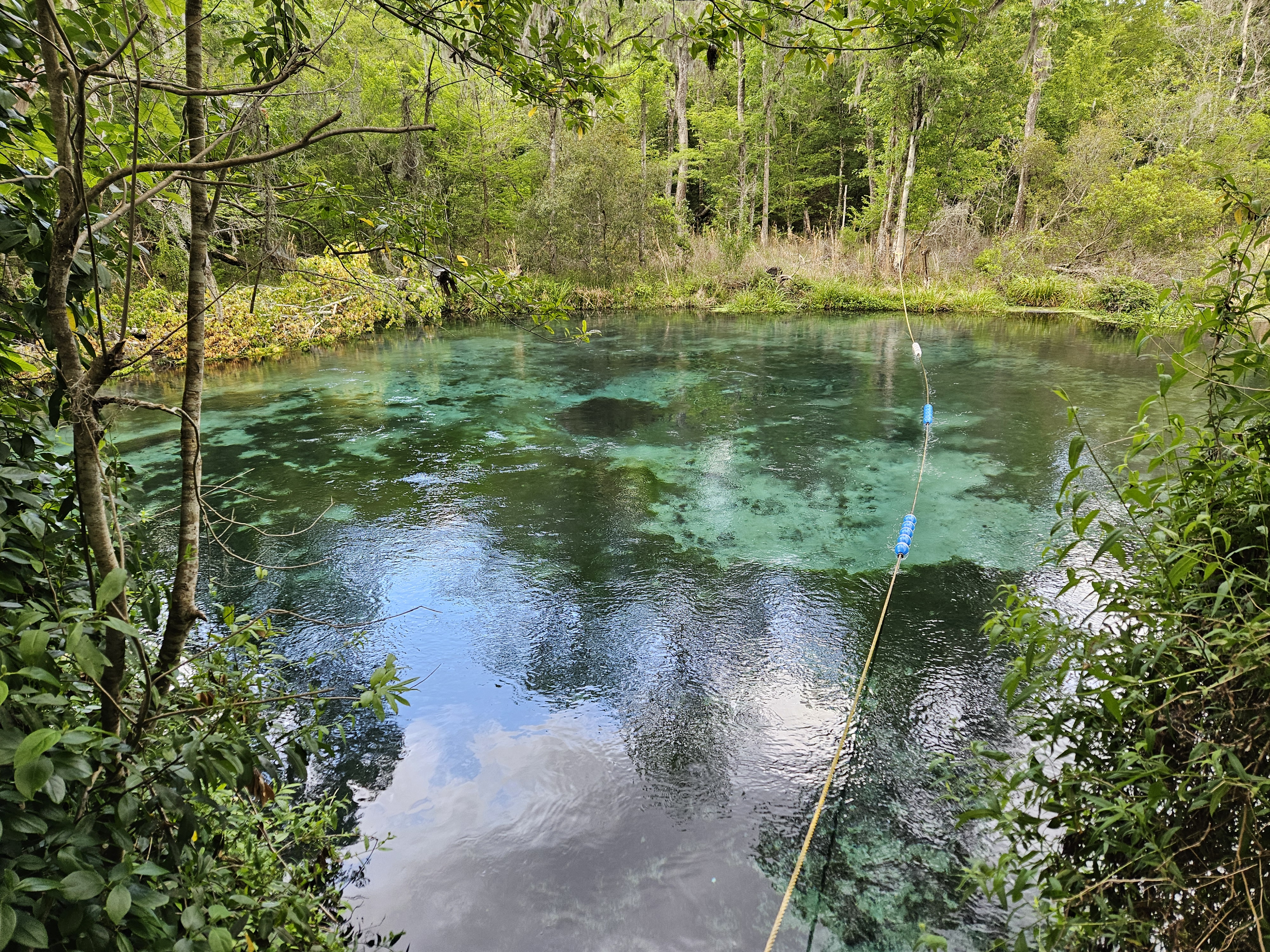
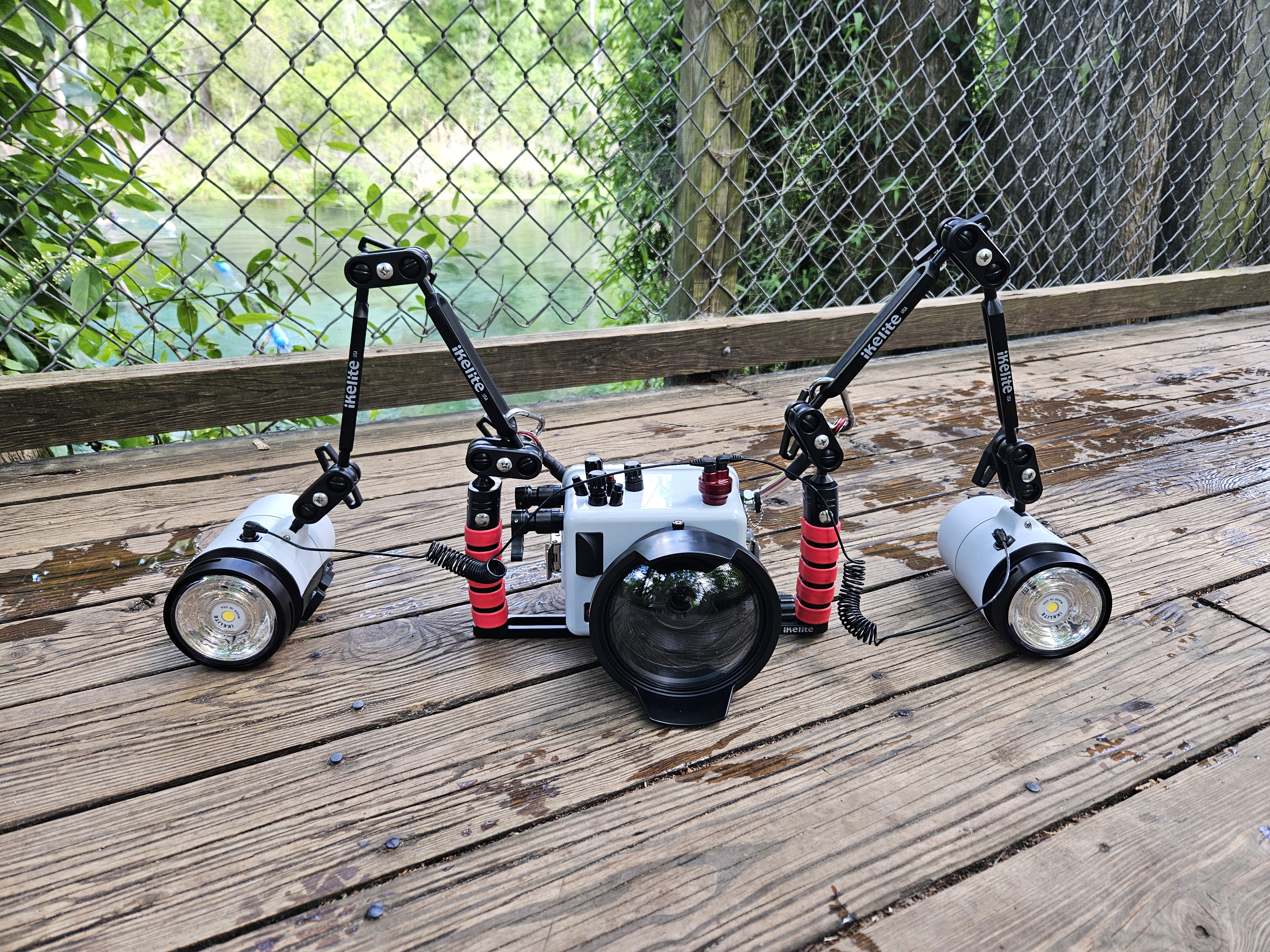
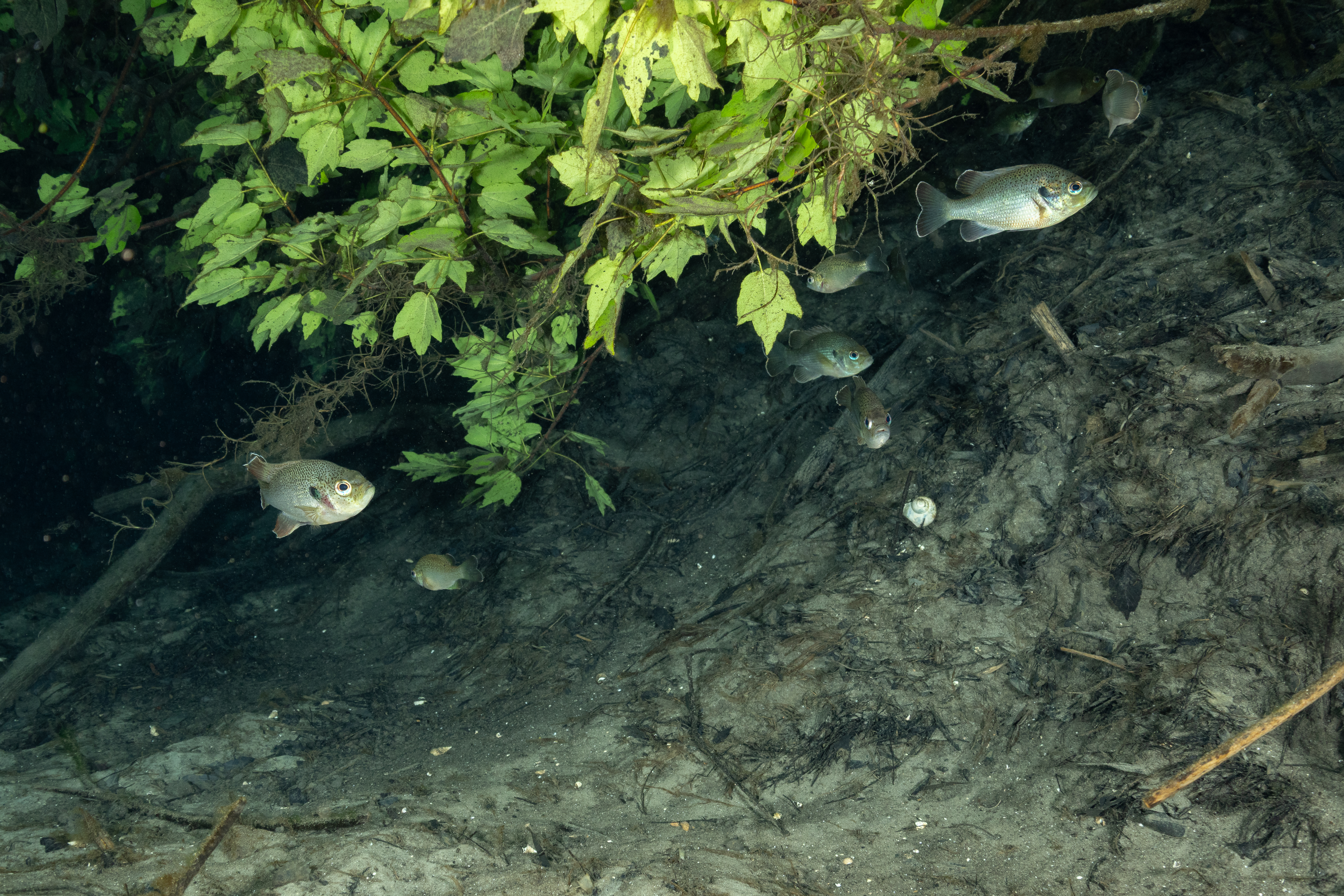
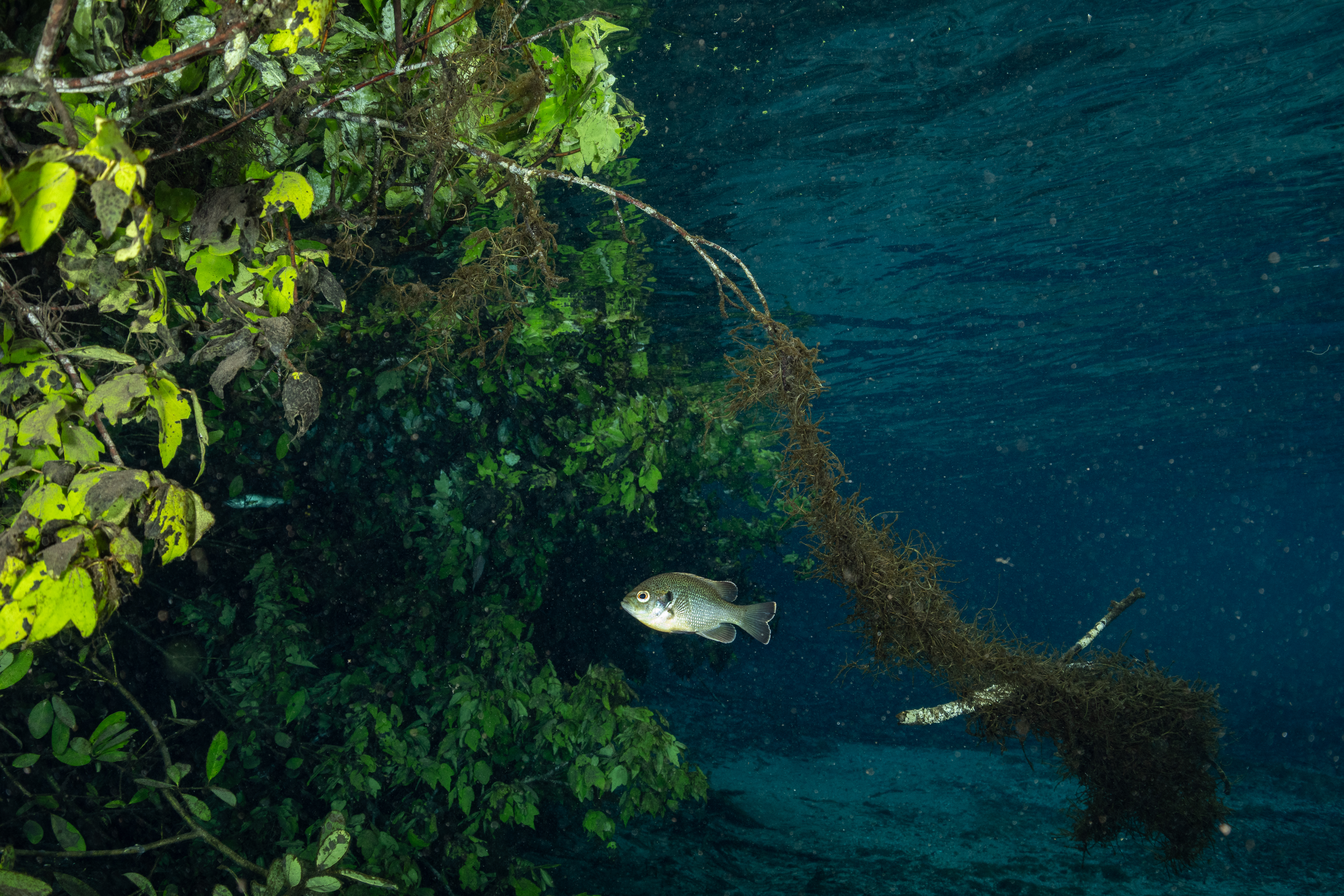
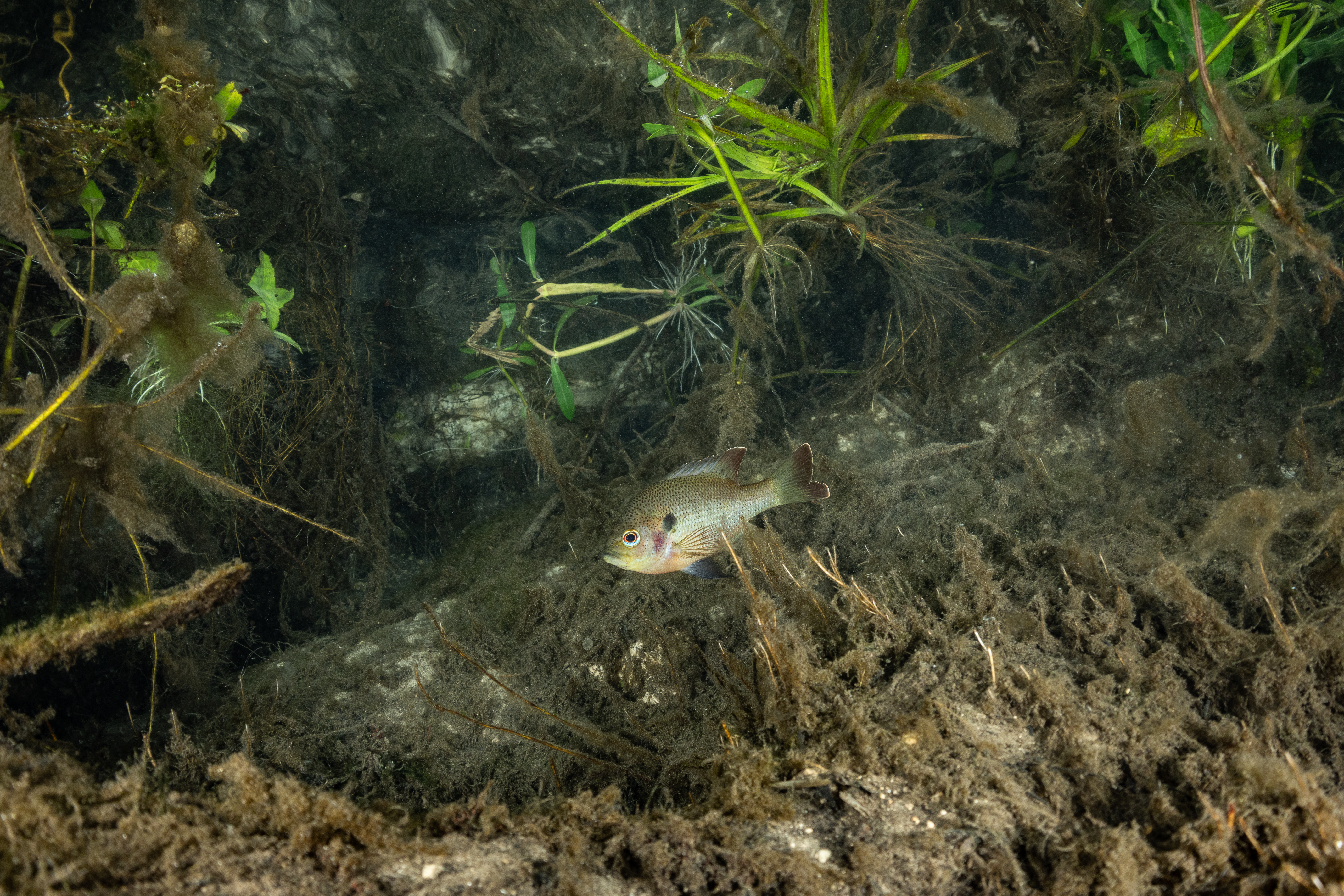
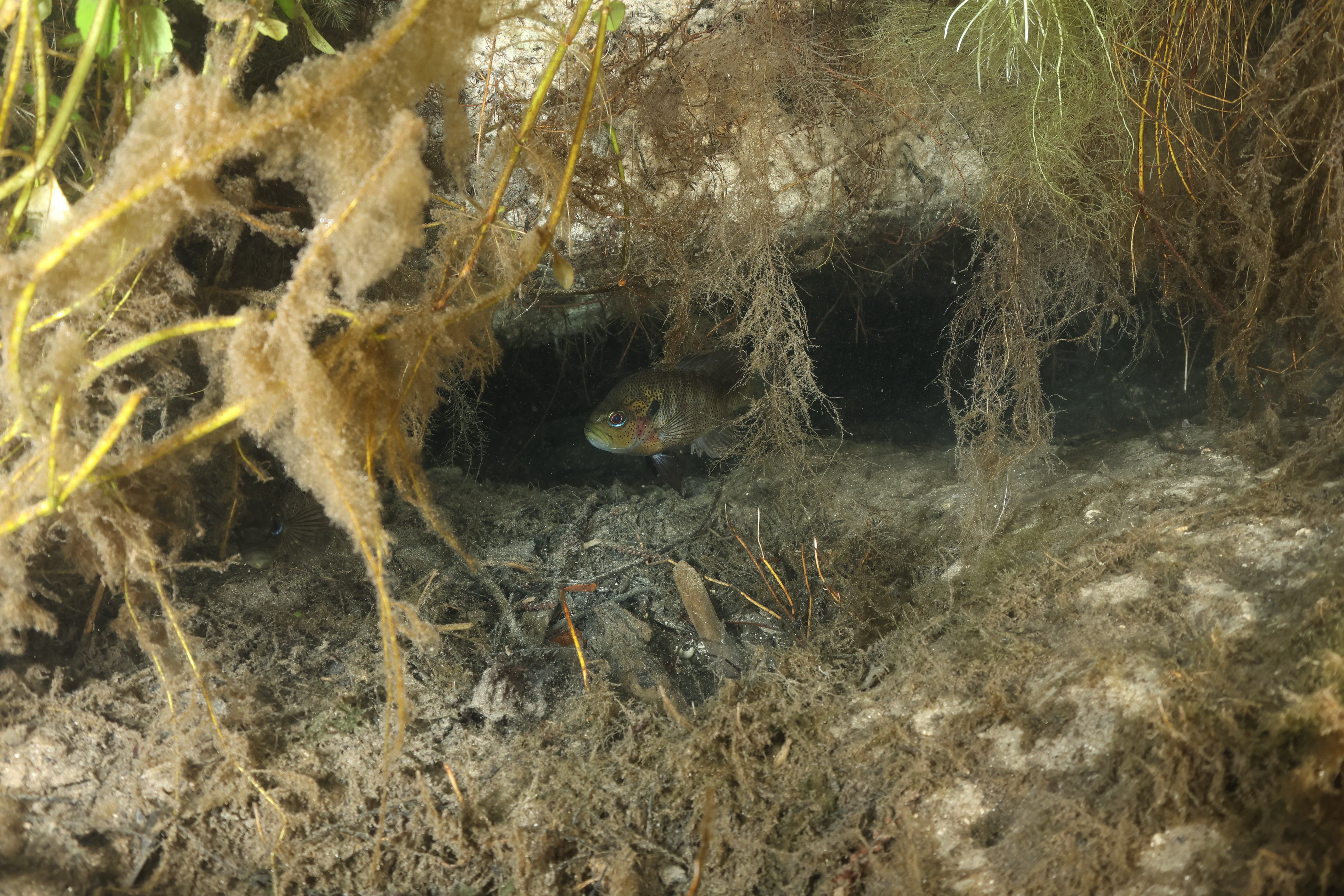
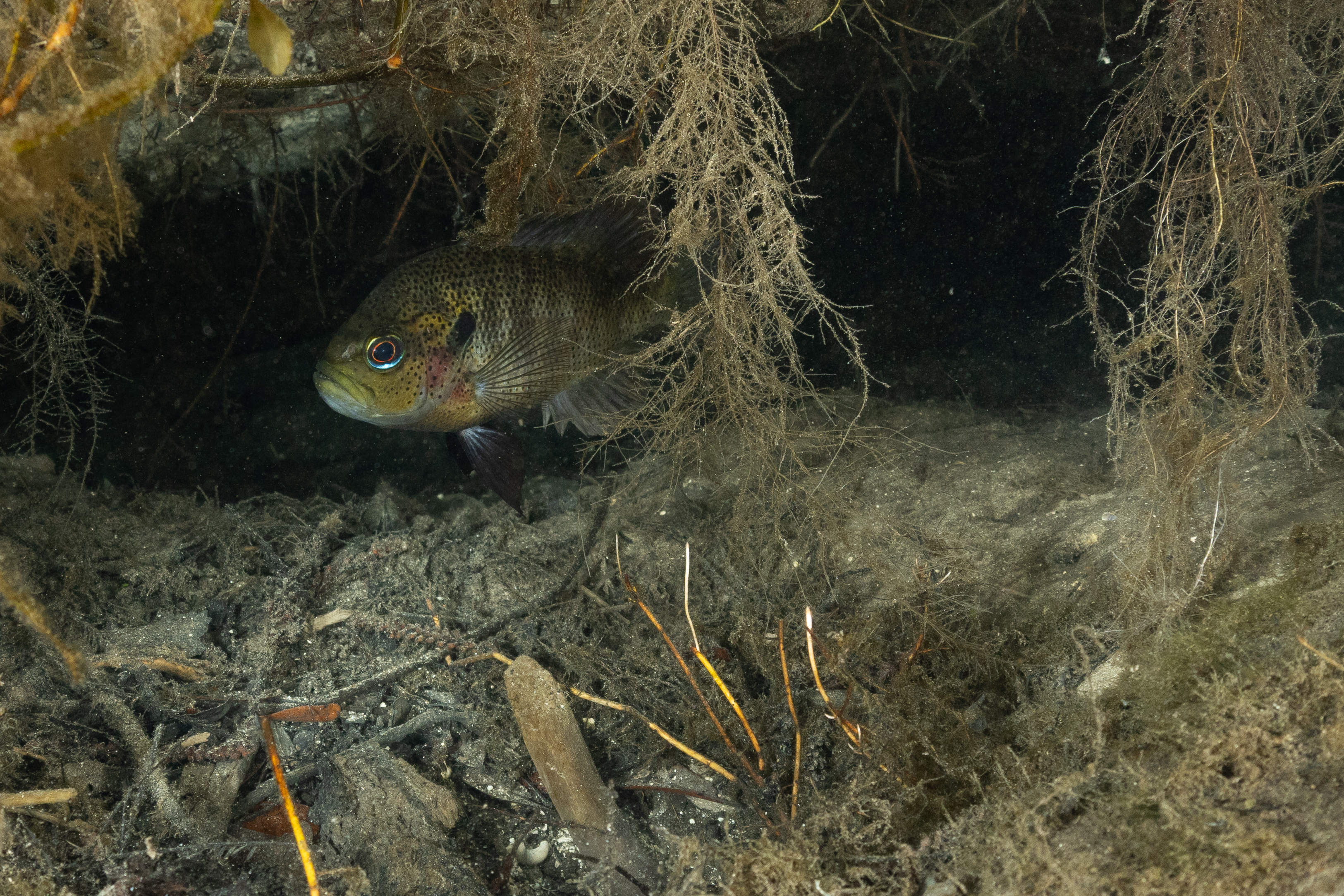
I tried out my new underwater camera setup at Blue Hole at Ichetucknee Springs and took the above photos. Click any image to enlarge.
I also tried out underwater video.
Two days later, I decided to film the fish found in a small canal in Gainesville, Florida. This past fall I filmed in this location with my TG-7. I now wanted to try out my new system in the same place.
 Reason and Nature
Very impressive photography! Have you ever thought of starting an online art studio?
LikeLike
Thanks. I haven’t considered that, but I do post my wildlife photos on my Flickr page: https://www.flickr.com/photos/192372687@N03/
LikeLike