In late April of this year, I found a Florida softshell turtle trapped in an abandoned outdoor swimming pool. In a previous post, I recount how I drained the pool, captured the turtle, and returned it to the nearby lake from which it came. This pool is part of a shuttered hotel, and is near where I live. Throughout the spring, summer, and now into the fall, I have been intermittently visiting the pool to see what other wildlife is present. Here, I report on what I observed and the changes that occurred over this time.
Physical changes
The main change over this 5-month period is that the pool has gradually filled-up with rain water. When I drained it in late April there were only a few inches of water remaining in the deep end. Now, in early October, the water nearly reaches the stairs in the shallow end, and is over 3 feet deep in the pool’s deep end.
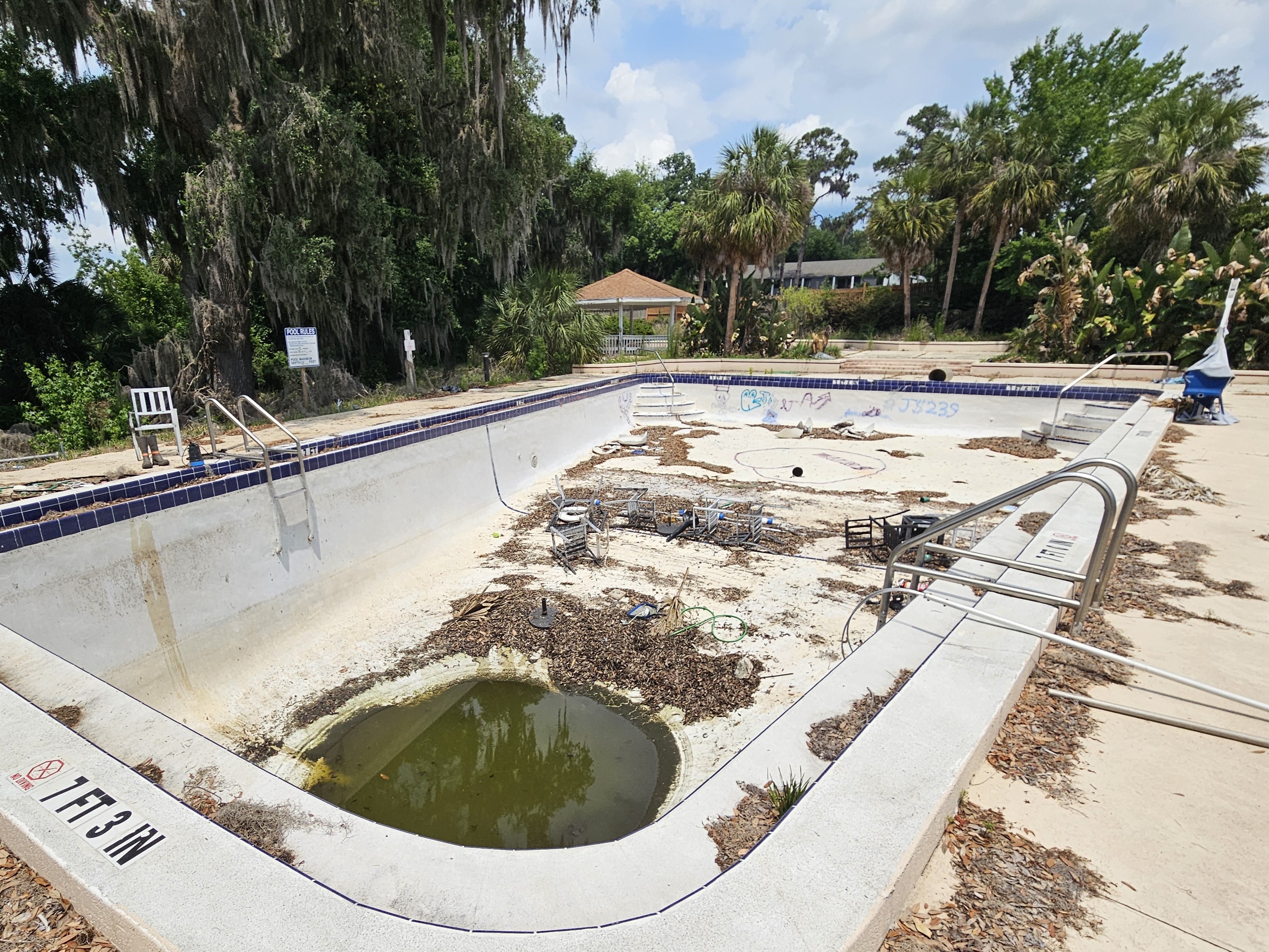

Another change is that the water surface is now mostly covered in duckweed and algae. I don’t recall these aquatic plants being present when the pool was drained. So, my best guess is that they were inadvertently brought in by animals moving between the nearby lake and the pool. In particular, I frequently observed a small American Alligator in the pool (which I know is capable of exiting the pool via the stairs). So, it seems a likely transfer culprit (i.e. algae and duckweed from the nearby lake could stick to the alligator and thereby get transferred when it re-enters the pool).


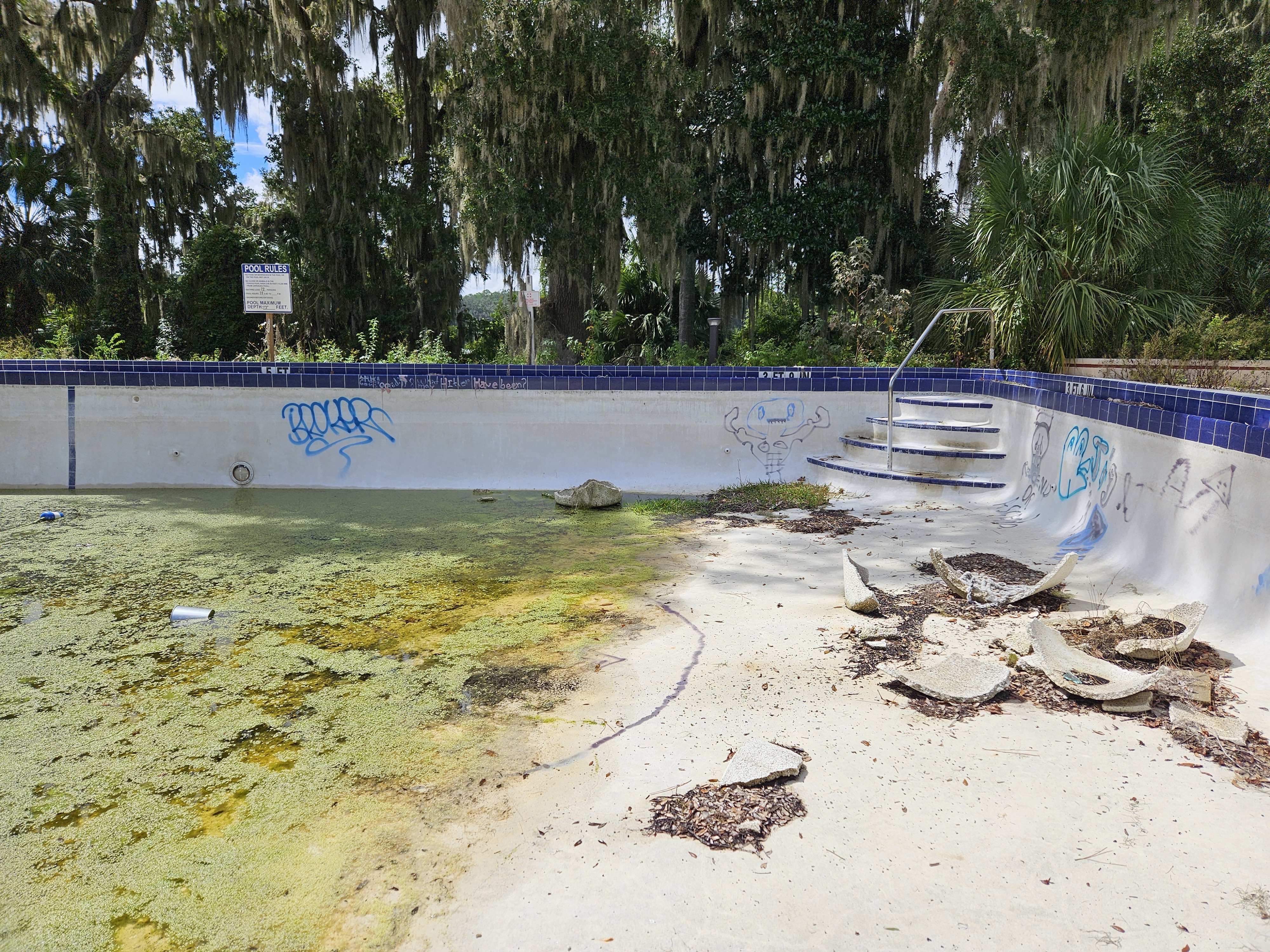

The pool is now covered in algae and duckweed. Click photos to enlarge.
Animals observed
A little over a month after draining the pool, I found another trapped female Florida softshell turtle. This time the capture and return to the lake was easy. This is because the turtle was on land, next to the stairs, rather than hidden in deep murky water. I positioned myself between the turtle and the pool water, took a few photos, and then simply picked it up and carried it the ~50 yards to the lake. I am not sure if the turtle fell over the pool’s edge and landed in the little remaining water or onto concrete (either way it is quite a drop) or if it crawled down the stairs of the pool, but then was unable to exit via the same route. Either way, the turtle seemed healthy and did not appear injured. Interestingly, it did have some patches of green algae growing on its shell and skin, which isn’t surprising given that these turtles are almost entirely aquatic. Finally, I am not sure if it is the same turtle that became trapped last time or if it is a different one.
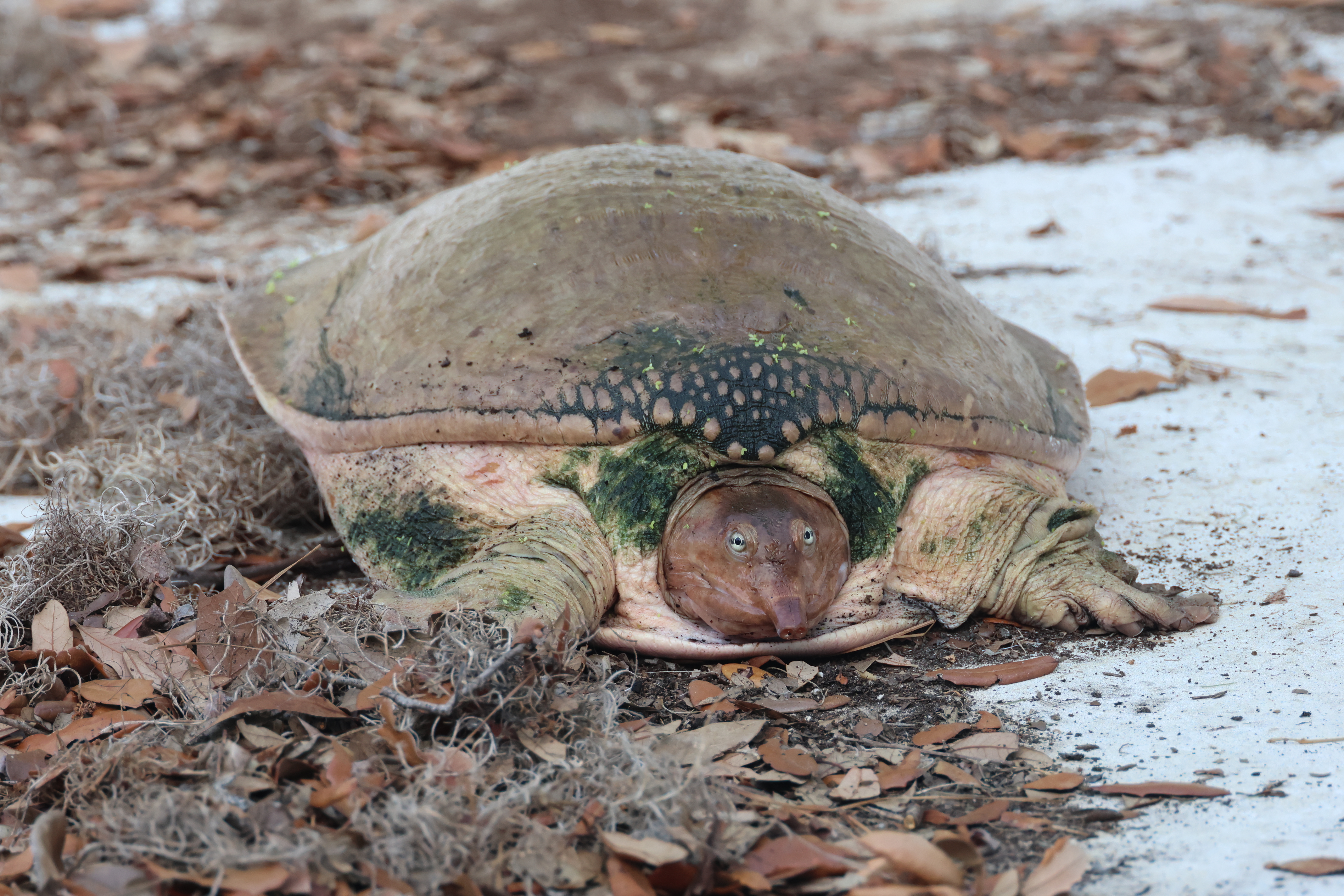
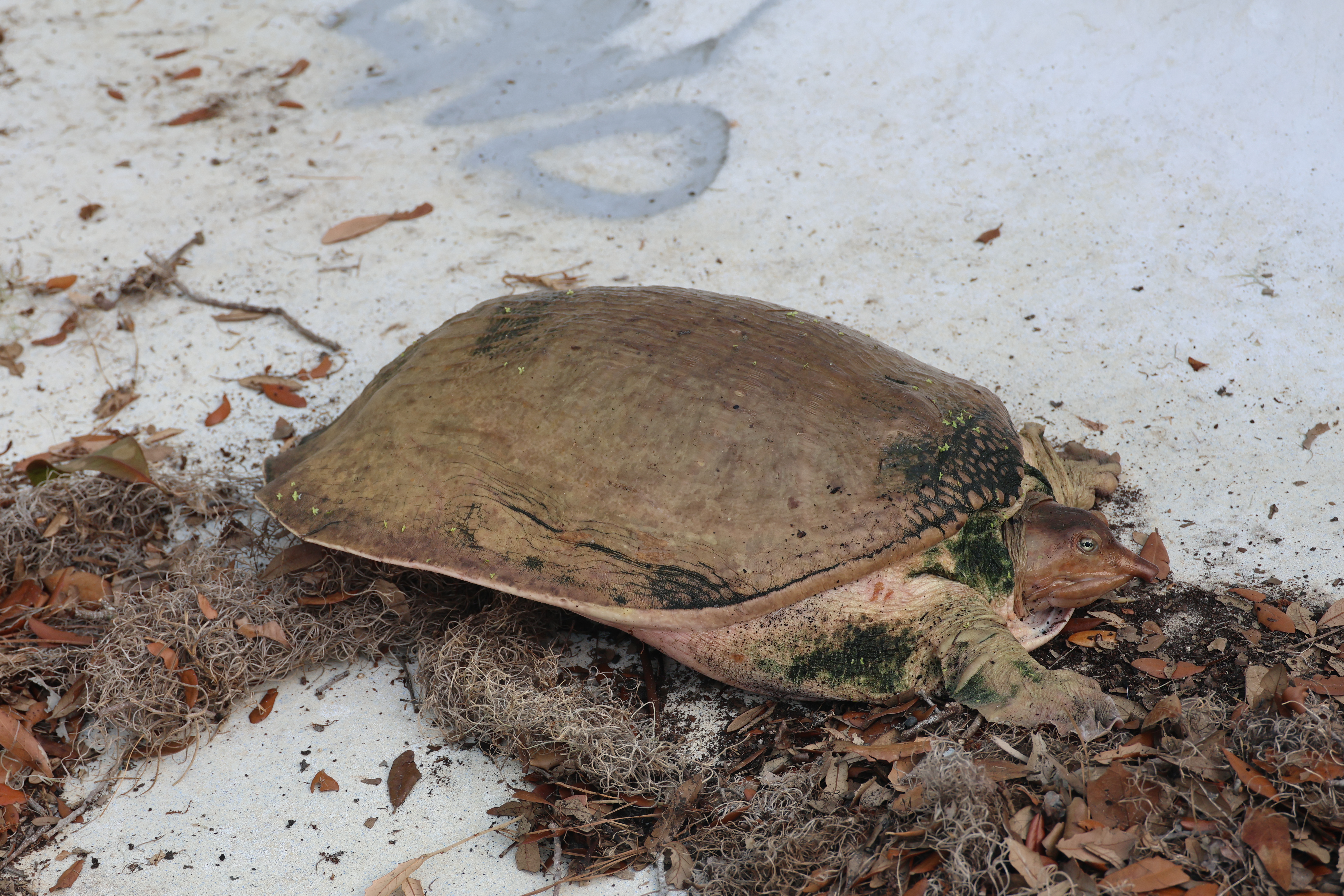
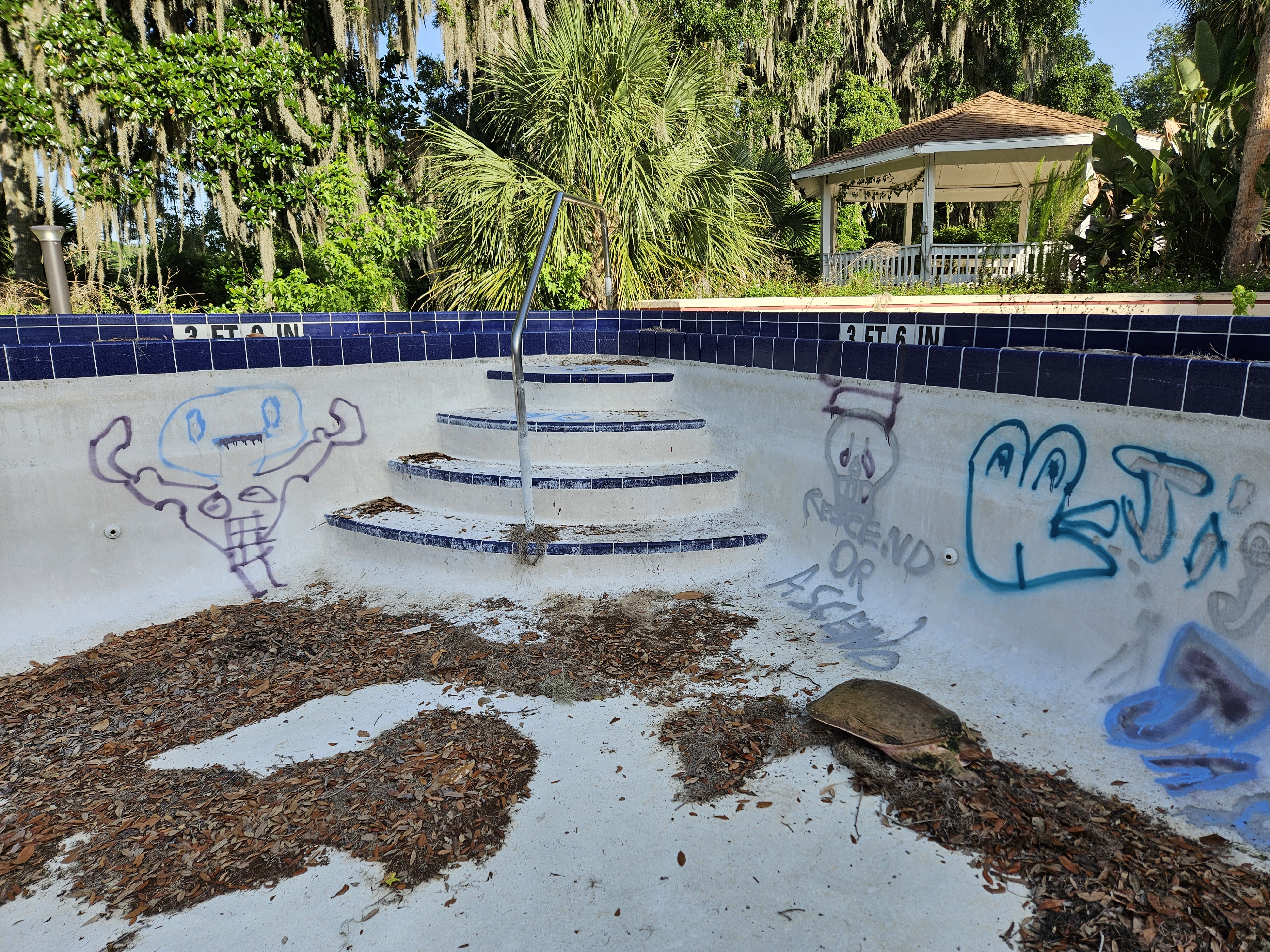
Another female Florida softshell turtle was found trapped in the pool in the springtime. Click photos to enlarge.
Throughout the summer and into the fall there has been a small alligator (about 3-4 feet in length) living in the pool. I know from my experience draining the pool that this alligator is able to get in and out using the pool stairs. [I assume I keep seeing the same alligator each time given it is the same size, and I’ve never seen more than one alligator in the pool.] I have seen this alligator basking at the water’s edge and floating in the pool with only its head visible. At night, it is clearly visible due to its bright eye shine. This raises two questions. Why does it choose to stay in the pool? And what, if anything, is it eating? Since it presumably could leave the pool at any point and return to the nearby lake, I assume it chooses to stay because it is good habitat. One of the biggest sources of mortality for small alligators is being eaten by larger alligators. I have witnessed this several times at nearby Paynes Prairie Preserve State Park. I think it is for this reason that smaller alligators often seek out peripheral habitat (such as small waterbodies) that large alligators avoid. The nearby lake contains large alligators. I have seen them basking on shore and floating in the water, both while walking along the shore and while kayaking in the lake. So, my guess is that this pool provides a safe haven where the smaller alligator is insulated from predation by larger alligators. As to what it is eating….. One night I found a dead partially-eaten rabbit floating in the pool with the alligator floating nearby. The rabbit likely fell into the pool and either drowned or was killed by the alligator. It seems possible that other small mammals such as mice or rats might occasionally fall in and become prey for the small alligator. The pool does not contain any fish. It does contain small aquatic insects and spiders, but these are likely too small to be viewed as prey. Finally, during the summer, there were numerous frogs and tadpoles in the pool, which the alligator could also presumably have eaten.

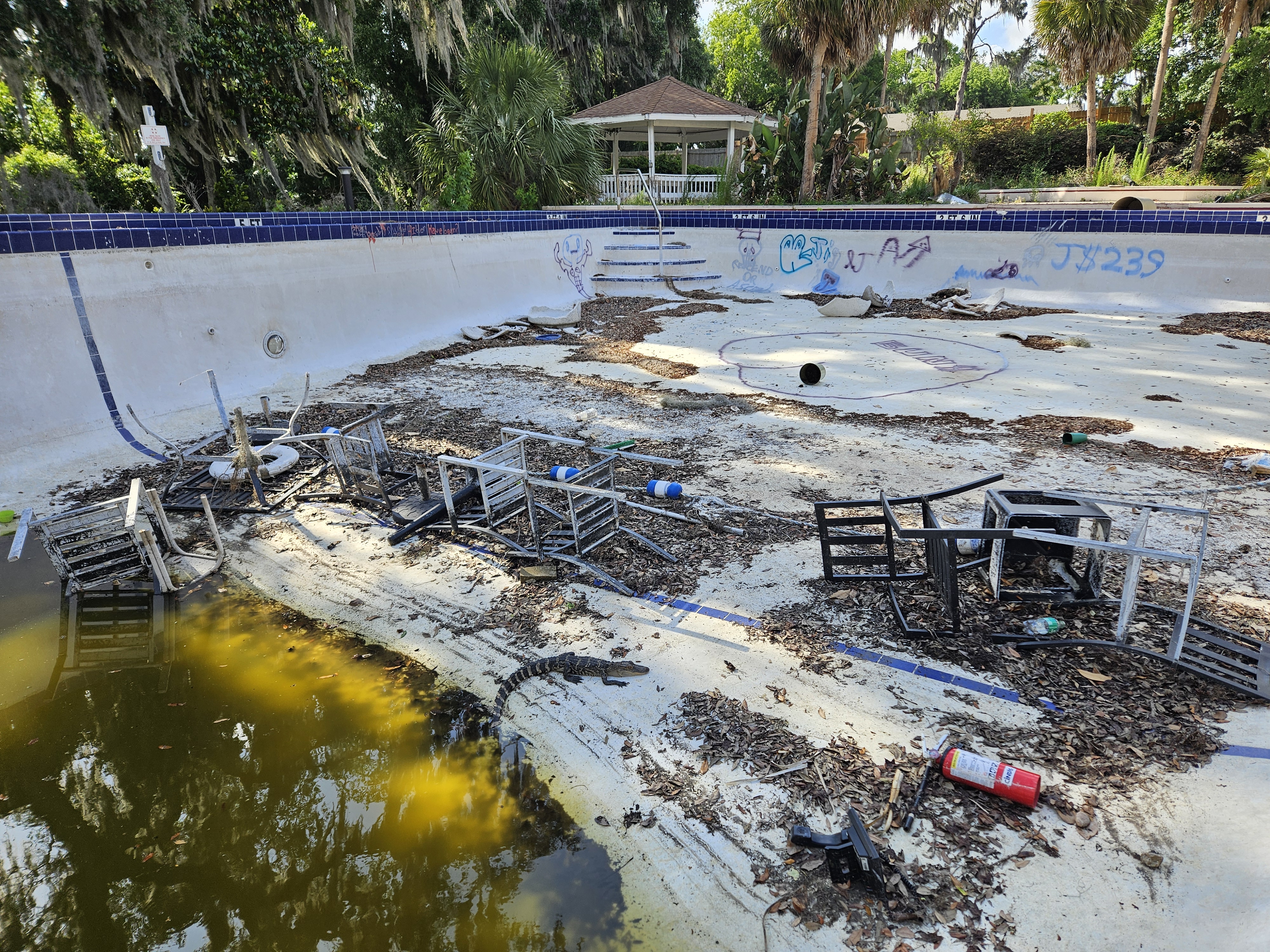
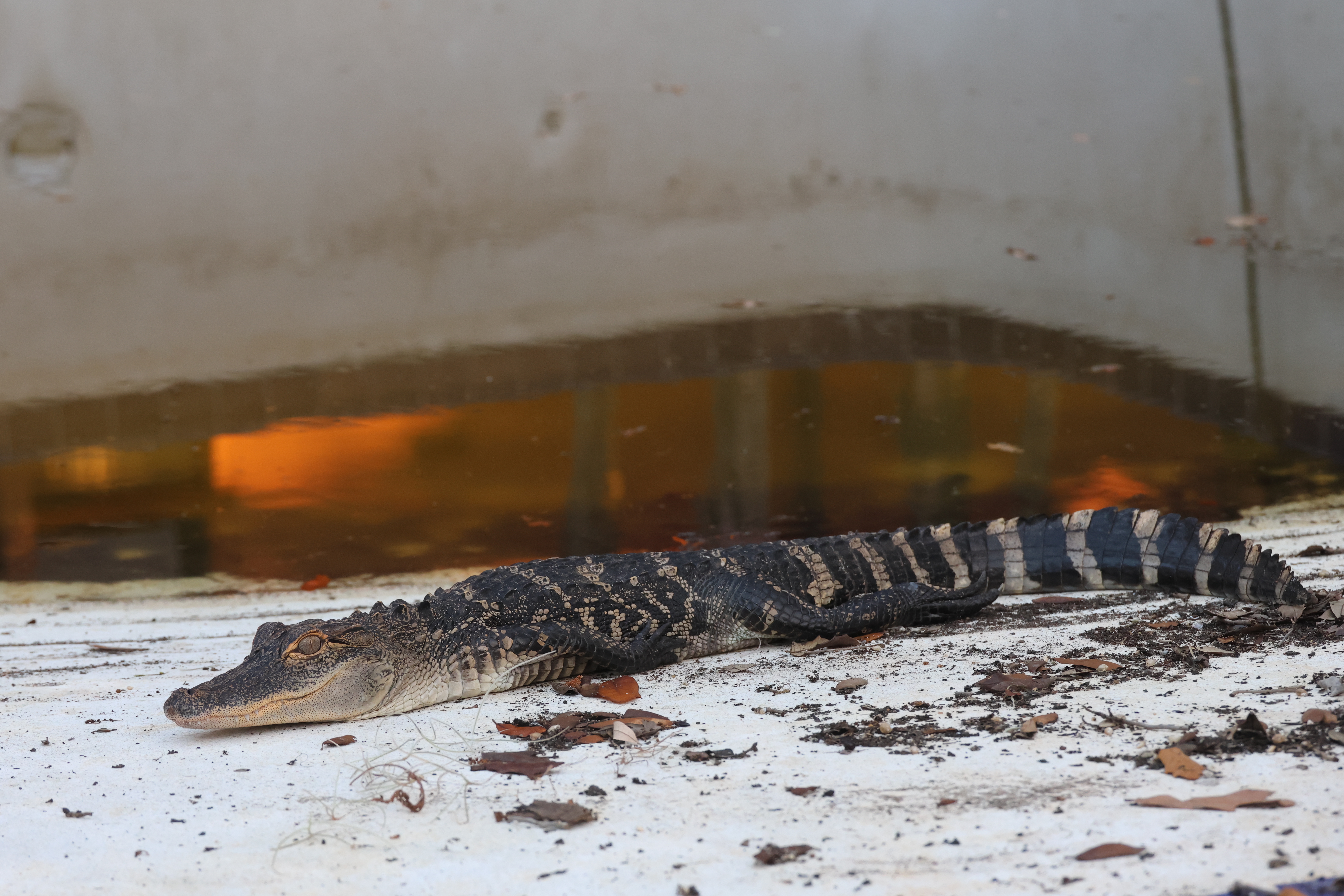

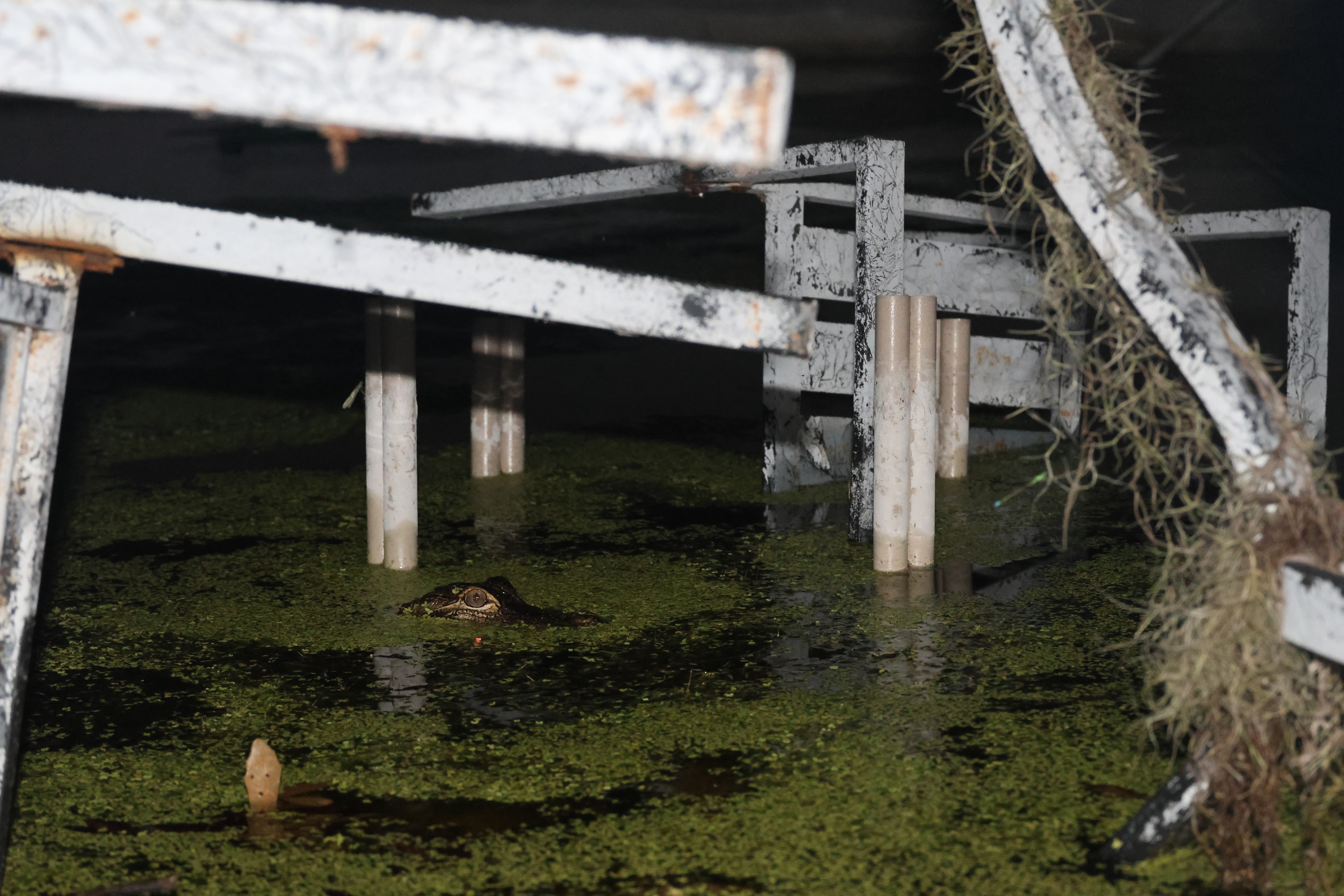


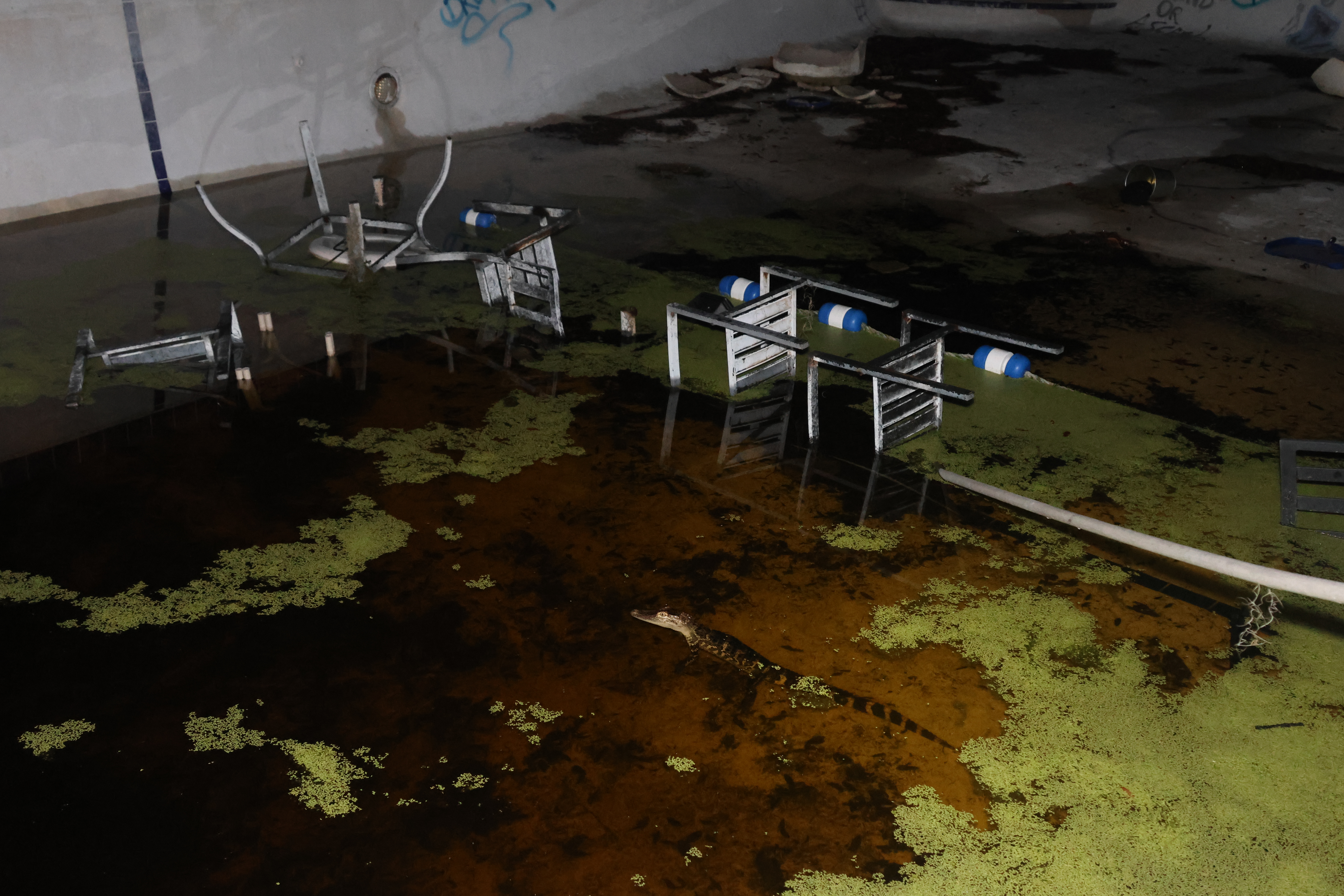

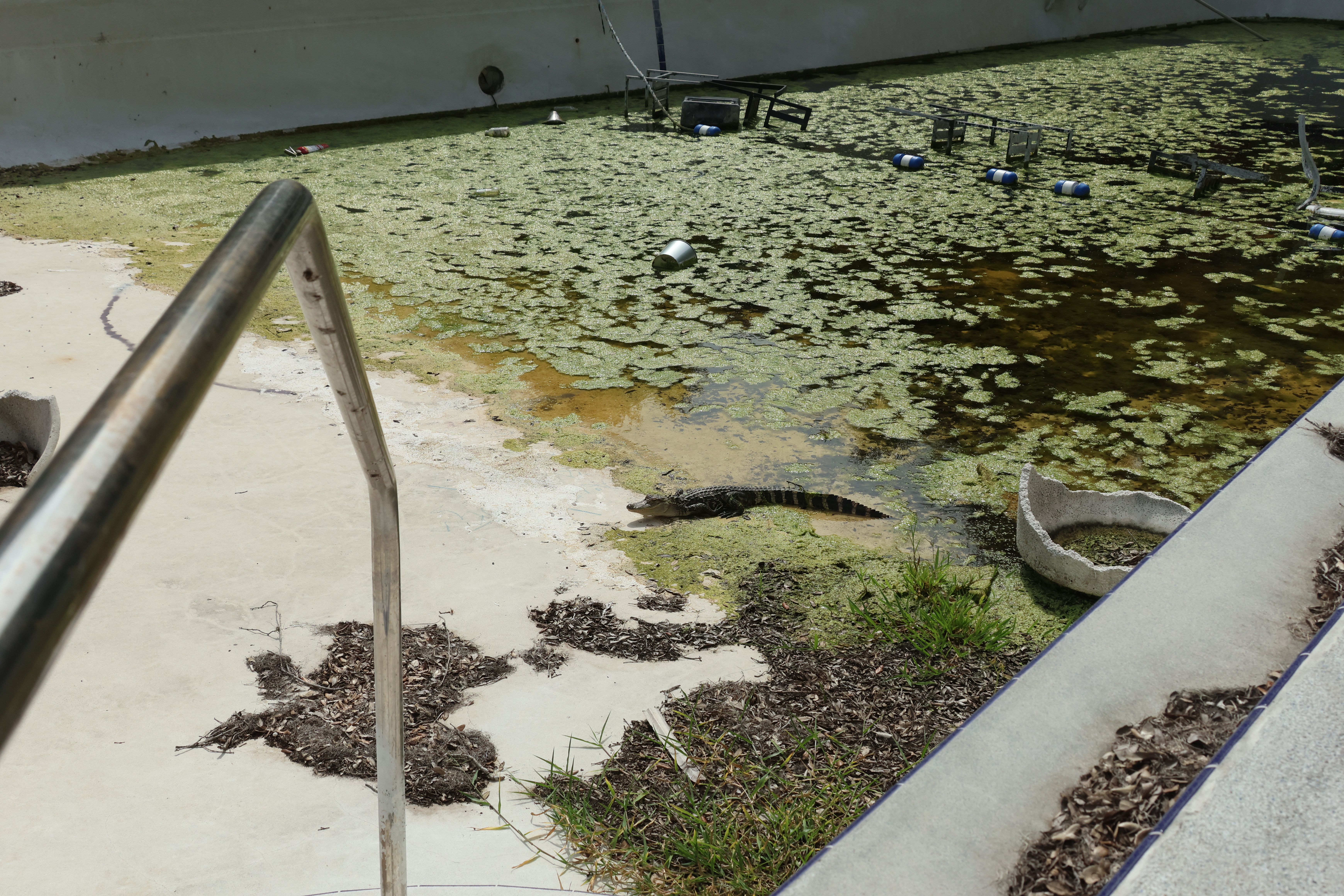

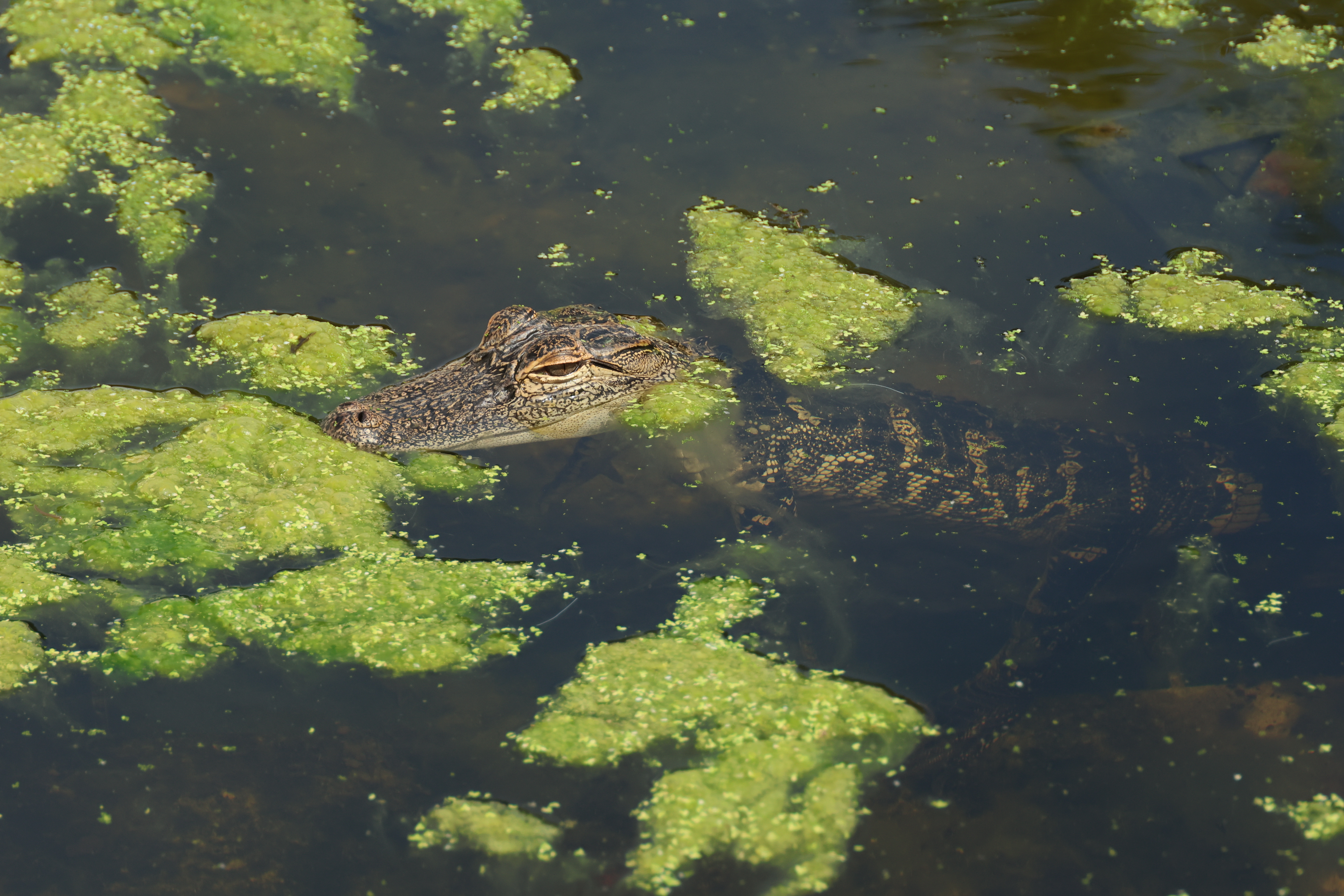
A small alligator has taken up residence in the abandoned swimming pool. I know that it is capable of leaving the pool on its own (via the stairs) because it did so while I was draining the pool to rescue the trapped turtle. However, it soon returned – presumably because the pool provides good habitat. Click photos to enlarge.
Since the pool does not contain any fish, it apparently provided an optimal breeding site for frogs. In the spring, I found big clumps of frog eggs in the water. Soon these eggs hatched and there were swarms of tadpoles. Finally, later in the summer I found thousands of newly metamorphosed froglets making their way onto land. These treefrog metamorphs had no problem exiting the pool on their own, as they could be seen clinging to the pool walls. Also, several long metal poles were placed in the pool providing a ramp out.


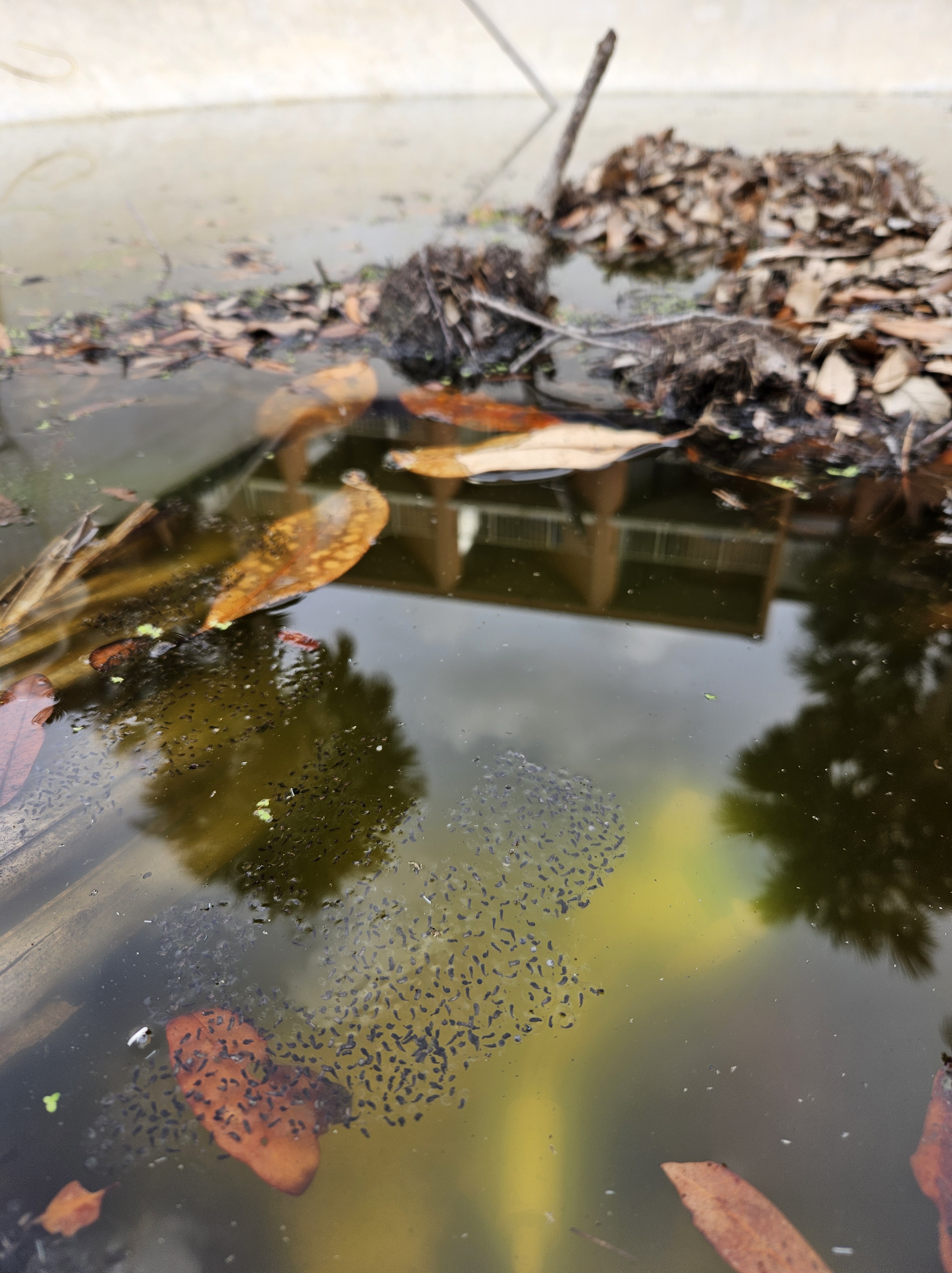


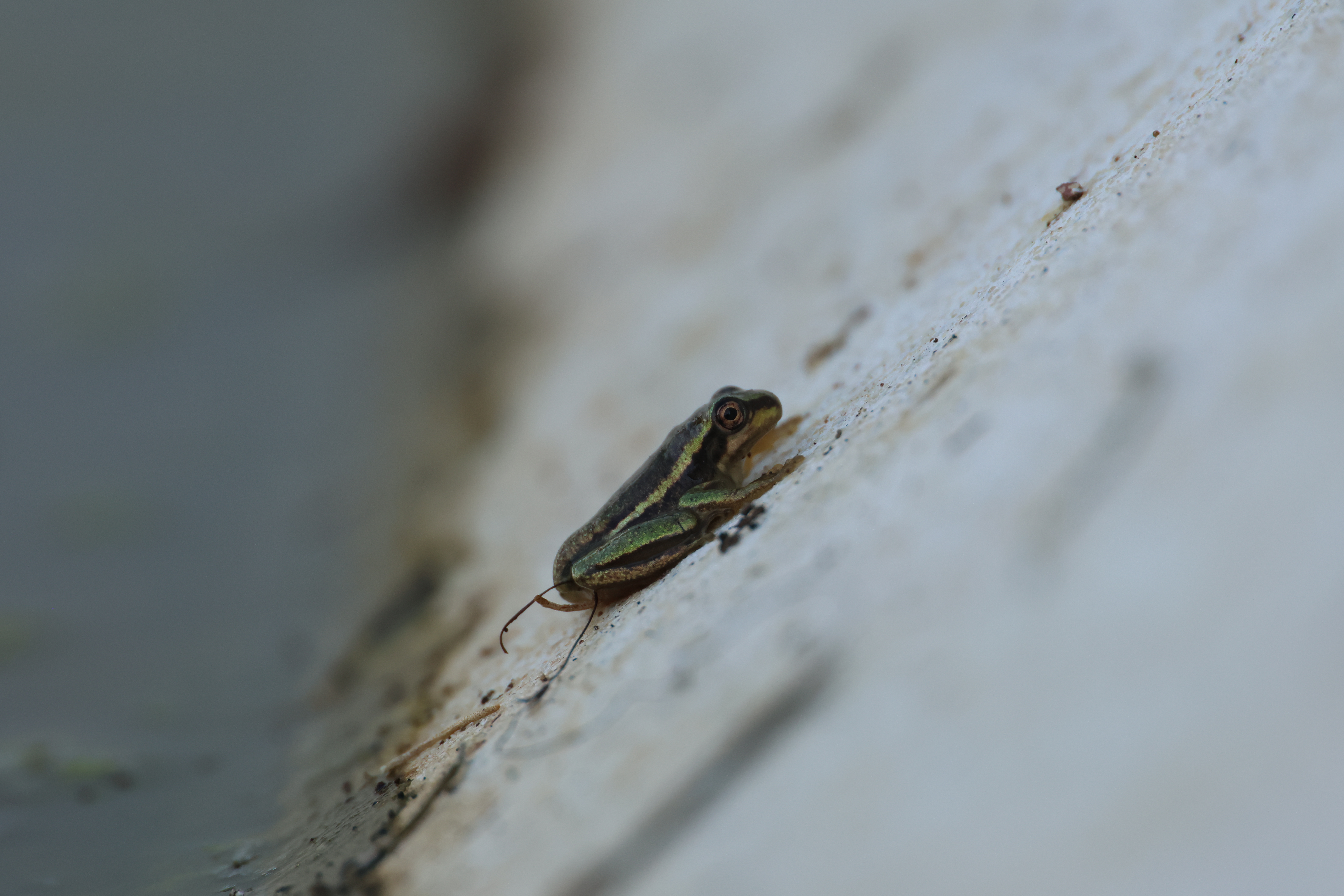
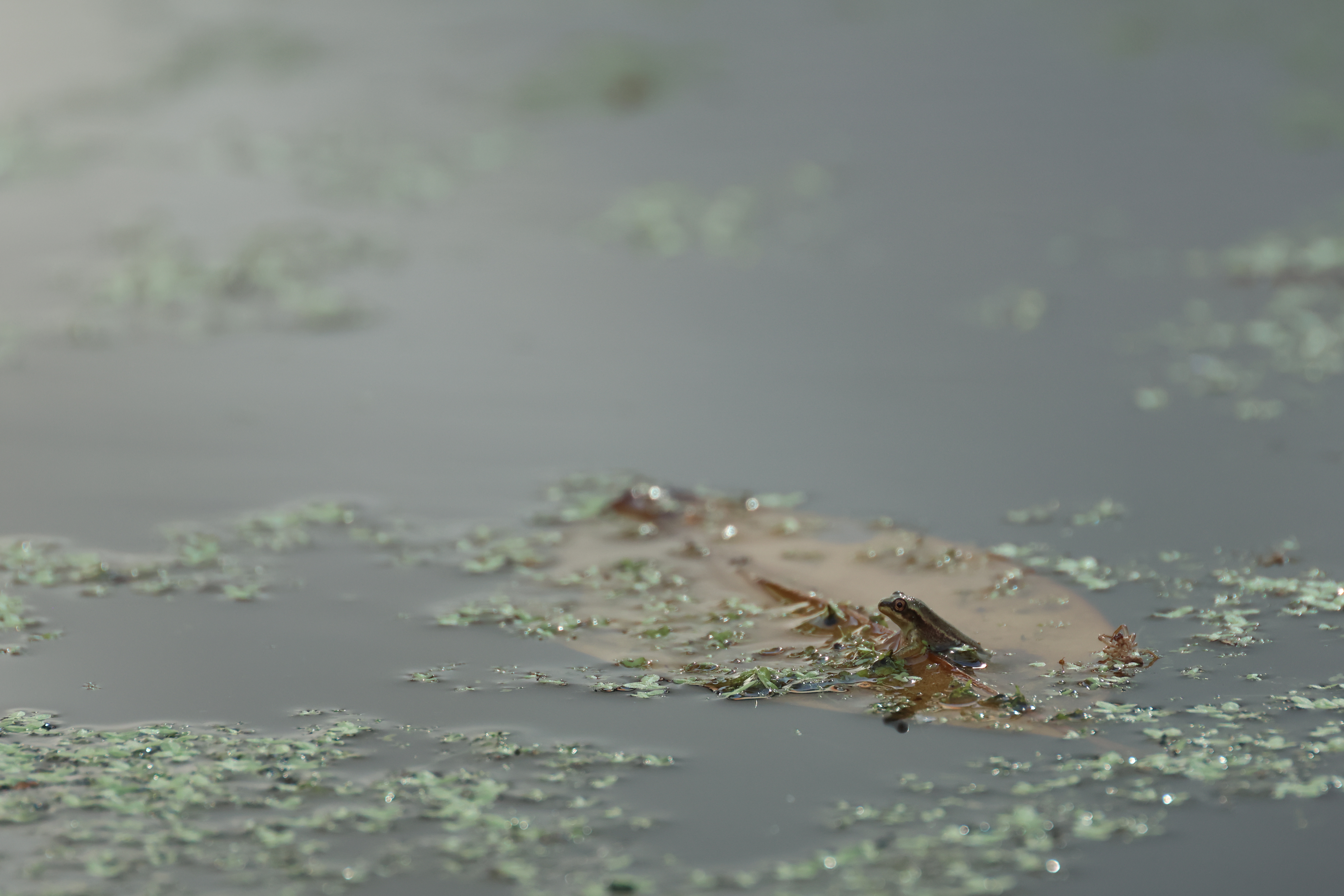
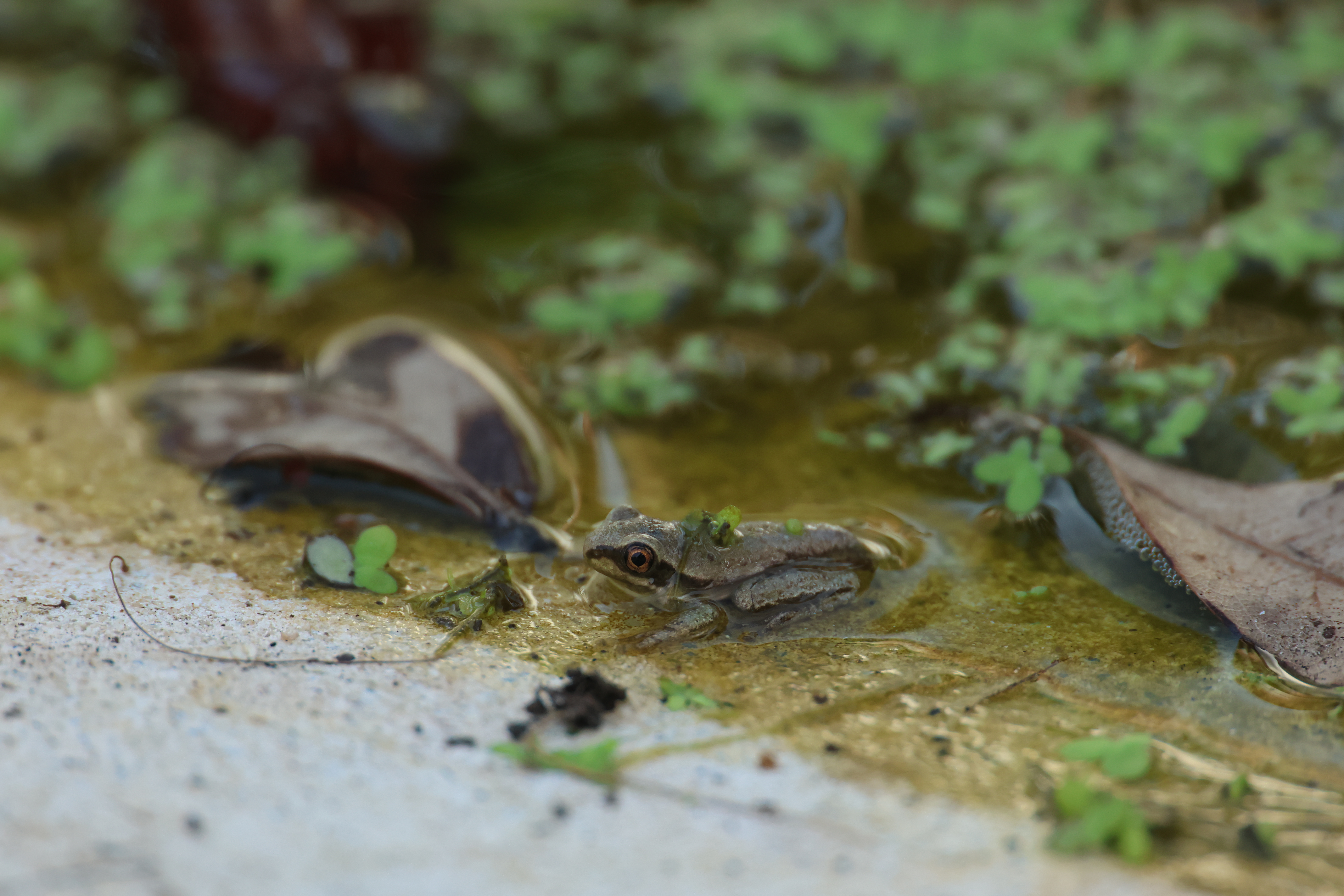
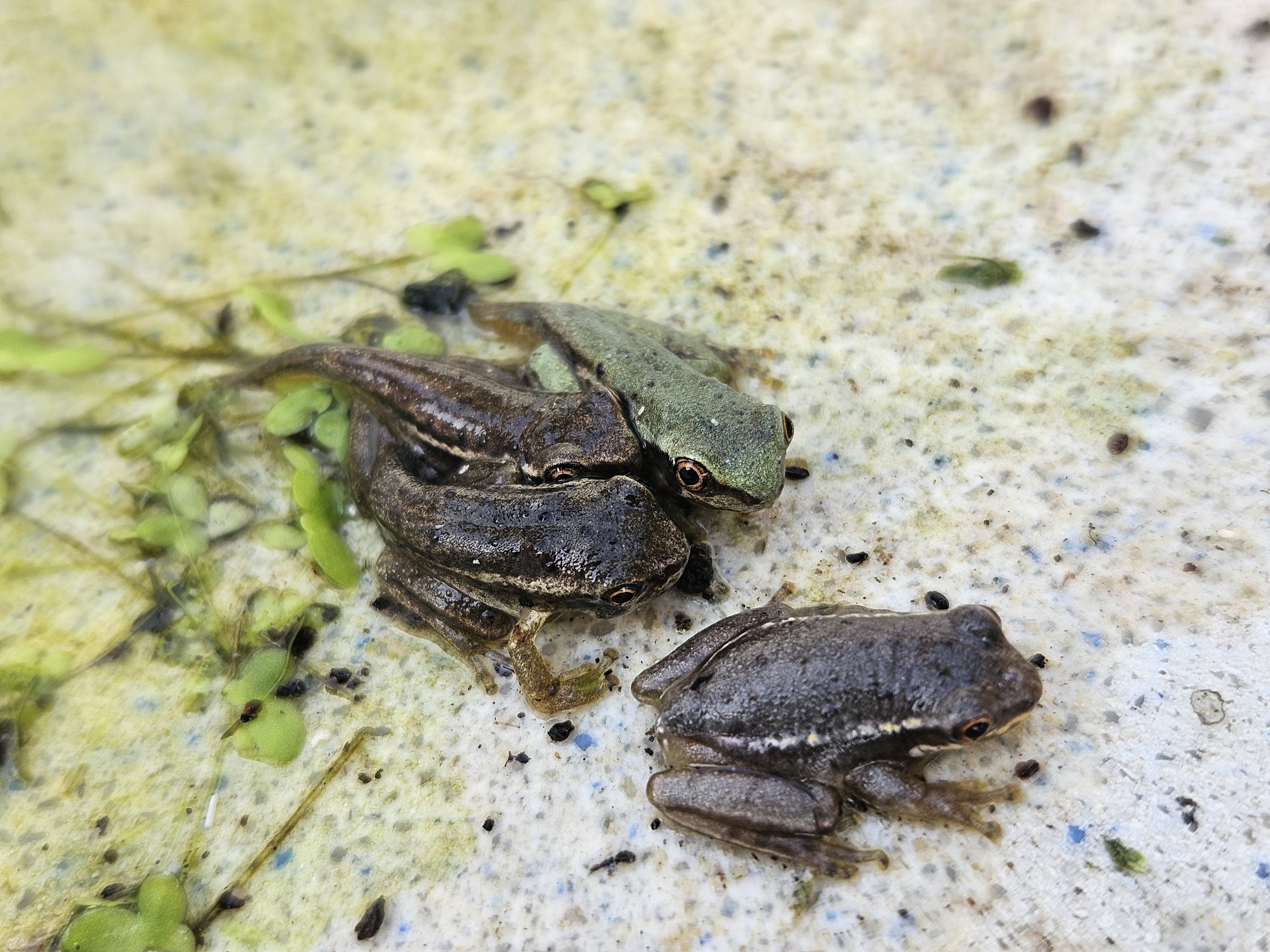

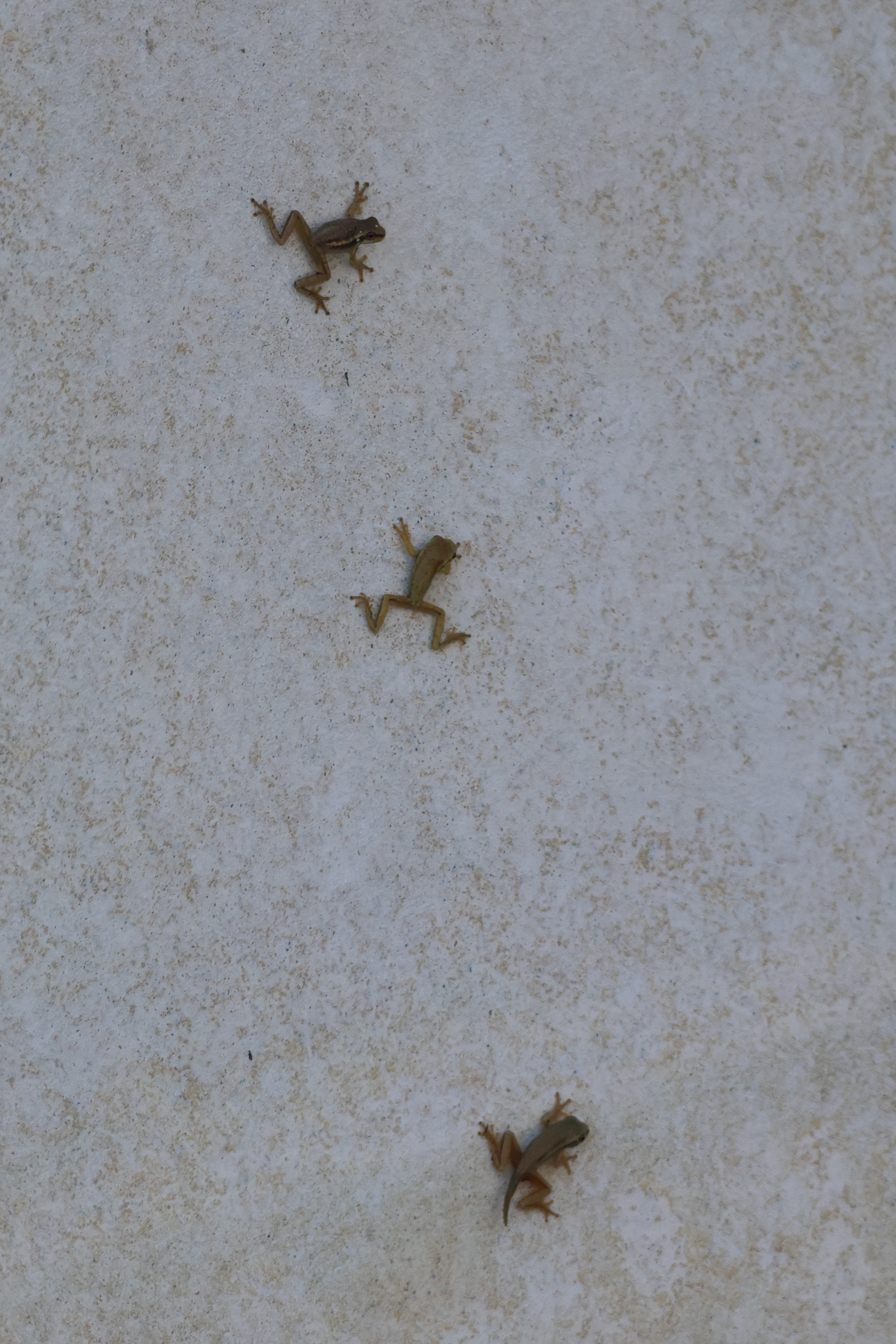
The abandoned pool provided a good breeding site for treefrogs. Click photos to enlarge.
Several times during the summer I visited the pool at night with my headlamp to look for frogs. Nighttime is when frogs are most active, so I thought I might find some calling in and around the pool. This turned out to be the case. The most commonly observed species was the Cuban treefrog (Osteopilus septentrionalis). This large treefrog species (up to 5.5 inches), native to Cuba and a few other islands, is now abundant throughout most of Florida. I frequently found them sitting on the edge of the pool and in the surrounding vegetation. I also observed native Green treefrogs (Hyla cinerea), and on one occasion I found an adult Southern leopard frog (Lithobates sphenocephalus) sitting in the pool.


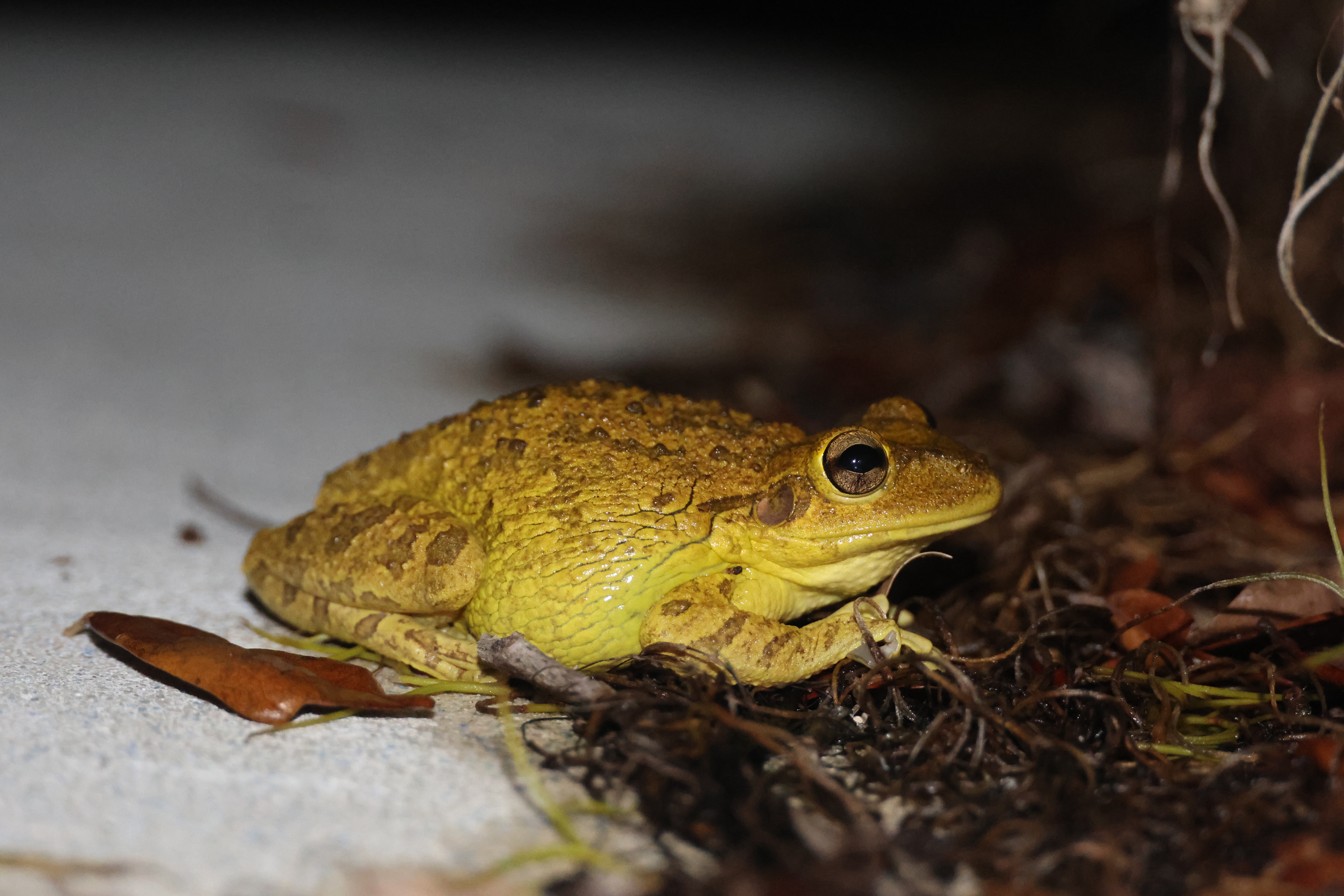

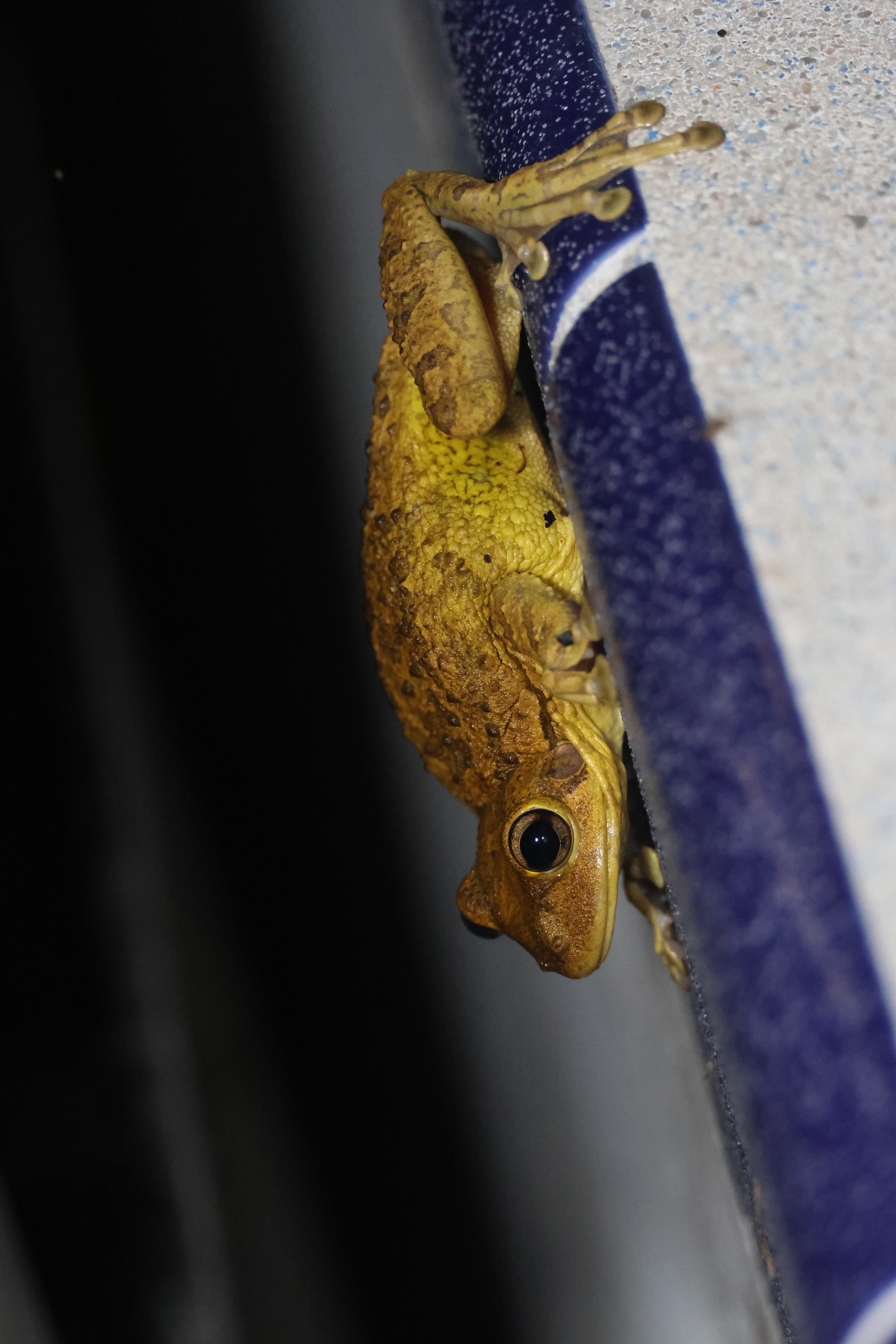
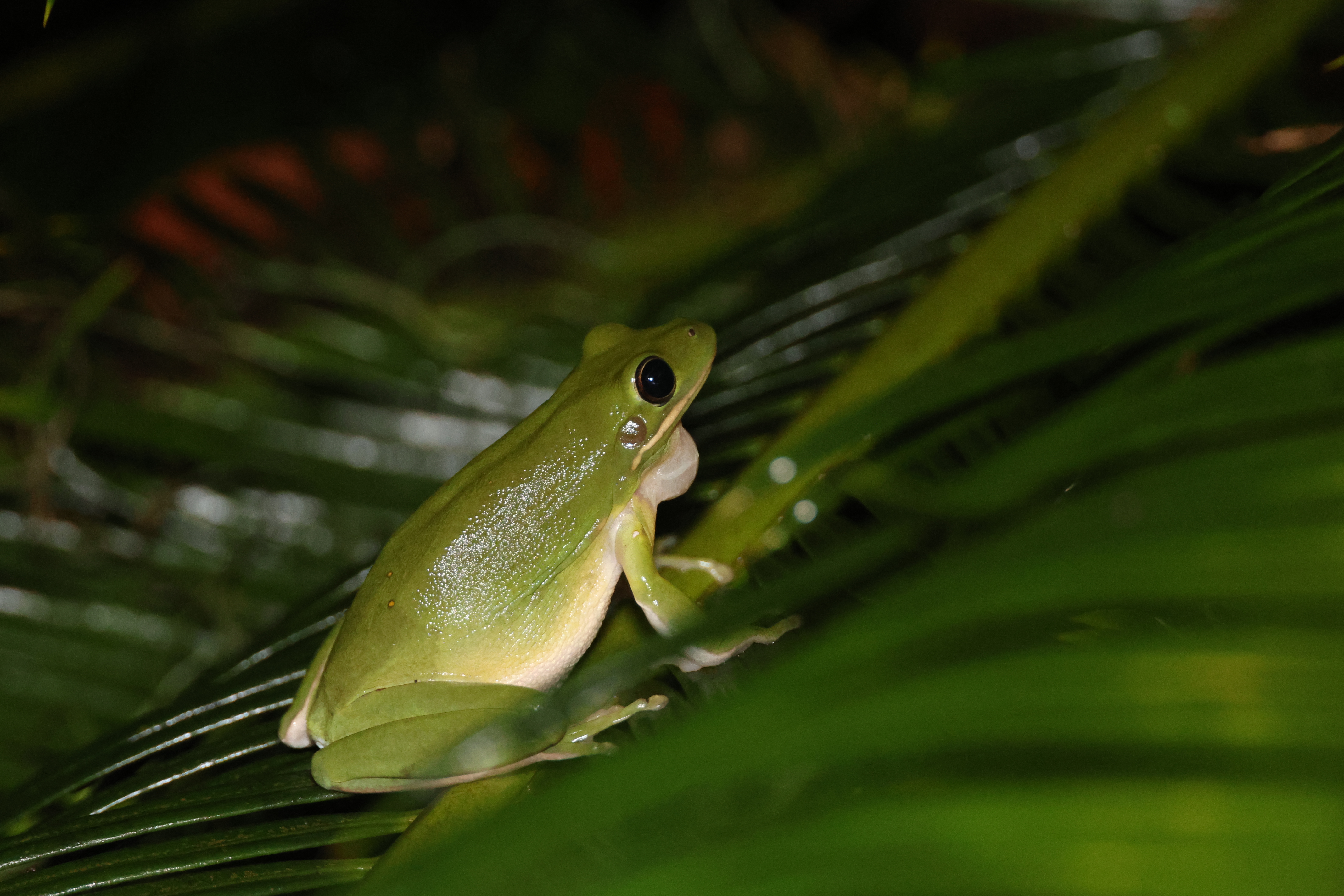
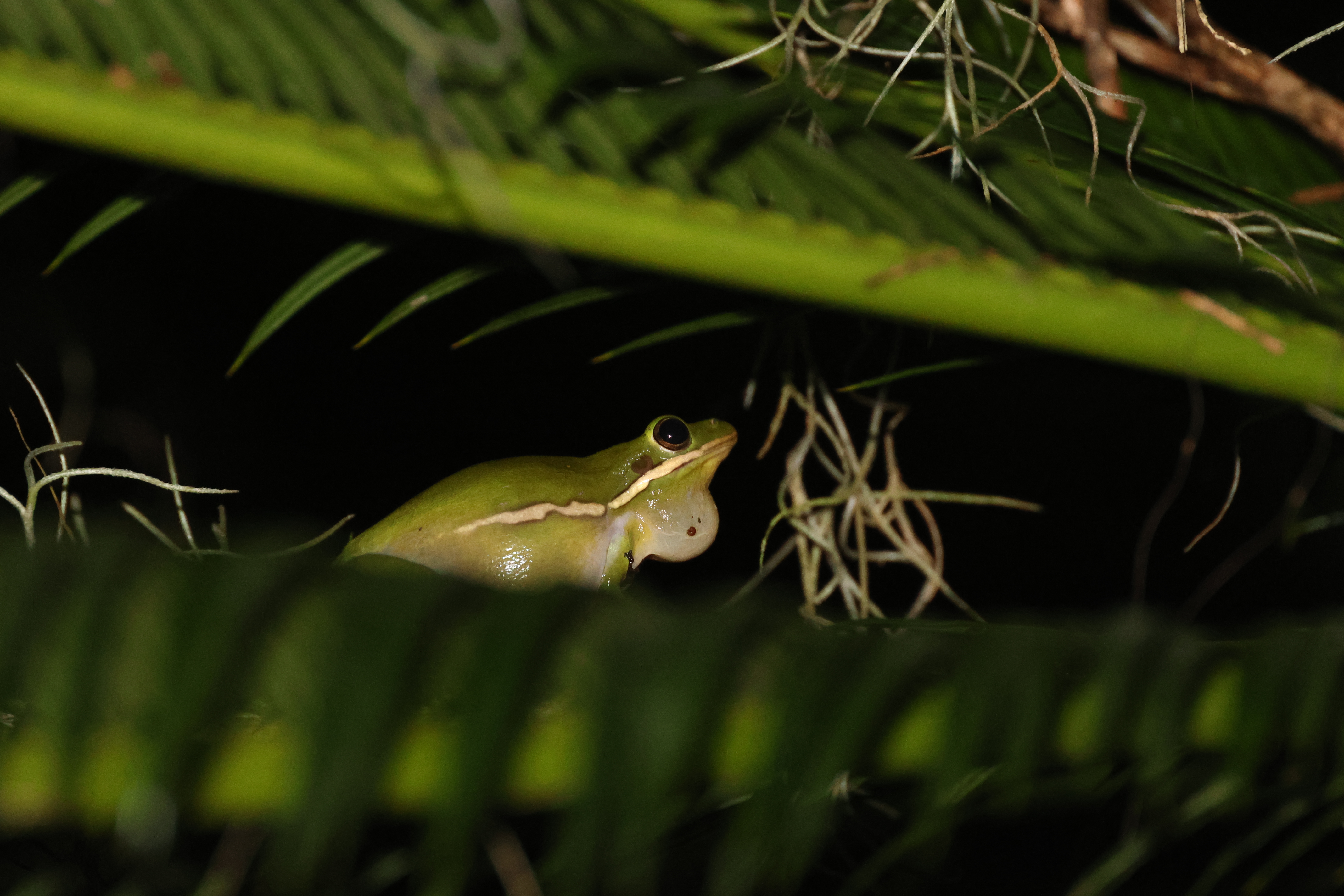
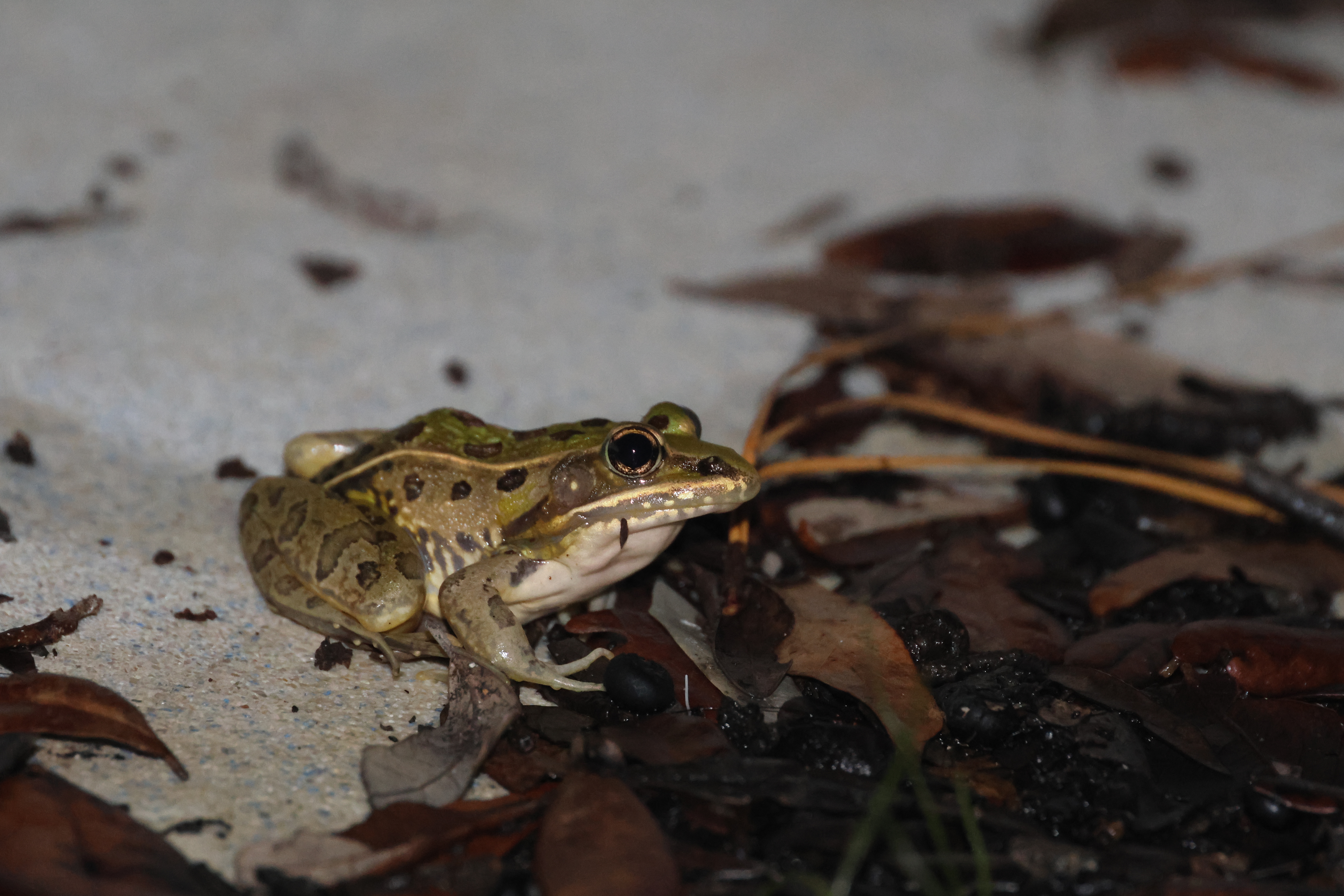
Cuban treefrogs, Green treefrogs, and a Southern leopard frog were found in and around the pool at night. Click photos to enlarge.
One night was particularly memorable. After it had rained during the day, there were hundreds of Cuban treefrogs lining the pool edge.

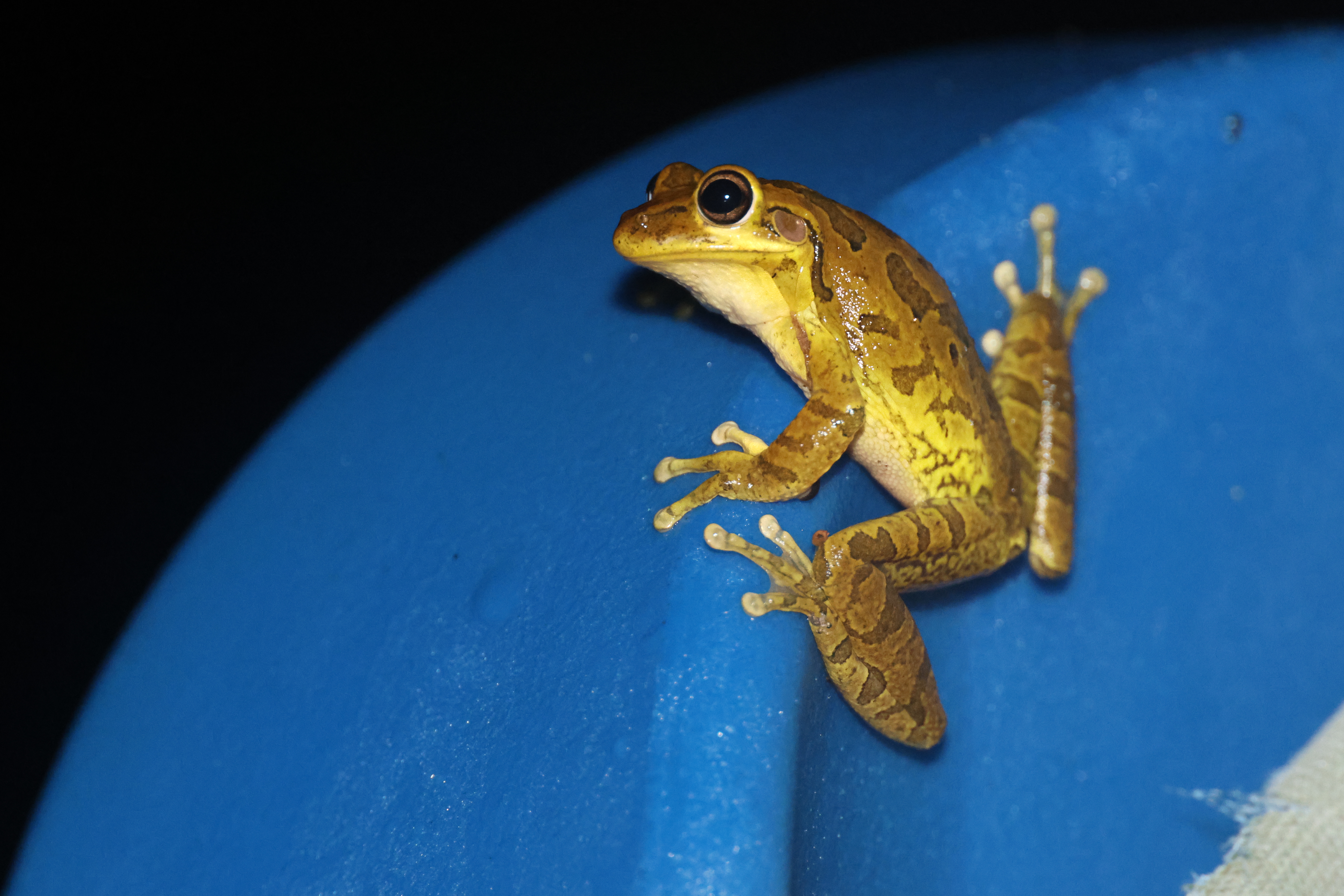

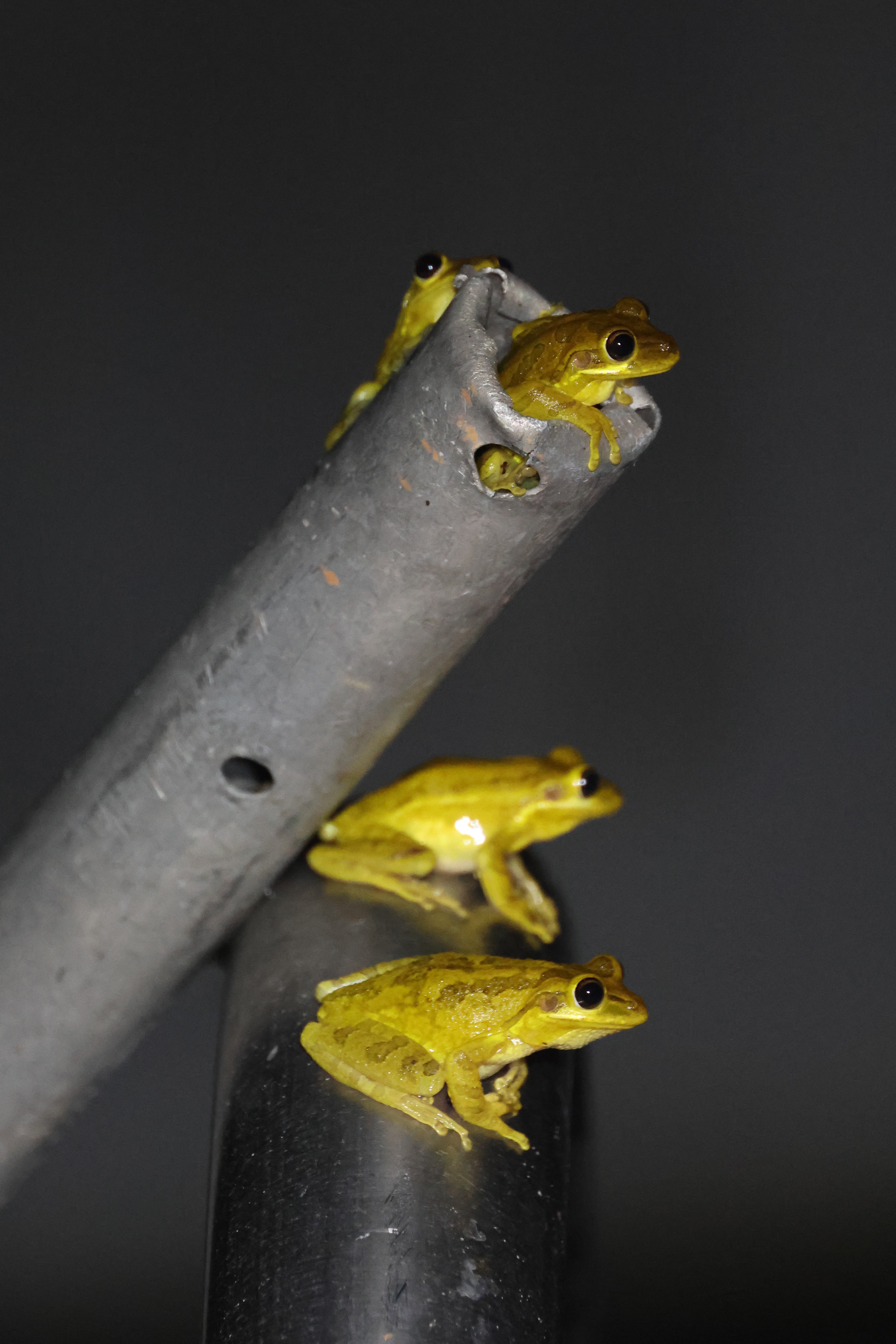

Abundant Cuban treefrogs at night, after it had rained during the day. Click photos to enlarge.
 Reason and Nature