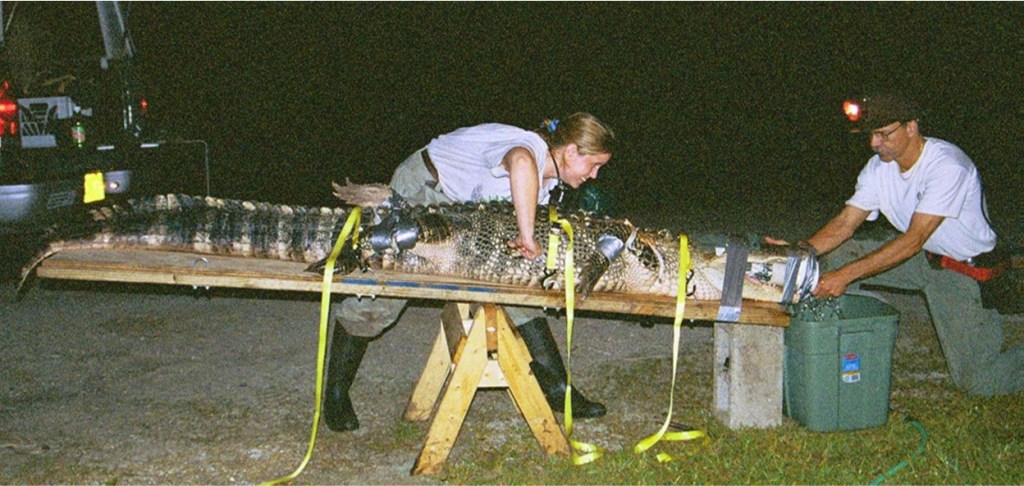
The question of what alligators eat has mostly been addressed through stomach content analysis. A sample of dead alligators, often harvested by hunters, have their stomachs opened, and all the prey items contained within are identified. Another approach involves capturing live alligators and removing their stomach contents through pumping or the Hose-Heimlich technique. This avoids killing the alligators. In this way, scientists are able to generate a list of diet items as well as their relative abundance. This list includes just about everything: fish, mammals, reptiles, amphibians, birds, and invertebrates (Delany and Abercrombie 1986, Wolfe et al. 1987, Delaney et al. 1999, Rice 2004).
Over the past year and a half, I would estimate I have spent over one hundred hours observing American Alligators (Alligator mississippiensis) in the wild. Most of the time alligators are either basking on shore, or floating in the water. Moments of action are relatively rare, but when that action does occur it often involves capturing and eating prey. It occurred to me that because I have spent so much time observing alligators, I have essentially generated an alternative diet data set based on direct observation of what they are eating. This is, of course, all documented through photos. Basically, whenever I see an alligator eating something (or doing something interesting more generally) I take a picture of it (and sometimes record video).
So, I decided to go through my photos and put together a list of everything I have seen alligators eat. All of these observations were made in the state of Florida, the vast majority in Paynes Prairie Preserve State Park (including La Chua Trail and Sweetwater Wetlands Park) and a few in other Florida locations.
Consider this fair warning, what follows is “nature red in tooth and claw.”
The following list contains species I have observed alligators eating, grouped by taxonomic category (i.e. fish, reptiles, amphibians, mammals, birds, and invertebrates). I list the species common name, scientific name, number of times I have observed an alligator eat that species (if more than once), and observation location (if other than Paynes Prairie Preserve State Park).
Fish
Black Crappie (Pomoxis nigromaculatus)
Bluegill (Lepomis macrochirus)
Bowfin (Amia calva) (4x)
Brown Hoplo (Hoplosternum littorale)
Eastern Mosquitofish (Gambusia holbrooki) (2x) (Everglades 1x)
Florida Gar (Lepisosteus platyrhincus) (8x) (Everglades 1x)
Shad (Dorosoma sp.)
Tilapia (Oreochromis sp.) (9x)
Unidentified fish species (2x)
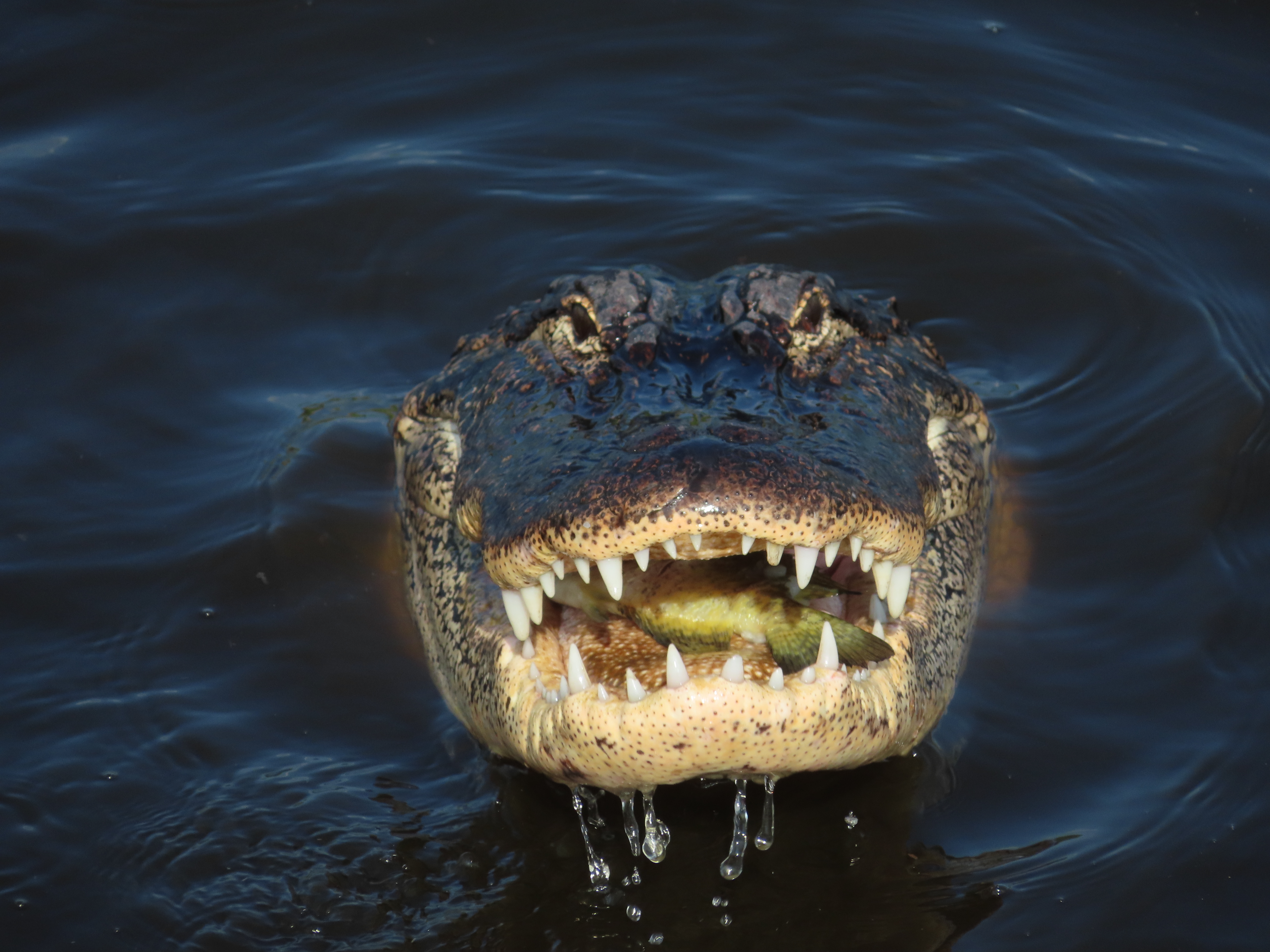
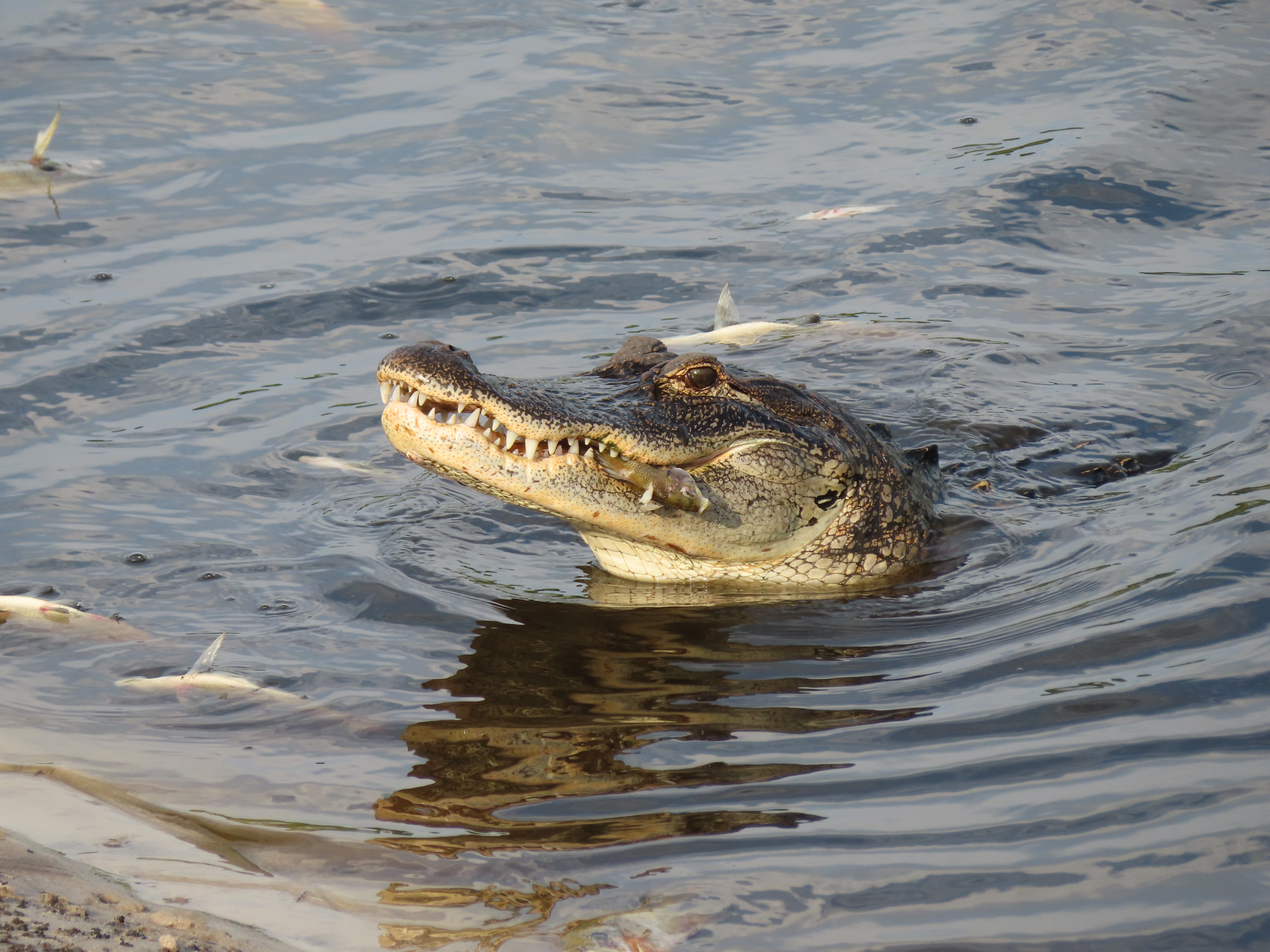
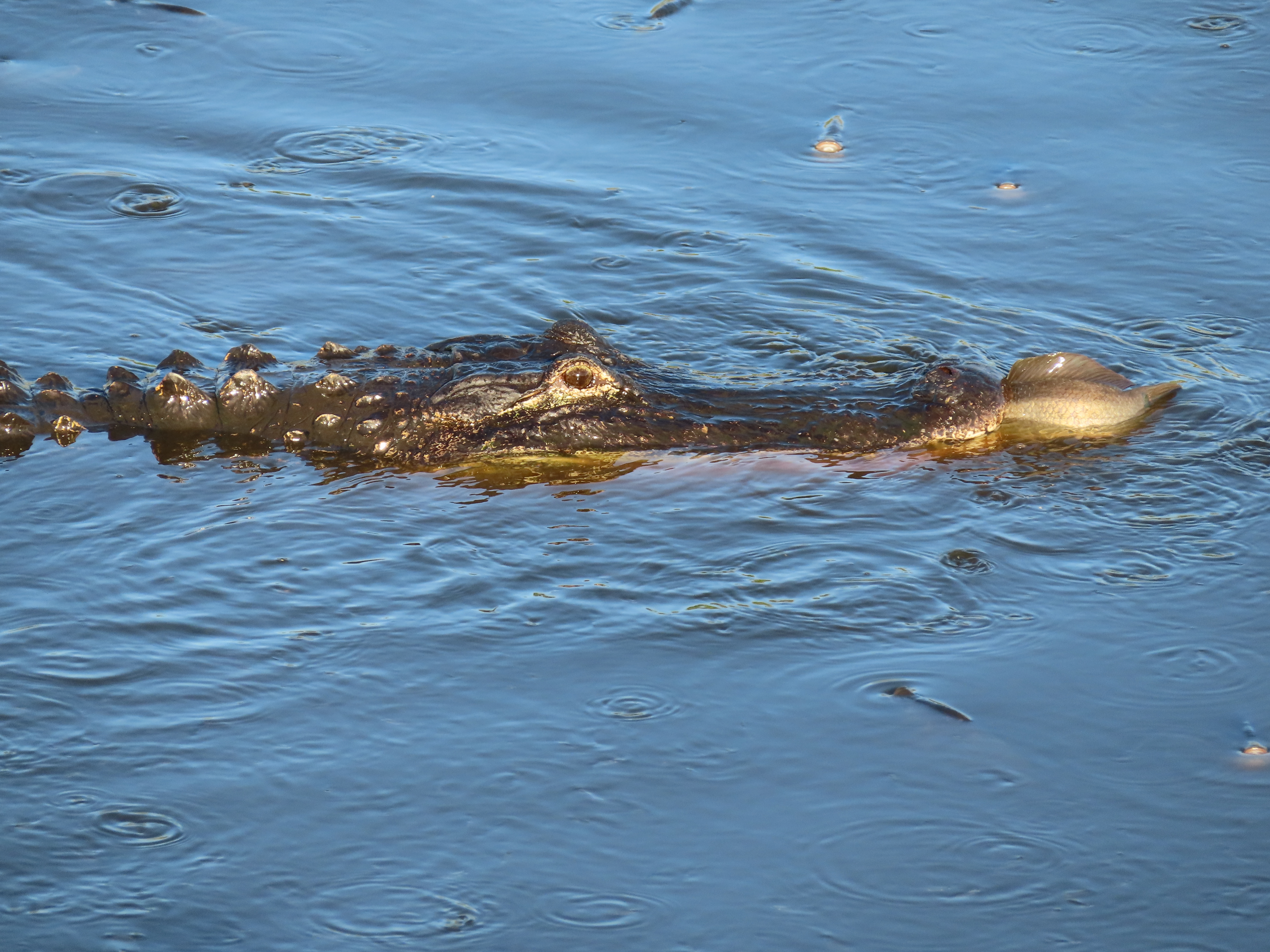
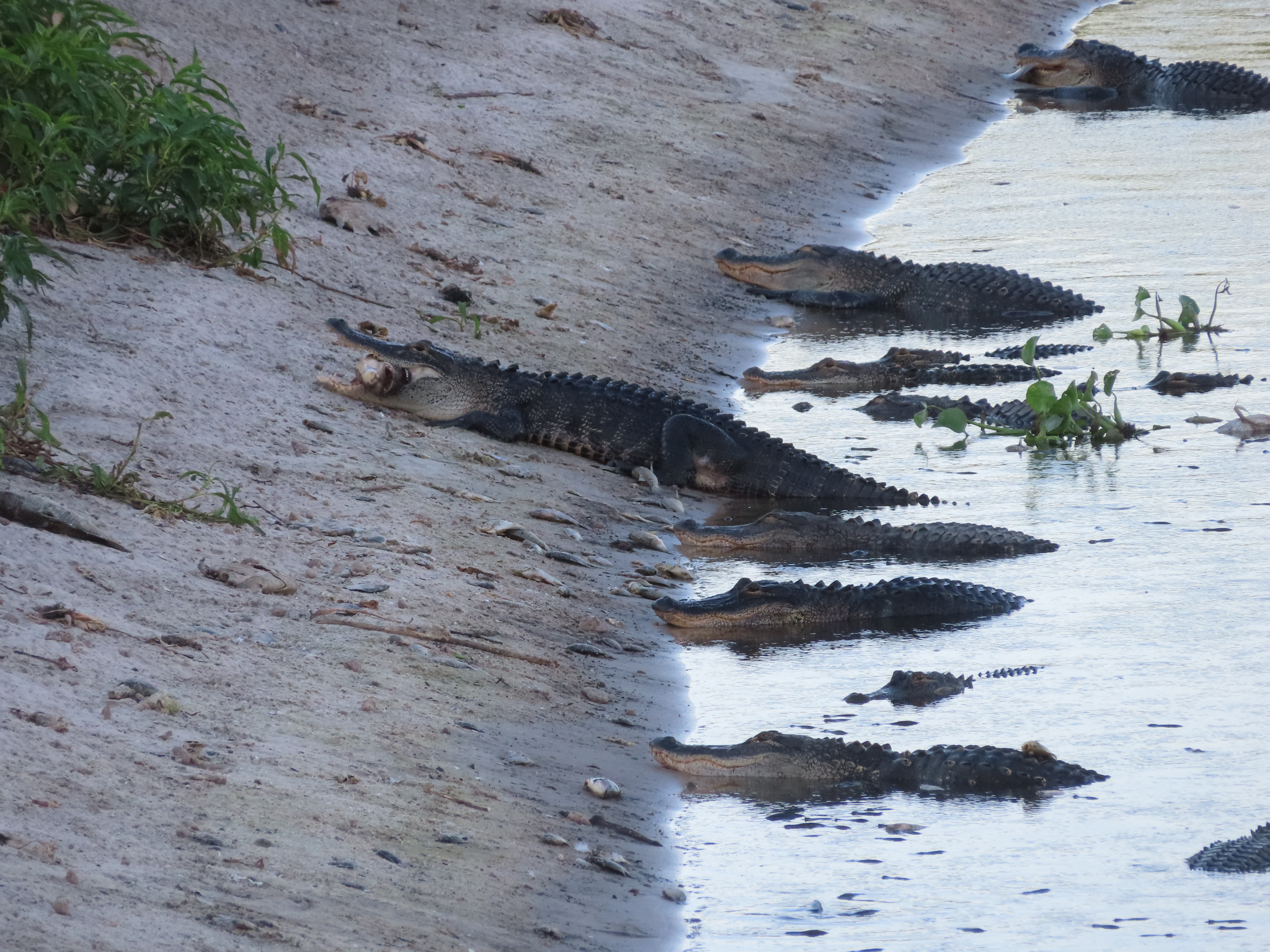
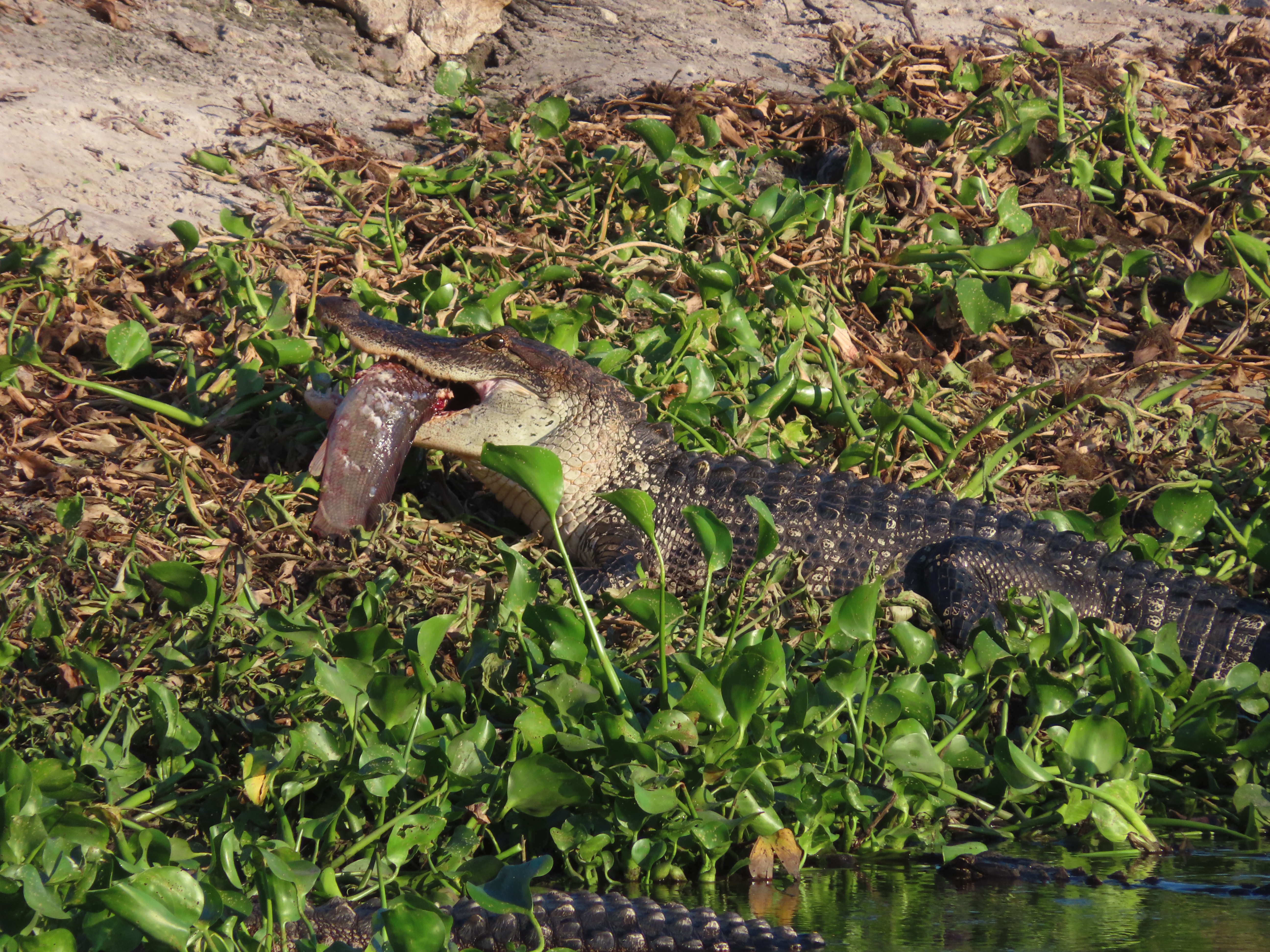
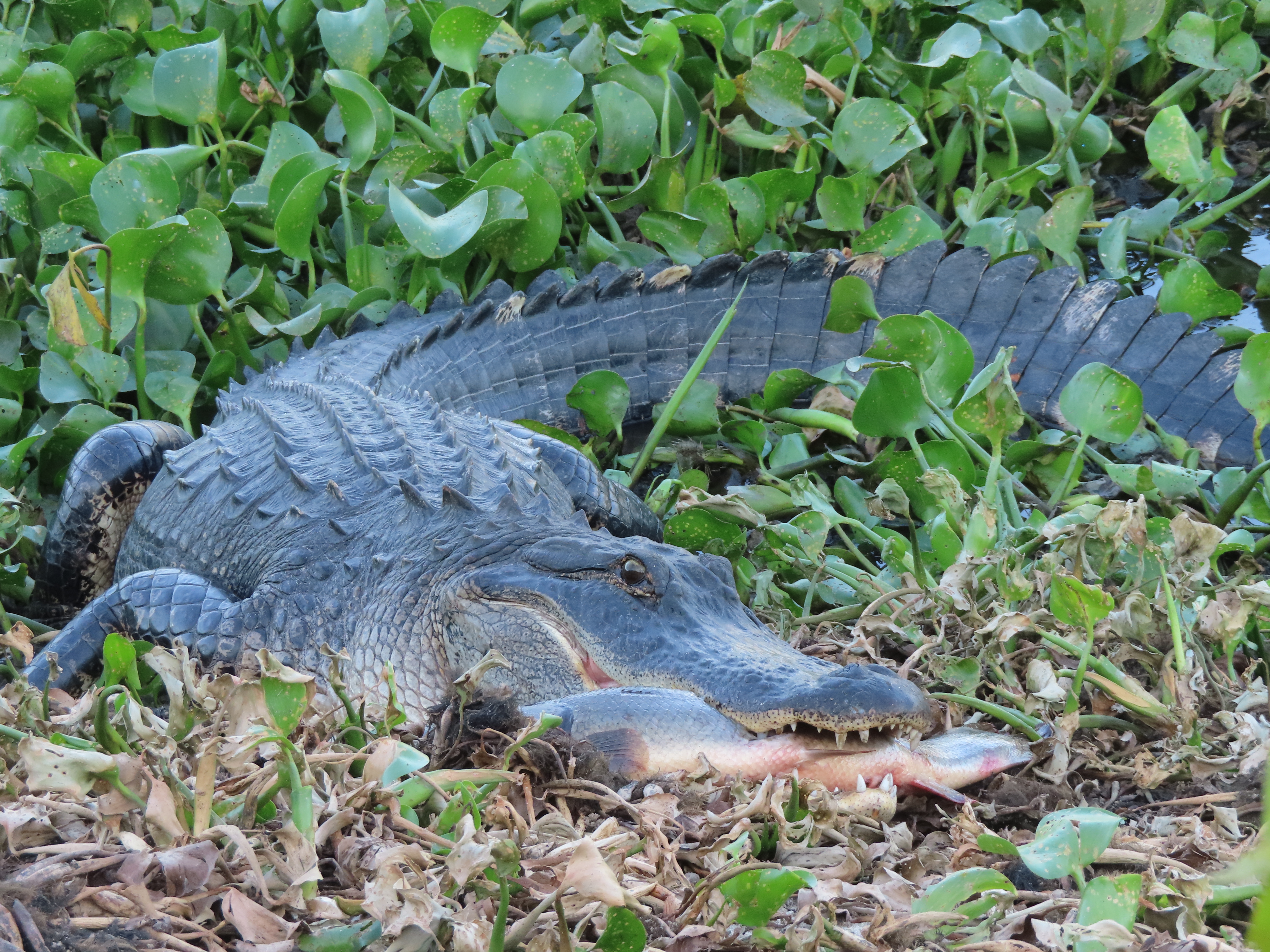
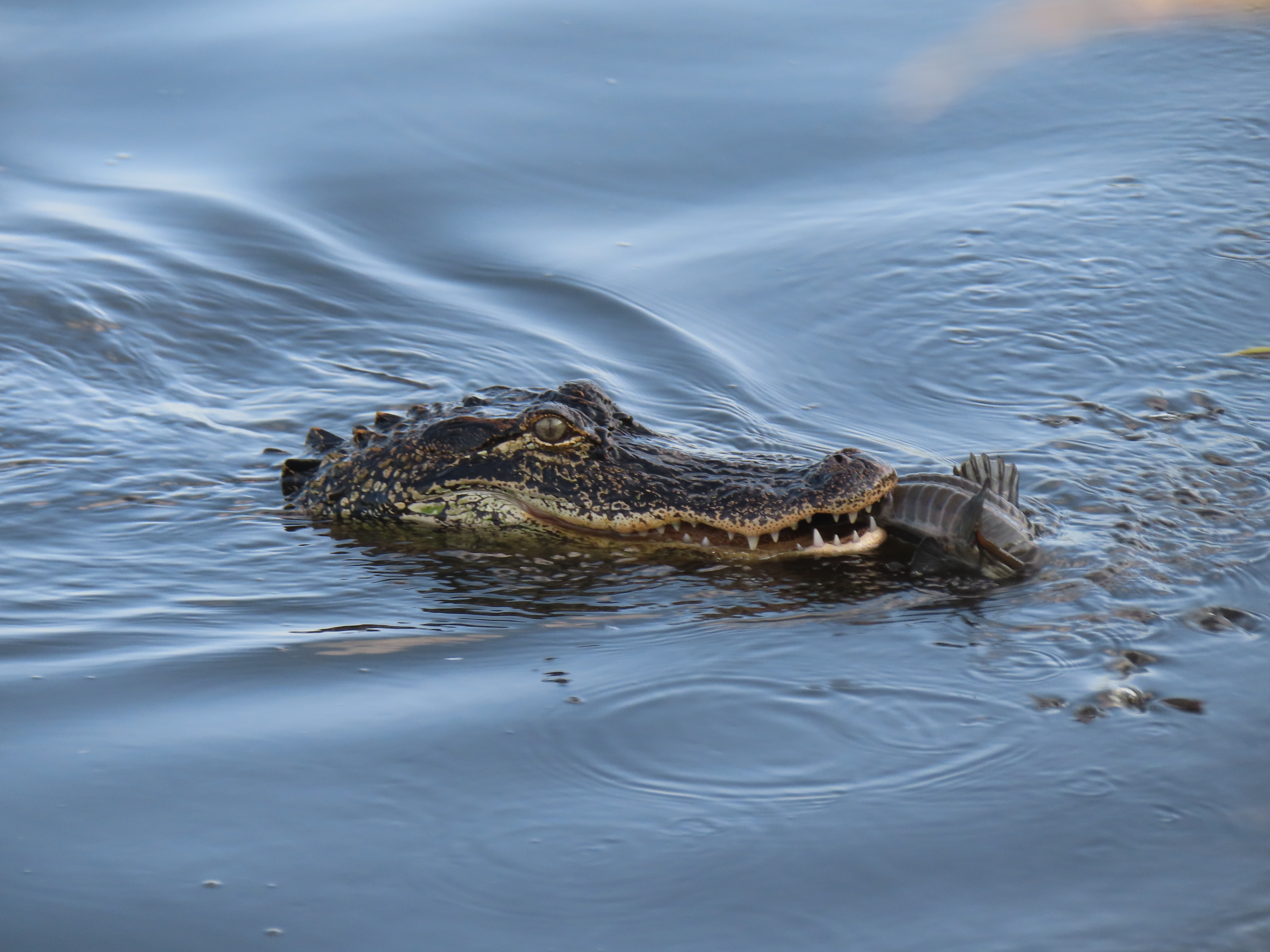
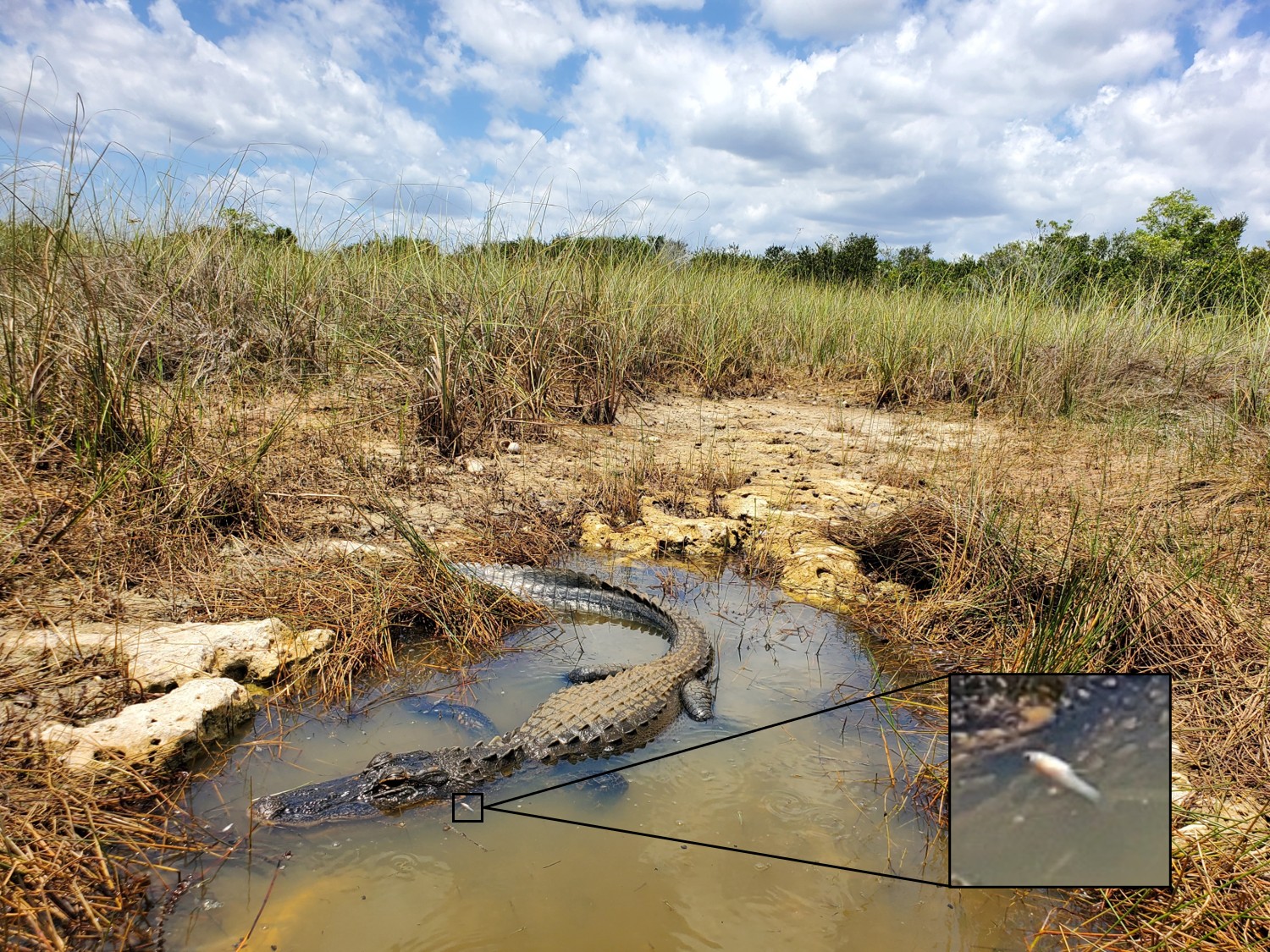
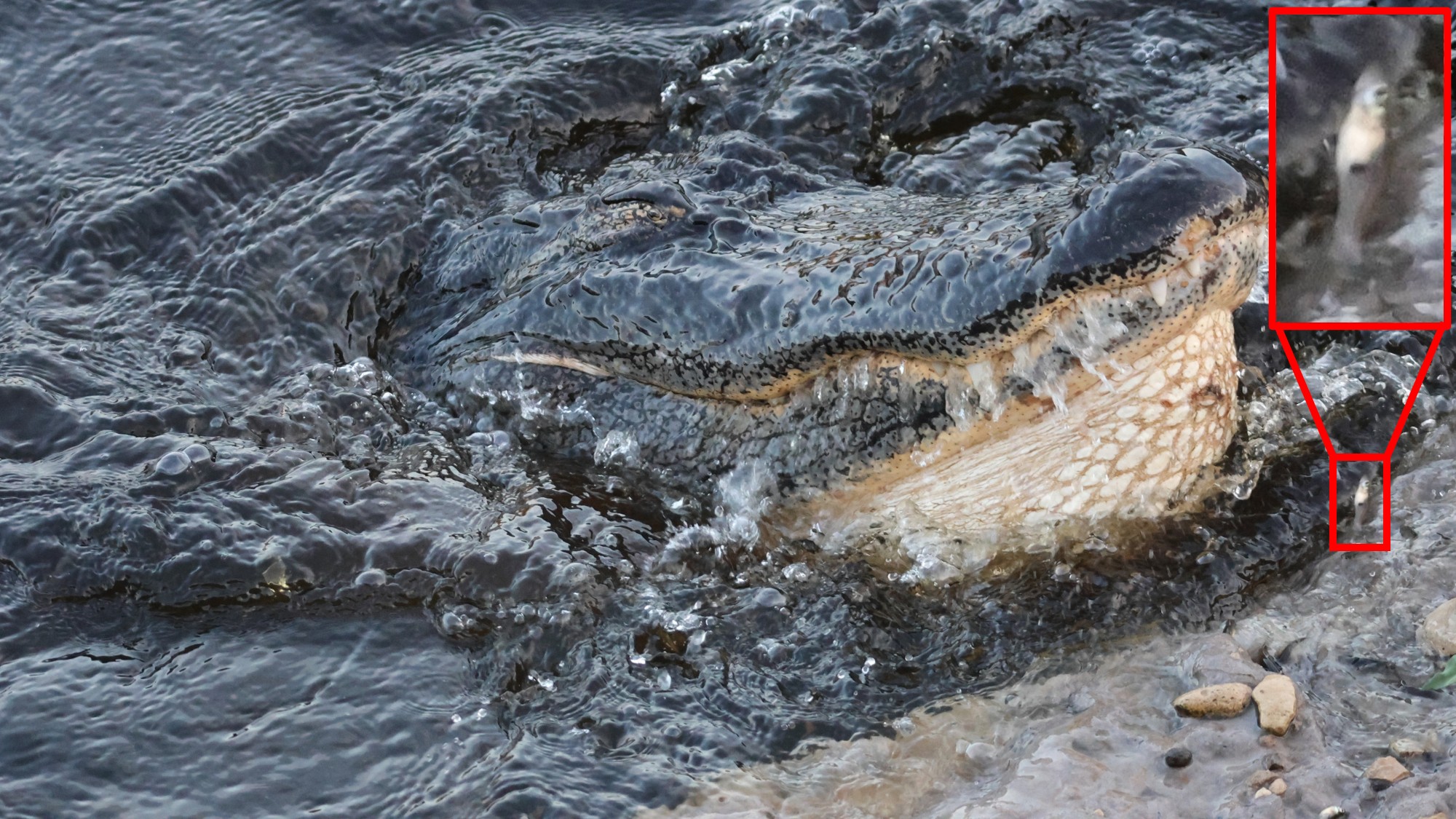
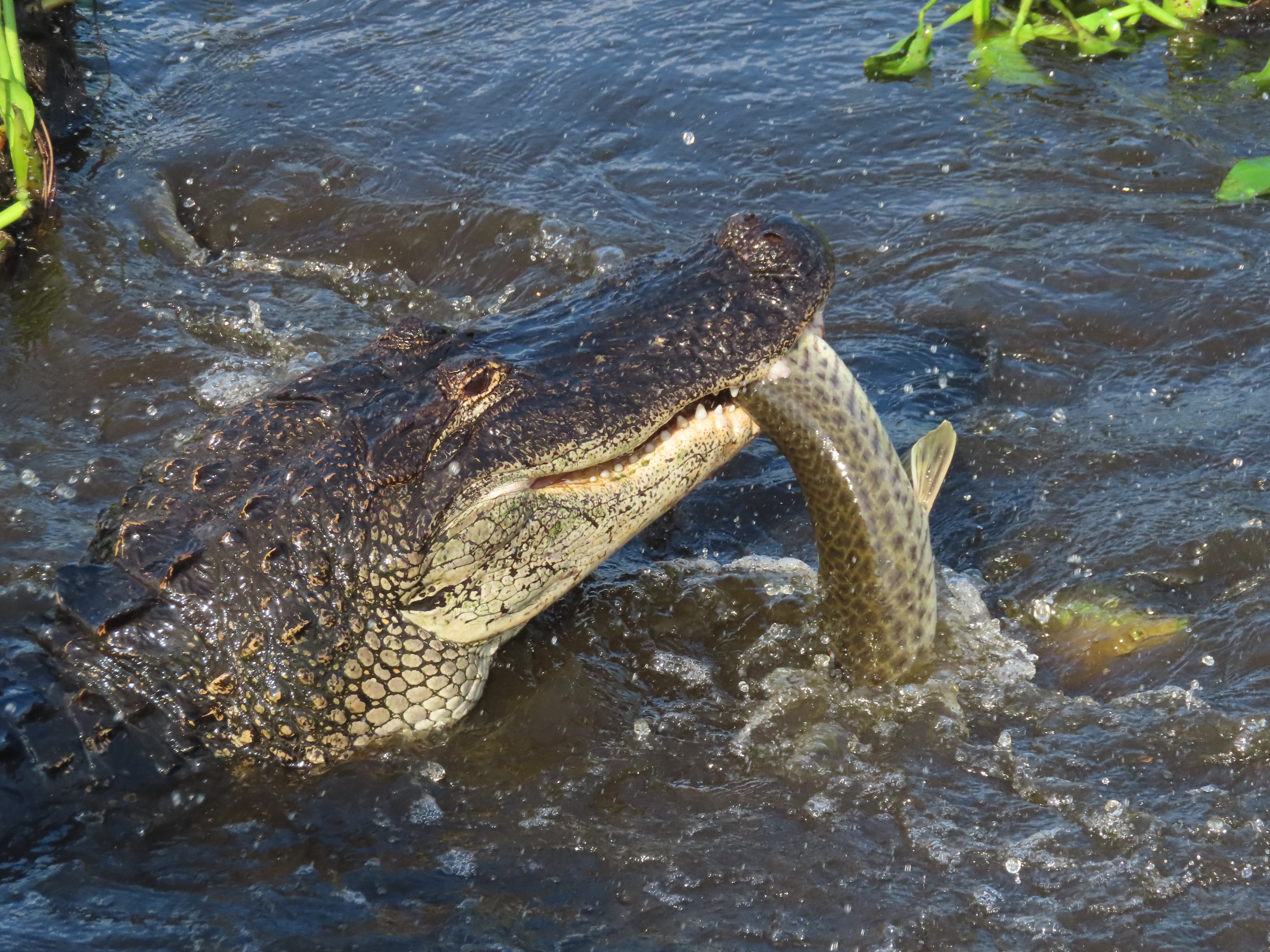
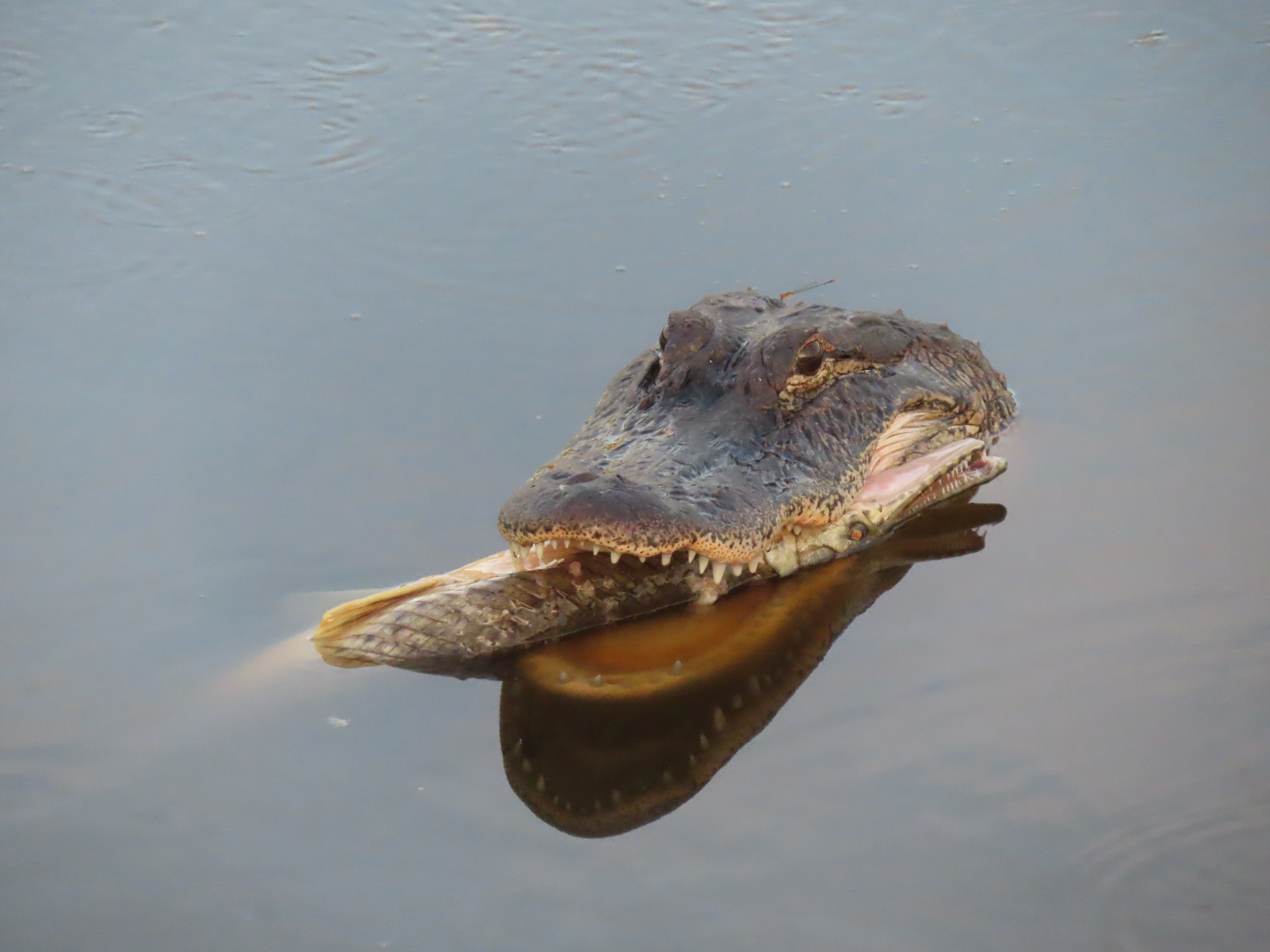
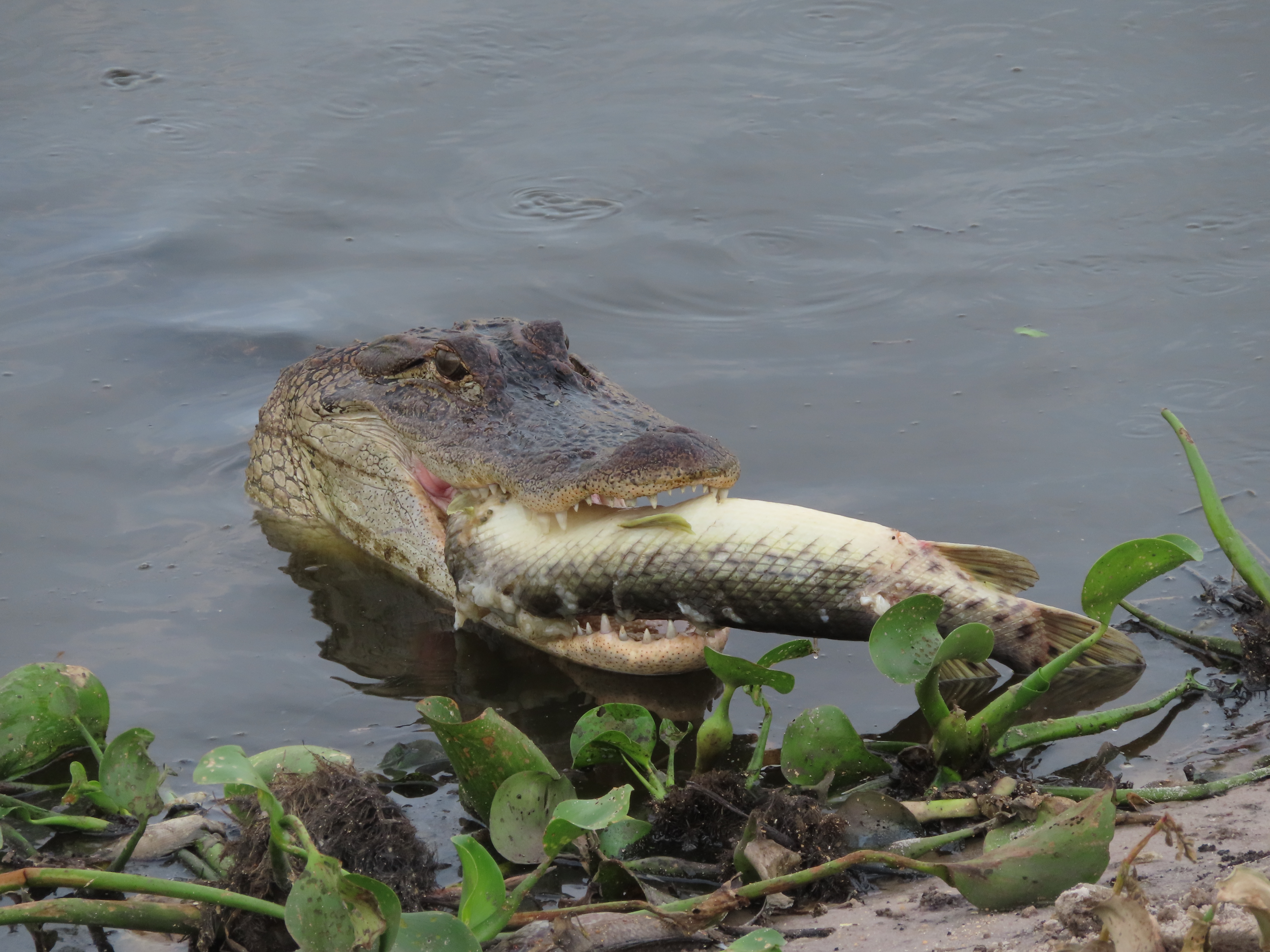
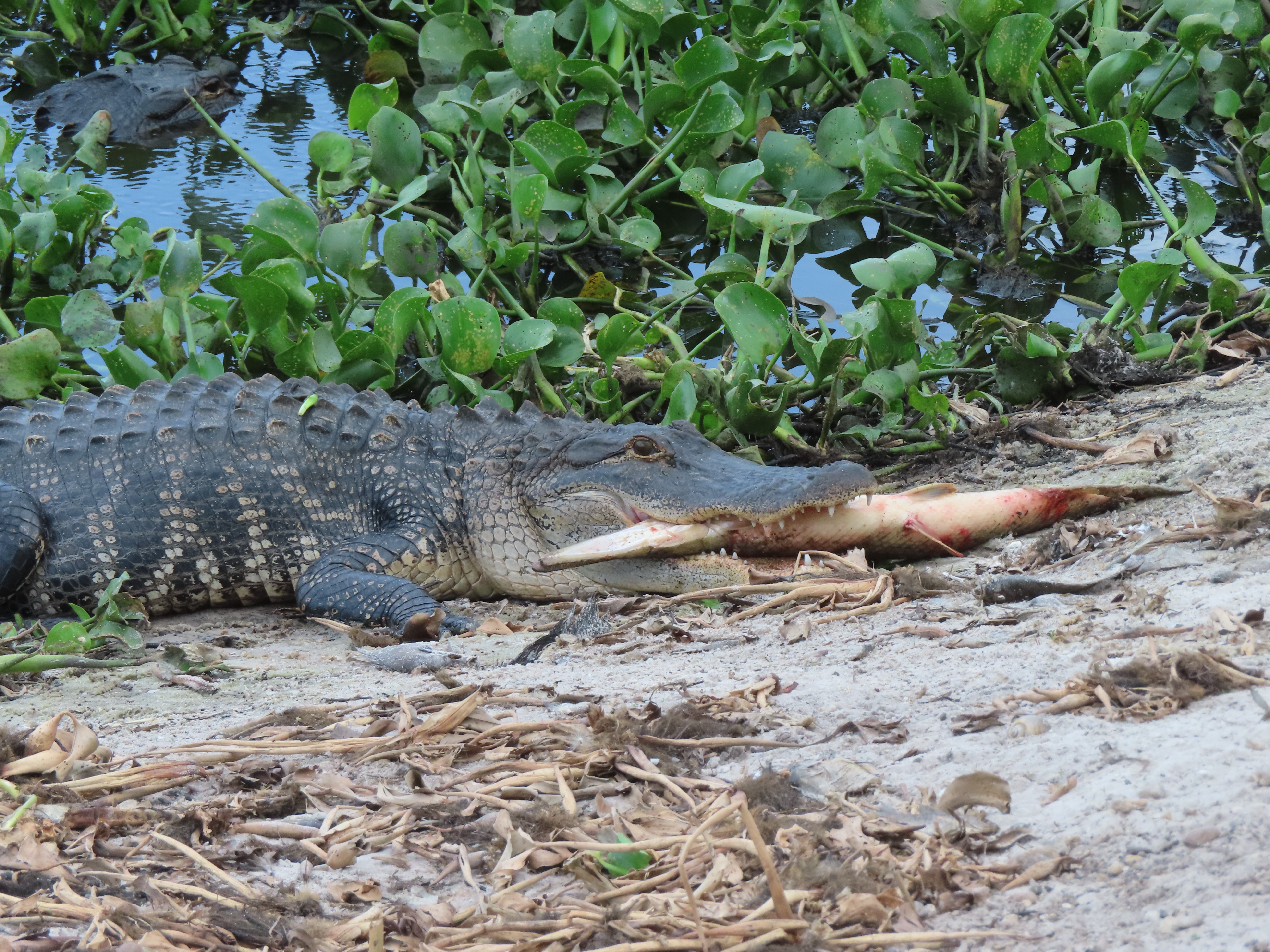
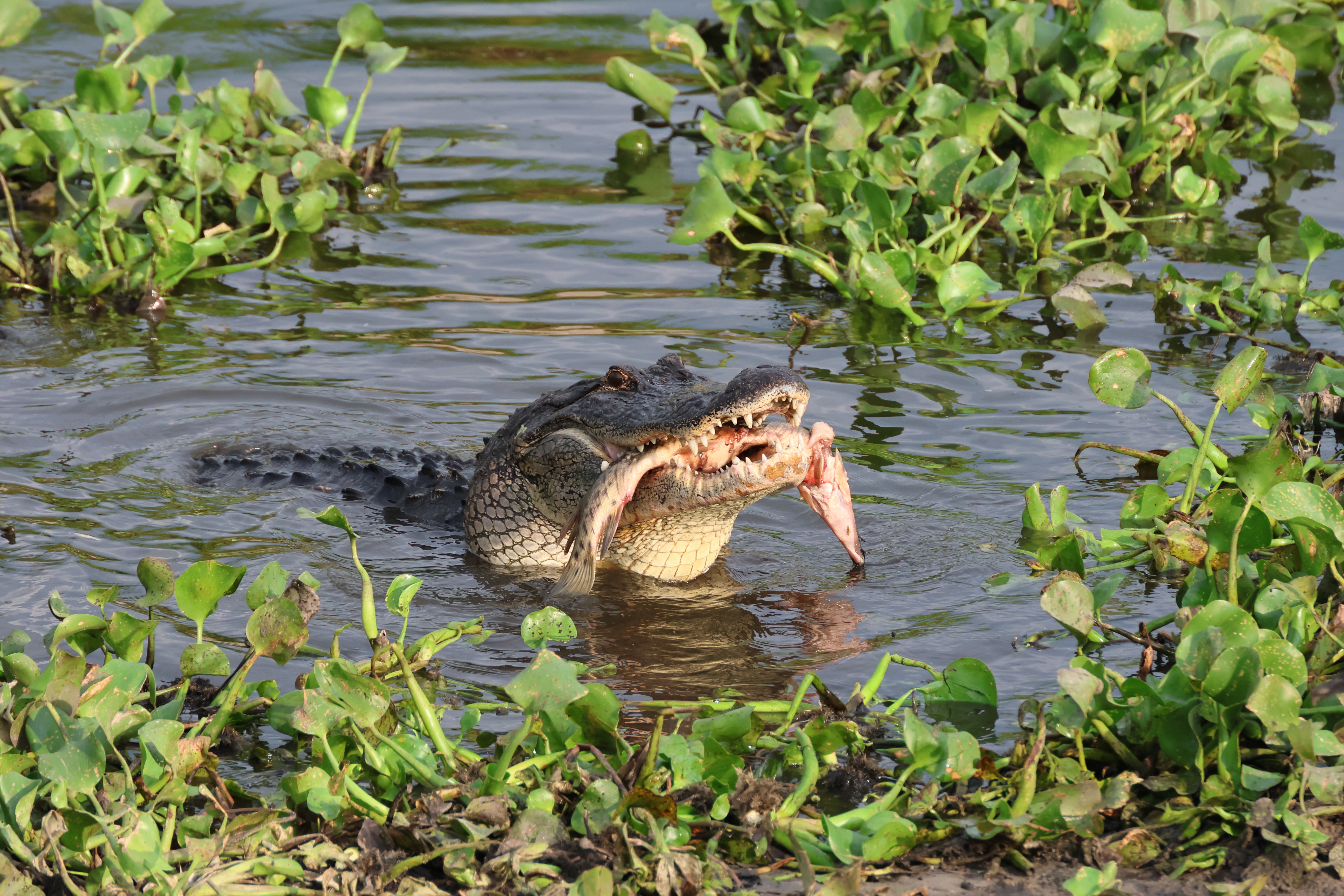
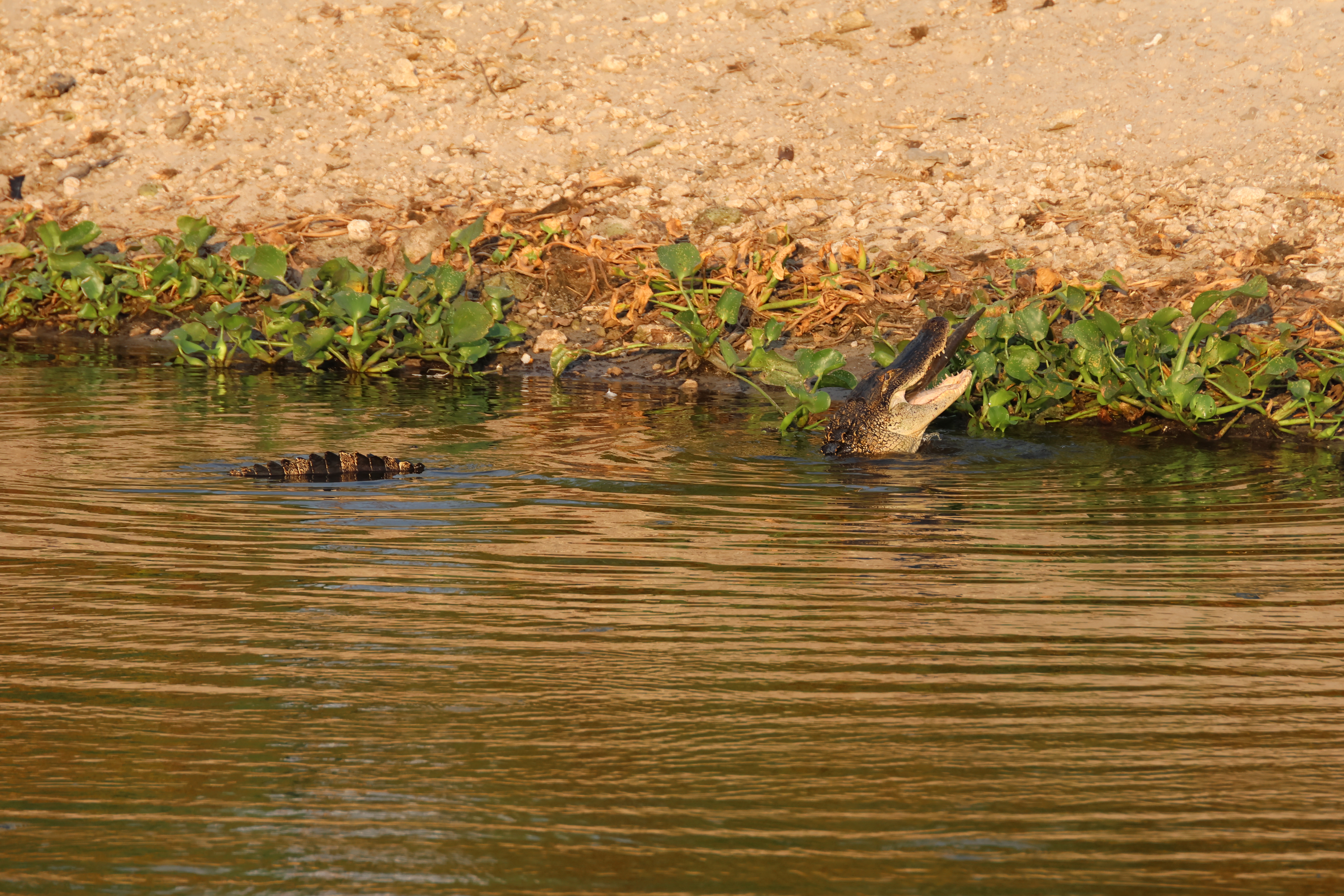
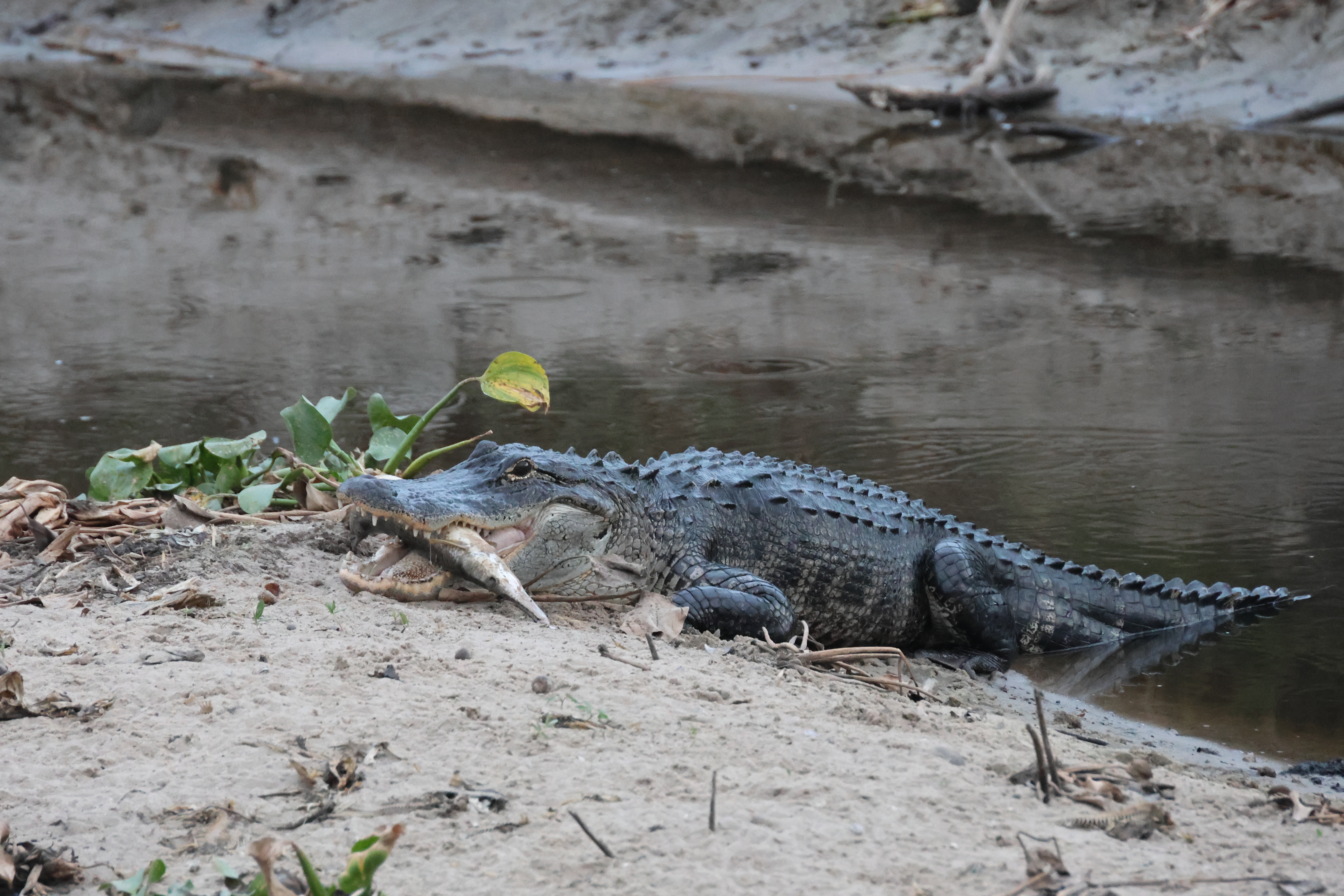
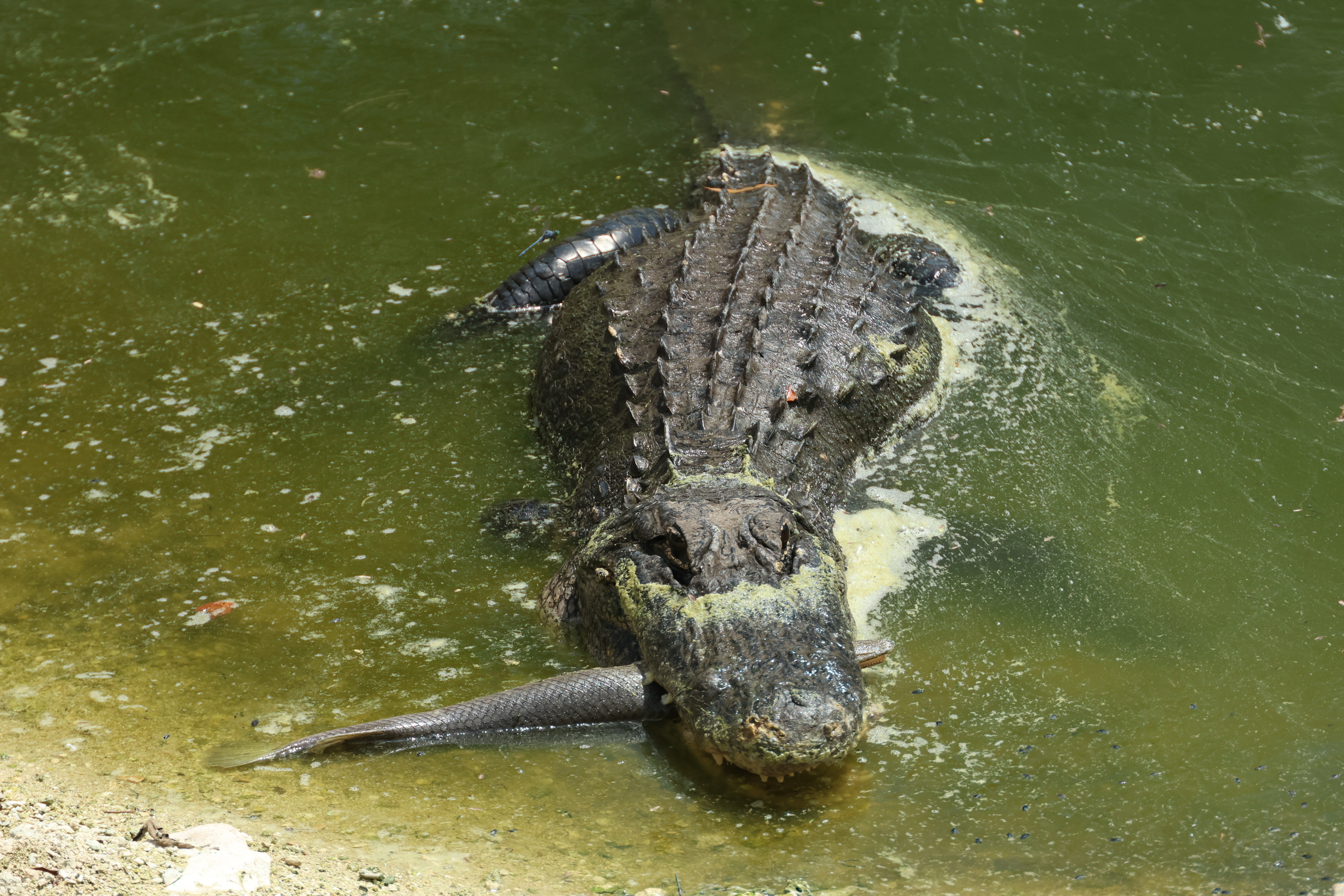
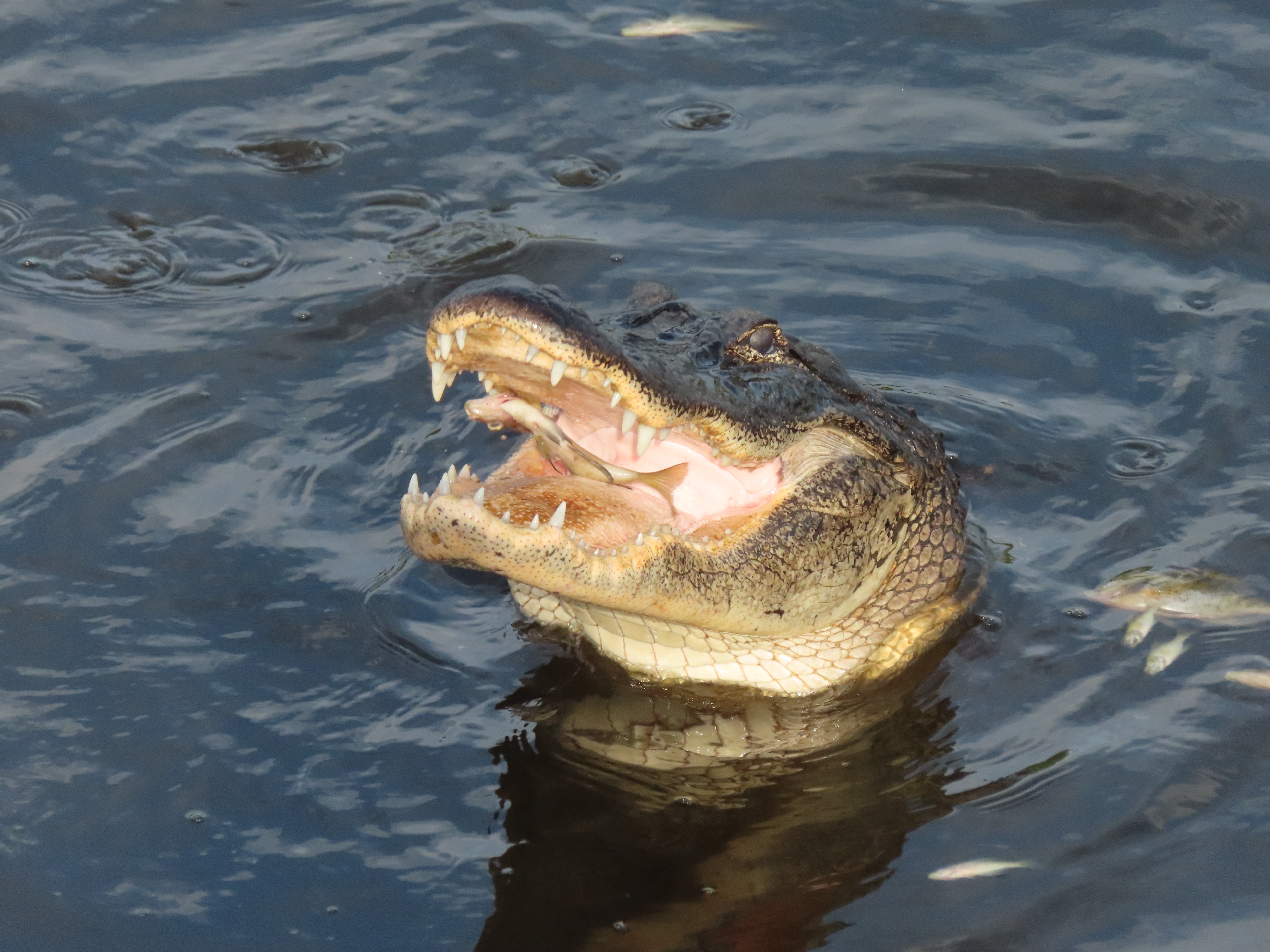
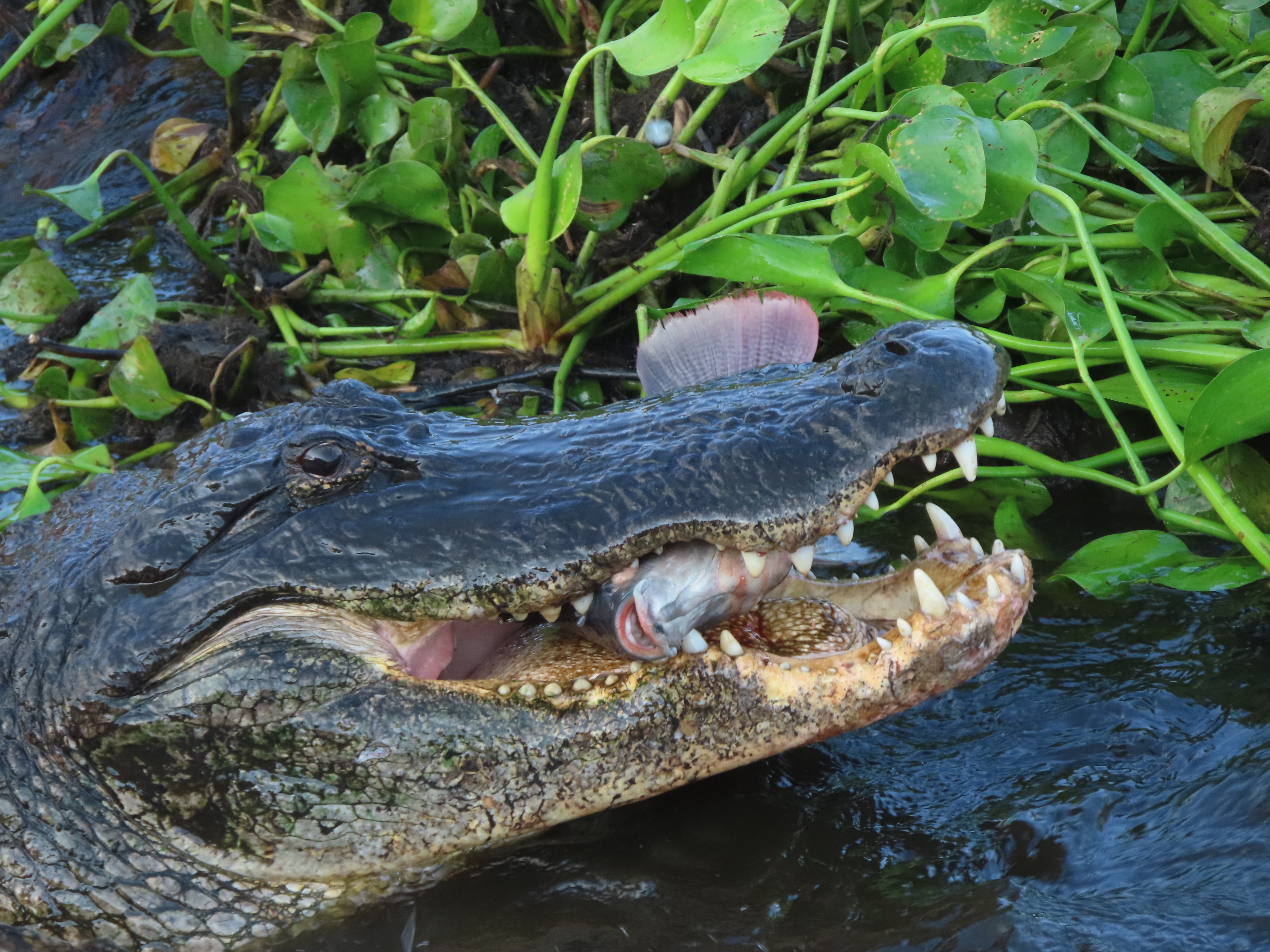
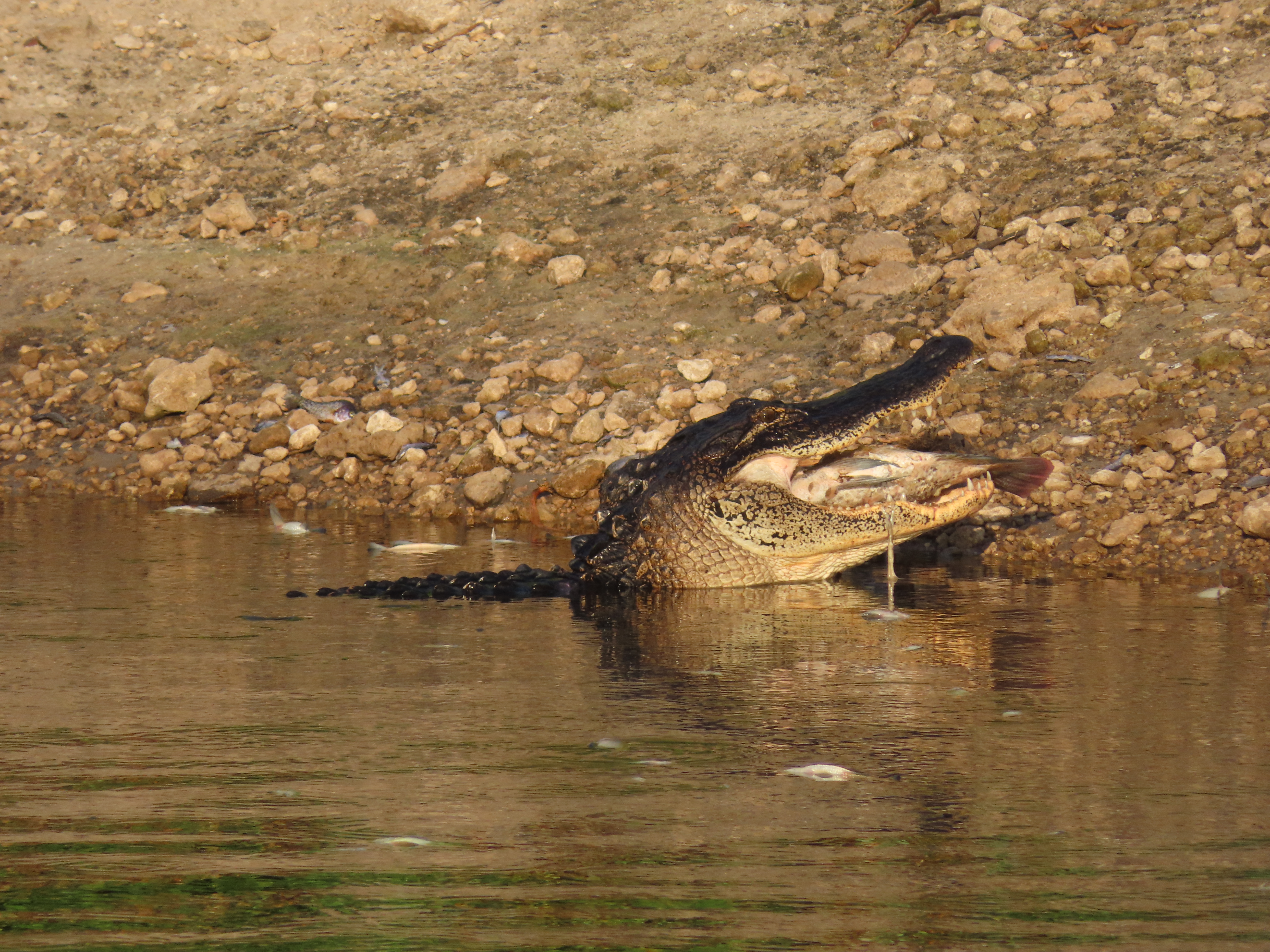
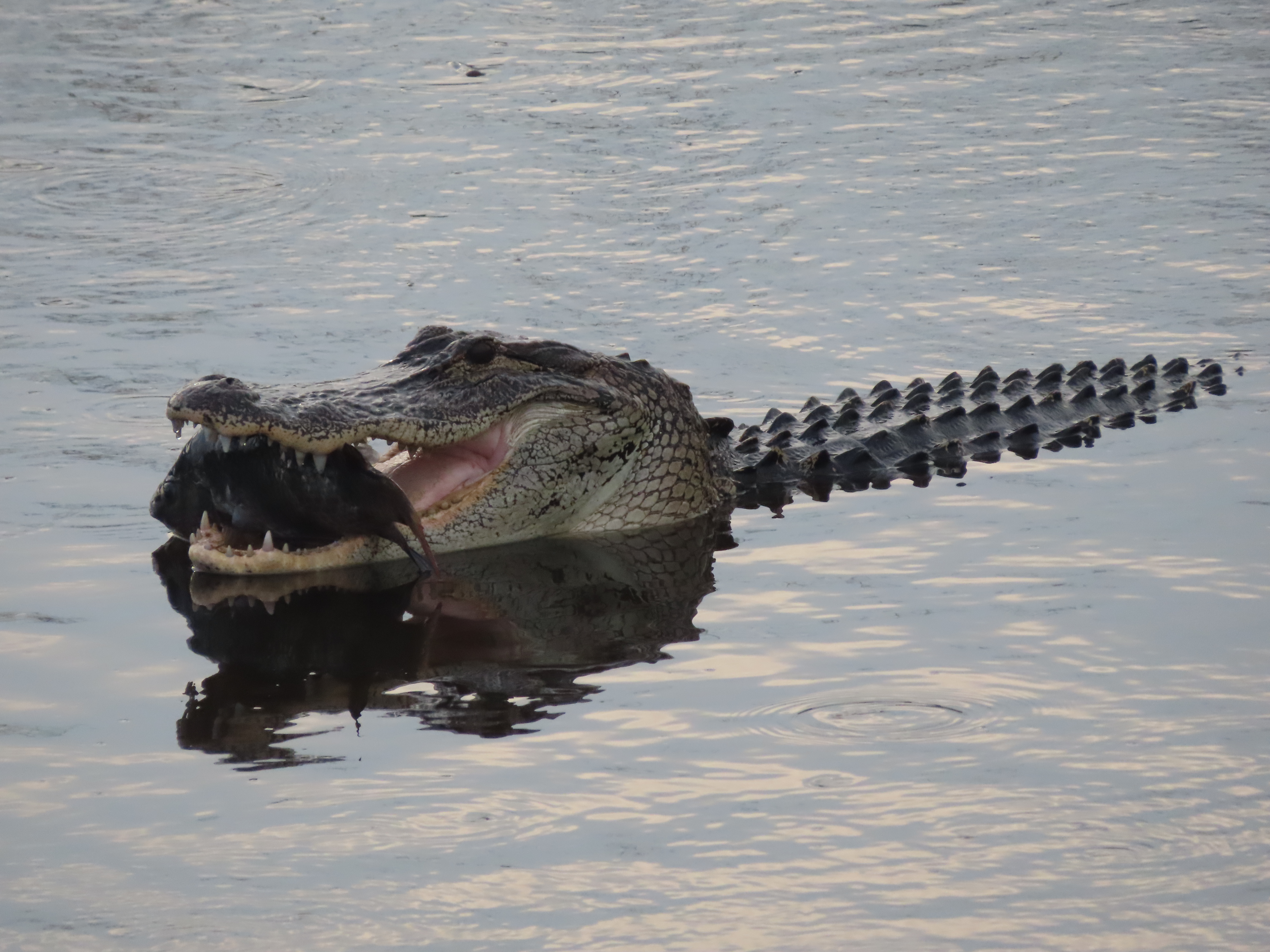
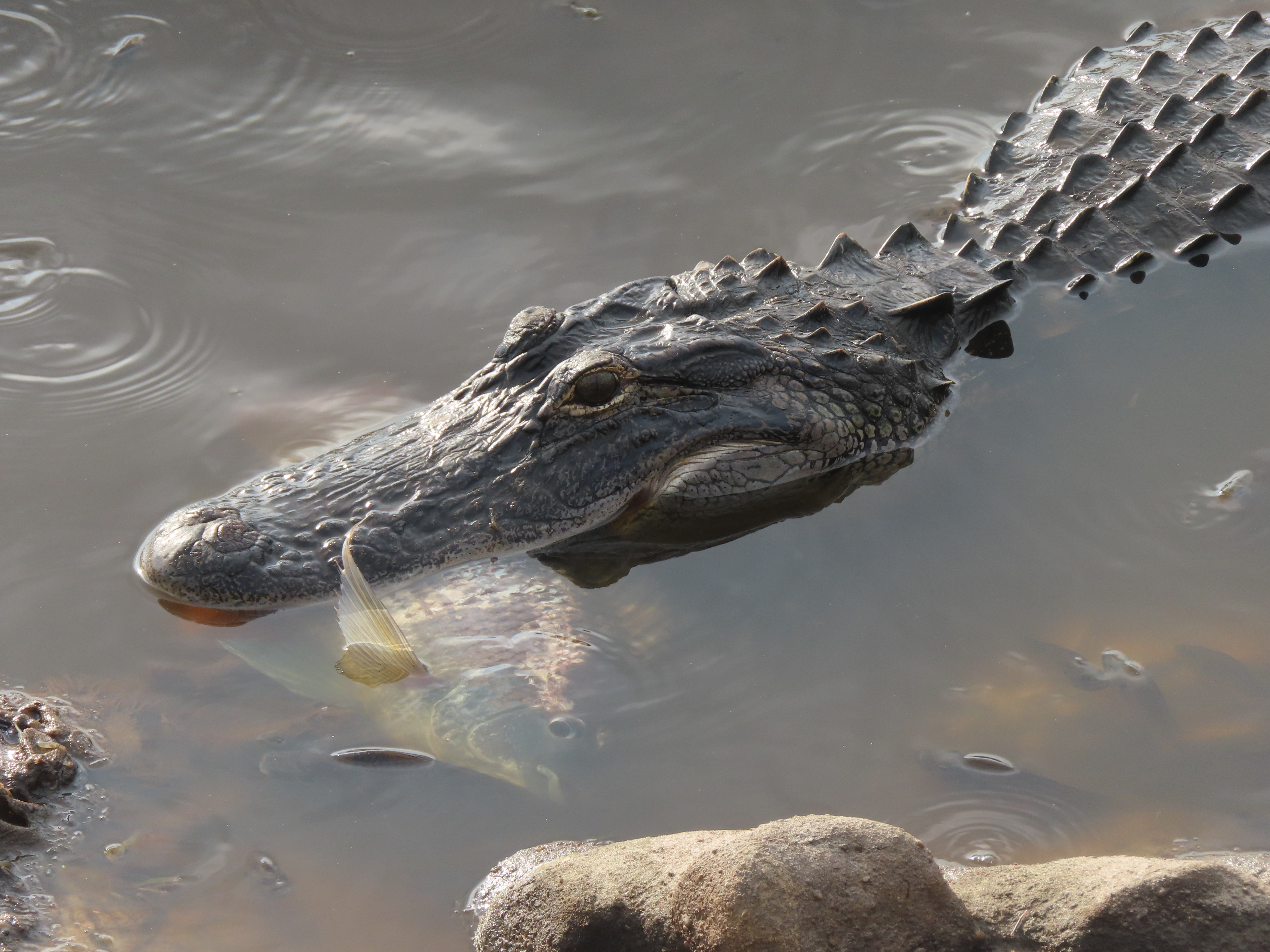
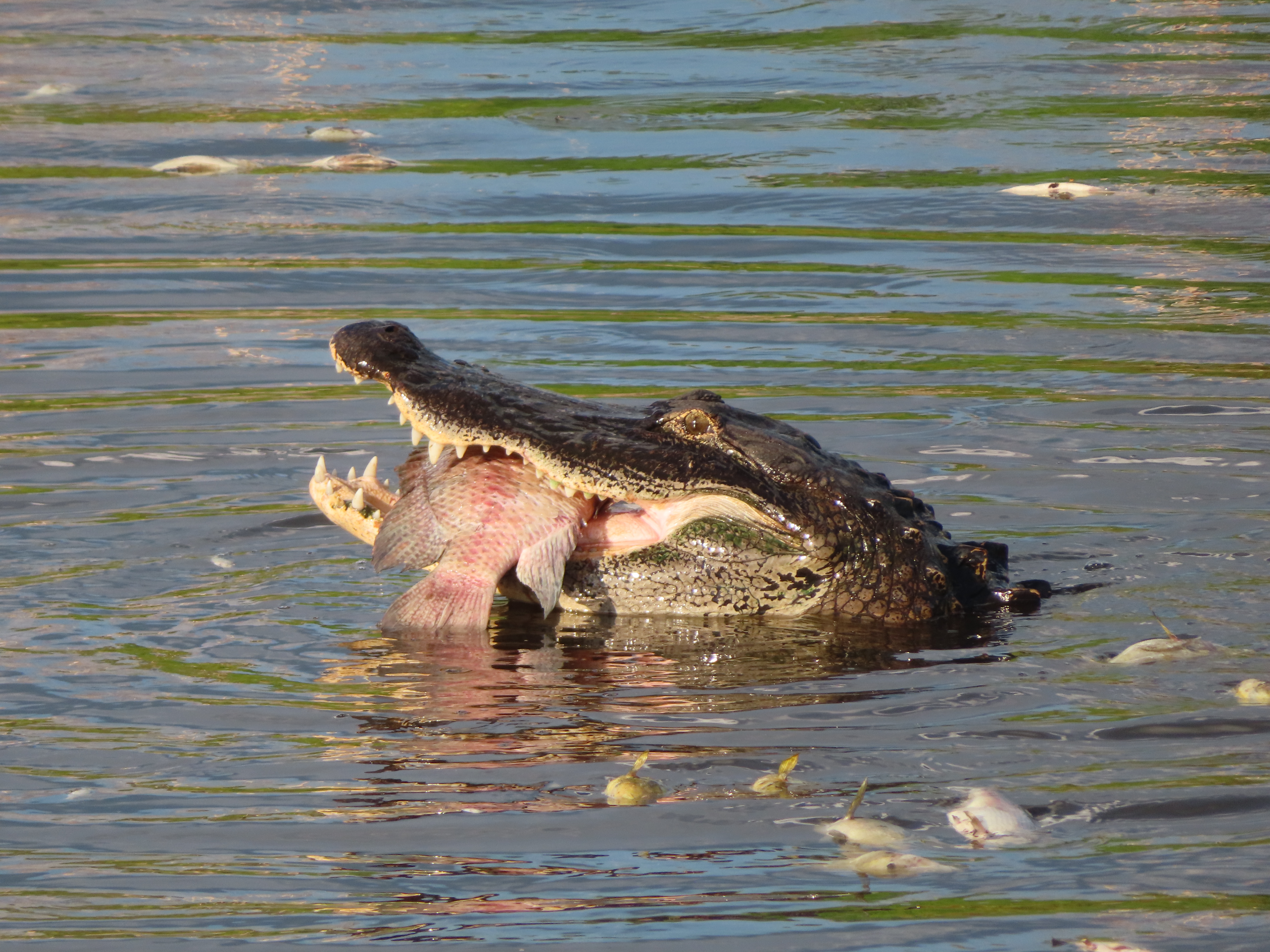
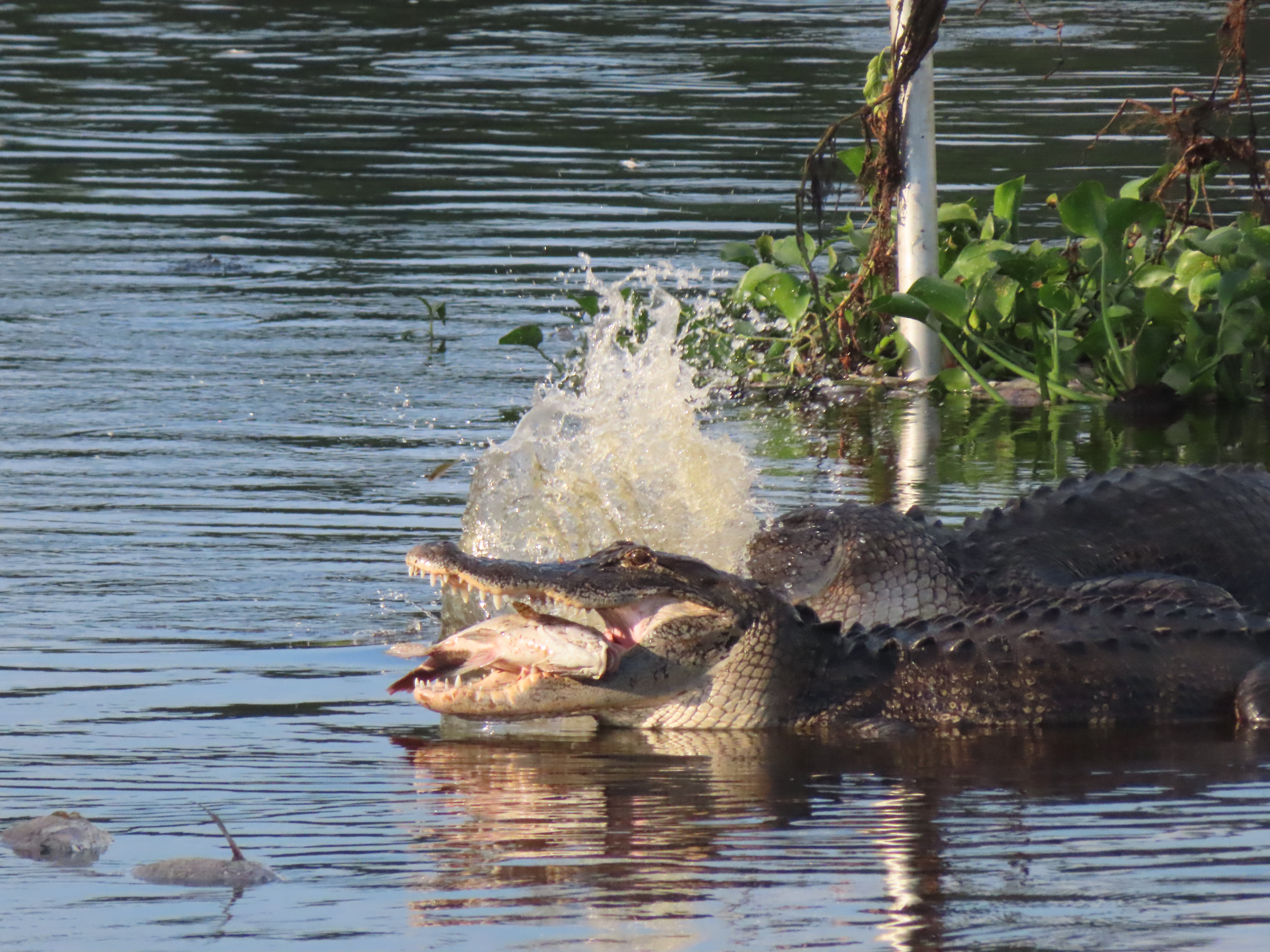
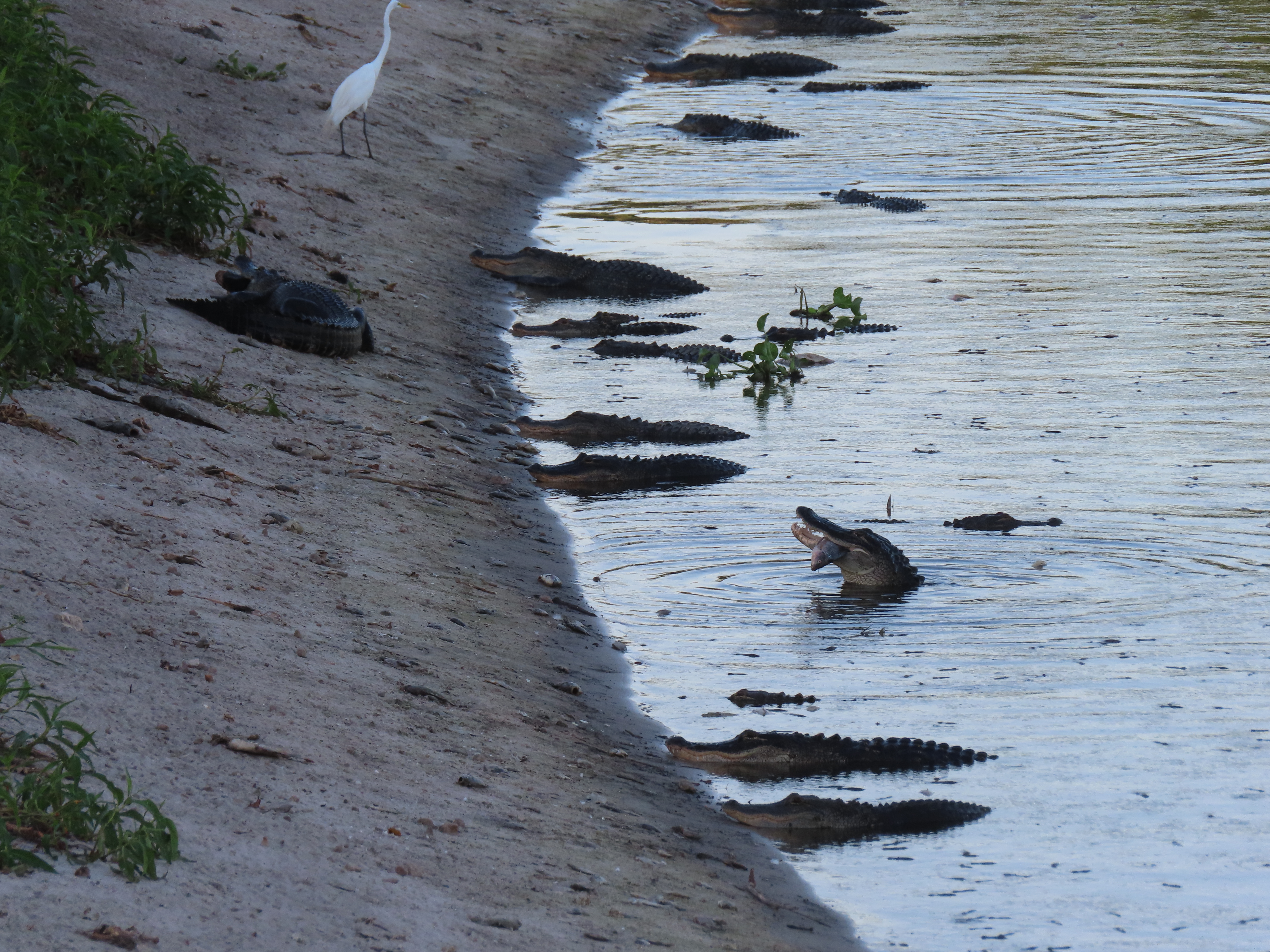
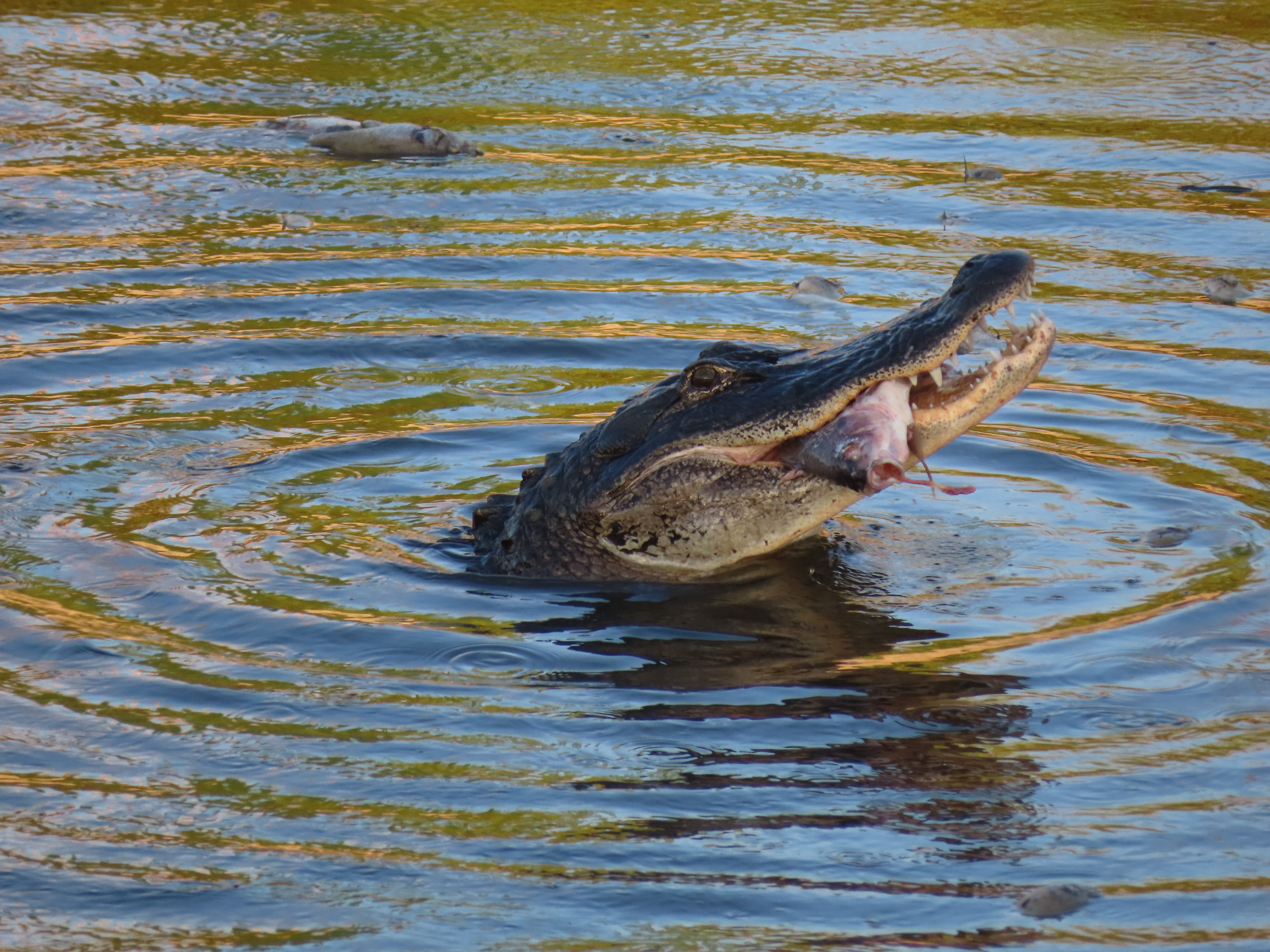
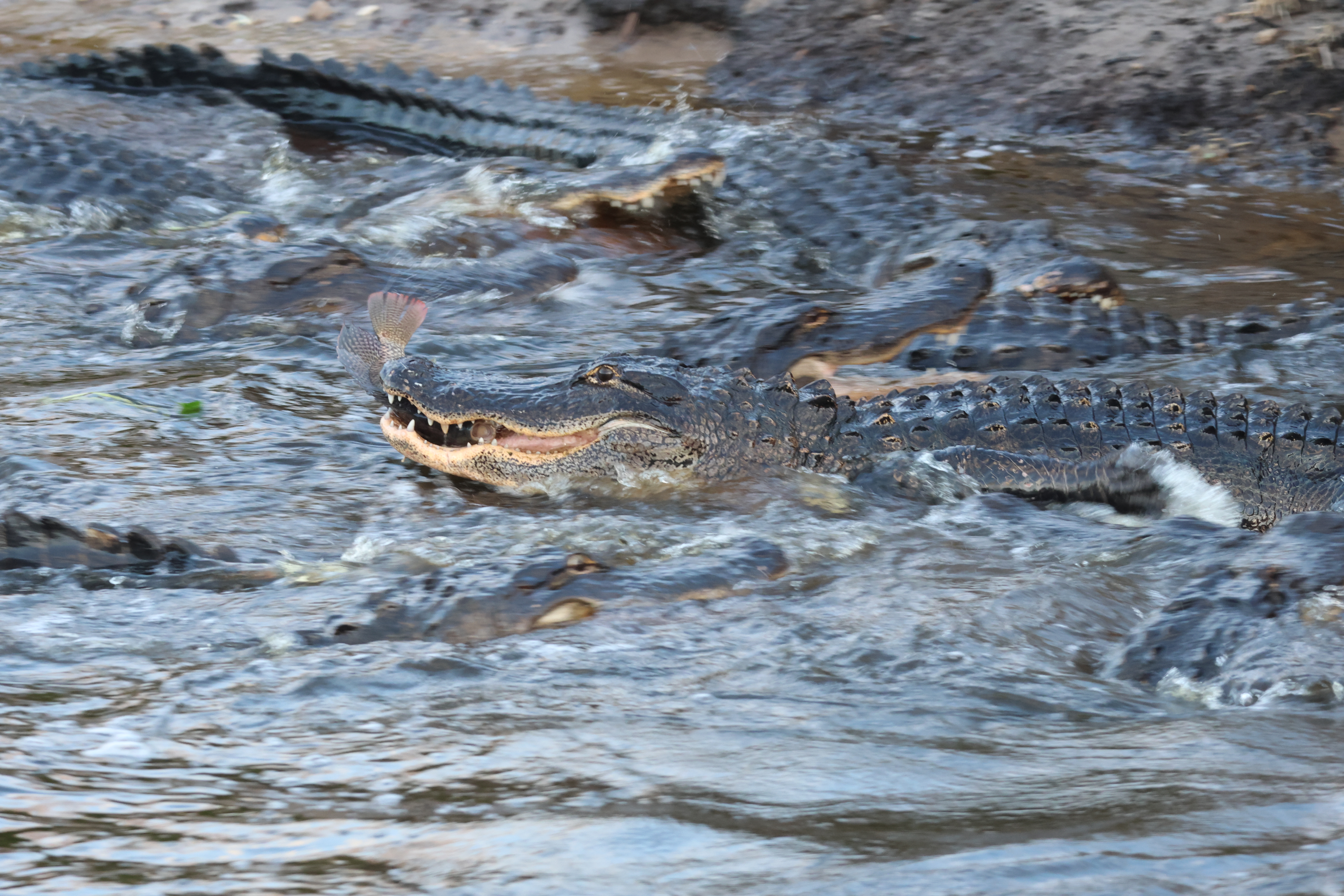
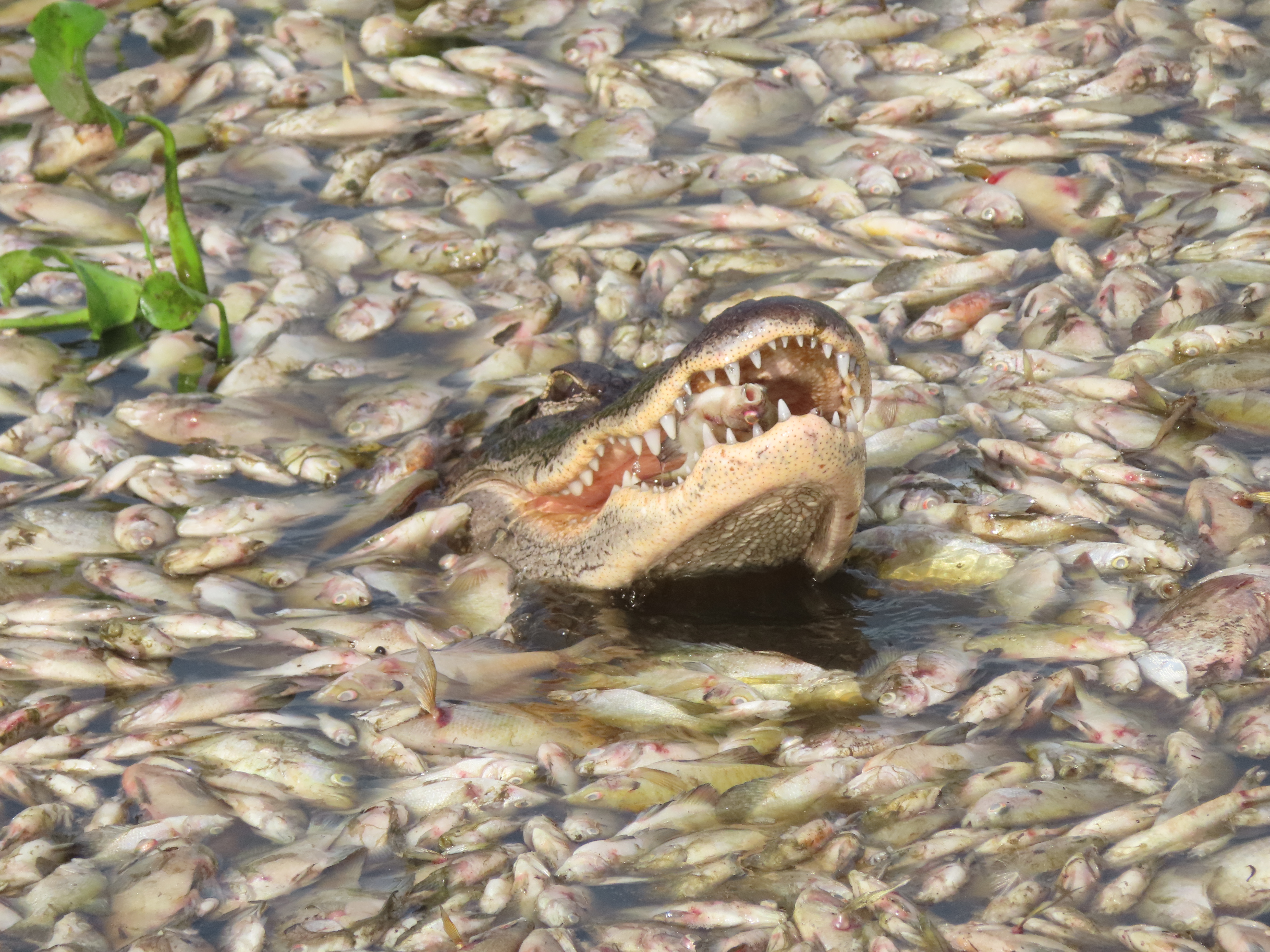
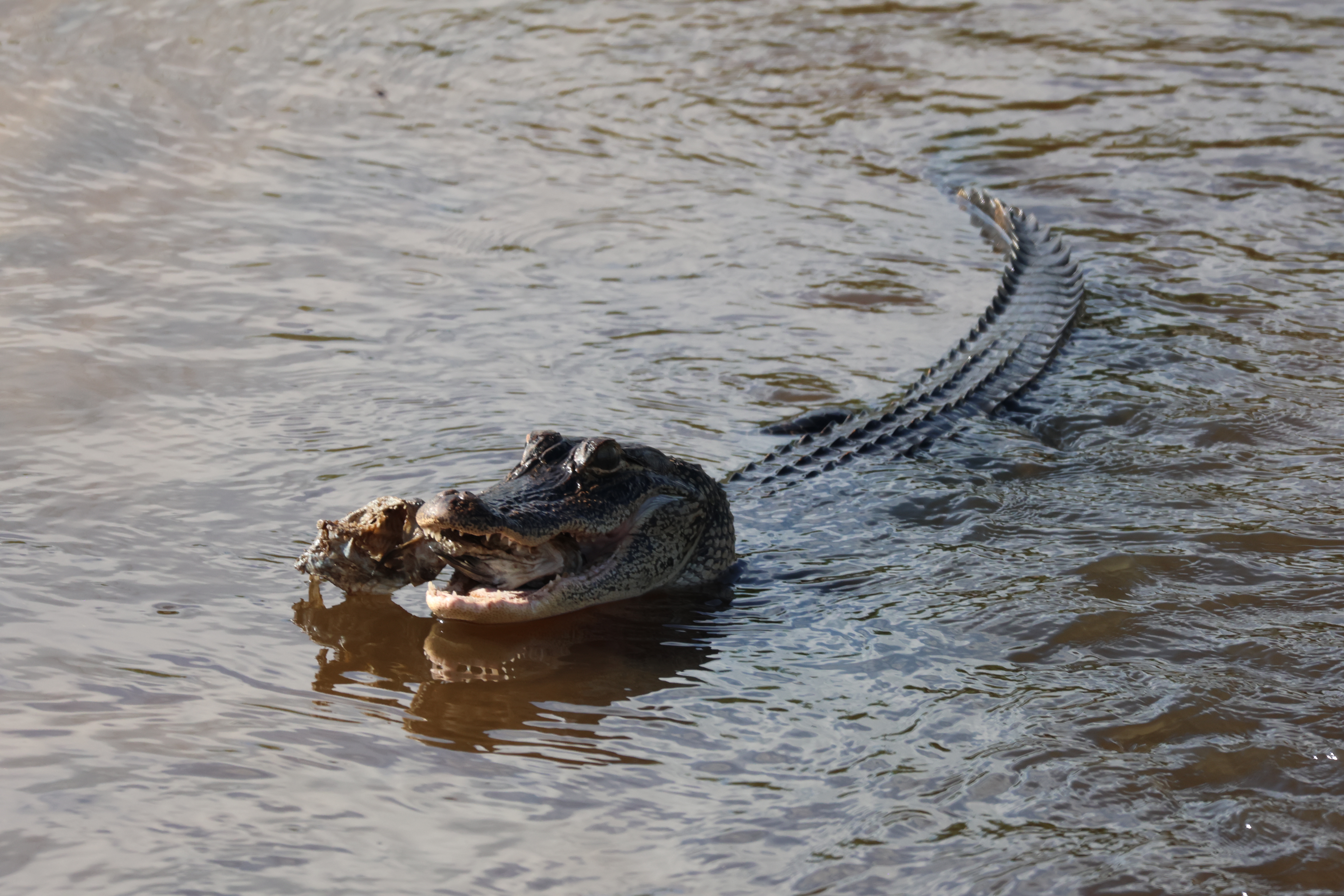
Alligators eating fish. Click to enlarge photos and open gallery view.
Natural history notes: Fish are the most commonly observed item I have seen alligators eat, and Tilapia, Florida Gar, and Bowfin were the species I observed being eaten most frequently. Alligators capture fish using a variety of hunting techniques, which I may detail in a future post. Many of the above photos of alligators eating fish were taken over a two week period in late spring 2024 at La Chua Trail in Paynes Prairie Preserve State Park. During this period, many fish became concentrated in a relatively shallow basin, and this provided fertile hunting grounds for alligators. There was subsequently a major fish die off allowing alligators to scavenge upon dead fish.
Reptiles
American Alligator (Alligator mississippiensis) (6x)
Cooter (Pseudemys sp.) (3x)
Florida Softshell Turtle (Apalone ferox) (2x)
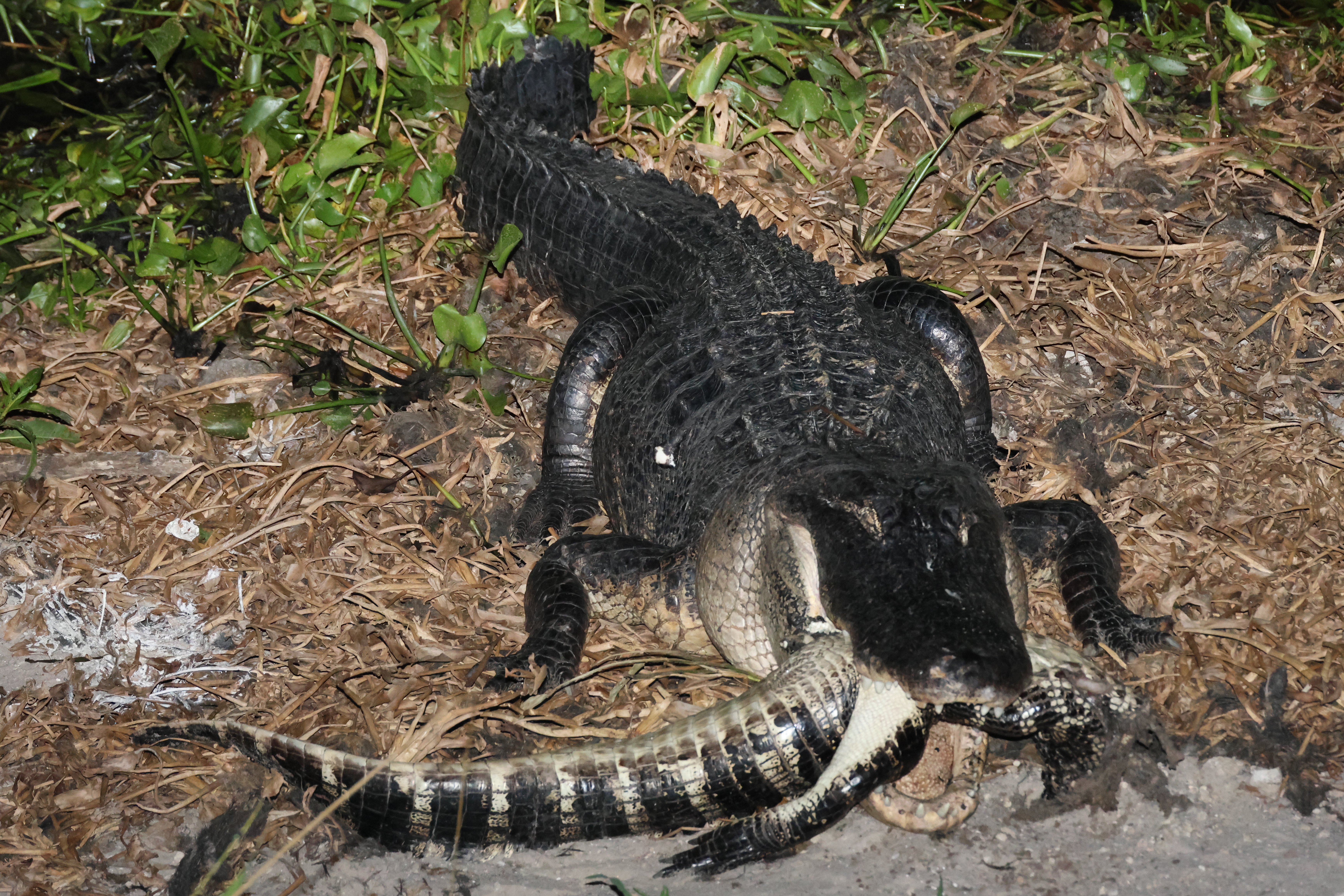
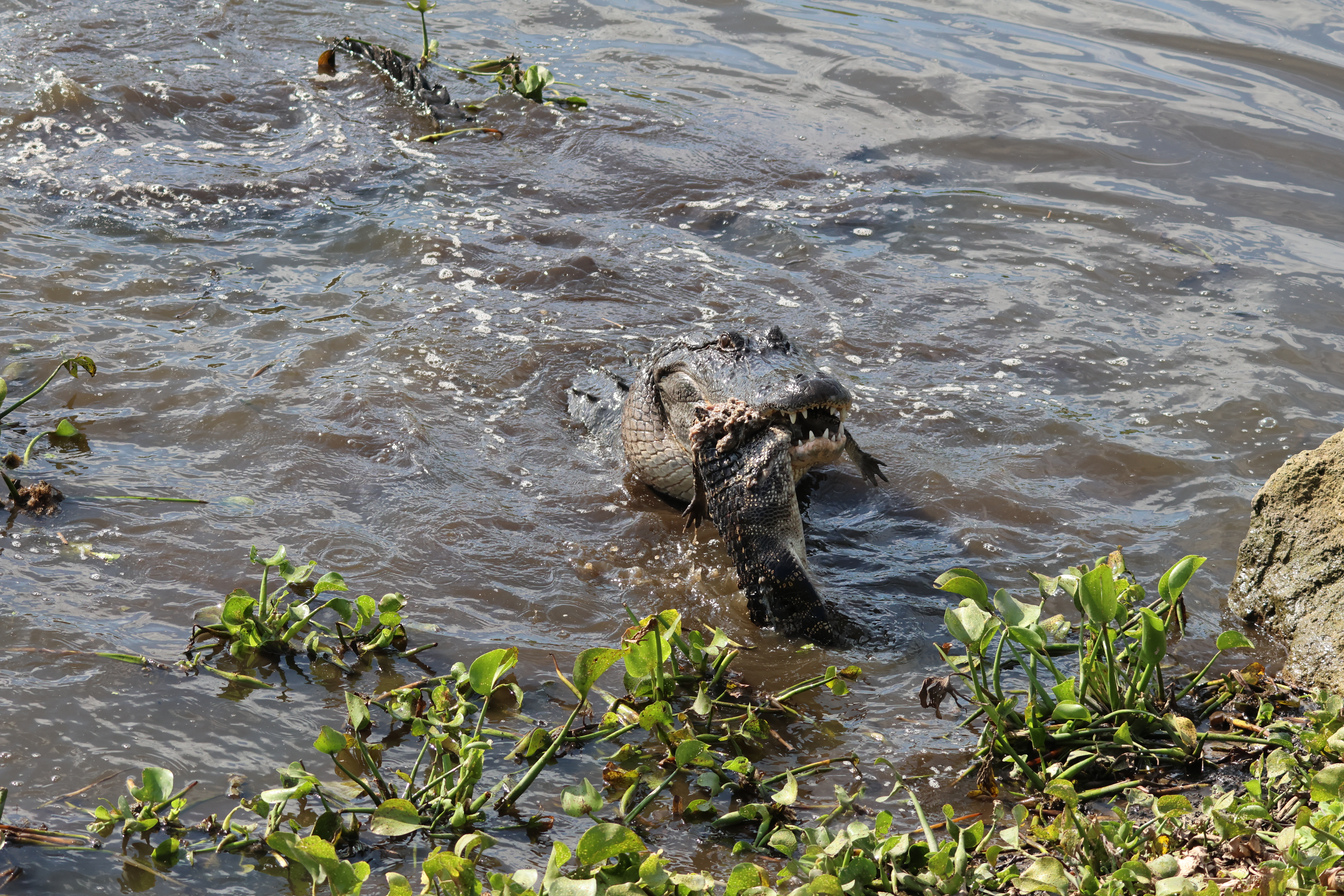
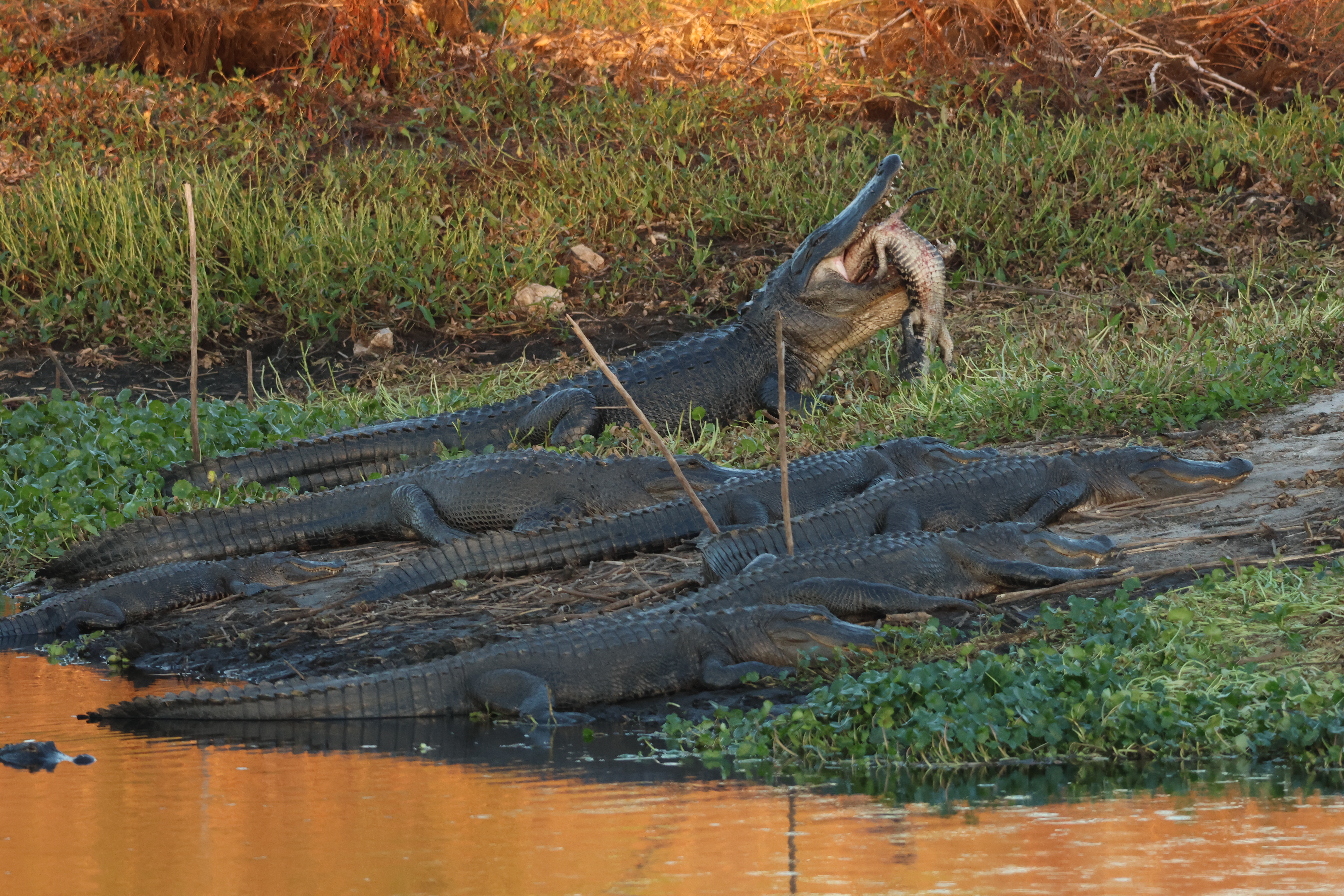
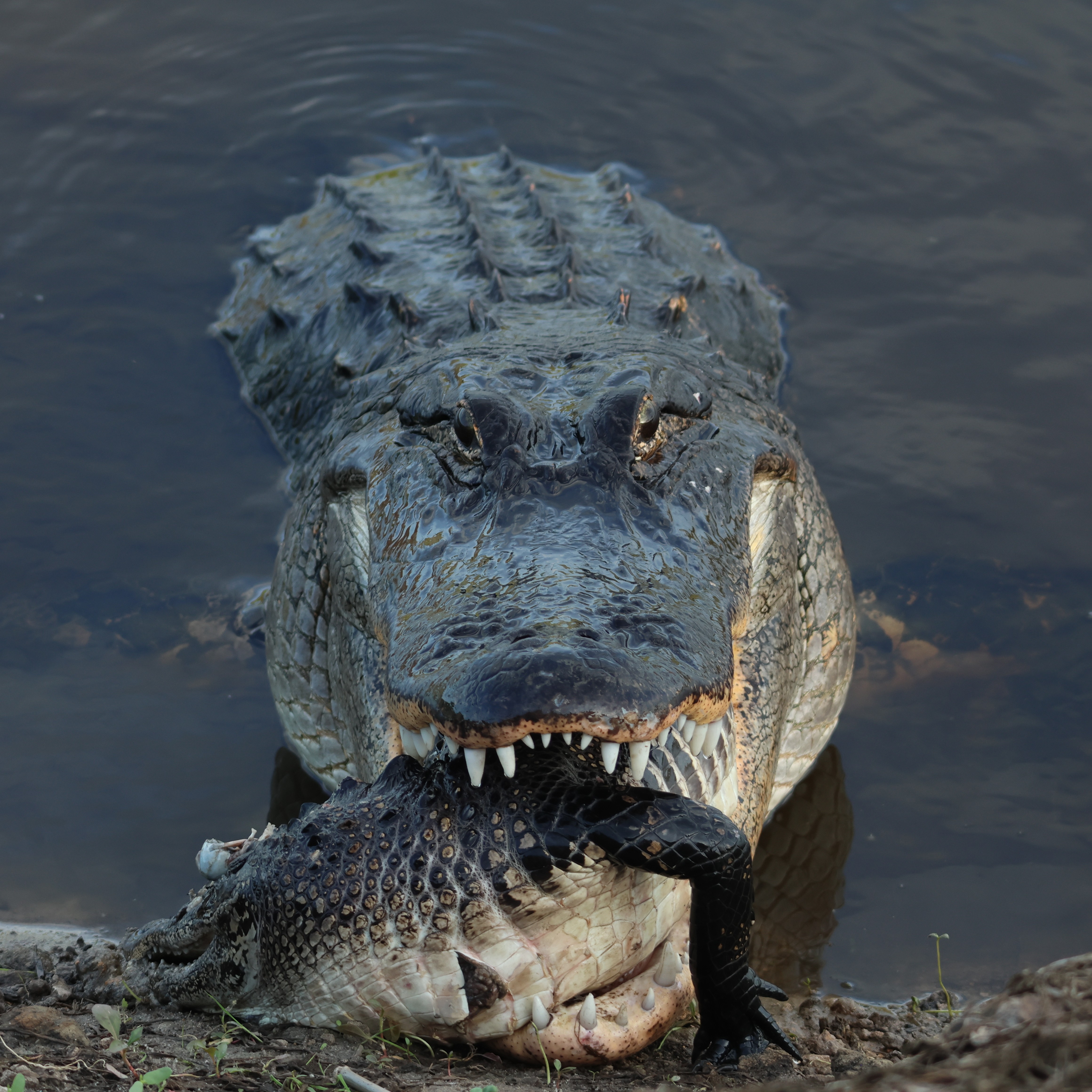
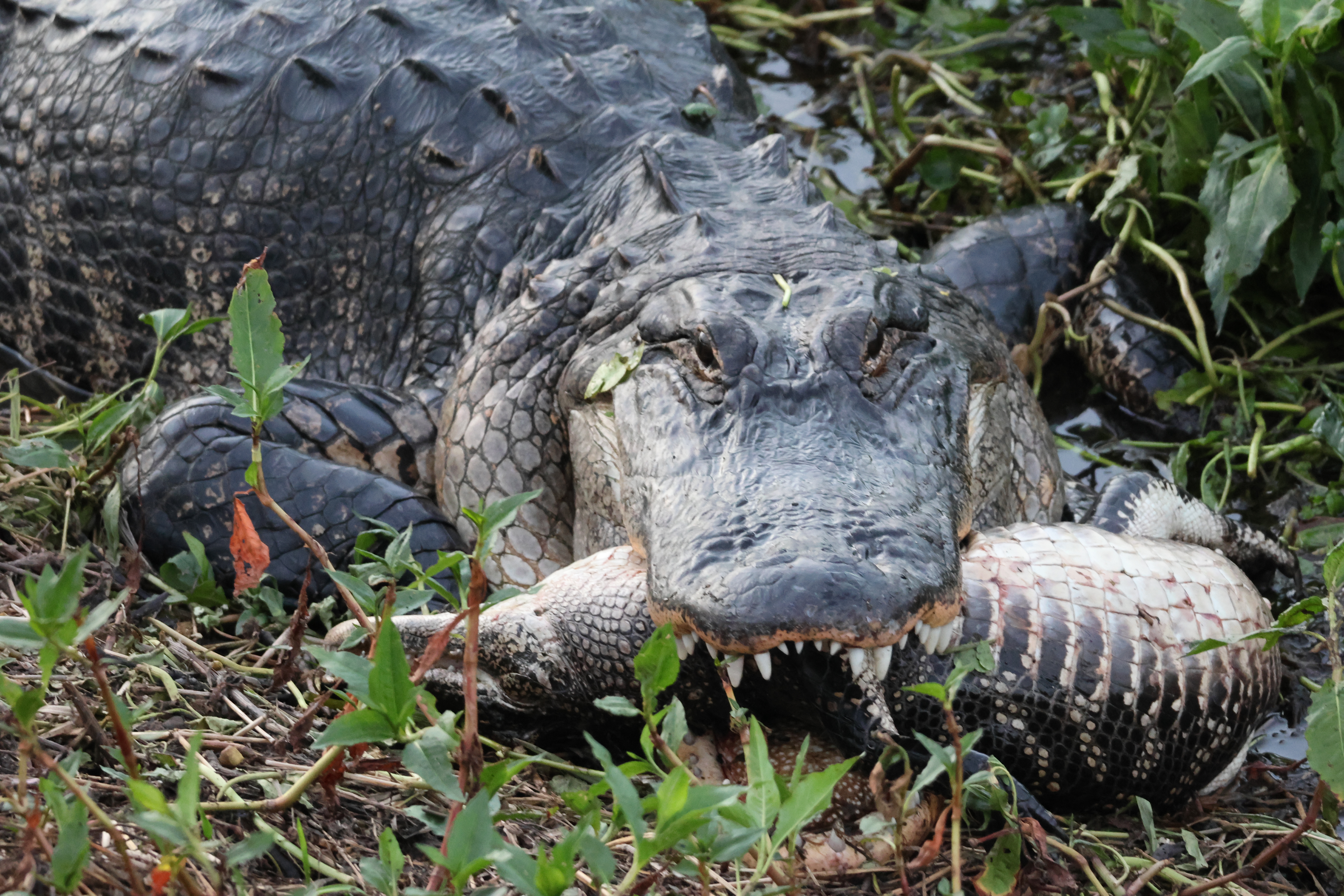
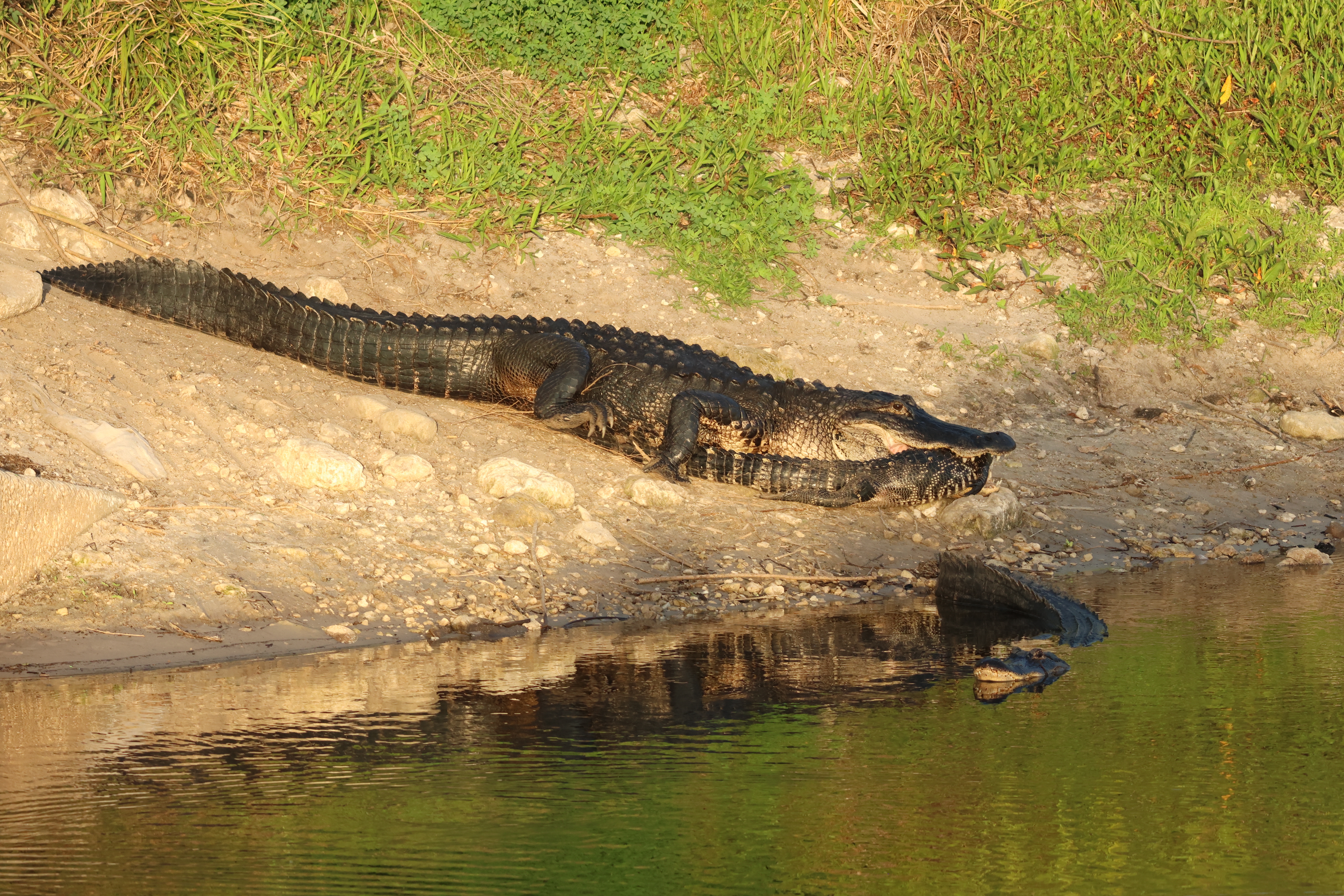
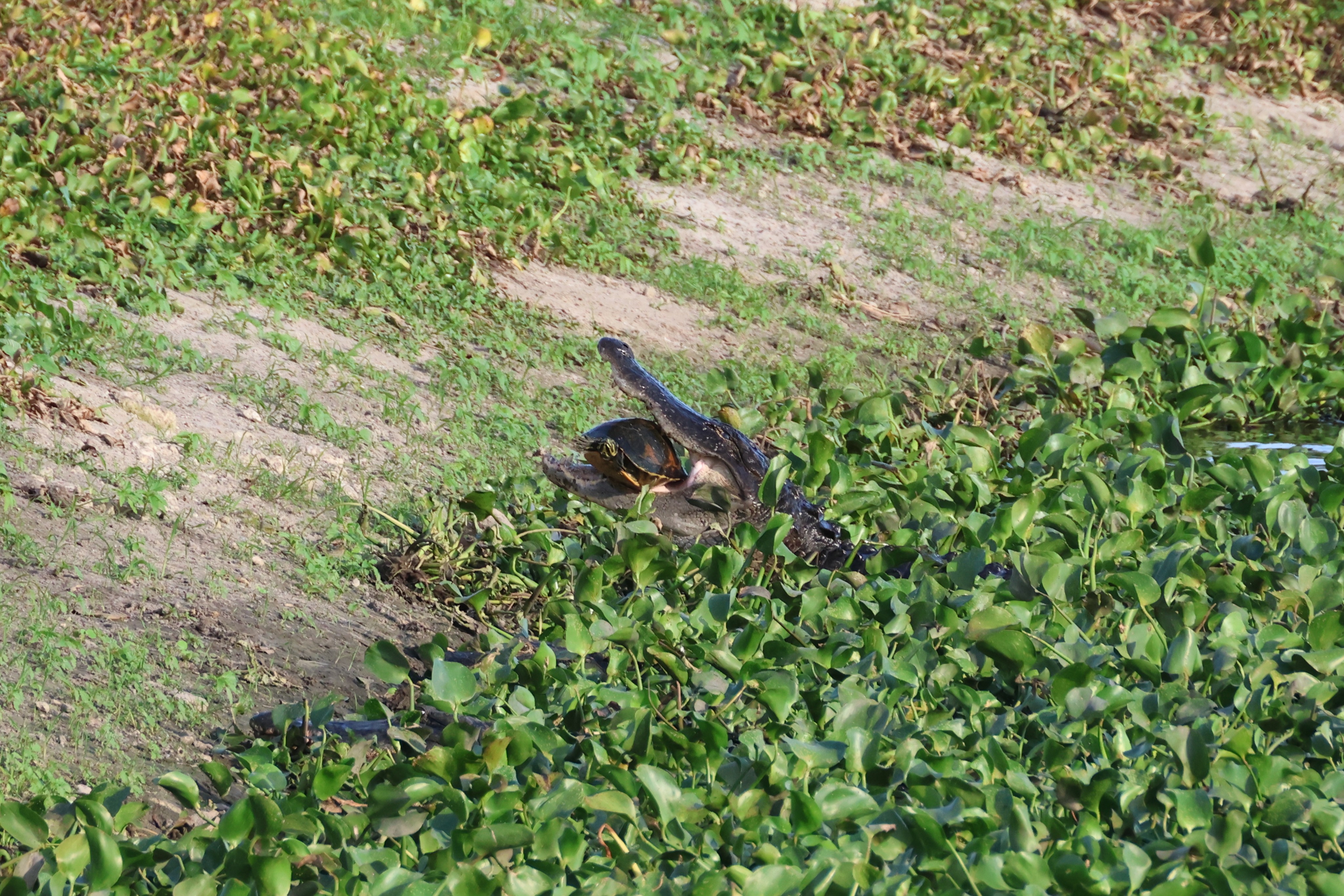
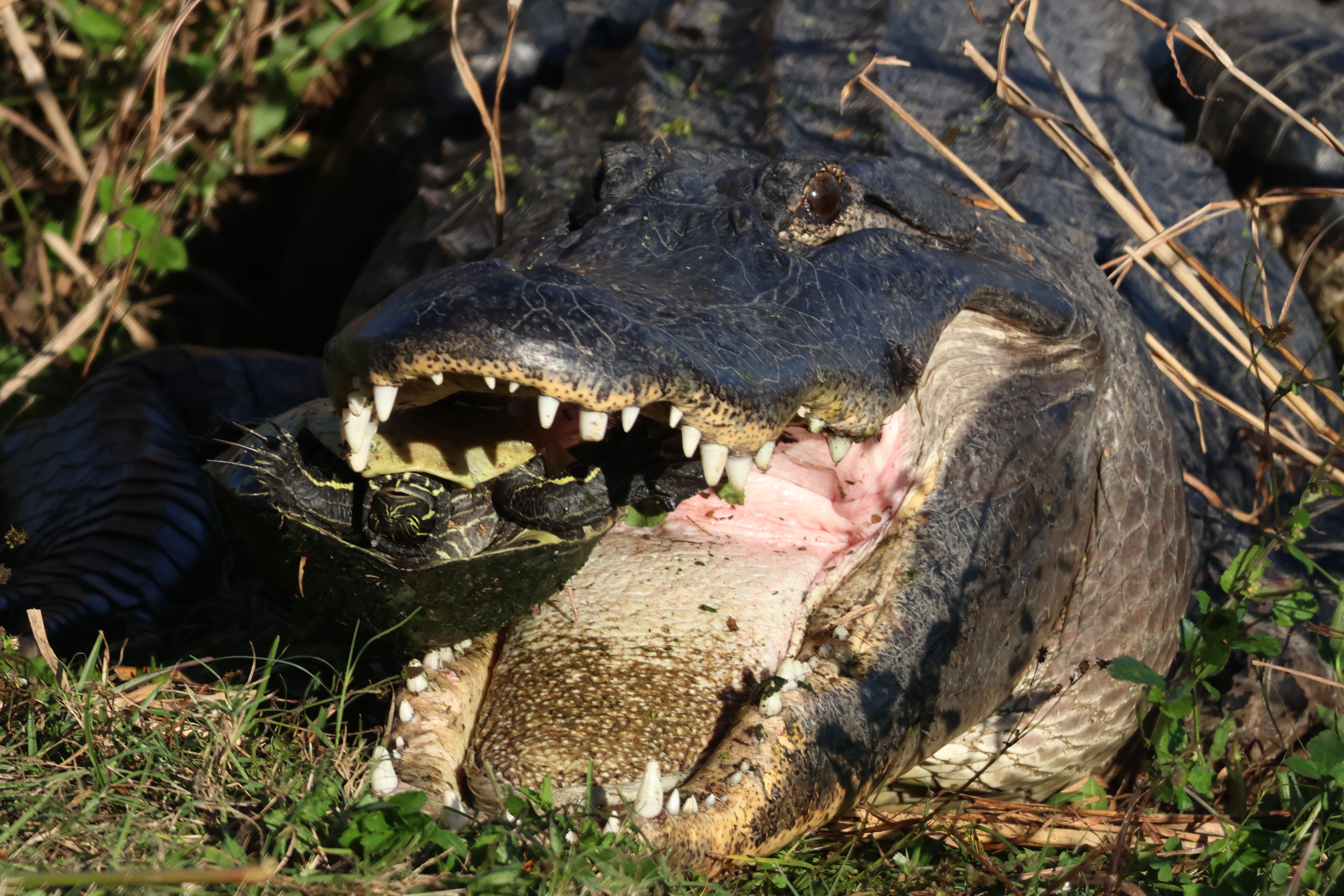
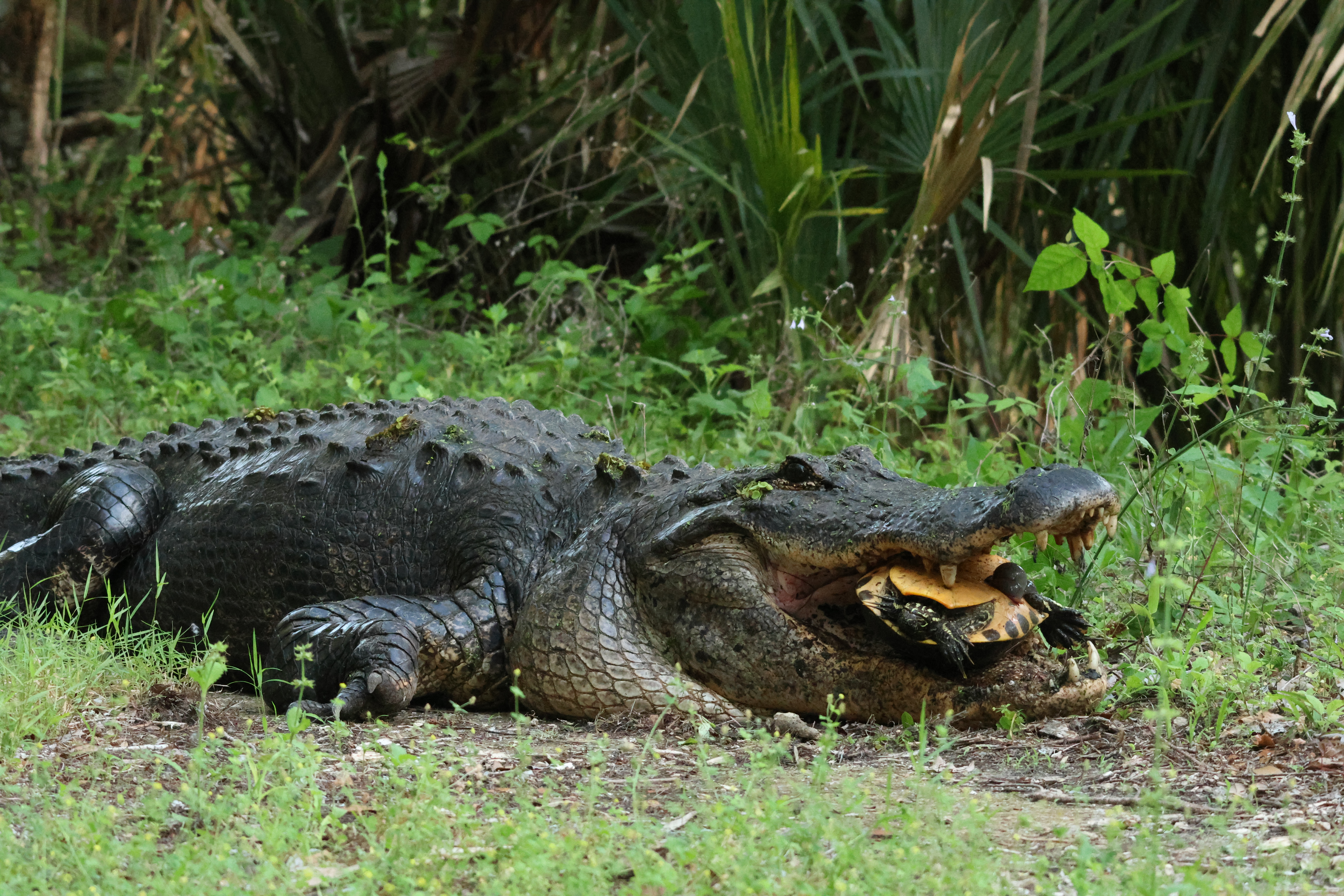
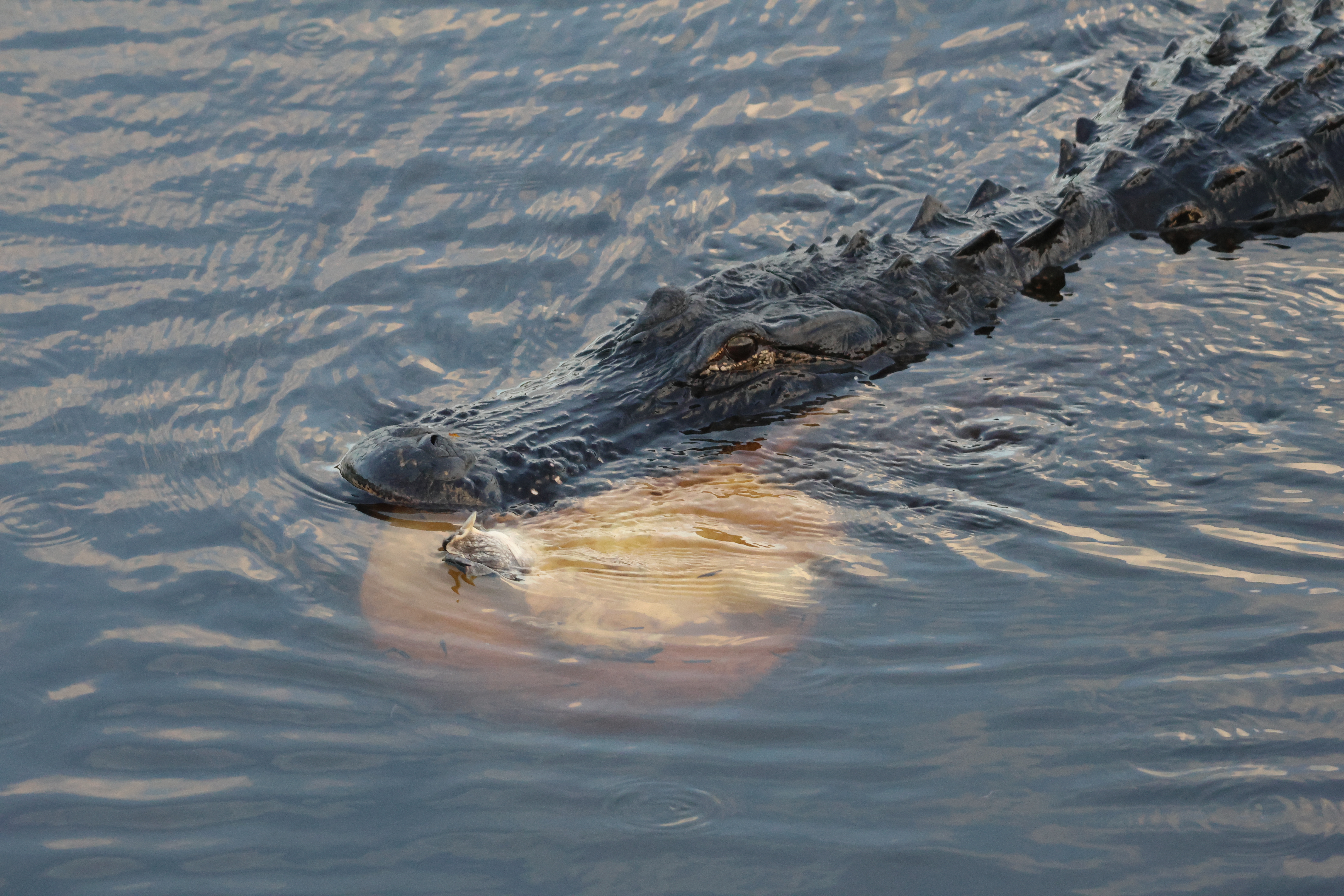
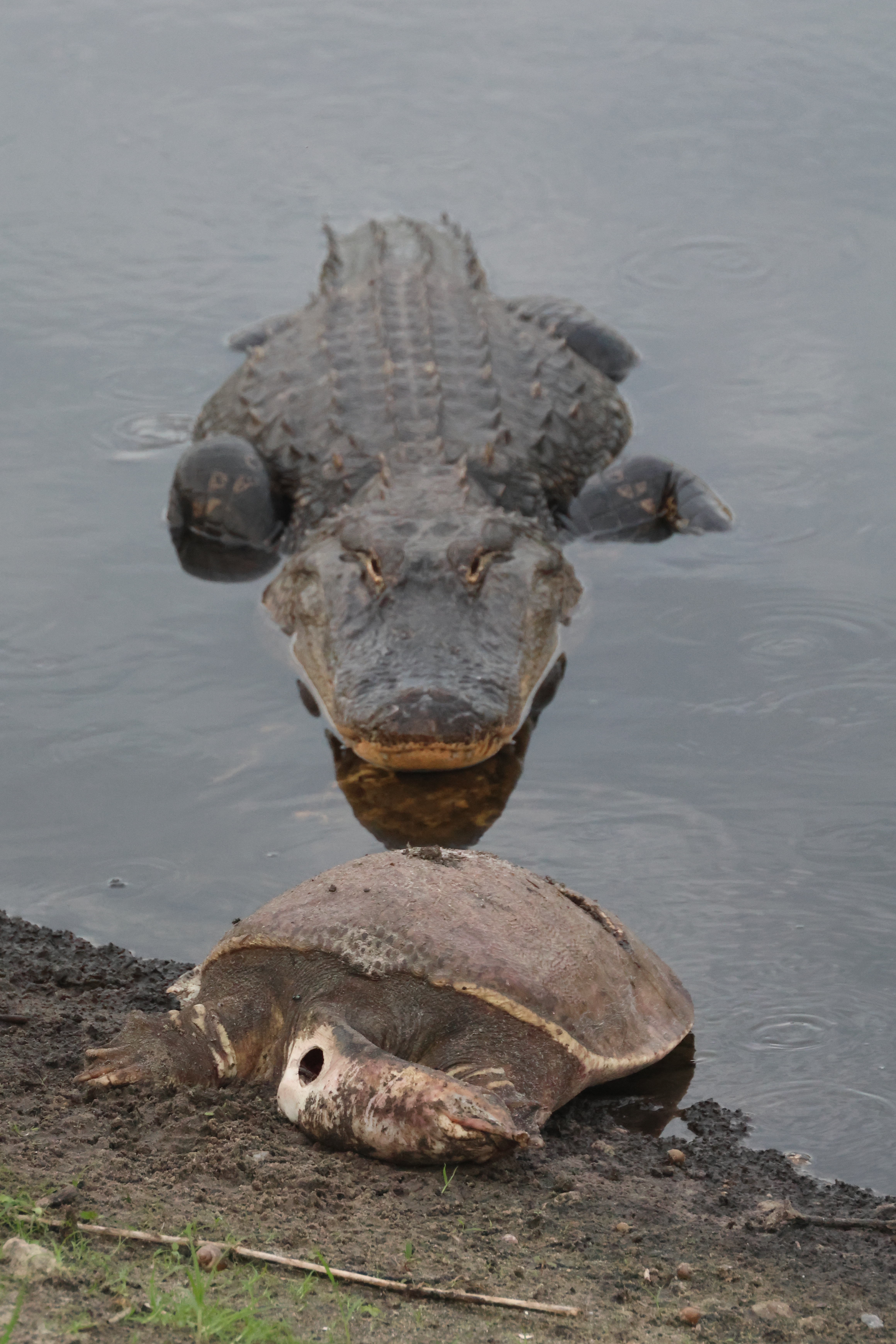
Alligators eating reptiles. Click to enlarge photos and open gallery view.
Natural history notes: The first time I witnessed a large alligator eating a small alligator I thought this was likely to be a very rare occurrence. That turned out not to be the case at all. I have since seen this happen on six separate occasions, including twice in the same evening. In each instance, I came upon a larger alligator with an already dead smaller alligator clutched in its jaws. The swallowing of such large prey takes a long time, frequently involves moving locations while dragging or swimming with the smaller alligator clutched in the jaws, and sometimes involves violent thrashing to try to rip off chunks which are more easily swallowed. I have seen large alligators attempt to consume Cooters (hard-shelled, fairly large, aquatic turtles in the genus Pseudemys) on three occasions, and twice successfully. In each instance the alligator emerged from the water with a turtle in its mouth, and moved some ways onto shore. It then proceeded to manipulate the turtle in its jaws, often flipping the turtle upside down, sometimes dropping the turtle and then picking it up again. Eventually, a series of crushing bites were delivered which broke the shell, after which the turtle was swallowed whole in a single motion. Twice I have seen alligators preying upon Florida softshell turtles. In one instance an alligator was seen swimming with a Florida softshell turtle in its mouth, and in the other an alligator was resting next to a dead Florida softshell turtle (which it may have been scavenging).
Amphibians
Greater Siren (Siren lacertina)
Unidentified Aquatic Salamandar (most likely Greater Siren or Two-toed Amphiuma) (2x)
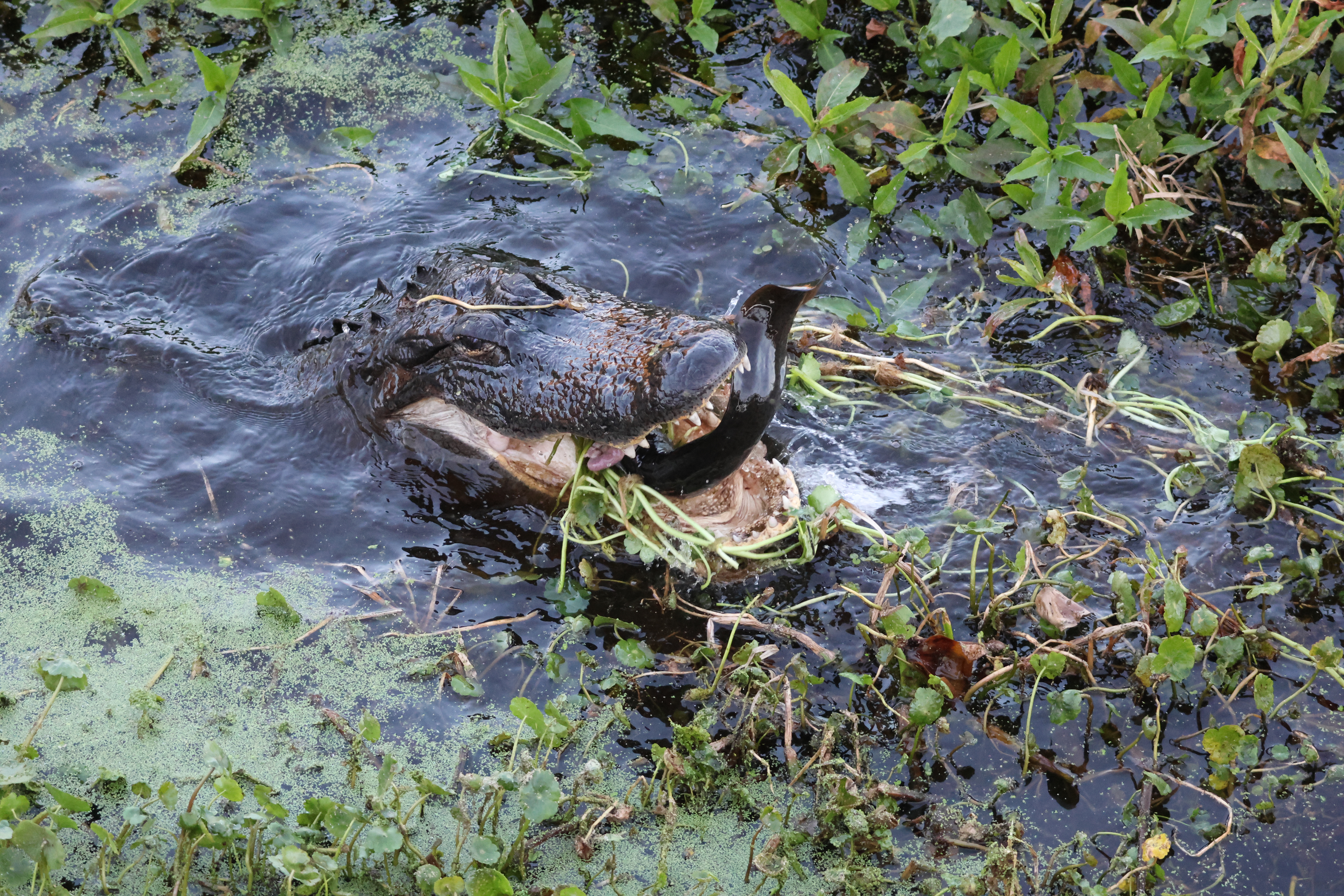
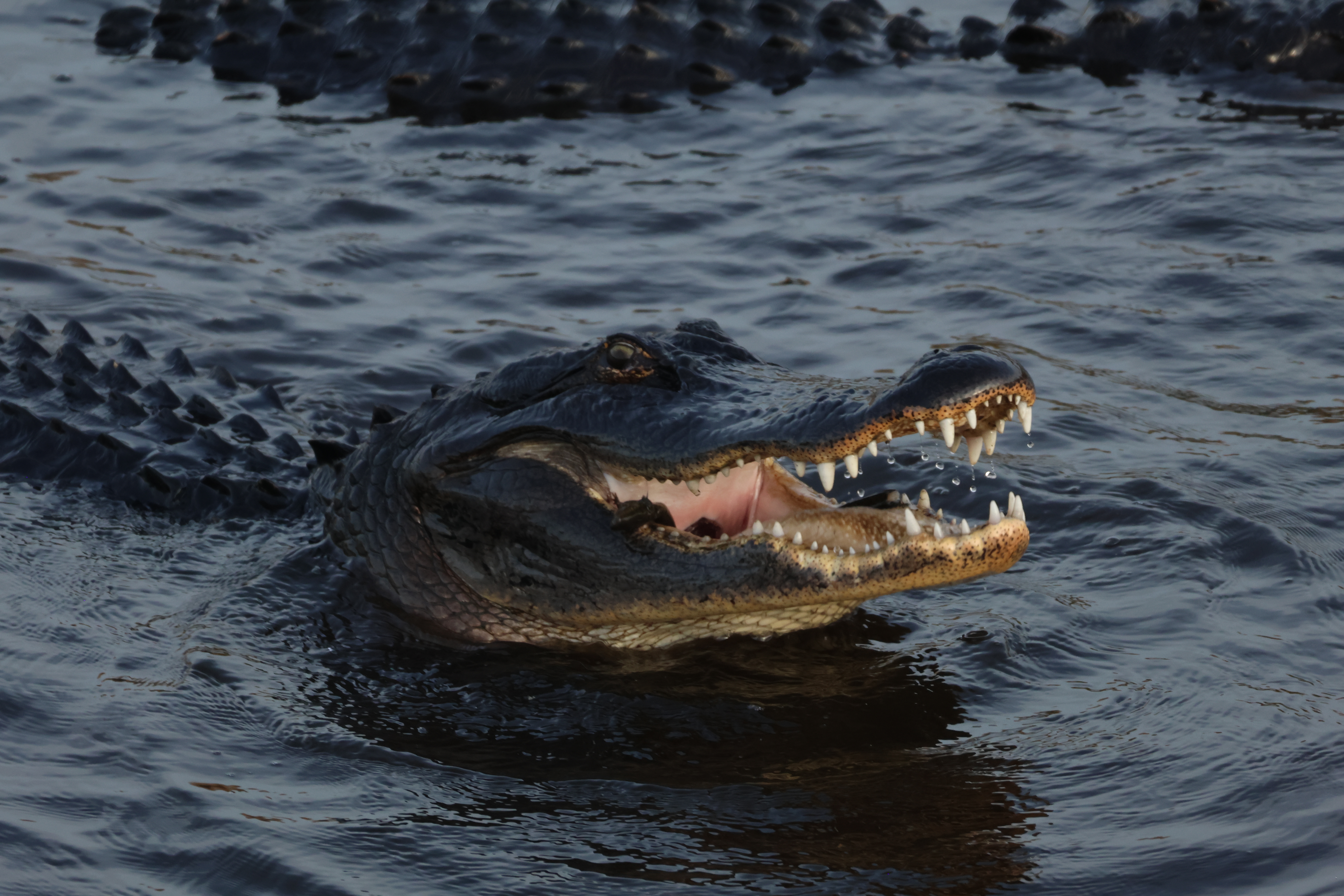
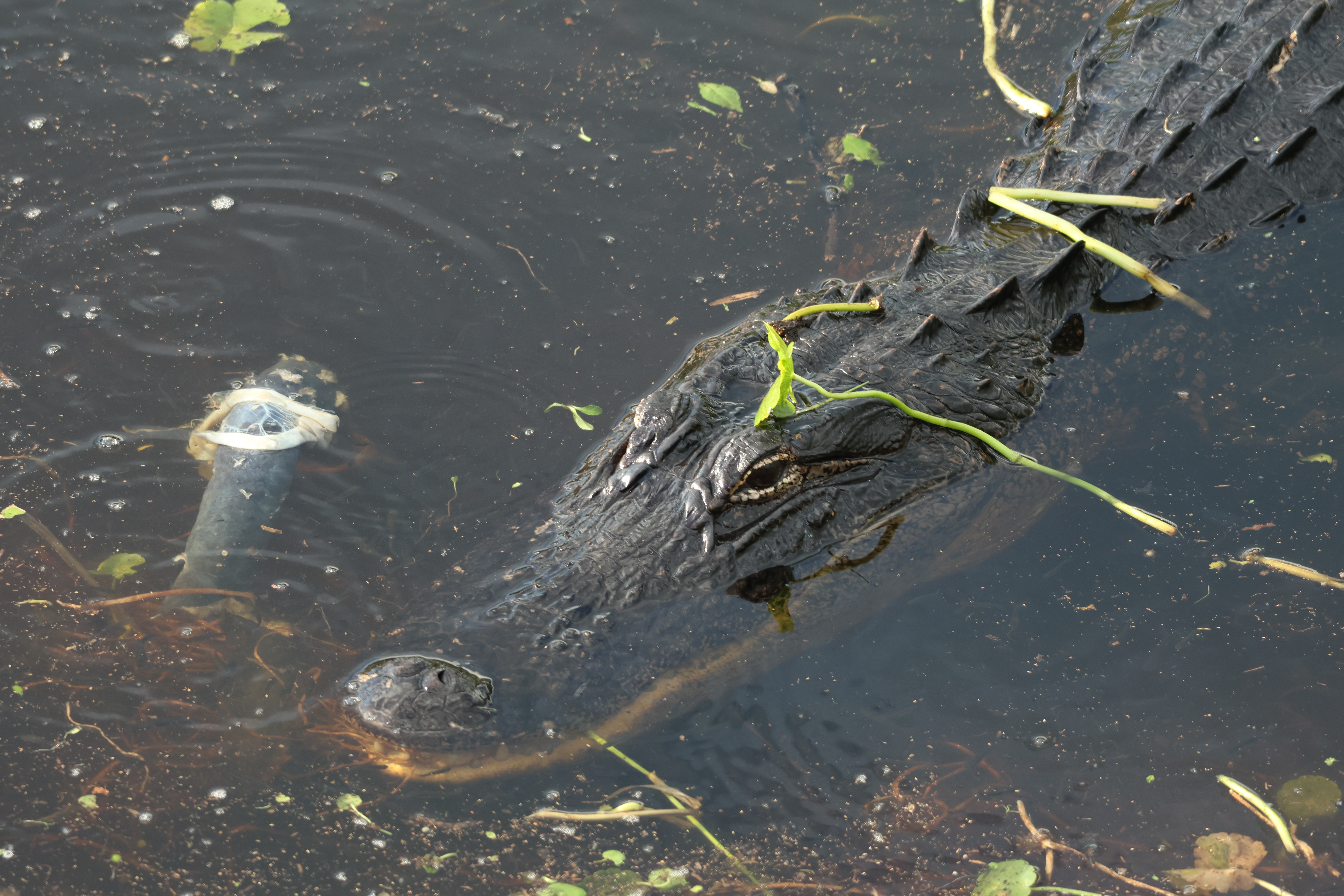
Alligators eating amphibians. Click to enlarge photos and open gallery view.
Natural history notes: I have observed alligators preying upon large aquatic salamanders on three separate occasions. In one instance I am confident the species being eaten was a Greater Siren, but in the other two instances I was unable to positively identify the species, but it was most likely either a Greater Siren (Siren lacertina) or Two-toed Amphiuma (Amphiuma means).
Mammals
Virginia Opossum (Didelphis virginiana)
White-tailed Deer (Odocoileus virginianus)
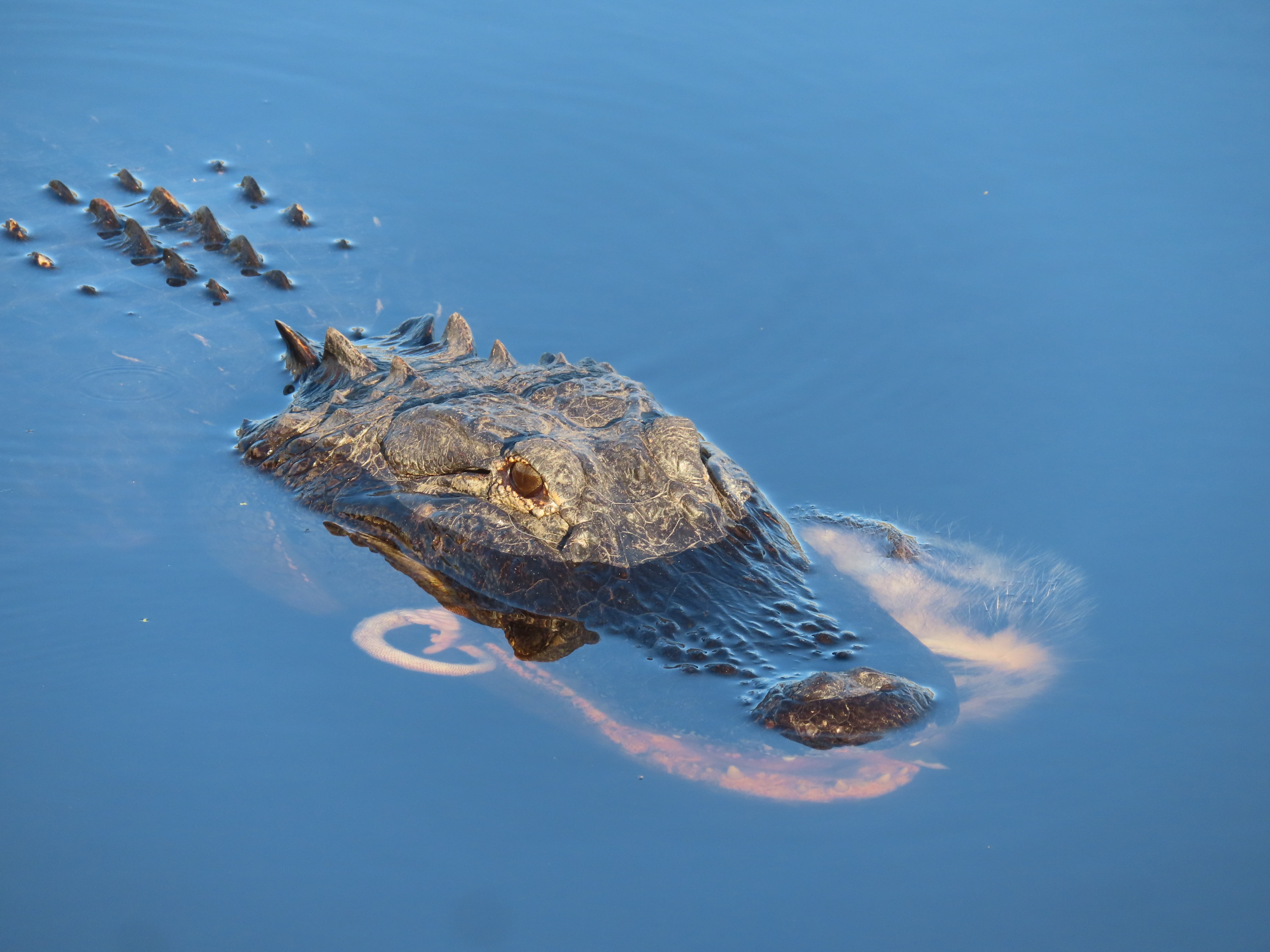
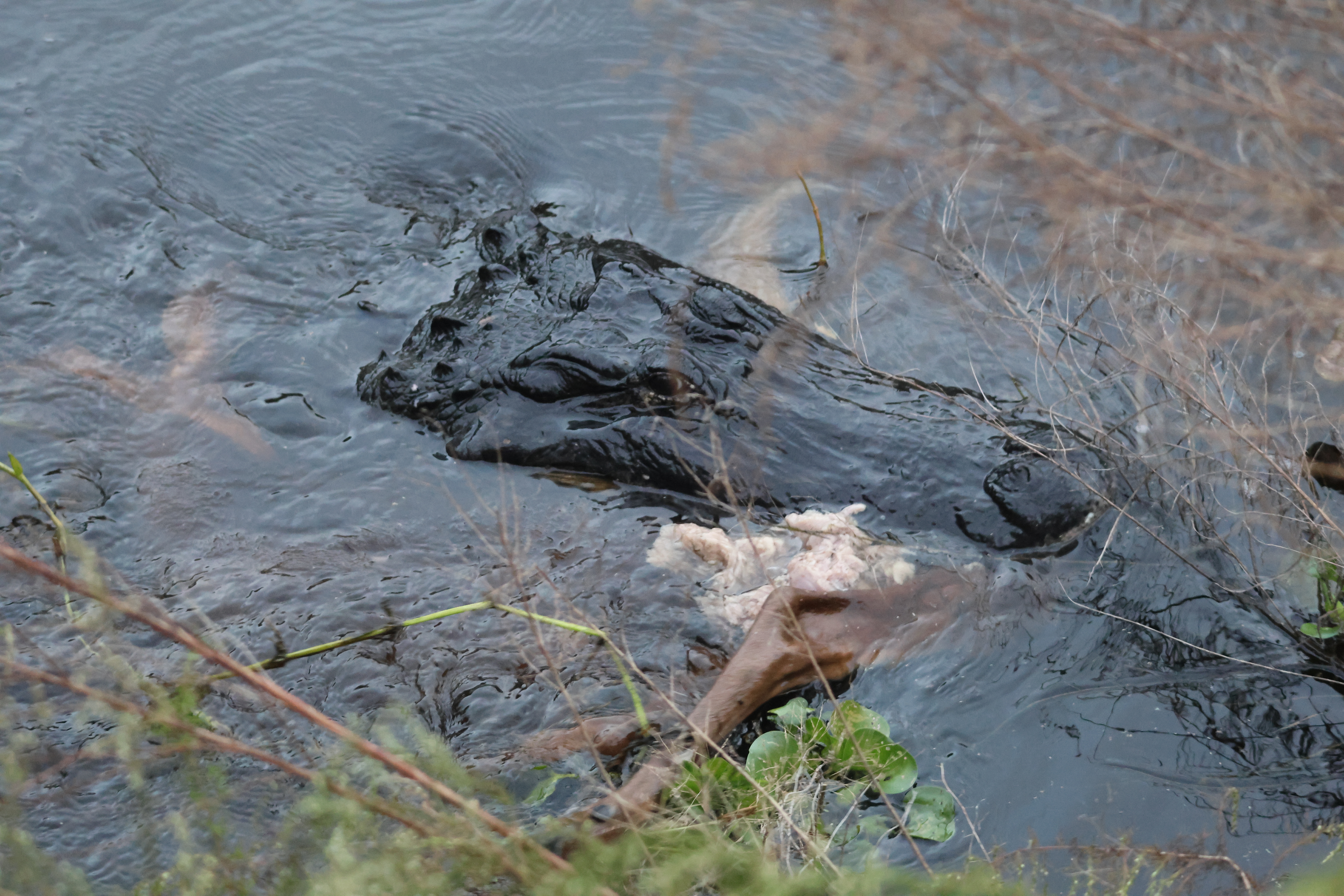
Alligators eating mammals. Click to enlarge photos and open gallery view.
Natural history notes: Twice I have observed alligators preying upon mammals. In one instance a dead opossum (clearly identified by its hairless tail) was observed in the jaws of an alligator. In the other, a large alligator was observed swimming with a dead white-tailed deer in its mouth. The deer appeared to be an adult female and largely intact. The alligator occasionally rose up from the water and thrashed the deer around in an attempt to rip off chunks that were able to be swallowed. Another smaller alligator was attracted by the commotion and at one point also grabbed hold of the deer. It got dark and I had to leave for the evening. I came back the next morning and the same alligator was found in the same spot with part of the deer still clutched in its jaws. It crawled onto shore and began basking (with part of the deer still in its mouth). Apparently much of the deer had been consumed during the night as less of it appeared visible and the alligator looked to have a large girth. Large prey, such as deer, take a long time to process and swallow and the alligator did not seem to be in a hurry.
Birds
Unidentified Bird (possibly Anhinga)
Unidentified Water Bird (Depot Park, Gainesville)
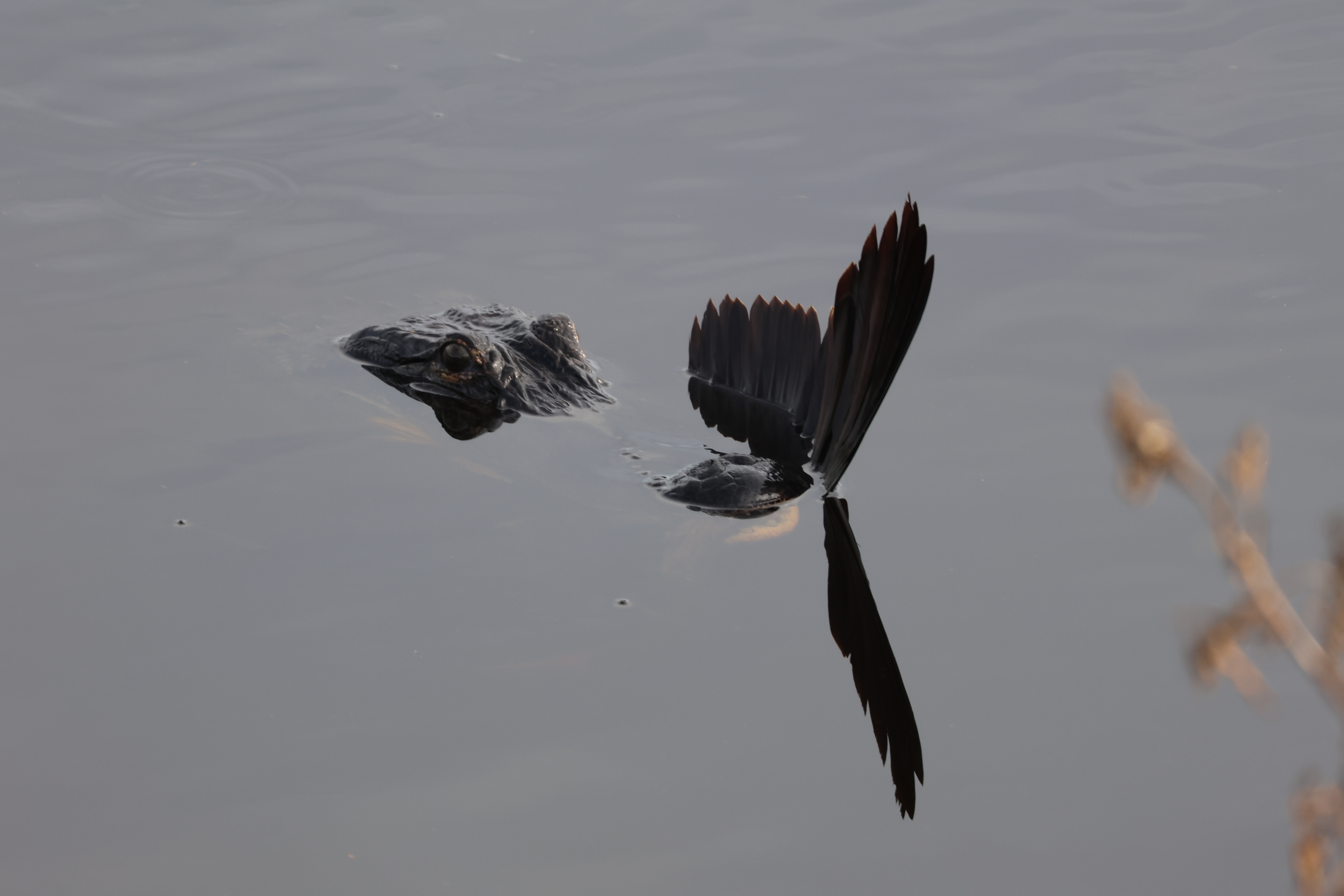
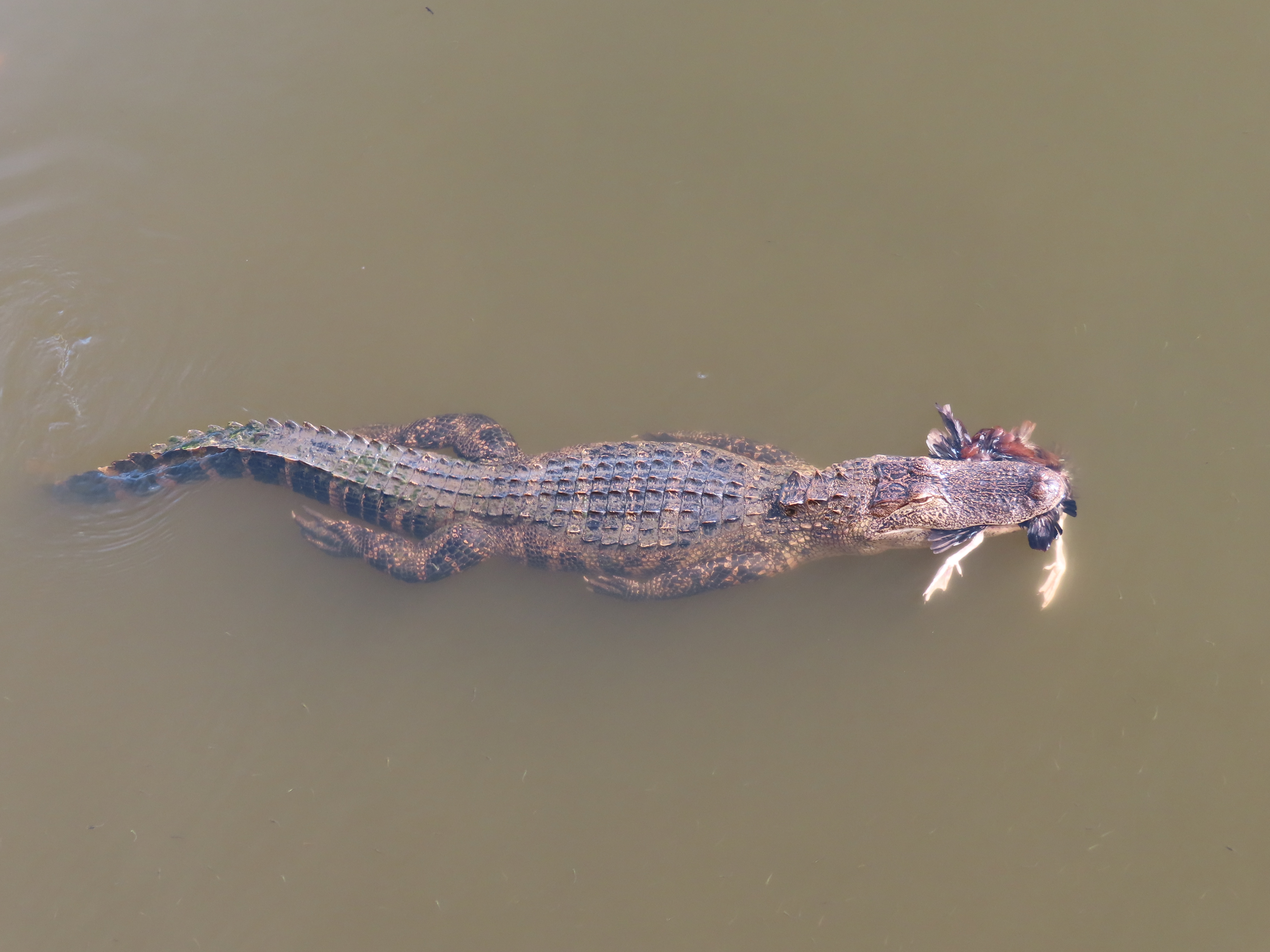
Alligators eating birds. Click to enlarge photos and open gallery view.
Natural history notes: Twice I have seen alligators swimming with dead birds in their jaws. In both cases, I have been unable to identify the species of bird. In one case the dark black feathers make me think it is possibly an Anhinga. In the other case, the yellow webbed-feet indicate some kind of water bird. I frequently see alligators and birds (particularly herons) in very close proximity. For example, alligators often bask at the water’s edge and various species of heron hunt small fish in the shallows only a few feet away. Yet, I have not seen an alligator make a lunge toward a heron. Perhaps, alligators know that these birds are very vigilant and attempting to capture them would have such low probability of success that it is not worth the energy of making an attempt.
Invertebrates
Atlantic Horseshoe Crab (Limulus polyphemus) (St. Mark’s National Wildlife Refuge)
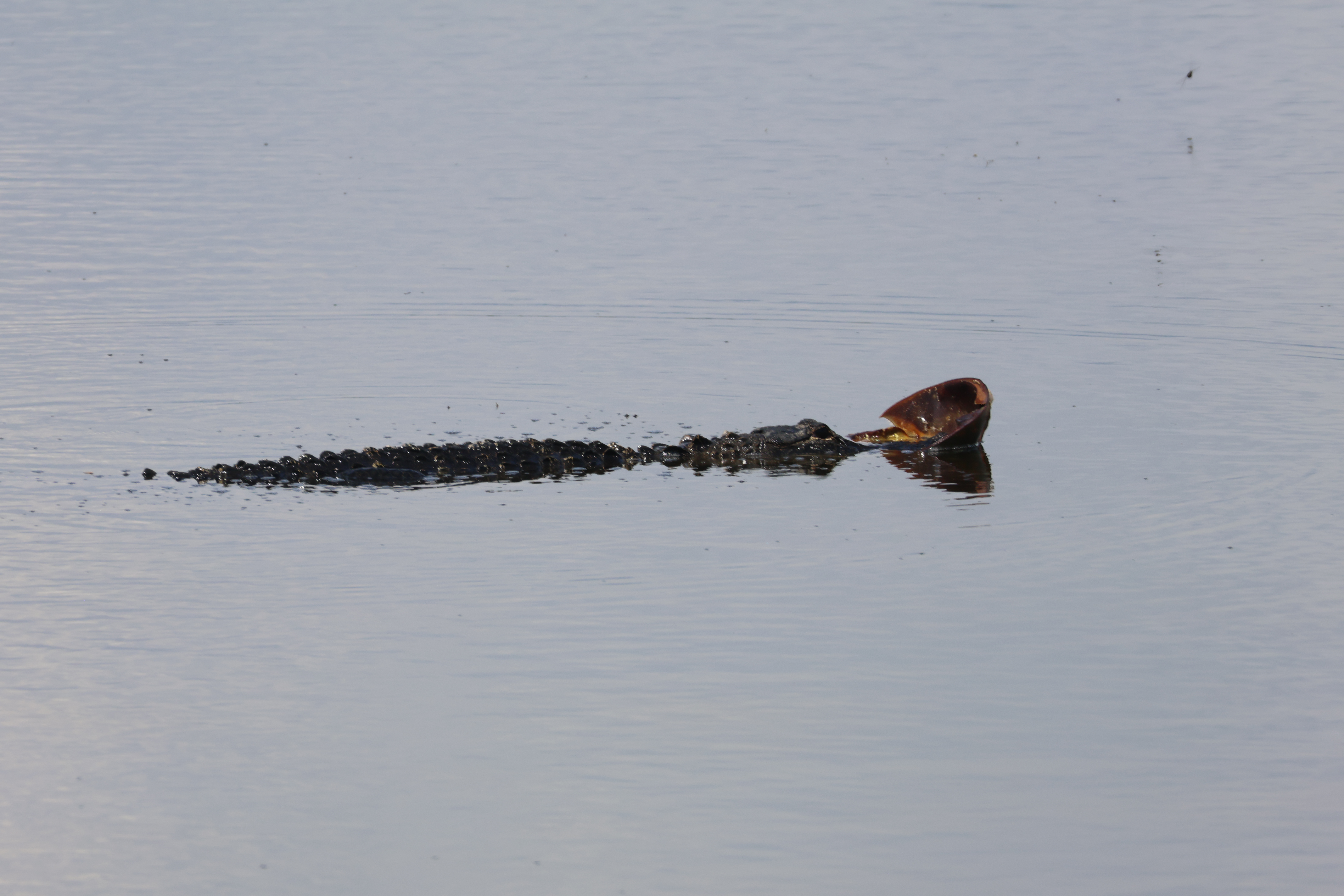
Alligators eating invertebrates. Click to enlarge photo and open gallery view.
Natural history notes: At St. Mark’s National Wildlife Refuge, on Florida’s Gulf Coast, I witnessed an alligator swimming with the unmistakable shape of a horseshoe crab in its mouth.
Other Objects
Stick
Vegetation
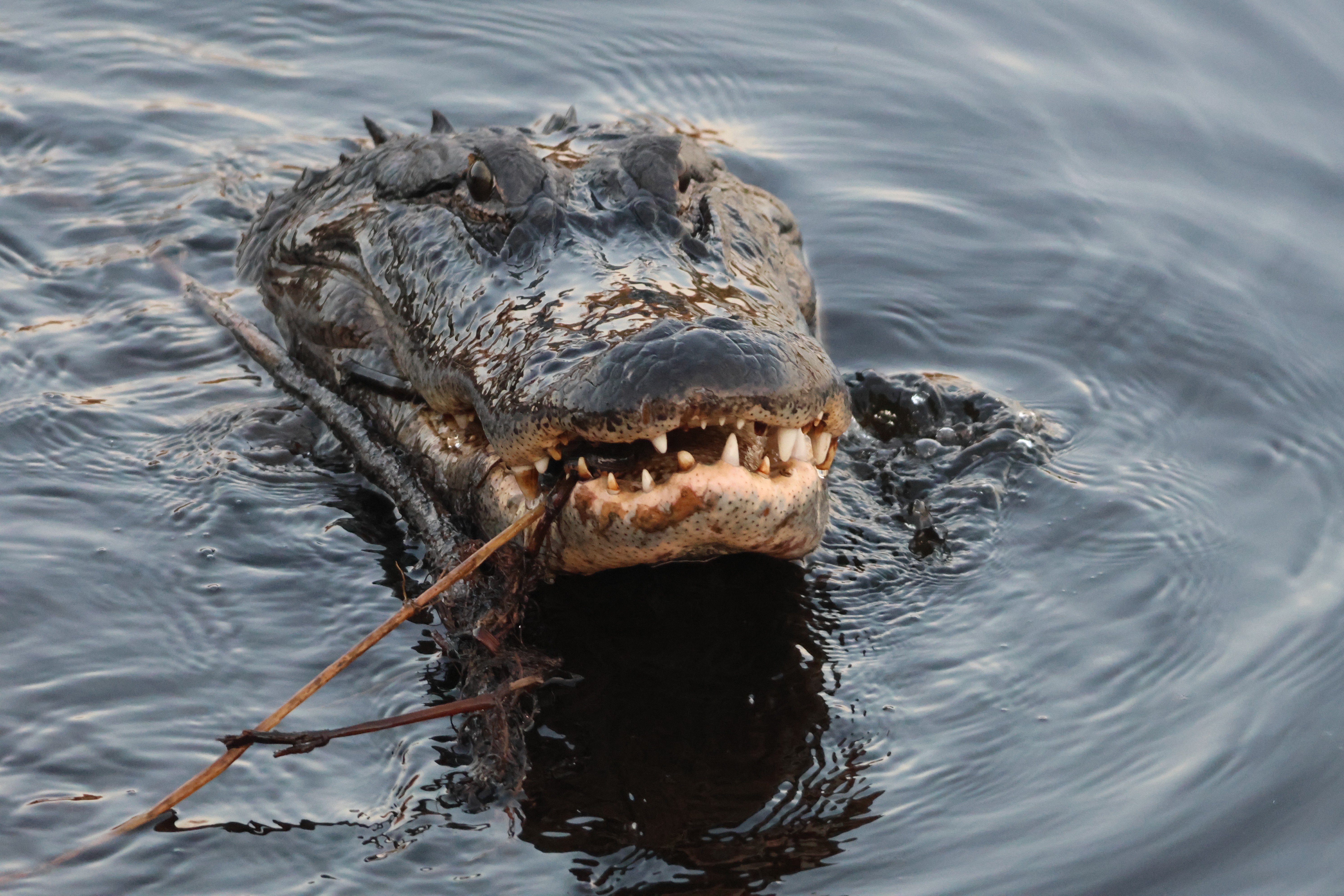
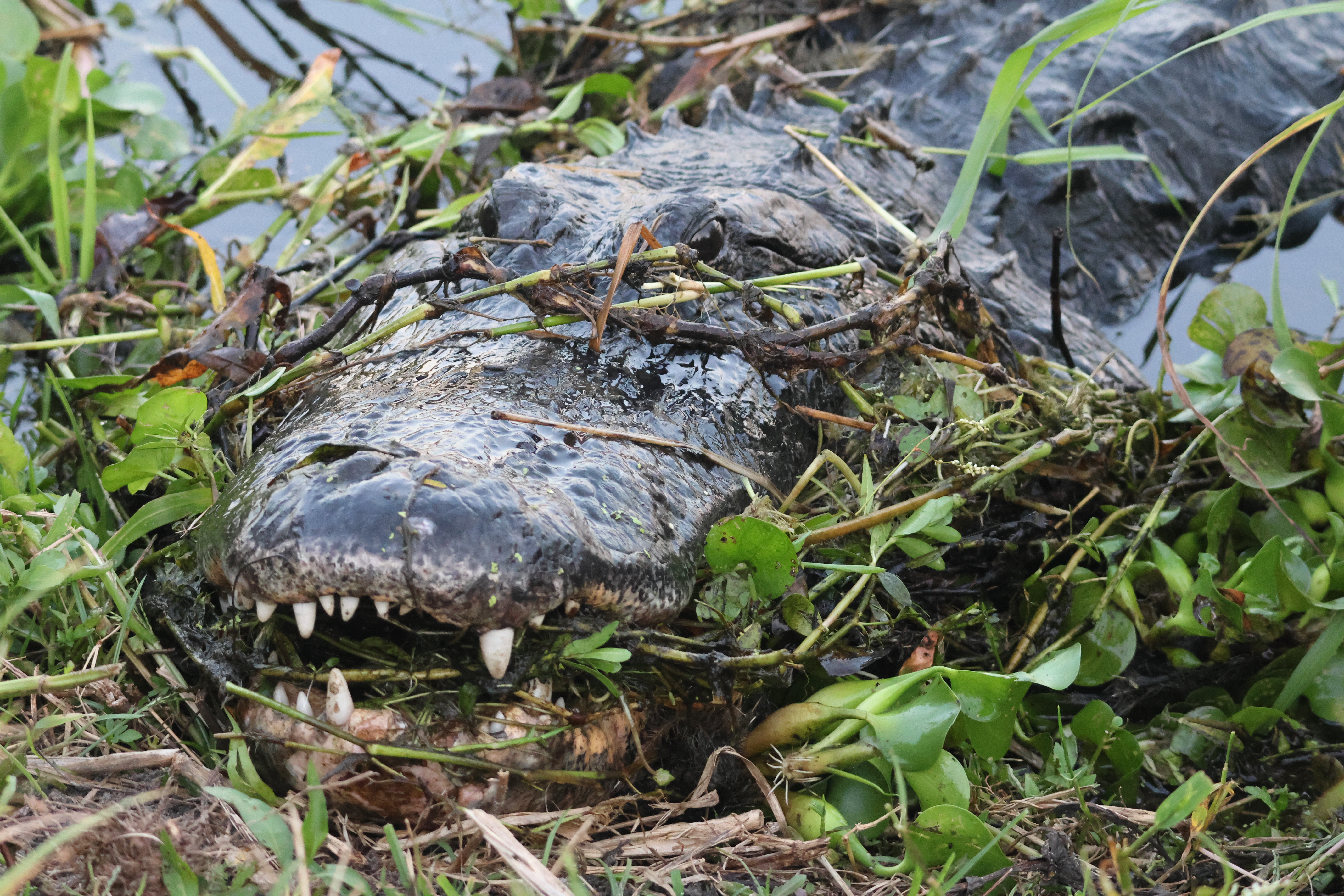
Alligators (apparently) eating other objects. Click to enlarge photo and open gallery view.
Natural history notes: I once saw an alligator appear to eat a stick. It may have accidently eaten the stick while trying to swallow some other prey item, but I couldn’t see any other prey in its mouth. I also once saw an alligator emerge onto shore with a mouthful of aquatic vegetation. It appeared to have swam through thick vegetation with its mouth open and not bothered to remove this.
That completes the list of items I have seen alligators eat. This list is obviously not a replacement for the analysis of stomach contents, and such a list is likely to be biased in two obvious ways. The first is that my observations have so far been limited to the daytime. Alligators reportedly hunt primarily at night. So what alligators are capturing and eating at night is likely missing from the above list. Second, my list is likely to be biased toward larger prey. It can be difficult to observe alligators eating smaller prey, and smaller prey is quickly swallowed with minimal processing time. In contrast, large prey items are more obvious to see, and can take a long time to process before it can be swallowed. This latter point is important because in most of the above photographs I did not witness the alligator actually capture the prey item (with the exception of some of the fish), but instead came upon the alligator with the already dead prey item in its mouth. Smaller prey items, that don’t require ripping into smaller chunks, would presumably have been swallowed whole soon after capture. This means that the prey I observed alligators carrying in their jaws is likely to be biased toward the subset which could not be immediately swallowed due to its larger size.
 Reason and Nature
3 thoughts on “Alligator Diet Observations”