Dams act as barriers to the natural flow of rivers. As a result, fish often congregate below dams. This, in turn, tends to attract fish-eating animals. Dams can therefore be good focal points to observe and photograph wildlife. I was reminded of this when, this past weekend, I visited Kirkpatrick Dam on the Ocklawaha River, in north central Florida. Earlier in the week, someone had mentioned to me that this was a good place to observe bald eagles. So I set out, camera in hand, to see what wildlife I could find.
Background on Kirkpatrick Dam
The Ocklawaha River is a 74-mile-long river that originates in the Harris chain of lakes in central Florida and flows north until it joins the St. Johns River near Palatka. The Silver River is the most well-known tributary of the Ocklawaha. The Silver River is a crystal-clear river that originates as discharge from Silver Springs, near Ocala, and flows for 5.4 miles to the Ocklawaha. In the 19th and early 20th century, when Florida was still a wild and untamed land, steamboat travel from Palatka to Silver Springs, along the length of the Ocklawaha and Silver rivers, was a scenic and adventurous trip. According to Wikipedia this journey was undertaken by several prominent people including Thomas Edison, Ulysses S. Grant, Harriet Beecher Stow, and Mary Todd Lincoln. As such, the Ocklawaha River has long been associated with adventure, untamed wilderness, abundant wildlife, and “old Florida”. This is reflected in postcards from this era.
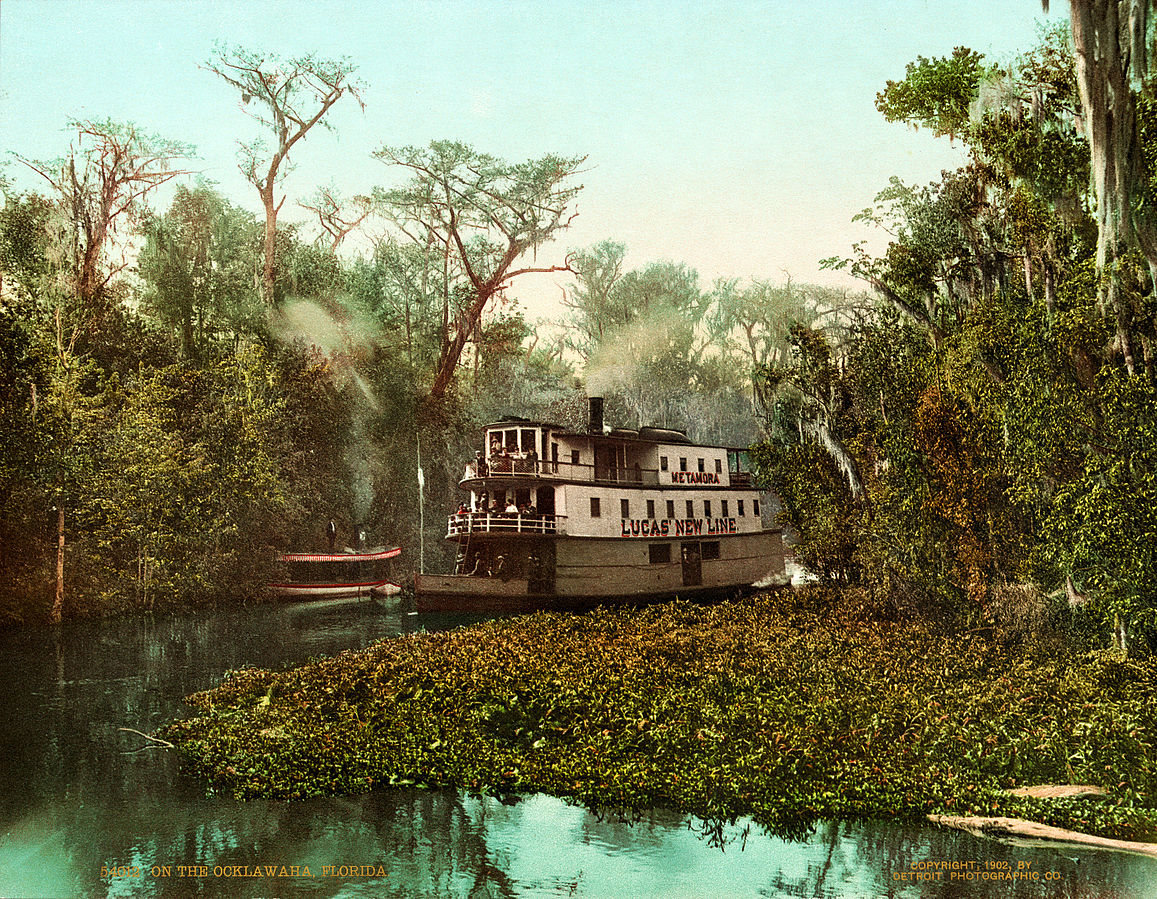
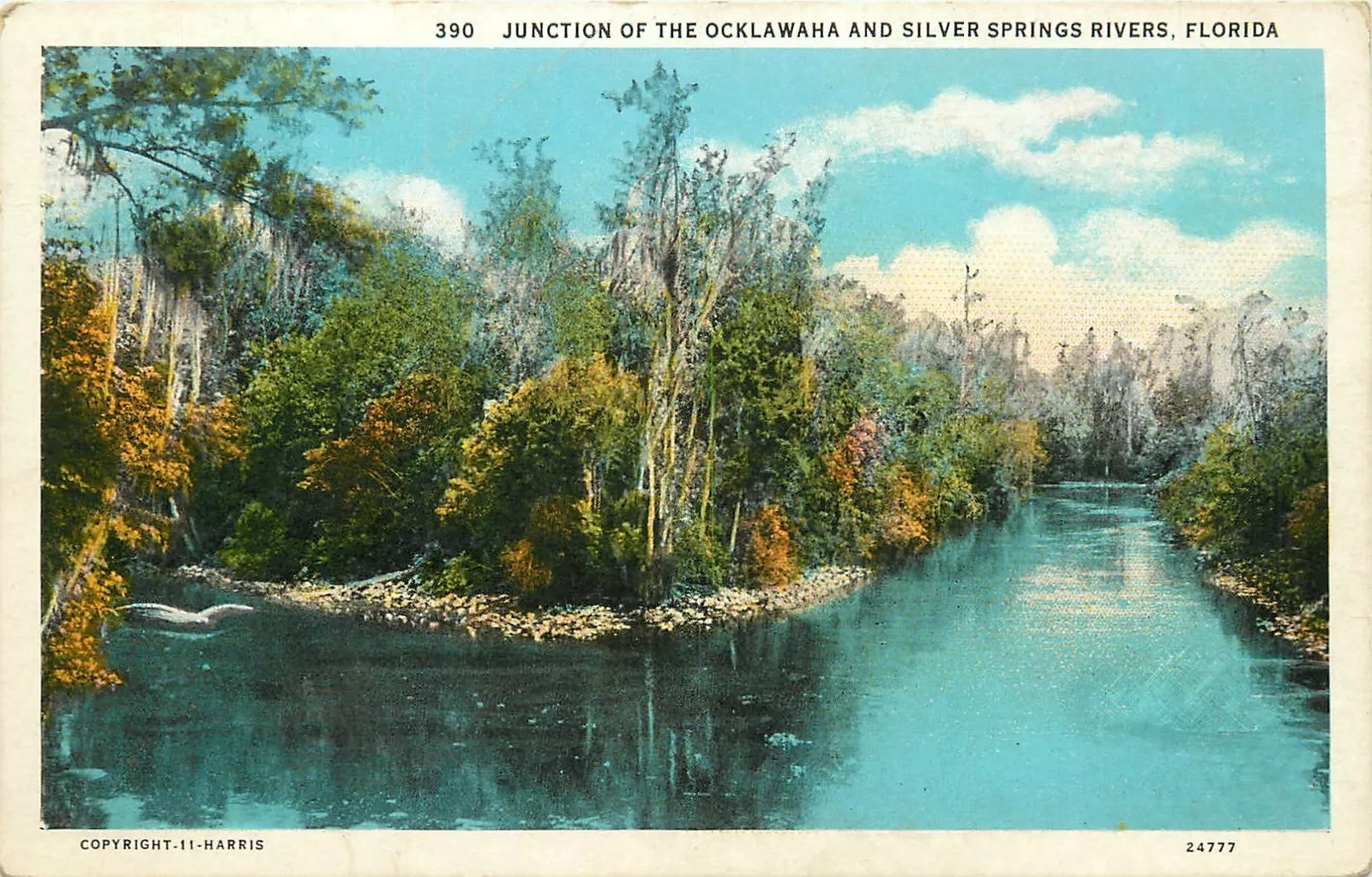
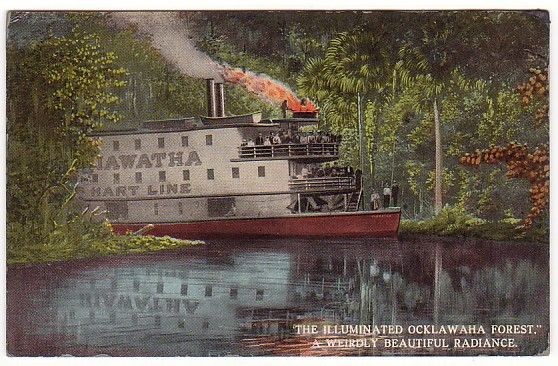


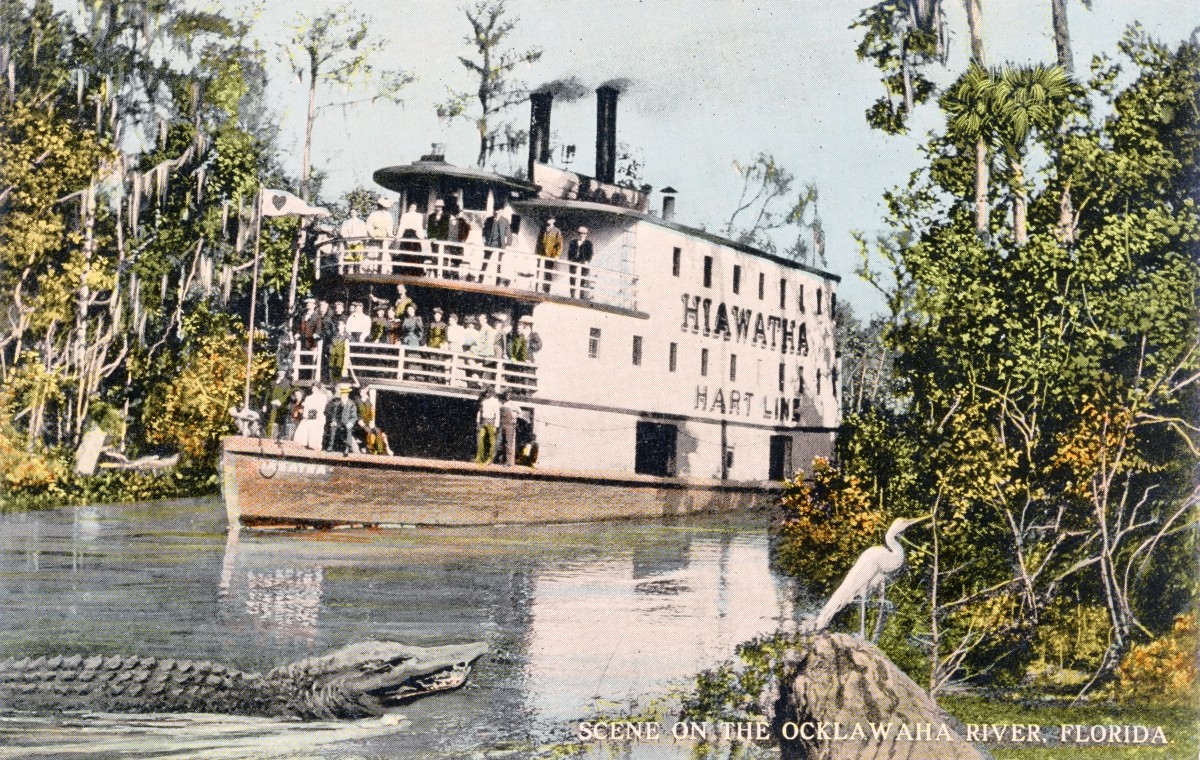
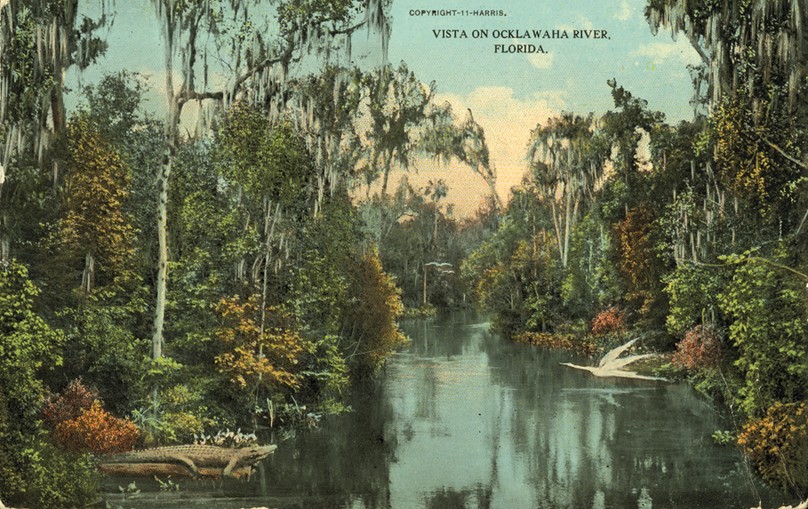
19th and early 20th century postcards reflect the adventurousness of steamboat travel on the Ocklawaha River. Click to enlarge.
Today, the Ocklawaha River is blocked by Kirkpatrick Dam and no longer navigable along its full length. This dam was completed in 1968 as part of an ill-fated attempt to create a Cross Florida Barge Canal. This was a project of the U.S. Army Corps of Engineers to create a shipping canal that bisected north Florida, connecting the Gulf and Atlantic. Due to significant environmental opposition, the project was halted in 1971 by President Richard Nixon and officially cancelled in 1990. A remnant of this project is the 13,000 acre artificial reservoir created by the impoundment of the Ocklawaha River at Kirkpatrick Dam. Environmental campaigns to remove the dam and return to a free-flowing Ocklawaha River have garnered broad public support.


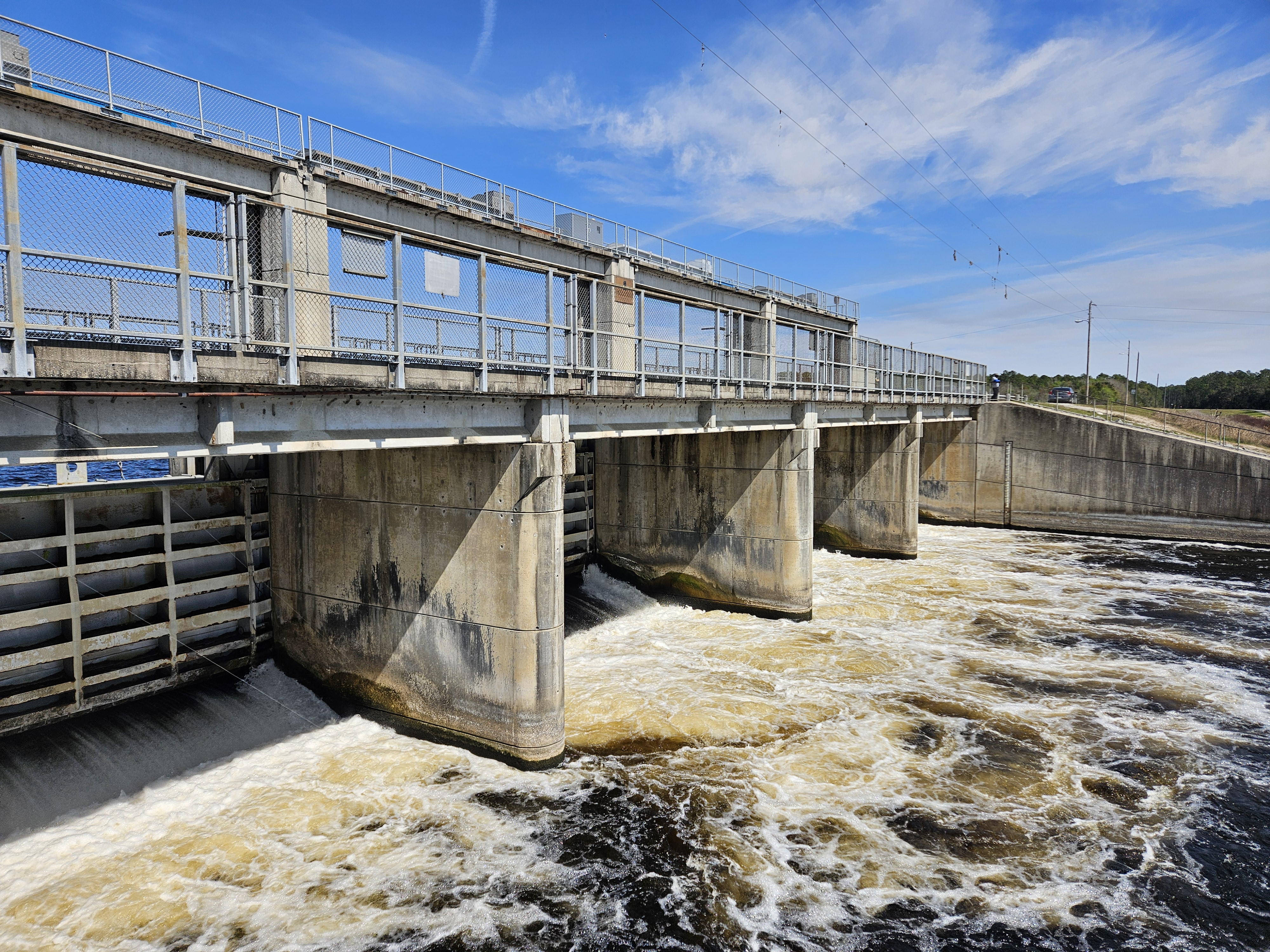
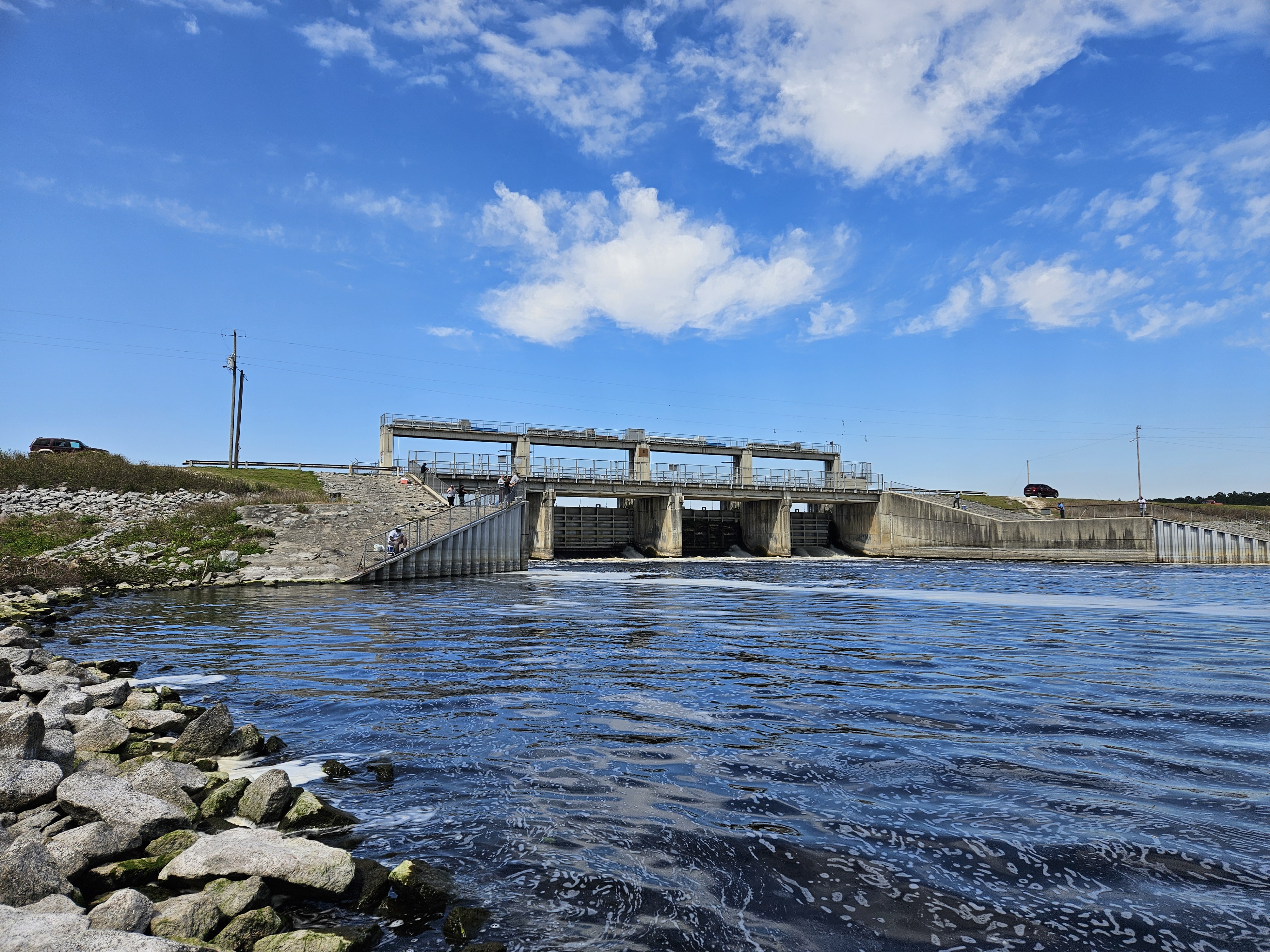
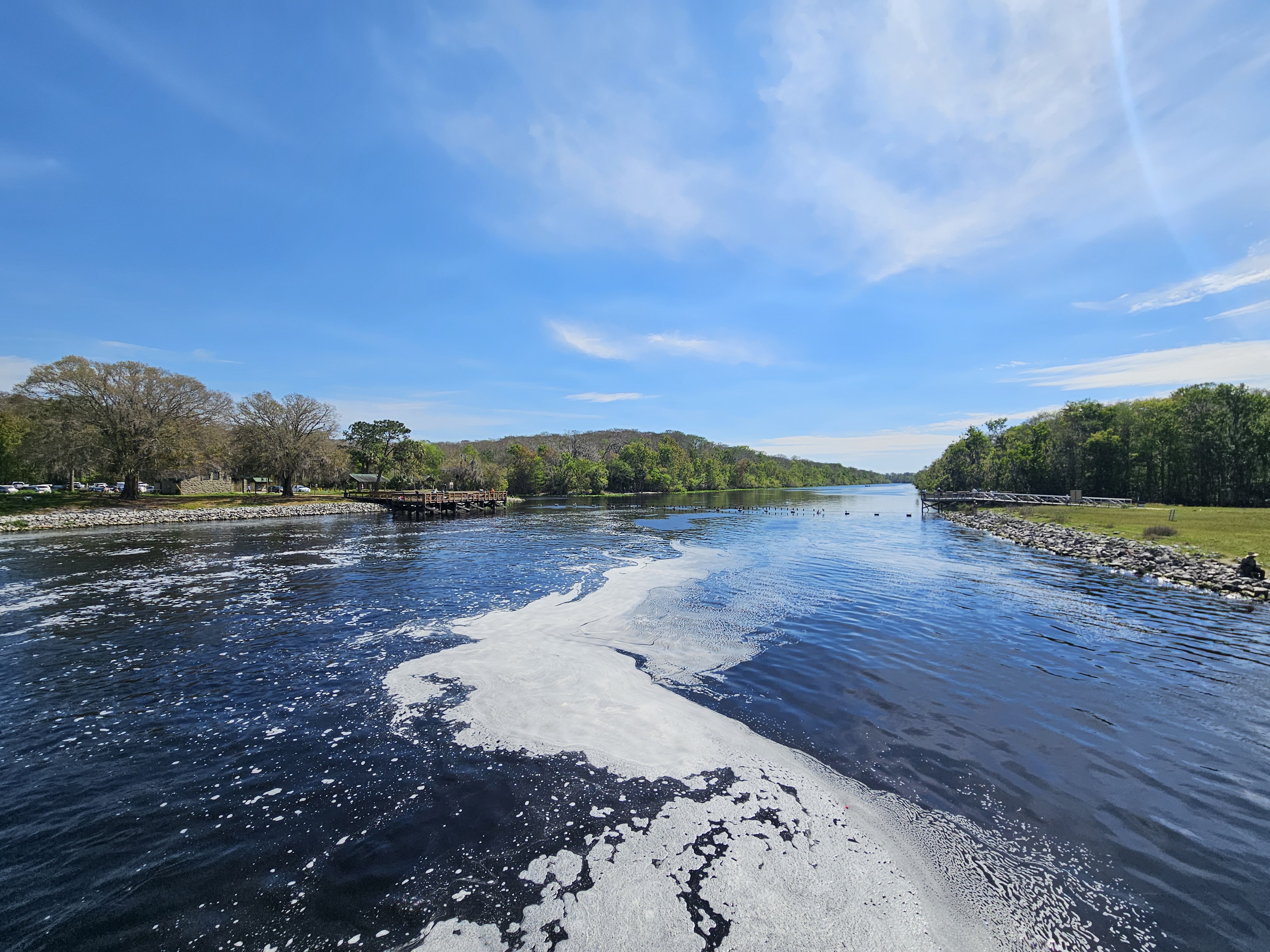
Kirkpatrick Dam, the tailrace (downstream), and Rodman reservoir (upstream). Click to enlarge photos.
Day at the Dam
All of the below photos were taken on March 1st, 2025 at Kirkpatrick Dam. Thousands of shad were found congregating below the dam. This attracted a variety of wildlife, although the highlight of the day was watching the Osprey (Pandion haliaetus).
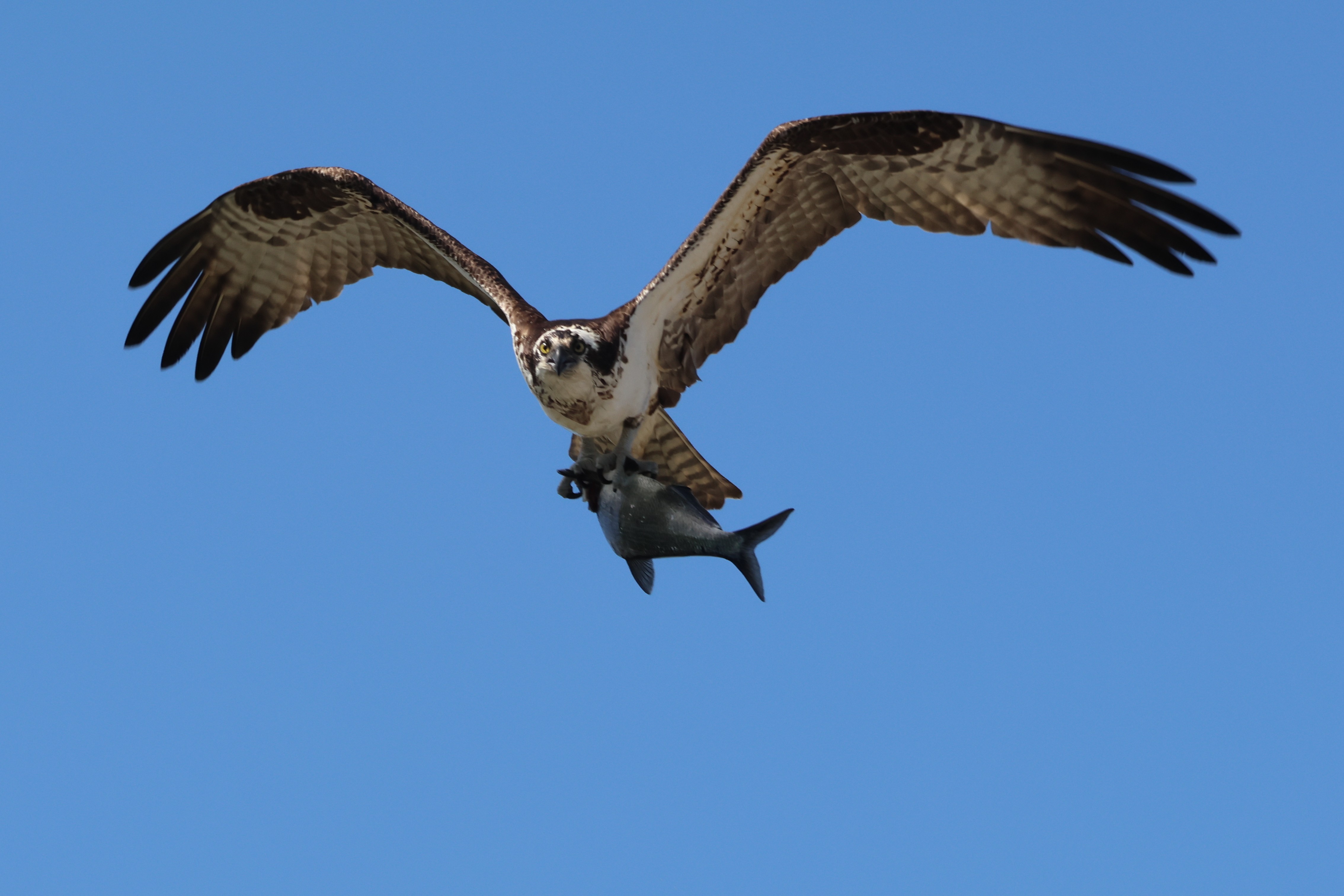


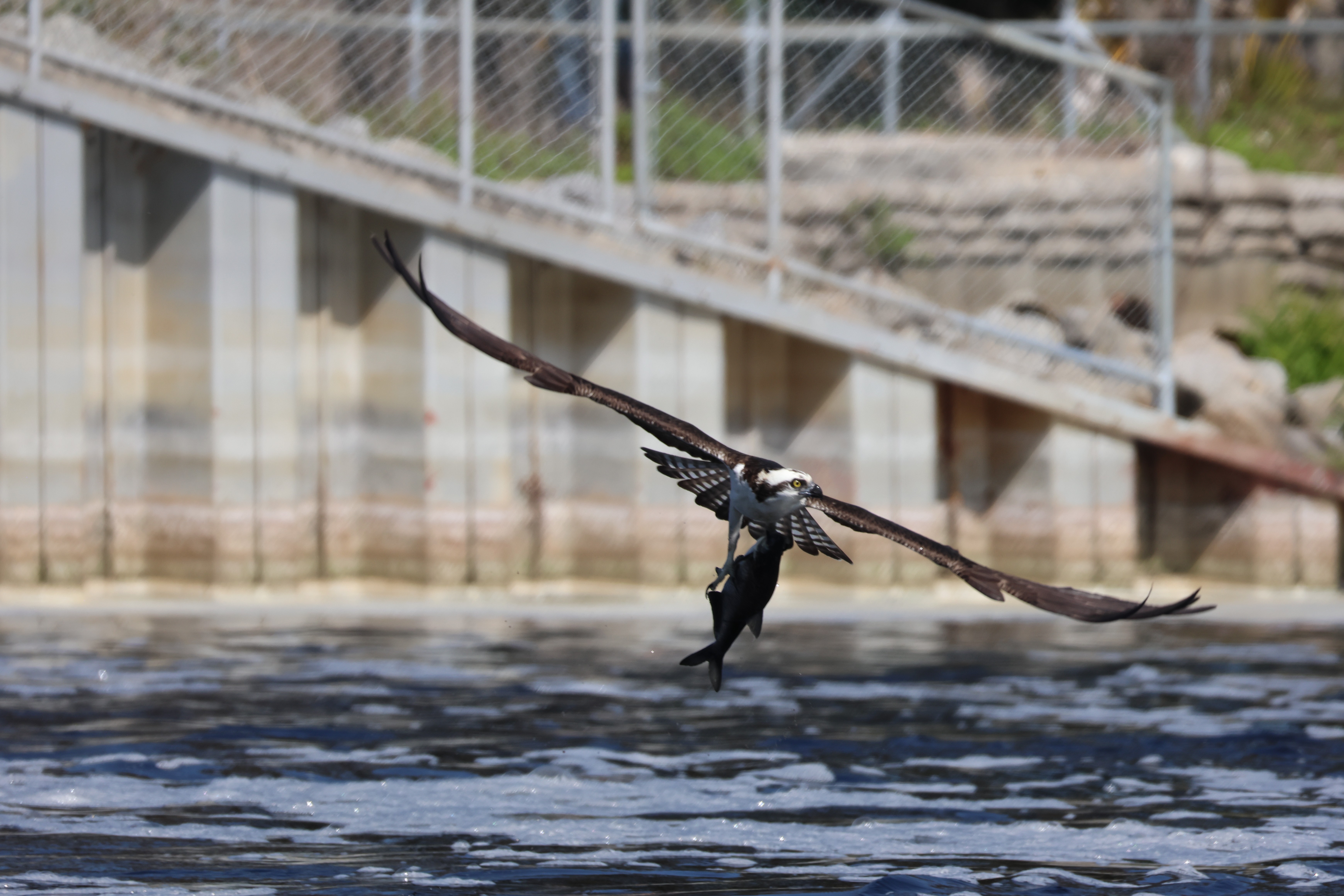

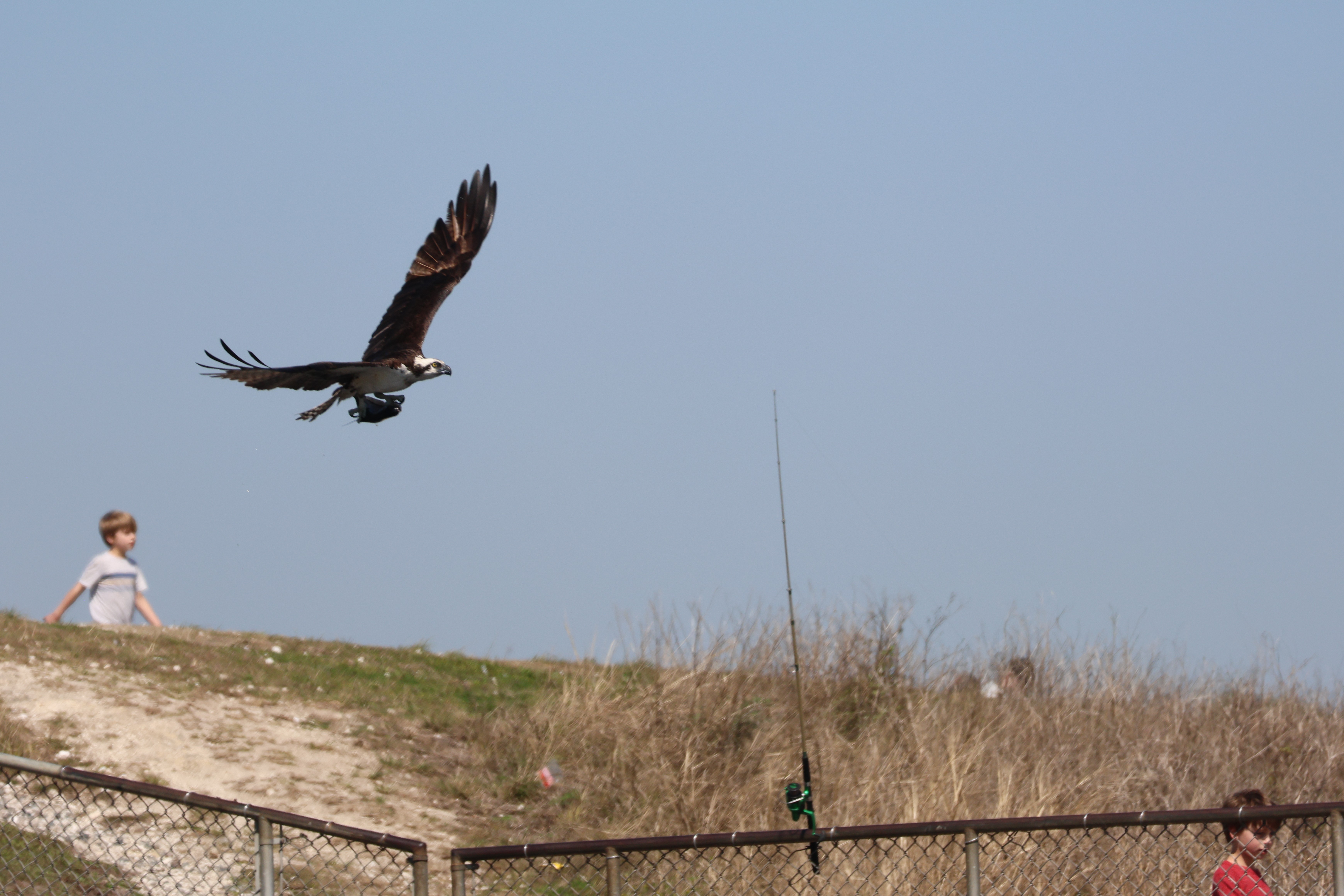
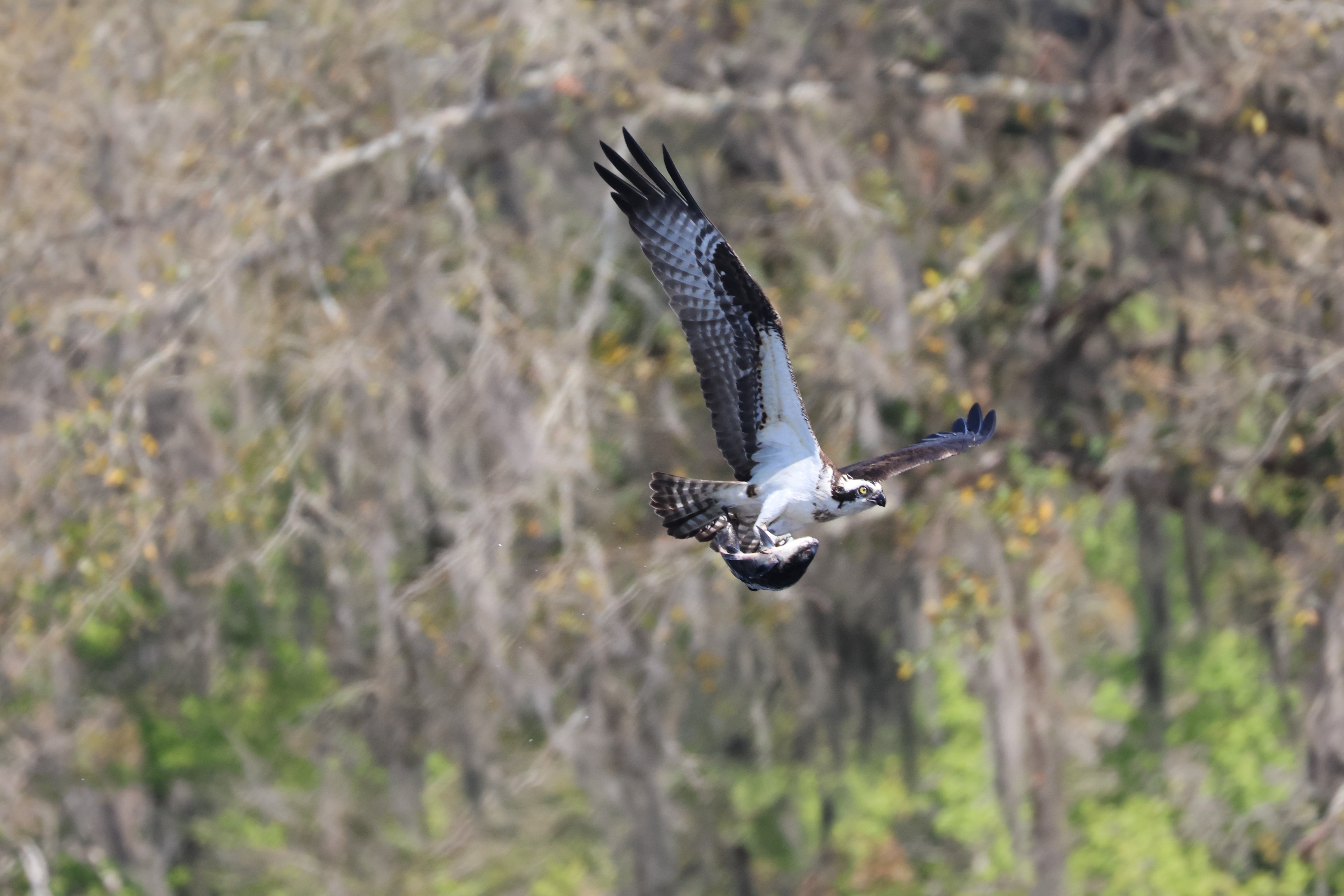
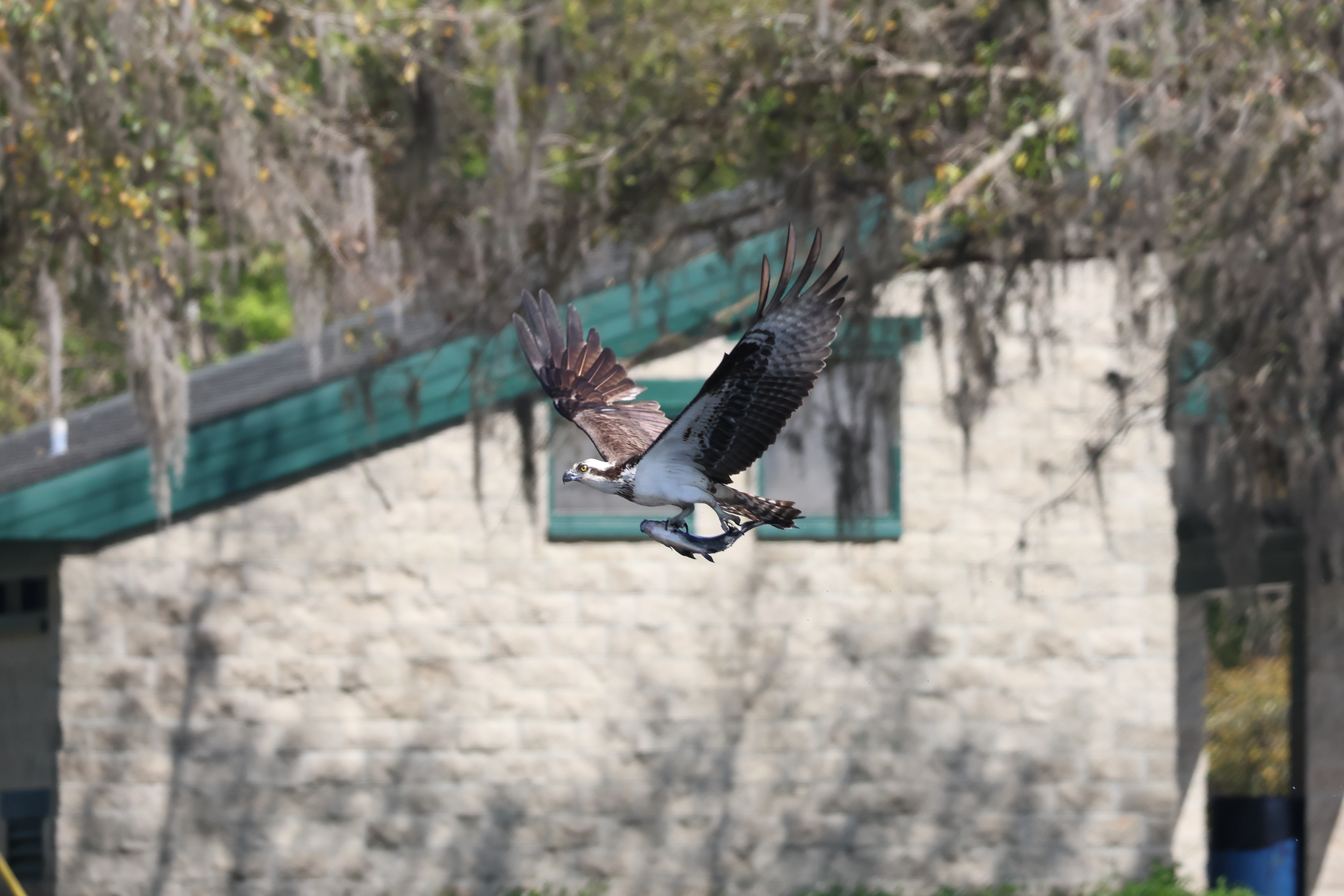
I managed to get quite a few photos of Osprey flying away with shad clutched in their talons. Click to enlarge photos.
In addition to getting many photos of Osprey flying away with shad, I also witnessed dozens of successful fish captures. At one point, five different Osprey were fishing. This entailed Osprey cruising at slow speed, from a height of around 100 feet, over the tailrace of the dam where the shad were congregated. When a target fish was spotted the Osprey would rapidly plunge, feet first, into the water. If successful, they would remain with the lower half of their body in the water and their wings spread on the surface, presumably manipulating the fish into a suitable position for takeoff. Then, with great effort, they would flap their wings and rise from the water with the unfortunate fish in their clutches. They would often make one or two passes flying across the dam, while carrying the fish, before landing in a tree to consume the fish.
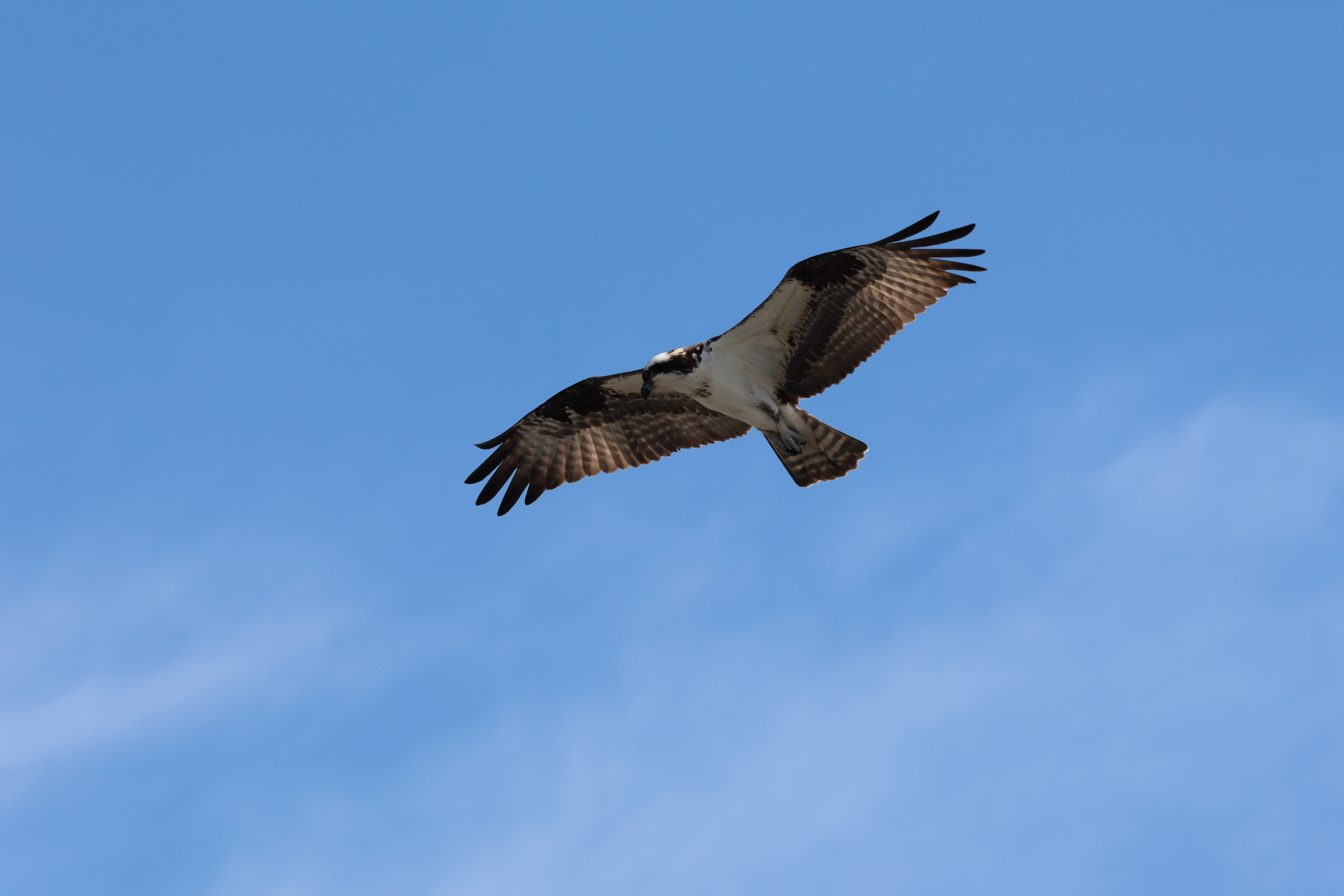


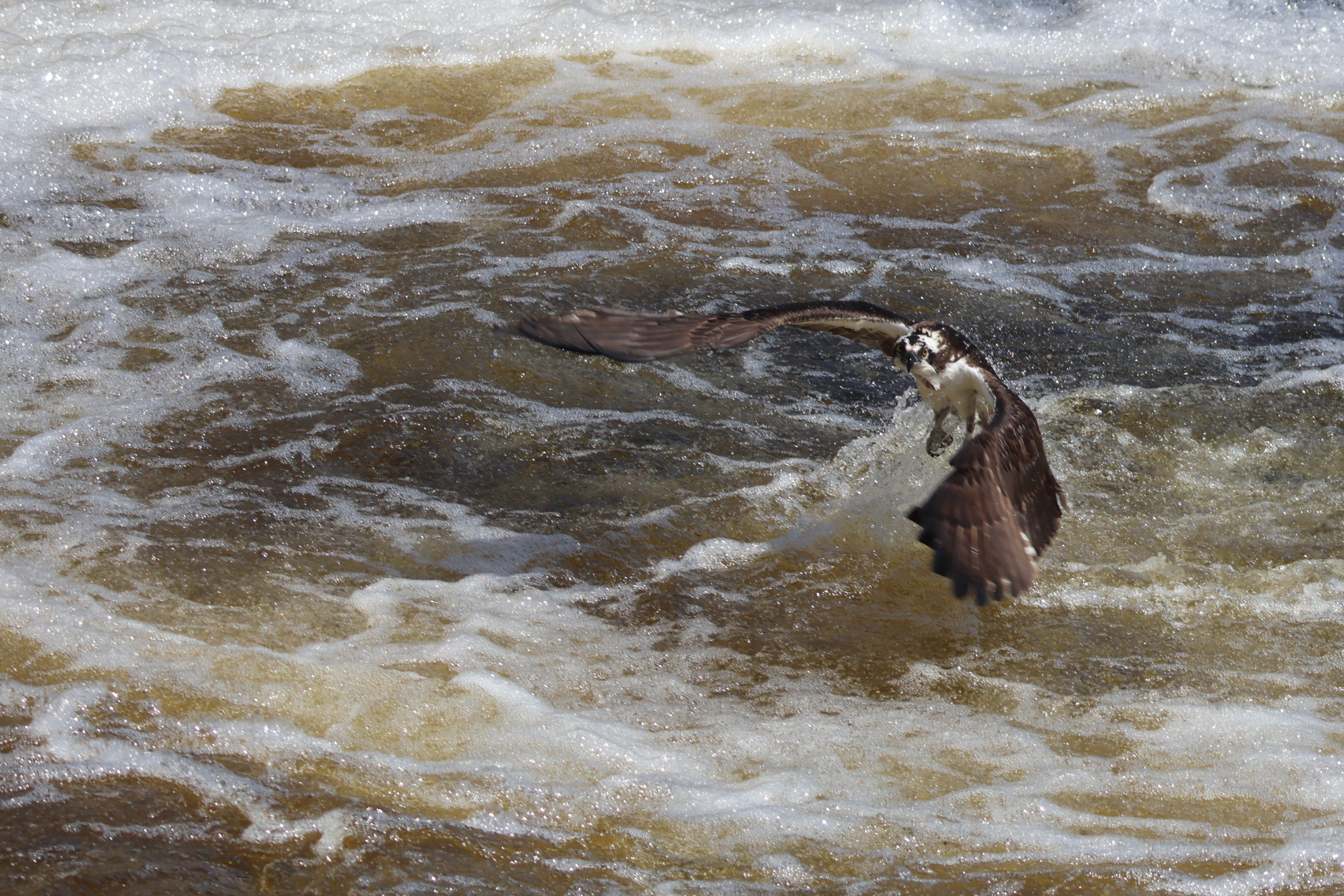
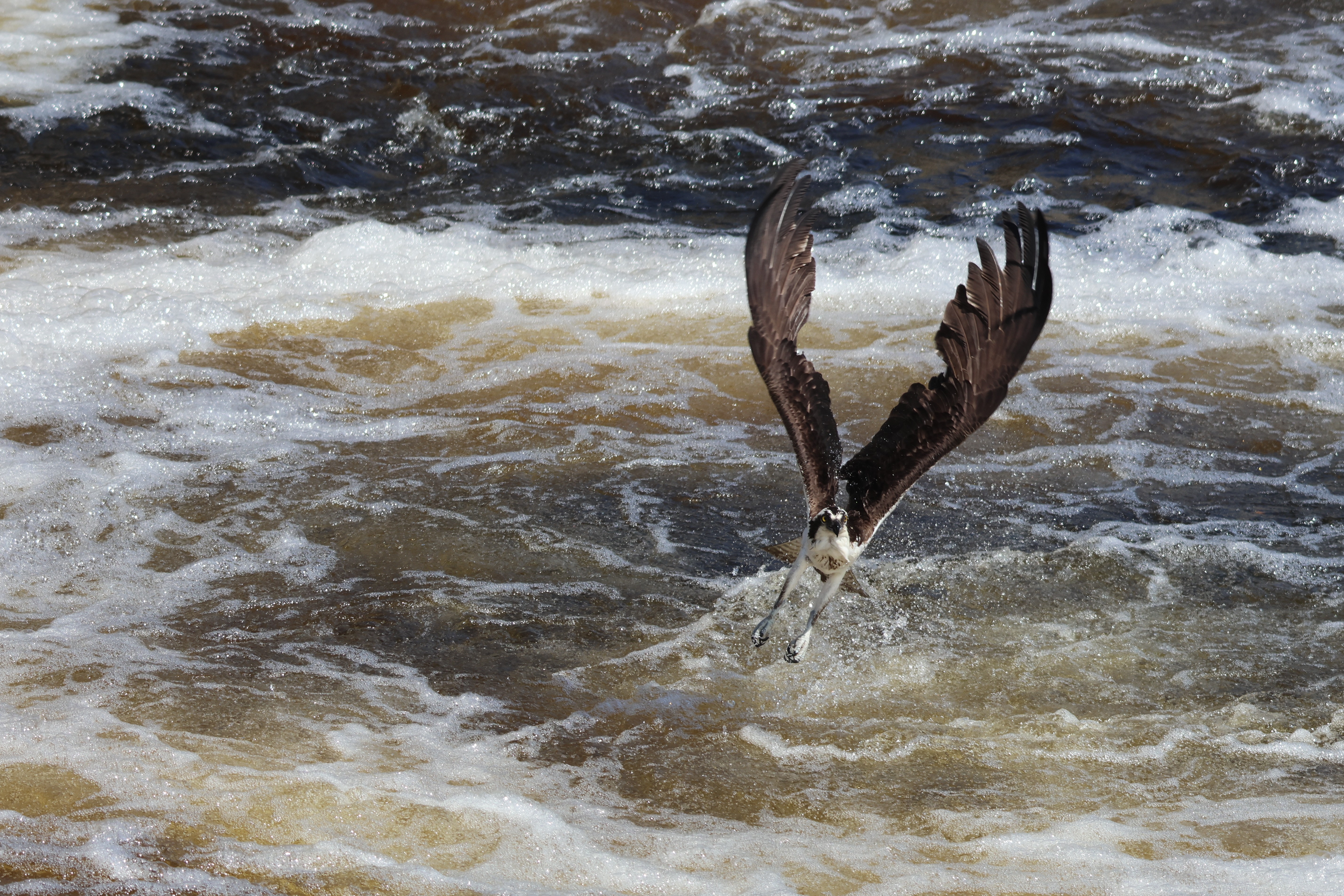
An Osprey looking for fish before plunging into the water below. This attempt was unsuccessful. Click to enlarge photos.

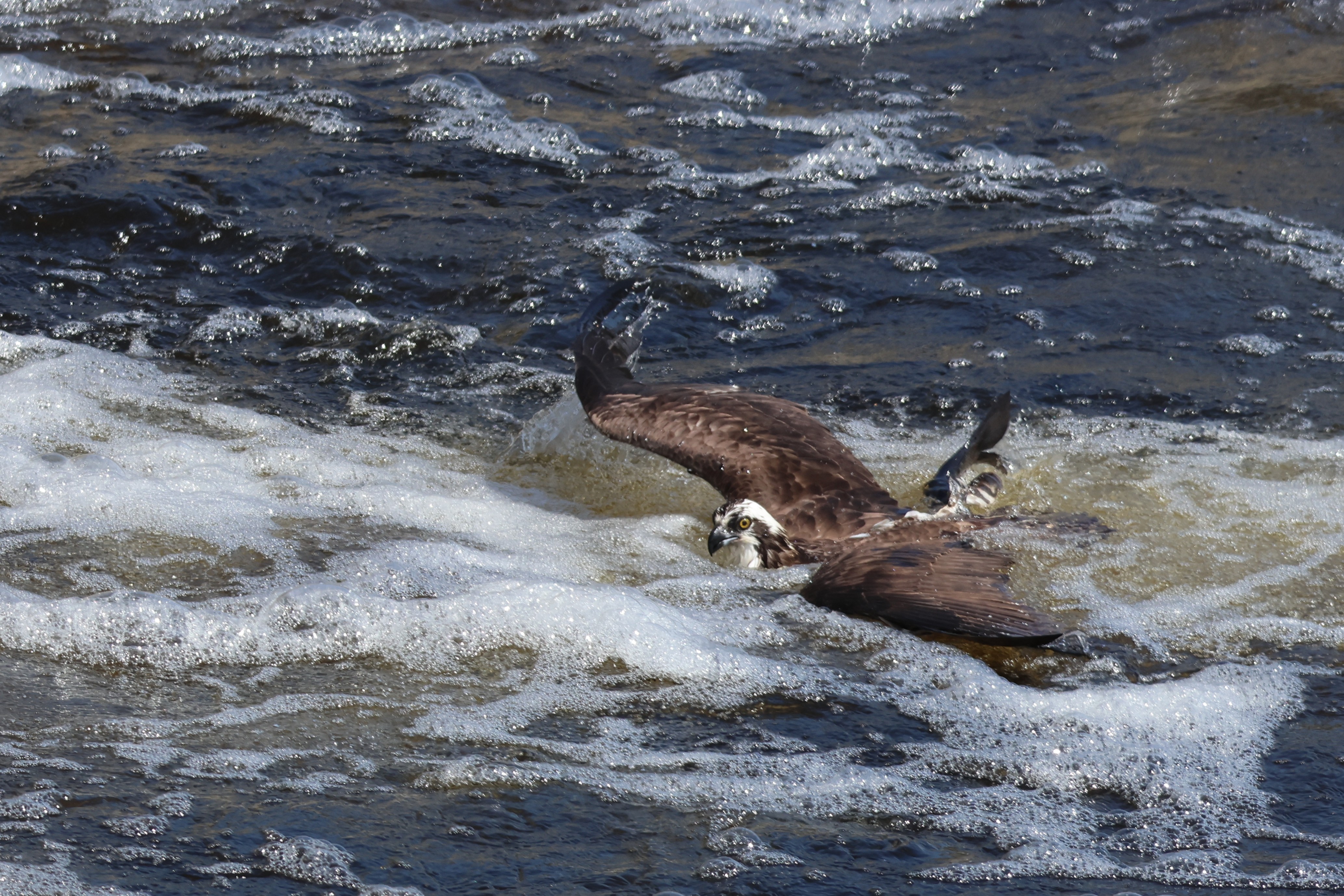

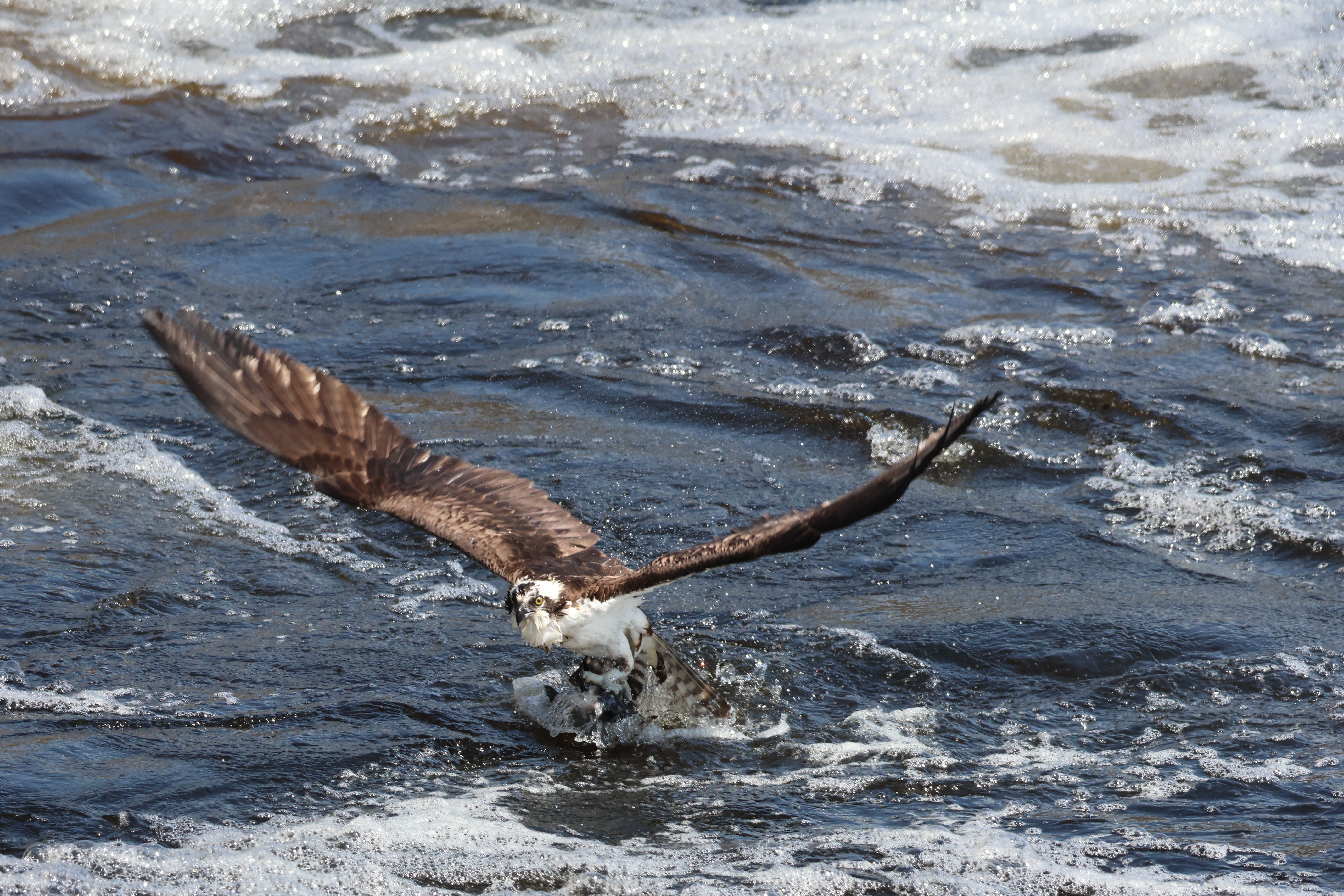

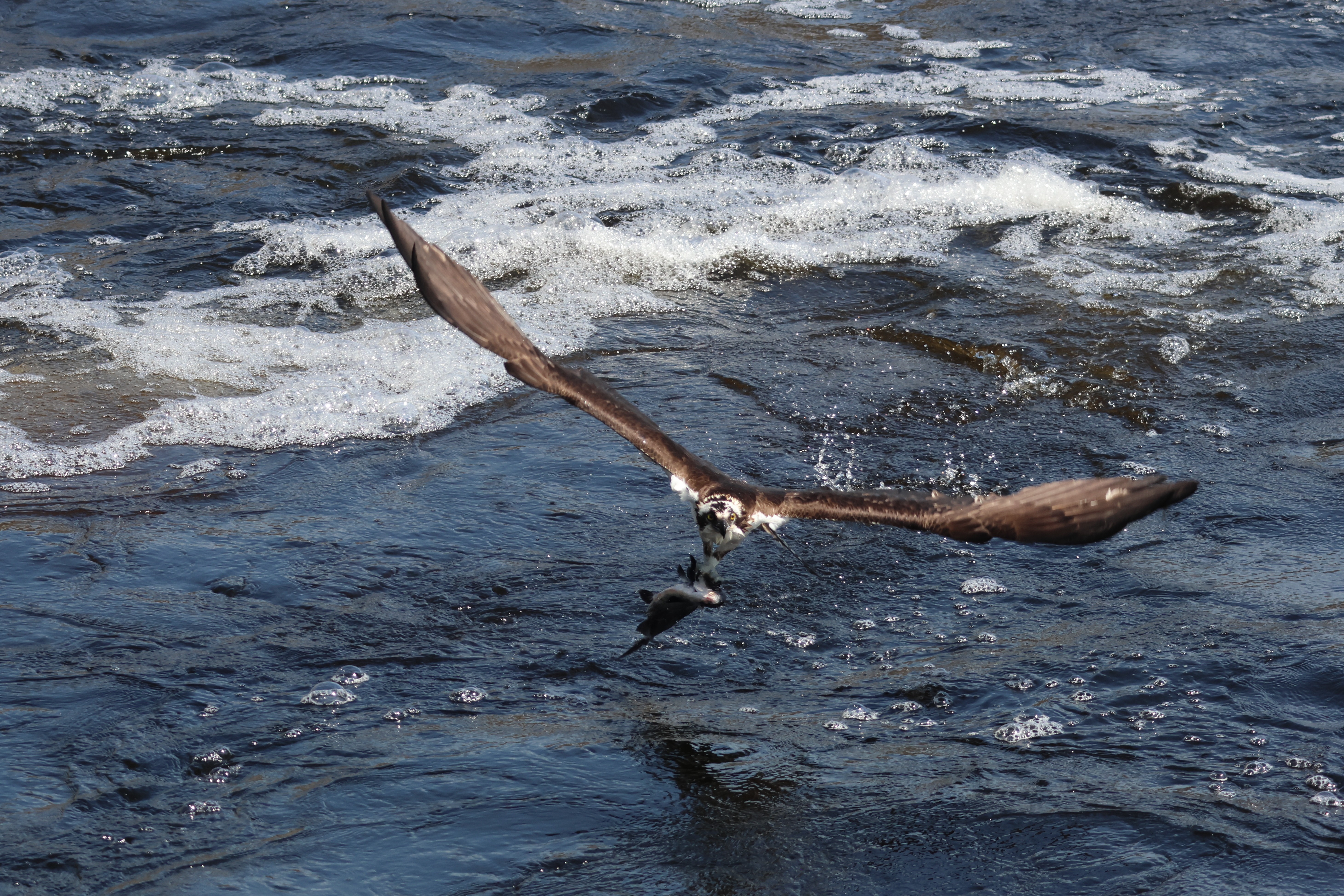
A successful fishing trip. I was surprised at how far the Osprey plunge into the water (the whole lower half of their body) and how long they remain in the water after grabbing a fish (up to a minute or so). They are not simply picking fish up off the surface and immediately flying away. Click to enlarge photos.


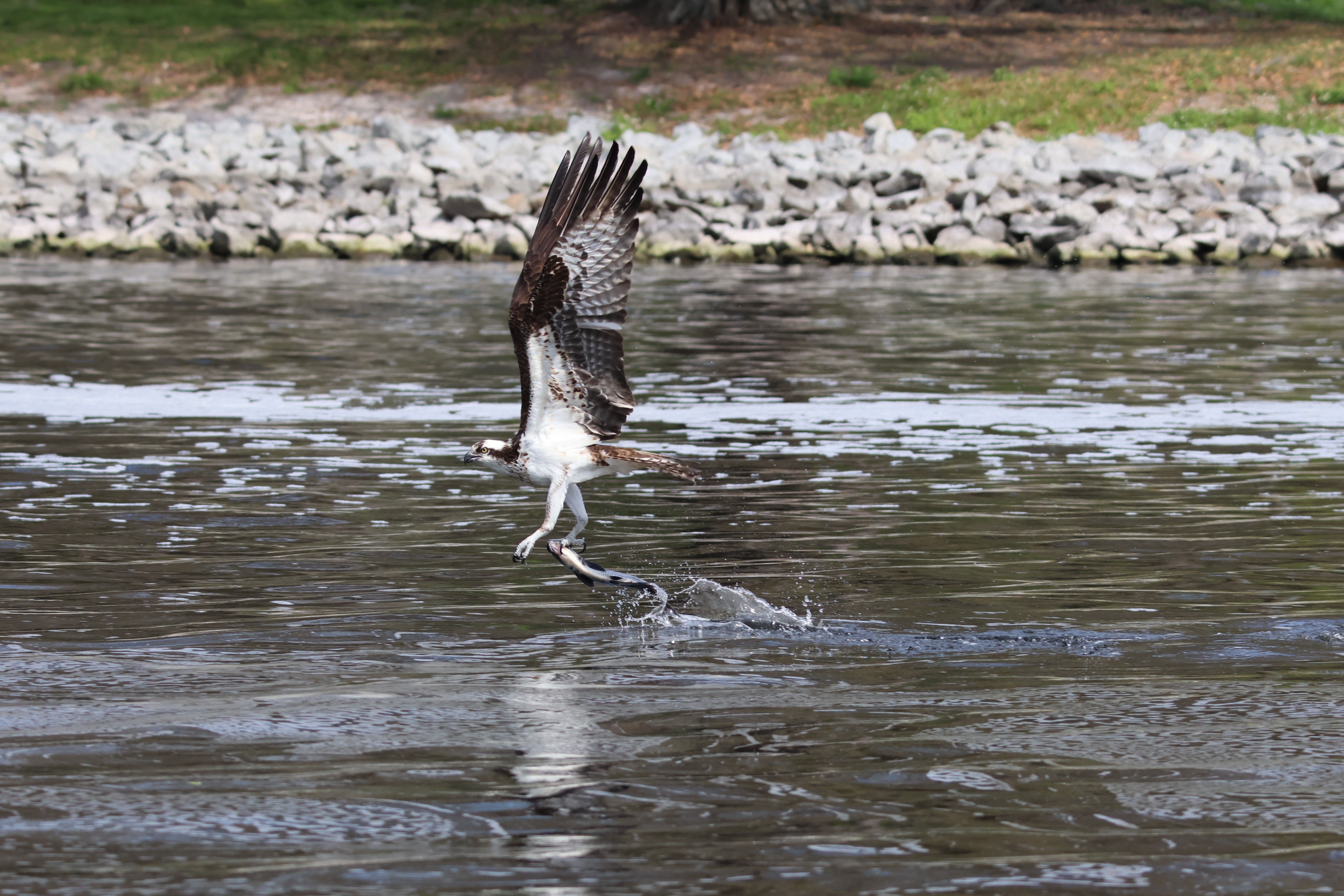

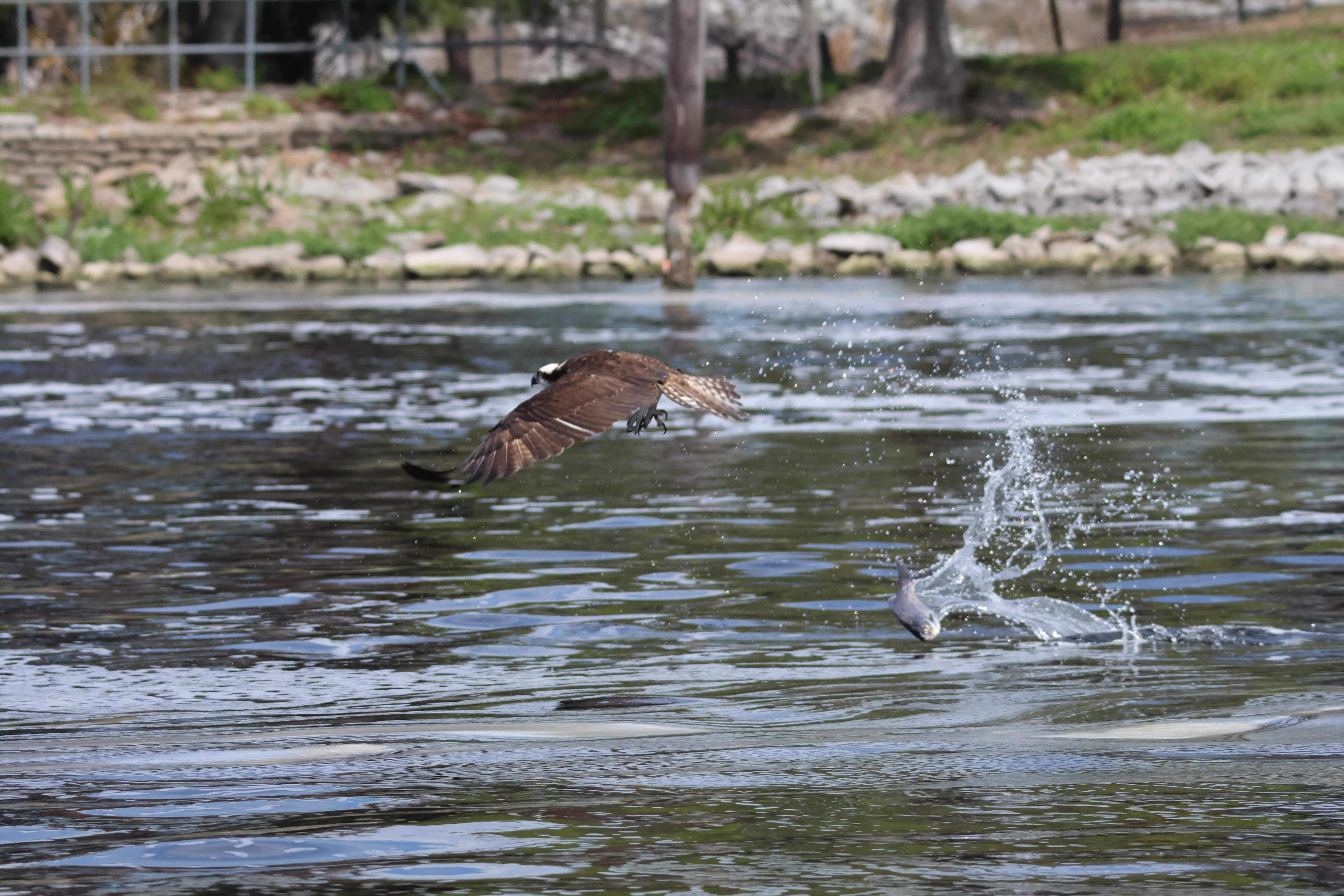
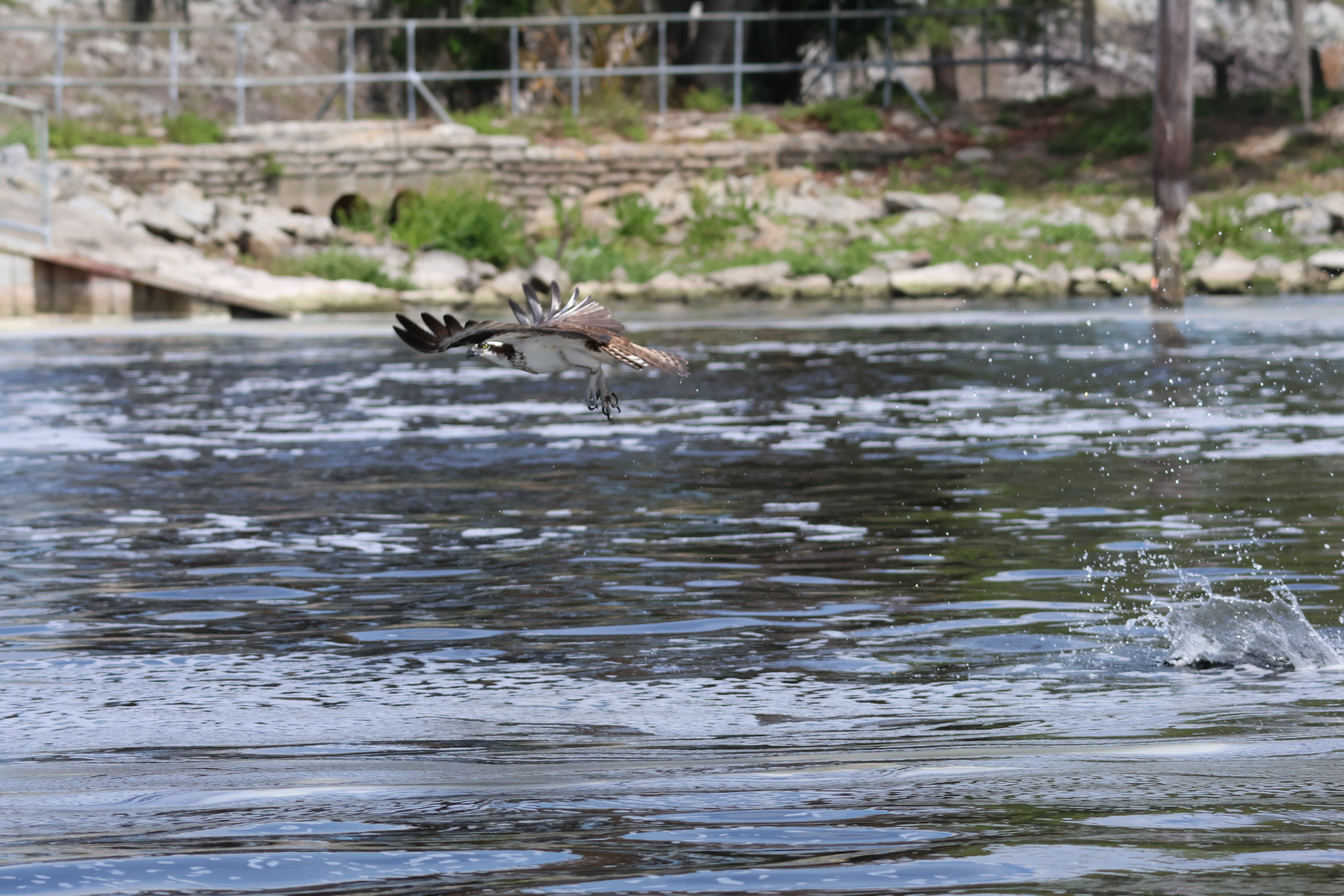
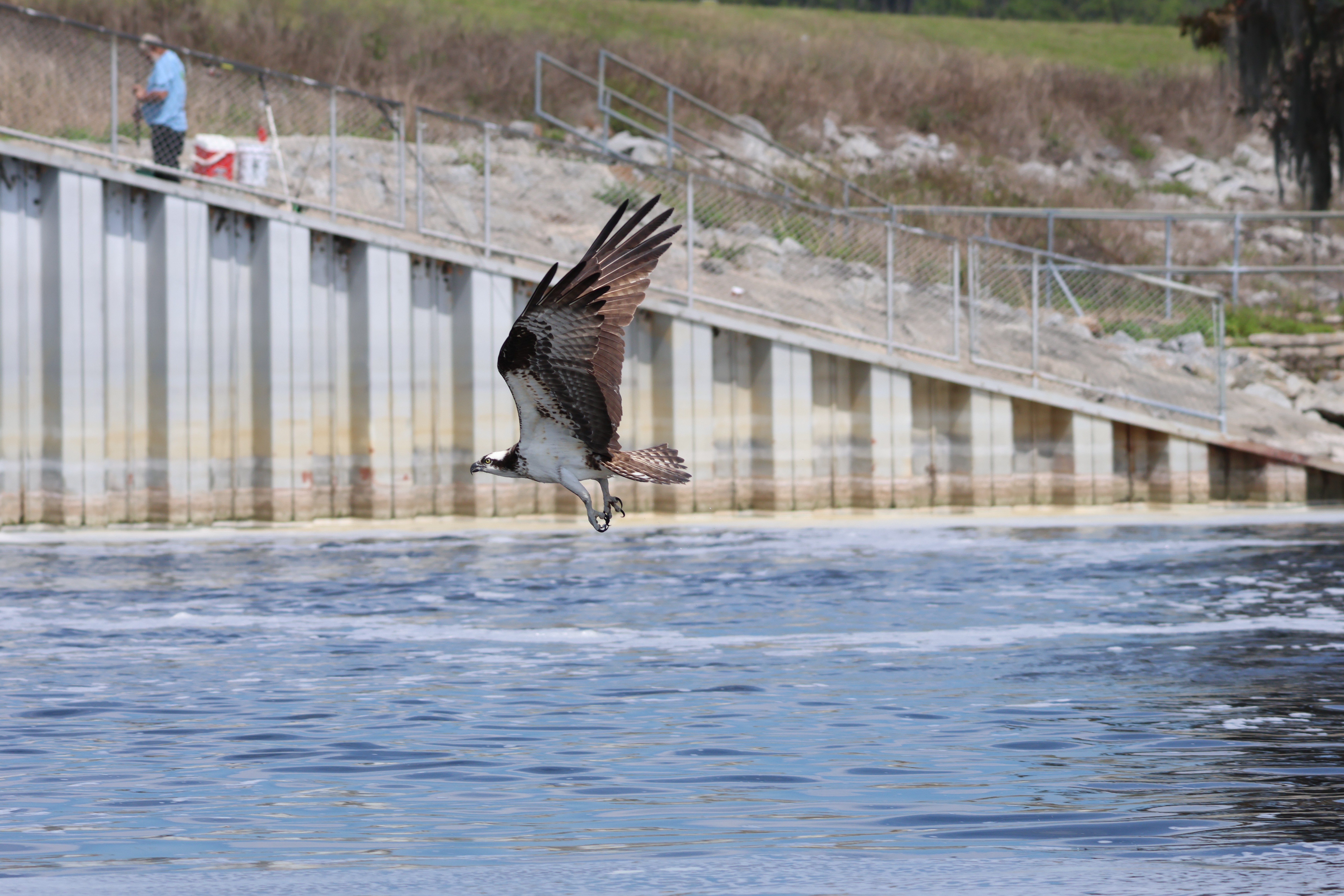
A successful fish capture, followed by a drop. Click to enlarge photos.
Besides Osprey, the other bird that was most common was the Double-crested cormorant (Nannopterum auritum). Many were found resting on a metal cable which prevented boats from getting too close to the dam. Also fish-eaters, Cormorants exhibit a totally different style of hunting compared to Osprey. Cormorants dive under the water, swim around, and capture fish with their bill. They then come to the surface in order to manipulate the fish into a position in which it can be swallowed whole. I saw many Cormorants capture and swallow fish. Interestingly, whenever one would emerge with a fish all the other nearby Cormorants would chase after it in an attempt to steal its fish.


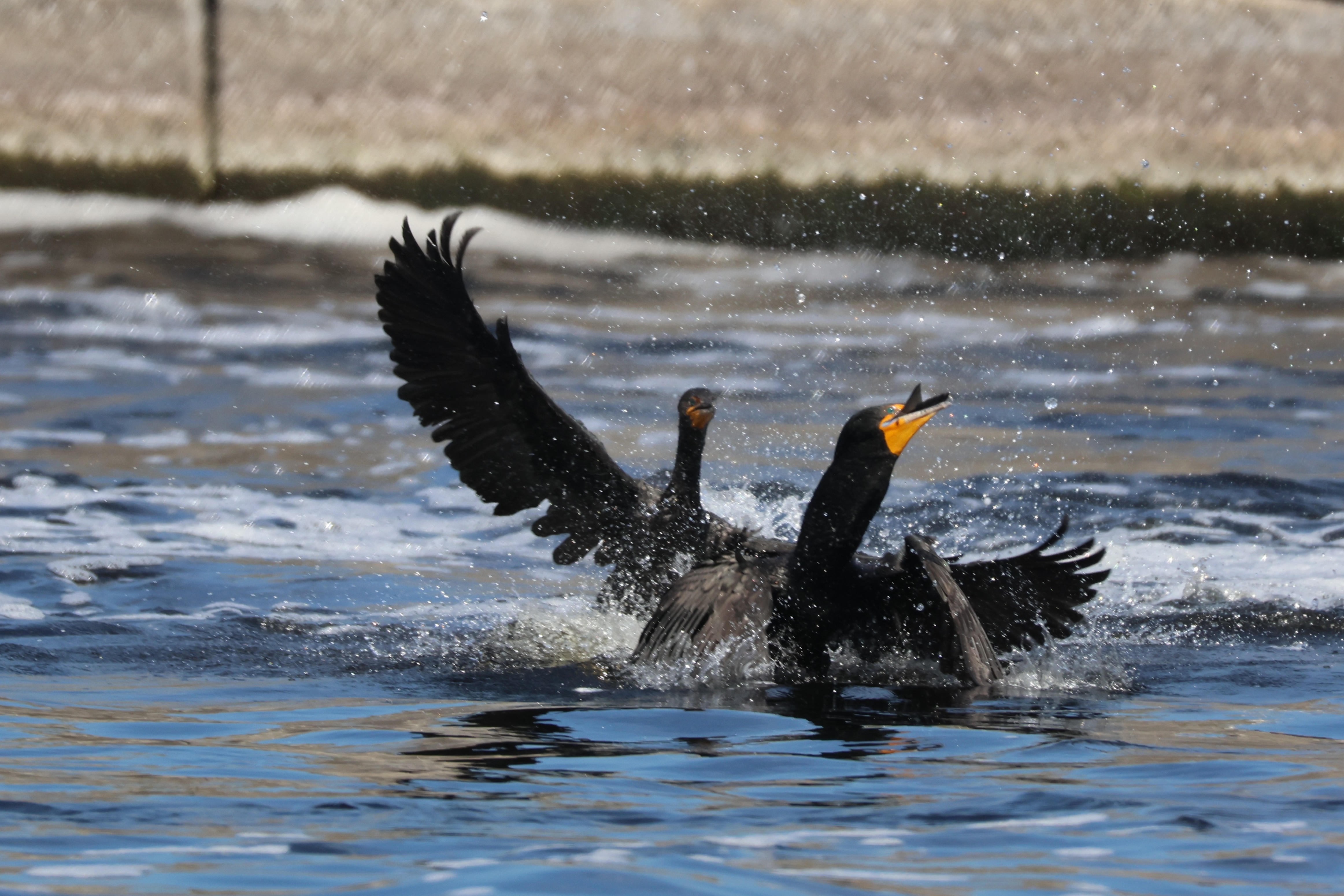
Double-crested cormorants were found either resting on a steel cable or fishing. Click to enlarge photos.
In addition to Osprey and Cormorants, I also saw a Great Blue Heron, a turtle, and a small alligator below the dam. Finally, although I was the only wildlife photographer, there were numerous people fishing on either side of the dam.
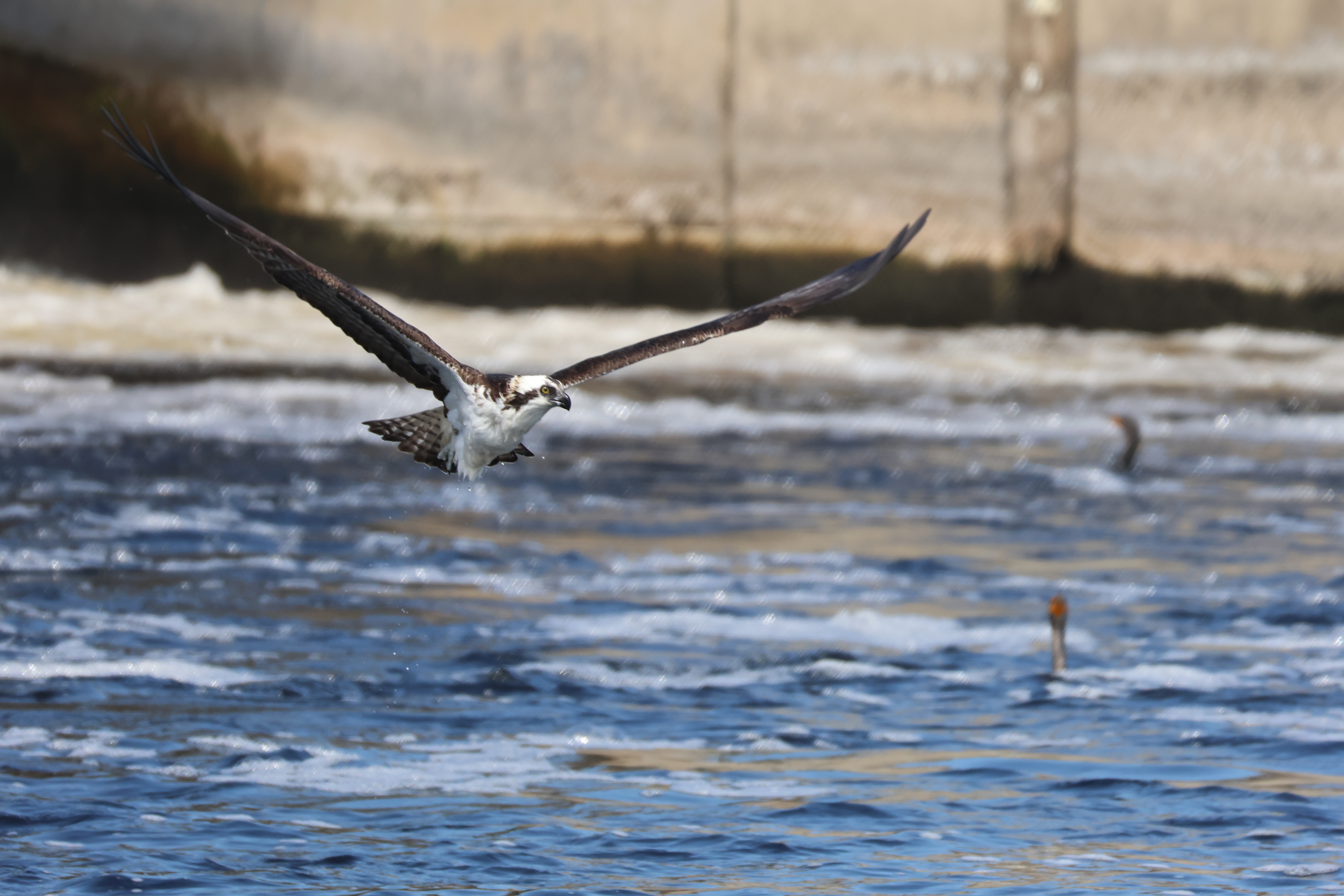


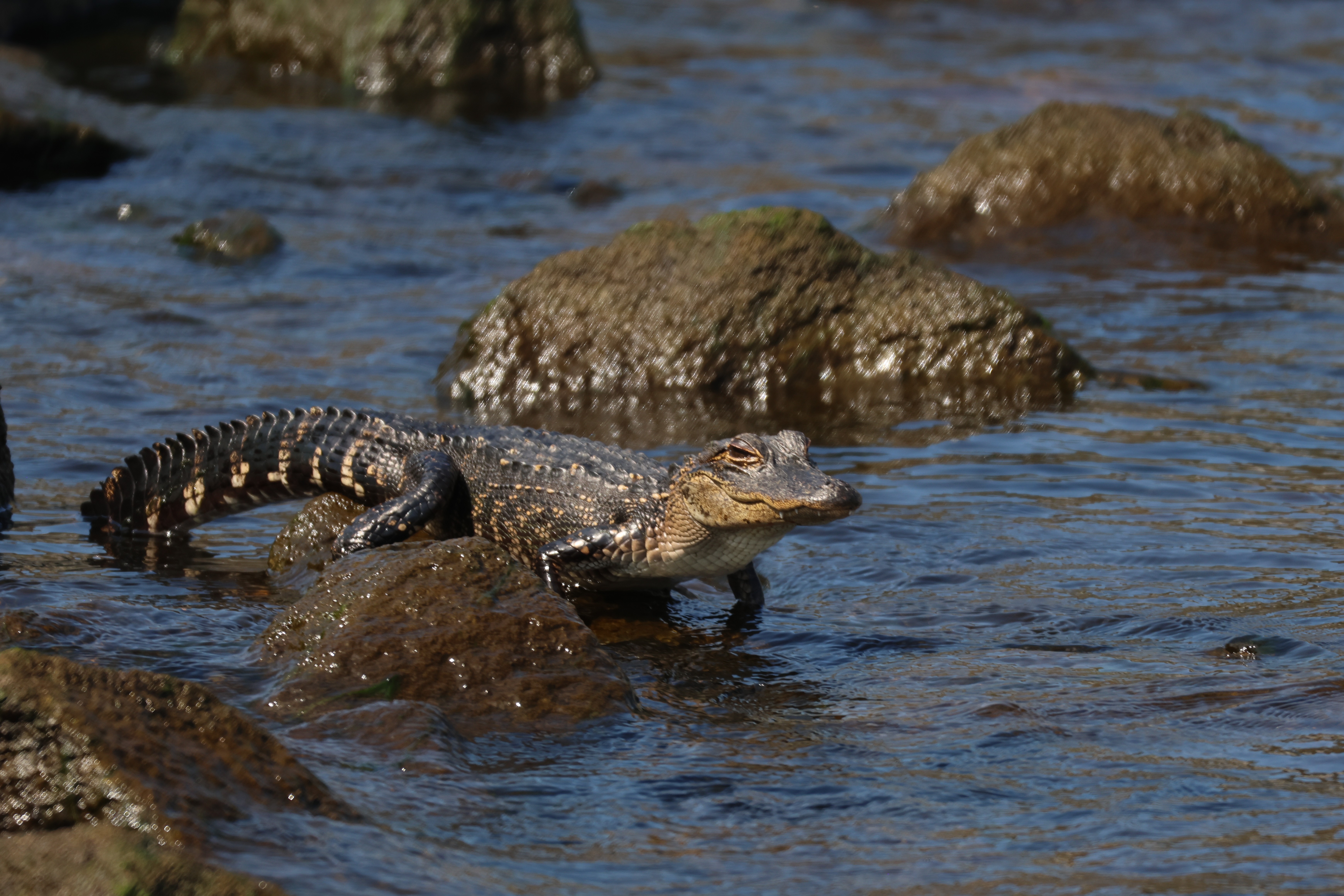

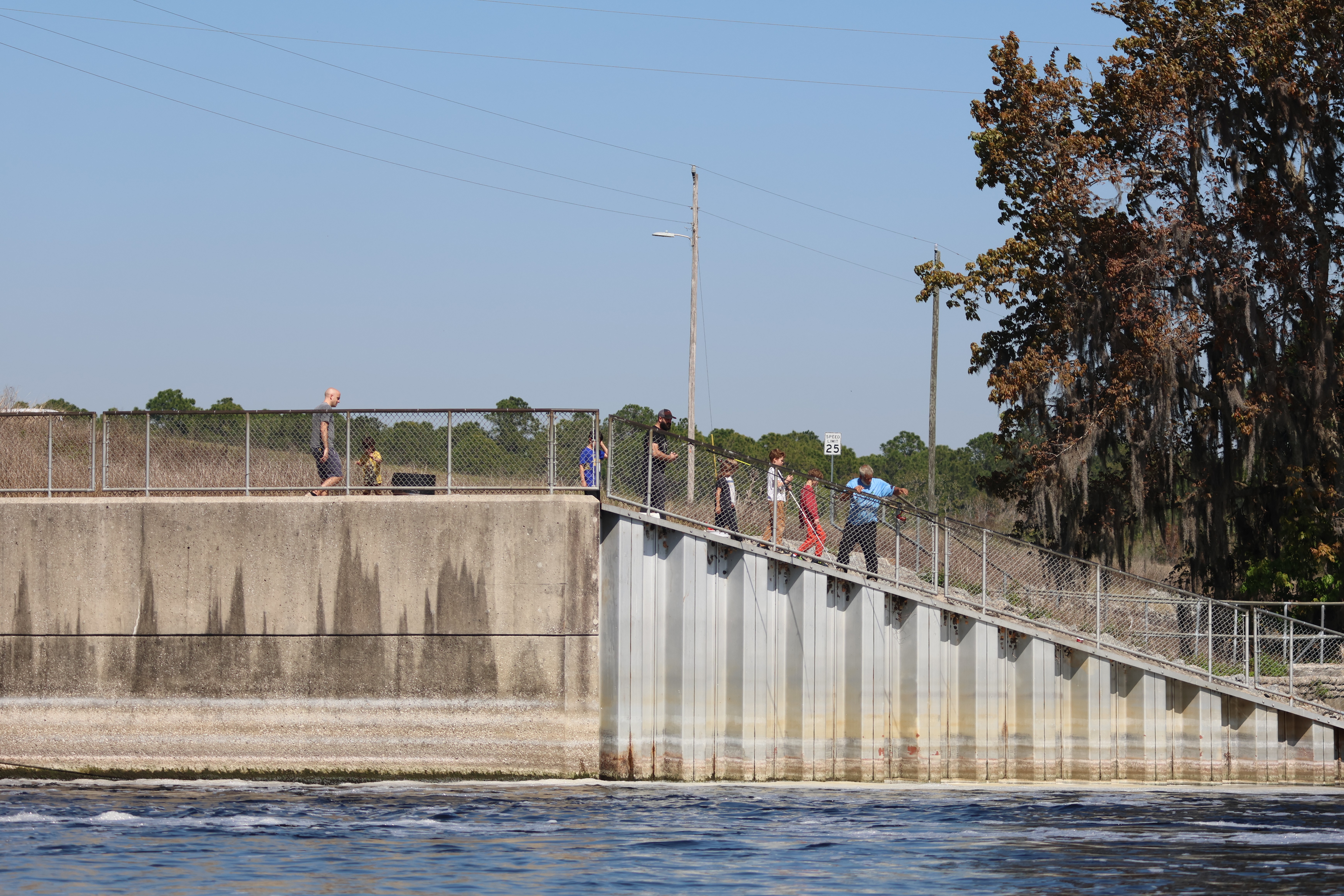
The fish-eating wildlife included Osprey, Double-crested cormorants, Great Blue Heron, a turtle, an American alligator, and humans. Click to enlarge photos.
 Reason and Nature