What coins depict – people, animals, plants, events, places, achievements, symbols – tell the story of civilizations and what they value. The world’s oldest known coin was produced in the kingdom of Lydia (modern day Turkey) over 2,500 years ago. It depicts a lion.

Coins depicting animals have been a common theme in subsequent centuries, right up to the present day. About three years ago I began collecting these world animal coins. I got the idea from my former postdoc advisor at UC-Irvine, John Avise. I cannot remember the exact context, but he mentioned to me that he collects coins, from any country, that depict animals. I found this really intriguing as we both have a strong interest in natural history and animals of all sorts, and growing-up I collected various U.S. coins (but not really foreign coins). A few years after this conversation, while living in Maryland, I visited a coin shop in Gettysburg, Pennsylvania. Here, there was a dish of foreign coins on the counter. I took a look and immediately noticed a stunning coin depicting a big cat. I got it for only a few dollars and from thereafter was hooked.
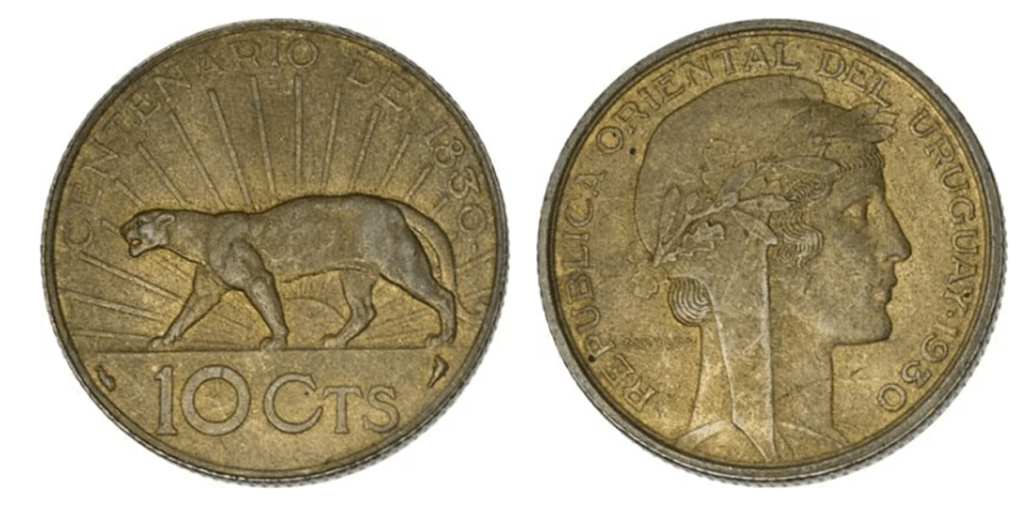
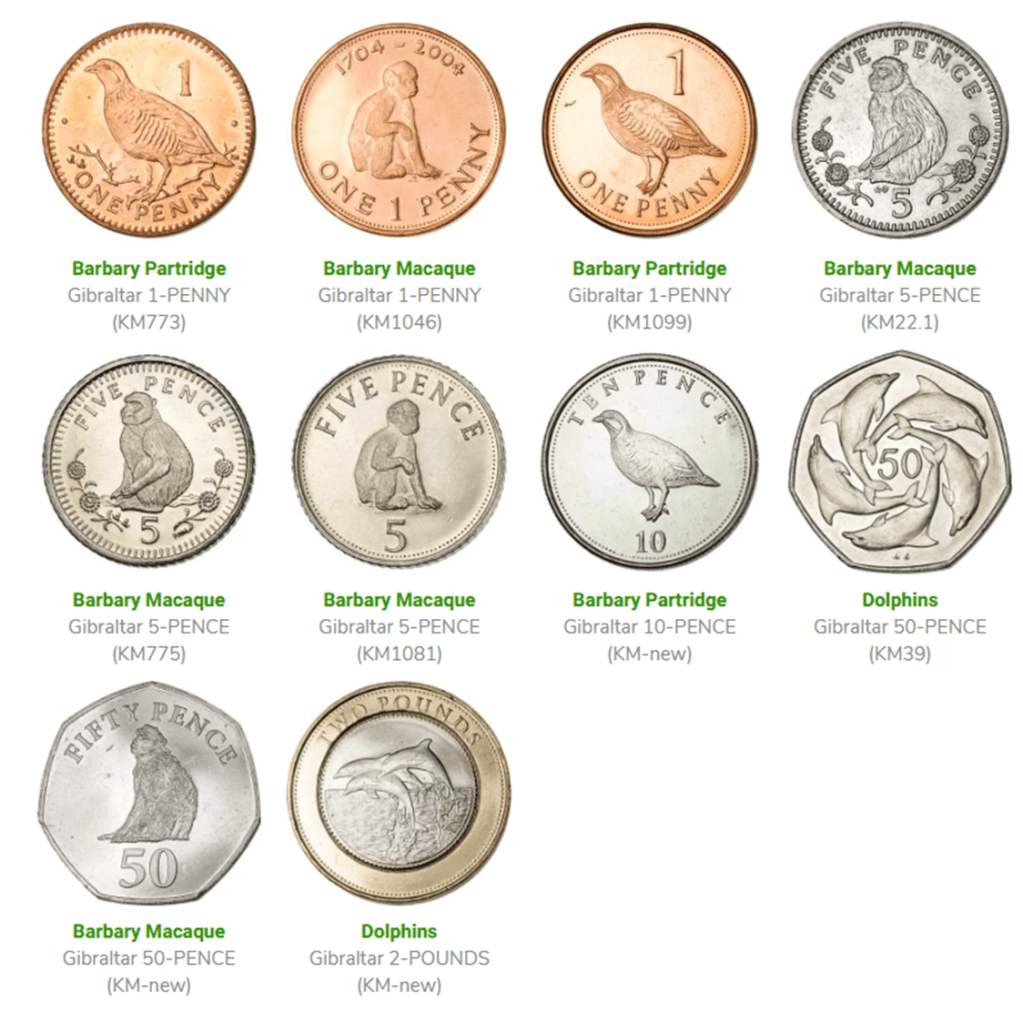
I began collecting world animal coins in earnest after visiting Europe in 2023. Here, I walked around many cities that had street markets. Often one or two sellers at these markets had coins for sale from various countries. On this same trip, I visited several small countries, such as Gibraltar, which have unique coins (some of which depict animals).
Back in the U.S.A. I have found the best way to add to my collection is go to coin shows. Of course, most dealers specialize on American coins but at each show there are usually at least a few that have foreign coins. Often these foreign coins are loose in a big container and sold for cheap, almost as an afterthought. Looking through these bargain bins of foreign coins can feel like a treasure hunt. To date, my most exciting find in one of these ‘bargain bins’ was a 1926 coin from Greenland depicting a polar bear. At the time I was rather new to collecting world animal coins and did not even know that Greenland had any coins. It turns out this coin was minted for only a single year (1926) in Denmark, when Greenland was a colony of Denmark. Only about 196,000 were produced.

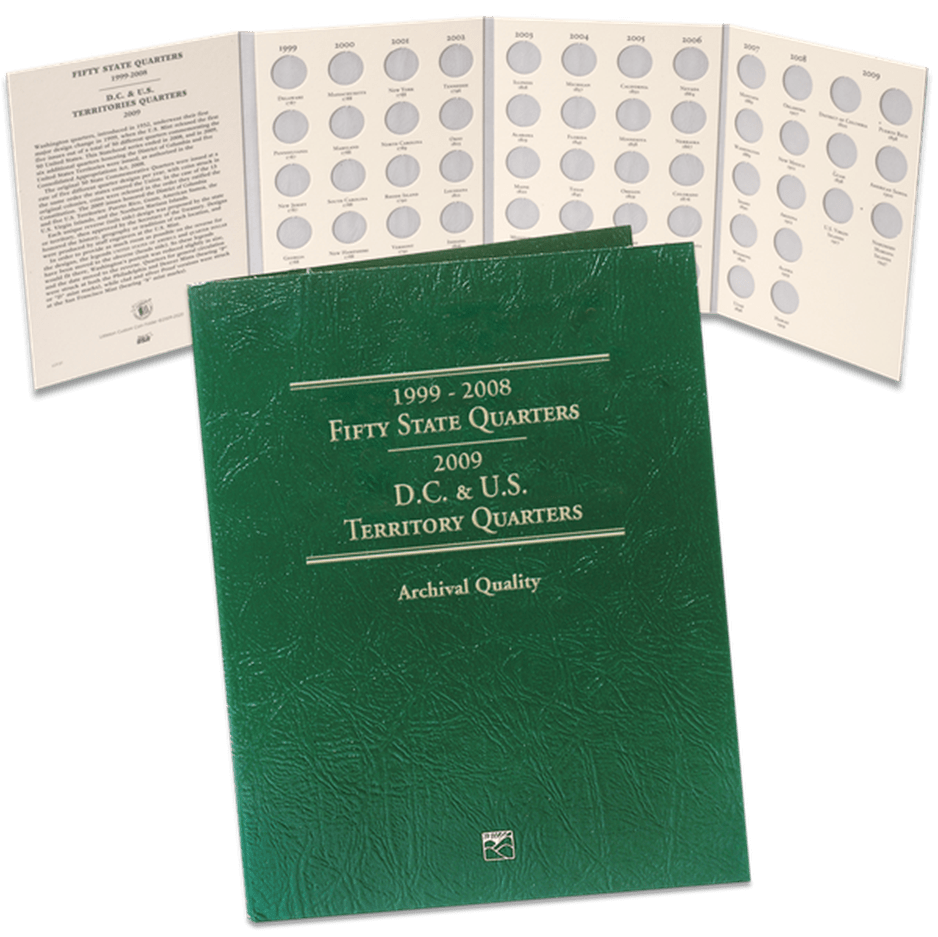
Most coin collectors focus on coins of a particular country and of a particular series. In this case you know at the outset exactly what coins you need to complete your collection. For example, if you collect U.S. buffalo nickels then you know they were minted from 1913 to 1938, and when the different mint marks and varieties are taken into account, you would need 64 coins to complete the series. If you collect U.S. state quarters, then you know there are 50 quarters (one for each of the fifty states), plus 6 more from Washington D.C. and the U.S. Territories of Puerto Rico, Guam, American Samoa, the U.S. Virgin Islands, and the Northern Mariana Islands. Each of these quarters were produced at both the Philadelphia and Denver mints giving a total of 112 quarters. You can buy coin folders with slots for each of these 112 quarters, and then it is simply a matter of acquiring all of them. There are no real surprises.
Collecting world animal coins is more open ended. One doesn’t know every coin one needs to complete the collection, as there is no universal and complete list of all animal coins the world over. What’s more, new coins are continuously being minted and released in the world’s 195 countries. This makes things interesting because you are continuously surprised by new coins that you have never seen before, or even knew existed. It also means it is helpful to set some parameters for your collection. I focus on circulation coins, and not commemorative or proof coins. Circulation coins are those that are legal tender and produced to enter circulation and be used for everyday transactions. Commemorative coins, not meant for circulation, often commemorate a special event and are designed to be sold well above face value in order to make money for the country minting them. They are typically large in size and made of precious metals such as gold, silver, or platinum. An example would be the American Silver Eagle, a one-ounce coin minted every year and made of 99.9% Pure Silver. Proof coins have a mirror-like finish and are often sold in special annual sets; they are also not meant to enter circulation. In addition to focusing on circulation coins, I focus on newer coins (from about 1900 to the present), and coins with realistic animal designs. Ideally, I’d like to get one representative specimen of each animal coin, preferably in uncirculated condition (i.e. with very little wear).
The question quickly arises as to what animal coins exist and how many? Soon after beginning to collect world animal coins, I found a website called Daniel’s Coin Zoo. This site contains the most complete cataloging that I have seen, complete with pictures of each coin. It is a well-organized site, and you can search by country or taxonomic group (i.e. mammals, birds, reptiles, etc.) and see what coins exist. I have often used this site as a reference when researching coins that I have purchased, or to see what interesting coins are available for various countries and of various types of animals (i.e. to help develop a search image).
Some interesting patterns are evident regarding which animals are most commonly represented on coins, and which are not. For example, coins depicting mammals and birds are more common than those depicting fish, reptiles, amphibians, and invertebrates. I find these patterns fascinating and therefore decided to do some analyses based on the fairly complete data available on the Daniel’s Coin Zoo website.
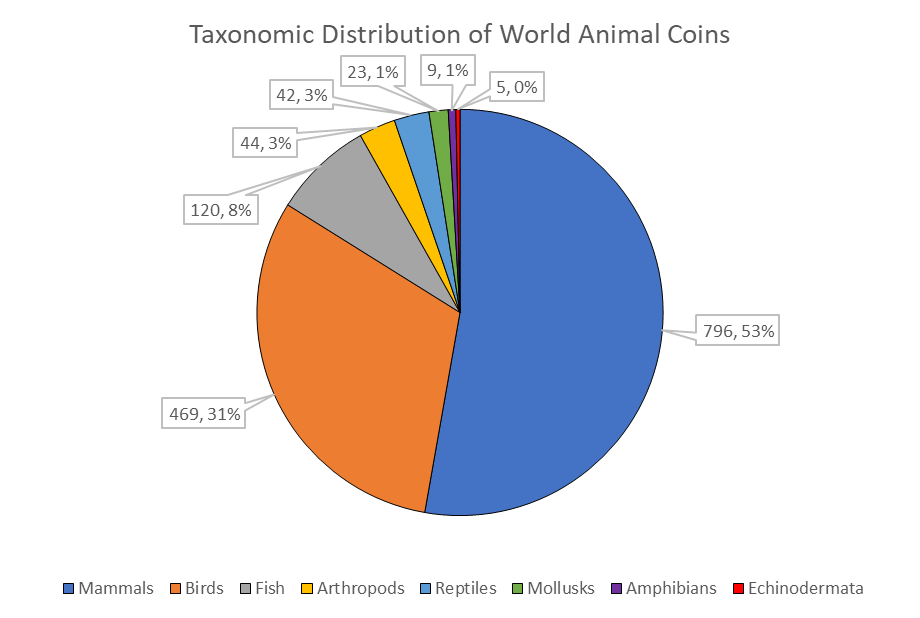
Daniel’s Coin Zoo lists just over 1,500 unique animal coins from across the world (limited to post-1900 circulation coins). More than half of these coins depict mammals (53%), about a third depict birds (31%), and only a small fraction (16%) depict all other animals (fish, Arthropods, reptiles, mollusks, amphibians, and Echinodermata or starfish).
Given their relative rarity, I particularly like coins featuring fish, amphibians, and reptiles. Below are a few favorite examples of coins in each of these categories.
Fish

Reptiles
There are only a few dozen coins depicting reptiles.


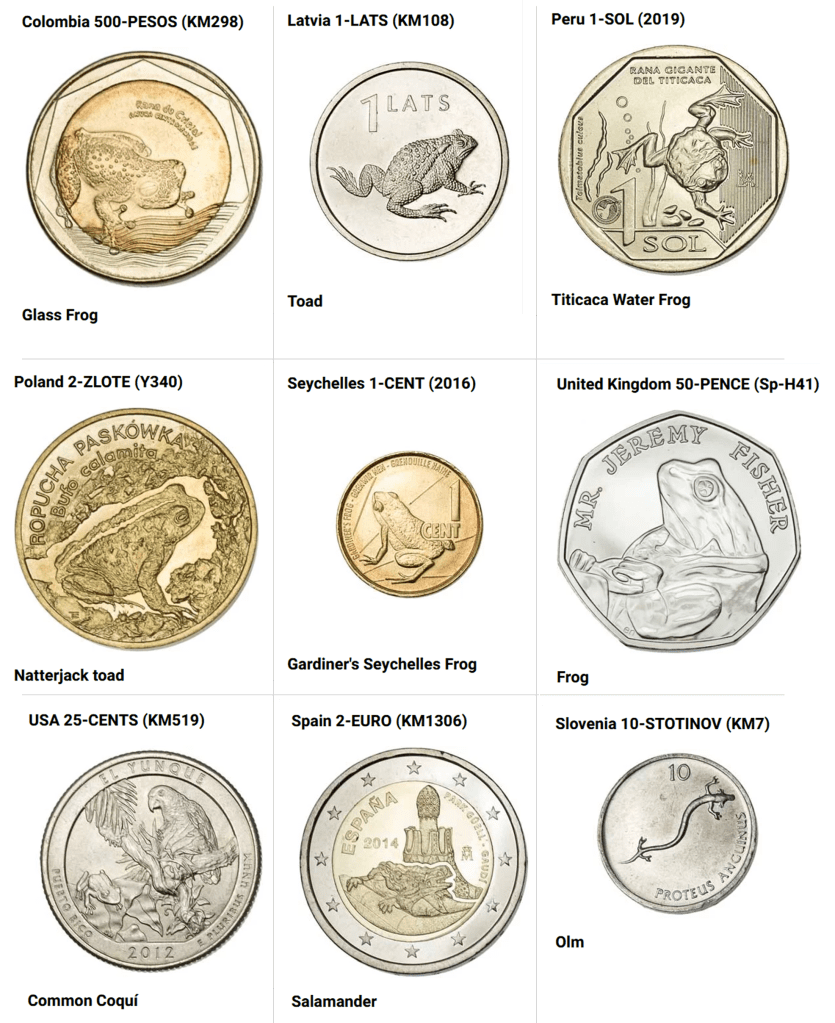
Amphibians
Only 9 coins depict amphibians (7 frogs and toads, and 2 salamanders).
Mammals
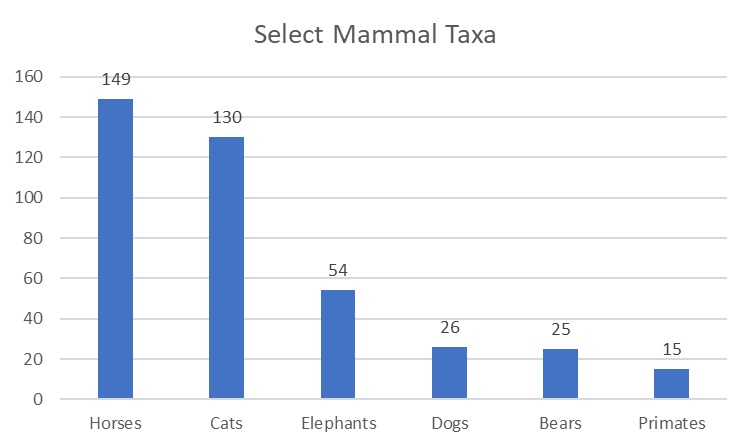
Mammals are the most common group of animals depicted on coins.

Birds
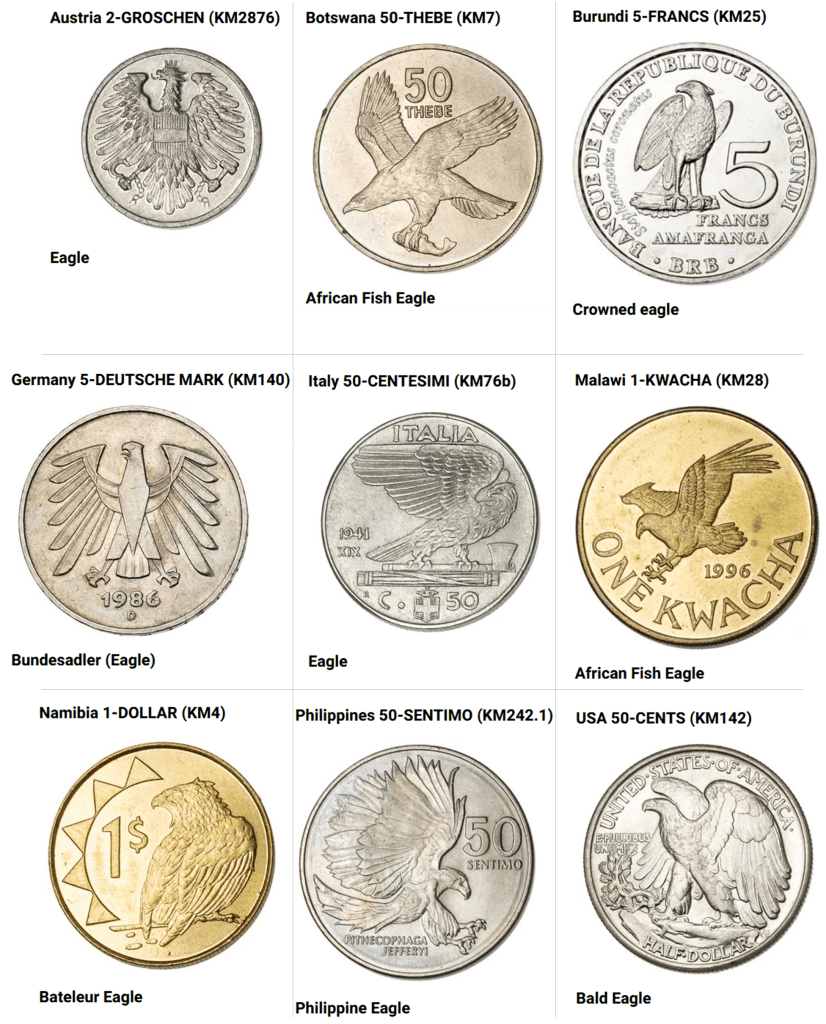
Amongst birds, eagles are particularly well represented.
Geographic regions
Different geographic regions have different numbers of animal coins.

Europe has the most animal coins (489, or 31% of total), followed closely by Africa (429, or 27% of total). This most likely has to do with the large number of European and African countries. The more countries, the more likely it is that some will depict animals on their coins.
Countries
Different countries vary greatly in how many animal coins they have minted.
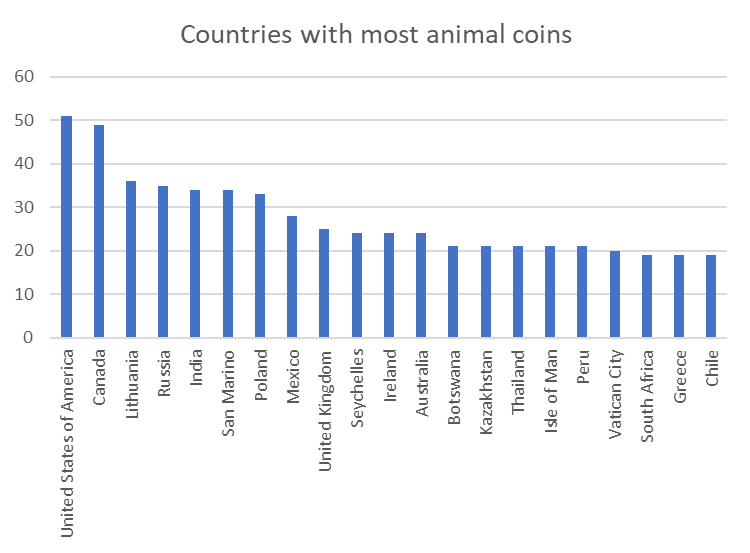
Up until recently, the U.S.A. had relatively few animal coins (a few eagles on various denominations, and the buffalo nickel). But the advent of the state quarter program, and later the national parks quarter program really boosted the numbers – to the point that the U.S. has the most animal coins of any country.


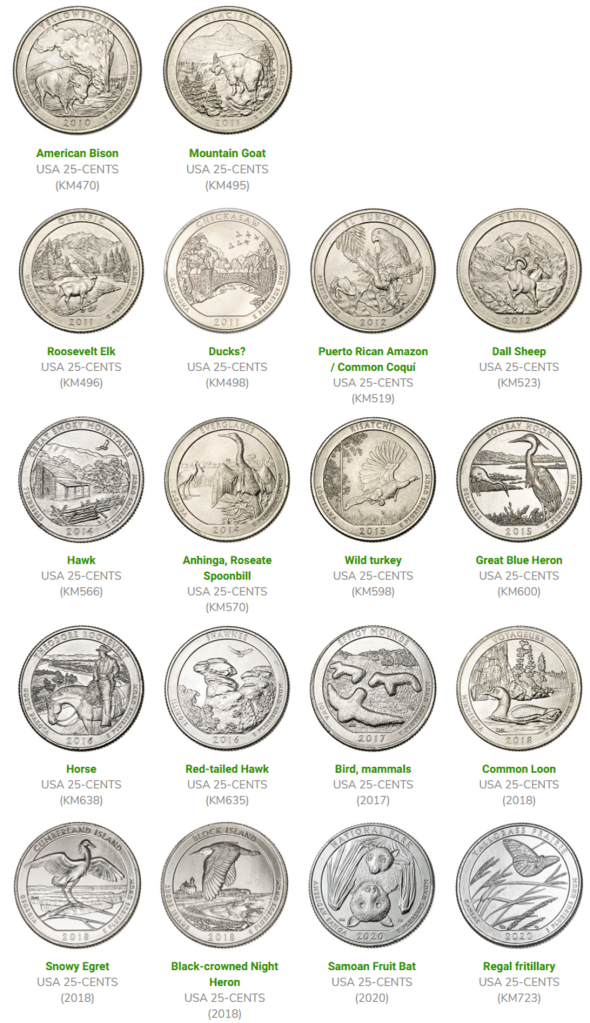
Amongst the U.S. National Park quarters, the standout, for me, is the American Somoa National Park coin depicting a Samoan Fruit Bat. Bats are pretty unique and rarely featured on coins. As a Florida resident, I think the state missed an opportunity by not putting an American Alligator on the Everglades National Park quarter. There are no circulation coins (in the entire world) that depict an alligator, and the alligator is the state reptile of Florida. Florida instead chose an Anhinga. While Anhinga are neat birds, they are not, in my humble opinion, as iconic a symbol of the Everglades as are alligators.
Finally, I made an evolutionary tree of vertebrate animals with major groups depicted using representative world animal coins (if available).

Interestingly, there are coins which depict such evolutionary rarities as the Coelacanth (an ancient lineage of lobe-finned fishes thought extinct until its discovery in the 1930s in the Indian Ocean), the Tuatara (a major category of reptiles represented by a single species found on New Zealand), and the Platypus (one of only two egg-laying mammal species – Monotremes – along with the Echidna, which is also depicted on an Australian coin). This seems evidence that countries tend to recognize and celebrate the fauna which makes them unique. I will however note a few gaps. There are no coins which depict Hagfish, Lamprey, Lungfish, or Caecilians. All these taxa have somewhat eel-like body shapes, so perhaps not the most charismatic fauna to put on a coin.
 Reason and Nature
I really got a kick out of that phylogenetic bracket at the end that was so well done!
some gorgeous ones too.
-a herpetologist that enjoys coins and oddities
LikeLike