Recently, while looking through some of my old wildlife photos I came upon one of a blue-tailed lizard that I photographed in Mozambique in 2010. What really struck me is how similar this lizard, the Blue-tailed sandveld lizard, looks to a species I recently photographed in Maryland and Florida, the American five-lined skink. They both have similar body shape, longitudinal body stripes, and bright blue tails.
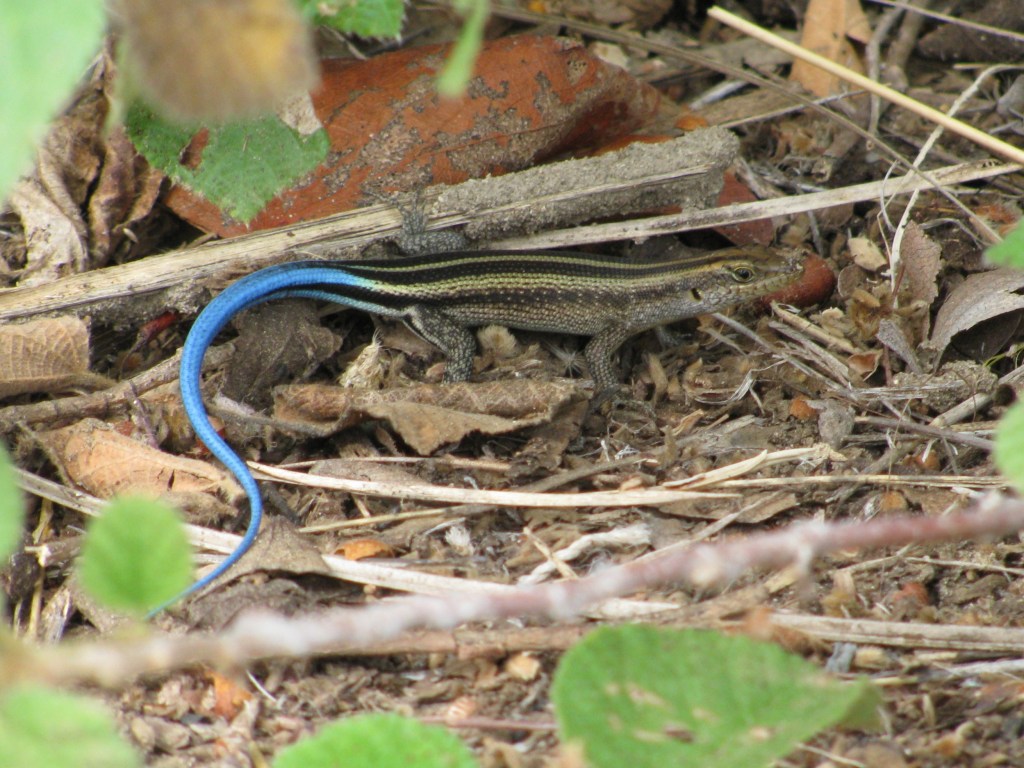
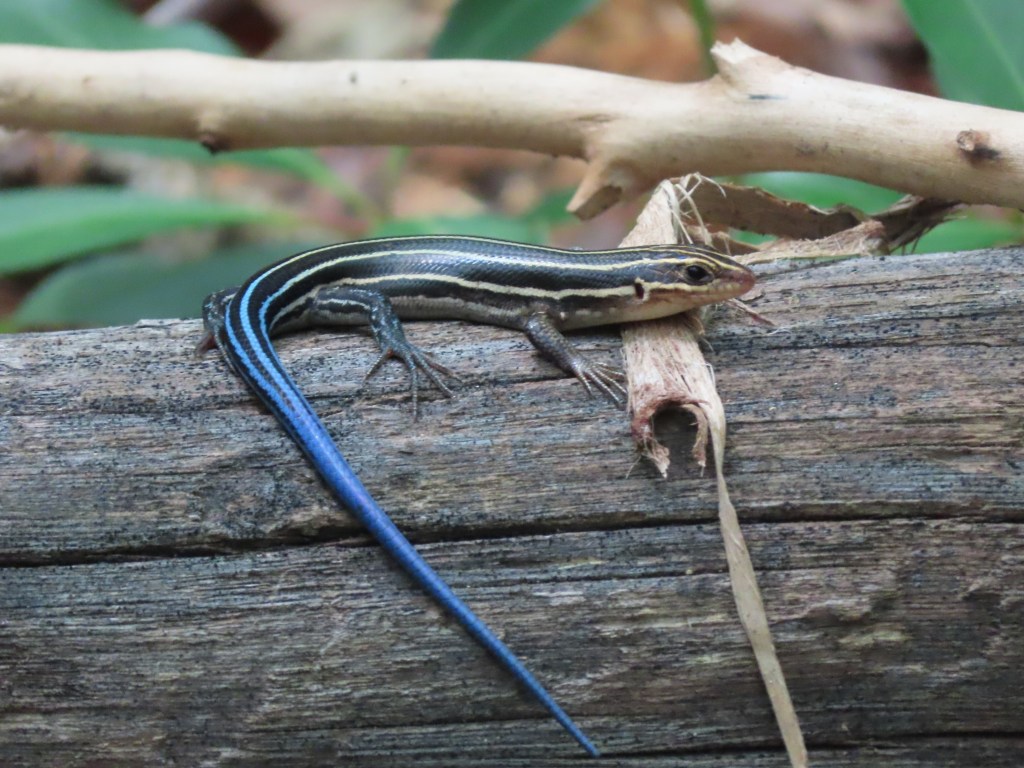
The Blue-tailed sandveld lizard (Nucras caesicaudata) and the American Five-lined skink (Plestiodon fasciatus) look similar despite being distantly related.
Yet, these species are found on different continents (Africa versus North America), and are in different lizard families (Lacertidae versus Scincidae). Using a neat online tool, we can estimate that these species diverged approximately 174 million years ago and are therefore about as closely related to each other as humans are to kangaroos – which is to say, not very closely related. This is a remarkable case of convergent evolution – species independently evolving similar appearance, likely in response to similar environmental selection pressures. However, the picture that emerges gets even more interesting when one considers that these two species are hardly unique amongst lizards. Longitudinal body stripes and blue tails have evolved independently dozens of times across the lizard tree of life. Showing all the species that exhibit this remarkably similar appearance is not practical, so below are just a small sampling of such species.
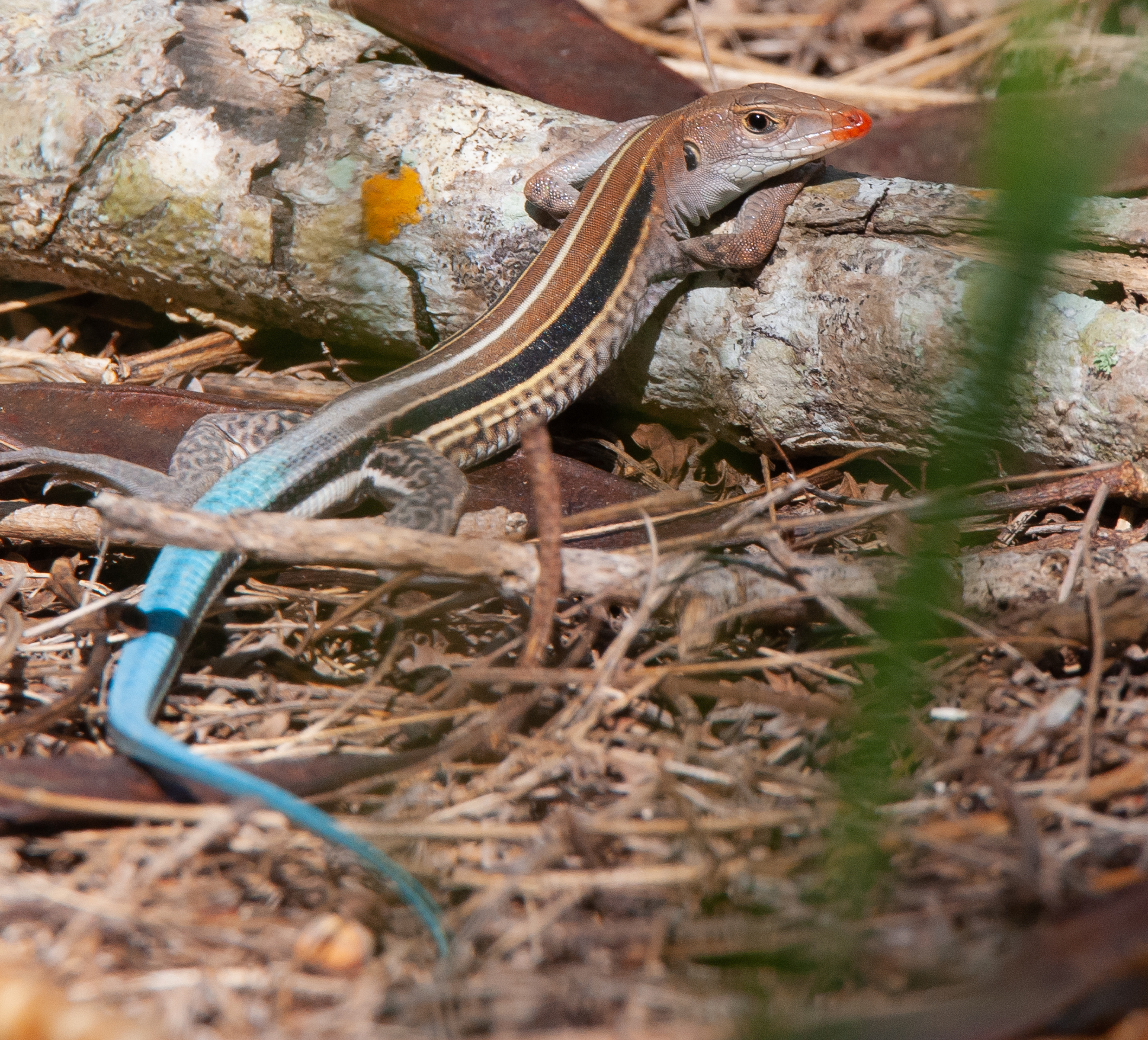
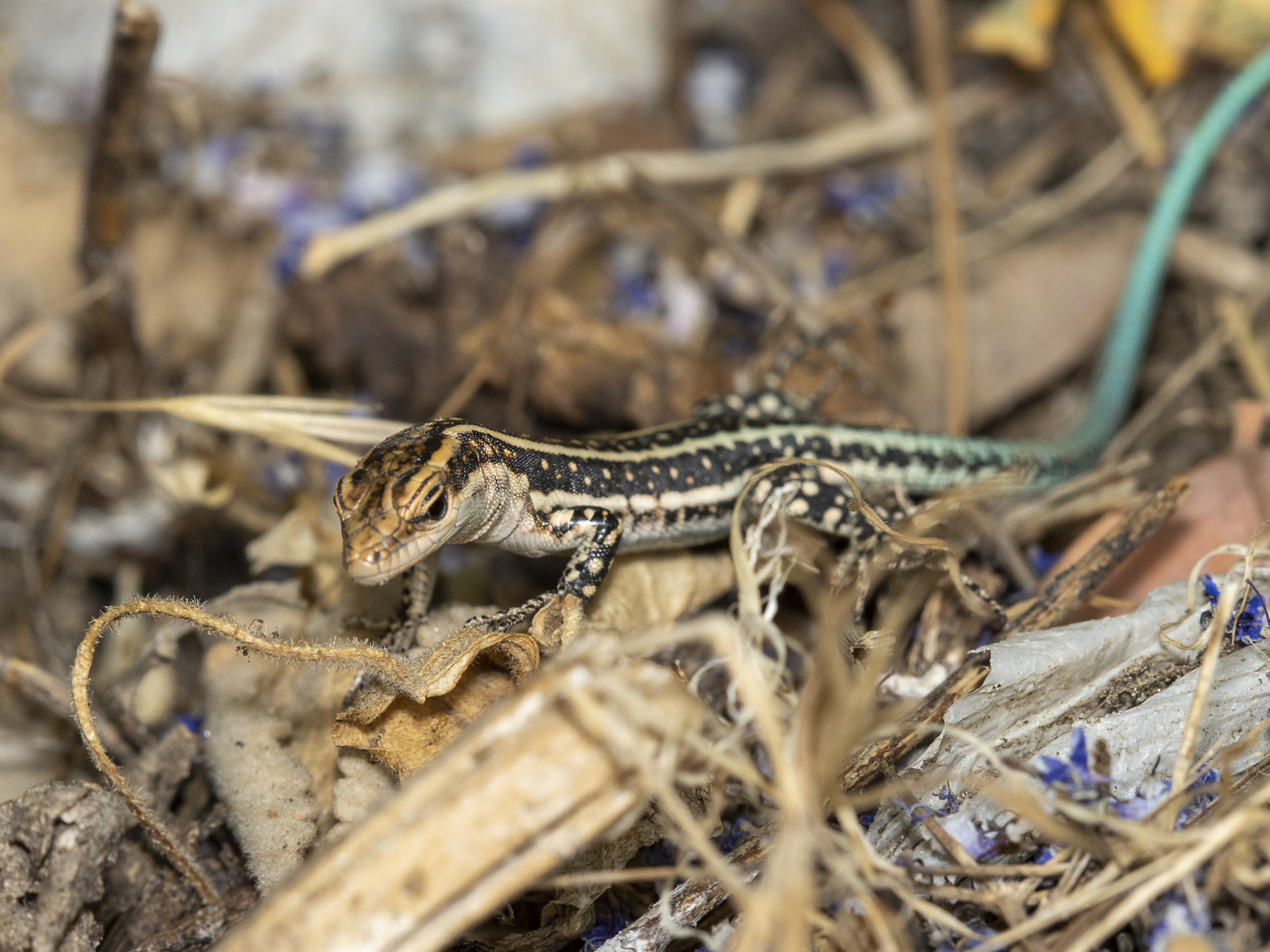
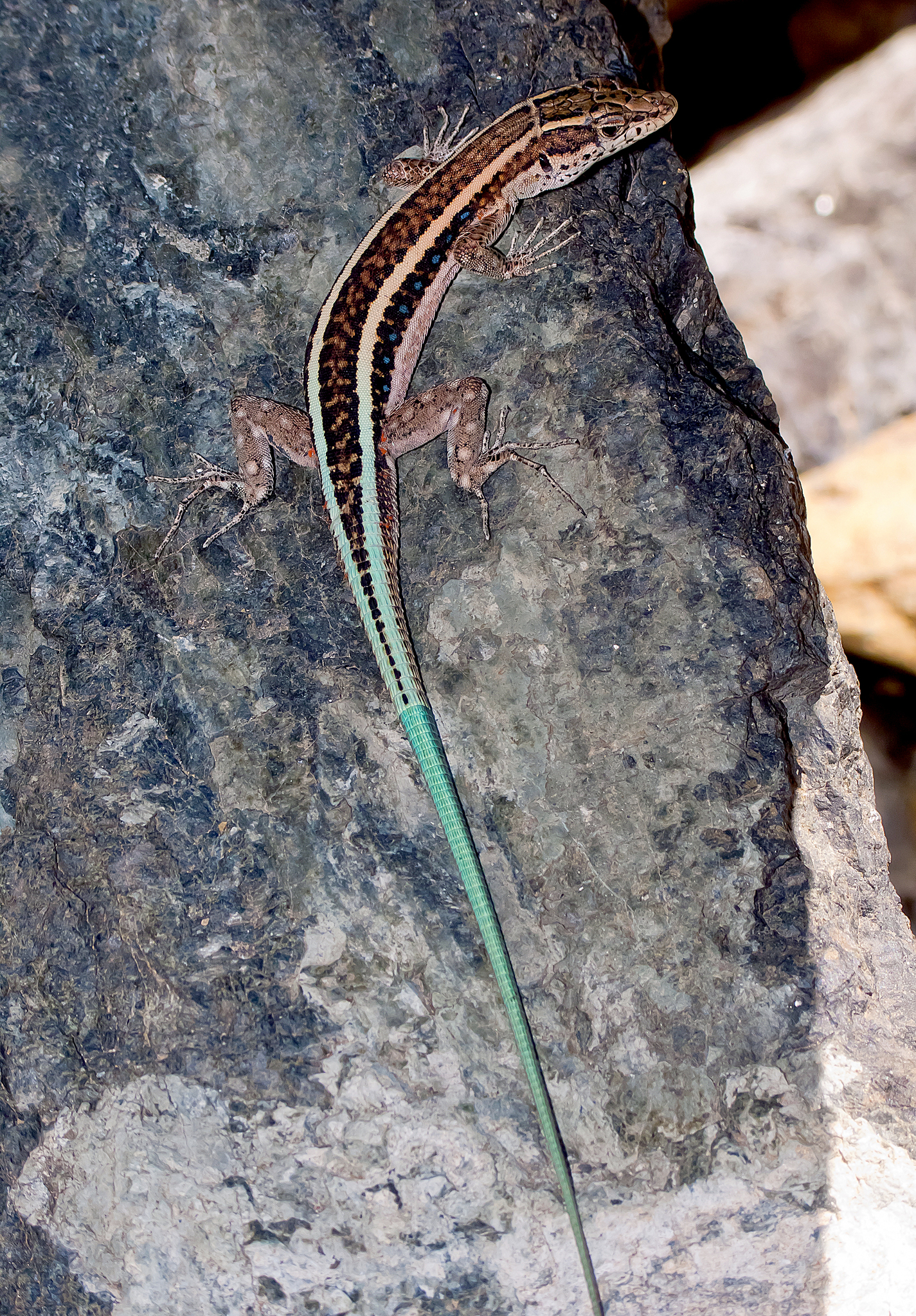
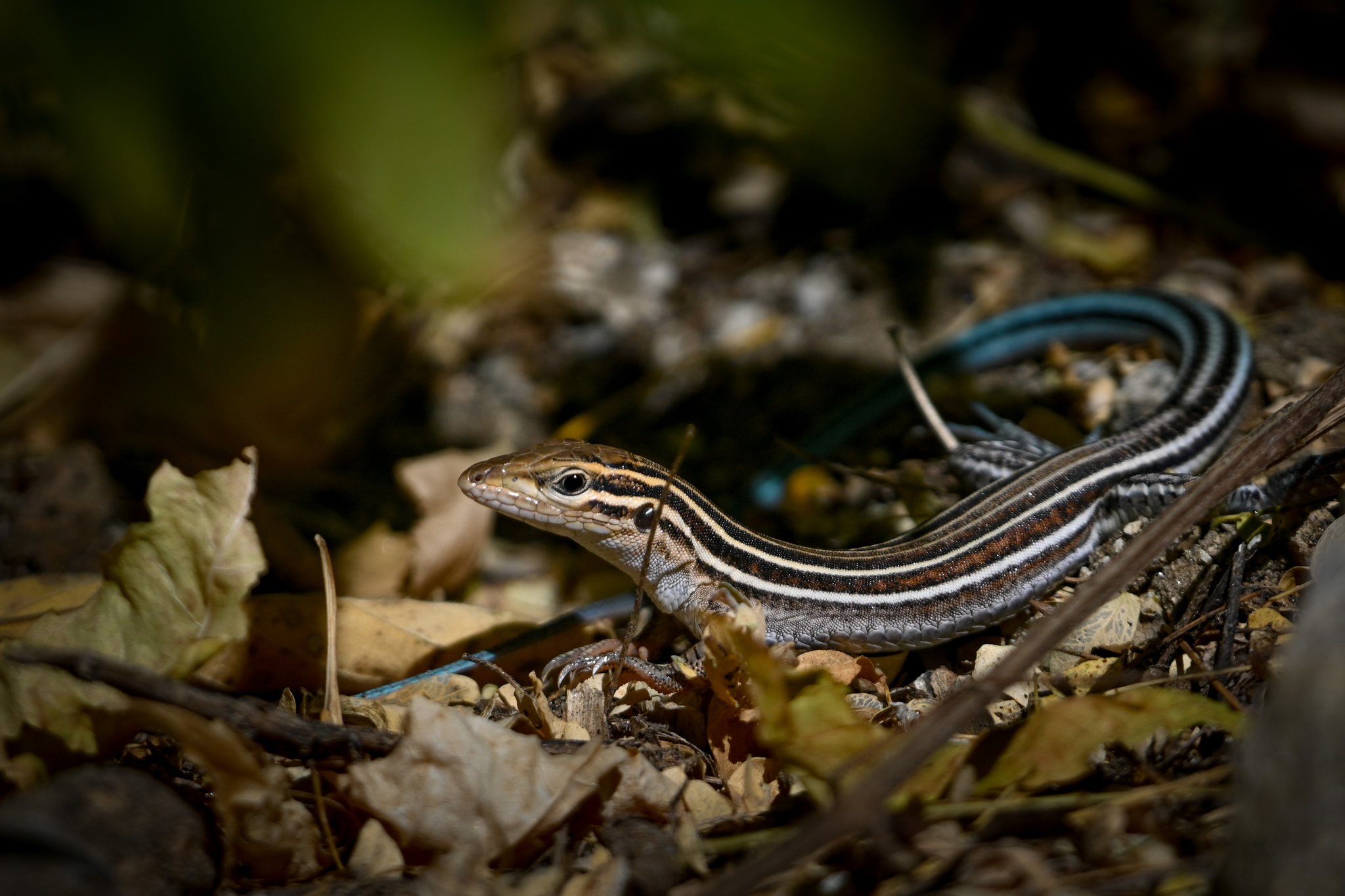
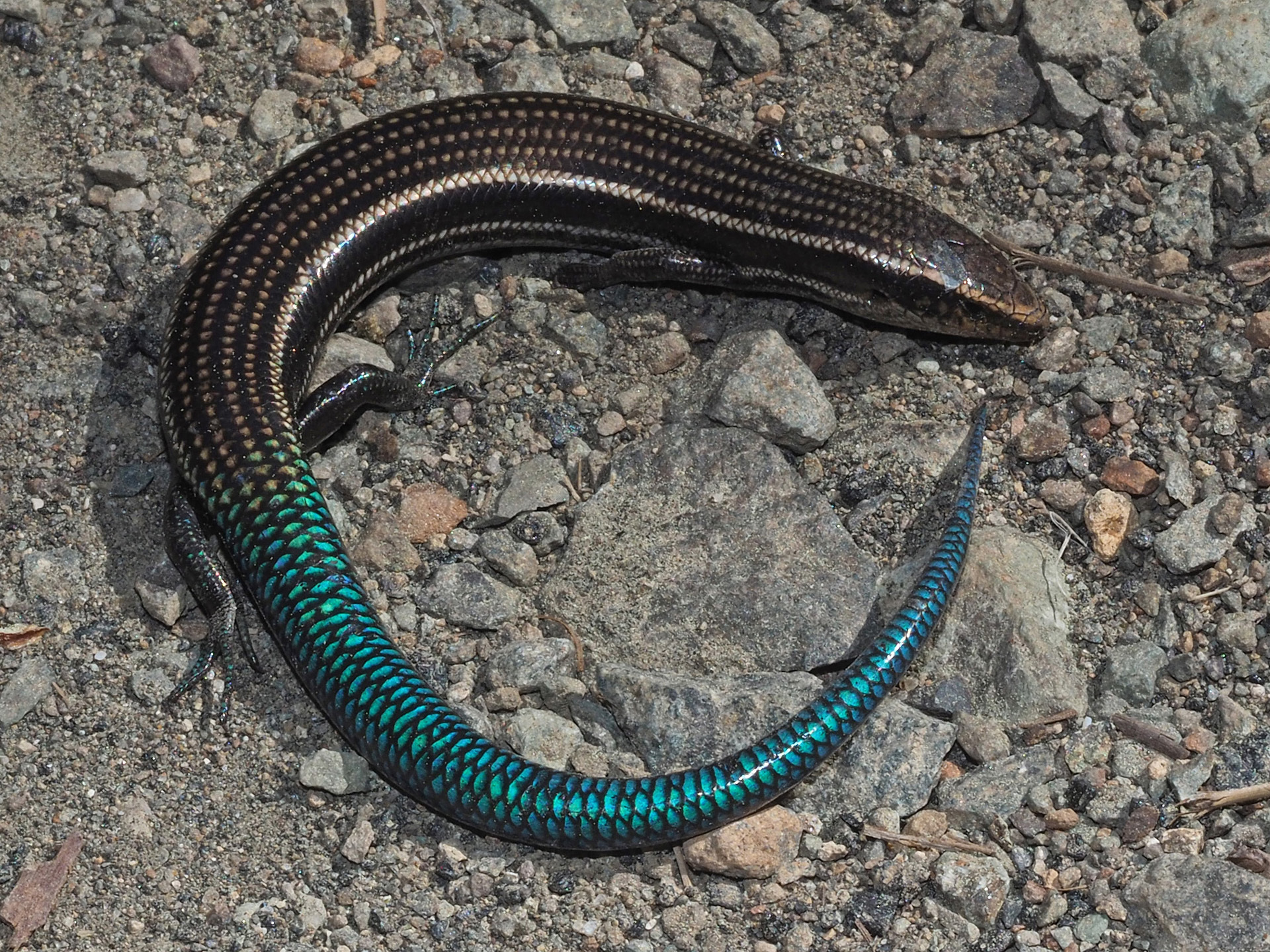
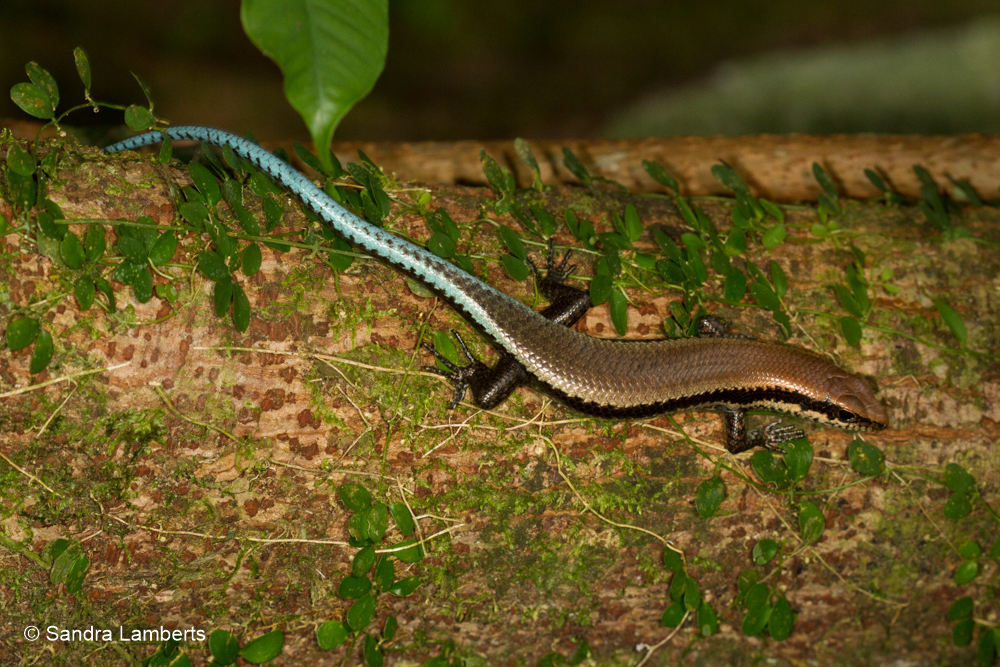
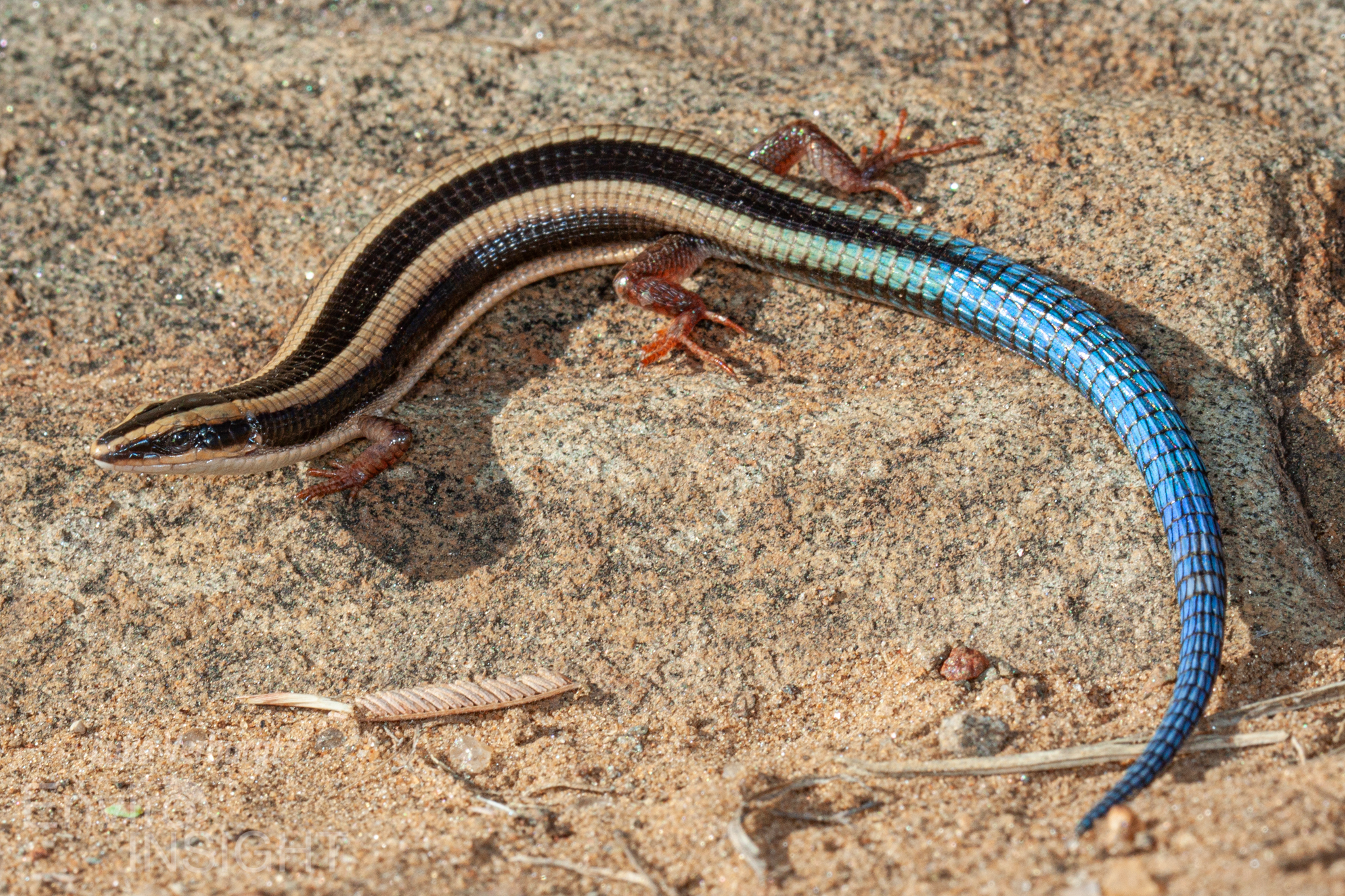
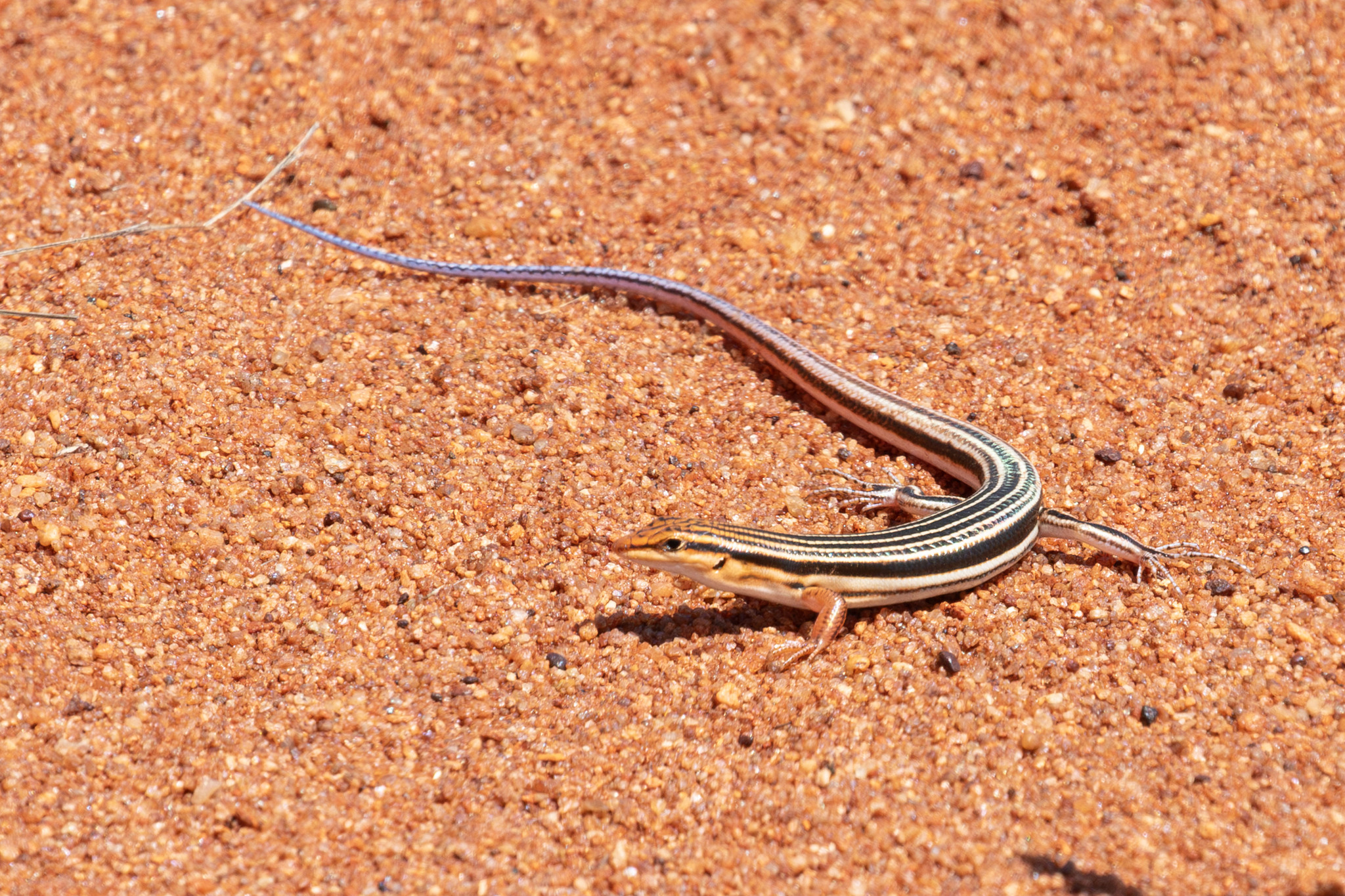
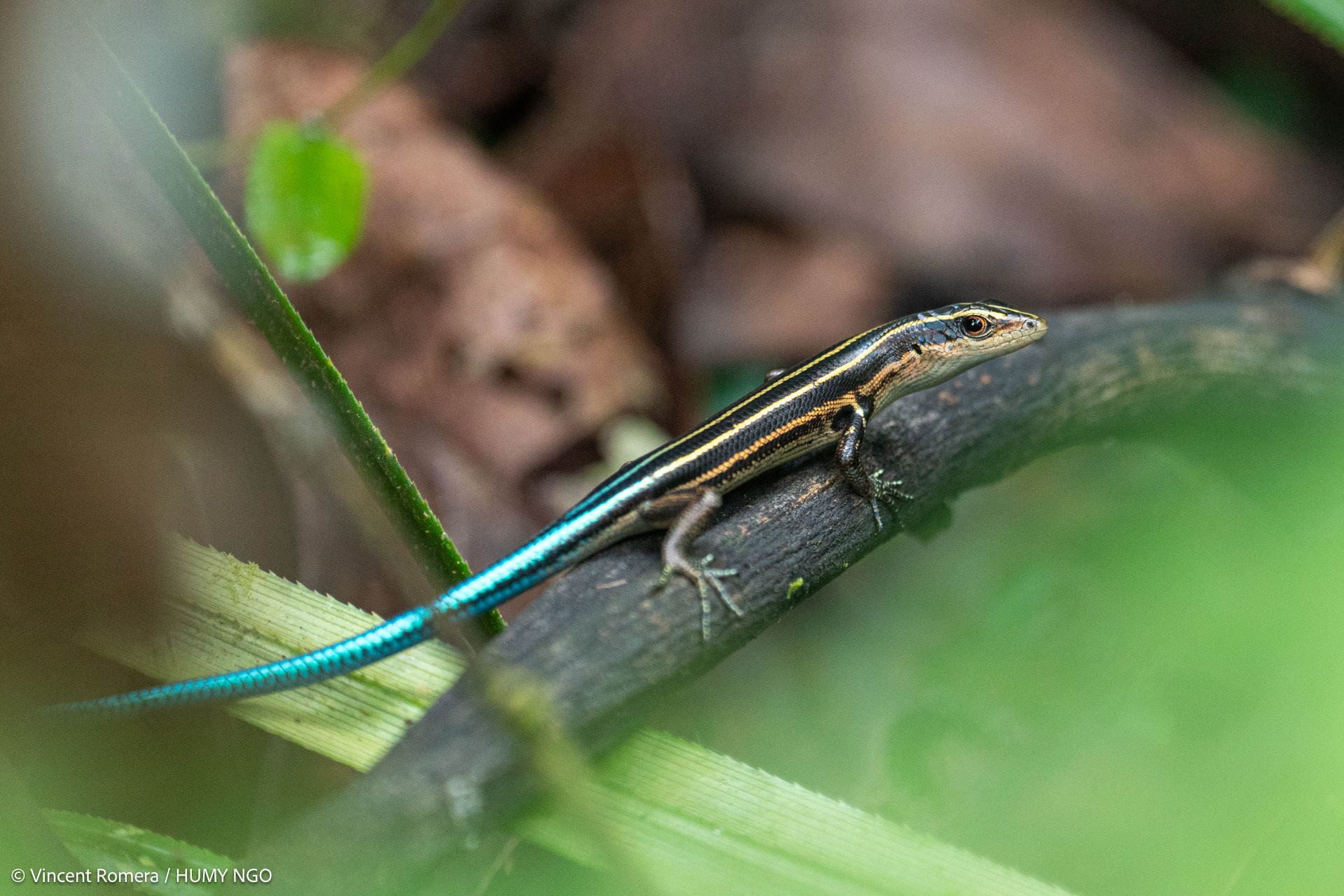
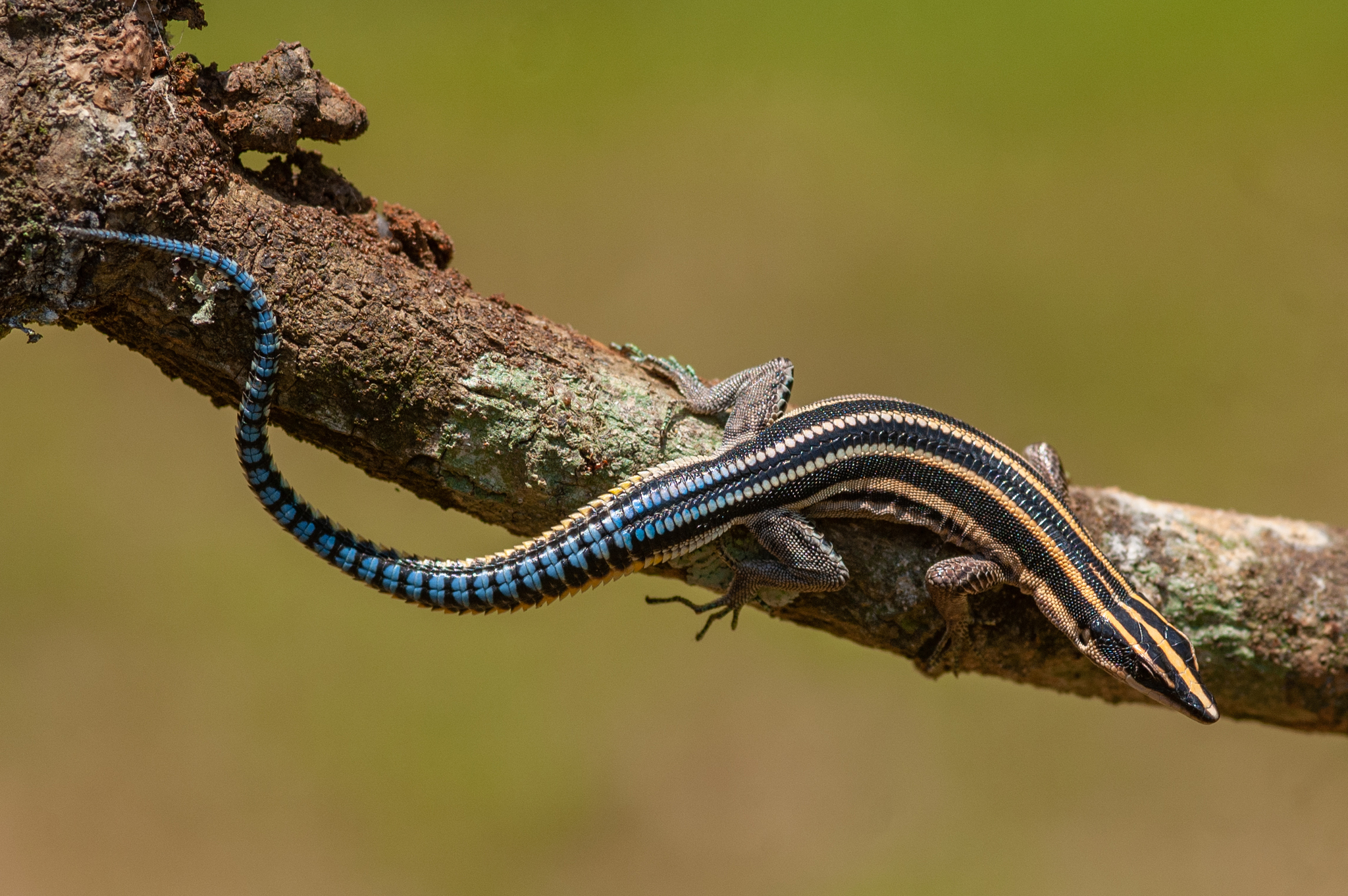
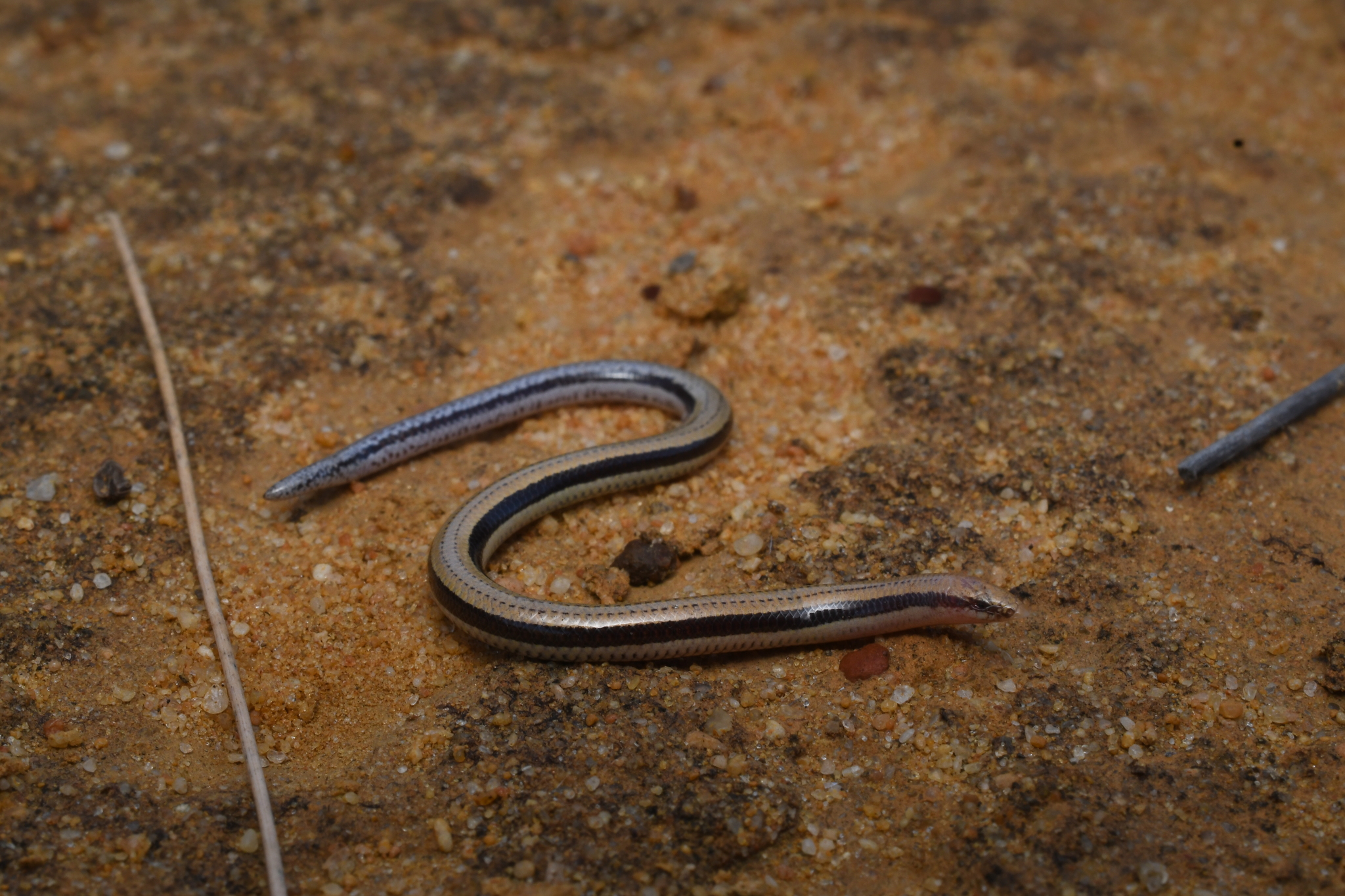
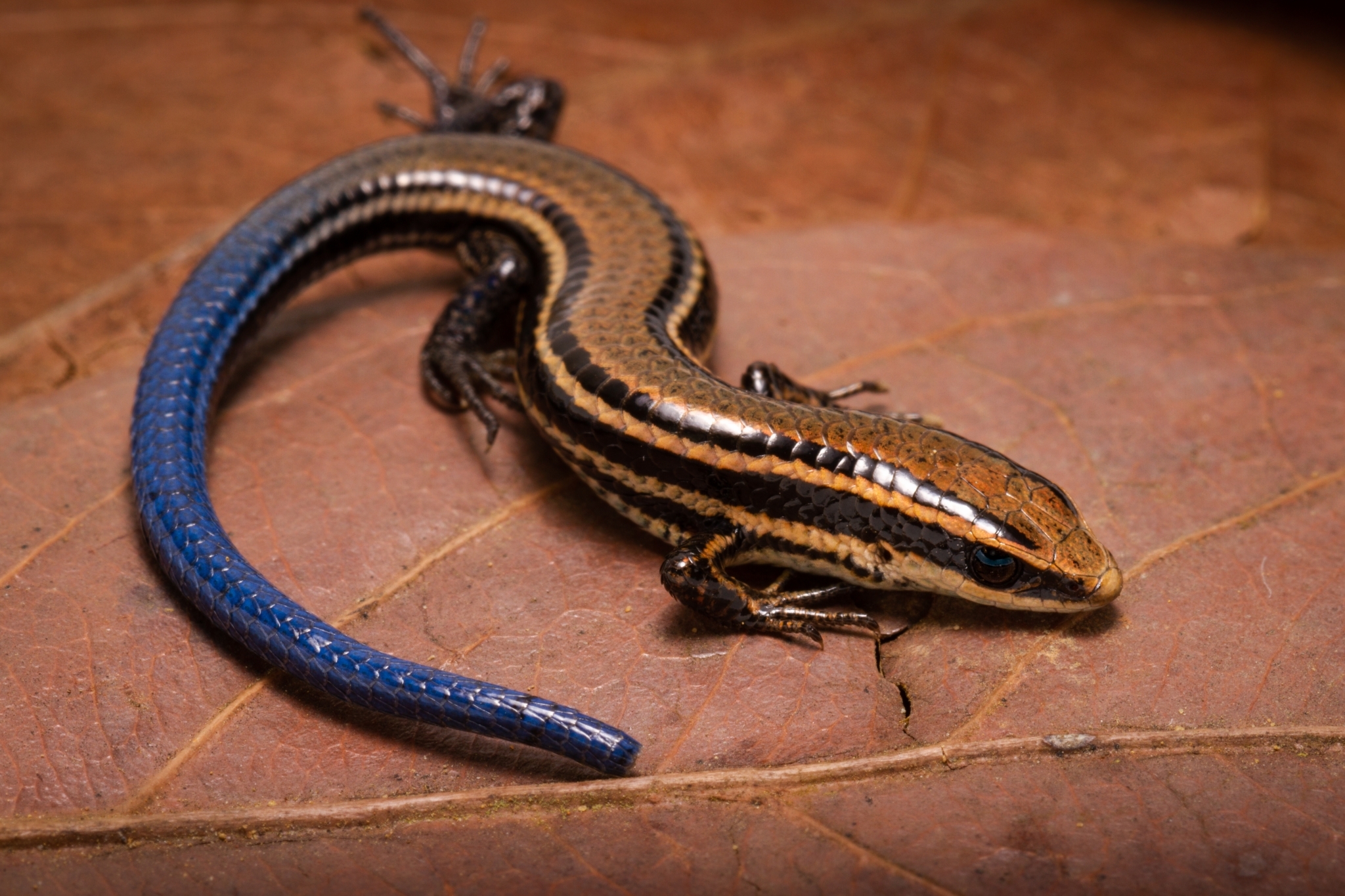
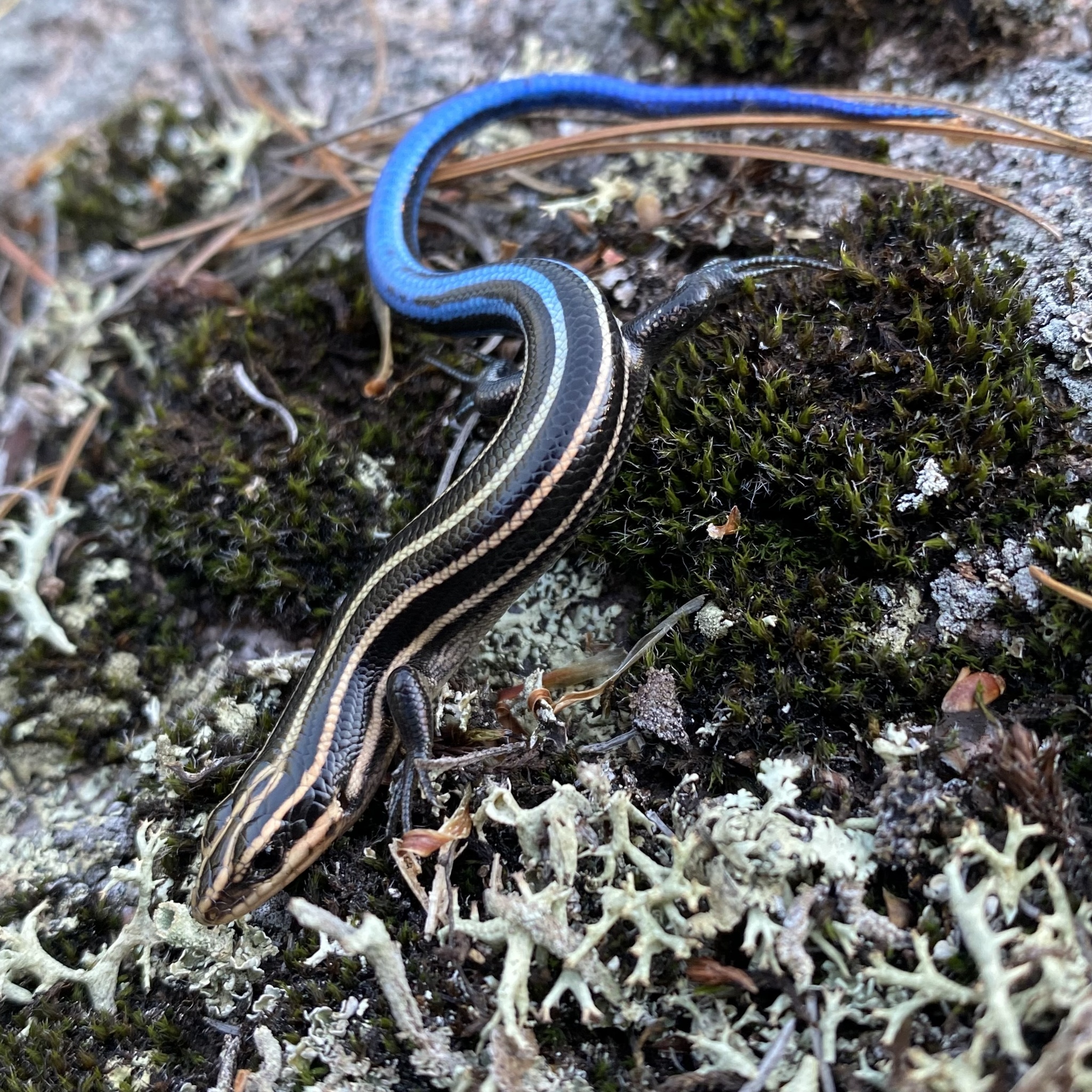
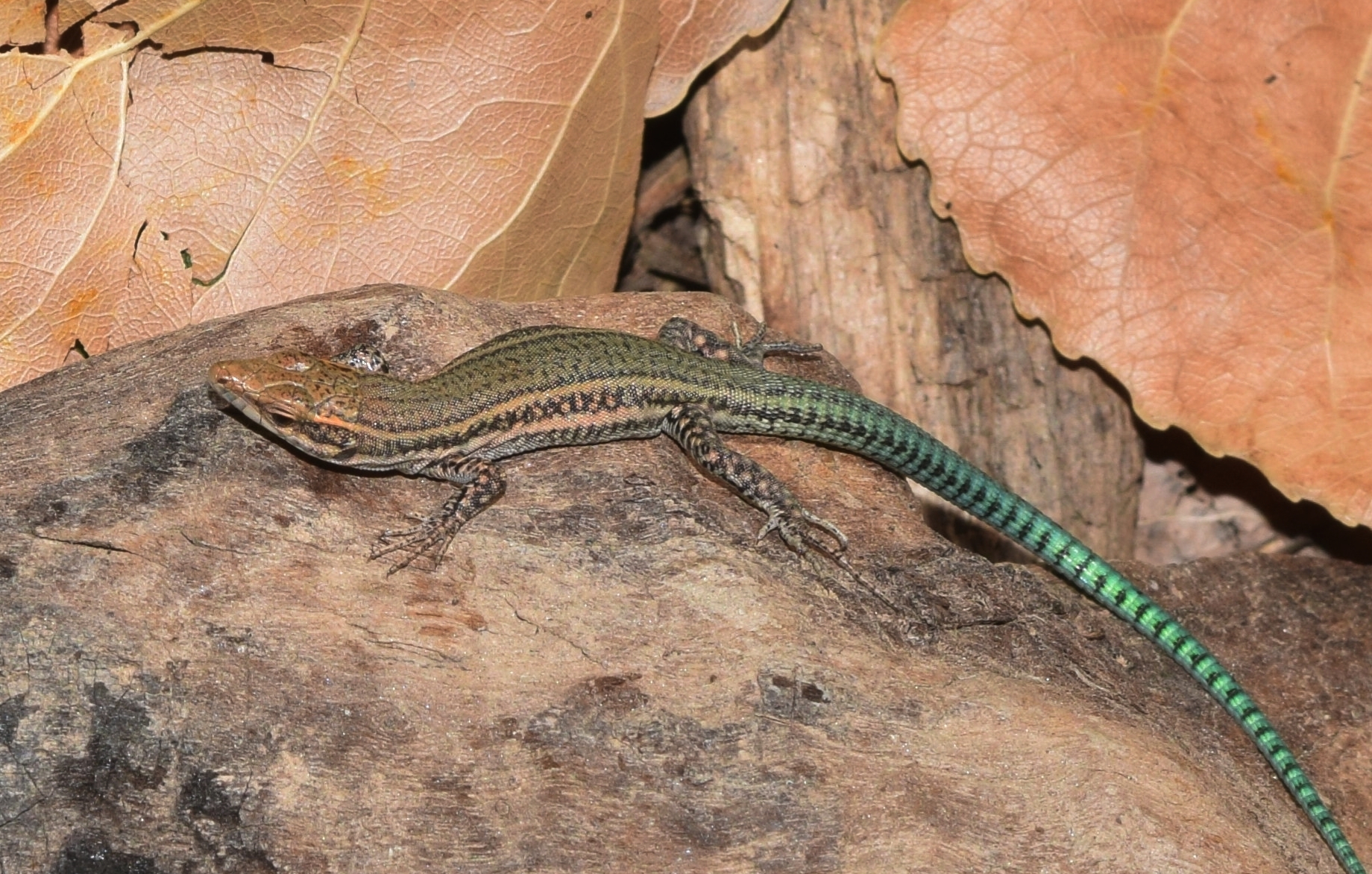
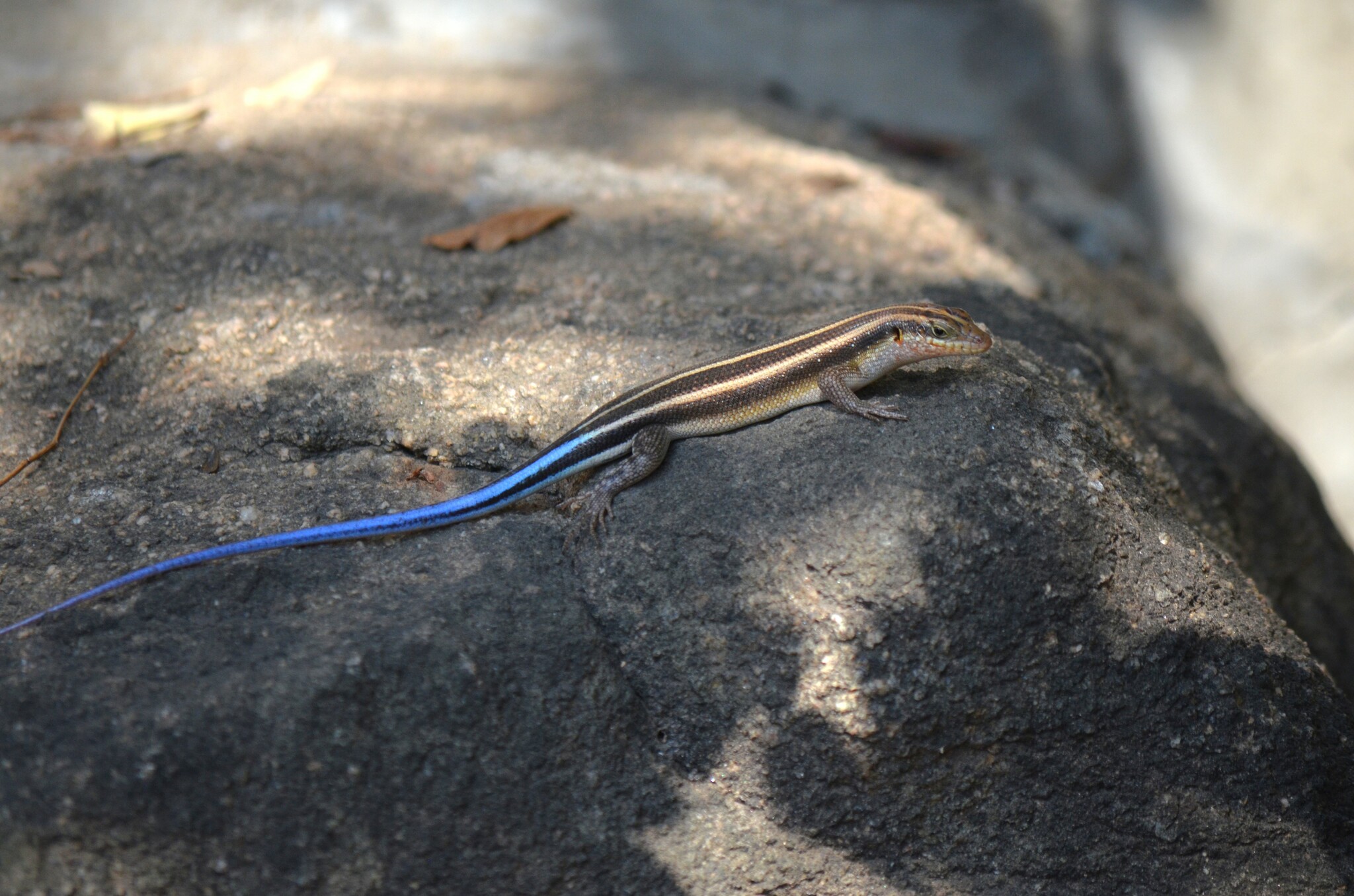
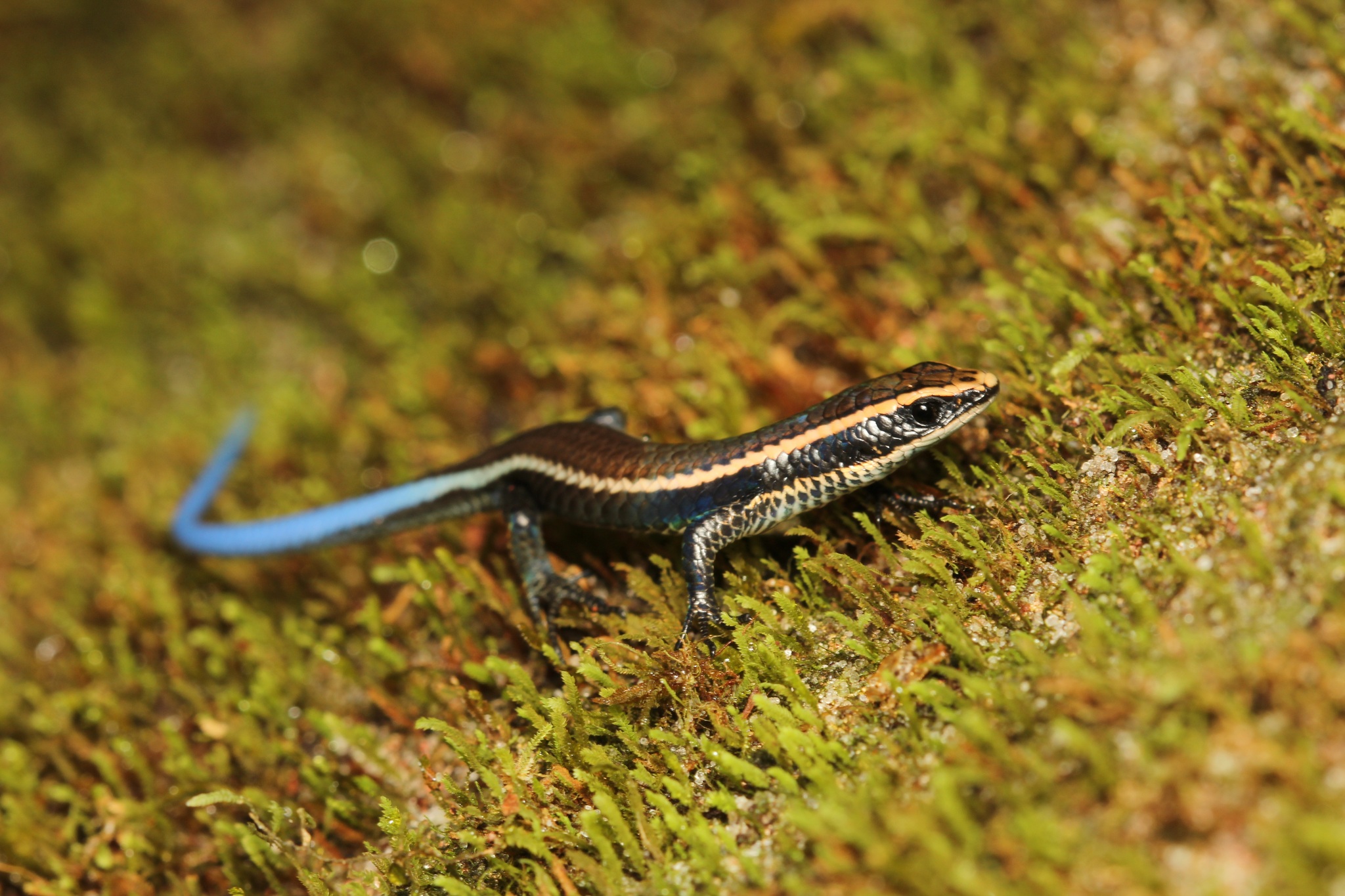
Examples of lizard species with longitudinal stripes and blue tails. All photos publicly available on iNaturalist. Please click photos to enlarge photos.
One research study compiled photographs of 1622 lizard species representing 36 families and scored each species’ coloration patterns, including the presence or absence of body stripes and tail color.
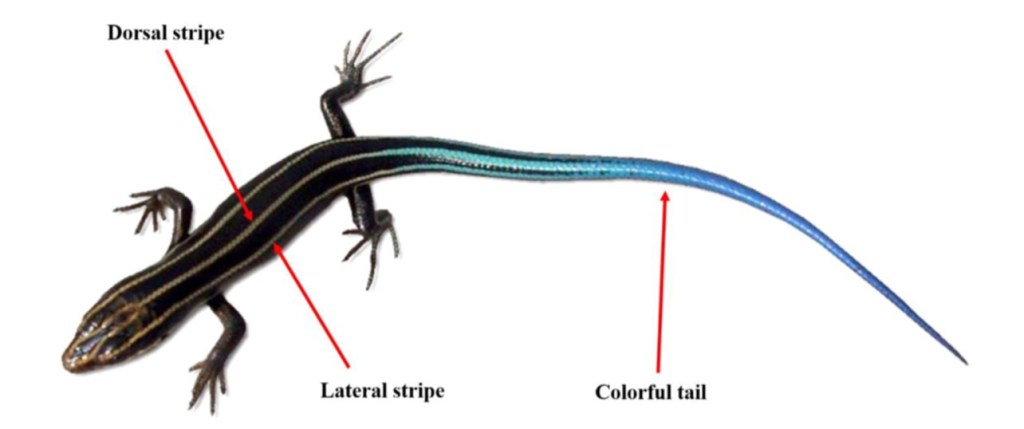
Figure depicting the scoring of body stripes and tail coloration from Murali et al. (2018).
This dataset was combined with an evolutionary tree of lizards. From this the authors of the research study estimated that a striped body has evolved 206 different times, and colorful tails 108 times!
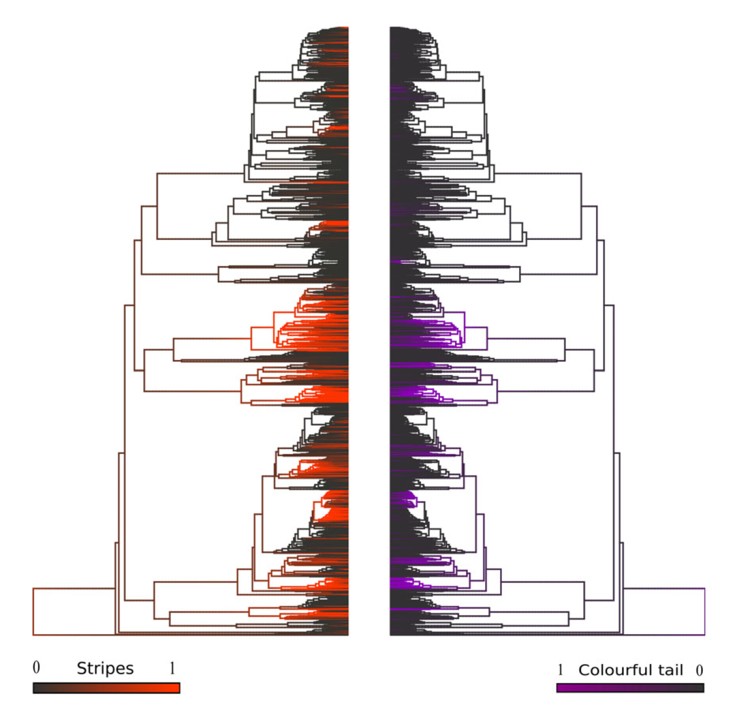
Lizard evolutionary trees depicting the (mirrored) ancestral state reconsturction of body stripes (absence=0, presence=1) and colorful tail (absence=0, presence=1) from Murali et al. (2018). Each of these traits appears to have evolved independently multiple times in different lizard lineages (colored branches in the evolutionary tree).
In addition to species with blue tails, there are many lizard species with red tails, again usually in combination with longitudinal stripes.
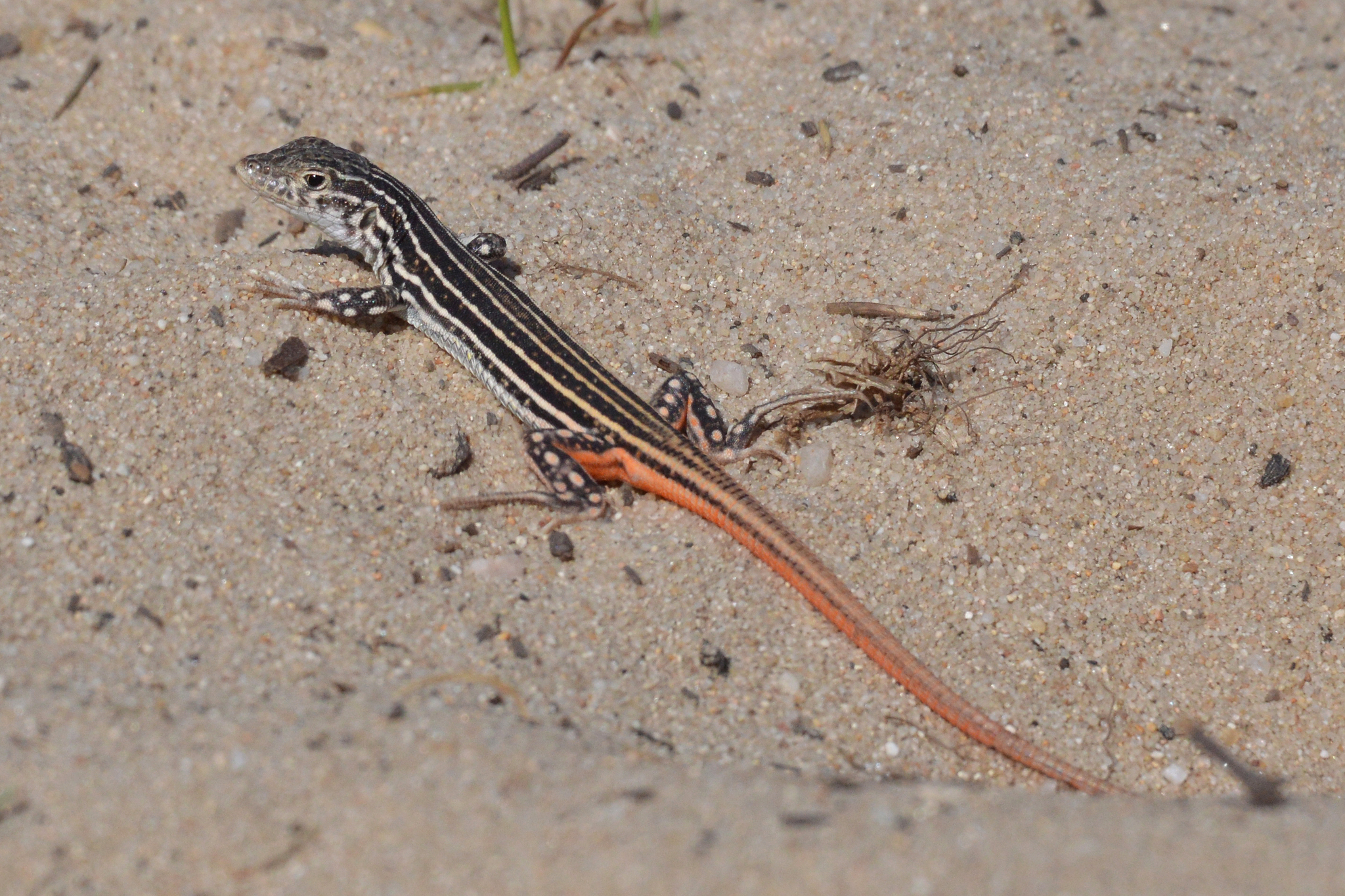
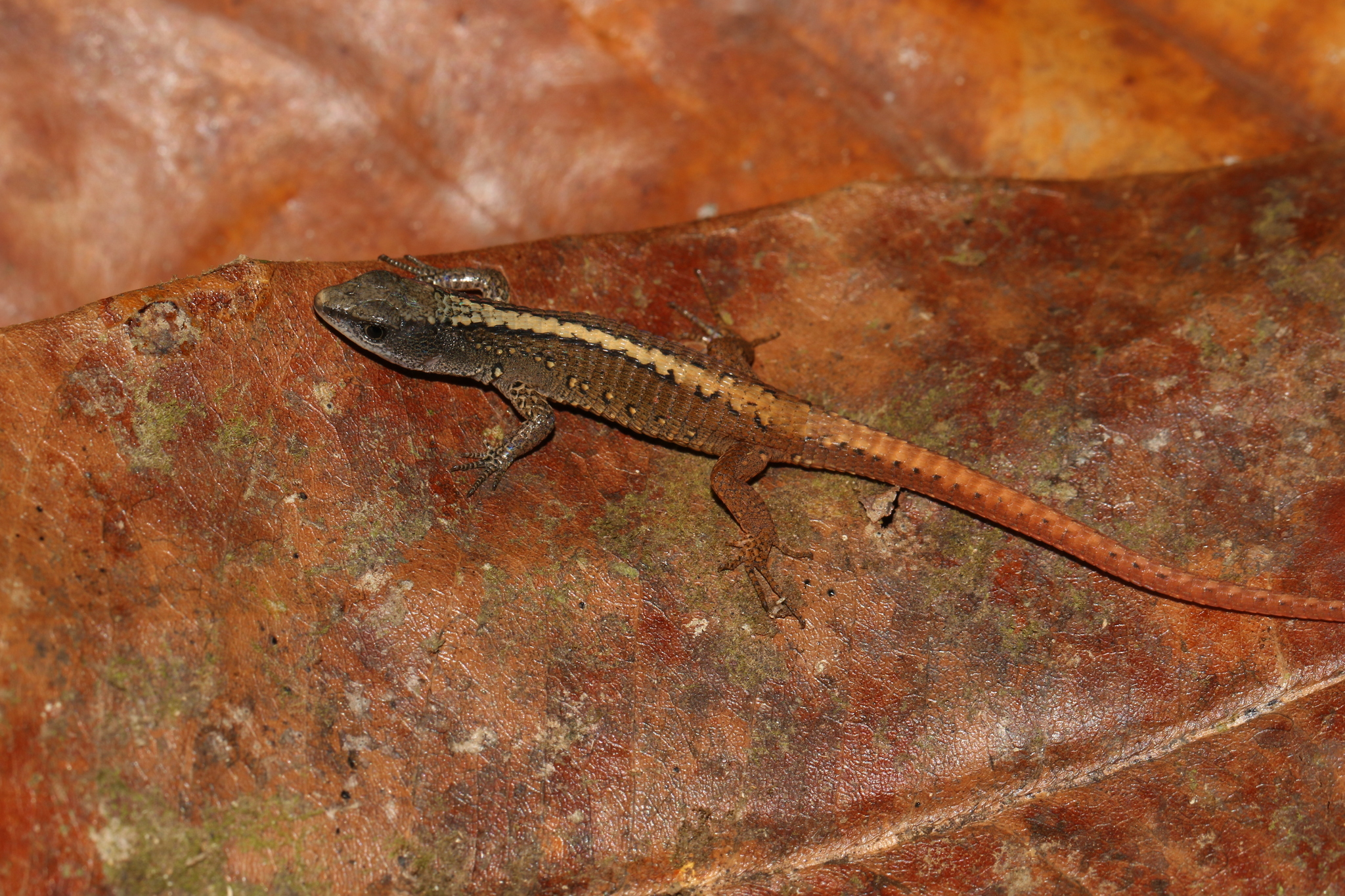
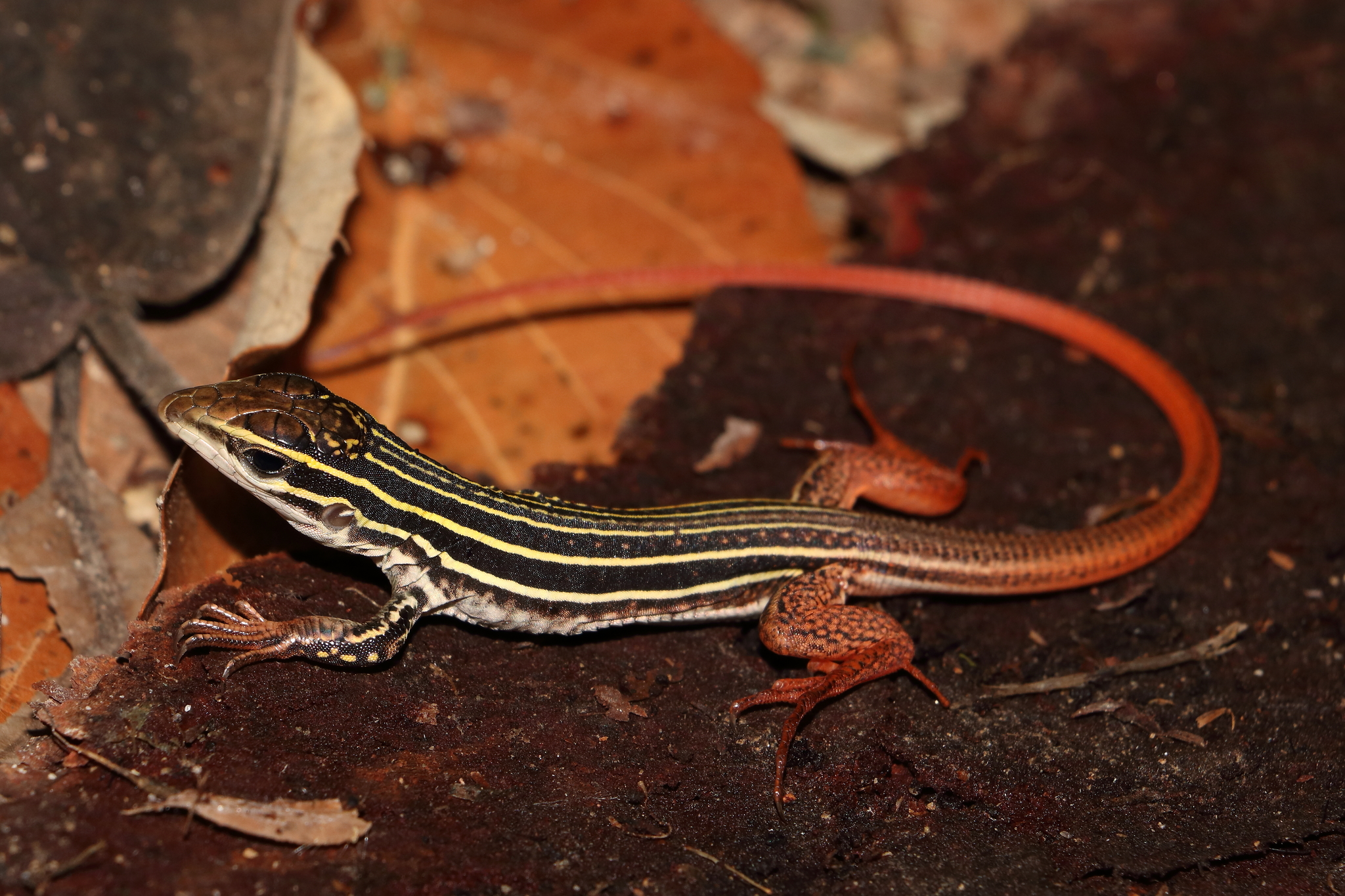
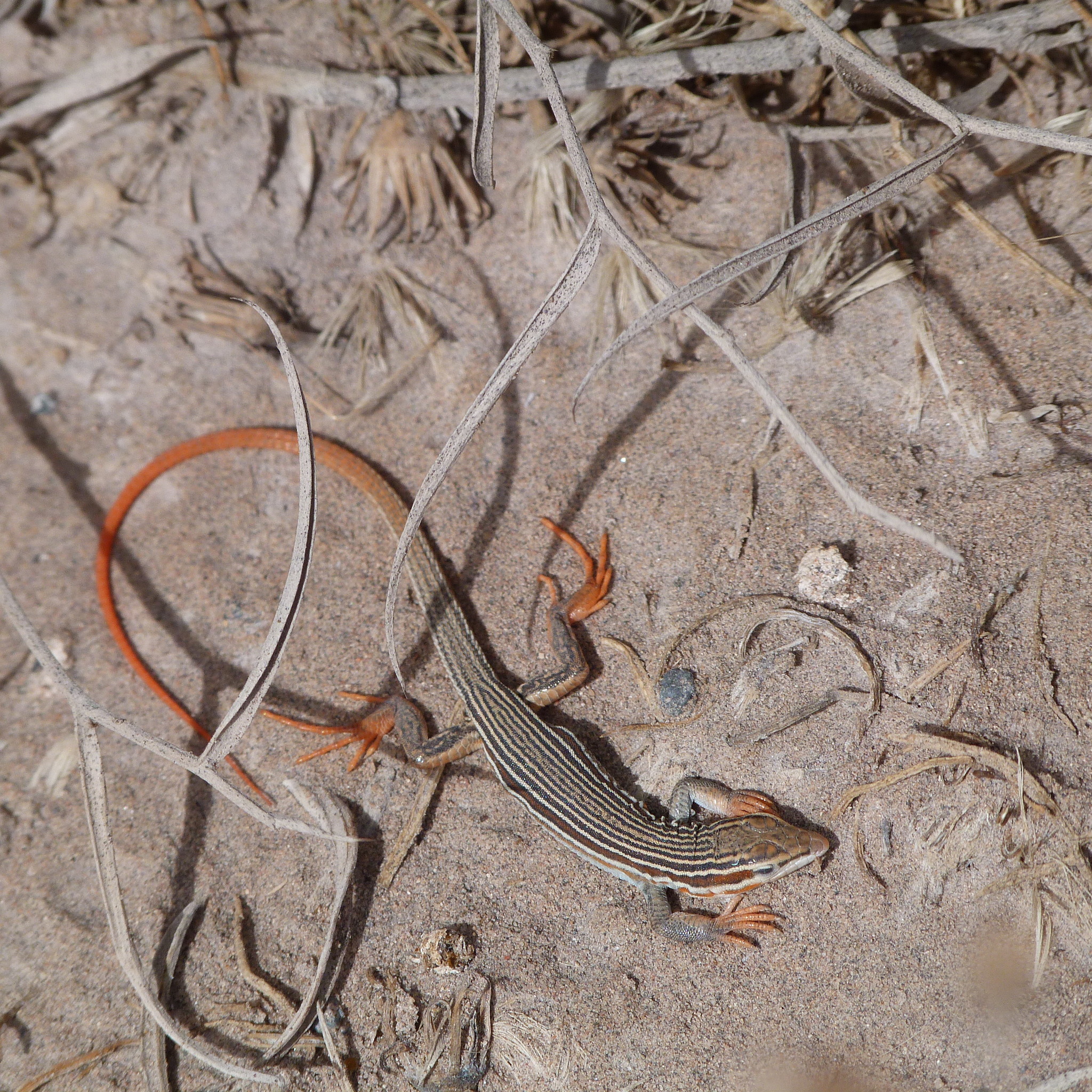
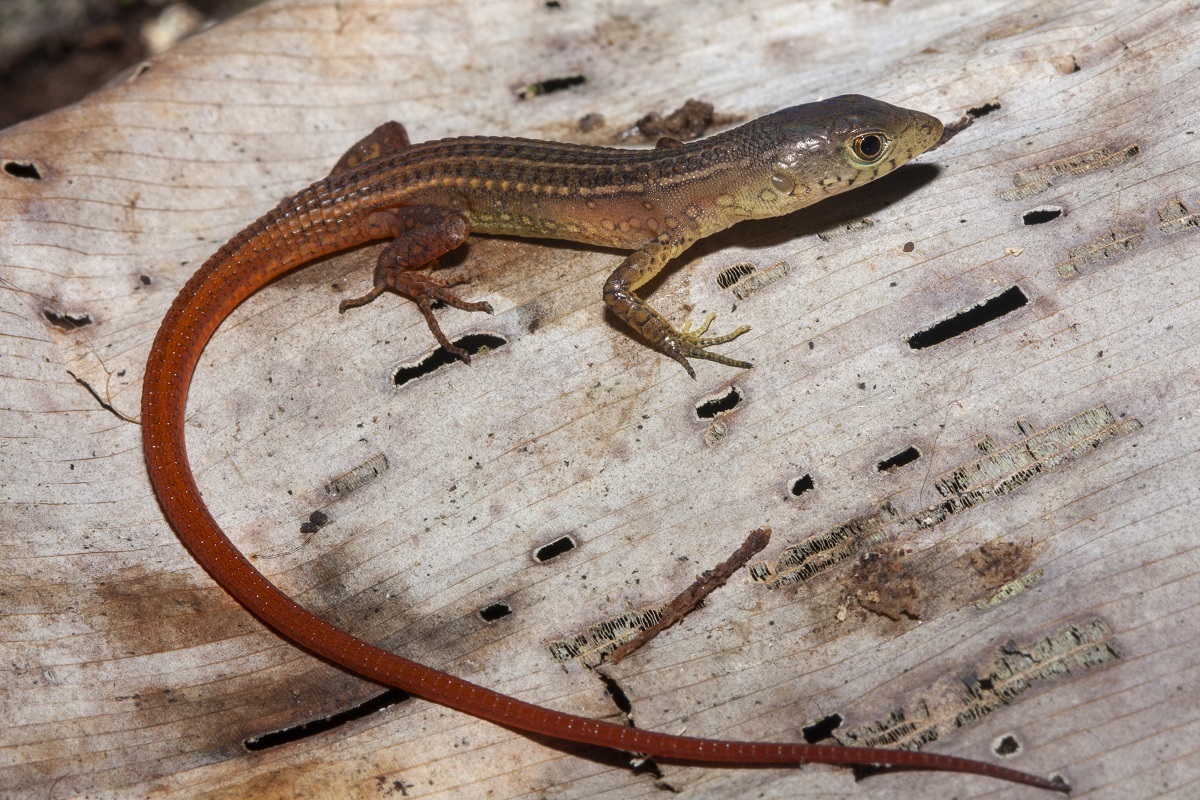
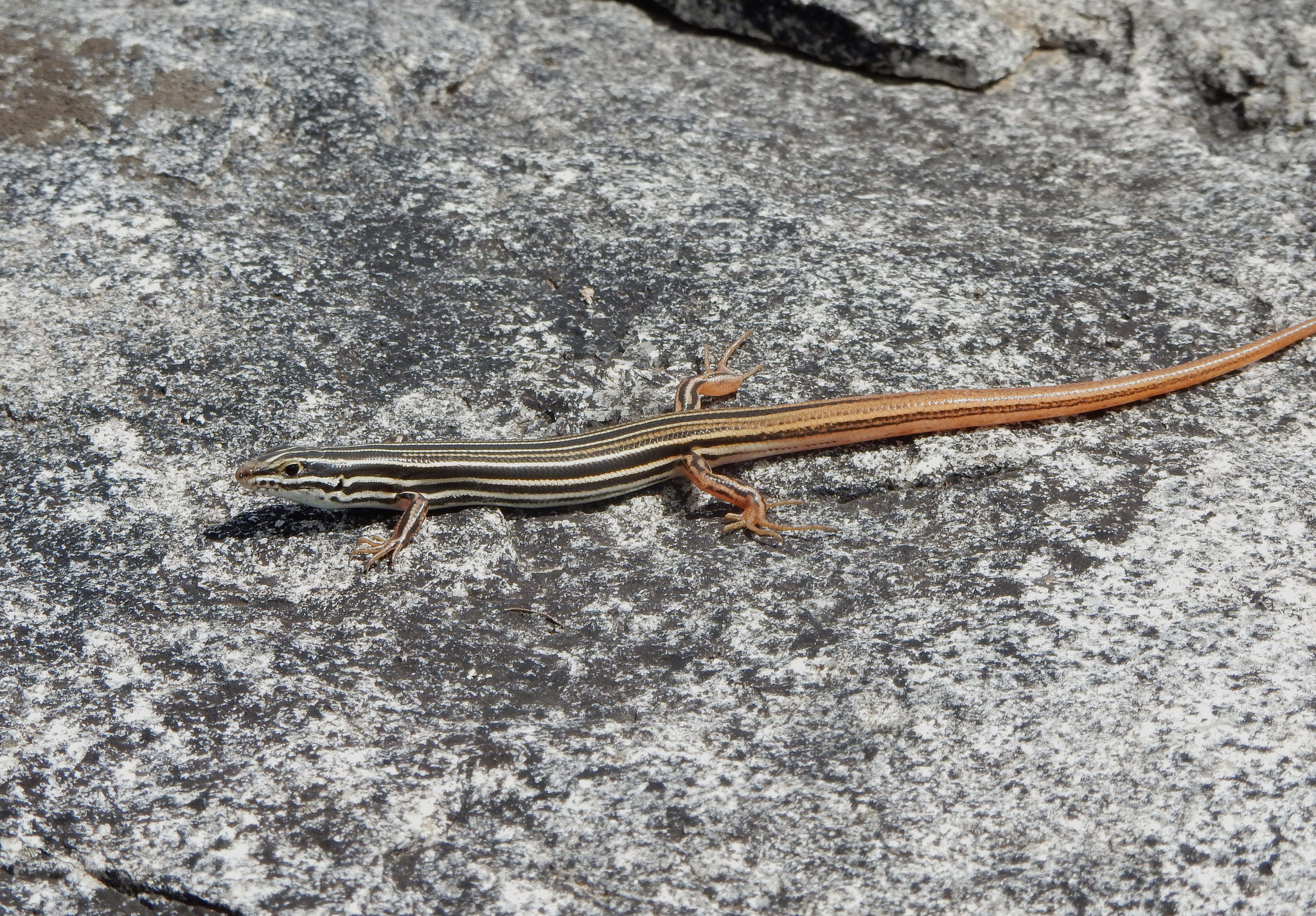
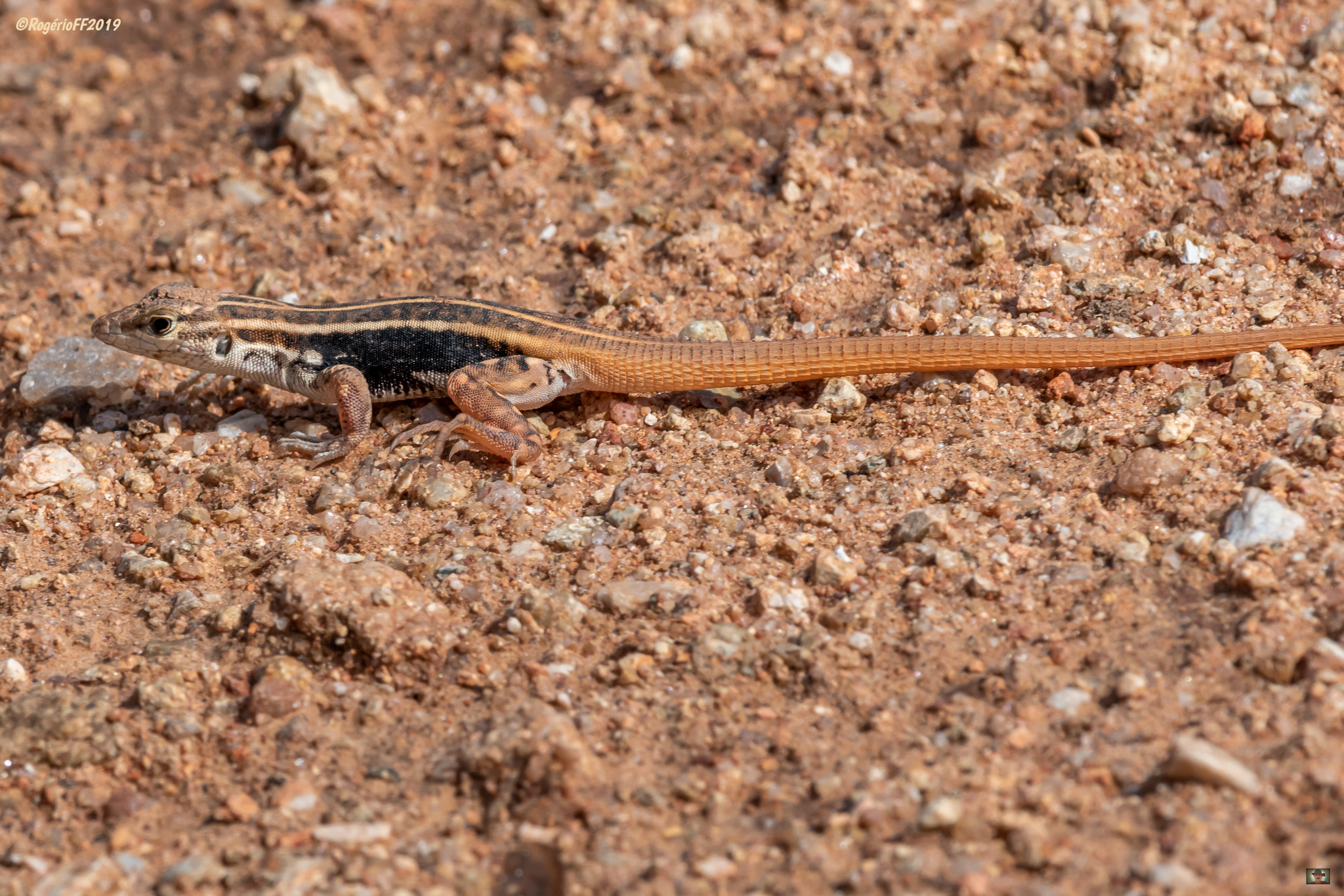
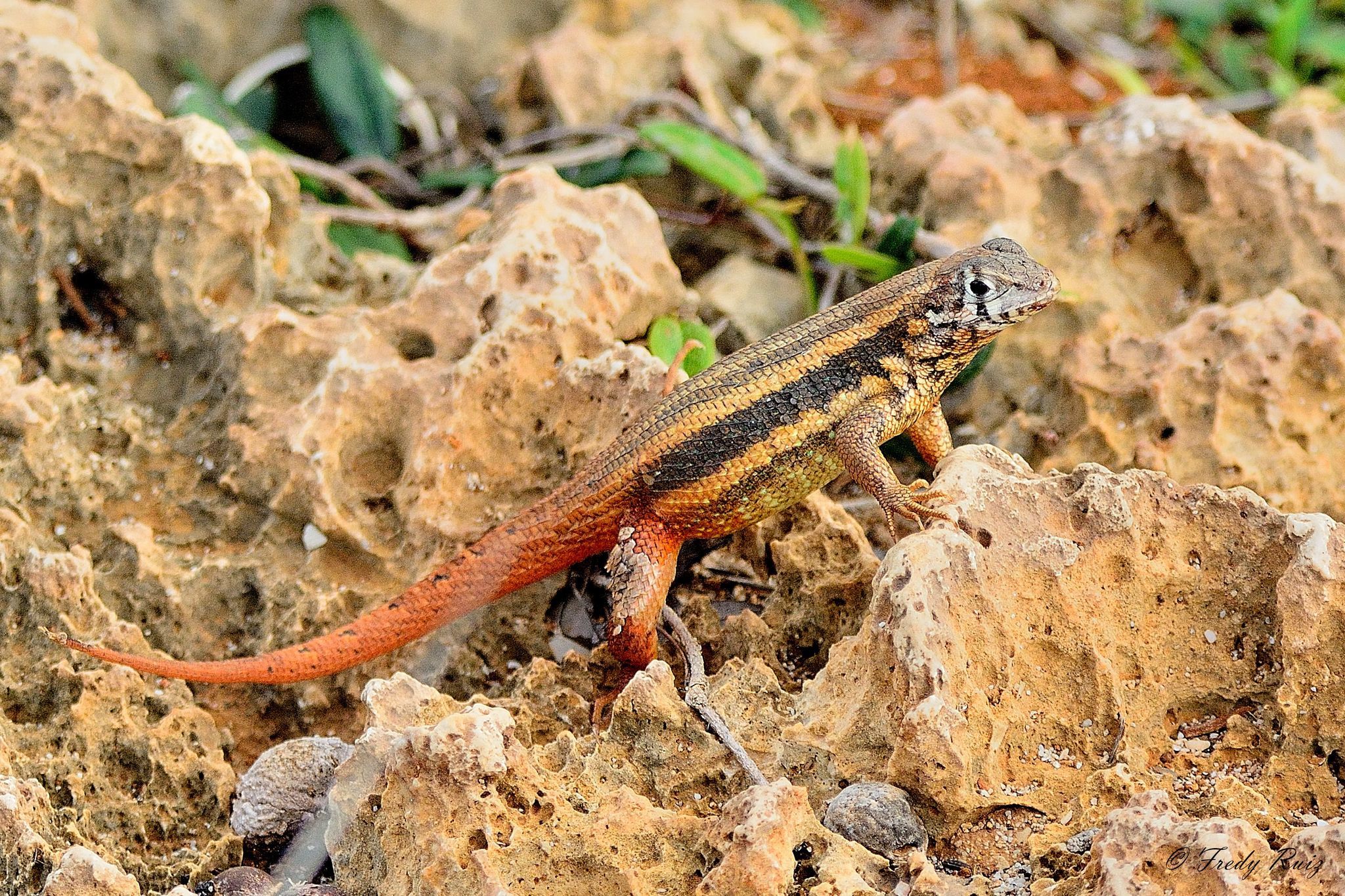
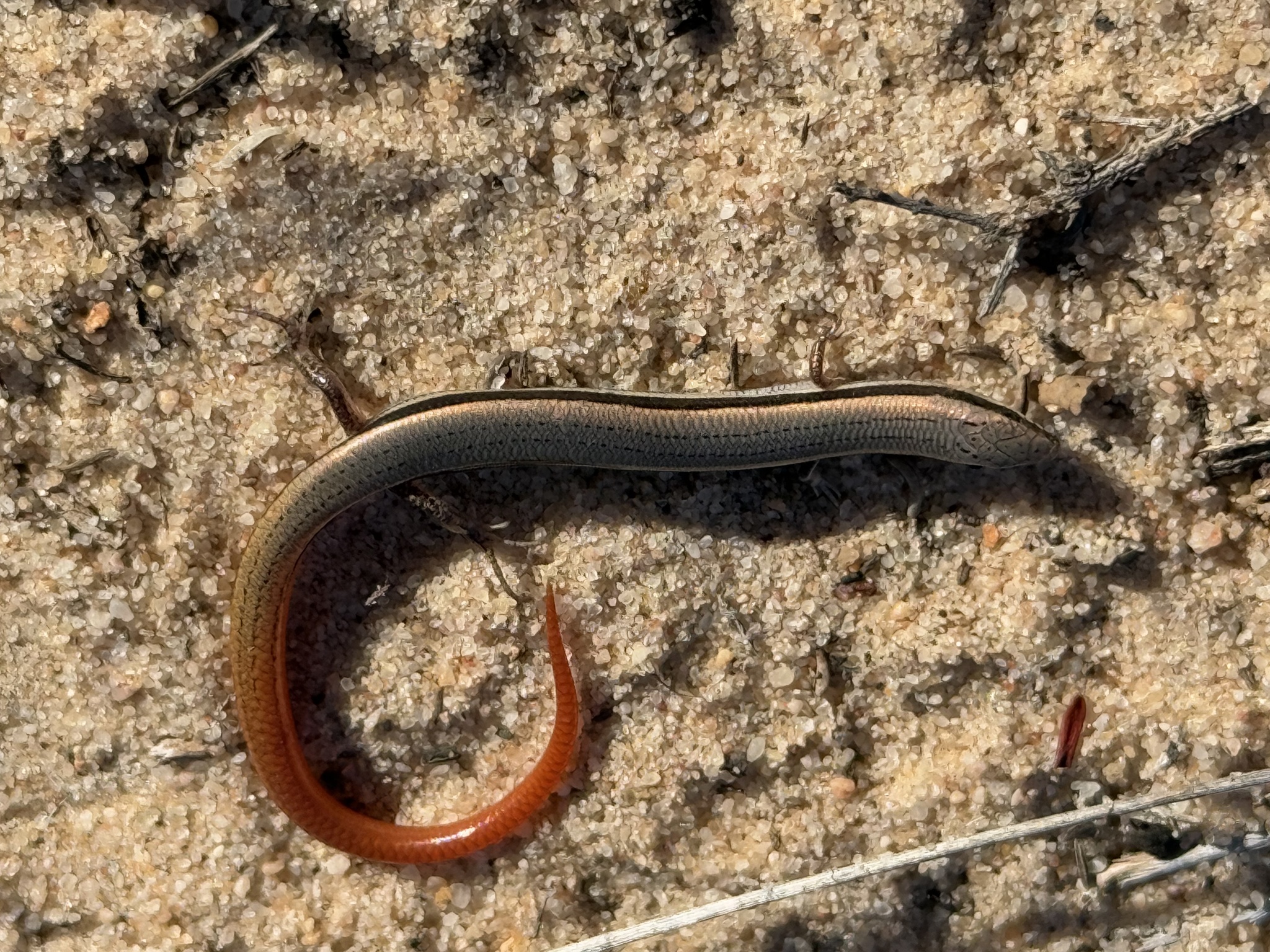
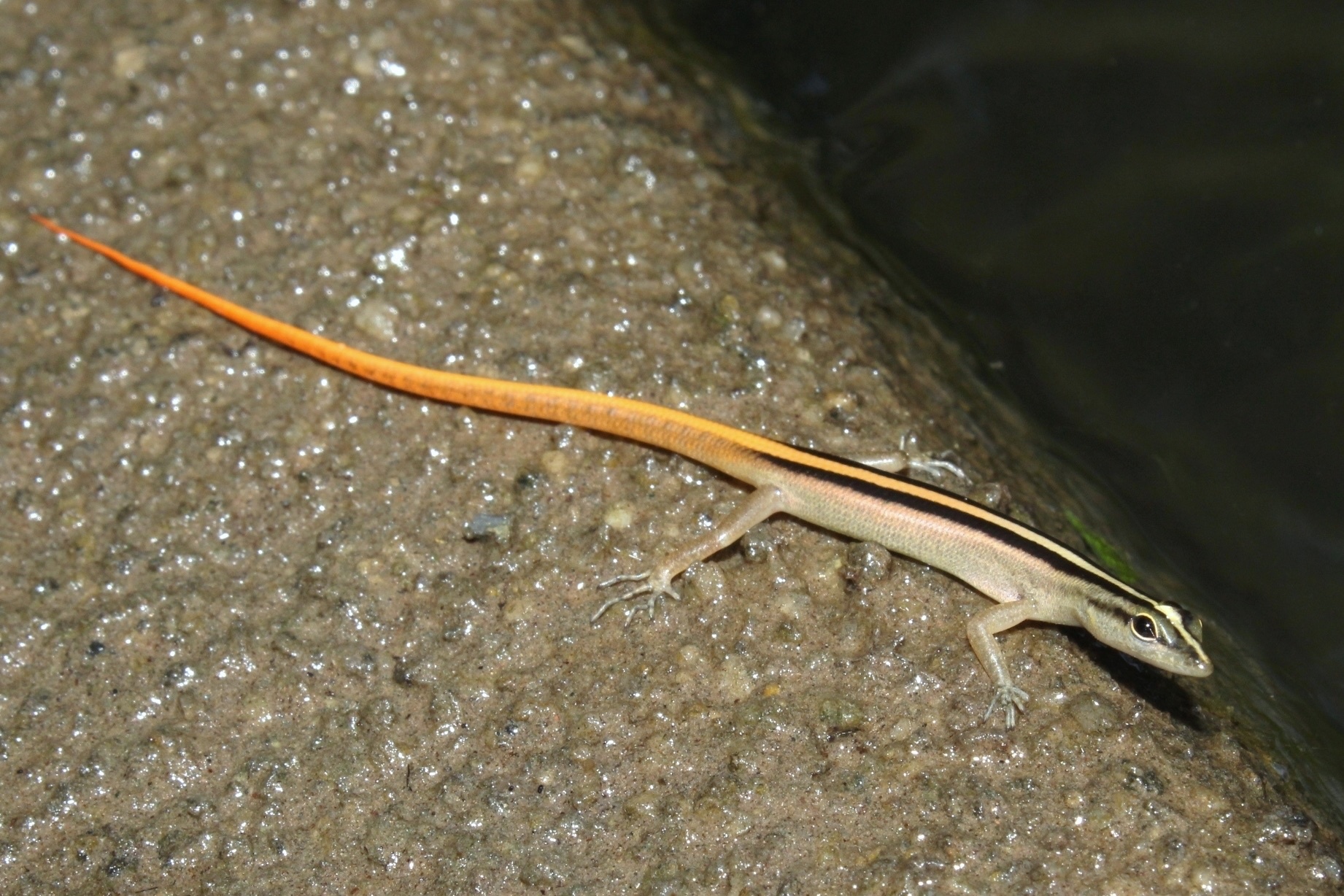
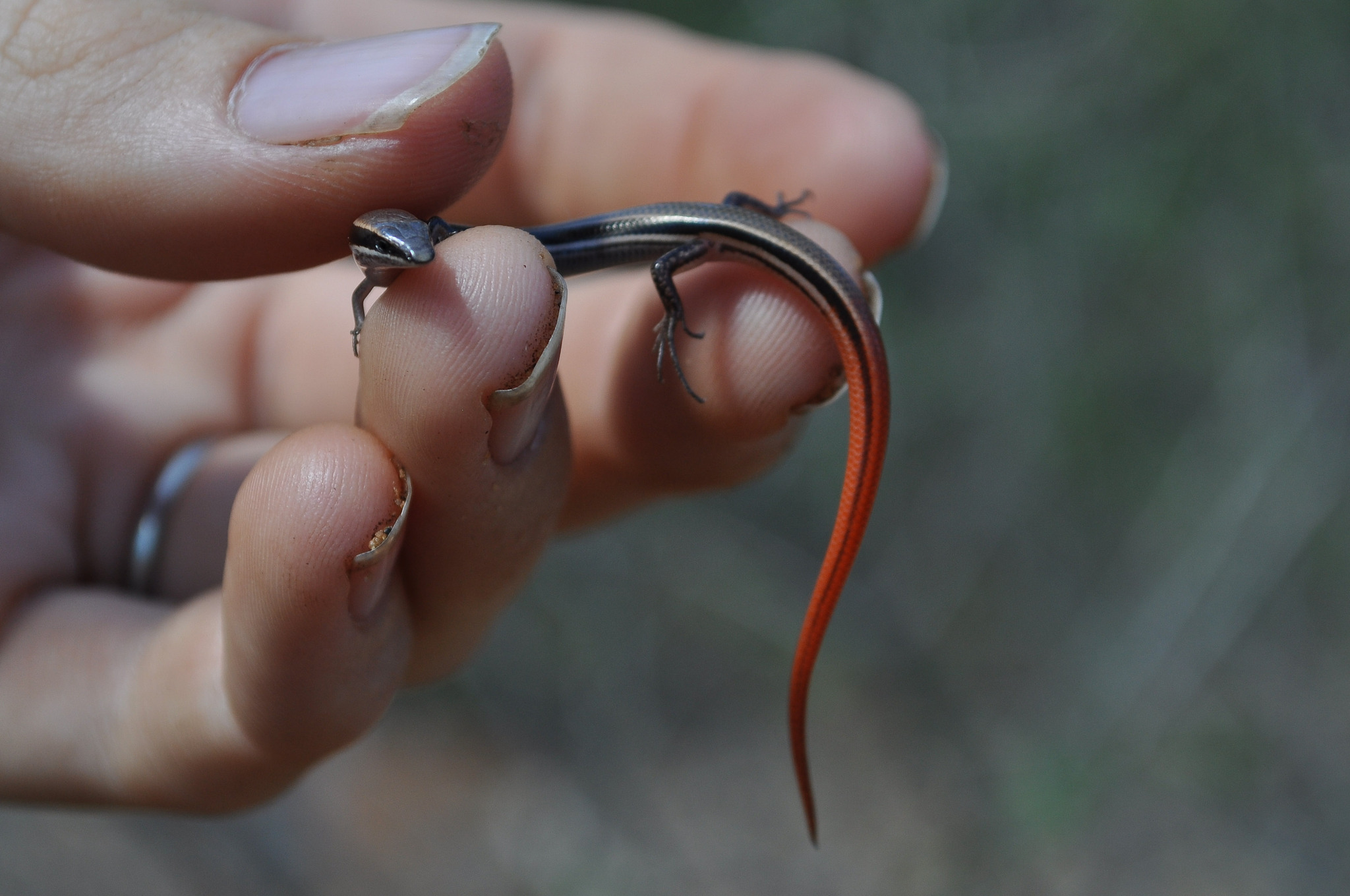
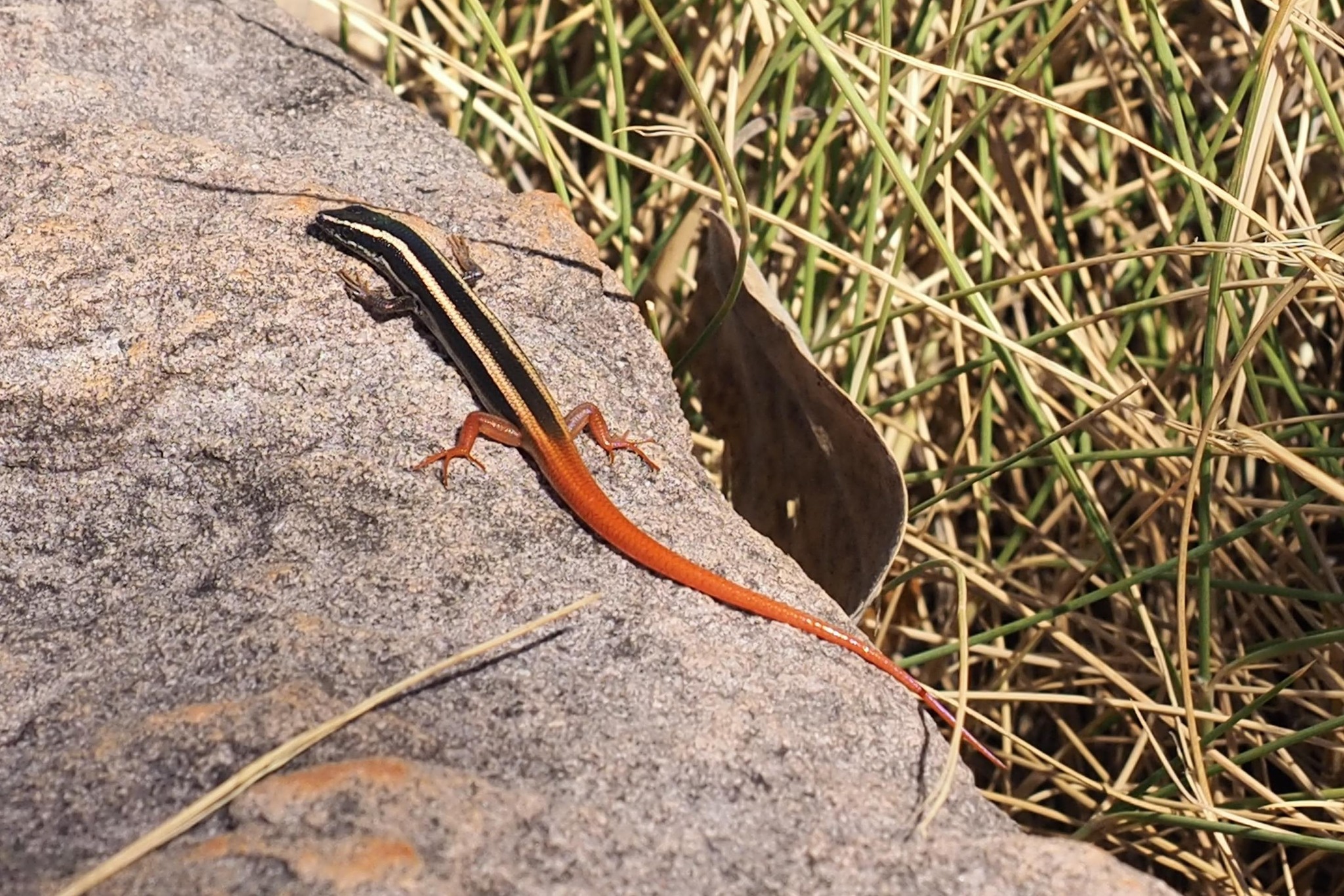
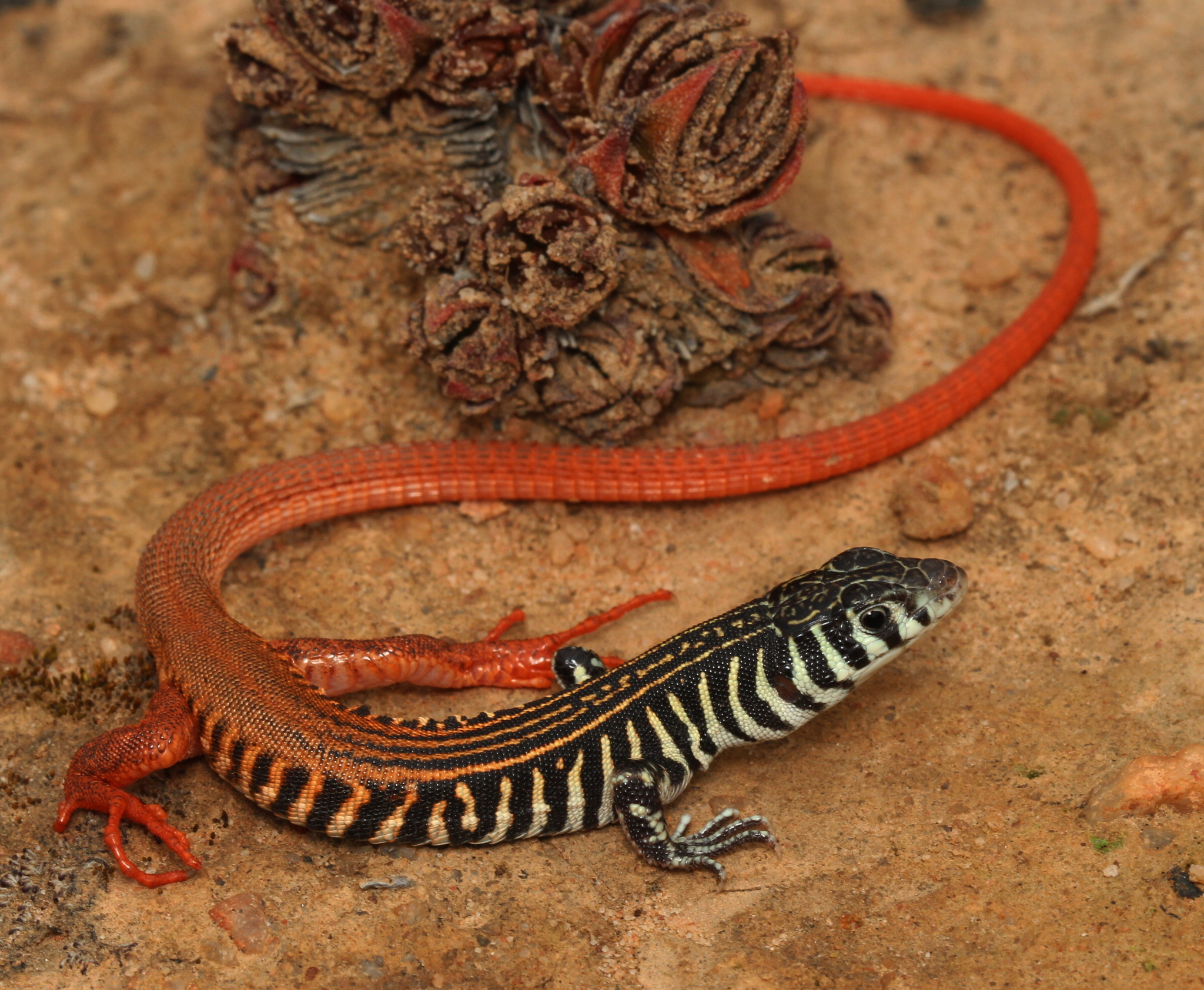
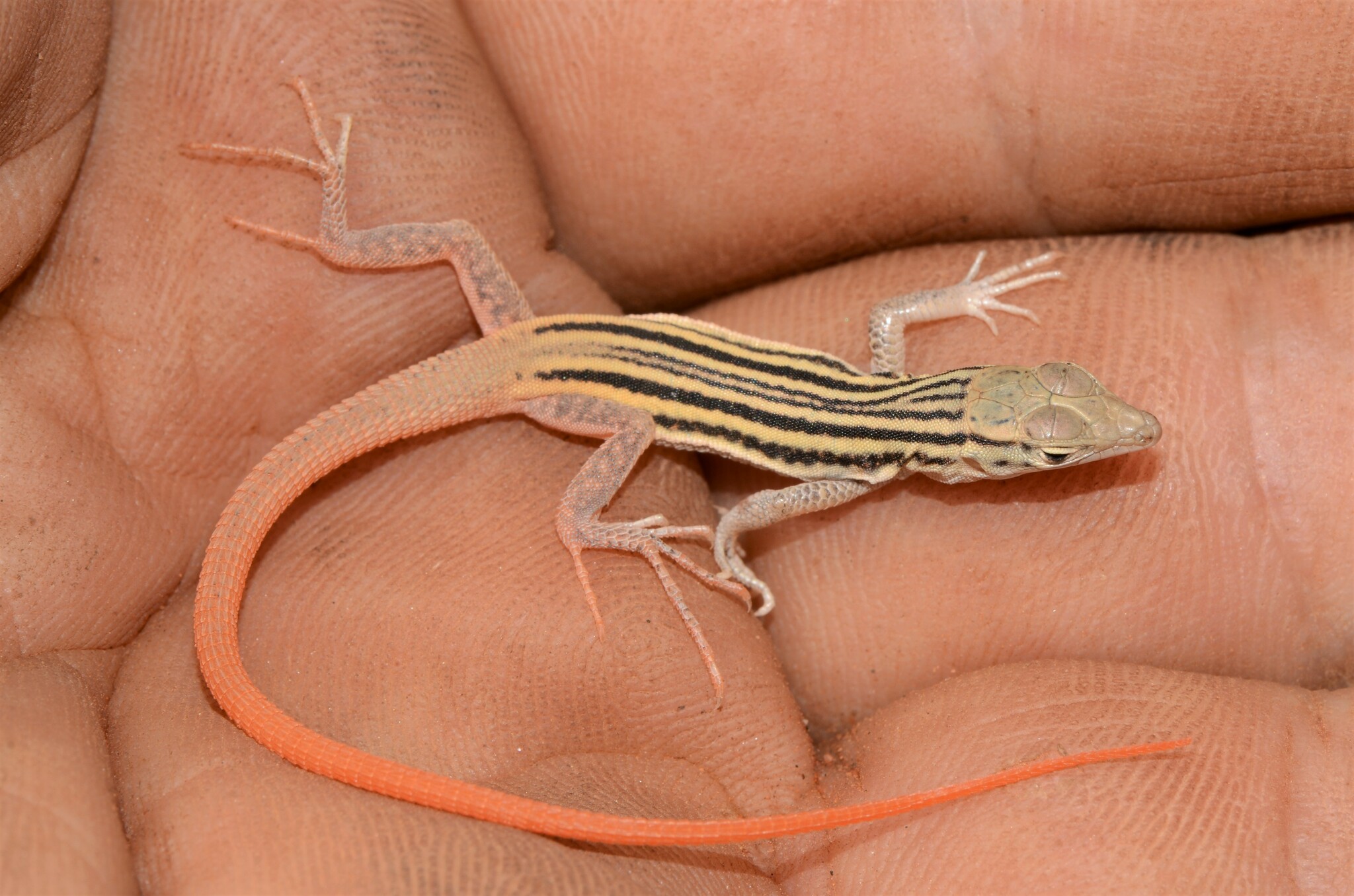
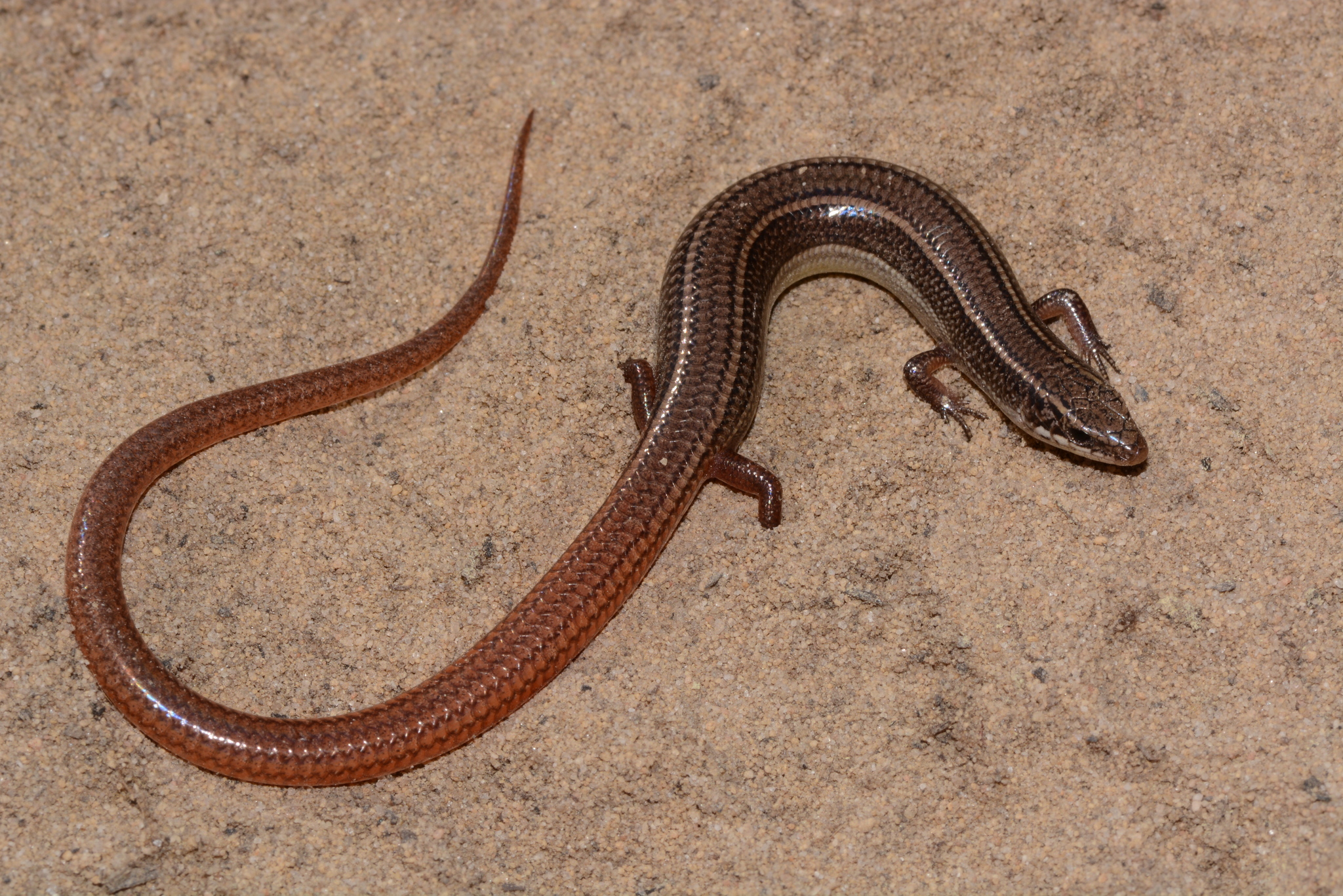
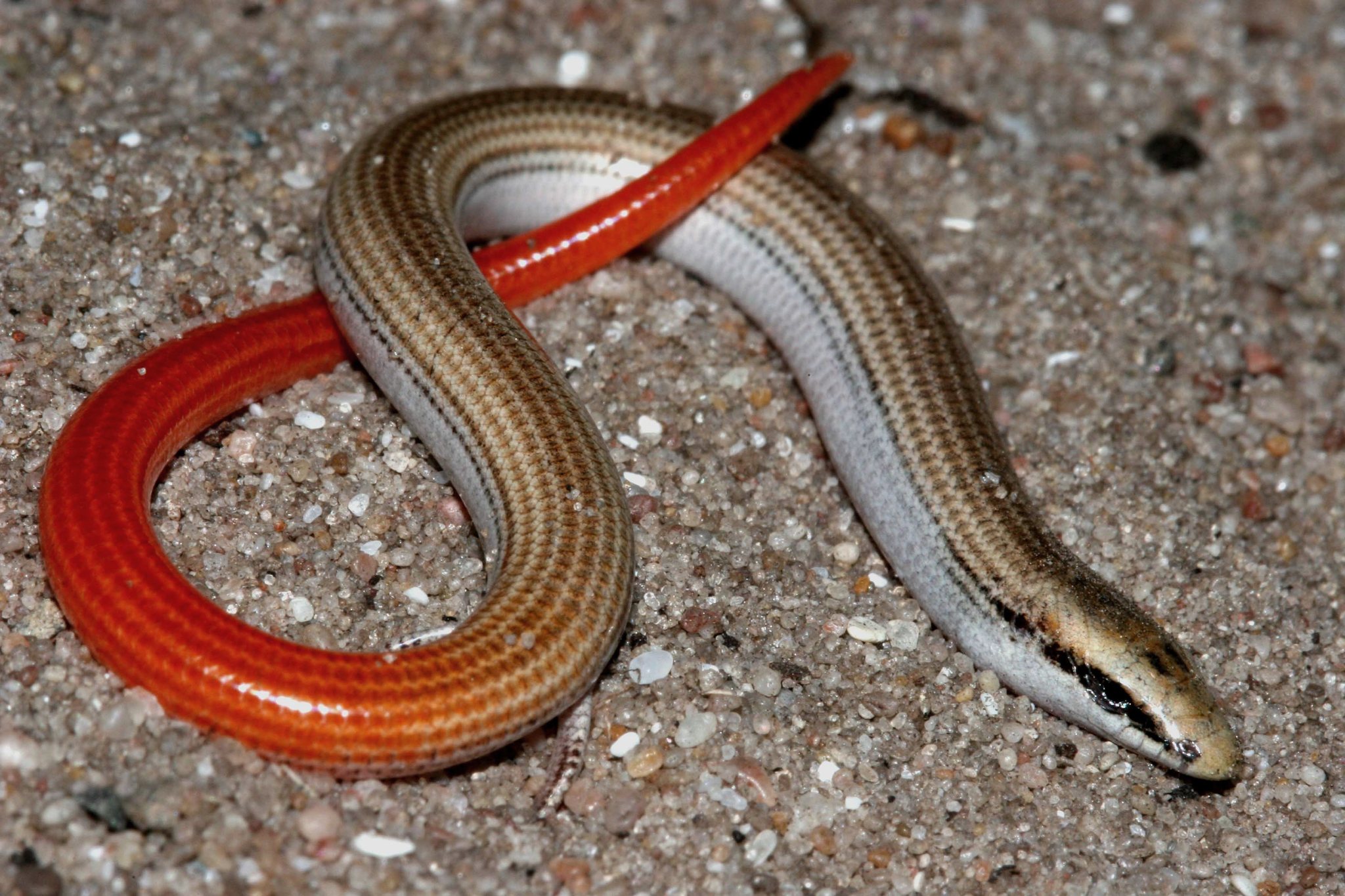
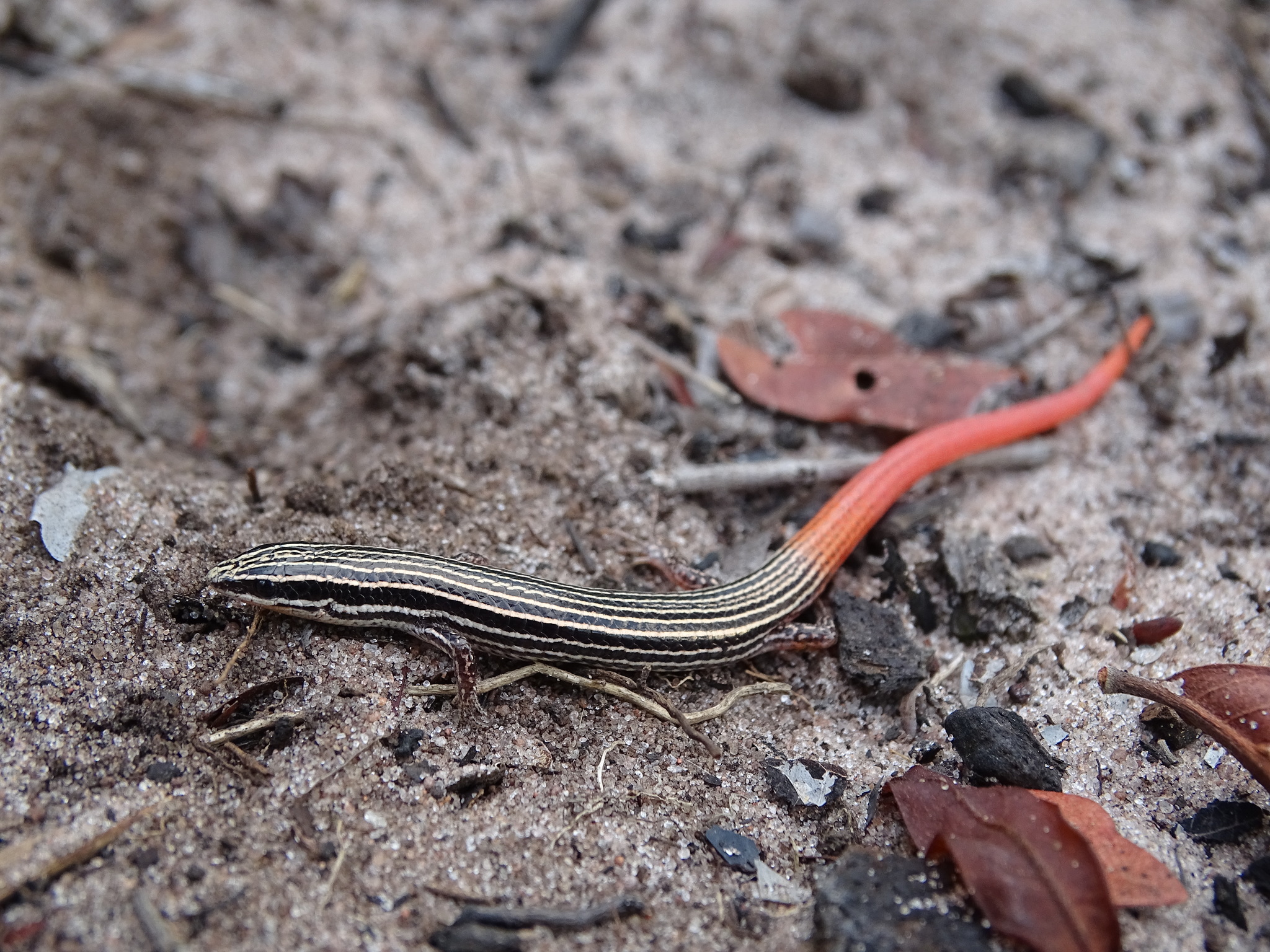
Examples of lizard species with longitudinal stripes and red tails. All photos publicly available on iNaturalist. Please click photos to enlarge photos.
This leads to some obvious questions. Why do we repeatedly see lizards evolving longitudinal stripes and colorful tails? The fact that this has arisen independently numerous times in various lizard species scattered across the globe suggests some very strong and universal selective advantage for this particular pattern. What?
Experimental evidence supports the idea that colorful tails serve to deflect a predator’s strikes toward the tail and away from the head and body, allowing for escape. This is known as the predator deflection hypothesis. Furthermore, longitudinal stripes may hamper a predator’s ability to judge the speed or trajectory of a rapidly fleeing animal. This is known as the ‘motion dazzle’ effect. I have first-hand experience of this. Growing up, I would often try to catch rapidly moving garter snakes, which have longitudinal stripes. When they are fleeing it is difficult to judge where to grab and I would sometimes grab for the tail only to come up empty handed.
The authors of the research study, mentioned above, combined their assembled data set on lizard coloration patterns with data on lizard behavior, habitat preference, and body temperature. This allowed them to test for associations between coloration patterns and ecological factors.
They found that body stripes and colorful tails are most likely to be found in lizard species that have the ability to lose their tail (i.e. caudal autotomy), and are active during the daytime. This is consistent with the ‘predator deflection hypothesis’ for the evolution of colorful tails. Furthermore, they found that striped species are more likely to be ground-dwelling, and have higher body temperature – which hints at a connection between stripes and a rapid escape strategy, as suggested by the motion dazzle hypothesis.
To sum up, many lizard species likely exhibit longitudinal stripes and brightly colored tails because this is an effective means to reduce predation that has been repeatedly favored by natural selection in ground-dwelling, actively moving, diurnal species, that have the ability to lose and re-grow their tail.
A final question is why do some lizard species have blue tails and others red? The study authors found that dorsal stripes (those on top of the body) were associated with red tails, and lateral stripes (those on the side of the body) with blue tails. They suggest that predators with different visual systems may impose selection favoring different combinations of dorsal versus lateral stripes, and red versus blue tails. In evidence of this hypothesis, they cite data indicating that blue tail color appears to function against terrestrial predators like snakes and ground-dwelling birds, and red tails against birds of prey like raptors.
 Reason and Nature
interesting to seesaw a good, or functional idea trends to reoccur.
LikeLike