I recently contributed a set of ‘Readers’ Wildlife Photos’ to a website I follow. I chose alligator photos because that’s what I have been photographing lately. One of the comments on this set of photos really struck me: “Alligators are kind of fascinating to me because they are (I think) the only potentially deadly predators that humans have elected to live in close proximity to rather than eradicate. Even though they seldom ever attack and kill people, every time I see a big one lolling on a lawn or poking its nose out of a pond I’m walking by, I can’t help wondering if it’s entirely sane to be so casual around animals that could easily kill me.”
I have been thinking about this comment, and I agree with it. Alligators are probably the only large predators capable of killing and consuming humans that are tolerated in such close proximity.
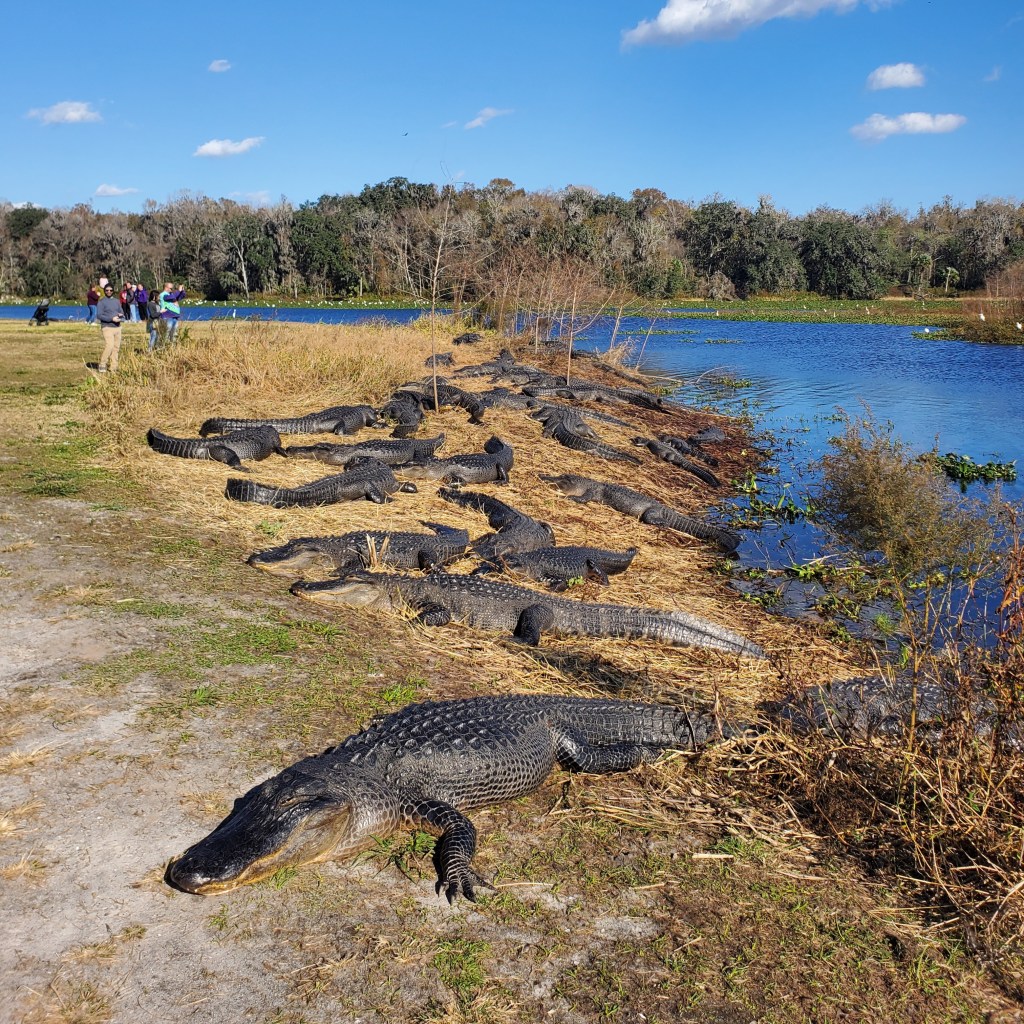
Other predatory species capable of killing and consuming humans include sharks, wolves, lions, tigers, grizzly bears, polar bears, leopards, mountain lions, crocodiles, and some very large snakes. These species either do not live in close proximity to humans (i.e. sharks found in the ocean, polar bears in the arctic), are confined to areas of relative wilderness or protected areas such as National Parks because they are readily hunted by humans (wolves, grizzly bears, tigers, lions, crocodiles, large snakes), or occasionally live in close proximity to humans but are very secretive and seldom seen (leopards, mountain lions). Species that fall in the first two categories are frequently Threatened or Endangered with extinction, and those in the third category – although not necessarily rare – survive by avoiding contact with humans. Alligators, on the other hand, are neither rare nor secretive.
There is a saying in Florida: If there is water there is likely a gator. It is safe to assume that every body of water in Florida including ditches, canals, retention ponds, creeks, springs, lakes, rivers, swamps, estuaries, and even the ocean potentially contains alligators. However, this wasn’t always the case. In the 1960s alligators were placed on the U.S. Endangered Species List. They were put on this list because they were being hunted for their valuable hides, rather than a deliberate extermination campaign (as notoriously was the case for wolves in the USA). Alligators subsequently made a remarkable recovery – to the point that an estimated 1.3 million are found in Florida, and 5 million in the southeastern United States.
So why are alligators tolerated in close proximity to humans, while other predators are not? I think the reason is that they are confined to water and the immediately adjacent area, and their behavior is fairly predictable. If you are not swimming or walking along the edge of a waterbody, your chance of being attacked by an alligator is extremely low. Furthermore, the number of fatal alligator attacks on humans is not as high as one might expect. Since record keeping began, there have been 45 documented fatal alligator attacks in the United States. For comparison, this is about the number of fatal dog attacks that occur in the United States each year.
Living in Florida, it is amazing to regularly see 10+ foot alligators in the wild. They are awe inspiring partly because of their dangerousness, and it is important to be alert to their potential presence when walking near water. To that end, I have photographed numerous signs (in various locations) warning the public about the likely presence of alligators and snakes.
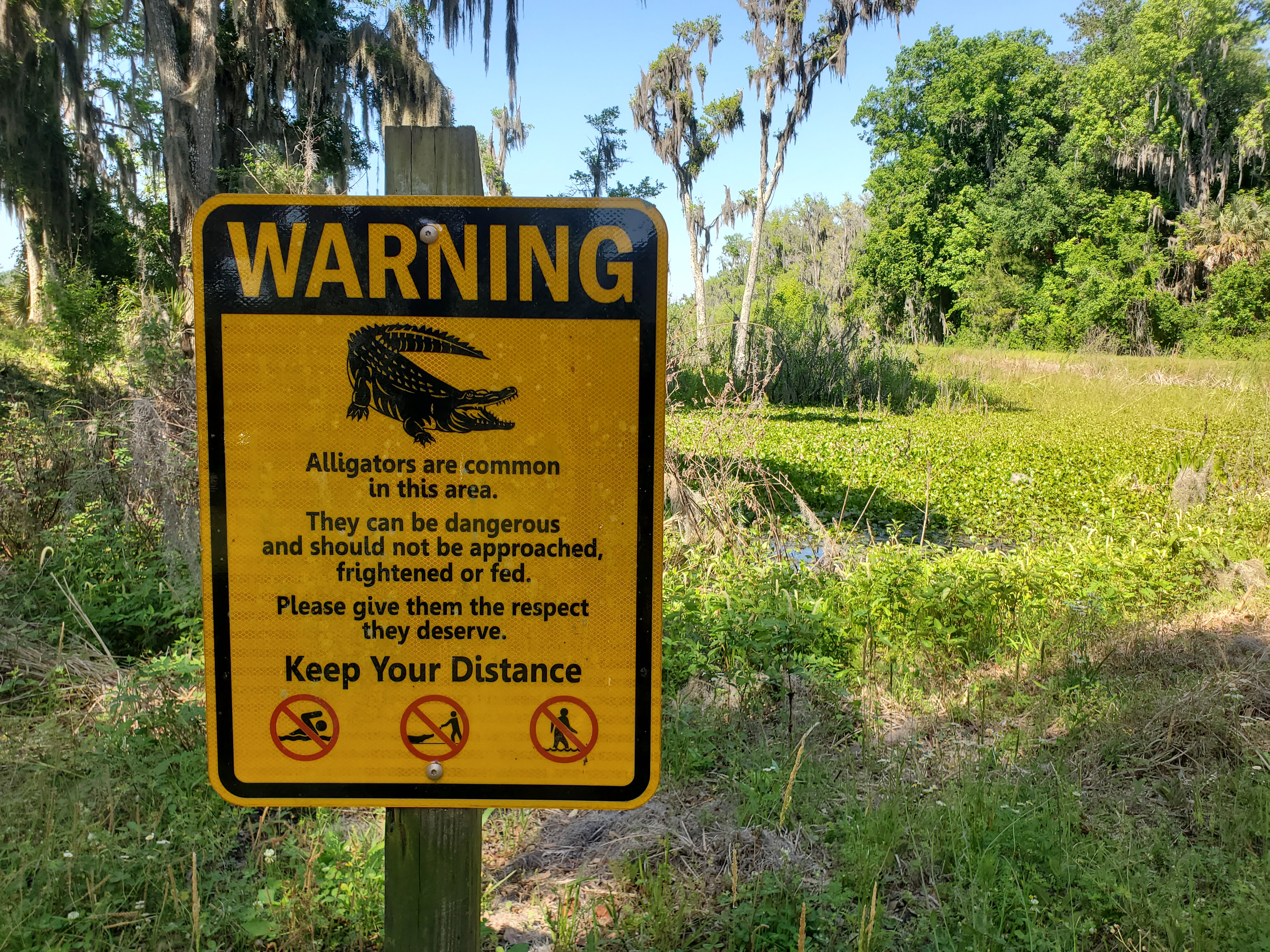
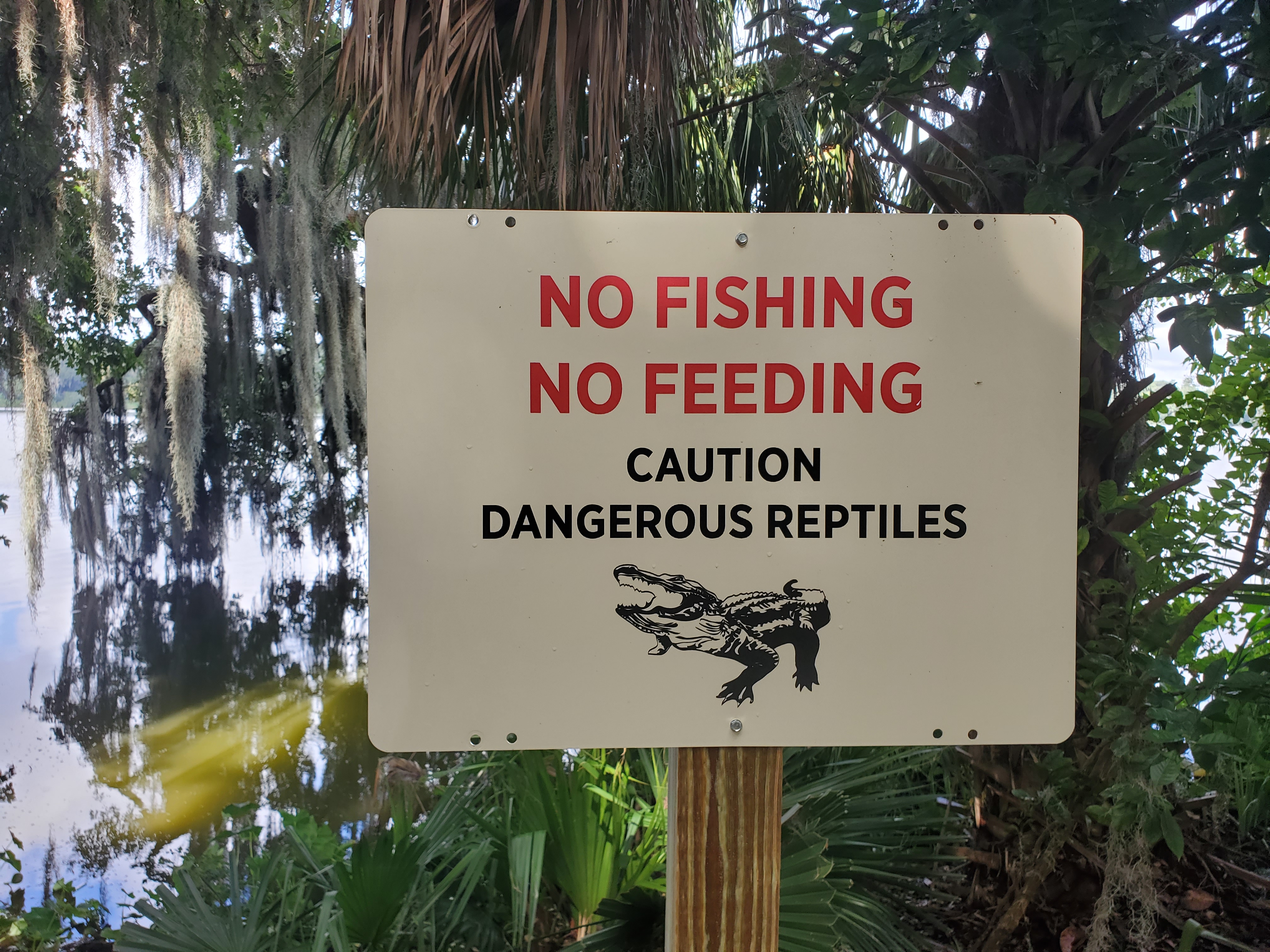
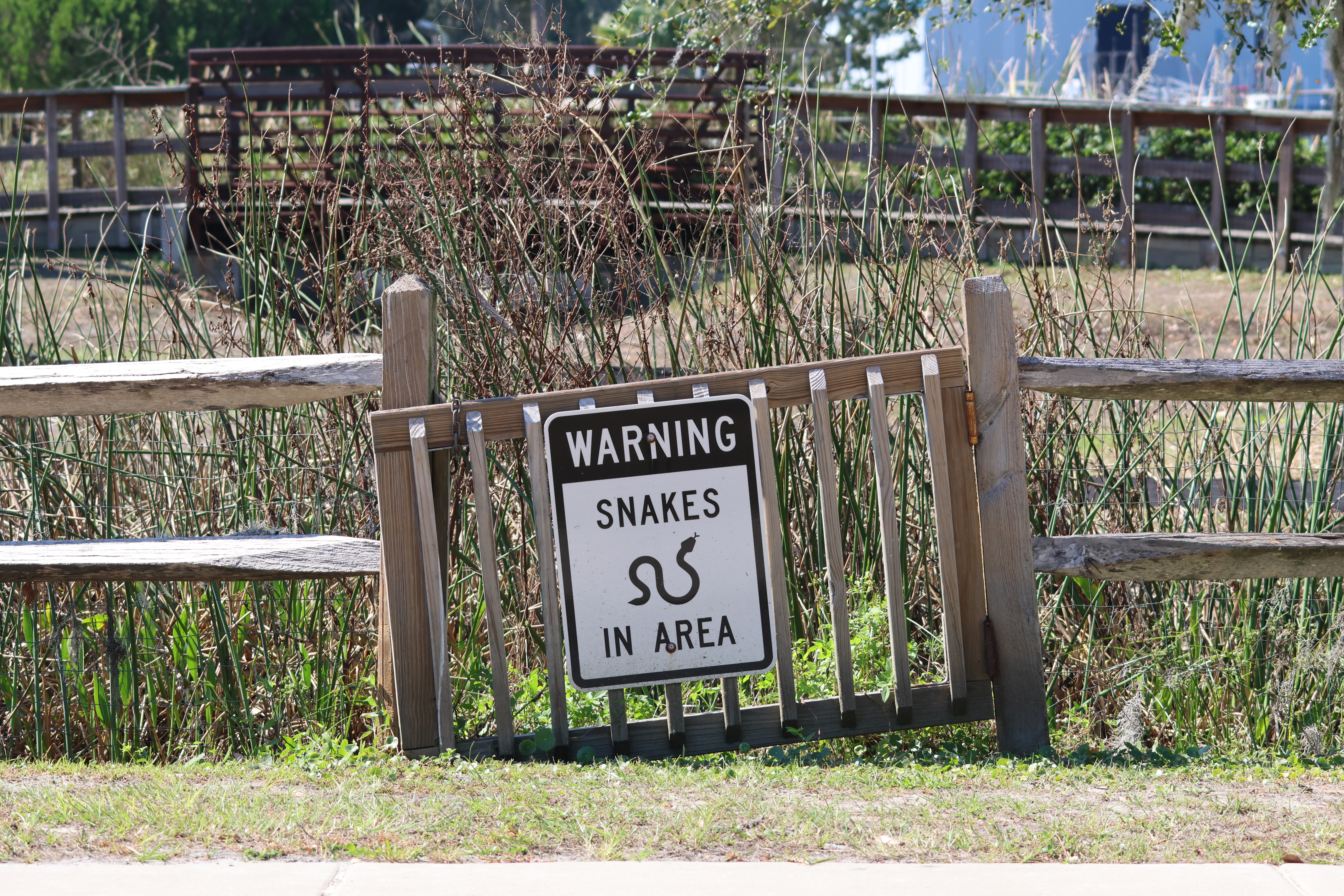

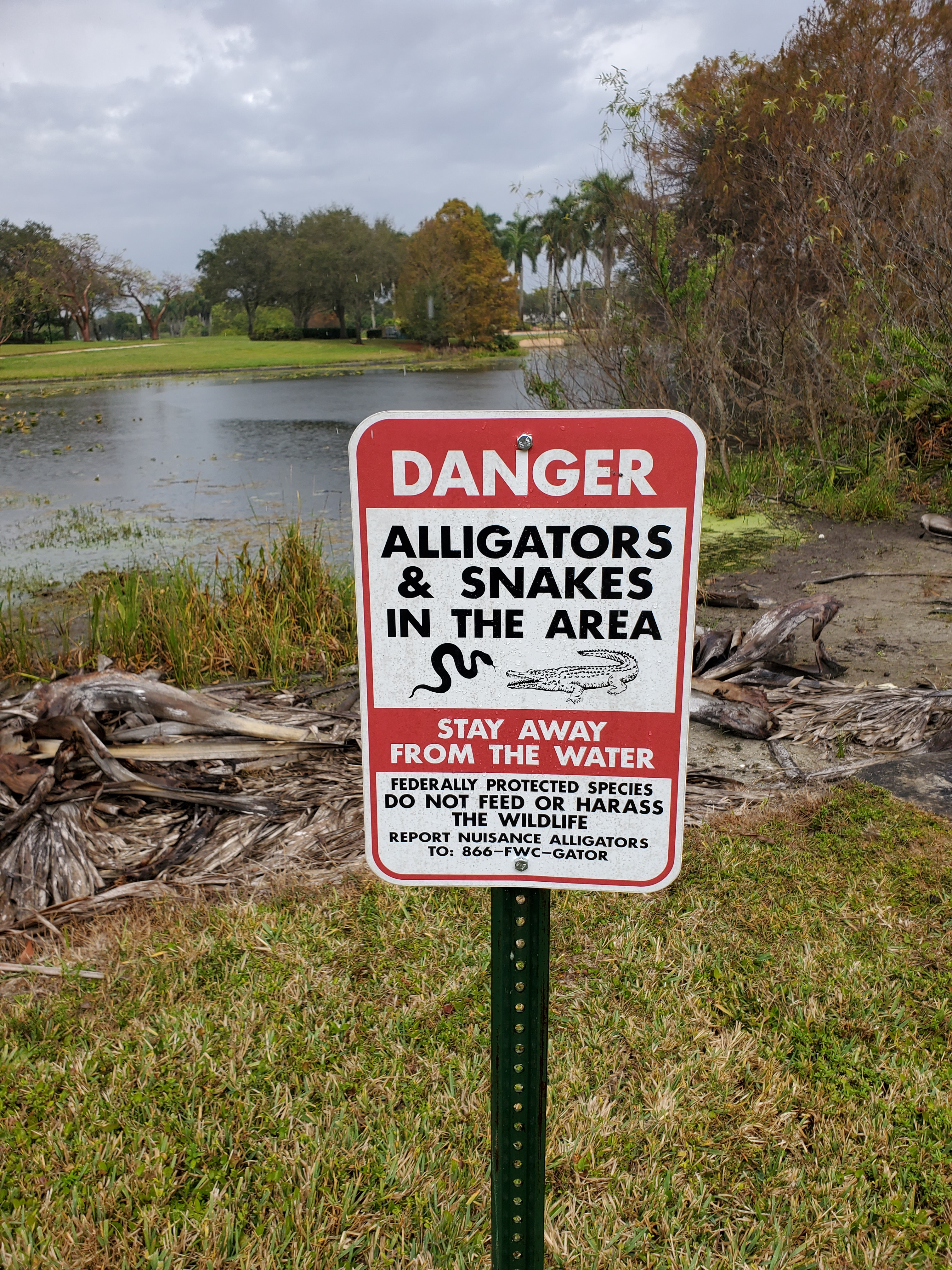
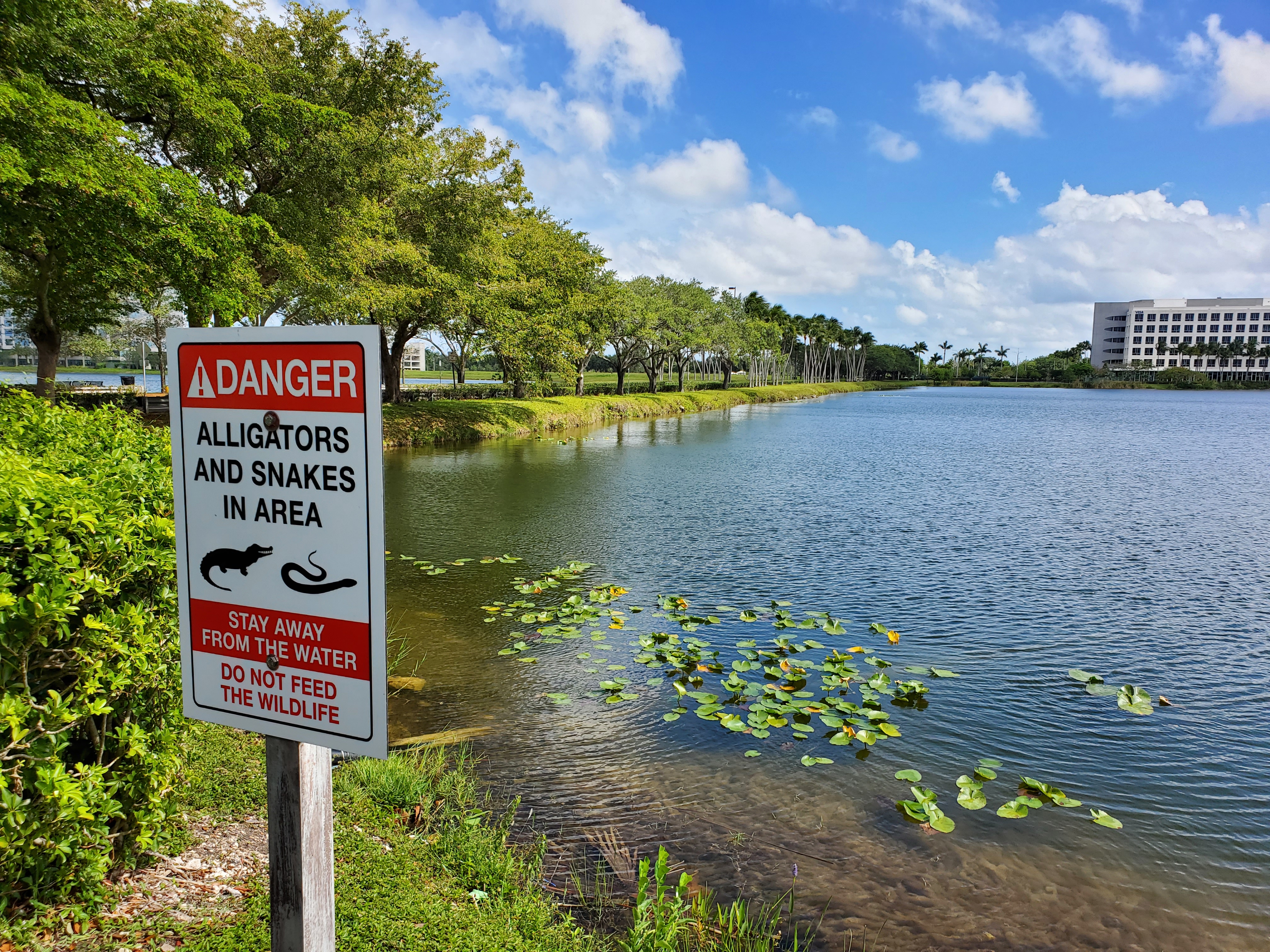
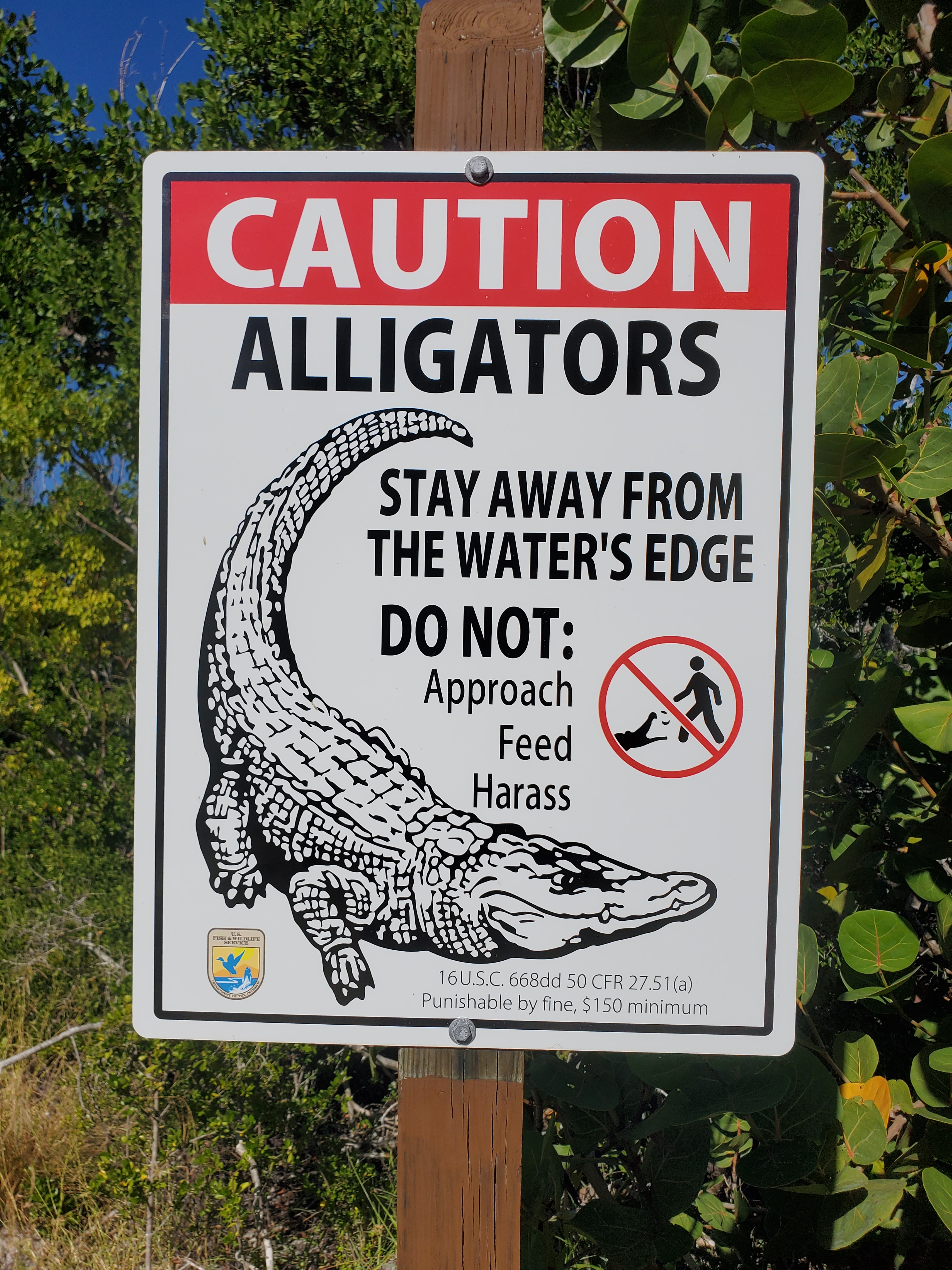
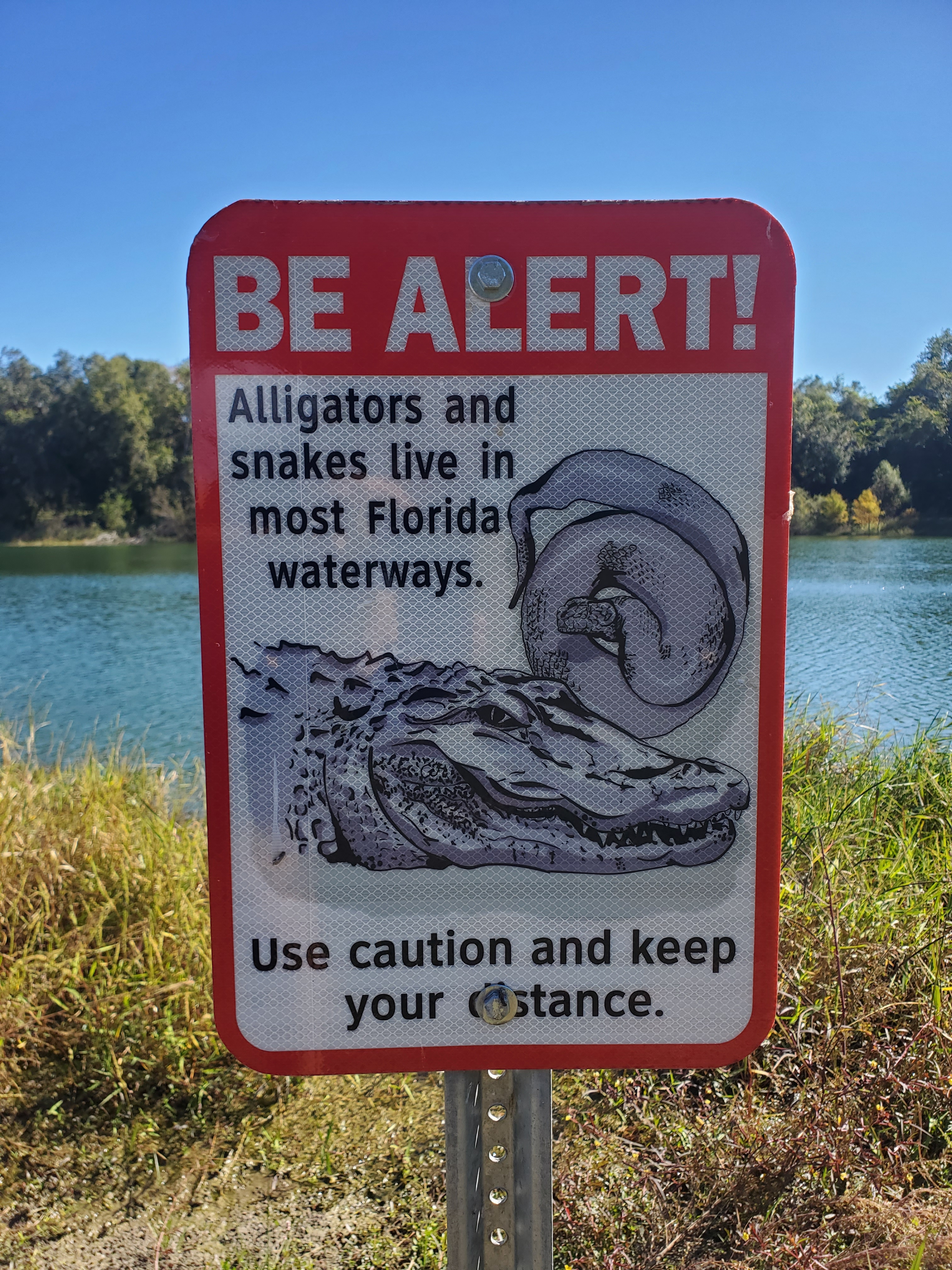
Examples of signs warning the public about the potential presence of alligators (and snakes). Click to enlarge photos.
 Reason and Nature