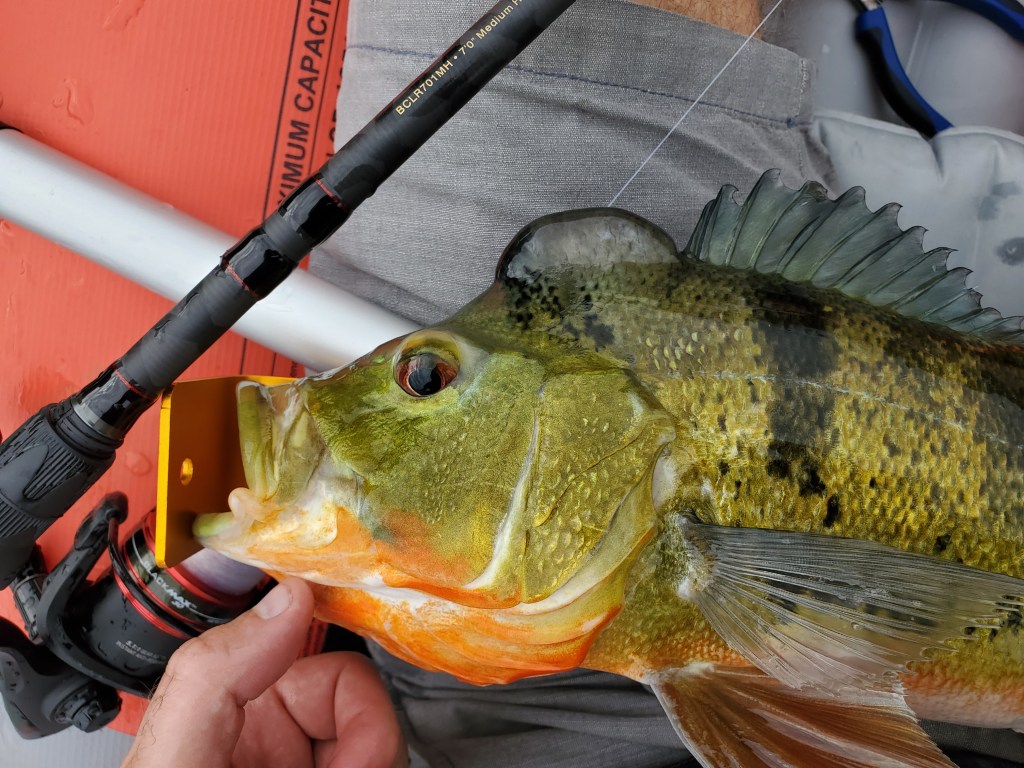
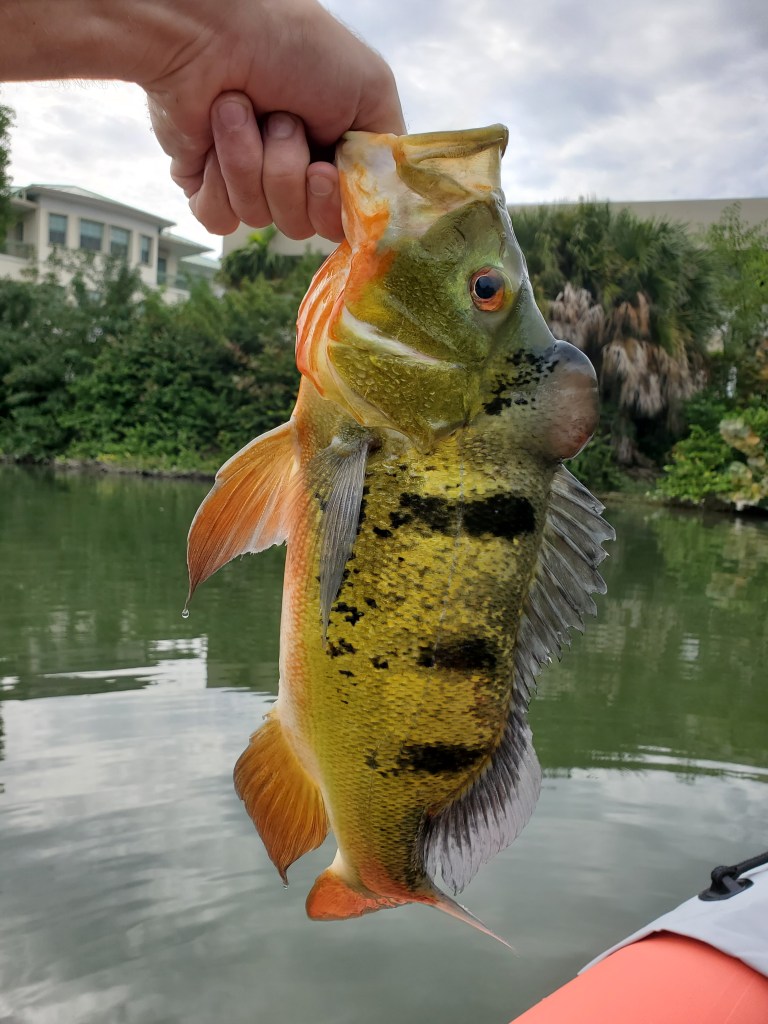
Butterfly peacock bass (Cichla ocellaris) are undoubtedly one of the world’s most striking freshwater fish. This species is actually a large predatory cichlid. In an earlier post on pike killifish, I pointed out that the elongated ‘pike’ body shape has evolved convergently in many different, and distantly related, groups of fish. Another successful predatory fish body shape is that of a ‘bass’ with semi-elongated body and very large mouth. Similar to the pike-like predatory body shape, the ‘bass’ body shape has also evolved independently in distantly related groups – likely because there are a limited number of ways to be a successful aquatic fish predator, and evolution has repeatedly found such optimal solutions. Below you can see the similarities in body shape between the butterfly peacock bass and largemouth bass.


In the family Cichlidae, of which the peacock bass is a member, there are 1,650 currently recognized species – with estimates of the actual number of species ranging from 2,000 to 3,000. This makes this family amongst the largest of all vertebrates. This group is famous in the field of evolutionary biology for having undergone explosive adaptive radiations in several African rift lakes such as Lake Tanganyika, Victoria, and Malawi. Besides Africa, cichlids are also found in North, Central, and South America. There are 15 currently recognized species of peacock bass in the genus Cichla. All are native to South America where they are sought after game fish.


The butterfly peacock bass is native to the Amazon River basin. Butterfly peacock bass were stocked into southeast Florida canals in 1984 by the Florida Fish and Wildlife Conservation Commission (FWC). They were ostensibly introduced to eat and help control other already abundant introduced fish species in South Florida’s waterways (such as tilapia and Mayan cichlids) and also to provide sport fishing opportunity. They are actually the only species which was legally (and deliberately) introduced into Florida waters by the state. According to the FWC, they are intolerant of salt water and water colder than 60 degrees F, which limits their spread primarily to Miami-Dade and Broward counties. I have found them in freshwaters throughout the Everglades, so it is clear that they are expanding westward from their point of introduction in the greater Miami area as well as northward as a result of recent milder winters – although it is undoubtedly true that they are still confined to South Florida and will remain so for the foreseeable future. Within the greater Miami region, they are well established, reproducing prolifically, and abundant.
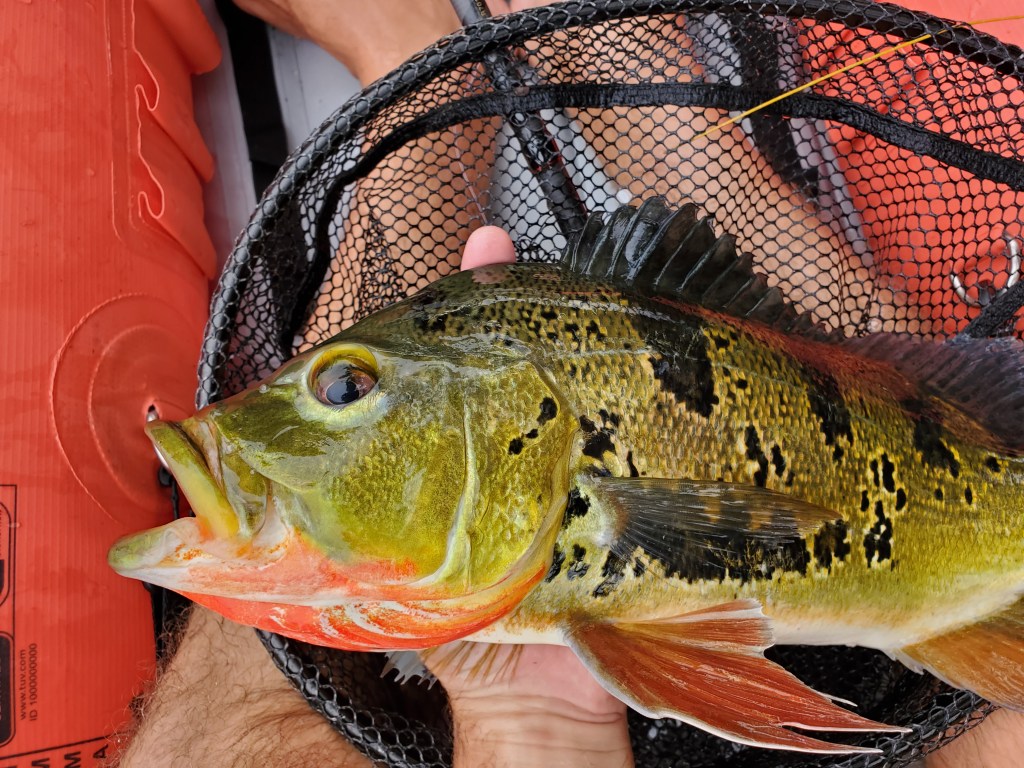
A bit on the biology of the butterfly peacock bass in South Florida…. They are aggressive predators and feed primarily on smaller fish. They are active during the daytime. The species inhabits freshwaters of all types (i.e. canals, ponds, lakes) and typically like hanging around fallen vegetation, culverts, bridges, overhanging trees – typically the same areas you would expect largemouth bass. According to the FWC, they typically spawn from April to September. Females lay 4,000 to 10,000 eggs and the nest and young are aggressively guarded by both parents (i.e. they exhibit biparental care). Interestingly, during the breeding season the males develop a big bump on their forehead – known as a nuchal hump. Finally, they are extremely popular sportfish. They readily take a variety of artificial lures and are famed for their aggressive strikes and jumps. Pound for pound they fight harder than largemouth bass. Evidently, they are delicious to eat, although the vast majority of anglers practice catch and release. There is a 2 fish bag limit on peacock bass, and this is probably one of the few cases where an introduced species in the U.S. has a limit placed upon its take (another is salmon introduced to lake Michigan). In Florida, the state record caught on hook and line measured 23.5 inches and weighed 9.11 pounds.

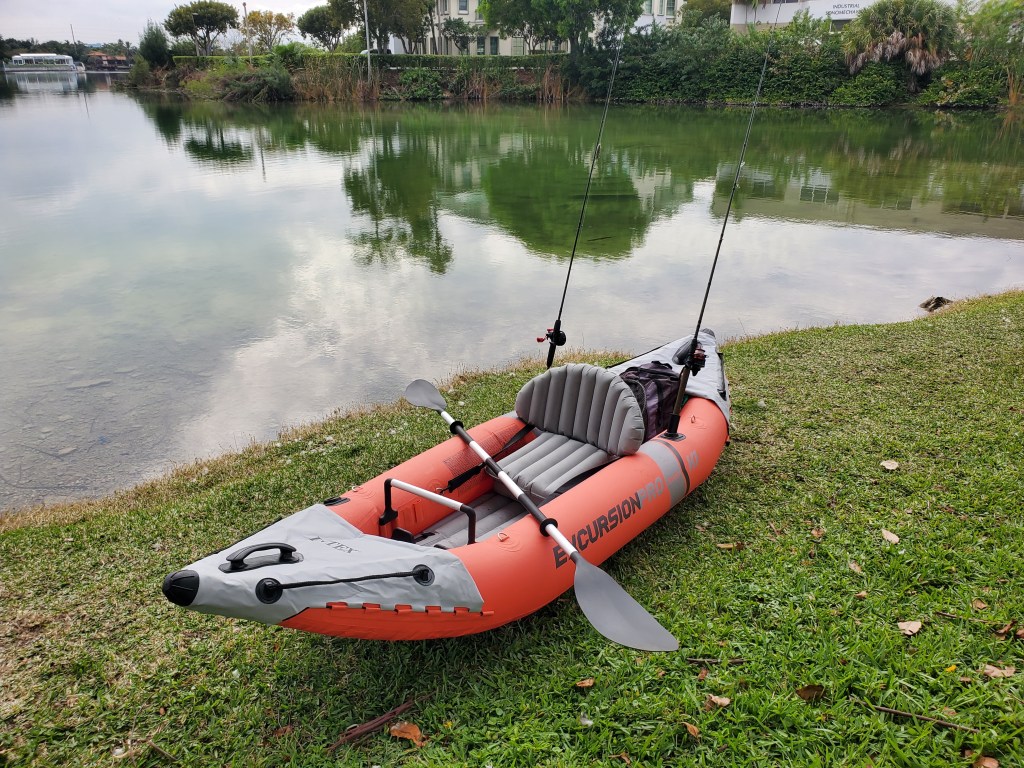
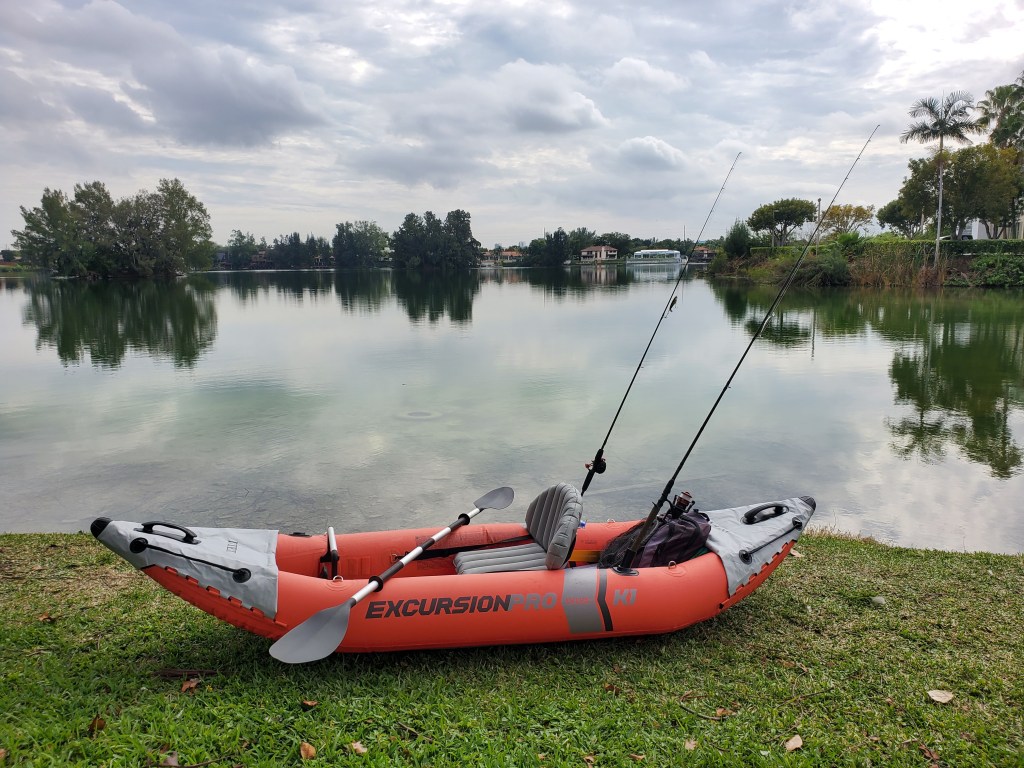
At the beginning of this year, I bought an inflatable fishing kayak. Prior to this point I was limited to shore fishing. From my perspective, the primary advantage of a kayak is that you can access desirable areas that are inaccessible from shore, for example due to completely overgrown banks or private property. This weekend I took the inflatable kayak out on an urban Miami lake. It was a great day of fishing, as I caught (and released) 20 peacock bass and 1 largemouth bass over a 4-hour period (12:30 to 4:30 pm). The water was calm, the air temperature in the low 70s F, and the weather was partly cloudy.



 Reason and Nature