Pike are ambush predators with elongated bodies and toothy jaws. The pike body-form has evolved convergently in many different groups of fish on almost every continent and ocean.

Examples of convergent evolution of pike in groups of fish from different geographic regions. These are just a few representative species, but dozens of others could have been included, such as gar, barracuda, needlefish, and pike cichlid. Although each of the above species look superficially similar (and have pike in their common name) they aren’t perfectly convergent; they exhibit noticeable differences which reveal their evolutionary history. For example, the pikehead is in the gourami family and, like most other species in the family, males exhibit elongated extensions of the pelvic fin and mouth brooding as a form of parental care. Likewise, the pike killifish is a live-bearer, like other members of the family Poeciliidae, but in contrast to all the other species depicted.
Convergently evolved, simply means that ‘pike’ evolved independently in very distantly related species and converged on a similar morphological body-plan and predatory habit (as opposed to each of the above pike species being closely related and inheriting similar body-plan and predatory habits from a shared common ancestor). To me, it is remarkable that pike can sometimes be found in a group of species (i.e. a clade in evolutionary jargon) in which all closely related species look and behave very differently. A very clear example of this is with the pike killifish (Belonesox belizanus). This species is actually in the same family of live-bearing fish as guppies, mosquitofish, mollies, and swordtails – the family Poeciliidae. This family of live-bearing fish contains 276 species of small, often colorful, live-bearing fish commonly kept in aquariums. This one single and very unique species has evolved to look and behave totally different than all the other species in the family – it has evolved into a pike and eats other fish!
The native range of the pike killifish is from from Central Mexico to Costa Rica. They inhabit fresh and brackish water including slow-moving rivers and estuaries. They are among the largest species in the family attaining a maximum size of 15 cm. Unlike most species in the family which exhibit a generalist diet, Belonesox are highly predatory and piscivorous (i.e. eat other fish).
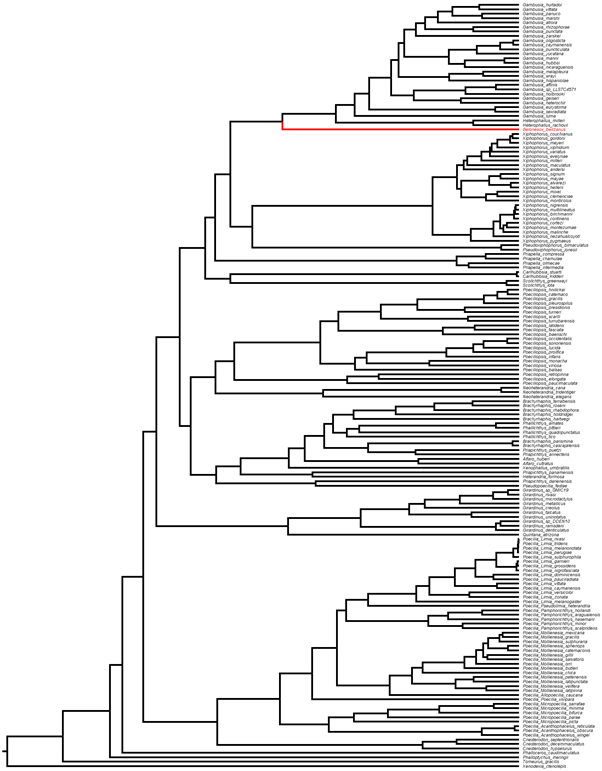
An evolutionary tree of poeciliid fishes based on DNA data. The pike killifish, Belonesox belizanus, the sole member of the genus Belonesox, is highlighted in red. The Belonesox lineage is estimated to have diverged from other poeciliid lineages ~24 million years ago. The sister clade to Belonesox (i.e. the most closely related group of species) contains the genera Heterophallus (2 species) and Gambusia (over 40 species). The genus Gambusia includes the well-known mosquitofish, highlighting just how different the pike killifish looks from its most closely related relatives.

A pike killifish, Belonesox belizanus, male (top) and female (bottom) with comparison to the closely related Eastern mosquitofish, Gambusia holbrooki (male, top and female, bottom). Note, images are not to scale as pike killifish are substantially larger than mosquitofish. Pike killifish are amongst the largest members of the family Poeciliidae (up to 15 cm) and are specialized for piscivory, with a pike morphology to match. In contrast, the much smaller mosquitofish (up to 6.5 cm) exhibits a generalist diet. Photo credits: Zachary Randall of the Florida Museum.
The pike killifish was introduced to South Florida (Miami-Dade county) in 1957, and today established and reproducing populations occur throughout South Florida and the Tampa Bay region. At several places in the Everglades, South Florida’s vast wetland, I was able to observe and photograph this interesting species.

A sign on the Anhinga Trail in Florida’s Everglades depicts the pike killifish (Belonesox belizanus) as one of several exotic fish species found in the area.

The other common name for this species, besides pike killifish, is pike topminnow. True to its name, amongst the tangled mangrove roots in the Everglades, this species sits just beneath the water surface.
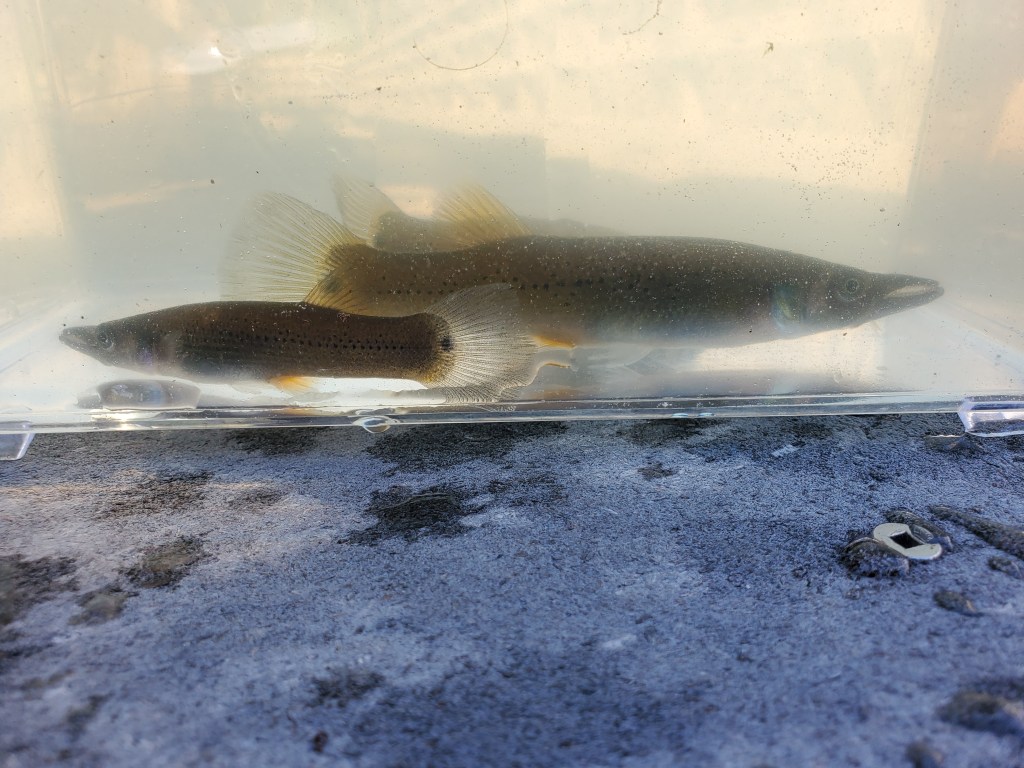
I managed to catch a few pike killifish with a small hand net, allowing for a closer examination. I first unsuccessfully attempted to catch this species using a fishing pole and a very small rubber minnow as bait. Furthermore, a cast net was out of the question given the mangrove roots.
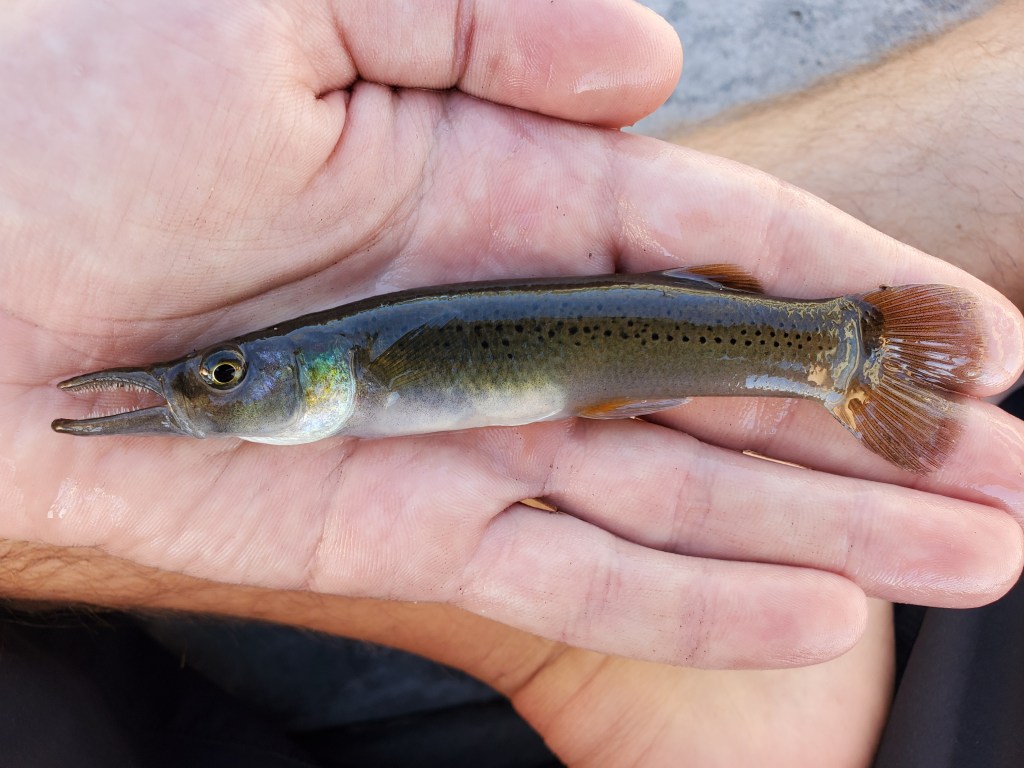
A pike killifish (Belonesox belizanus).

When held out of water pike killifish tended to open their mouths exposing their needle-like teeth. In this photo you can really see the prominence of the jaws. As a friend remarked, its as if you took a normal looking poeciliid head such as that of a Gambusia species, and added on giant toothy jaws.
 Reason and Nature
One thought on “The amazing pike killifish”