The Everglades, southern Florida’s vast wetland, are an amazing place to observe nature. Over Memorial Day weekend I went to the Everglades to do some fishing and nature photography. At dusk, I observed three species of water snake, the southern water snake (Nerodia fasciata), the Florida green water snake (Nerodia floridana), and the brown water snake (Nerodia taxispilota) emerge, in large numbers, from rock pavers next to an underpass. At one point I counted 15 snakes in an area about 10 foot by 8 foot. I had never before seen such a dense aggregation of snakes. What made this especially interesting is three different species were living (literally) on top of each other, and engaging in interesting behavior (i.e. actively hunting). I found this so fascinating that I went back to the same spot two more times within the next few days and managed to get many photos (and videos) of the snakes emerging from the rocks and hunting. As an inaugural post, I decided to describe these natural history observations, illustrated with photos.
The site
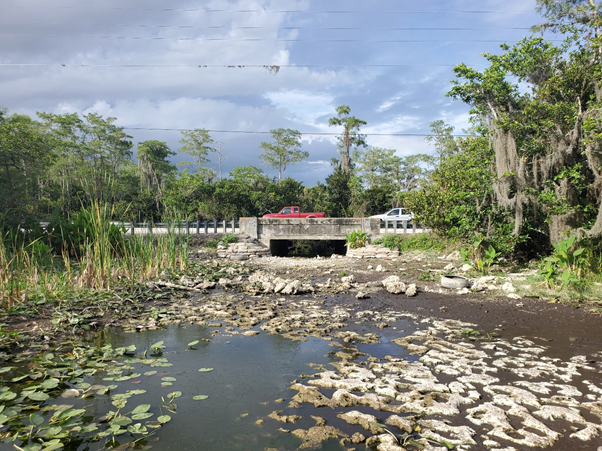
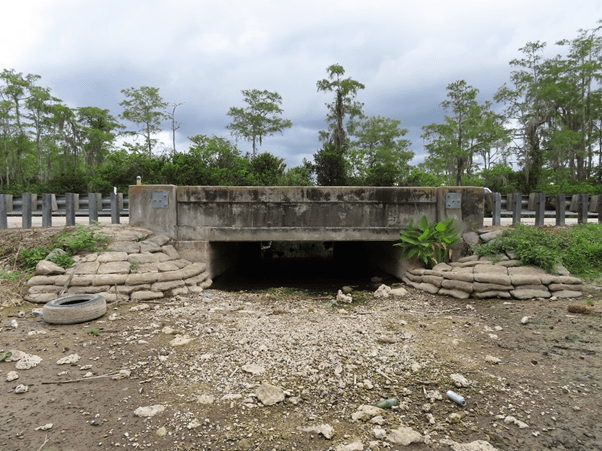
The site where I observed many snakes. This Everglades underpass connects a freshwater swampy region (foreground) to a canal (opposite side). I had visited this area a few weeks earlier and the dry ground where I was standing to take these photos was covered in water. The receding water left fish stranded in pools, which in turn provided abundant food for predators of all sorts. The water’s edge begins at the shaded underpass and gradually gets deeper as one moves towards the canal. The stacked pavers on either side of the underpass, on both sides of the road, provided ideal shelter for water snakes, which emerged in large numbers at dusk. At night, southern water snakes (Nerodia fasciata) in particular gathered at high density in the shallow water between the stacked pavers to hunt fish.
Day – snakes mostly concealed
During the day snakes generally remained concealed in the cracks and crevices between the stacked pavers. Several snakes stuck their head out of the cracks but quickly retreated inward upon sensing a threat. Occasionally, I observed a snake in the open but still in close proximity to the safety of the pavers.
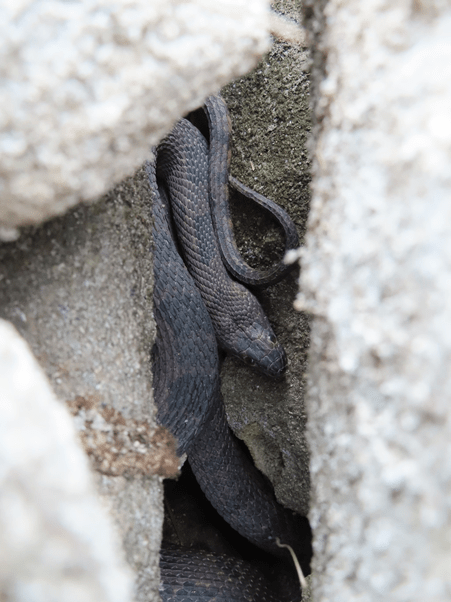
A brown water snake (Nerodia taxispilota) well concealed between pavers.
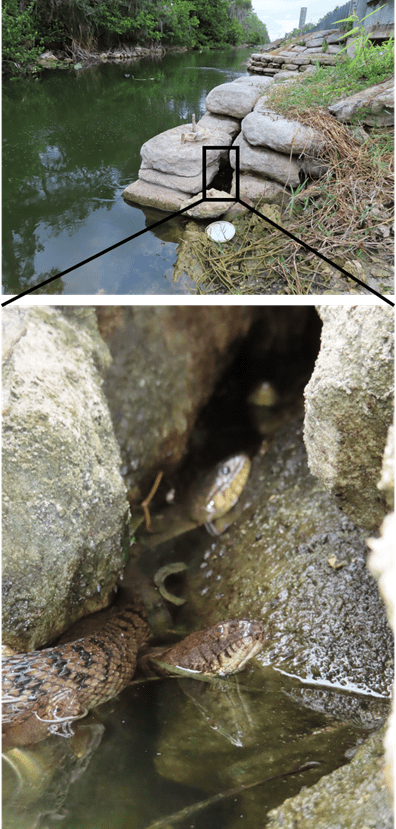
Multiple snakes rest within a gap in the pavers. When taking this picture I was focused on the two different species of water snakes draped over each other in the center of the picture (brown and Florida green). It wasn’t until looking at a larger version on my computer screen that I realized four snakes were in frame!
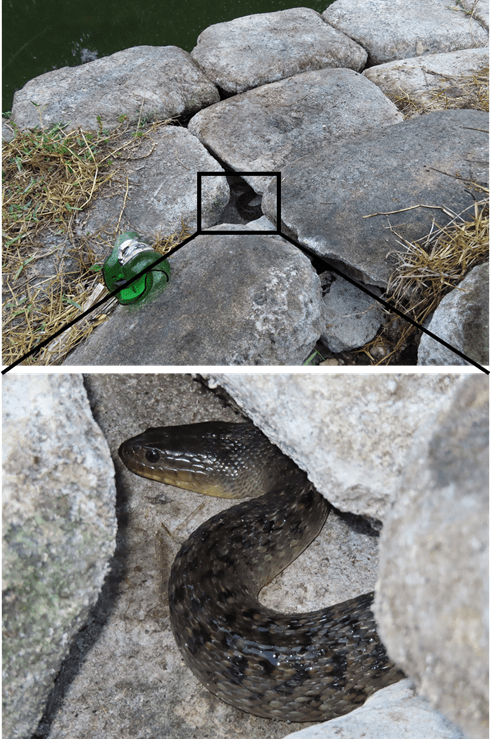
A Florida green water snake (Nerodia floridana) in a gap between the pavers.
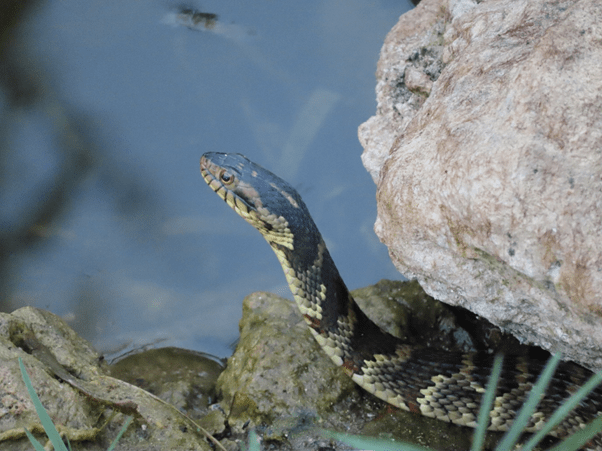
A southern water snake (Nerodia fasciata) sticks its head out from between the pavers.
Dusk – emergence
At dusk it became snake city, as all the snakes concealed during the day began to emerge.
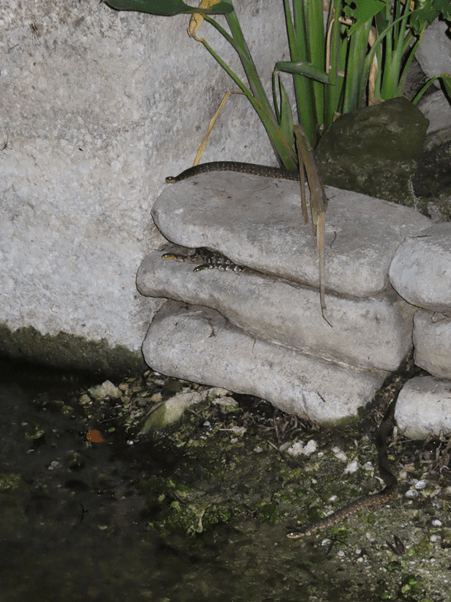
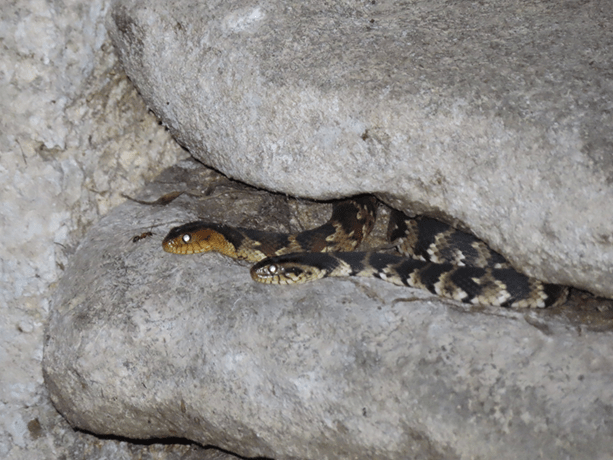
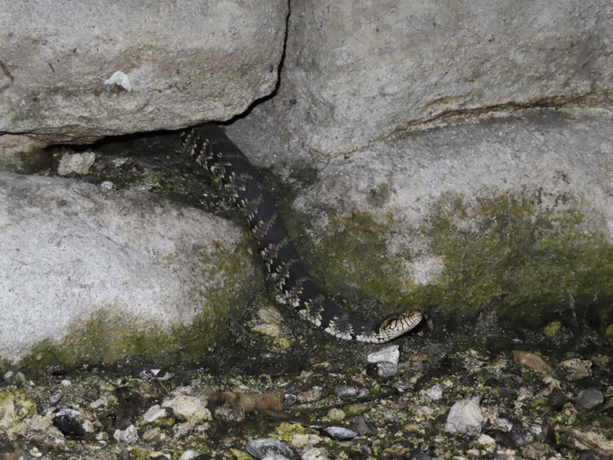
Southern water snakes (Nerodia fasciata) emerge from the pavers and into the shallow waters.
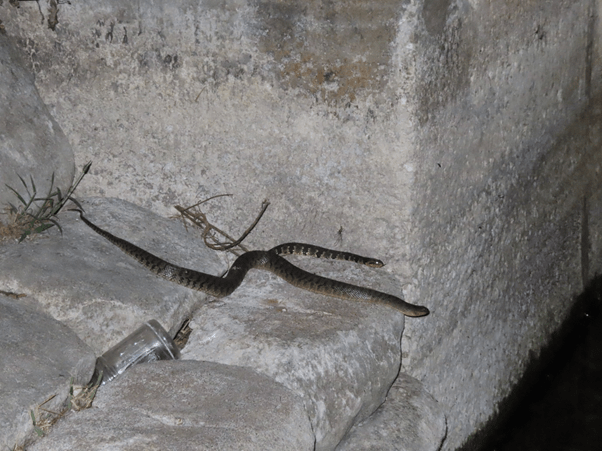
A southern water snake (top) and Florida green water snake (bottom) emerge together.
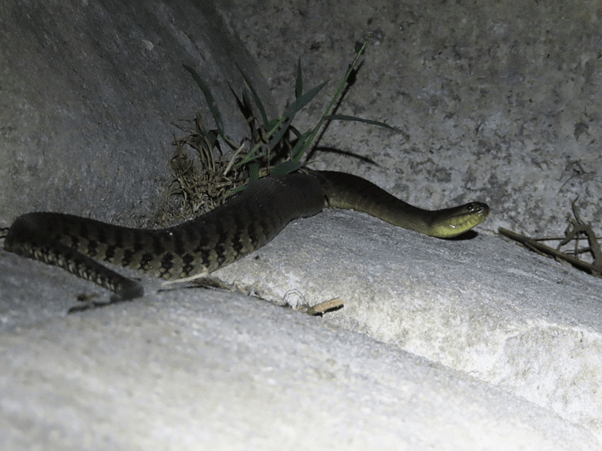
A Florida green water snake (Nerodia floridana) after emerging from the pavers.
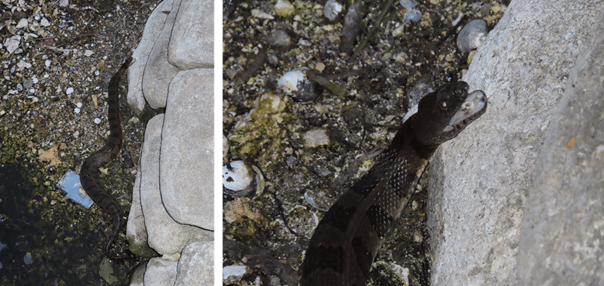
After emerging at dusk this bulky brown water snake (Nerodia taxispilota) rested on the edge of the pavers with its mouth partially open (I am not sure why the mouth was kept open). Eventually it moved into the water.
Night – moving around and hunting
At night all three species of water snake became active.
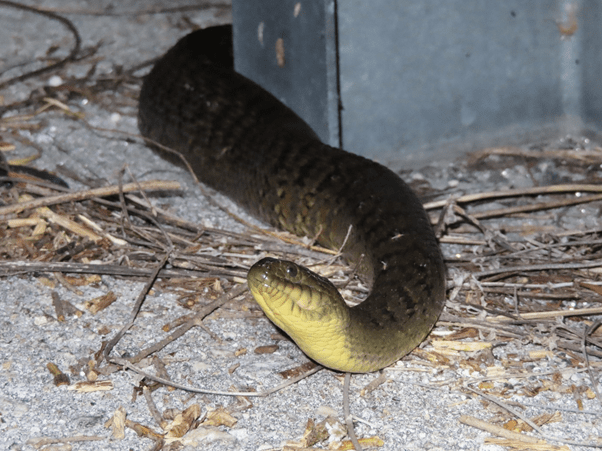
A large Florida green water snake (Nerodia floridiana) with impressive girth made its way up from the pavers and began traveling along the shoulder of the road.
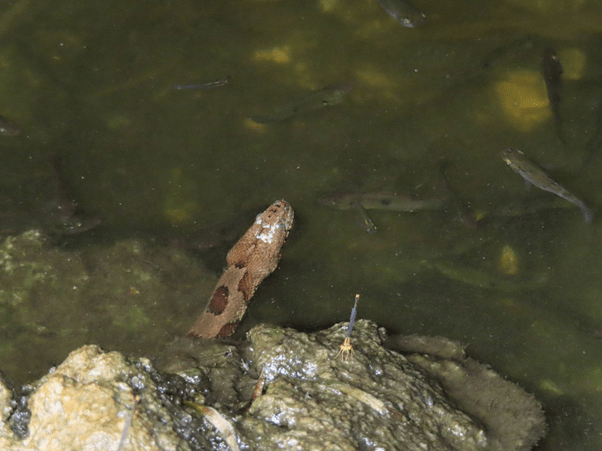
A brown water snake (Nerodia taxispilota) remains motionless with its head sticking out of the rocks and into fishy waters.
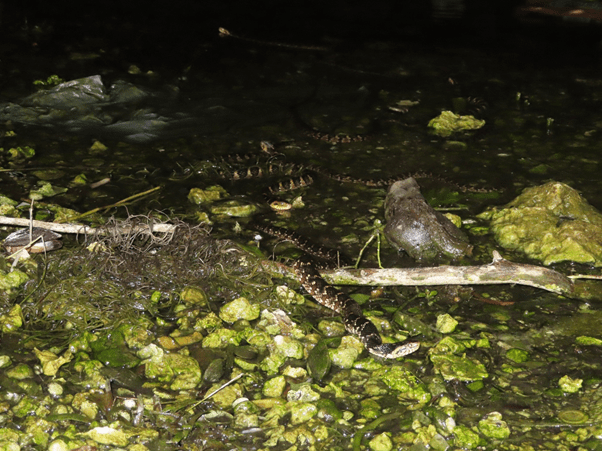
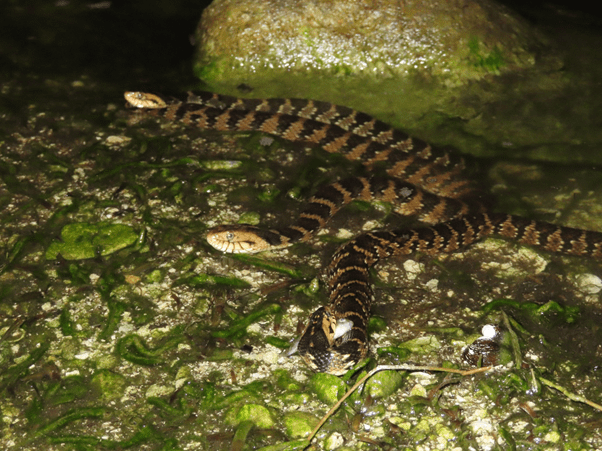
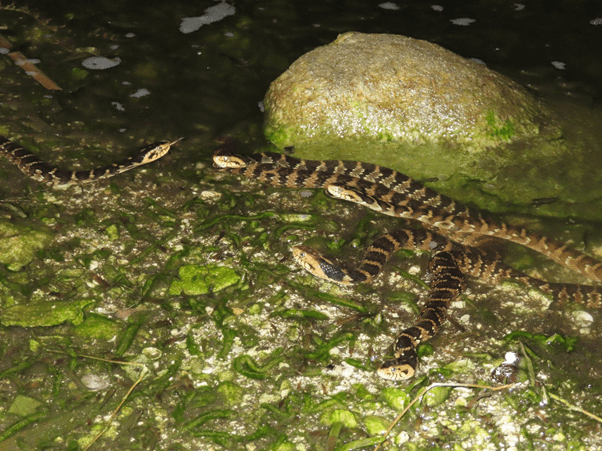
Southern water snakes (Nerodia fasciata) at high density in the shallow waters directly adjacent to the pavers they emerged from. While hunting, individuals of this species swam rapidly with their mouths wide open, swinging their head side to side until they made contact with a fish and were able to grab, manipulate, and swallow it. This was the species I was able to observe best because they performed this active hunting behavior in very shallow water and seemed unaffected by my presence.
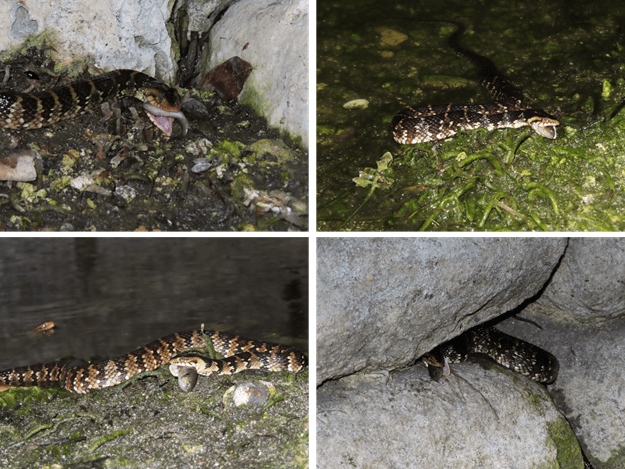
While I sat watching I saw many different southern water snakes (Nerodia fasciata) successfully catch and eat fish in the shallow water. When they tried to swallow the fish tail-first, as in the above photos, it could take several minutes (and I was able to get photos) but when they did so head-first it happened quickly.
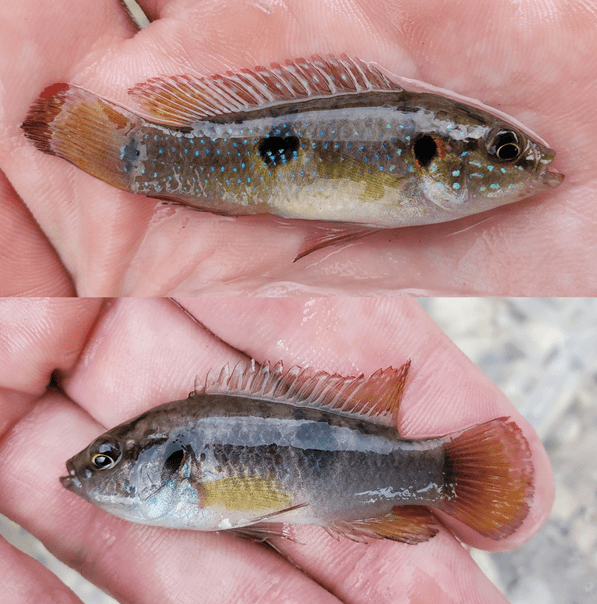
What kind of fish were the southern water snakes eating? In every case in which I was able to identify the fish being eating from the photographs, it was an African jewelfish (Hemichromis letourneuxi) – an introduced species first reported in Miami-Dade County in 1965. There were many other species of fish in the shallows, such as sailfin mollies (Poecilia latipinna). Perhaps African jewelfish were the easiest to catch.
 Reason and Nature
2 thoughts on “Water snakes galore in the Everglades”